
Key Takeaways
- After a building water leak, dehumidification can support controlled drying once the water source, electrical hazards, contamination and structural risks have been assessed. It is one part of recovery, not a substitute for water removal, cleaning, repair or material verification.
- Choose equipment from the measured moisture load, entering conditions, materials and required drying evidence. A hygrometer describes room air; it does not certify that assemblies are dry. Provide drainage and a safe operating plan for any unit used.
- Use air movers only after the water is judged clean enough for the proposed work and electrical/structural hazards are controlled. Air movement exposes wet surfaces; a dehumidifier removes vapour from the air. Do not spread contamination or close required ventilation by default.
- Record material readings at representative locations and investigate concealed layers with appropriate moisture meters; thermal imaging can help locate anomalies but does not replace material measurements or an inspection plan.
- If water may contain sewage, chemicals or other contamination, stop and obtain the applicable PPE, containment, cleaning and professional assessment. Deeply soaked, damaged or load-bearing materials require qualified decisions before drying equipment is operated.
- Complete recovery requires a documented source repair, safe access, appropriate cleanup, material-specific readings that meet the responsible project standard, and no unresolved wet layers or active ingress. Room RH, stable air readings, or absence of odour alone are not completion criteria.
This page addresses drying after a building water leak. Stop the source, document the condition, assess electrical, structural and contamination risks, remove pooled water where safe, and decide what materials can be dried or must be removed. A dehumidifier can lower airborne moisture after those gates are passed; it cannot make contaminated water safe, repair the building or certify hidden materials. Equipment-drain failures belong with maintenance and drainage troubleshooting, not this recovery pathway.
The Dehumidifier’s Critical Role
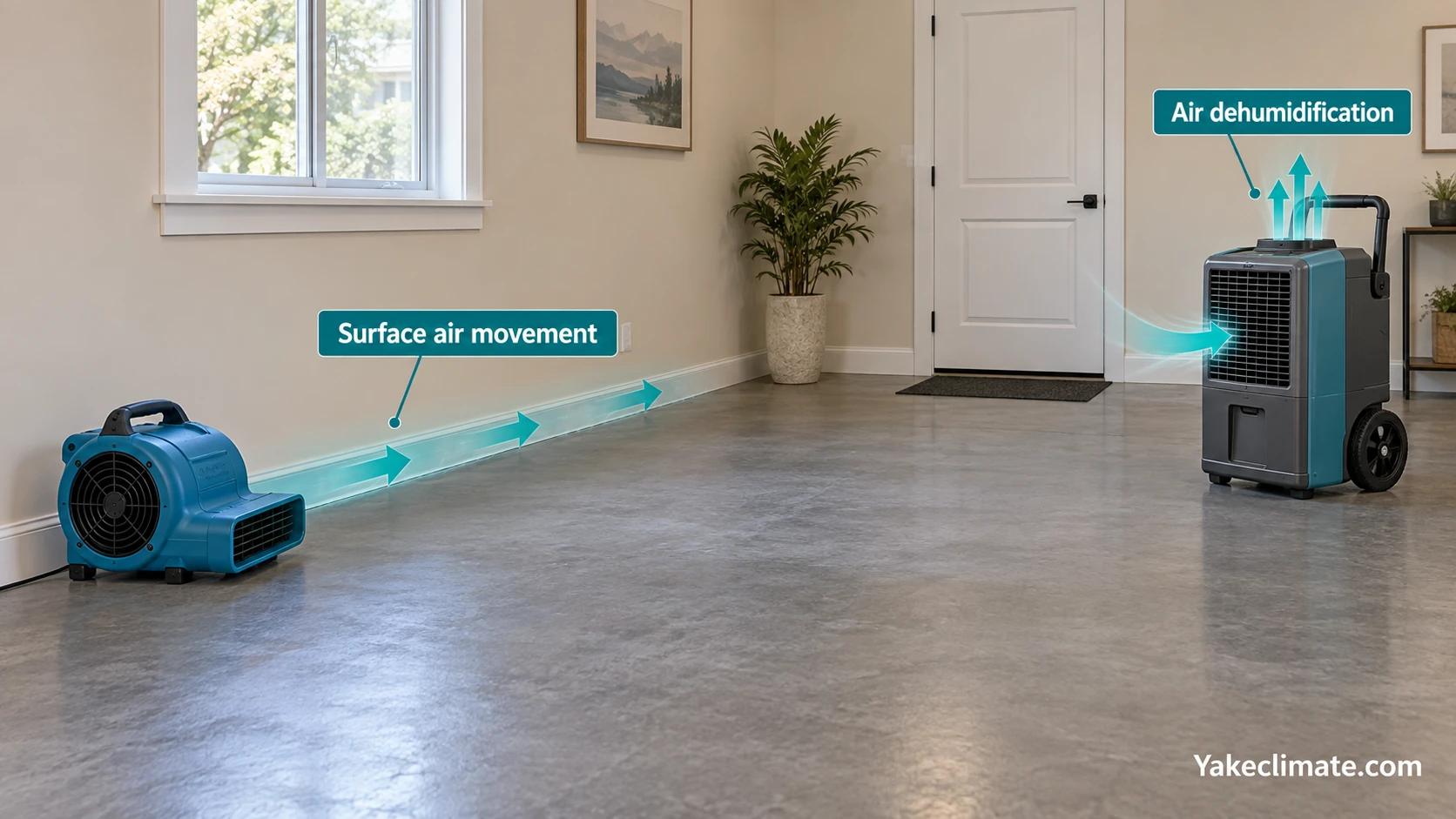
A dehumidifier supports the vapour-removal part of water-damage recovery. It does not remove pooled water, clean contamination, repair an envelope or pipe, dry every hidden layer, or establish when repairs may begin. Use it with source control, extraction, safe air movement, material measurements and a documented close-out decision.
1. Moisture Extraction
Place the unit only after the area is safe and the water category and material plan are known. Use delivered water removal at the actual entering temperature and humidity, provide drainage, and monitor both air and materials. Do not promise continuous operation, a number of days, or capacity from room area; adjust the plan from observed material readings, moisture sources and equipment performance.
2. Air Circulation
Air circulation can accelerate evaporation from exposed surfaces, but it is conditional. Confirm the water is suitable for the proposed method, isolate or contain the work as required, protect occupants, and verify electrical and structural safety first. Keep required ventilation and containment controls under the responsible restoration plan; doors and windows are not a universal setting.
3. Mold Prevention
Mould risk is controlled by removing or drying moisture and addressing contaminated or damaged materials. Room RH can support trend monitoring, but no universal RH band proves that a wall, floor, insulation layer or contents are safe. Follow the responsible remediation scope and use material evidence before closing the work.
4. Odor Reduction
Odour is a prompt to investigate, not a pass/fail test. Remove the source, clean or dispose of affected materials under the restoration plan, and check concealed spaces. Do not use air fresheners or odour absorbers to mask a wet or contaminated condition.
5. Structural Integrity
Inspect for warping, loss of strength, delamination, corrosion and other structural or equipment damage. A dehumidifier may support drying, but it cannot restore load capacity or make an electrically affected item safe. Obtain qualified structural and electrical decisions before repair or re-energisation.
Optimal Dehumidifier Setup
After the source is stopped and the area is judged safe to enter, drying is a coordinated process. A dehumidifier lowers moisture in the air; air movers expose wet surfaces to that lower vapour pressure. Neither machine proves that a wall, floor assembly or insulation is dry. For desiccant duty in cold or low-dew-point restoration, compare process and regeneration conditions in the desiccant restoration guide. For equipment selection and project integration, return to the industrial dehumidifier range. Select the drying method from the materials, contamination status, temperature, moisture load and required evidence—not from floor area or a preset timetable.
Placement
Place equipment on a stable surface with the clearances and drainage specified for the selected unit. Keep access paths open and avoid directing airflow into unsafe electrical equipment, contaminated areas or fragile finishes. Placement should serve the material and containment plan, not a generic distance.
Distribute equipment according to the affected zones, air path and containment plan. A larger area may require more equipment, but floor area alone cannot determine capacity or drying time. Record the selected unit, operating condition, drainage and observed response.
Settings
Measure room temperature and RH for context, then measure the affected materials at representative depths and locations. Set controls within the selected equipment and material plan; do not prescribe 40% RH, 20–30 °C, or continuous mode as universal recovery settings. Check that the operating condition is within the unit envelope and that drainage and electrical protection are working.
Use trend readings to decide whether the drying plan is progressing, but do not stop automatically after an RH band holds for 24 hours. The responsible party should compare repeat material readings, inspect concealed layers, verify source repair and document the acceptance criterion for each affected assembly.
Sealing
Control ongoing ingress and protect the work area according to the approved restoration plan. Do not seal a space or cover openings in a way that traps moisture, blocks required ventilation, or hides unsafe conditions. Any containment, pressure or HVAC change must be made by the responsible team for the site.
Inspect joints, pipes, vents and floor/wall interfaces for active ingress. Repair the source and document it. A closed room can still retain moisture; reducing air exchange is not a substitute for source repair or a safe ventilation and containment plan.
Determining Run Time
Runtime is an observation, not a preset. It depends on the water inventory, materials and layer depth, source control, temperature, airflow, equipment performance, drainage and the required acceptance standard. Record readings over repeat visits and continue or change the plan only from evidence.
Damage Severity
Map affected materials and conditions: pooled water, porous contents, wall/floor assemblies, insulation, electrical equipment, visible damage and possible contamination. Photograph and record the source and initial readings. Sagging, weakness, unsafe electrical conditions or suspected contamination require the responsible specialist before drying equipment is operated.
For pervasive, concealed or structural damage, use qualified restoration, structural and electrical assessment as applicable. Moisture meters and thermal imaging help locate questions; repeat material readings and the project acceptance criteria determine whether drying is complete.
Room Size
Area and air volume help describe the project, but do not determine dehumidifier capacity or drying hours by themselves. Specify the water source and inventory, affected materials and depth, entering conditions, airflow, drainage, equipment data, safety controls and the evidence required to close the work.
Material Type
Identify the materials and assemblies that got wet. Porous materials can retain water below an apparently dry surface; non-porous surfaces can conceal water underneath or behind them. Electrical equipment, insulation, textiles and contaminated contents need separate handling decisions. Record material type, location, measurement method and repeat readings.
Continue measurements at representative locations and depths. A stable room reading does not establish material dryness. Document the source repair, material results, equipment condition and any remaining inaccessible or excluded areas before deciding whether to remove, restore or release the area.
The Dehumidifier’s Limitations
A dehumidifier is useful for airborne moisture and exposed drying within a safe, controlled work plan. It cannot resolve saturated assemblies, contaminated water, concealed moisture, active ingress, structural damage or unsafe electrical conditions by itself.
| Limitation | Decision to make | Evidence to check |
|---|---|---|
| Saturated materials | Decide what can be dried, cleaned or removed | Material and assembly assessment, repeat readings |
| Contaminated water | Use the responsible containment and cleanup plan | Source, contamination assessment, occupant risk |
| Cold or dry entering air | Verify the selected unit’s delivered capacity and defrost behaviour | Model data at expected temperature and humidity |
| Energy and power | Include the full equipment and site load | Rated power, actual duty, available circuits |
| Multiple zones | Plan air paths and equipment for each affected zone | Extent, barriers, airflow and drainage |
| Uncertain drying time | Set a material-specific endpoint, not a preset duration | Repeat material readings and accepted dry standard |
| Hidden moisture | Investigate or open inaccessible layers when indicated | Assembly inspection and appropriate measurement |
Saturated Materials
Carpets, drywall, insulation, wood flooring and other absorbent materials can remain wet below the surface. Decide whether each material is cleanable, removable or restorable under the applicable restoration scope. Use repeat material readings and the project acceptance criteria; do not infer completion from runtime or room RH.
Air movers and heat sources may help dry suitable materials within the approved plan, but some contaminated, damaged or inaccessible assemblies require removal. The restoration professional should decide material by material, using the water assessment and repeat moisture readings rather than assuming every wet layer can be dried in place.
Contaminated Water
Sewage, chemicals or unknown water require a contamination assessment before airflow or equipment placement. The responsible team determines containment, cleaning, disposal and occupant protection; a dehumidifier does not neutralise contaminants or replace that work.
Do not operate fans or dehumidifiers in a contaminated area until the responsible plan addresses containment, PPE, cleaning, disposal and occupant protection. Sewage, chemicals or unknown water require appropriate professional assessment; equipment does not neutralise the hazard.
Hidden Moisture
Hidden moisture is a reason to investigate, not a reason to run equipment indefinitely. Use an appropriate meter and inspection method for the material and assembly, record locations and repeat readings, and escalate inaccessible or damaged layers to the responsible specialist.
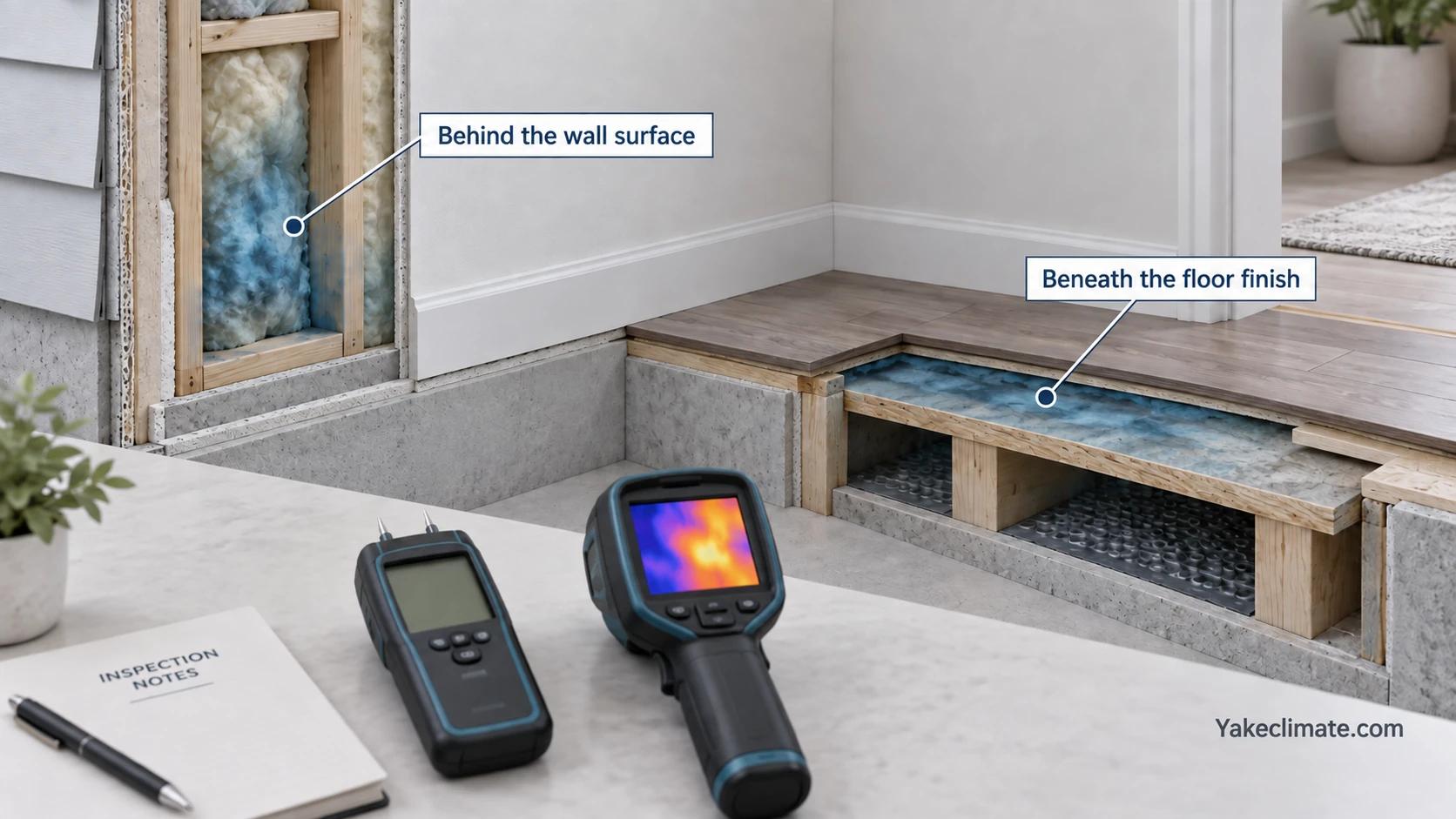
Thermal imaging can locate temperature anomalies that suggest moisture pockets, but it is not a moisture measurement or acceptance certificate. Confirm the finding with an appropriate material method and document what remains inaccessible.
Preventing Mould After a Leak
Prevent further damage by safely stopping the source, assessing contamination and affected materials, and deciding what must be cleaned, removed or dried. Extraction, airflow and dehumidification belong in the responsible restoration and occupant-safety plan; no room-RH target substitutes for material evidence.
Visible mould or suspected contaminated water changes the task from ordinary drying to controlled remediation. Protect occupants, avoid spreading contamination and obtain qualified assessment before deciding whether materials can be cleaned or must be removed.
Track repeat material readings and investigate renewed ingress, hidden wet layers or a stalled drying response. Record what was checked and what changed; neither an odour nor a room-air reading alone establishes that mould risk has been resolved.
Signs of Full Recovery
Full recovery is a documented decision about the source, safety, contamination, materials and acceptance evidence. Dry-looking surfaces, stable air RH and no odour may be useful observations, but none alone proves that hidden materials or assemblies are dry and safe to repair.
Dry Surfaces
Inspect floors, wall bases, hidden corners, contents and equipment casings. Use material-appropriate readings at repeat locations and record depth and method. Carpets and upholstery may need separate handling or removal decisions.
Test materials even when surfaces appear dry. Concrete, wood, insulation, wall cavities, padding and seams can hold moisture. Record repeat readings against the project acceptance criteria and escalate areas that cannot be measured.
Neutral Odor
Odour is not a completion certificate. Investigate recurring or unexplained smells, concealed moisture, contamination and active ingress; do not mask them with air fresheners or odour absorbers.
If conditions change or odour returns, revisit source control, concealed moisture, ventilation and the material record. Opening windows or running fans requires the same safety and containment decision as any other airflow change.
Stable Humidity
Room RH is an air measurement. It can support trend monitoring, but it does not prove that materials, assemblies or contents are dry or that remediation is complete. Use the material-specific acceptance criterion and document the measurement locations and method.
Do not assign 24–48 hours or 3–10 days from leak size alone. Continue while the approved plan shows unresolved material moisture or active ingress, and stop when the responsible acceptance criteria, safety checks and source-repair evidence are satisfied.
Stable conditions and documented material results can support release of the affected area. They do not replace cleaning, contamination decisions, structural/electrical assessment, source repair or any required professional sign-off.
Conclusion
After a building water leak, a dehumidifier can support safe drying when the source, water category, electrical and structural risks have been assessed. The correct outcome is documented material evidence and a responsible acceptance decision—not a room-RH number, odour test, area-to-capacity table or fixed runtime.
FAQ
Frequently Asked Questions
What is the main purpose of a dehumidifier after a water leak?
A dehumidifier lowers airborne moisture and can support evaporation after a safe, controlled assessment. It does not remove pooled water, clean contamination, repair the source, dry every hidden layer or certify the materials.
How should I set up my dehumidifier for optimal recovery?
First confirm the source is stopped and the area is safe, including water category, electrical and structural checks. Then follow the responsible drying plan for extraction, airflow, drainage, equipment clearances and material measurements; do not centre a unit or seal a room as a universal rule.
How long should I run my dehumidifier after a water leak?
There is no reliable runtime from room size or a fixed RH target. Continue or change the plan from repeat material readings, source control, equipment performance, drainage and the responsible acceptance criterion.
Can a dehumidifier completely remove all moisture after a leak?
No. It can remove airborne moisture, but hidden layers, pooled water, contaminated materials, active ingress and structural or electrical damage need separate assessment and action.
How does a dehumidifier help prevent mold after a leak?
It can lower air moisture and support approved drying, but it does not make contaminated water safe or prove that mould risk is resolved. Address the source and materials, and follow the applicable remediation and containment plan.
What are signs that my space has fully recovered from a water leak?
A complete recovery decision requires source repair, safety and contamination checks, appropriate cleanup, material-specific readings and documented acceptance. Dry-looking surfaces, no odour or a room RH value alone are not enough.
What should I do if mold appears even after dehumidifying?
Stop treating the area as a simple drying task. Protect occupants, avoid spreading contamination, document the extent, and obtain the applicable professional remediation and material assessment. Do not scrub or use fans based only on visible size.


