
The cost of a commercial dehumidifier cannot be answered reliably from floor area alone. The project budget depends on the moisture load, operating condition, technology, installation work, energy use and maintenance scope.
Use this framework with the industrial dehumidifier product family, the industrial dehumidification resource page and the broader commercial dehumidifier selection guide before asking for a budget estimate.
Equipment Cost Drivers
Equipment cost changes with capacity, operating temperature, target humidity or dew point, airflow, construction material, filtration, controls and special options. Two units with similar catalog capacity may not be comparable if one is built for harsher conditions.
Start with the industrial dehumidifier specifications checklist so the supplier can see which requirements are confirmed and which are assumptions.
| Cost driver | Project input |
|---|---|
| Capacity | Moisture load and target condition. |
| Technology | Refrigerant, desiccant or hybrid boundary. |
| Airflow | Room distribution or duct pressure. |
| Materials | Dust, corrosion, washdown or temperature exposure. |
| Controls | Standalone, BMS, alarm or custom interface. |
Installation Cost Drivers
Installation can include electrical work, rigging, mounting, ducting, drainage, controls integration, access platforms and commissioning. Ask the installer to price the actual site scope separately from equipment supply.
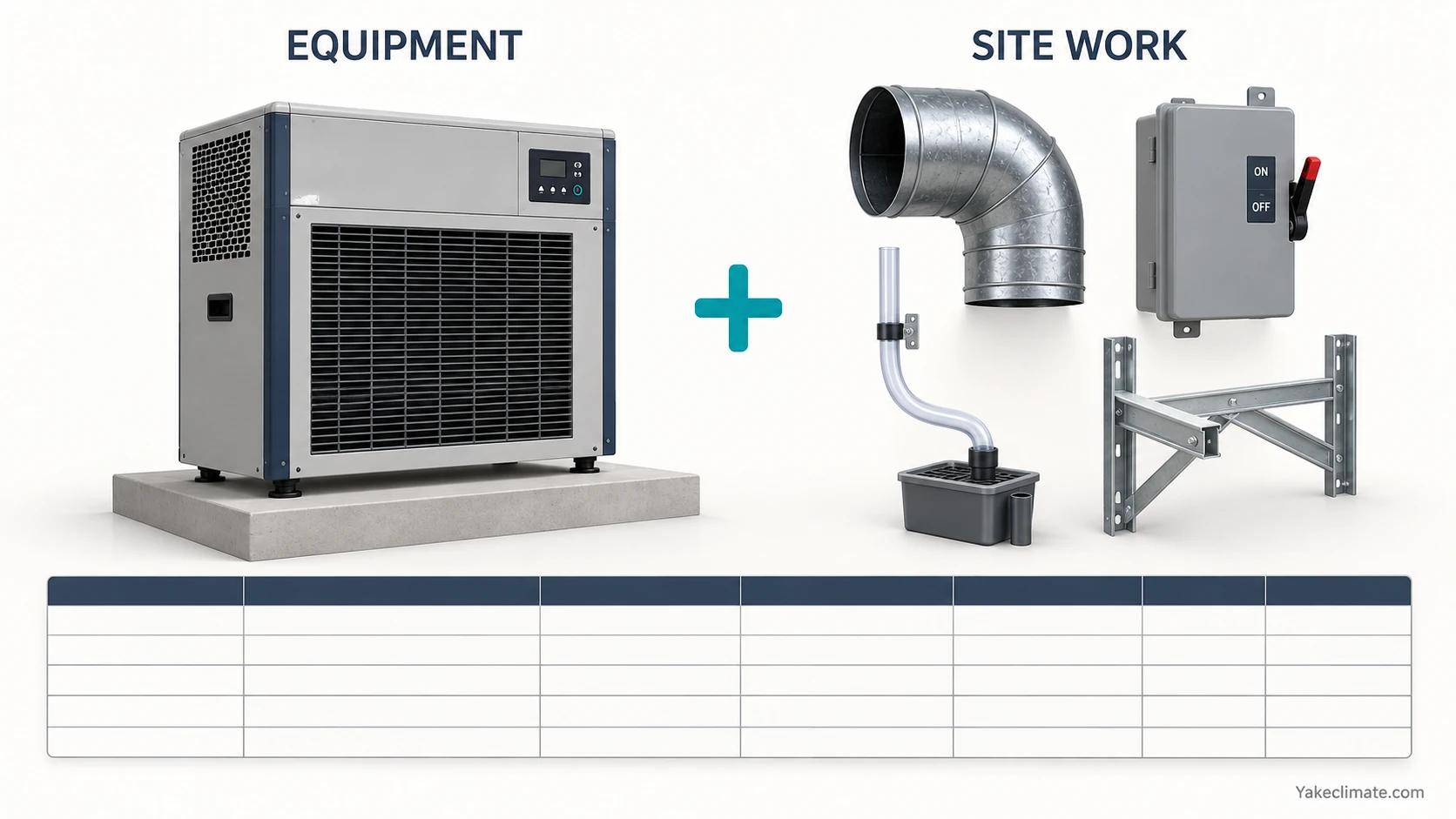
Use the installation site readiness checklist and commercial dehumidifier drainage planning before treating the equipment price as the project budget.
Energy and Operating Cost Drivers
Estimate operating cost from expected energy use over the duty schedule and the applicable tariffs. Include compressor, fan and auxiliary inputs; for thermally regenerated desiccant systems, include the regeneration heat supply. State the operating conditions behind the estimate.
Use the running cost calculation framework for general estimates and the desiccant reactivation energy article for low-dew-point projects.
Maintenance and Lifecycle Cost Drivers
Filters, coils, drains, sensors, alarms, rotors, belts and access panels all influence lifecycle cost. A unit that is hard to service can become expensive even if its purchase price is low.
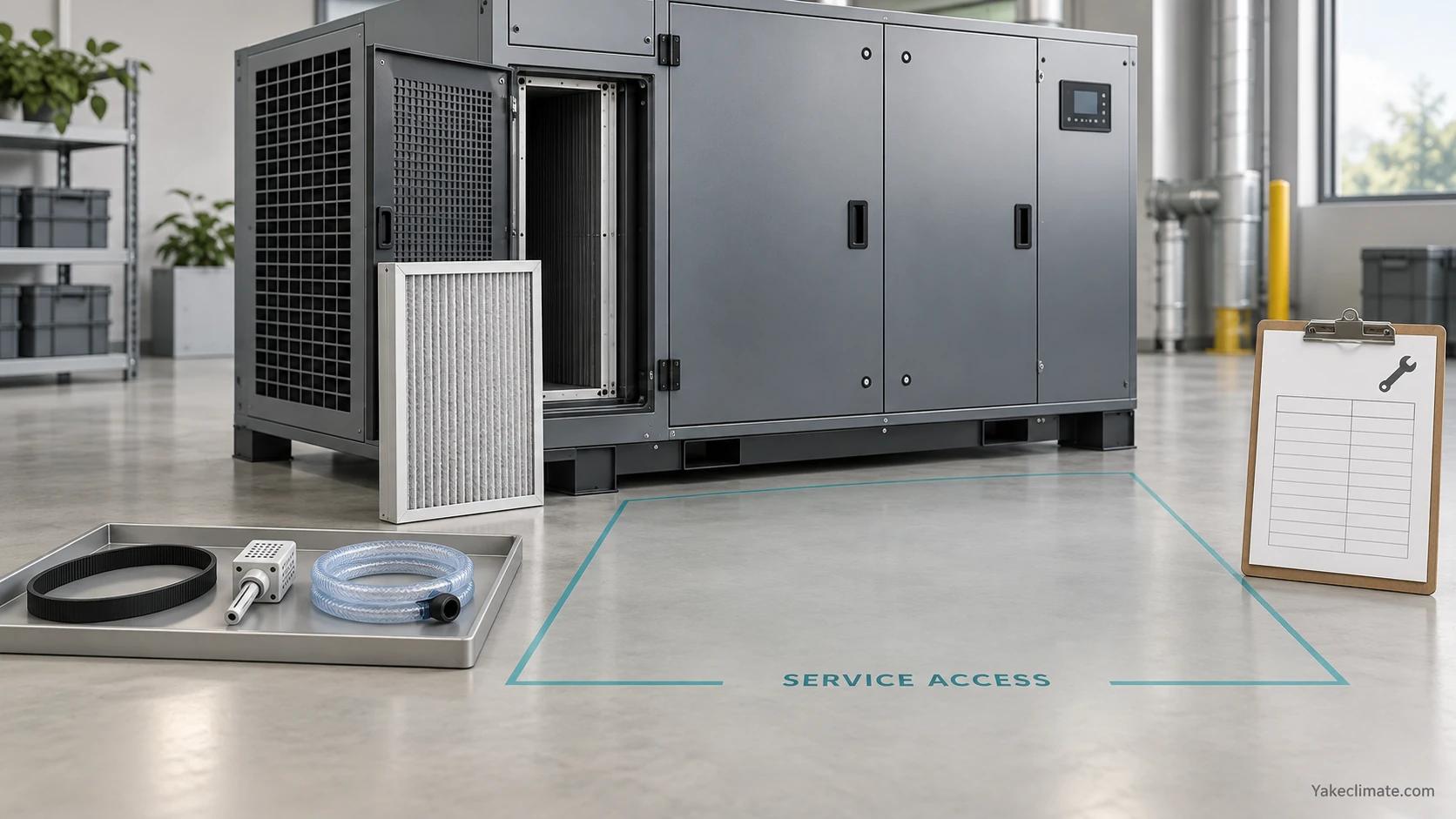
Tie the budget to the commercial dehumidifier maintenance checklist so the operating team knows what must be inspected and recorded.
Keep Purchase and Lifecycle Budgets Distinct
The U.S. Department of Energy’s life-cycle cost framework includes equipment and installation, energy, maintenance, repair or replacement, and eventual disposal. Use consistent study periods and stated assumptions when comparing these future costs with the purchase budget.
Inputs for a Comparable Budget
For each budget line, identify the responsible supplier or contractor, what is included, and what remains an allowance or exclusion. Record the estimate date, currency and quote validity; revisit affected lines when the agreed scope changes.
- Equipment: site and duty conditions, capacity basis, technology, options, delivery scope and applicable taxes.
- Installation: electrical, mounting, ducting, drainage, access and controls work included in each contractor’s price.
- Commissioning: tests, acceptance criteria, training and responsibility for completing them.
- Operation: energy inputs, expected hours, local tariffs and the period covered by the estimate.
- Maintenance: planned tasks, labour, access, consumables and spare parts included or excluded.
- Lifecycle allowances: repair, replacement and disposal assumptions, with the evaluation period stated.
FAQ
Frequently Asked Questions
How much does a commercial dehumidifier cost?
The cost depends on capacity, operating condition, technology, installation, drainage, controls, energy use and maintenance scope, so a useful answer requires project inputs.
Why do commercial dehumidifier prices vary so much?
Units with similar nameplate capacity may differ in construction, airflow, controls, low-temperature capability, corrosion protection and service design.
Is installation a major part of the budget?
It can be, especially when the site needs ducting, electrical work, drainage, rigging, controls integration or access changes.
How do I estimate operating cost?
Estimate energy use over the expected operating schedule and apply local tariffs, including auxiliary power and any regeneration heat. Use the running cost calculation framework to document the conditions and assumptions.
Next Step
Send the project condition, moisture source, operating schedule, installation scope and controls requirement through the contact page. Yakeclimate can review the cost-driving inputs before recommending an industrial dehumidifier configuration.


