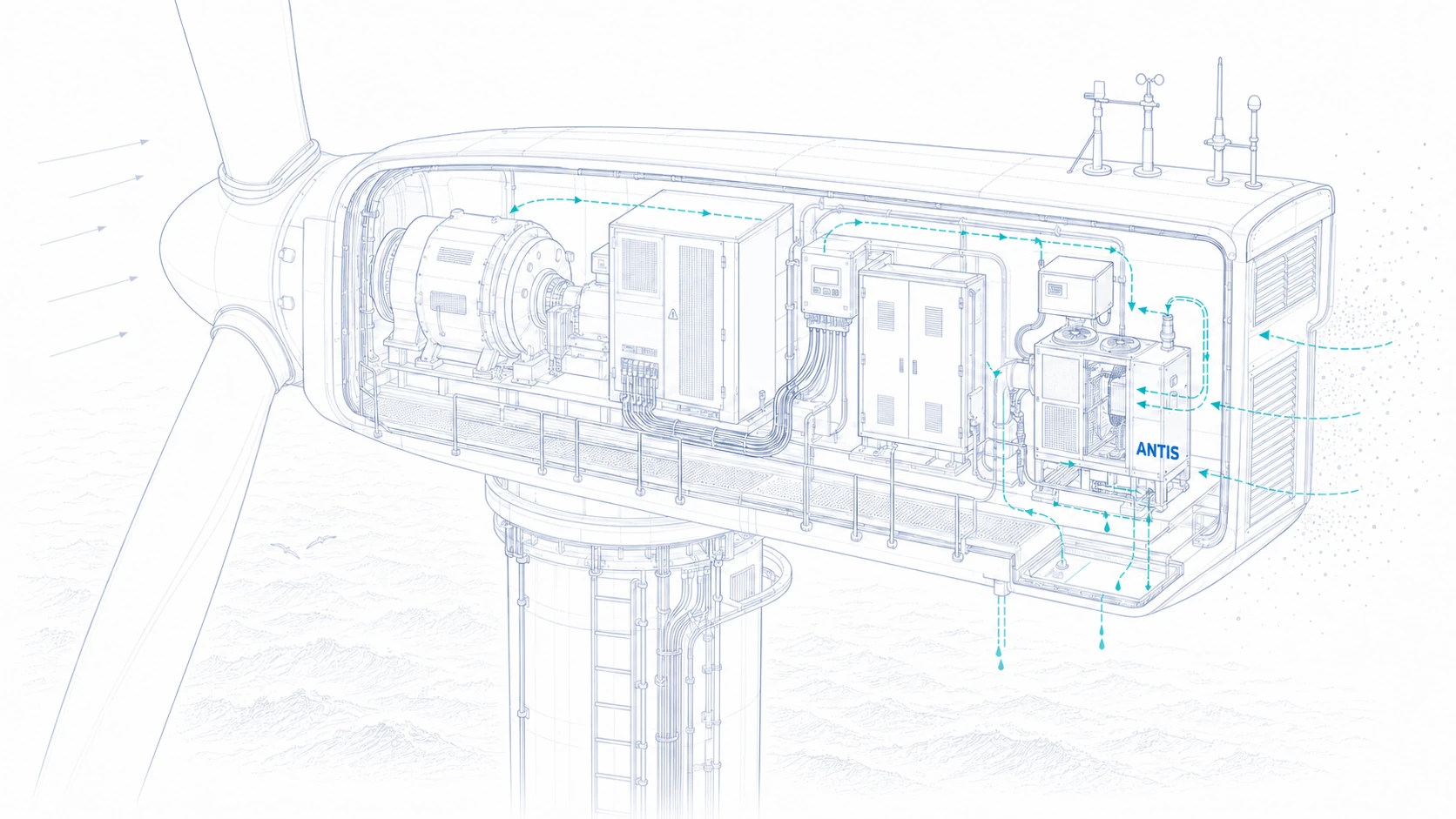
Refrigerant and desiccant dehumidification equipment for wind turbines, grid equipment and substations. Published ratings define a comparison point; project selection still depends on temperature, humidity or dew point, airflow, filtration, power, drainage and installation conditions.
Product selection should be confirmed against temperature, target humidity, airflow, drainage, power supply, and installation conditions.
DEFINITION
What is a wind turbine dehumidifier?
A wind turbine dehumidifier removes moisture from air in wind turbines and enclosed wind-power equipment. This family includes refrigerant and desiccant equipment, with applications also covering grid equipment and substations. Refrigerant models require condensate drainage, while desiccant models use separate process and regeneration air paths. Selection depends on the site's temperature, humidity or dew-point target, airflow, power and installation conditions.
Yakeclimate designs and manufactures industrial dehumidification equipment for complex climate applications, with a focus on agriculture and energy projects.
Product overview
How this product family supports a project
Refrigerant and desiccant dehumidification equipment for wind turbines, grid equipment and substations. Published ratings define a comparison point; project selection still depends on temperature, humidity or dew point, airflow, filtration, power, drainage and installation conditions.
01
Three refrigerant and desiccant base models in the current public catalogue.
02
Published moisture-removal values remain attached to their rated temperature and relative humidity.
03
Low-temperature desiccant configurations list separate process and regeneration-air requirements.
04
Project review should confirm the protected boundary, airflow, filtration, power, drainage, controls and service access.
01 / MODEL SELECTION
Wind-power dehumidifier models and rated conditions
Compare ADS desiccant and refrigerant equipment using the original catalogue units. Neither an operating-temperature limit nor a family application label guarantees performance at your site. Request data for the selected inlet condition and humidity or dew-point target.
Catalogue ratings by model. Scroll horizontally to see all columns.
Units and rating conditions are retained from the catalogue. The kg/h and L/24h figures are not directly comparable across different inlet conditions. Operating range does not establish removal capacity at its temperature limits.
02 / APPLICATION CONDITIONS
Match the equipment to the installation environment
Define the space being dried, its coldest surfaces and the air entering it. The catalogue operating range and rated removal describe different conditions; check removal at the actual inlet before specifying a unit.
01
Onshore nacelles and tower spaces
Record seasonal temperature/RH, leakage, ventilation and access openings. Review mounting, vibration, heat input and service access with the turbine project team.
02
Offshore exposure
Specify salt exposure, corrosion protection, enclosure requirements and maintenance intervals. Offshore certification, explosion protection and environmental test results need confirmation for the exact configuration.
03
Substations and electrical rooms
Distinguish room humidity control from a sealed cabinet duty. Review cold surfaces, cable entries, outside air and fault alarms; use the cabinet range for a separate enclosure assessment.
03 / INSTALLATION & INTERFACES
Confirm power, moisture discharge and controls
The two desiccant models have different electrical supplies and airflows. The refrigerant model requires condensate drainage. Use the model table and individual datasheet together to prepare the installation review.
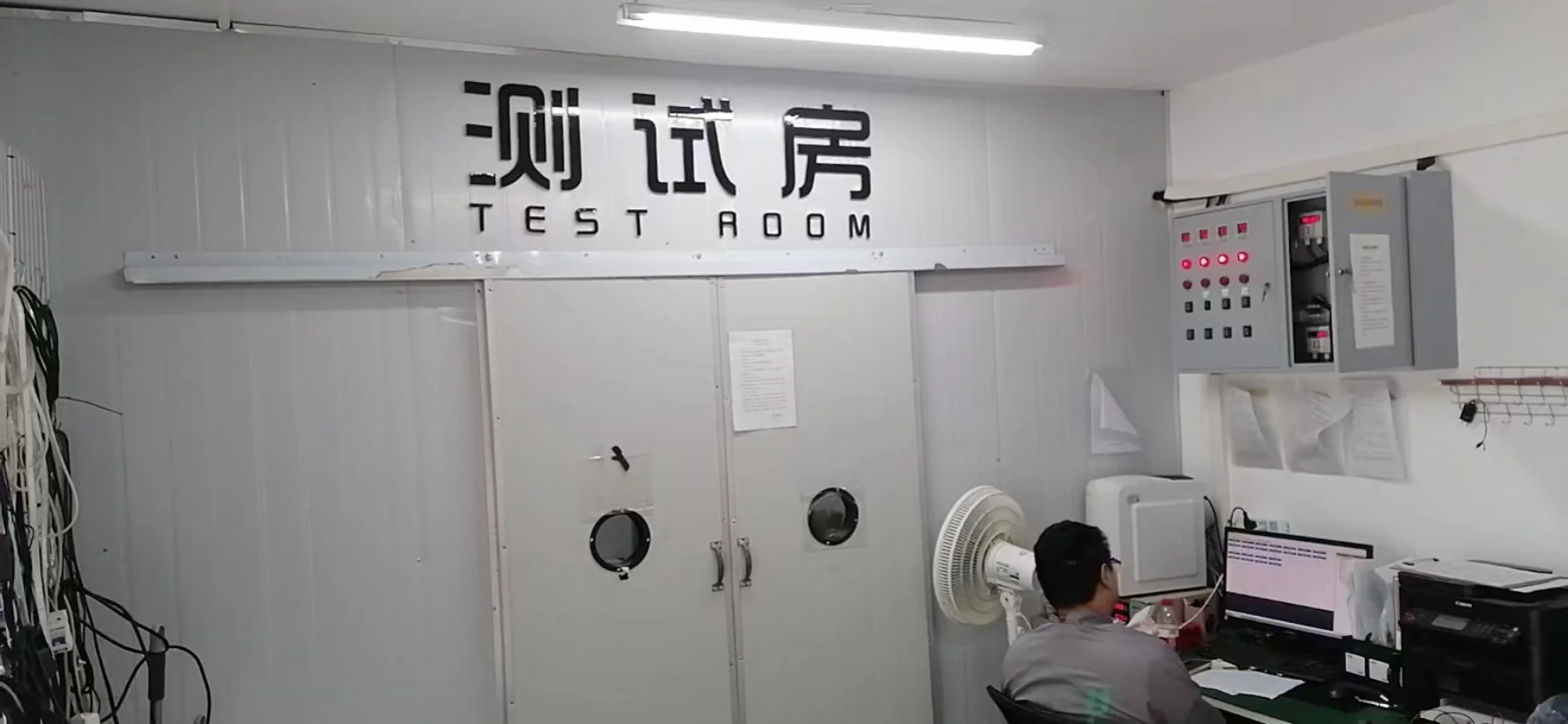
Yakeclimate equipment test room
01
Desiccant air paths
Plan process-air return and dry-air delivery separately from regeneration intake and wet-air exhaust. Confirm duct resistance, insulation and exhaust location with the selected ADS model.
02
Refrigerant drainage
ADS-150L lists external hose drainage. Confirm discharge elevation, hose protection and any freezing risk; request its airflow data before designing circulation or ductwork.
03
Electrical and control interfaces
Match voltage and frequency to the specific model. ADS-500M lists a dry-contact control board; ADS-500MXF and ADS-150L list panel control. Agree sensor, alarm and remote-control requirements individually.
04 / PROJECT REVIEW
Send the conditions that determine the configuration
Nacelle, tower, room or cabinet; enclosed volume and layout
02
Minimum/maximum inlet temperature and RH; target RH or dew point
03
Available power, mounting, airflow, exhaust/drain route and service access
04
Onshore/offshore exposure, required tests, controls and acceptance criteria
TECHNOLOGY COMPARISON
Refrigerant versus desiccant rotor technology
The Wind Power Dehumidifier on this page is part of the Wind Power Dehumidifier range; compare the rated values in each model specification table with the working principles below.
Technology route
How it works
Typical applications
Refrigerant dehumidification
Cools air below dew point to condense and separate water vapor
Conventional dehumidification duty in commercial and industrial spaces
Desiccant rotor dehumidification
Adsorbs moisture onto a rotating wheel and regenerates it continuously
Lower-temperature or lower-humidity targets in storage and process environments
Ultrasonic humidification
Adds fine water mist to raise or compensate relative humidity
Humidity compensation in agriculture and process areas
Application fit
Where this product can be evaluated
Application fit depends on the moisture load, operating temperature, room volume, airflow path, and installation constraints.
Step 1 — define the operating conditions. Record the temperature range, current and target relative humidity, moisture load, and the volume of the room or enclosure to be protected.
Step 2 — confirm the site constraints. Check the available power supply, drainage method, airflow or static-pressure requirement, and installation space; for ceiling, cabinet, or portable mounting confirm the fixing method and service access.
Step 3 — review the rated data and confirm the configuration. Compare the rated capacity in l/24h and the surrounding specification values in the table against the recorded conditions, then confirm the configuration with Yakeclimate before ordering.
FAQ
Frequently Asked Questions
Is the Wind Power Dehumidifier capacity rating based on standard testing conditions?
Rated capacity is published under the named condition in the specification table (for example 30°C/80% RH, in l/24h). Actual moisture removal depends on operating temperature, humidity, airflow, and installation conditions.
Which applications can the Wind Power Dehumidifier support?
The applications listed on this page are evaluation starting points. Final suitability depends on the moisture load, temperature, airflow, and installation limits of the project.
How does Yakeclimate support project configuration?
We co-develop application-specific dehumidification equipment around the operating conditions, interfaces, and integration requirements of the wider project or system.
Project support
Confirm the right configuration for your operating conditions.
Share the operating temperature, current and target humidity, room dimensions, airflow, power supply, drainage method, and installation limits. Yakeclimate can use these details to recommend a suitable next step.