
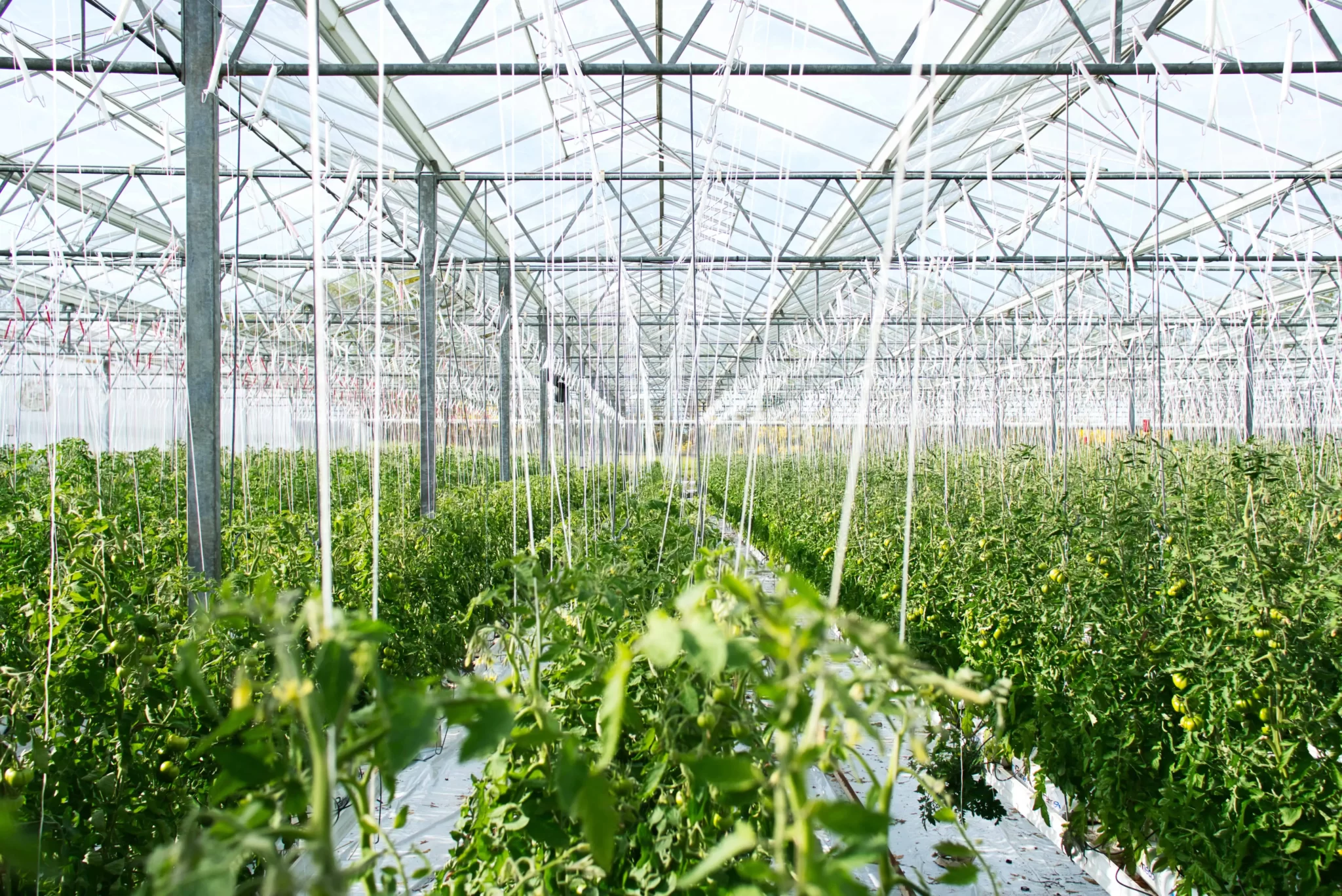

YAKE Agriculture
Humidity Control for Cultivation and Agricultural Environments
YAKE focuses on equipment and project support for cultivation, greenhouse, indoor-growing, post-harvest, storage, and other agricultural environments where moisture conditions affect operation and product quality.
What are you growing, and how does the room behave from day to night and from stage to stage? Share the crop or process, the target conditions, and the installation limits — we will identify the right equipment direction from there.
Agriculture is shaped by operating stage. Crop load, irrigation, lighting, ventilation, temperature, and outside climate change the moisture requirement over time.
AGRICULTURAL FOCUS
Review humidity together with temperature, airflow, and operating stage
Agricultural spaces change with crop load, irrigation, lighting, ventilation, outdoor conditions, harvest activity, and storage requirements.
YAKE project discussions use these conditions to identify suitable equipment and the information still needed before final selection.
01
Condensation and surface-moisture control
02
Humidity stability across operating stages
03
Air distribution and ventilation interaction
04
Equipment placement and service access
05
Dehumidification and humidification requirements
06
Controls and interfaces with surrounding equipment
APPLICATION ENVIRONMENTS
Explore the agricultural environments behind the requirement
Greenhouses
Condensation, ventilation, night conditions, crop load, air movement, and seasonal variation.
Indoor and Vertical Growing
Lighting, cooling, irrigation, plant transpiration, airflow, and changing production stages.
Post-Harvest and Processing
Moisture conditions during drying, handling, packaging, staging, and quality-sensitive workflow.
Agricultural Storage
Temperature, humidity, ventilation, product load, storage duration, packaging, and condensation risk.
Livestock and Other Agricultural Facilities
Moisture sources, ventilation, hygiene, equipment durability, and the operating conditions of the specific facility.
PRODUCT FAMILIES & TECHNOLOGIES
Match the moisture-control method to the agricultural environment
01
Ceiling-Mounted Equipment
58 to 720 L/day with no floor footprint, up to 4.5 L/kWh, operating down to 12 °C, with heat recovery and low-GWP R290 or R32 refrigerant. Modbus-compatible with greenhouse climate computers.
View equipment options → 02Floor-Standing Equipment
160 to 960 L/day, installed with minimal site modification — the usual choice when retrofitting an existing greenhouse.
View equipment options → 03Desiccant Dehumidification
For lower-temperature operation, lower humidity targets, or deeper drying requirements.
View equipment options → 04Ultrasonic Humidification
3 to 100 L/h of ultra-fine mist reaching up to 99% RH without wetting the crop — for mushroom houses, indoor farms, and cold storage.
View equipment options →ENGINEERING SUPPORT
Build the equipment discussion around the real agricultural process
Every project starts with a site-specific humidity load calculation for the crop in question rather than a catalogue lookup, and equipment is specified to integrate with the climate computer already installed through Modbus. Fifteen years of OEM manufacturing for greenhouse brands worldwide sits behind that approach. These details help compare standard products, adapted configurations, and further co-development where the application requires it.
Crop, product, or process stage
Space dimensions and layout
Temperature and humidity range
Target conditions by operating stage
Irrigation, transpiration, washdown, or other moisture sources
Ventilation, cooling, heating, and airflow conditions
Installation, power, drainage, and water
Controls, quantity, schedule, and market requirements
FIELD PROJECTS
Review product information and verified project context
A North American greenhouse grower runs YAKE humidity control across its cultivation zones, holding target RH to suppress pest and mould pressure, with IP54-rated units built to stay in service long-term in high-humidity conditions. Agricultural research institutes in Zhejiang, Guangdong, and Anhui use this equipment, and food producers including Mengniu Dairy apply ceiling-mounted units to high-bay packaging storage. The brand was established in 2010 and equipment now reaches customers in 50+ countries and regions. Product documents, test records, application guidance, and project records are most useful when reviewed against the selected model and real operating conditions.
PROJECT START
Bring us the crop, the room, and the moisture problem — we will help you work out the rest
Send the crop or process stage, space, temperature, humidity target, moisture sources, airflow, installation conditions, controls, and project schedule.
Discuss an Agriculture Project