
Resources
Practical Information for Humidity-Control Decisions
Find guides, FAQs, product comparisons, application notes, and project checklists for agriculture, energy, electrical, and industrial environments.
Use these resources to clarify the conditions behind a requirement, compare equipment options, and prepare a more focused technical discussion.
Technical content should support a real equipment decision. Use these resources to compare equipment options and prepare for a technical discussion.
BROWSE BY INDUSTRY
Follow the industry context behind the humidity problem
01
Agriculture — YAKE
Guides and application notes for cultivation, greenhouse, indoor-growing, post-harvest, storage, condensation, and air-distribution questions.
Browse Agriculture Resources → 02Energy — ANTIS
Guidance for battery energy storage, electrical enclosures, condensation risk, dew point, compact installation, controls, and validation.
Browse Energy Resources → 03Industrial Humidity Control
Product-selection and engineering resources for refrigerant, ceiling-mounted, desiccant, and low-humidity applications.
Browse Industrial Resources →BROWSE BY RESOURCE TYPE
Choose the format that matches your next decision
01
Technical Articles
Search application notes, engineering explanations, FAQs, comparisons, and practical guidance.
Open resources → 02Technical Tools
Calculate dew point, convert moist-air properties, and screen surface condensation risk with visible inputs and assumptions.
Open resources → 03Application Guides
Start with agriculture, energy, electrical, or industrial operating conditions.
Open resources → 04Product and Technical Information
Review product families, operating ranges, specifications, installation, and selection inputs.
Open resources → 05Company Film and Video
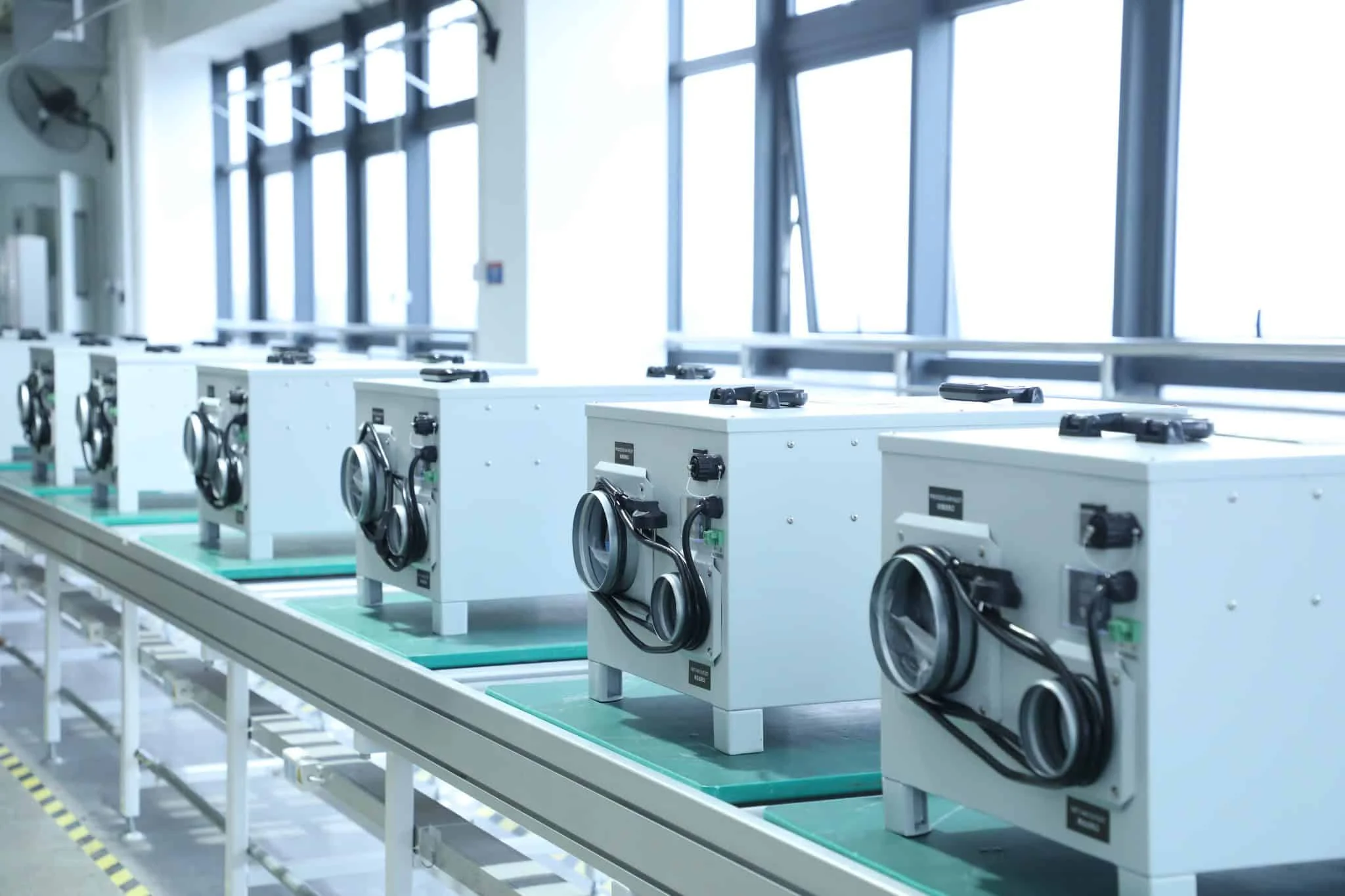
See the manufacturing base, engineering work, equipment assembly, and testing process.
Open resources → 06Industrial Humidity Glossary
Definitions, units and application boundaries for moist air, condensation, loads, dehumidification, agriculture and electrical environments.
Open resources →PRODUCT SELECTION RESOURCES
Compare equipment with the conditions that determine performance
Product-selection resources explain how technology differences relate to temperature, humidity targets, airflow, installation, utilities, and project constraints.
Explore Product Selection Guides- Refrigerant vs. desiccant dehumidification
- When low-temperature operation changes equipment selection
- How to prepare humidity and moisture-load information
- Ceiling installation, airflow, access, and drainage
- Humidity control for cabinets and enclosed electrical spaces
- Water quality and control requirements for ultrasonic humidification
PREPARE A PROJECT REQUIREMENT
Collect the information that makes a technical discussion useful
If some values are unknown, share the information you already have. The remaining questions can be identified during the initial review.
- Application and project location
- Space, enclosure, or process dimensions
- Temperature and humidity range
- Target humidity or dew point
- Moisture sources, airflow, and ventilation
- Installation position, power, and drainage
- Controls, alarms, and communication needs
- Quantity, schedule, and destination market
FEATURED & RECENT RESOURCES
Continue from the topic or application most relevant to your work
Each article links to related applications, product families, project evidence, and contact options so the next step remains easy to find.

Greenhouse Humidity During Rain: Check the Water Path Before Changing the Vents
Rain does not automatically make ventilation ineffective. Trace liquid water and vapour, test the usable air path and record the event before choosing a drying route.

Greenhouse Humidity Control Deadband: Set and Test the Start–Stop Logic
A greenhouse humidity deadband separates equipment start and stop conditions. Define the sensor, control owner and protection timers, then verify the crop-zone response.

Leafy Greens Greenhouse Humidity Control: Plan by Crop Zone, Not One RH Number
A crop-zone approach to lettuce, spinach and kale humidity observations, wetness checks, shared-air limits and equipment enquiry inputs.

Condensation on Greenhouse Pipes: Find the Water Source and the Cold Surface
Trace the first water on a greenhouse pipe, compare the pipe surface with nearby-air dew point, and route leaks, insulation and humidity issues separately.

Leaf Condensation in a Greenhouse: Verify Where the Water Forms
Separate direct leaf dew from roof drips and irrigation using event-time leaf temperature, local dew point and a water-path record.

Condensation on Greenhouse Glazing: Identify the Wet Layer Before Changing Controls
Identify which face, cavity or joint is wet on greenhouse glass, film or rigid panels before changing climate controls.
COMPANY FILM
Inside Yakeclimate: Engineering and Manufacturing
See the manufacturing base, engineering work, production process, equipment assembly, and testing behind Yakeclimate industrial dehumidification equipment.
Watch on YouTubeAPPLY THE INFORMATION
Need help applying the information to a real project?
Send the application, operating conditions, target, and installation limits. We can help organize the questions that need to be answered before product selection or engineering review.
Discuss Your Requirement