
Case Studies
Project Records Built Around Conditions, Decisions, and Evidence
Explore how humidity-control requirements were defined, what constraints shaped equipment selection, and how the agreed solution was reviewed in the real project context.
Each published case identifies the information available for public review and keeps confidential project details protected.
A useful case explains why the equipment was selected. Conditions, constraints, responsibilities, and evidence explain the product decision.
BROWSE BY INDUSTRY & BRAND
Follow the application closest to your project
01
YAKE Agriculture Projects
Project records for cultivation, greenhouse, indoor-growing, post-harvest, storage, and other agricultural environments.
Explore this application → 02ANTIS Energy Projects
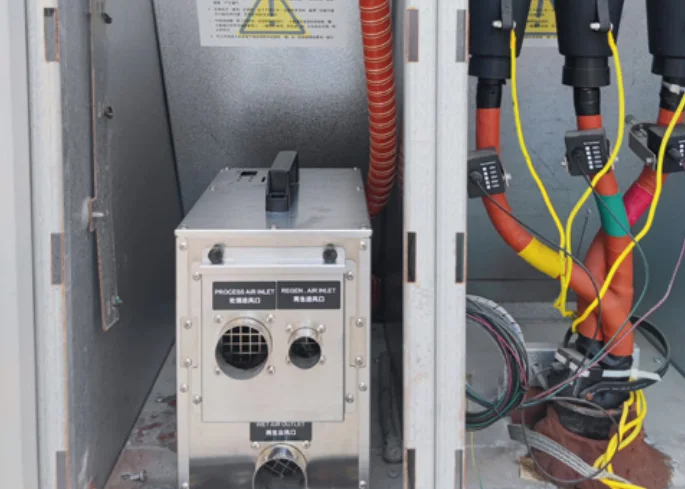
Project records for battery energy storage, electrical enclosures, switchgear, power-grid environments, and related energy applications.
Explore this application → 03Industrial and Commercial Projects
Additional applications organized by environment, product family, and humidity-control objective.
Explore this application →WHAT IS A PROJECT RECORD
What is a project record?
A project record is a published summary of how humidity-control requirements were defined for a real installation. It refers to the operating conditions, technical decisions, implementation scope, validation method, and confirmed results, while keeping confidential customer details protected. Records are released only after project facts, customer permissions, images, equipment details, and result statements have been confirmed.
PROJECT RECORD STRUCTURE
Read the project logic, not only the equipment name
Each record is organized so project teams can compare the conditions, technical decisions, delivery scope, validation method, and confirmed results with their own requirement.
- Application and project background
- Temperature, humidity, moisture, and airflow conditions
- Installation, control, schedule, and market constraints
- Selected equipment and adaptation scope
- Manufacturing, installation, or commissioning responsibilities
- Validation method and available evidence
- Confirmed results and remaining operating conditions
PROJECT RECORD VS CASE STUDY
Project record vs. traditional case study
The table below summarizes how a published project record differs from a traditional marketing case study, so readers know what each format can and cannot prove.
| Aspect | Project record | Traditional case study |
|---|---|---|
| Content basis | Operating conditions, constraints, decisions, and evidence | Brand highlights and selected performance claims |
| Verification | Confirmed before publication with customer permission | Often published without independent verification |
| Confidentiality | Protects customer identity and sensitive project details | May reference named customers or logos |
| Reader use | Supports technical review for a similar application | Supports awareness and brand preference |
Use a project record as an input to your own technical review. Equipment selection still depends on the actual temperature, humidity target, moisture load, airflow, installation, power, drainage, controls, and schedule of your project.
HOW TO USE A PROJECT RECORD
How to use a project record
Three steps connect a published record to a new project requirement.
- Step 1: Compare the conditions
Mark which operating conditions in the record match your site and which differ, including temperature, humidity target, moisture load, and airflow.
- Step 2: Identify the constraints
List the installation, power, drainage, controls, schedule, and market constraints that shaped the equipment decision.
- Step 3: Prepare your requirement
Gather the operating data available for your site and share the relevant record together with your requirement for a focused technical review.
FEATURED PROJECT RECORDS
Review verified projects with comparable operating conditions
Published records will allow comparison of the environment, technical decision, implementation scope, and available evidence with a new requirement.
AgricultureEnergy StorageElectrical EnclosuresIndustrial DehumidificationLow Humidity and DesiccantStandard EquipmentAdapted EquipmentCo-Development
01
Delivered Project
Calla Lily Greenhouse Case Study: Nighttime RH at 77.1%
After a calla lily greenhouse of approximately 1,000 m² expanded its dehumidification configuration from one RYCF-22S to two, three-point nighttime average relative humidity decreased from 87.4% to 77.1%. The records also identified persistent high humidity on the cooling-pad side and showed why rated capacity cannot be treated as field performance.
Explore this application → 02Project Record
How Many Dehumidifiers Does a 5-Hectare Greenhouse Need? A Sizing Walk-Through
A greenhouse quantity stays open until the design moisture load and effective removal capacity are confirmed at the project operating condition.
Explore this application →PREPARE YOUR PROJECT
Use a similar case to prepare your project
A case can help identify missing information, but equipment selection still depends on the actual temperature, humidity target, moisture load, airflow, installation, power, drainage, controls, quantity, and schedule.
- Note which conditions are similar
- Identify which conditions are different
- Prepare the operating data available for your site
- List the constraints that affect equipment selection
- Share the relevant case when submitting your requirement
FAQ
Frequently Asked Questions
Why do some records appear without customer names?
Records are published only after project facts, customer permissions, images, equipment details, and result statements have been confirmed. No placeholder customer names or unverified performance claims are shown.
Can a similar case replace a site-specific review?
No. Equipment selection still depends on the actual temperature, humidity target, moisture load, airflow, installation, power, drainage, controls, quantity, and schedule of your project.
How are the facts on this page verified?
Company facts come from the verified fact list (Founded in 2010, 500,000+ units, 50+ countries and regions, 46+ patents), and equipment values come from the product specification table published for each model.
SIMILAR APPLICATION
Discuss an application similar to one of these projects
Send the project record that caught your attention together with your own operating conditions. We can use both to structure a more focused technical review.
Discuss a Similar Application