
ANTIS
ANTIS / 01 ANTIS Energy
Moisture-Control Equipment for Energy and Electrical Enclosures
ANTIS focuses on humidity-control equipment and project support for battery energy storage, electrical cabinets, switchgear, power-grid environments, and related energy applications.
Every enclosure has its own balance of heat, air, and space. Tell us about yours — the conditions outside, the heat inside, and the deployment plan — and we will work out the right configuration.
The enclosure defines the equipment constraints. Ambient conditions, internal heat, available space, drainage, power, and controls help determine the suitable equipment and configuration.
ENERGY & ELECTRICAL FOCUS
One brand, one problem: moisture inside sealed energy equipment
ANTIS was established in 2021 as Yakeclimate's brand for energy and electrical environments. It focuses on humidity control for energy storage, wind power, power-grid and substation installations, electrical enclosures, and technical rooms. Yakeclimate equipment has been supplied to customers in 50+ countries and regions.
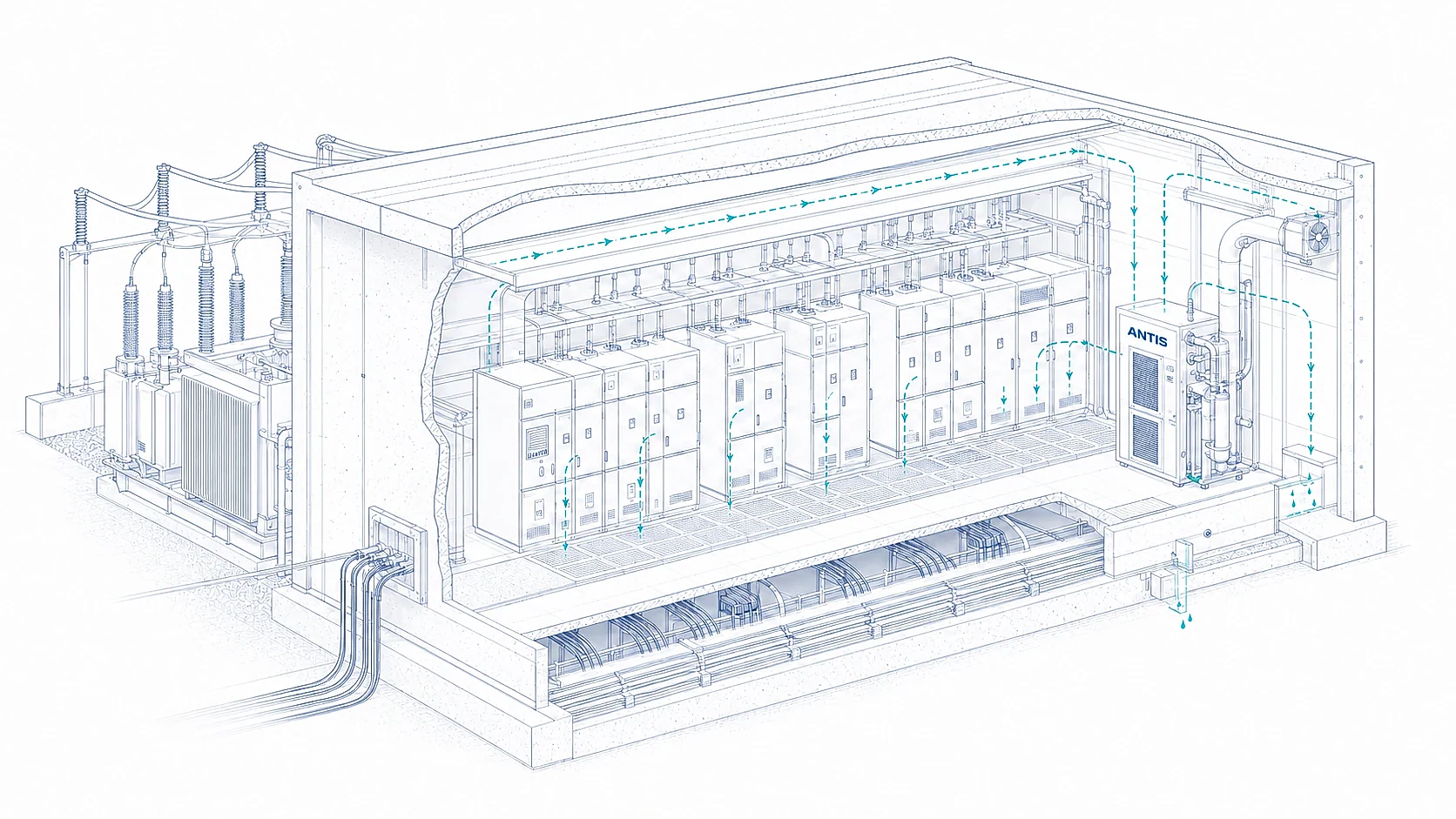
Inside a sealed cabinet, container, or switchgear room, condensation starts when a surface falls below the dew point of the air touching it. That single condition is why cabinet volume alone never determines the equipment: the heat inside, the air exchanged through doors and glands, the coldest panel, and the drainage route all move the answer.
01
Water forming on busbars, terminals, and cabinet skins
02
Corrosion that reduces insulation class over time
03
Free depth too tight for a standard unit
04
Internal heat sources that create cold surfaces elsewhere
05
Condensate with nowhere safe to drain
06
Dozens of cabinets that must behave identically
APPLICATION ENVIRONMENTS
Where ANTIS equipment operates
01
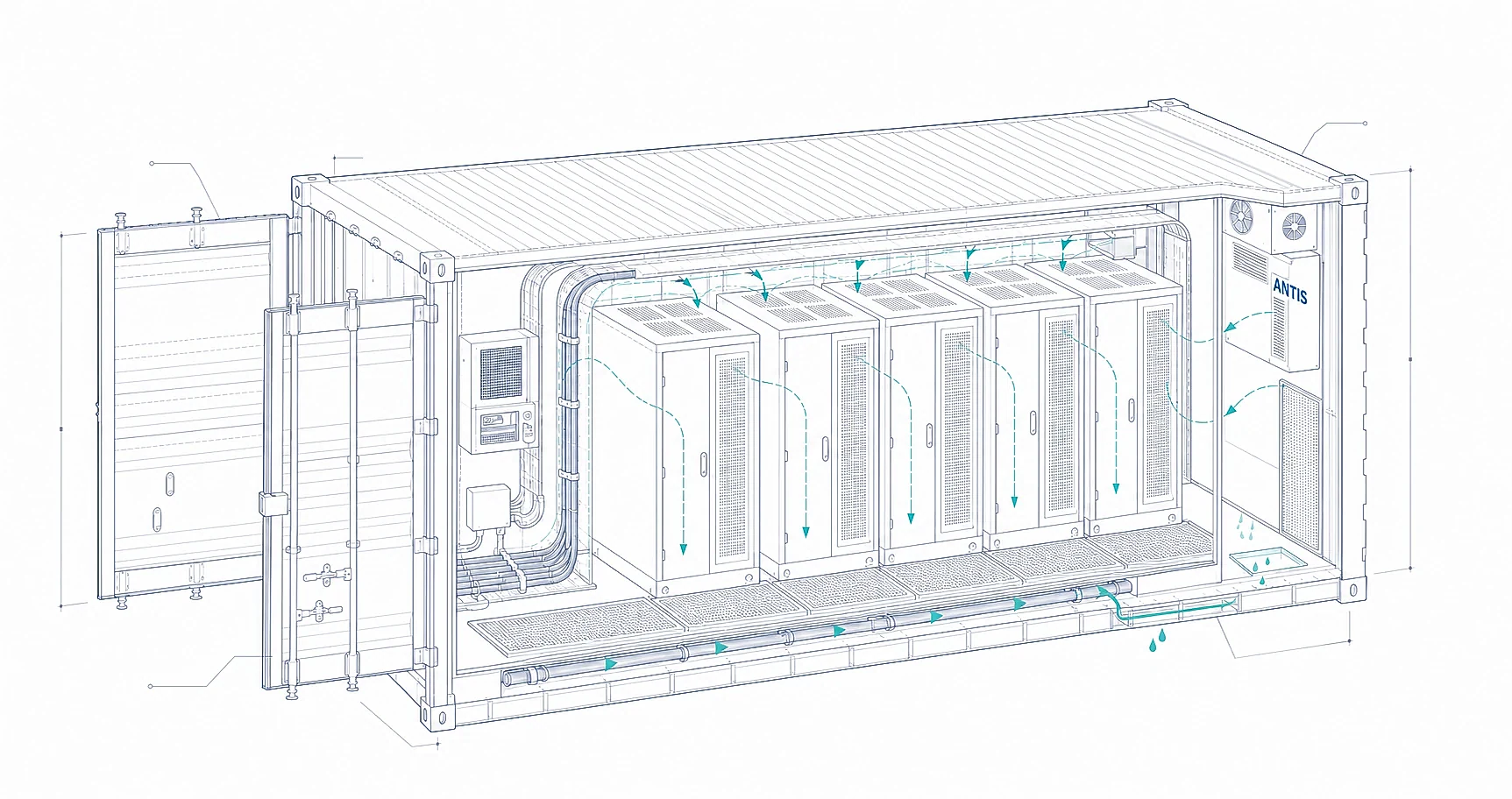
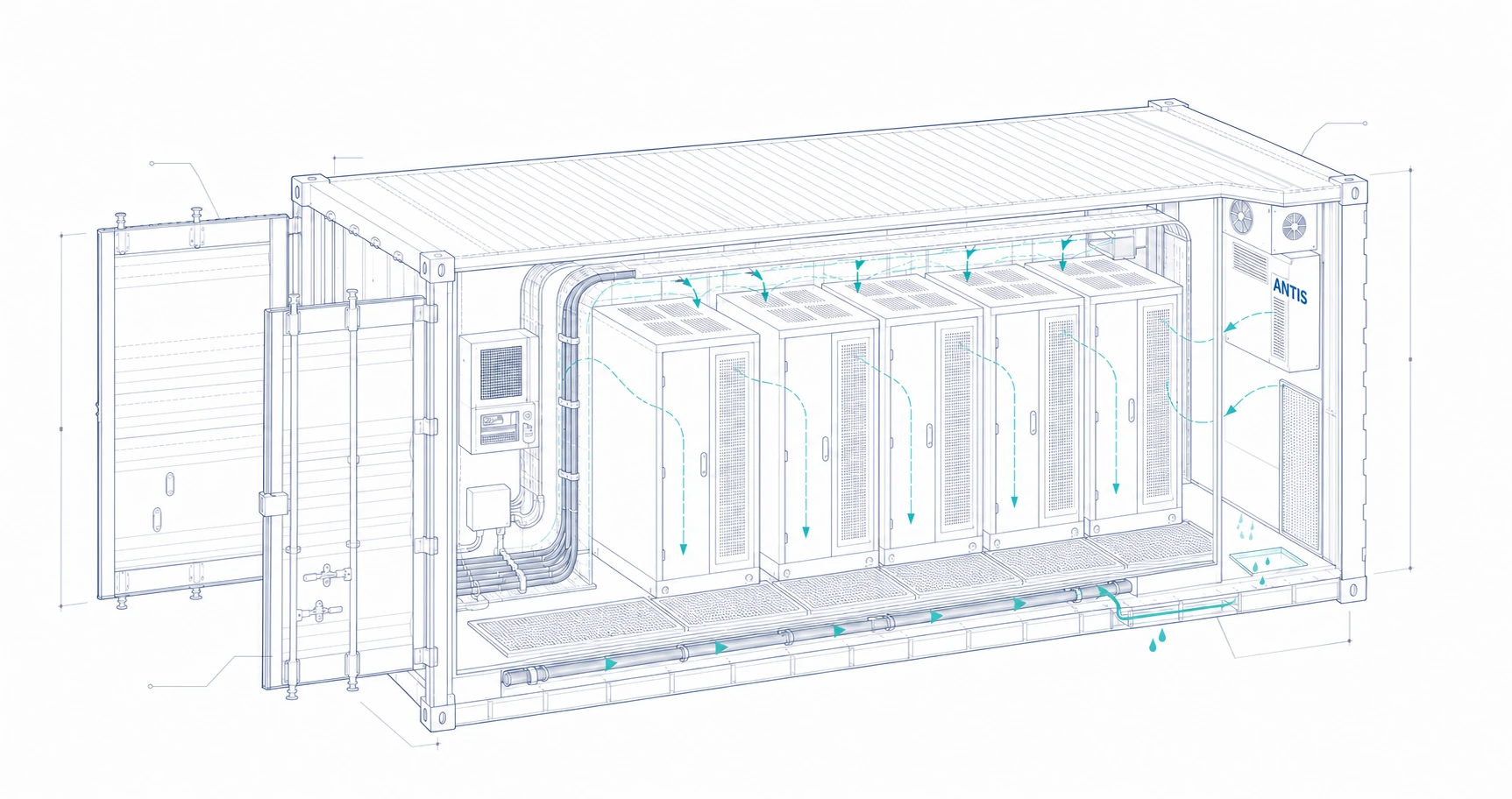
Battery Energy Storage
Cabinets, containers, and battery rooms — the enclosures where a wet busbar becomes a reliability problem.
02
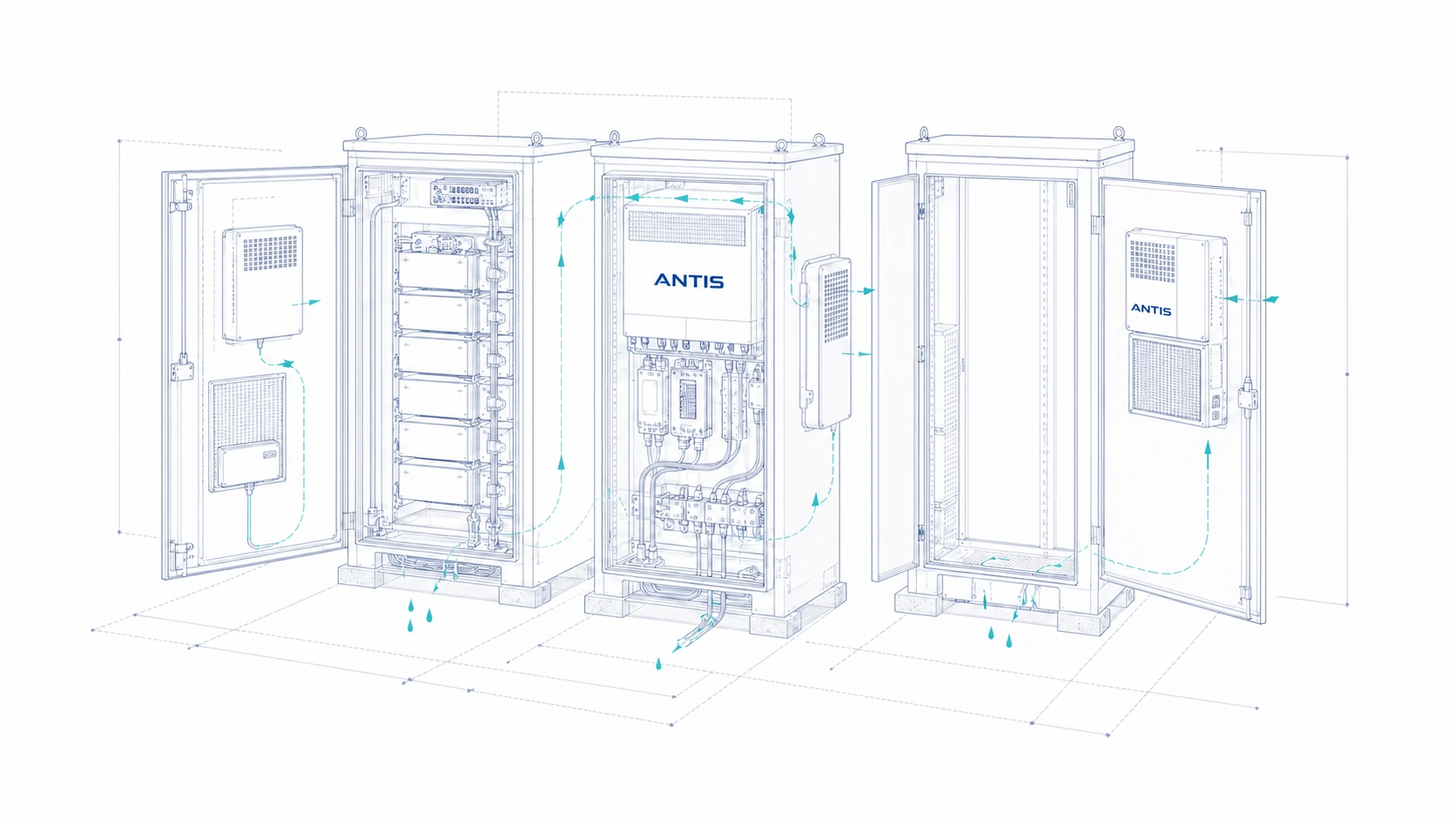
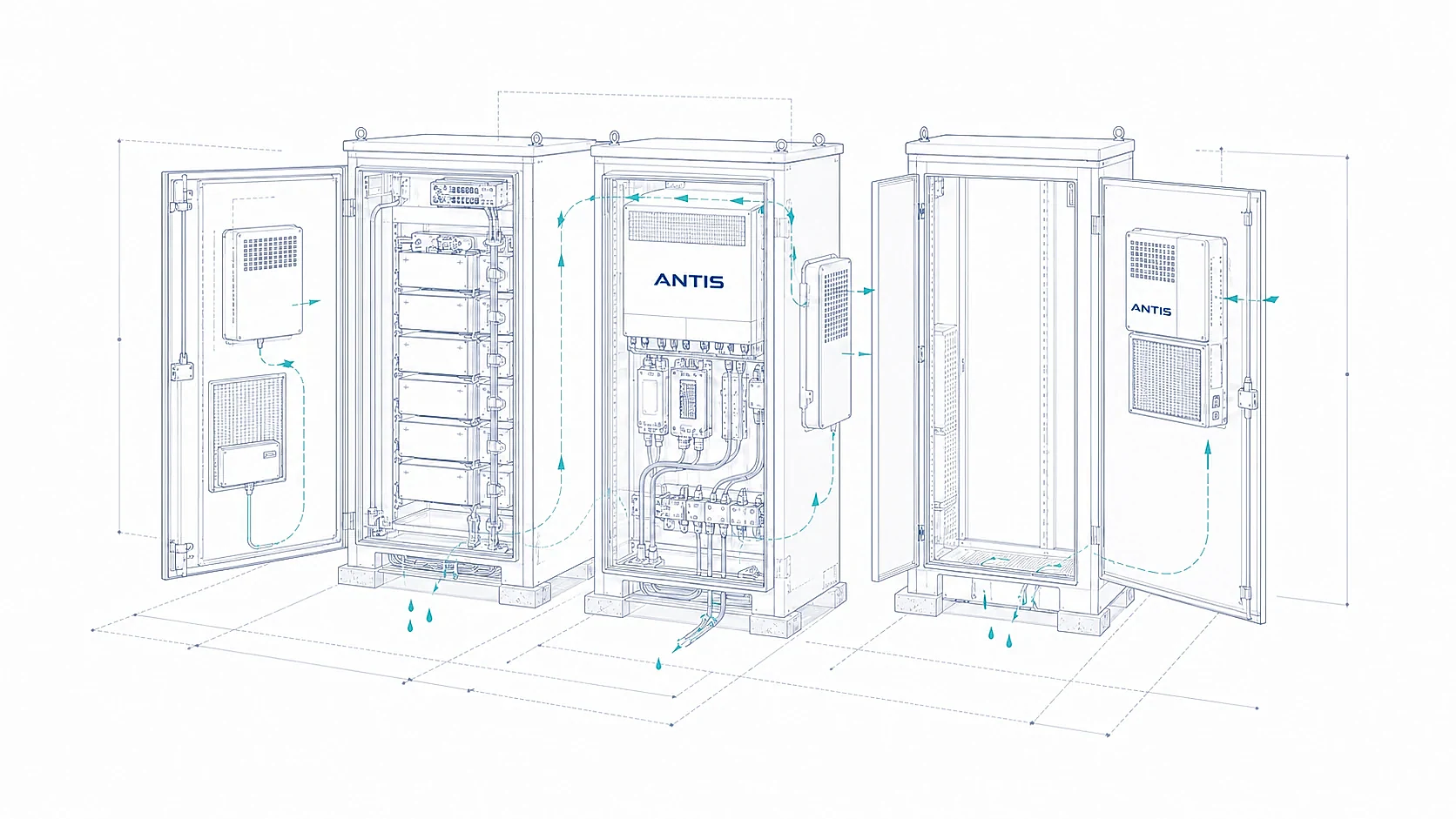
Electrical Cabinets and Switchgear
Sealed electrical spaces with tight free depth, internal heat, and no obvious route for condensate.
03
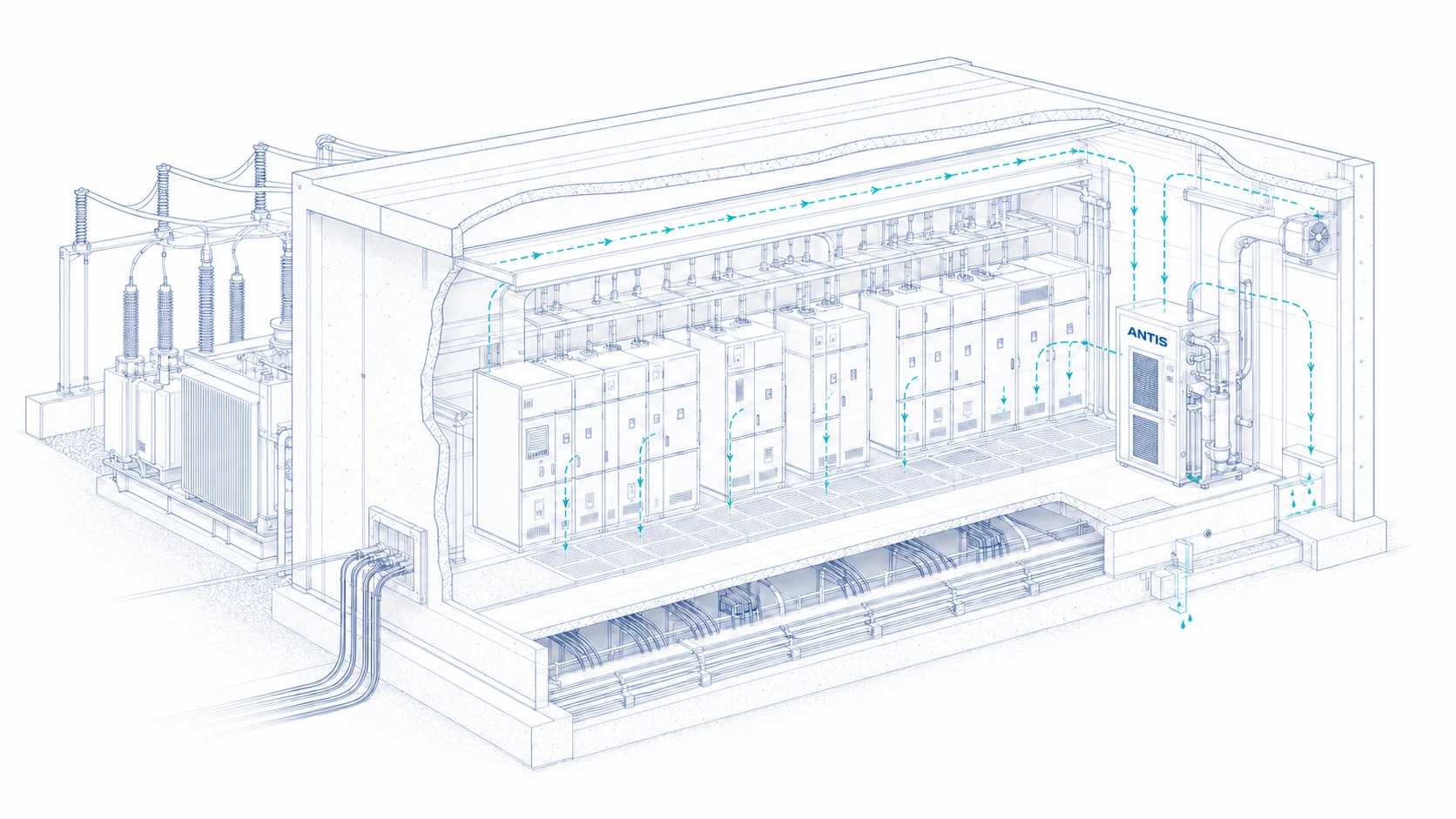
Power-Grid Environments
Substations, box transformers, and control cabinets, often above a cable trench that stays wet.
04
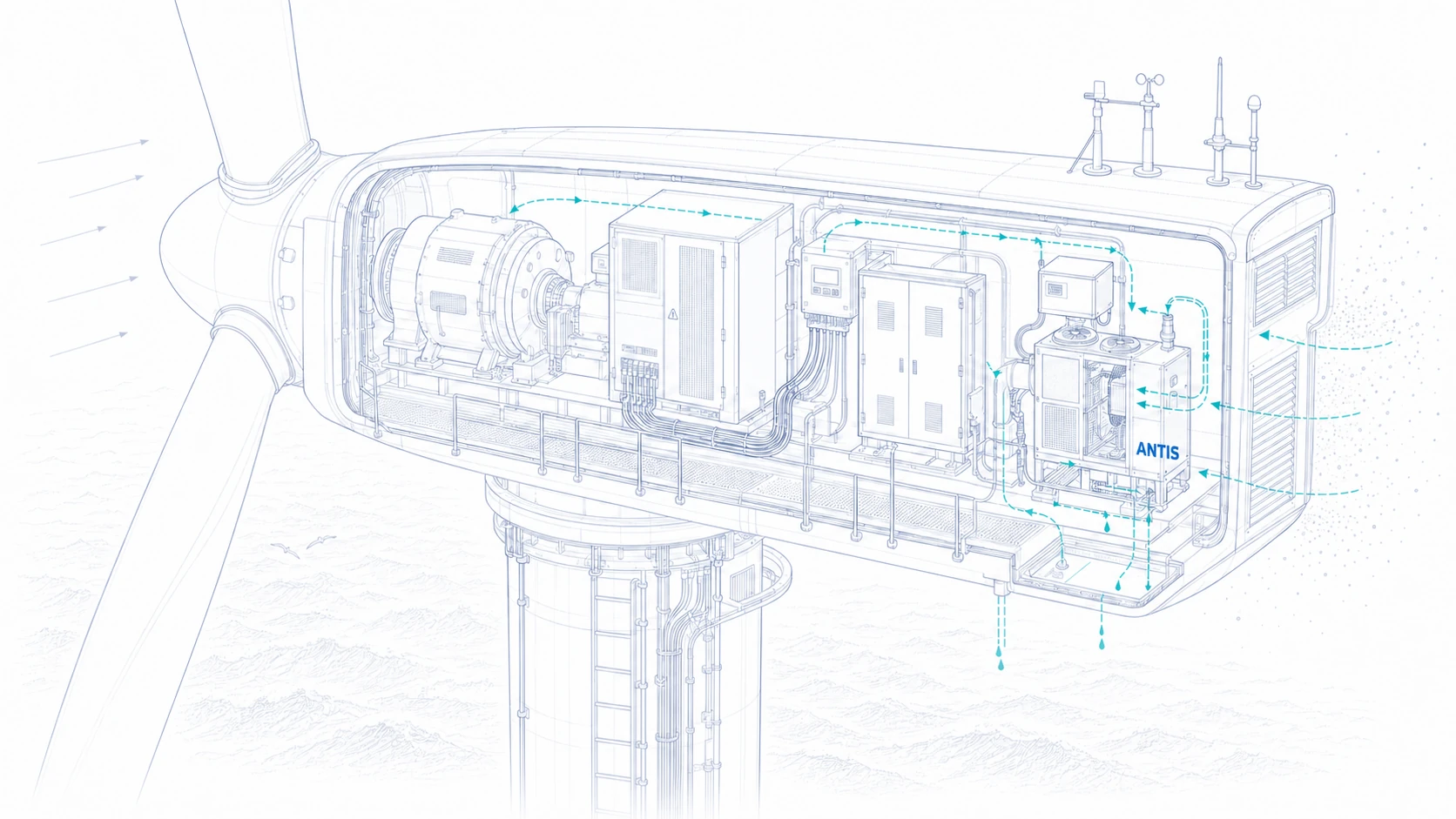
Wind-Power Equipment
Nacelles, towers, and converter cabinets — long service intervals, vibration, and salt air offshore.
05
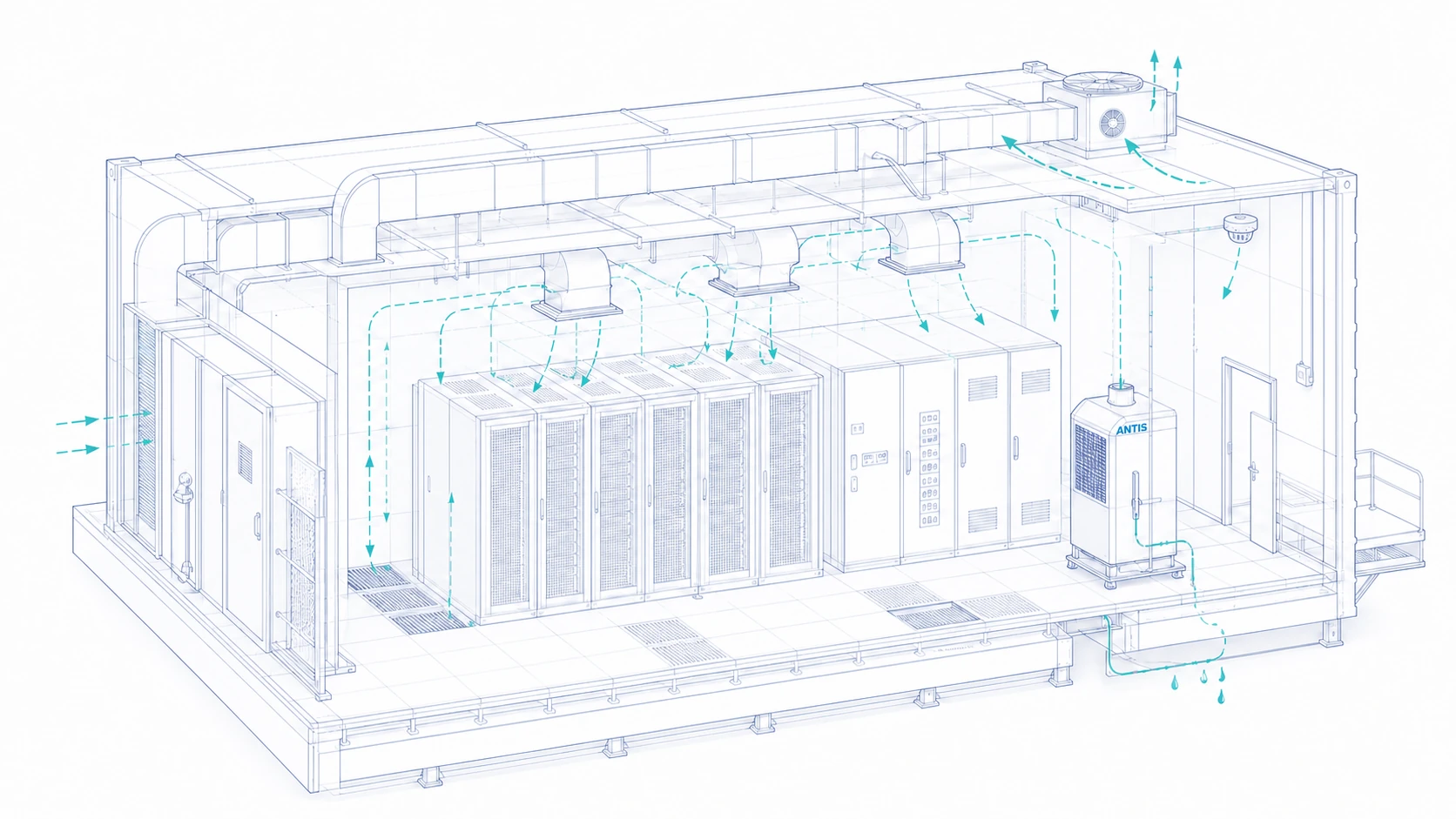
Data Centres and Technical Rooms
Server halls and technical spaces where moisture limits, filtration, and corrosion sit alongside the cooling design.
PRODUCT FAMILIES & TECHNOLOGIES
Four equipment routes, separated by enclosure and operating range
01
Energy Storage — Micro-Compressor
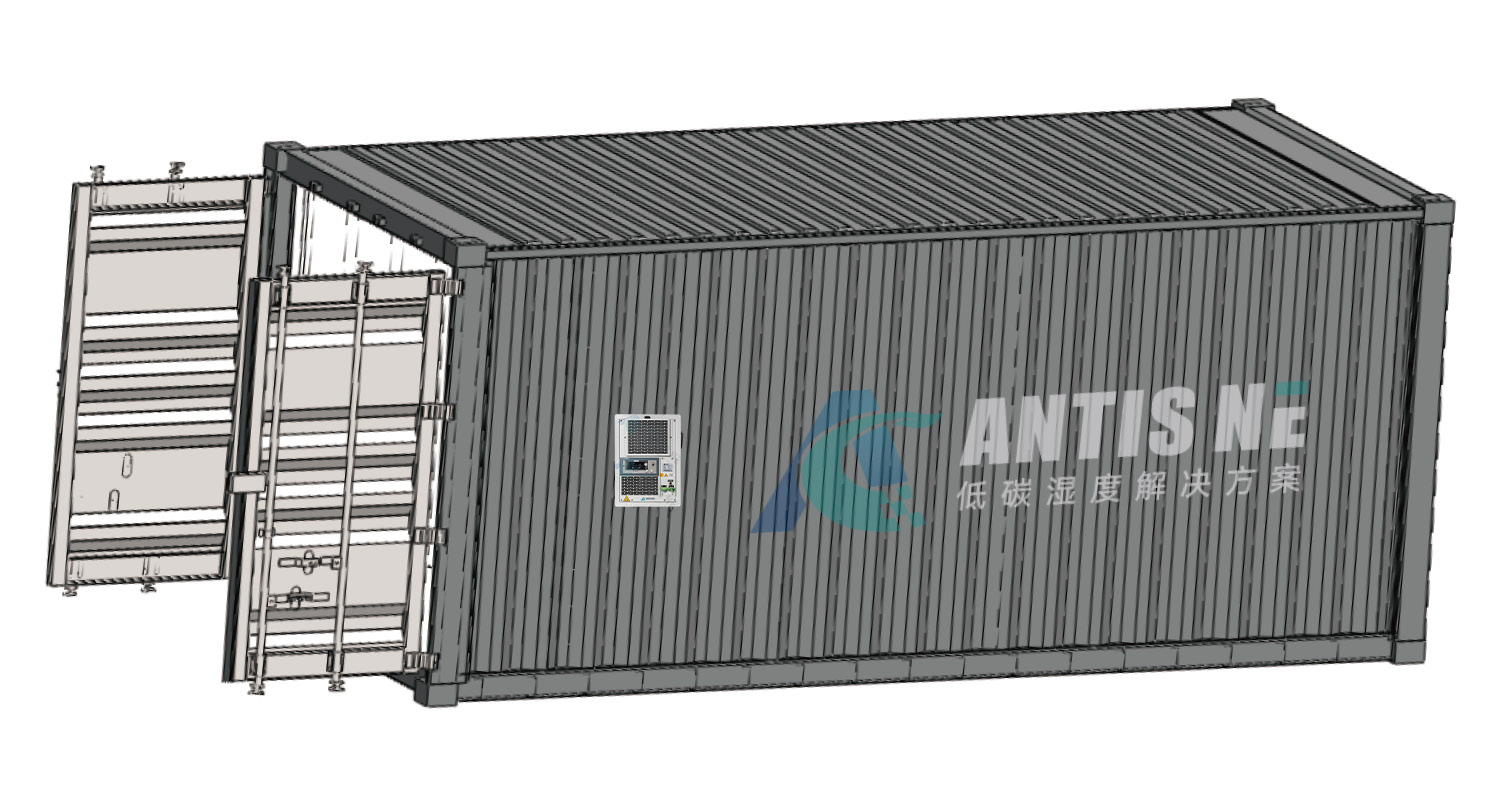
ADS-10D and ADS-10DW2 at 10 L/day for 20 ft containers, internally or externally mounted; ADS-100WB at 4–6 L/day in an ultra-slim door-mounted body rated for 60,000 hours. Both series are covered by our own patents.
View equipment options → 02Energy Storage — Semiconductor
ADS-500ML and ADS-1000ML for commercial and industrial cabinets and PCS enclosures, with RS485 communication, LED display, quiet fans, and conformal-coated boards.
View equipment options → 03Wind and Grid — Desiccant Rotor
Project-specific desiccant equipment for wind and grid environments, where low temperature or a lower dew-point target puts the duty outside what a refrigerant unit can deliver.
View equipment options → 04Data Centre and Industrial
Higher-capacity industrial equipment for data centres, larger technical rooms, and warehousing, where cabinet-scale products cannot match the total moisture load.
View equipment options →ENGINEERING SUPPORT
What ANTIS builds in-house
Four things are our own work rather than bought in: a PPX super silica gel rotor that outperforms conventional PPS media, internal variable-frequency fans that adapt to enclosure volume and duct length, control boards with automatic memory, self-diagnosis and automatic defrost, and dual-rotor compressors paired with hydrophilic finned coils and U-shaped air paths. Building these ourselves is what makes an adapted configuration possible at all — a bought-in module cannot be reshaped to fit a 60 mm door cavity or a nacelle service interval.
Mounting position and cabinet interface
Air inlet, outlet, and circulation arrangement
Power, drainage, and condensate handling
Sensors, setpoints, alarms, and fault signals
Communication and external controls
Materials, components, labels, and documentation
Sample, pilot, and repeat-deployment configuration
TESTING & VALIDATION
Our own enthalpy-difference laboratory and salt-spray chamber
Dehumidification output is measured in our own enthalpy-difference laboratory, built in-house, before a model reaches production — so a published capacity is a number we produced ourselves rather than a supplier claim. Corrosion resistance is tested in our own salt-spray chamber, with CNAS-accredited salt-spray reports for filters and anti-corrosion components. That evidence is what lets a coastal or offshore project specify a model instead of hoping it survives.
- Dimensions and installation interfaces
- Electrical and control functions
- Drainage and moisture-removal operation
- Alarm and communication functions
- Run testing under agreed conditions
- Documentation and configuration review
- Additional project-specific checks where agreed
FIELD PROJECTS
Equipment already running in the field
At a coastal energy-storage site in Zhuhai, one ADS-10D replaced four semiconductor units and took the container from saturated to stable dry conditions in three to four hours. Offshore wind projects in Guangdong run salt-spray-resistant ADS-500M units. A China Energy Investment Group wind farm operates custom anti-salt-spray desiccant equipment — one unit in the nacelle, two in the tower — continuously in high-humidity, high-salt air. CRRC specified compact ANTIS-built units inside energy-storage cabinets for condensation control.
SELECTED CUSTOMERS
Customers across energy storage and wind power
Selected customers across energy storage, wind turbine manufacturing, and wind-power operations.
Energy storage






Wind turbine manufacturers
Wind-power operators and service market

PROJECT START
Tell us what the enclosure has to protect — we will take it from there
Send the enclosure type, dimensions, ambient and internal temperature range, current humidity, target conditions, heat sources, installation, power, drainage, controls, communication, quantity, and schedule.
Discuss an Energy Project