
There is no single drying time for “drywall.” Newly applied joint compound must reach the condition required for the next coat or finish; gypsum board wetted by a leak first needs a water-source and contamination assessment. Chemical set, evaporation from a compound coat, and drying a wall cavity are different decisions. This guide shows how to choose the right check before coating, repairing or replacing material.
First Identify What Is Wet
| Situation | Main question | Readiness decision |
|---|---|---|
| New drying-type joint compound | Has each coat dried under the actual room conditions? | Follow the product instructions and allow the coat to dry before covering or sanding |
| New setting-type compound | Has the specified chemical set occurred, and is it dry for paint? | The next coat may be possible after set where the instructions allow; paint still requires dryness |
| Board wetted by a clean leak | Is the source stopped, the board sound and the cavity accessible for assessment? | Check for swelling, seams, hidden wet material and an appropriate drying plan |
| Flood, sewage, chemicals or visible mold | What exposure and material-removal controls are needed? | Do not use a finishing-compound clock as a salvage or safety test; obtain qualified assessment |
A stain, a cool surface, a lighter color or a room relative-humidity reading cannot by itself certify that a compound layer or concealed wall assembly is dry. A material measurement must fit the material and purpose; record the location, instrument and conditions so follow-up readings are comparable.
New Joint Compound: Set Is Not the Same as Dry
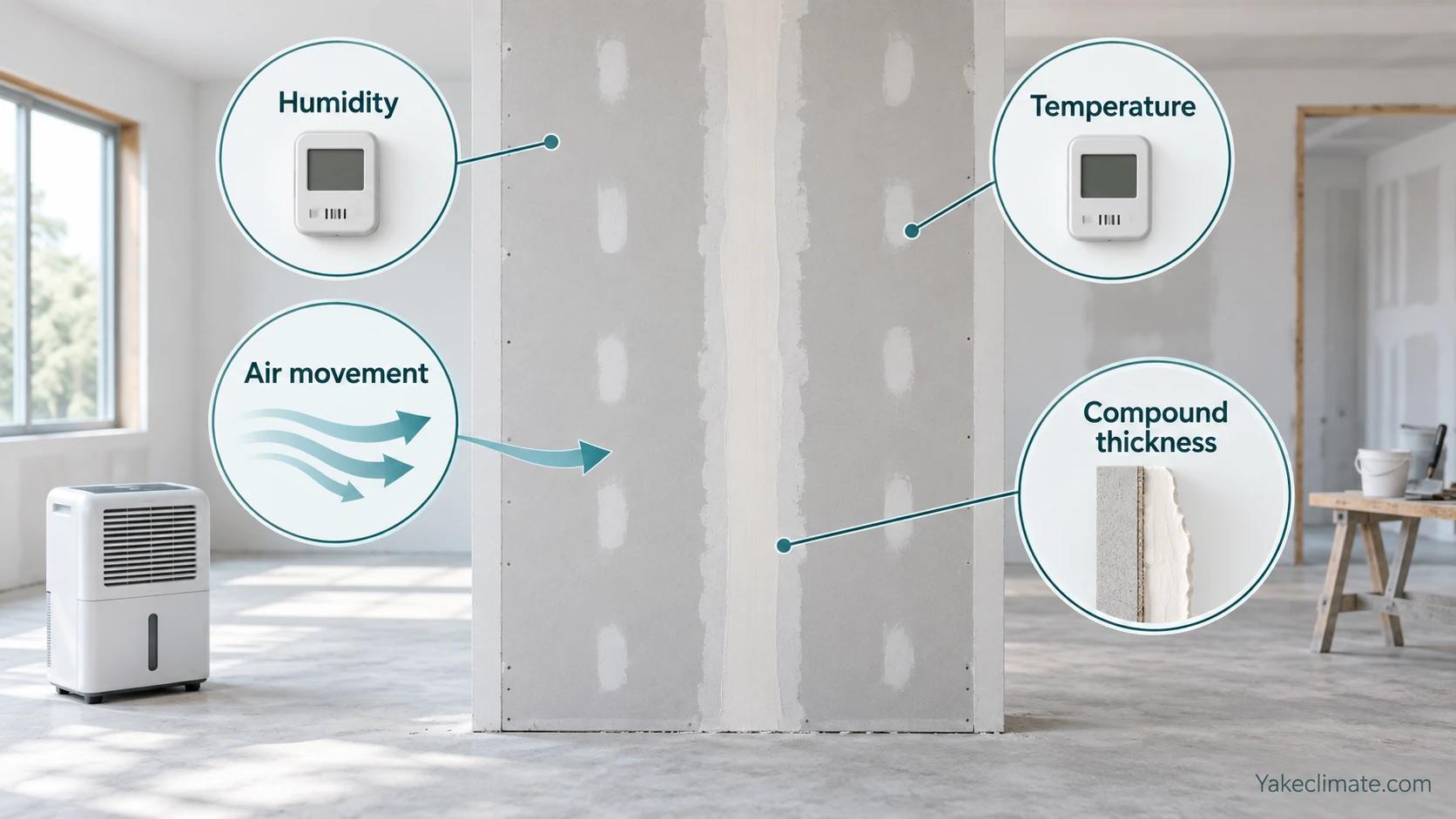
Drying-type joint compound loses water by evaporation. Coat thickness, temperature, humidity and air exchange affect the waiting time. The Gypsum Association advises allowing each coat to dry thoroughly in wet or humid weather before adding another coat. A product label and site conditions take precedence over a generic “24-hour drywall” rule.
Setting-type compound hardens by chemical reaction. A named setting time is not the same as permission to paint a damp surface. In its guidance for repair of joint ridging, the Gypsum Association says a setting-type coat must be set before the next coat and dry before painting; it refers users to the manufacturer for setting times. The same repair guidance gives at least 24 hours for a drying-type coat in that specified repair procedure. It is an example of a defined application, not a universal time for every board, product or climate.
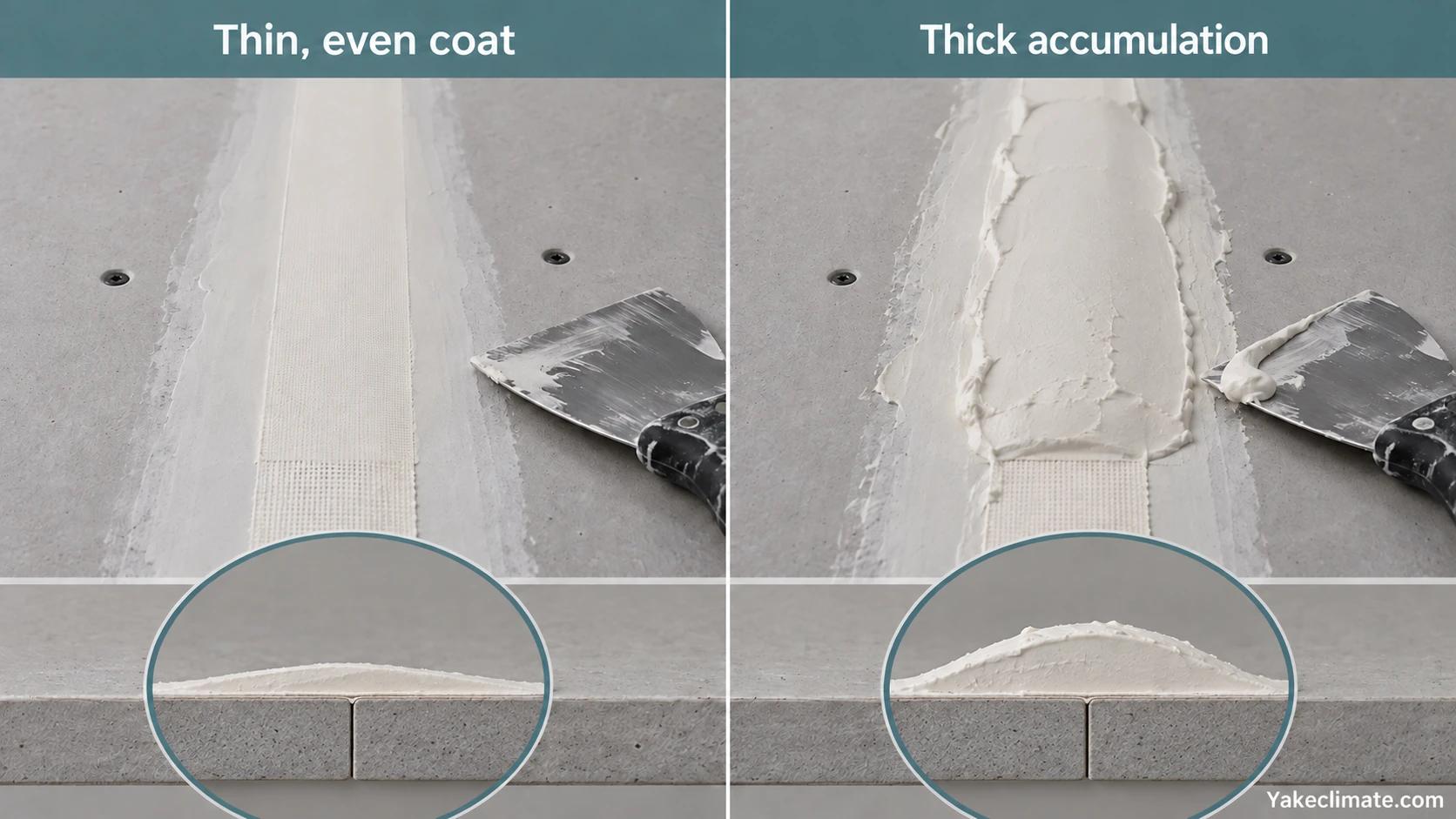
Spread compound in the layer thickness and sequence specified by its manufacturer. A thick accumulation retains more water than a thin, even coat. Before sanding, priming or covering a coat, check the applicable product instructions and inspect the full treatment area rather than the easiest exposed patch.
Control the Room Without Creating a Finish Defect
Cold, humid conditions slow evaporation; an excessively hot or dry local draft can cause cracks or edge defects. Gypsum Association GA-236 warns against rapid air movement over wet joints and direct heater discharge onto wall surfaces. It also notes that some temporary heaters add water vapor unless ventilated properly. Use ventilation, heat or dehumidification only within the compound manufacturer’s environmental and safety instructions, and check whether incoming air is wetter or drier than the room air.
Gypsum Association GA-236-2000: joint treatment under hot, cold, humid and dry conditions.
A dehumidifier can lower room-air moisture when ventilation and the enclosure make that useful. It does not set a chemical compound, dry an inaccessible cavity by itself, or guarantee a coating outcome. Avoid treating 25%, 30–50% or any other fixed room RH as a universal drywall pass mark; the assembly, compound and finish system determine the relevant conditions.
Water-Damaged Board: Decide Whether Drying in Place Is Appropriate
Stop the leak and assess electrical, structural and contamination hazards before using fans, heat or dehumidifiers. The EPA says drywall affected by clean water may be dried in place if there is no obvious swelling and the seams are intact; otherwise removal is necessary. The wall cavity is difficult to dry and needs access or ventilation if the board is retained. That guidance is for clean-water damage and does not authorize drying sewage- or chemically contaminated board in place.
After flooding or substantial wetting, check insulation, framing, cavities, coatings and neighboring materials. If water is contaminated, mold is visible or an unsafe system is involved, use qualified remediation and the appropriate protection plan. Do not run a fan through visible mold or assume a 24–48-hour urgency goal means that all board is salvageable at that hour. The related damage-restoration guide covers broader cleanup and professional-intervention decisions.
US EPA flooded-home guide: safe entry, mold precautions and repair sequence.
Related guide: water and mold damage cleanup and when to call professionals.
A Practical Readiness Record
- Identify whether the job is compound finishing or water-damage restoration; record the product or board system and the water source.
- For new compound, record layer type, application time, room conditions, manufacturer instructions and the check required before the next coat, sanding or paint.
- For wet board, record contamination assessment, swelling and seam condition, cavity access, affected materials, measurement locations and the repair or replacement decision.
- Recheck after conditions change. A single surface touch, color change, room RH number or fixed countdown is not a documented completion criterion.
Yakeclimate supplies industrial dehumidification equipment. A product selection for a construction or restoration site requires the project load, electrical and drainage conditions, safety assessment and a material-specific completion criterion; this article does not represent a Yakeclimate site test or restoration-service guarantee.
Sources and Scope
Gypsum Association GA-236-2000: Joint Treatment Under Extreme Weather Conditions.
Gypsum Association GA-221-14: Repair of Joint Ridging.
US EPA: Mold Course Chapter 4, including clean-water drywall decisions.
FAQ
Frequently Asked Questions
How long does a new coat of drywall mud take to dry?
There is no universal time. Drying-type compound depends on layer thickness and actual temperature, humidity and air exchange; follow the product instructions and confirm each coat is dry before the next finishing step. A named setting time for setting-type compound is a separate condition.
Can I paint immediately after setting-type compound has set?
No. Setting may permit a next compound coat where the manufacturer allows, but the repair must be dry before painting. Follow the compound and paint-system instructions.
Should I use a fan or heater to make joint compound dry faster?
Avoid a strong draft or direct heater discharge onto wet joints because rapid local drying can cause cracking. Use only conditions allowed by the compound manufacturer, and manage moisture safely; some temporary heaters add water vapor.
Can leak-damaged drywall be dried in place?
For clean-water damage, EPA says it may be possible if the board has no obvious swelling and the seams remain intact, provided the wall cavity can be assessed and dried. Contamination, visible mold, damage or inaccessible wet materials can change the decision.
Does a light color or low room humidity prove drywall is dry?
No. Surface appearance and room RH do not establish the condition of a compound layer or concealed assembly. Use the relevant product and material criteria, appropriate measurements and comparable inspection records.
Is every board dry or safe after 24 to 48 hours?
No. That interval is an urgency target in cleanup guidance, not a universal dry, salvage or safety threshold. The water source, contamination, material condition and cavity access govern the next step.

