
Engineering & Co-Development
Develop Equipment Around Real Application Requirements
We co-develop application-specific dehumidification equipment around the operating conditions, interfaces, and integration requirements of the wider project or system.
The result may be a standard model, an adapted configuration, low-humidity equipment, or a co-development project with agreed technical requirements and deliverables.
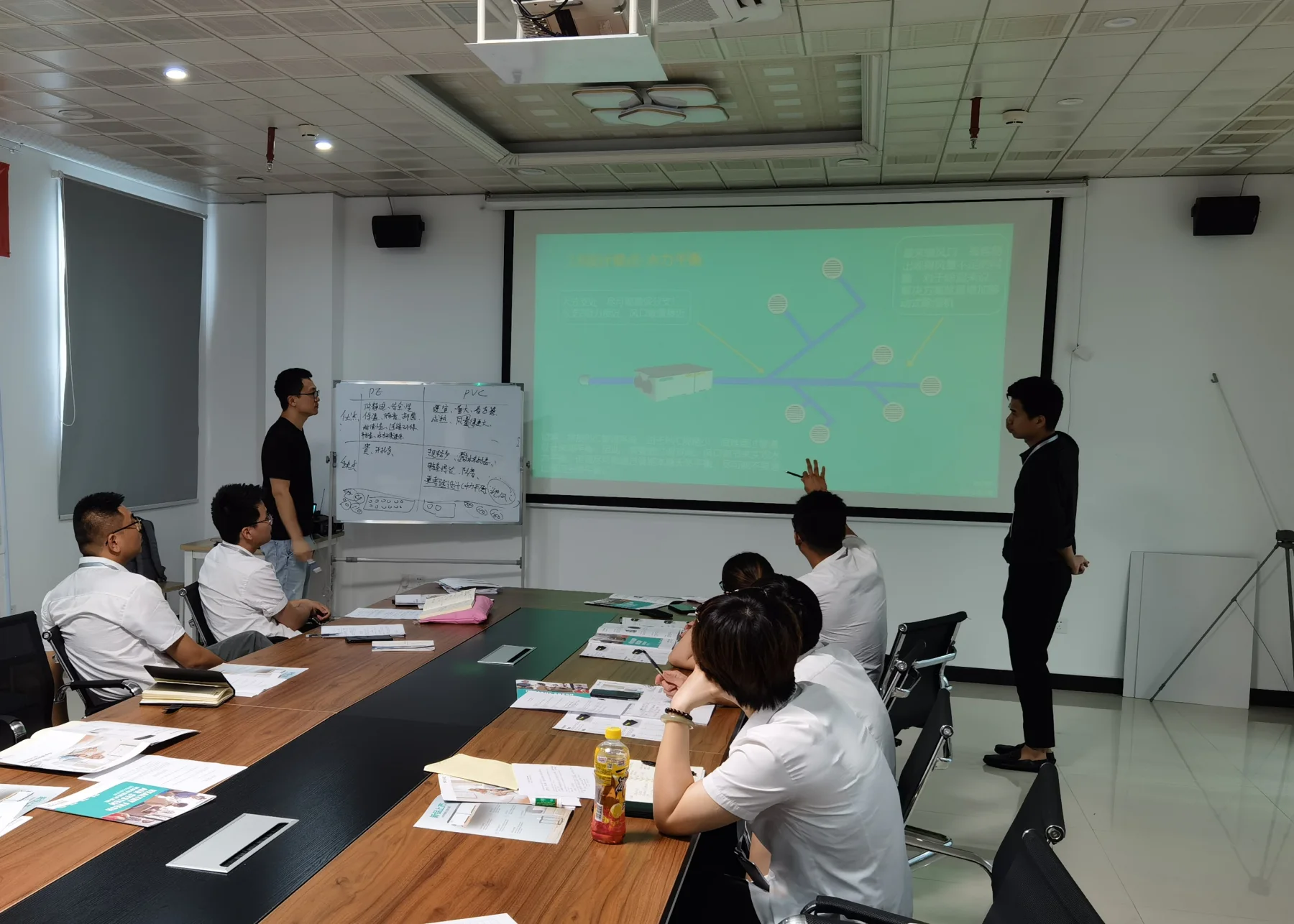
Application review before equipment selection. Project conditions, interfaces, and responsibilities are clarified before the configuration is fixed.
START WITH THE APPLICATION
Engineering decisions begin with the environment around the equipment
The same room size can create different moisture-control requirements when temperature, ventilation, product load, enclosure leakage, operating schedule, and target humidity change.
01
Agriculture and Controlled Environments
Review crop conditions, ventilation, condensation, air distribution, and the operating pattern of the growing environment.
Explore YAKE Agriculture → 02Energy and Electrical Environments
Review enclosure limits, dew-point risk, heat load, controls, service access, and repeated deployment requirements.
Explore ANTIS Energy → 03Industrial and Commercial Applications
Review the process, room conditions, installation constraints, and the equipment needed to maintain the target conditions.
Explore Equipment Families →ENGINEERING REVIEW DETAILS
Review project conditions before comparing equipment
The more we know about where moisture comes from and when it peaks, the faster we can rule equipment in or out — before anyone talks about model numbers.
01
Operating conditions: Temperature, humidity, seasonal variation, moisture sources, and operating schedule.
02
Moisture and airflow: Fresh air, infiltration, pressure, air distribution, and the expected moisture load.
03
Space and utilities: Available space, service access, ductwork, power, drainage, and mounting constraints.
04
Controls and interfaces: Sensors, setpoints, alarms, communication, monitoring, and third-party responsibilities.
EQUIPMENT OPTIONS & SIZING
Compare the moisture-removal method before finalizing capacity
Capacity is reviewed together with moisture load, airflow, operating range, redundancy, installation form, and the control strategy required by the wider project.
Refrigerant Dehumidification
A practical option where temperature conditions support condensation-based moisture removal and stable drainage.
Desiccant Dehumidification
Relevant for lower humidity, lower dew point, low-temperature operation, or stable dry-air delivery.
Compact and Application-Specific Equipment
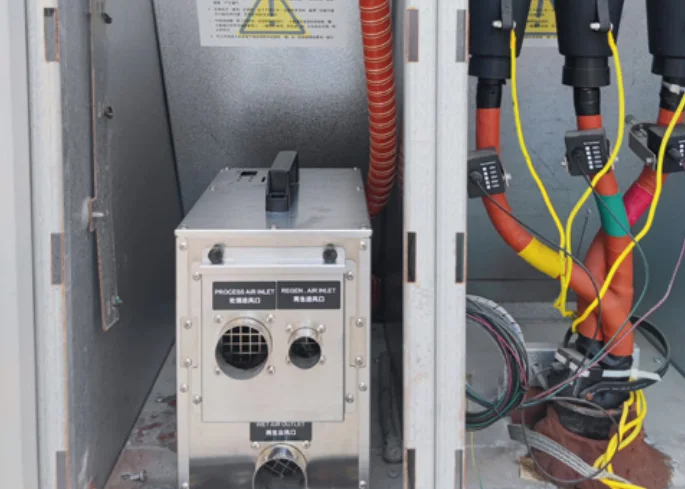
For cabinets, enclosures, ceiling spaces, and installations shaped by mounting, airflow, drainage, or control limits.
ADAPTATION & CO-DEVELOPMENT
Adapt the equipment where the standard configuration does not fit
Scope is confirmed project by project. Each adaptation should have defined requirements, review points, expected outputs, validation methods, ownership, and change-control rules.
- Cabinet, frame, panel, and installation adaptation
- Air inlet, outlet, and duct connection changes
- Power, drainage, and service-access changes
- Sensor, controller, alarm, and communication interfaces
- Material and component review for the application
- Documentation and repeat-order configuration
- Prototype, sample, or pilot-unit preparation where agreed
CONTROLS & SYSTEM INTERFACES
Confirm interfaces with the surrounding project
A useful interface discussion identifies what the equipment reads, what it controls, what it reports, and which party is responsible for each connection.
01 / CONTROL Operating logic and sensors
Setpoints, sensor type and position, start and stop logic, alarms, and fault handling.
02 / COMMUNICATION Signals and data
Dry contacts, protocol requirements, remote monitoring, and the data needed by the wider system.
03 / RESPONSIBILITY Interface ownership
Third-party controllers, wiring boundaries, commissioning requirements, and project-side responsibilities.
PROJECT WORKFLOW
Move from requirement review to a controlled technical decision
46+ patents support Yakeclimate’s product and application development. The practical value is expressed through a review process that uses project requirements to define equipment that can be manufactured.
Clarify the application
Collect the operating conditions, target, installation limits, quantity, schedule, and market requirements.
Select suitable equipment
Compare technology, capacity, installation form, controls, and open technical questions.
Confirm scope and deliverables
Define the model or adaptation scope, drawings, sample needs, documents, testing, and responsibilities.
Build, validate, and review
Complete the agreed manufacturing and validation steps and control changes before repeat delivery.
FROM ENGINEERING TO VALIDATION
Carry technical decisions into manufacturing and validation
A workable equipment plan should lead to clear production information, inspection points, test requirements, documentation, and a repeatable configuration. This development work is backed by 46+ patents across humidity-control equipment.
TECHNICAL DISCUSSION
Bring us the operating conditions and the difficult constraints
Share the application, temperature, humidity target, moisture sources, airflow, installation space, power, drainage, controls, quantity, and project schedule.
Discuss a Technical Requirement