
Resources / Energy
Condensation and Humidity Control in Energy Storage and Electrical Enclosures
Guidance on dew point, condensation risk, compact installation, controls, and validation for battery energy storage, cabinets, containers, and switchgear.
Use these articles to assess condensation exposure inside an enclosure before selecting equipment or defining validation requirements.
In an enclosure, condensation is a reliability question before it is a comfort question. These resources connect ambient conditions, internal load, dew point, and equipment selection.
RESOURCE CATEGORIES
Move between resource groups and the related industry, product, or engineering page
01
Energy — ANTIS
Equipment and project support for battery energy storage, electrical cabinets, switchgear, and enclosed energy environments.
Open related page → 02Agriculture & Controlled Environments (69)
Application notes and selection guidance for greenhouses, indoor cultivation rooms, drying spaces, and storage environments where humidity affects the crop rather than the building.
Browse this category → 03Industrial Dehumidification (42)
Comparisons and engineering notes covering refrigerant, ceiling-mounted, desiccant, and low-dew-point equipment, and the operating conditions that decide between them.
Browse this category → 04Commercial & Building Moisture Control (19)
Practical guidance on condensation, water damage, drying, mold prevention, and equipment choices for commercial spaces and building moisture problems.
Browse this category → 05Humidification & Air Quality (4)
Technical articles on humidification, ventilation, filtration, humidity measurement, and how moisture control interacts with wider air systems.
Browse this category → 06Humidity Science & Engineering (15)
Explanations of relative humidity, dew point, condensation, moisture measurement, monitoring, and controls for industrial humidity-control decisions.
Browse this category → 07All Articles (180)
Every article in the library, newest first.
Browse this category →TECHNICAL ARTICLE LIBRARY
Search, filter, and continue from the topic relevant to your work
Each article has a clear place in the resource library and connects to relevant industries, product families, cases, and project support.
FIND THE RIGHT RESOURCE
Search article titles, summaries, categories, and technical topics.
Search across the resource library.
Central vs Cabinet-Level BESS Dehumidification
Compare dehumidification arrangements.
Cabinet Cooling: Compare the Air, Heat and Moisture Paths
Separate heat transfer from moisture control.
High-Altitude BESS Moisture-Control Review
Review humidity basis, airflow, performance and equipment suitability.
Seasonal Shutdown: Electrical Enclosure Moisture Records
Preserve shutdown evidence and unresolved gaps.
PCB Conformal Coating vs Cabinet Moisture Control
Review coating and cabinet conditions separately.
Continuous vs Demand-Controlled Dehumidification
Compare continuous and demand-controlled operation by identifying drying, circulation, measurement, runtime and energy evidence for the selected equipment.

Purge Air and Enclosure Moisture Control
An enclosure purge proposal review guide.
Membrane Vents and Enclosure Condensation
A guide to membrane vent limits and enclosure review.

Electrical Enclosure Corrosion Control: Humidity, Dew Point, and Salt-Air Risk
Electrical enclosure corrosion control starts with the environment around the enclosure and the air trapped inside it. Moisture, salt, pollution, temperature cycles and cold surfaces can create corrosion or condensation even when the enclosure itself is correctly specified.

Data Center vs BESS Humidity Control
Data-center humidity methods can inform BESS monitoring, zones and airflow, but BESS outdoor exposure, duty cycles and safety needs require their own environmental design.

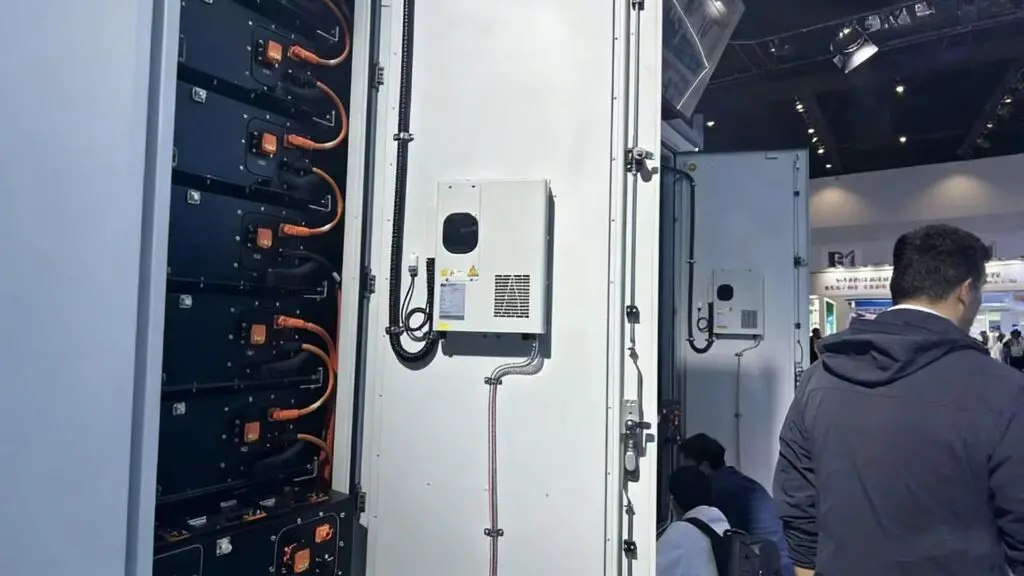
Electrical Cabinet Dehumidifiers: Selection and Drainage

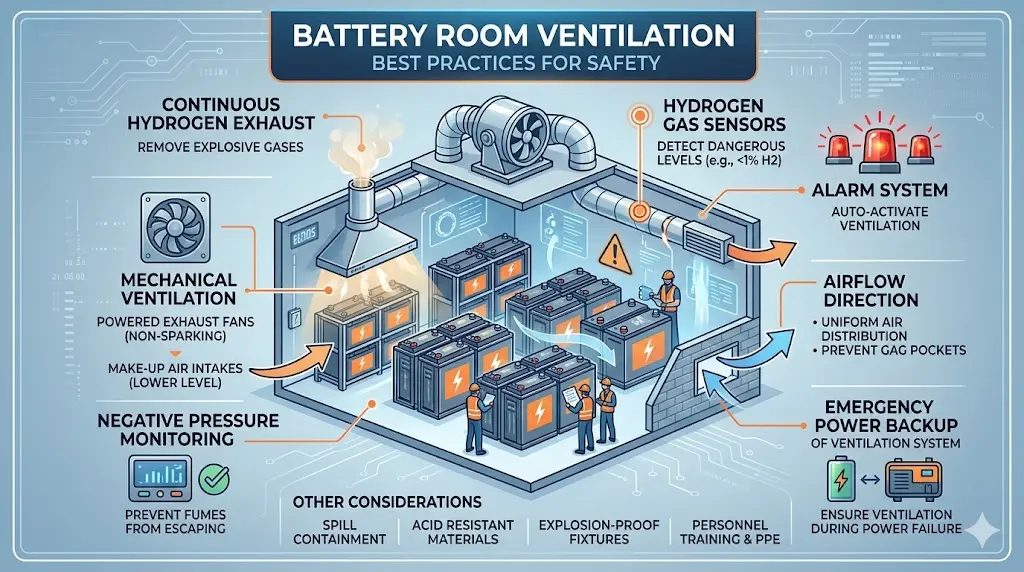
Battery Room Ventilation and Humidity Control: Two Jobs, Sized Separately
NO MATCHING RESOURCES
Try a broader term or describe the application differently.
Search by equipment type, humidity issue, industry, installation condition, or a technical topic.
APPLY THE INFORMATION
Need help applying an article to a real project?
Share the application, operating conditions, target, and installation limits. We can help identify the questions that matter before product selection or engineering review.
Discuss Your Requirement