
Resources / Energy
Condensation and Humidity Control in Energy Storage and Electrical Enclosures
Guidance on dew point, condensation risk, compact installation, controls, and validation for battery energy storage, cabinets, containers, and switchgear.
Use these articles to assess condensation exposure inside an enclosure before selecting equipment or defining validation requirements.
In an enclosure, condensation is a reliability question before it is a comfort question. These resources connect ambient conditions, internal load, dew point, and equipment selection.
RESOURCE CATEGORIES
Move between resource groups and the related industry, product, or engineering page
01
Energy — ANTIS
Equipment and project support for battery energy storage, electrical cabinets, switchgear, and enclosed energy environments.
Open related page → 02Agriculture & Controlled Environments (84)
Application notes and selection guidance for greenhouses, indoor cultivation rooms, drying spaces, and storage environments where humidity affects the crop rather than the building.
Browse this category → 03Industrial Dehumidification (42)
Comparisons and engineering notes covering refrigerant, ceiling-mounted, desiccant, and low-dew-point equipment, and the operating conditions that decide between them.
Browse this category → 04Commercial & Building Moisture Control (19)
Practical guidance on condensation, water damage, drying, mold prevention, and equipment choices for commercial spaces and building moisture problems.
Browse this category → 05Humidification & Air Quality (4)
Technical articles on humidification, ventilation, filtration, humidity measurement, and how moisture control interacts with wider air systems.
Browse this category → 06Humidity Science & Engineering (15)
Explanations of relative humidity, dew point, condensation, moisture measurement, monitoring, and controls for industrial humidity-control decisions.
Browse this category → 07All Articles (195)
Every article in the library, newest first.
Browse this category →TECHNICAL ARTICLE LIBRARY
Search, filter, and continue from the topic relevant to your work
Each article has a clear place in the resource library and connects to relevant industries, product families, cases, and project support.
FIND THE RIGHT RESOURCE
Search article titles, summaries, categories, and technical topics.
Search across the resource library.

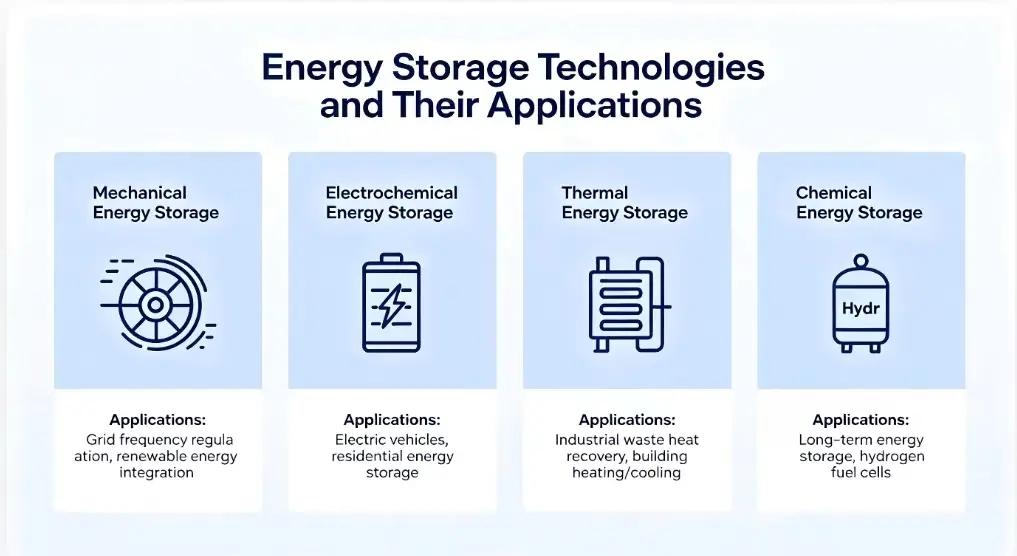
Energy Storage Technologies and Humidity Risks

How Cabinet Condensation Control Units Work
Understand cabinet water-removal mechanisms, drainage, airflow and the control functions to verify for the selected equipment.

Low-Temperature Desiccant Dehumidification for Wind and Substation Equipment
Wind turbines and substation equipment can face cold metal surfaces, humid air, repeated temperature changes and long periods with limited service access. In these conditions, the environmental-control question is not simply “how many litres per day?”

Air Leakage, Service Doors and Moisture Load in Sealed Enclosures
A sealed electrical enclosure is not automatically a moisture-free enclosure. Water vapour may be trapped during assembly, introduced when service doors open or exchanged through gaskets, cable entries, vents and pressure-equalisation devices.

Cable Trench Moisture and Condensation in Switchgear
A wet cable trench can supply both liquid water and water vapour to switchgear. If cable entries are open or poorly sealed, humid trench air can move into the cable compartment as temperature and pressure change. Condensation then appears on the coldest internal surfaces, even when the switchgear…

Sensor Placement for Dew Point and Condensation Monitoring
A humidity reading is only representative of the air around the sensor. It does not prove that every compartment, cable chamber or metal surface in a battery energy storage system is protected from condensation.

Charge and Discharge Cycles: Condensation Risk in BESS
Charge and discharge cycles do not create condensation by themselves. They change the heat released inside a battery energy storage system, the duty of its cooling equipment and the temperatures of walls, pipes, cold plates and electrical components. Condensation becomes possible when any of thos…

Why an IP-Rated Enclosure Can Still Condense
An IP-rated enclosure can still condense because ingress protection and condensation control are different design questions. IEC 60529 classifies how an enclosure protects against access to hazardous parts, solid foreign objects and water under specified conditions. It does not guarantee that eve…

Consistency Across Multiple Battery Cabinets: Controls, Alarms and Maintenance
A multi-cabinet battery energy storage system needs more than identical dehumidifiers. Consistency depends on using the same equipment definition, sensor basis, control states, alarm meanings, communication map, drainage arrangement, maintenance method and acceptance test.

Commissioning and Validation Checklist for BESS Humidity-Control Equipment
Commissioning a BESS humidity-control device means proving more than “the unit turns on.” The installed system must move air through the intended zone, remove moisture under the relevant condition, drain safely, report useful status and recover after a defined moisture event.

Condensate Drainage for Battery Cabinets and Containers
Condensate drainage is part of the dehumidifier installation, not an accessory decision to make on site. A correctly selected unit can still wet a battery cabinet if the tray is not level, the hose rises, the outlet freezes, the termination allows backflow, or the enclosure penetration is poorly…

Connecting Dehumidifiers to BMS and EMS
Connecting a dehumidifier to a BMS or EMS starts with a signal and data list, not with the phrase “RS485 required.” RS485 describes an electrical serial layer. It does not define the register map, alarm meanings, command authority, update rate or commissioning test.
NO MATCHING RESOURCES
Try a broader term or describe the application differently.
Search by equipment type, humidity issue, industry, installation condition, or a technical topic.
APPLY THE INFORMATION
Need help applying an article to a real project?
Share the application, operating conditions, target, and installation limits. We can help identify the questions that matter before product selection or engineering review.
Discuss Your Requirement