
Electrical enclosure corrosion control starts with the environment around the enclosure and the air trapped inside it. Moisture, salt, pollution, temperature cycles and cold surfaces can create corrosion or condensation even when the enclosure itself is correctly specified.
Electrical cabinets, BESS containers and coastal equipment rooms can combine humidity, cold surfaces and contamination. Review the environment alongside energy humidity control applications and the energy storage dehumidifier product family.
Separate Enclosure Rating From Condensation Risk
An enclosure rating describes ingress protection boundaries. It does not guarantee that humid air inside the enclosure will never reach a cold surface or that moisture will never enter through conduit, service openings or maintenance events.
UL 50E describes enclosure construction requirements and also states boundary exclusions around internal condensation, icing, corrosion or contamination from openings such as conduit. Use that distinction when discussing corrosion risk.
Compare Dew Point With the Coldest Surface
Condensation forms when humid air contacts a surface below its dew point. For an electrical enclosure, the critical surface may be a metal wall, a terminal, a cold cabinet area or a component near outdoor air exposure.
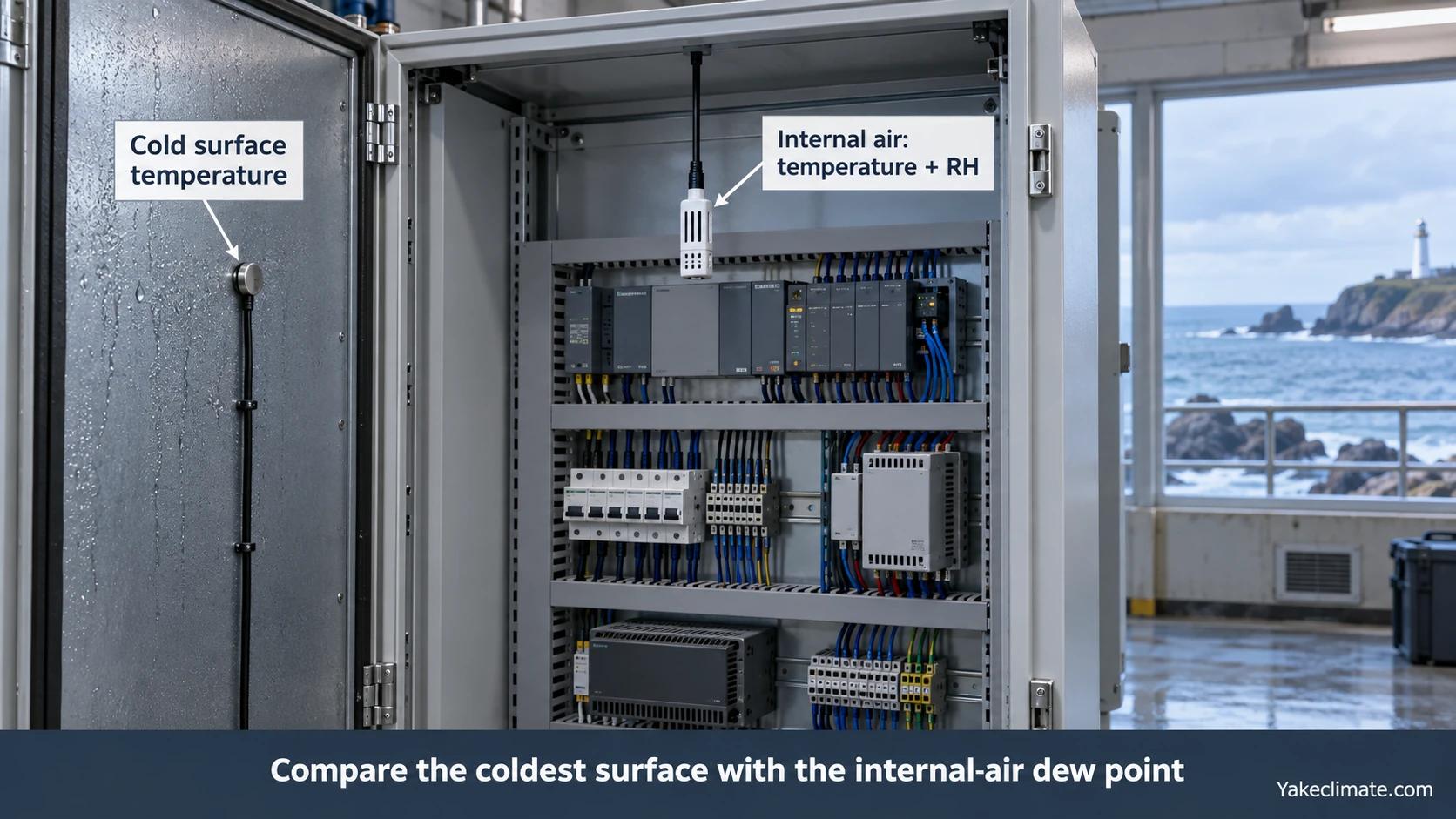
Use the dew point calculator to frame the discussion, then confirm the real surface temperature and environmental profile with the project team.
| Input | Reason |
|---|---|
| Ambient temperature and RH | Defines the moisture state of surrounding air. |
| Internal heat load | Changes cabinet temperature and cycling. |
| Coldest surface | Determines condensation margin. |
| Air exchange | Moves humid or salty air into the enclosure. |
| Salt exposure | Raises corrosion concern even with small amounts of moisture. |
Account for Salt Air and Polluted Atmospheres
Coastal and industrial atmospheres can make moisture more aggressive. Salt and pollutants on surfaces can accelerate corrosion when humidity rises or when condensation appears.
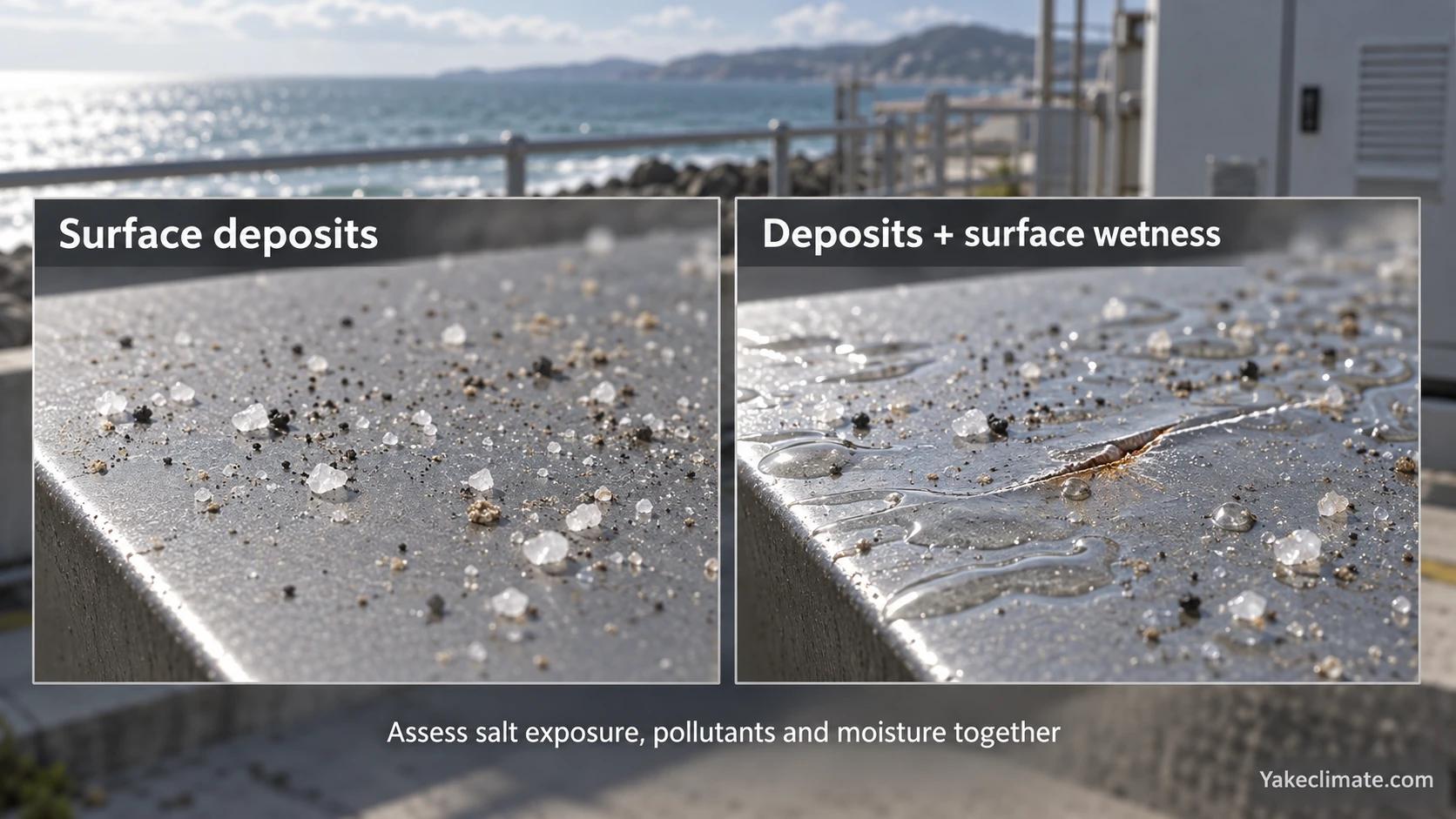
ISO 9223 identifies temperature-humidity effects, sulfur dioxide pollution and airborne salinity as key factors in atmospheric corrosivity. This supports a risk-based project review instead of a single humidity number.
Choose a Moisture-Control Method for the Risk Level
Heaters can raise surface temperature. Ventilation can dilute internal air when outdoor air is suitable. Dehumidification removes moisture from air at its available capacity; it does not remove the source load. Sealing, material selection, coating, drainage, monitoring and maintenance may still be required.
See the PCB coating and cabinet moisture control comparison.
For cold or low-dew-point electrical scenarios, connect this decision to low-temperature desiccant dehumidification for wind substations, commercial desiccant dehumidifier selection and the refrigerant vs desiccant selection guide.
Measurement and Design Responsibilities
ASHRAE psychrometrics explains moist-air properties and dew point. NIST humidity calibration services describe measurement and calibration considerations.
Humidity control remains one part of the enclosure design. Define environmental conditions alongside electrical design, material selection, safety requirements and the applicable compliance review.
Prepare a Comparable Equipment Request
Include the enclosure exposure, relevant cold-surface condition, moisture sources and required environmental outcome. Separate measured values from estimates so suppliers can state which assumptions affect their proposed duty.
Add the permitted air exchange, power and installation limits, drainage route, alarms and maintenance access, plus the required RH or dew-point outcome. Keep the design conditions and responsibilities attached to the proposal when configurations change.
FAQ
Frequently Asked Questions
Does an IP-rated enclosure prevent condensation?
No. An ingress rating does not automatically remove internal condensation risk when humid air reaches a cold internal surface.
What causes corrosion inside an electrical enclosure?
Moisture, surface wetness, airborne salts, pollutants, temperature cycling and material selection all contribute to corrosion risk.
Is a heater enough to prevent electrical cabinet condensation?
A heater can keep surfaces warmer, but it does not remove moisture. It should be evaluated with dew point, sealing, ventilation and energy use.
When is dehumidification useful for electrical enclosures?
It is useful when the project needs to remove moisture from the surrounding or internal air and the available removal capacity is adequate for the incoming moisture load under the project conditions. Source control, sealing and salt/material controls remain necessary.
Next Step
Send the enclosure location, ambient humidity, cold-surface risk, salt-air exposure and alarm requirements through the contact page. Yakeclimate can review whether energy storage dehumidifier equipment or another moisture-control method fits the duty.
