
1. The Requirement Comes First
Dew point is the temperature at which air becomes saturated and water starts to condense. Moisture load is the rate of water vapour entering a space from ventilation, processes, materials, or people.
| Industry | Main moisture risk | Typical control target | Equipment direction |
|---|---|---|---|
| Food and beverage | Mould, spoilage, corrosion, condensation | Product- and zone-specific RH or dew point | Compare equipment at the actual cold-store inlet and target |
| Pharmaceutical | Product degradation, process repeatability | Product- or process-specific RH or dew point; cleanroom class alone does not set it | Select from target, inlet state and verified equipment data |
| Museums and archives | Mould and material deterioration | Collection- and building-specific temperature/RH range and allowed variation | Humidification and/or dehumidification if the conservation plan requires |
| Electronics and IT | Condensation and corrosion on equipment | Dew point referenced to cold surfaces | Enclosure and room units |
| Storage and warehousing | Mould, mildew, packaging damage | Goods- and packaging-specific condition | Select after actual moisture loads and delivery requirements are defined |
| Hospitality and indoor pools | Condensation, corrosion, comfort | Dew point and evaporation control | Pool-hall dehumidifiers with reheat |
| Agriculture and greenhouses | Crop disease, condensation, transpiration load | VPD or dew point by stage | Refrigerant or desiccant by temperature |
| Energy storage and electrical | Condensation, corrosion, insulation failure | Dew point referenced to coldest surface | Enclosure and container units |
2. Food and Beverage
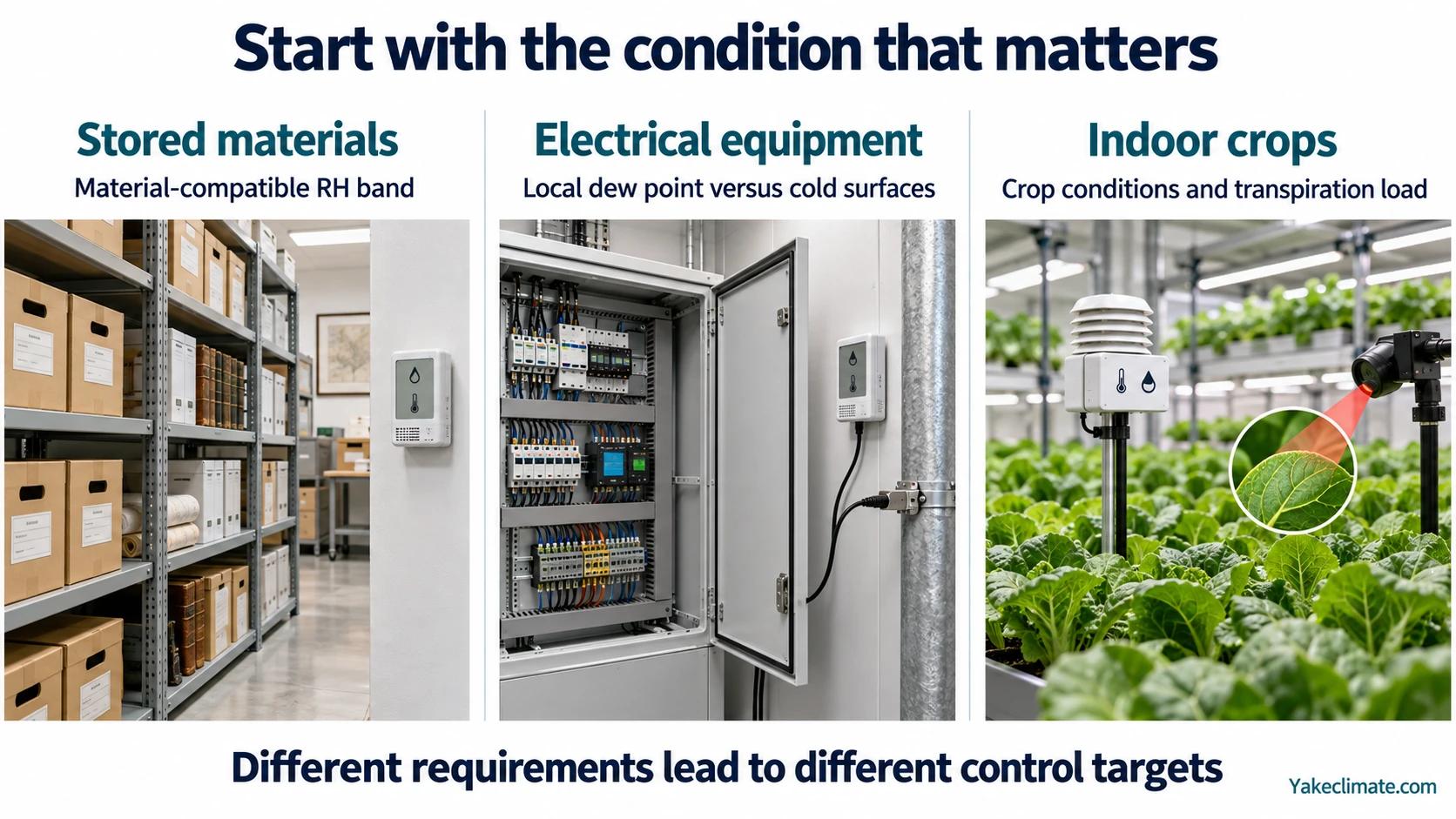
Humidity can contribute to mould, spoilage or corrosion risk, but the acceptable condition depends on the product and process. Define the required band and moisture load before selecting equipment. In cold rooms, compare the actual entering condition and target before choosing a technology; do not infer the answer from the industry label alone.
3. Pharmaceutical and Medical
Pharmaceutical manufacturing operates under regulatory and process controls. A cleanroom classification describes particle cleanliness; it does not by itself prescribe a low dew point. The moisture target comes from the product, process, materials and applicable requirements, and the equipment team designs to that target.
4. Museums and Archives
Preserving artefacts, artwork and documents depends on the collection's material risks and the environment in which it is stored or displayed. Define the conservation requirement and tolerance for the specific collection; some projects may require coordinated humidification and dehumidification, while others may not.
5. Electronics, IT, and Energy Storage
Excessive humidity risks condensation on cold surfaces, corrosion at connectors and terminals, and insulation failure. Server rooms, switchgear, and battery enclosures are protected by keeping the local dew point below the coldest relevant surface. For compact enclosures, this is a boundary problem: sealing, drainage, and local equipment matter as much as capacity.
6. Storage and Warehousing
Warehouses protect inventory against mould, mildew and packaging damage. Set the target condition from the goods, packaging and applicable storage requirements. Quantify ventilation, infiltration, door-opening and product or process moisture loads for the actual schedule and indoor/outdoor air states; no single source is always dominant.
7. Hospitality and Indoor Pools
Indoor pools generate a continuous evaporation load. Condensation on windows and structure, corrosion, and occupant comfort all depend on controlling the dew point. Pool-hall dehumidifiers remove the moisture load and reheat the air to avoid overcooling, which is why the equipment is specified for the evaporation rate, not the room volume.
8. Agriculture and Controlled Environments
Greenhouses and indoor farms manage humidity around crop, surface and process conditions. Transpiration contributes to the moisture load, while condensation on cold surfaces is a separate dew-point problem. See agriculture humidity control.
9. Energy and Electrical Environments
Battery rooms, containers, switchgear, and substations face condensation and corrosion risk. Ventilation for safety may add a large moisture load, so the two functions must be coordinated, as set out in battery room ventilation and humidity control.
10. Choosing the Right Equipment
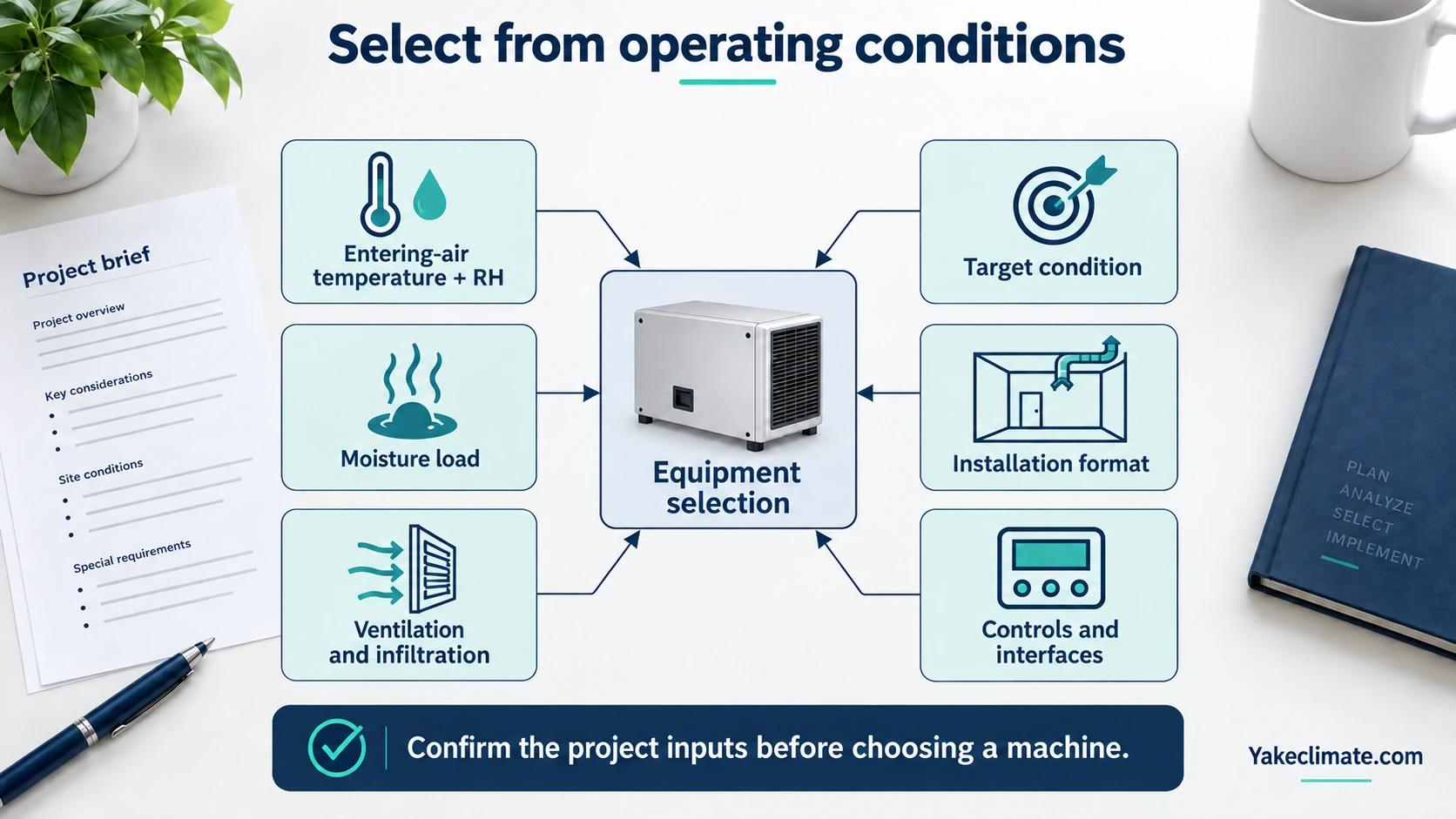
The industry name does not select the machine. Repeated input categories include entering-air temperature and humidity, target condition, moisture load, ventilation, format and controls, but their limits differ by application. The existing selection method is set out in commercial dehumidifier selection.
11. Discussing a Project
Industrial Dehumidification for Complex Climate Applications
Yakeclimate designs and manufactures industrial dehumidification equipment for complex climate applications, with a focus on agriculture and energy projects.
We co-develop application-specific dehumidification equipment around the operating conditions, interfaces, and integration requirements of the wider project or system.
Explore industrial dehumidifiers, review agriculture humidity control, review energy-storage dehumidifiers, or contact Yakeclimate with the space, moisture sources, target condition, and operating range.
FAQ
Frequently Asked Questions
Which industries use industrial dehumidifiers?
Food and beverage, pharmaceutical, museums and archives, electronics and IT, storage and warehousing, hospitality and indoor pools, agriculture, and energy storage all use them. Each controls a different requirement: product stability, process repeatability, equipment reliability, or occupant comfort.
Does the industry determine the equipment?
No. The operating condition determines the equipment: temperature, humidity, moisture load, ventilation, format, and controls. Two facilities in the same industry can need different technologies because their conditions differ.
What is the difference between RH control and dew point control?
RH describes how close air is to saturation at its current temperature. Dew point describes the actual moisture content and determines whether a surface condenses. Where condensation is the risk, control dew point relative to the coldest surface.
Why do cold stores often use desiccant equipment?
Refrigerant performance and frosting can become constraints as entering-air temperature drops. Desiccant equipment may be considered for cold stores or low-humidity process rooms, but the choice depends on the actual inlet condition, target and equipment performance data.
Is a room volume enough to size a pool-hall or warehouse system?
No. Room volume alone does not establish moisture load. For a pool hall, estimate evaporation and applicable outdoor-air, infiltration and occupancy loads. For a warehouse, check ventilation, infiltration, door openings and goods or process moisture sources at the relevant operating conditions.


