
A water-damage restoration service should diagnose the source, control immediate hazards, document affected materials and define how drying and repairs will be verified. Pumps, fans and dehumidifiers have different roles; none can make contaminated water safe, repair a leak or prove that a concealed assembly is ready to rebuild. This guide helps a property owner or facility manager scope and assess a service, rather than promising a particular cleanup result.
Triage Safety Before Selecting Equipment
Keep people out of areas with unsafe electrical equipment, structural damage, suspected sewage or chemical contamination, or substantial visible mold. Stop the water entry if safe, record the time and locations affected, and ask a qualified professional to assess hazards before entering or operating equipment. Do not energize flood-affected electrical systems or use fuel-powered generators indoors.
A recent supply-line leak, a roof leak, a sewer backup and a flood require different exposure controls and material decisions. Do not call all water from a previously clean source safe: contact with building materials, duration and concealed contamination can change the risk. There is no rule that every clean-water event automatically becomes a fixed contamination category at exactly 48 hours.
EPA flooded-home text guide: safe entry, equipment, cleanup and repair sequence.
What a Restoration Service Should Assess
Ask for a documented source hypothesis, an affected-area map and a list of visibly wet and potentially concealed materials. The assessor should explain which walls, floors, insulation, cavities or HVAC components require closer inspection and how the findings will be confirmed. A thermal image can locate patterns that merit checking; it does not by itself identify water or establish that a material is dry.
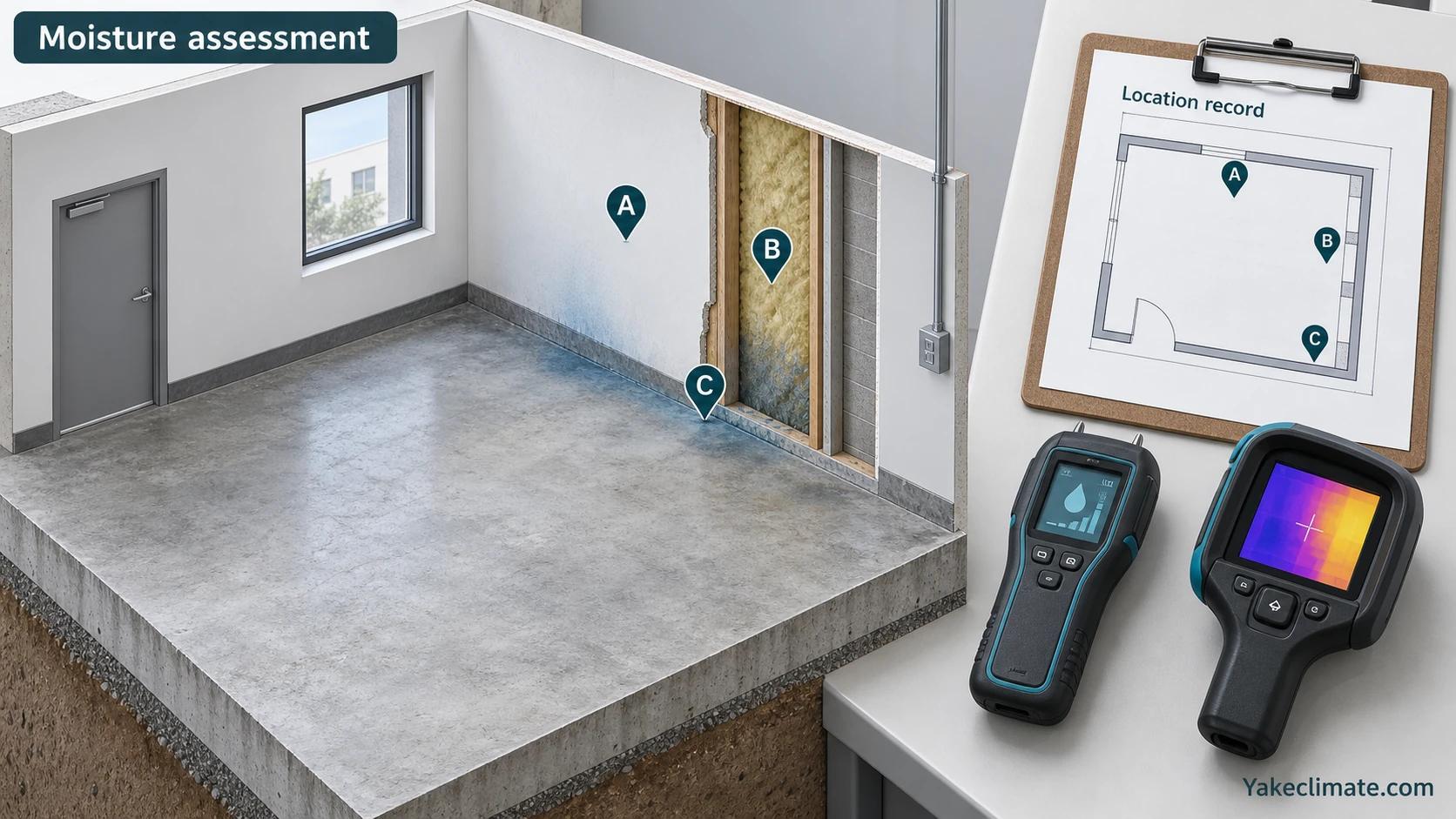
Record measurement location, material, instrument and date so later readings can be compared. Air temperature and relative humidity describe the air; a suitable material meter or test method is needed to evaluate wet building materials. No single handheld reading substitutes for the material manufacturer’s reinstallation criterion or a qualified assessment of hidden damage.
EPA commercial-building guide: moisture meters, drying methods and remediation planning.
Compare Providers by Scope and Evidence
EPA advises asking about a provider’s training, experience, qualifications and references. It does not certify flood-cleanup contractors or maintain an approved-contractor list. Check any local license, insurance and worker-protection requirements that apply to the work; ask who will assess contamination, remove affected materials, measure drying and authorize reconstruction. A credential is useful context, not a guarantee of a result.
Request a written scope that separates emergency stabilization, extraction, cleaning or removal, drying, testing and rebuild. It should identify the water source to be repaired, the assumed affected area, conditions that trigger scope changes, measurement locations, equipment and power requirements, disposal, access and who signs off each stage. Compare quotes on the same scope rather than choosing by an unsupported flat cost per room or a promise of a fixed completion date.
EPA flood-cleanup guidance: how to assess professional qualifications and references.
Understand the Role of Each Service Step
| Stage | What the service should do | What the equipment cannot prove |
|---|---|---|
| Source and safety | Identify and isolate the water source; assess electrical, structural and contamination risks | A pump or air-drying device makes the site safe |
| Extraction | Remove accessible standing water with equipment suited to the water and site | No moisture remains in cavities or materials |
| Cleaning or removal | Choose material-specific cleaning, containment or removal after contamination assessment | A disinfectant replaces physical cleaning or source repair |
| Drying | Plan air movement, dehumidification, temperature and drainage for remaining moisture | Fans are safe around visible mold or a timer proves complete drying |
| Verification and repair | Compare documented material readings and inspect source control before rebuilding | One RH reading guarantees safe occupancy or future performance |
EPA cautions that fans can spread existing mold; visible growth should be cleaned before fans are used in the affected area. If flood water affected the HVAC system, do not run it as a dryer until a qualified professional says it is safe. A dehumidifier removes water vapor from air after bulk water and source control, but cannot sterilize porous material or reverse structural damage.
EPA flooded-home text guide: do not use fans on visible mold before cleaning.
For contaminated surfaces, cleaning methods and any disinfectant or sanitizer must fit the material, product label and exposure conditions. EPA discusses EPA-registered products for certain cleaned nonporous surfaces; “EPA-approved agent” is not a blanket authorization for every material or mold problem. Do not mix cleaning products. Ask the service to document what was used, where and why.
Ask for a Measurable Completion Handoff
A useful handoff identifies the repaired water source, materials removed or cleaned, moisture locations and comparable before/after readings, remaining exceptions, and the criterion used before rebuilding. Drying within 24–48 hours is an urgency goal in relevant EPA guidance; it is not a promise that every carpet, wall or slab is salvageable or dry at a fixed hour. Ask how the service will revisit an area if moisture returns.
If the job includes a concrete floor, floor coverings or adhesive, ask for the flooring system’s required test method and manufacturer limits before reinstallation. The separate concrete-floor guide covers those material-specific decisions. Mold cleanup, occupant exposure and professional-intervention questions are addressed in the related mold-damage guide; this page focuses on commissioning and judging a restoration service.
Concrete-floor drying and flooring-readiness decisions after a leak.
Related guide: mold-damage cleanup and when specialist intervention is needed.
Cost, Insurance and Recurrence
Costs depend on the source, contamination, affected assembly, access, labor, equipment time, disposal and rebuild scope. Generic price bands and claims about property-value loss cannot replace an itemized quote for this site. Photograph damage, retain readings and invoices, and ask the insurer about the policy’s notice, coverage and documentation requirements. No contractor or article can promise an insurance payment.
After handoff, inspect the repaired source and adjacent materials through normal use and after rain or other relevant events. Recurrent staining, odor or moisture calls for a new source investigation. Yakeclimate supplies industrial dehumidification equipment; it does not claim to provide a local restoration crew, property appraisal, insurance handling or a guarantee of remediation outcomes.
Sources and Scope
US EPA: Flood Cleanup to Protect Indoor Air and Your Health.
US EPA: Text Version of the Flooded Home.
US EPA: Mold Remediation in Schools and Commercial Buildings, Chapter 3.
FAQ
Frequently Asked Questions
When should I call a restoration professional?
Seek qualified help for electrical or structural hazards, suspected sewage or chemicals, extensive water damage, substantial visible mold, hidden damage or affected HVAC systems. A smaller clean-water leak may still need specialist assessment if the source or material condition is unclear.
What should a restoration quote include?
Ask for source diagnosis, affected materials, safety and contamination controls, extraction, cleaning or removal, drying, measurement locations, change-order triggers, disposal, rebuild criteria and who is responsible for each stage.
Does EPA approve water-damage restoration contractors?
No. EPA advises checking qualifications, training, experience and references; it does not certify flood-cleanup contractors or maintain an approved-contractor list. Check local requirements independently.
Will a dehumidifier or fan complete the restoration?
No. Equipment supports a plan after source and safety assessment. Bulk water, contamination, material damage and concealed moisture require separate actions and verification. Do not use fans where visible mold can be spread before cleanup.
Is all drywall or carpet ruined after 48 hours?
No universal 48-hour discard rule applies. Contamination, how long materials were wet, access and whether they can be cleaned and dried determine the decision; use material-specific professional judgment.
How do I know a restoration service is finished?
Ask for a repaired source, removal or cleaning record, documented comparable moisture readings, material-specific acceptance criteria and a repair handoff. A single air-humidity number or walkthrough is not a guarantee.
Will insurance cover the service?
Coverage depends on the policy, source of loss, exclusions, notice and evidence. Keep photos, estimates, readings and invoices and confirm requirements with the insurer; payment cannot be promised.

