
The rotor in a rotary desiccant dehumidifier is not just a wheel. Its media, sector layout, seals, drive system, filtration and reactivation path all decide whether the unit can hold the required leaving-air dew point.
What the Rotor Does
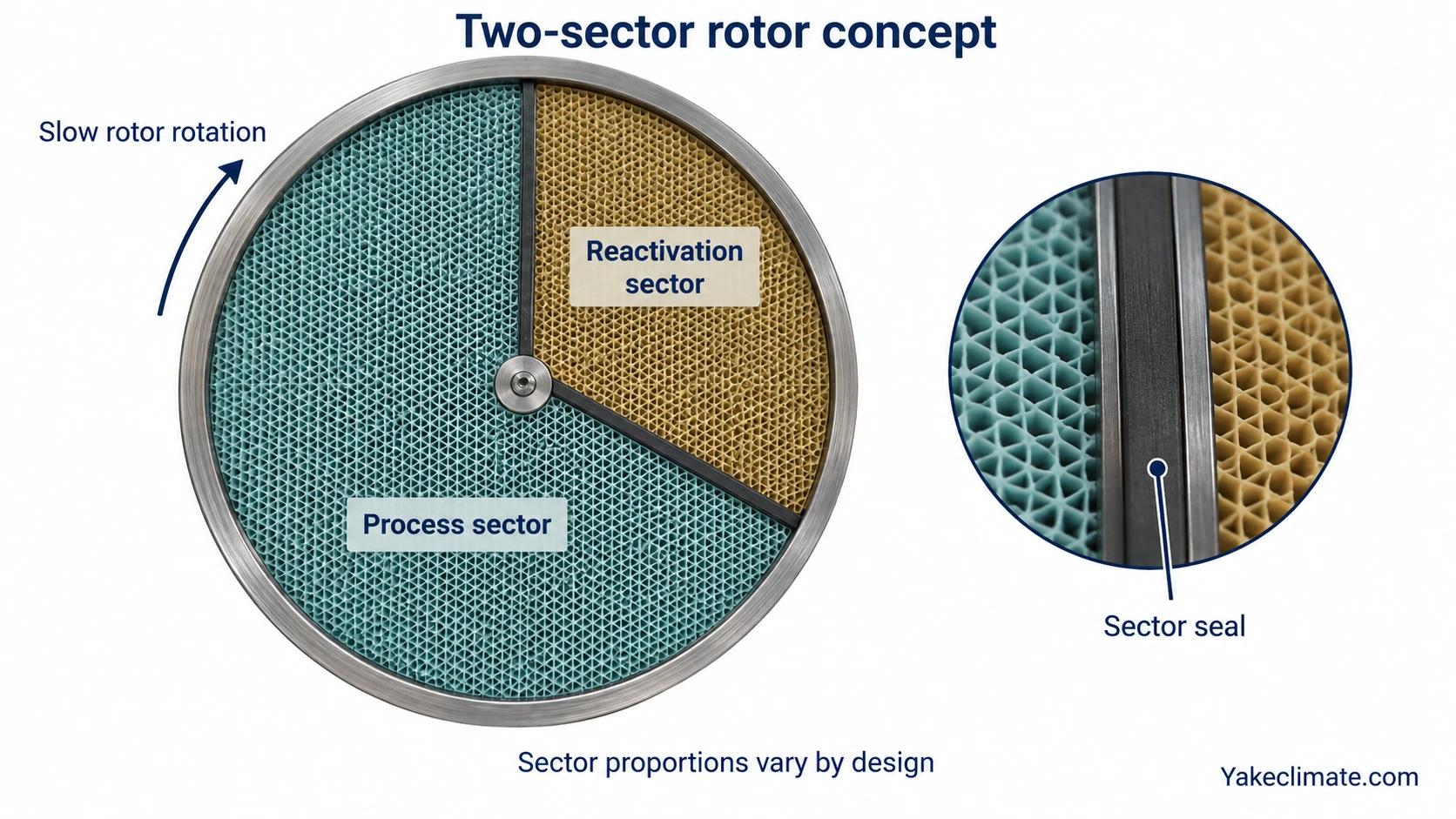
A rotary desiccant rotor is a honeycomb matrix coated or impregnated with a moisture-attracting material. As the wheel slowly rotates, one section dries the process air and another section is heated to release moisture into the reactivation air stream.
ASHRAE describes desiccant dehumidification as a dedicated equipment category covering solid and liquid desiccant systems, equipment performance, applications and load calculations (ASHRAE TC 8.12). That category exists because rotor performance is not captured well by ordinary room-dehumidifier language.
The Rotor Assembly, Part by Part
| Part | Function | Why it affects performance |
| Desiccant matrix | Adsorbs water vapor from process air. | Determines moisture capacity, pressure drop and tolerance to operating conditions. |
| Hub and rim | Keep the rotor round and stable. | Misalignment causes seal wear and uneven airflow. |
| Drive belt or gear | Rotates the wheel through dry and wet sectors. | Speed instability changes moisture pickup and regeneration time. |
| Radial and perimeter seals | Separate process air from reactivation air. | Leakage can raise leaving dew point even when the rotor media is good. |
| Sector plates | Divide process, reactivation and optional purge zones. | Sector geometry affects capacity, carryover and heat recovery. |
| Access panels | Allow inspection and cleaning. | Poor access turns small maintenance issues into performance loss. |
Sector Layout Matters More Than Diameter Alone
Rotor diameter is easy to compare, but it is not enough. Two rotors with the same diameter can perform differently if the face velocity, media depth, sector angles or seal quality differ.
The basic layout has a large process sector and a smaller reactivation sector. Some low dew point systems add a purge sector to reduce heat and moisture carryover before the rotor re-enters the process air stream. That extra sector can improve stability, but it also adds ducting and control requirements.
Seal Leakage Is a Low Dew Point Problem
Seal leakage is one of the most practical reasons a rotary desiccant system misses its target. A small amount of wet reactivation air leaking into the dry process stream can matter more than a small change in nominal rotor capacity.
Review these points before accepting a design:
- Can the seals be adjusted after commissioning?
- Is the access path clear enough for inspection?
- Does the fan arrangement keep the intended pressure relationship across sectors?
- Is the dew point sensor downstream of any possible leakage point?
Reactivation Heat Sets the Rotor's Recovery Capacity
The rotor must be dried every rotation. If reactivation heat is too low, too variable or poorly distributed, the rotor returns to the process sector partially loaded with moisture.
ASHRAE's 2020 handbook update notes expanded material in desiccant dehumidification and pressure-drying equipment, including applications, air filters and research-based rating guidance (ASHRAE 2020 Handbook update). For buyers, the practical point is simple: ask for rated performance at the actual air conditions and utility type, not just a generic catalog point.
| Reactivation source | Fit | Watchpoint |
| Electric heater | Simple and clean for many projects. | Electrical capacity and operating cost. |
| Steam coil | Useful where plant steam already exists. | Condensate management and coil control. |
| Hot water coil | Can use recovered heat in some systems. | May not reach high enough temperature for strict dew point targets. |
| Direct gas | High heat input for large systems. | Combustion air, exhaust and local code requirements. |
Filtration Protects the Rotor
A desiccant rotor is sensitive to what the air carries. Dust increases pressure drop. Oil aerosol and sticky process vapors can coat the media and reduce adsorption. Some contaminants cannot be removed by ordinary cleaning.
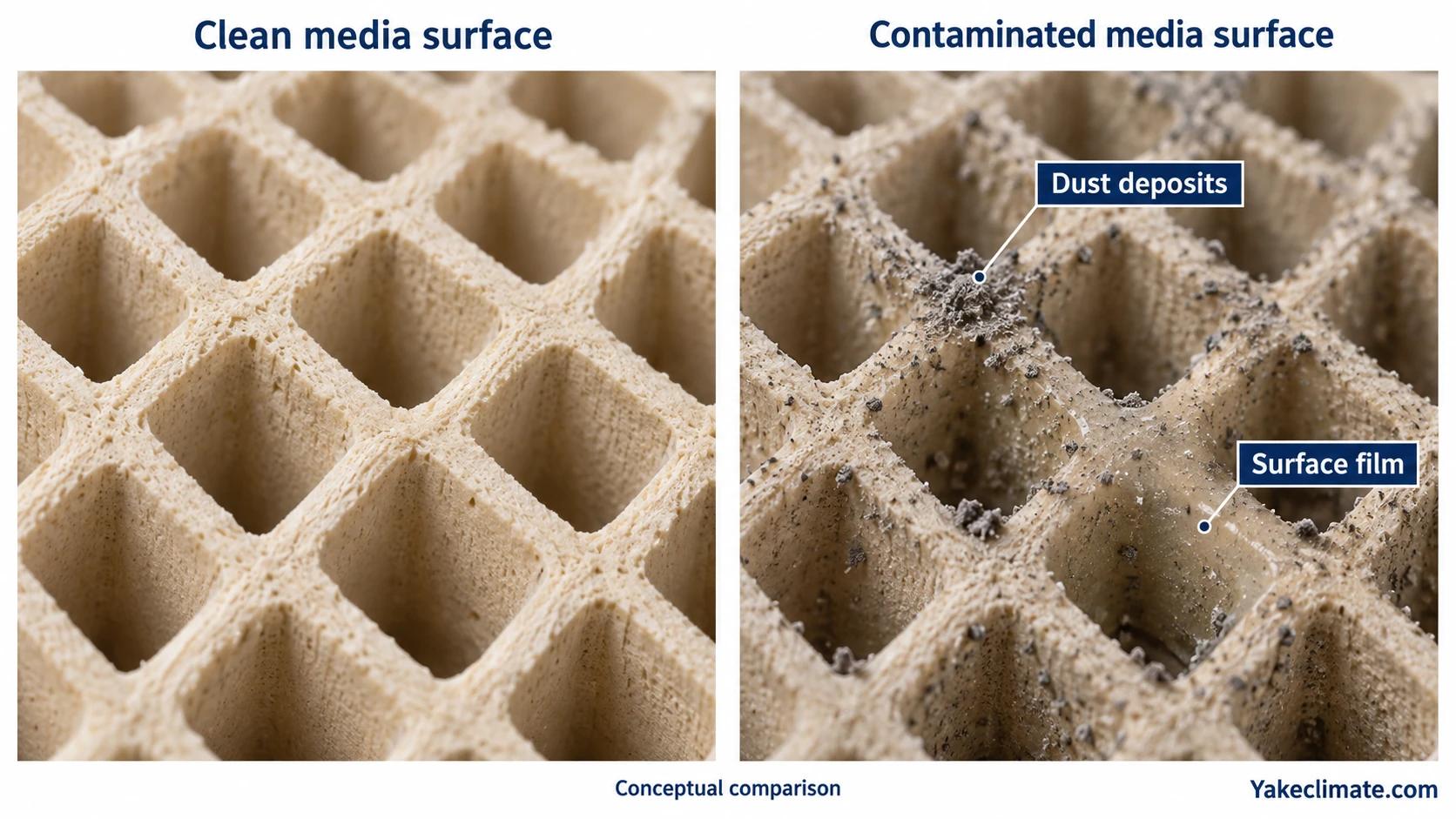
For dry rooms, food powder areas, pharmaceutical support spaces and cold storage, define the filtration stage before the rotor and the maintenance interval after commissioning. Filter pressure drop should also be included in fan selection.
Rotor Selection Checklist
Use this checklist when comparing desiccant rotor dehumidifiers:
| Question | Why it matters |
| What leaving-air dew point is guaranteed at my inlet condition? | Prevents catalog-point confusion. |
| What is the process airflow and external static pressure? | Confirms the unit can serve the duct system. |
| What is the reactivation heat source and temperature range? | Confirms the rotor can regenerate fully. |
| How are sector seals adjusted and inspected? | Controls leakage risk after installation. |
| What filter stage protects the rotor? | Protects capacity over time. |
| What control signal reports dew point, alarm and heater status? | Makes the unit usable in the wider control system. |
If the project only needs moderate humidity control in a warm space, start with the industrial dehumidifier family. If the design target is low dew point, cold operation or process-dry air, use the dehumidification technology comparison tool before issuing an RFQ.
FAQ
Frequently Asked Questions
Does a larger rotor always mean better drying?
No. Rotor size matters, but performance also depends on media depth, face velocity, reactivation heat, seal leakage and airflow balance.
Why does rotor contamination reduce capacity?
The desiccant surface must contact water vapor. Dust, oil or sticky vapor blocks that surface and can increase pressure drop across the rotor.
What should be measured during commissioning?
Measure process inlet condition, process outlet dew point, process airflow, reactivation temperature, reactivation airflow, pressure relationship between sectors and sensor calibration.


