
Greenhouse dehumidification design starts with project data, not with a model number. Crop water use, night temperature, screens, ventilation, CO2 strategy and airflow layout can change the required moisture-removal capacity by a large margin.
The Minimum Data Set
A useful greenhouse RFQ should describe the crop, the room and the control objective.
| Input | Example format | Why it matters |
| Greenhouse layout | Area, height, bay count, compartments and screen zones. | Defines the controlled volume and zoning. |
| Crop and stage | Tomato, strawberry, leafy greens, propagation or mixed crop. | Changes transpiration and disease-risk profile. |
| Water use | Daily water consumption, irrigation volume or condensate estimate. | Helps estimate moisture released into the air. |
| Day and night conditions | Temperature, RH, dew point or VPD targets by period. | Separates plant response from condensation risk. |
| Ventilation strategy | Natural vents, exhaust fans, CO2 retention limits. | Determines whether ventilation can remove moisture. |
| Screen schedule | Thermal screen, blackout curtain or shade schedule. | Screens can trap moisture and change heat transfer. |
| Airflow layout | HAF fans, ducts, air tubes, aisles and crop height. | Determines whether dry air reaches the canopy. |
| Controls | Greenhouse computer, Modbus, relay, analog signal or standalone controller. | Affects staging and alarm integration. |
ASHRAE's HVAC design pathway lists psychrometrics, moist air properties and air distribution as core design concepts (ASHRAE). Greenhouse projects add another layer: the crop itself is a changing moisture source.
Separate the Operating Periods
Greenhouse load is rarely flat across 24 hours. A single daily average can hide the period that actually sizes the equipment.
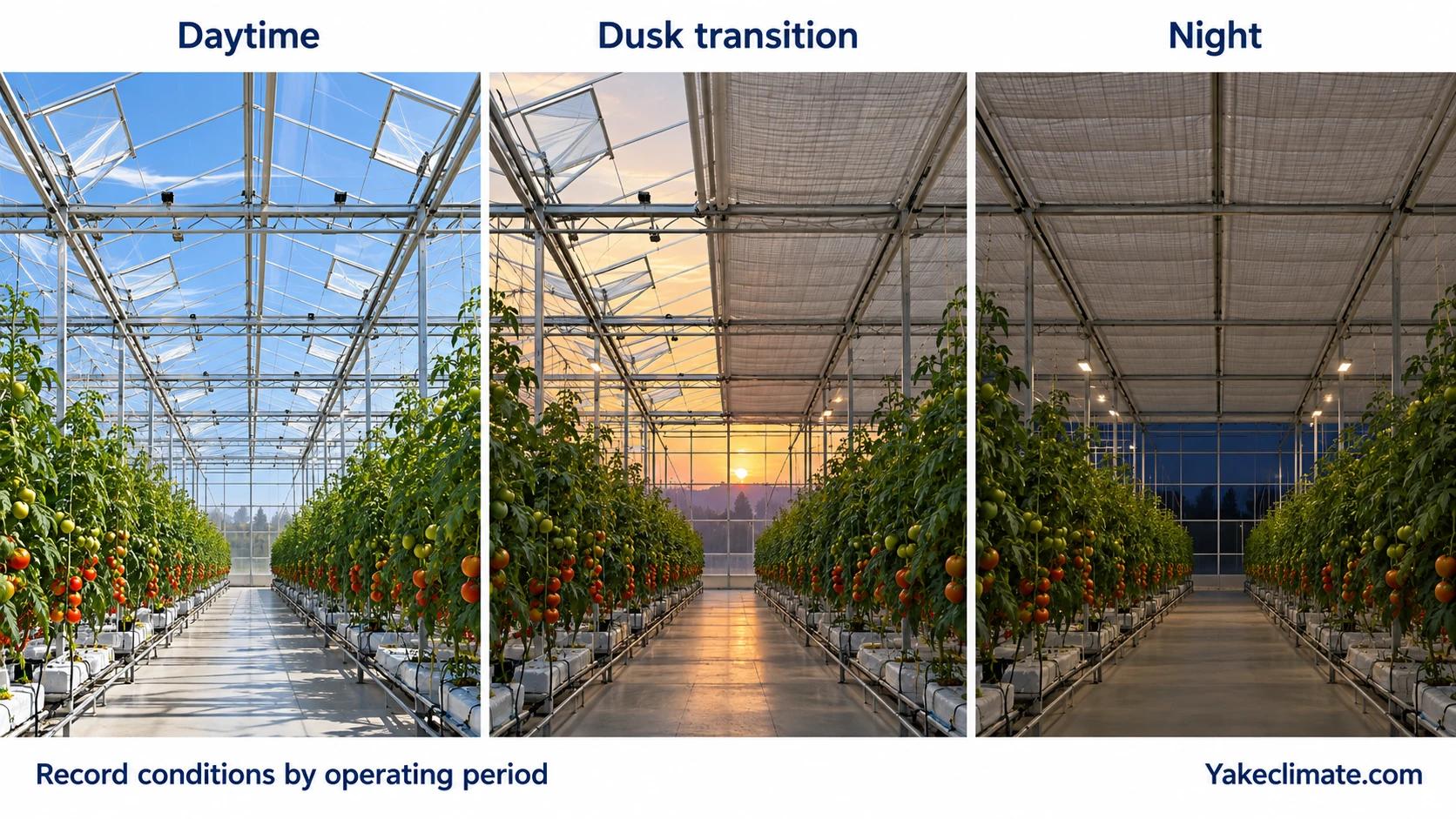
| Period | Common design question |
| Daytime | Is ventilation enough when solar load, crop transpiration and CO2 strategy interact? |
| Dusk transition | Does RH spike when air cools and screens close? |
| Night | Can the crop stay dry without wasting heat through ventilation? |
| Blackout or screen closure | Is moisture trapped below the screen or curtain? |
| Irrigation or misting event | How long do leaves, fruit or trays remain wet? |
For greenhouse operators, trend data is more useful than a single snapshot. If available, send 7 to 14 days of temperature, RH, dew point, ventilation position, screen status and irrigation timing.
Prepare the Moisture-Load Evidence
Record irrigation, drainage and actual water-storage changes for the same crop-and-medium boundary and period. Irrigation minus drainage is not automatically transpiration: evaporation, storage and other flows need to be resolved. A change in total pot weight can include non-water changes. State which inputs are measured, estimated or unknown; daily averages do not establish a night peak.
Use the greenhouse moisture-load calculation method for the dry-air balance, signed outdoor exchange, period totals, latent heat and process-airflow calculations. For the RFQ, send the input record, adopted boundary, assumptions and unresolved terms with the result. A calculated removal requirement is not verified device capacity.
Send Temperature, Humidity and Pressure Together
Record the measurement location, time, temperature, RH and absolute pressure, with units. The greenhouse psychrometric calculation guide explains humidity ratio and dew point conversion. Do not substitute RH for humidity ratio or assume sea-level pressure applies to the site. Include relevant surface temperatures when assessing condensation.
Document Outdoor Exchange Separately from Circulation
Send vent and fan states, effective zone volume, weather, screen position and the airflow estimate or test report for each operating period. Opening percentage is not airflow, internal circulation is not outdoor exchange, and ACH50 is not operating ACH. Keep volume-flow reference conditions. A tracer-decay report should identify mixing, background concentration, sources and sinks, inter-zone exchange, fitted interval and the tested configuration; do not turn a limited test into a general greenhouse leakage rate.
Avoid counting leakage twice when it is already included in measured exchange. Outdoor-air drying can reduce the moisture-removal requirement only within the applicable temperature, crop, CO2 and operating constraints. Leave unsupported inputs open rather than hiding them in a generic peak or safety factor.
Air Distribution Is Part of the Design Data
Capacity does not solve a greenhouse humidity problem if the dry air does not reach the crop zone. Include drawings or photos that show:
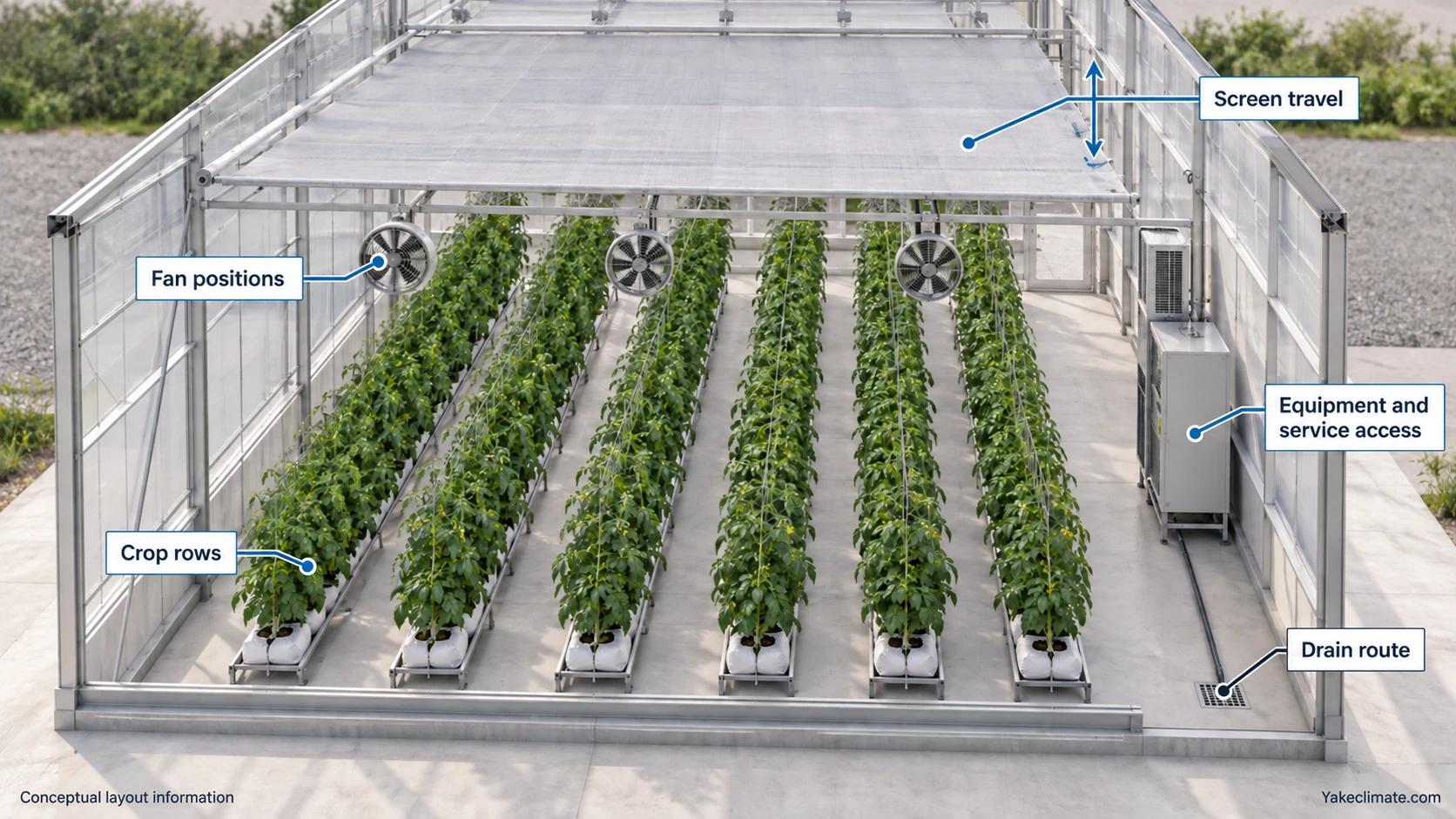
- crop rows, benches or tiers,
- aisles and service corridors,
- fan positions,
- duct or air-tube routes,
- screen or curtain movement,
- possible equipment locations,
- drainage route and service access.
If the project has an existing greenhouse computer, include the control interface and the signals available for dehumidifier staging.
When a greenhouse choice is still provisional, compare the decision with the missing evidence rather than with a single headline number. The capacity comparison reference explains why test conditions matter; use the table below to frame the next project check.
| Mistake | Decision still open | Evidence to check |
| Using floor area or one capacity number to fix a model or quantity | Whether a candidate can meet the project's conditions and time periods remains open | Project targets and load assumptions by period, plus the supplier's capacity information and stated conditions |
| Fixing the layout from total capacity alone | The location and connection arrangement still require review | Air path and layout, drainage, controls, power and access information for this project |
| Treating an estimate or completed form as final confirmation | Do not treat the equipment choice or quotation as final while material inputs remain unconfirmed | Mark estimates, leave unknowns open, and identify the missing input that could change the decision |
RFQ Checklist
Before sending an inquiry, prepare this package:
| File or note | Purpose |
| Plan drawing or dimensions | Defines area, height and compartments. |
| Crop information | Explains moisture source and disease risk. |
| Operating targets | Defines day, night and transition conditions. |
| Water-use estimate | Gives a load basis. |
| Weather or outdoor design condition | Helps compare ventilation and dehumidification. |
| Control description | Shows how equipment should communicate. |
| Installation photos | Reveals hanging limits, ducts, drains and access. |
| Project stage and quantity | Separates concept review from final selection. |
Use the General Project Information Form (Word) together with the Agriculture Project Preparation Form (Word) to organize the information you already have. Fill in known facts, mark estimates as “estimated,” and leave unknown items blank. These forms support project discussion; they do not confirm a model, performance, or quotation. You do not need to complete every field before asking a question. When ready, use the agriculture project inquiry.
Use the editable Word supplier response template to record proposed capacity, supporting conditions, interface differences and open questions against your project requirements.
Then decide whether the project needs ventilation strategy, refrigerant dehumidifiers, desiccant equipment or a hybrid approach. The agriculture dehumidification overview is the correct application entry point.
FAQ
Frequently Asked Questions
What is the most important input for greenhouse dehumidifier sizing?
The most important input is the moisture load by operating period. Area helps describe the greenhouse, but crop water use, night cooling, screen closure and ventilation limits usually explain the real load.
Can I size a greenhouse dehumidifier by square meters?
No. Square meters can be a rough context value, but they do not describe crop transpiration, outdoor air, temperature, dew point, curtain operation or airflow.
What if I do not have water-use data?
Send the best available project information and label the unknowns. A supplier can make a preliminary estimate, but the uncertainty should remain visible until measured data or a final design basis is available.


