
Greenhouse propagation humidity control is a staged problem. Unrooted cuttings and young seedlings need a humid environment, but saturated air, wet media and weak air movement can increase disease risk and make hardening-off difficult.
Why Propagation Is Different From Production
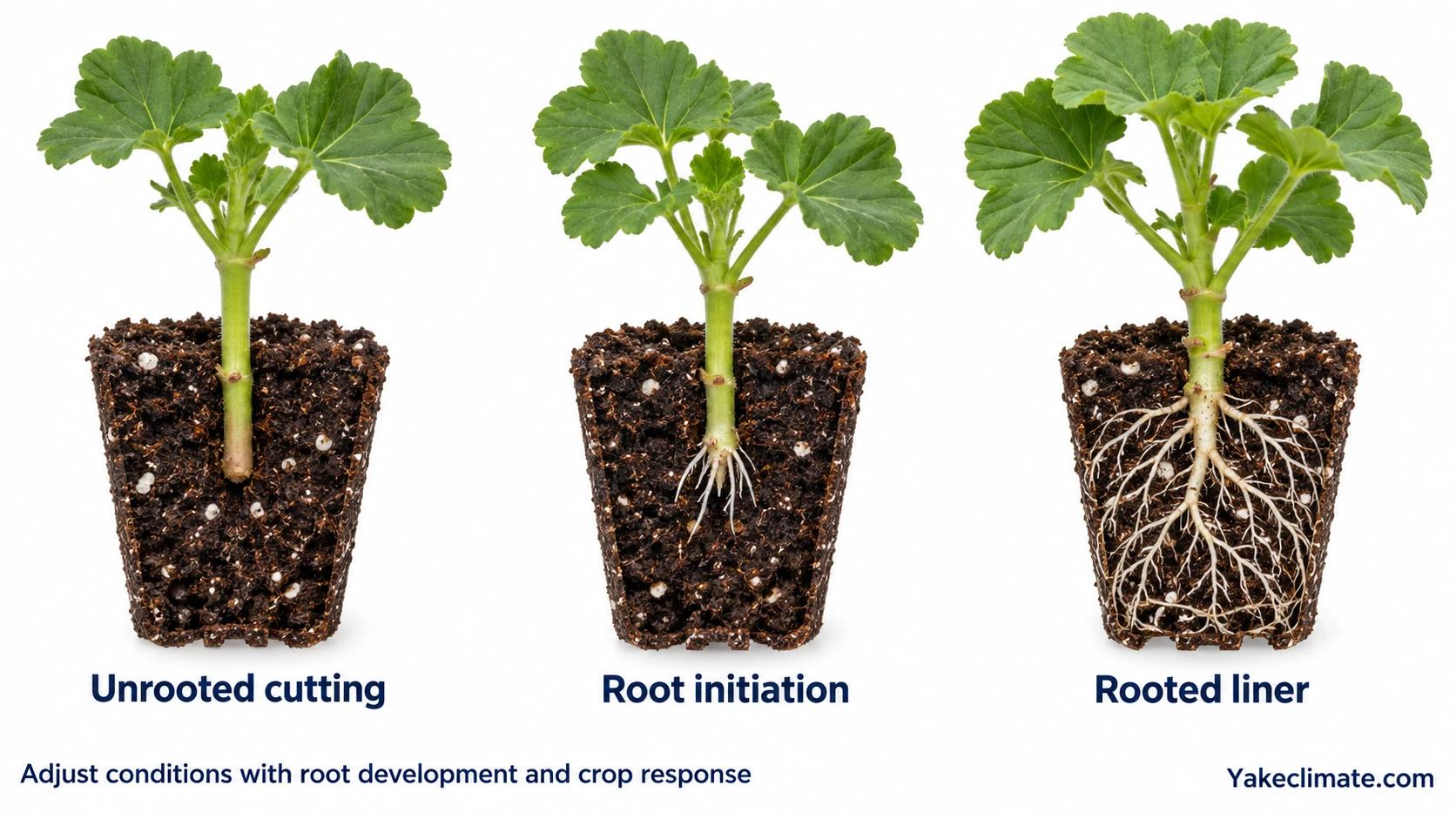
Young plants do not behave like a mature canopy. Cuttings without roots rely on a low vapor pressure deficit to limit water loss. Michigan State University Extension notes that propagators often maintain a low VPD around cuttings and then gradually reduce humidity as roots develop (MSU Extension).
This creates a design tension:
| Propagation need | Humidity implication | Control risk |
| Keep unrooted cuttings from wilting | Low VPD and high humidity. | Stagnant wet surfaces. |
| Encourage root development | Gradual humidity reduction. | Drying too fast can stress plants. |
| Harden plants before transplanting | More air movement and lower humidity. | Poor transition causes transplant shock. |
| Control disease pressure | Avoid persistent wet media and weak airflow. | Over-watering and poor sanitation can dominate. |
The goal is not to run a large dehumidifier at full output. The goal is controlled transition.
Damping-Off Risk Needs More Than an RH Setpoint
NC State Extension identifies greenhouse soilborne diseases such as Pythium, Rhizoctonia and Phytophthora as causes of damping-off, root rot and crown rot in susceptible crops (NC State Extension). NC State's gardener handbook also notes that sowing in rows improves light and air movement and can reduce the spread of damping-off when it occurs (NC State Extension).
For a commercial propagation space, dehumidification should support the overall disease-management system:
- Use clean trays, media and work practices.
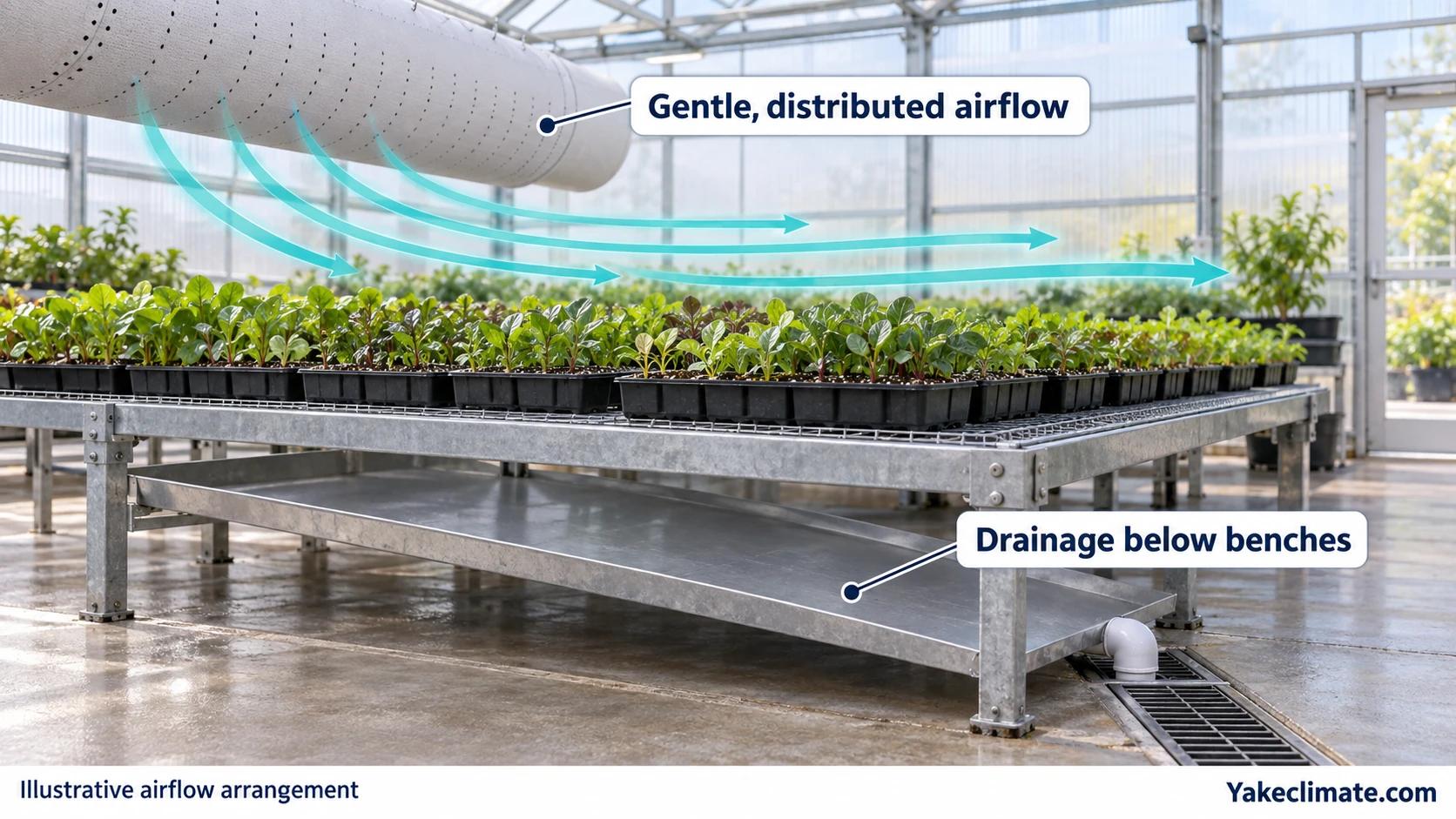
- Avoid standing water and poorly drained bench areas.
- Keep air moving gently across tray surfaces.
- Lower humidity in stages as roots become functional.
- Monitor crop response, not just room RH.
A Stage-Based Control Framework
A simple propagation room often needs at least three operating modes.
| Stage | Control objective | Dehumidification role |
| Unrooted cuttings | Prevent wilting and maintain low VPD. | Usually limited or staged only to avoid saturation and surface wetness. |
| Root initiation | Begin reducing humidity swings while keeping plants hydrated. | Modulated control with gentle airflow. |
| Rooted liner or hardening | Prepare plants for production greenhouse conditions. | More active moisture removal and stronger air exchange. |
The transition should be based on crop response, root development and grower protocol. A fixed RH value copied from another crop or facility can create the wrong outcome.
Equipment and Airflow Questions
Propagation rooms need careful air distribution. High air velocity can dry exposed leaves before roots can replace the water. No air movement can leave wet pockets on trays and under benches.
Before selecting equipment, confirm:
| Input | Why it matters |
| Crop or cultivar group | Different cuttings and seedlings tolerate drying differently. |
| Stage duration | The room may need several operating modes. |
| Mist or fog schedule | Adds moisture directly to the room and crop surface. |
| Tray and bench layout | Affects air path and wet pocket formation. |
| Temperature and humidity targets | Defines the VPD transition. |
| Drainage and floor condition | Standing water can dominate the humidity problem. |
| Control interface | Determines how setpoints change by stage. |
For a broader greenhouse sizing method, use the commercial dehumidifier sizing calculator inputs guide.
Where Yakeclimate Equipment Fits
For propagation and nursery projects, the useful RFQ is not "how many units for this square meter area?" It is a request for a controlled air path:
- moisture load by stage,
- gentle airflow through trays or benches,
- stable control around misting or fogging,
- condensate drainage and service access,
- communication with the greenhouse computer or BMS.
Start with the agriculture dehumidification application page and compare technology options after the crop schedule is defined.
FAQ
Frequently Asked Questions
Should propagation rooms always run at very high RH?
No. Early rooting may require high humidity or low VPD, but humidity should usually be reduced as roots develop. The transition depends on crop type and propagation protocol.
Can dehumidification prevent damping-off by itself?
No. Damping-off control also depends on sanitation, media, drainage, watering, tray spacing and airflow. Dehumidification can help reduce persistent wetness, but it is not a substitute for crop hygiene.
What makes propagation airflow different?
Young plants can be damaged by high air velocity. The air path should remove stagnant moisture without blasting cuttings or seedlings directly.


