
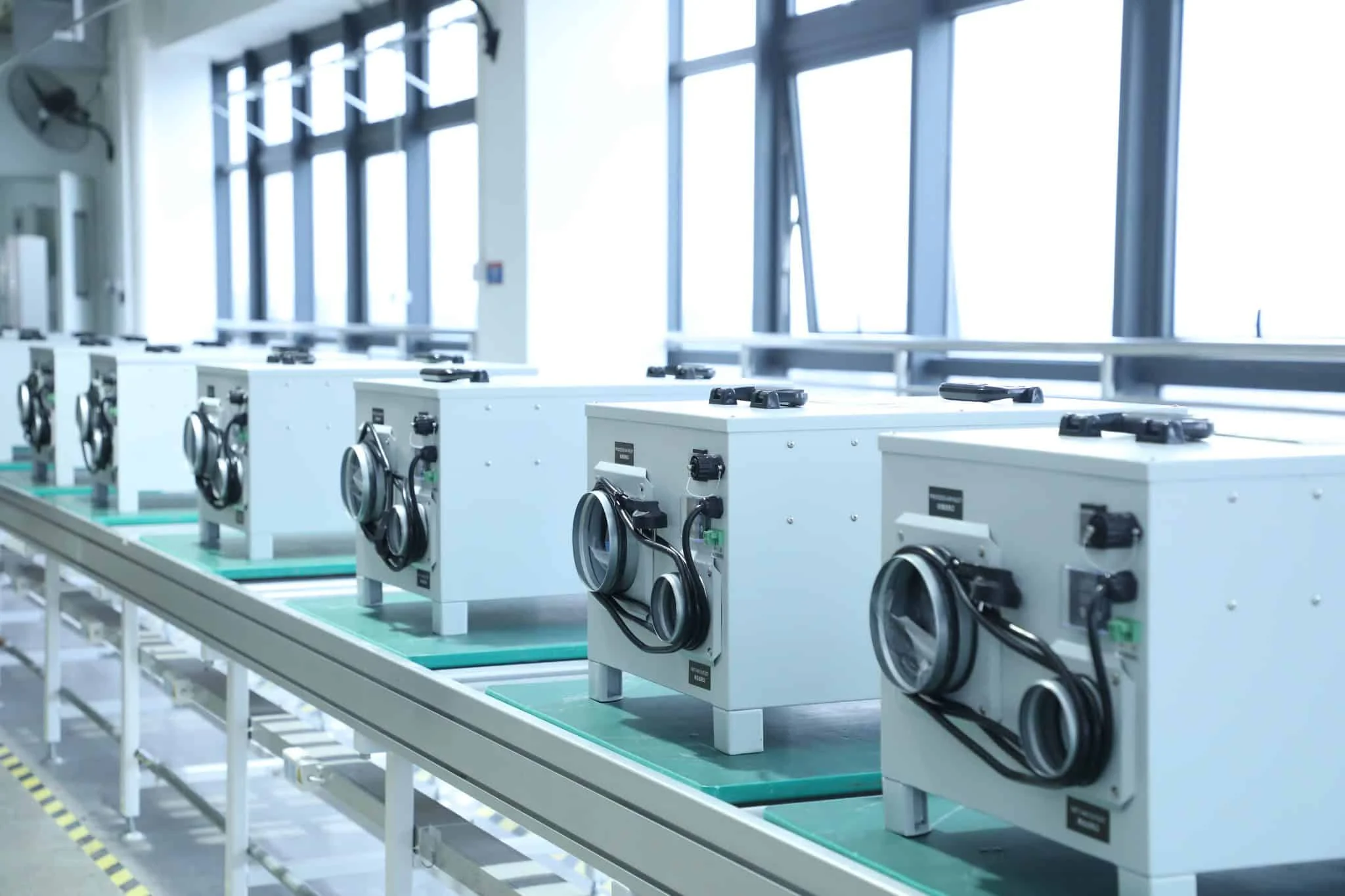
Yakeclimate dehumidification equipment production line

Resources

Practical Information for Humidity-Control Decisions

Find guides, FAQs, product comparisons, application notes, and project checklists for agriculture, energy, electrical, and industrial environments.

Use these resources to clarify the conditions behind a requirement, compare equipment options, and prepare a more focused technical discussion.

RESOURCES / 01
Technical content should support a real equipment decision. Use these resources to compare equipment options and prepare for a technical discussion.

PRODUCT SELECTION RESOURCES

Compare equipment with the conditions that determine performance

Product-selection resources explain how technology differences relate to temperature, humidity targets, airflow, installation, utilities, and project constraints.

Explore Product Selection Guides
  1. Refrigerant vs. desiccant dehumidification
  2. When low-temperature operation changes equipment selection
  3. How to prepare humidity and moisture-load information
  4. Ceiling installation, airflow, access, and drainage
  5. Humidity control for cabinets and enclosed electrical spaces
  6. Water quality and control requirements for ultrasonic humidification

PREPARE A PROJECT REQUIREMENT

Collect the information that makes a technical discussion useful

If some values are unknown, share the information you already have. The remaining questions can be identified during the initial review.

  1. Application and project location
  2. Space, enclosure, or process dimensions
  3. Temperature and humidity range
  4. Target humidity or dew point
  5. Moisture sources, airflow, and ventilation
  6. Installation position, power, and drainage
  7. Controls, alarms, and communication needs
  8. Quantity, schedule, and destination market

FEATURED & RECENT RESOURCES

Continue from the topic or application most relevant to your work

Each article links to related applications, product families, project evidence, and contact options so the next step remains easy to find.

Greenhouse Ventilation Strategies for Healthy Plant Growth
Agriculture & Controlled Environments

Greenhouse Ventilation Strategies for Healthy Plant Growth

Greenhouse ventilation strategies are designed methods of exchanging air in a greenhouse in order to maintain temperature, humidity, and CO₂ concentrations at levels conducive to plant health.

Greenhouse Carbon Filtration Systems for Cleaner Air
Agriculture & Controlled Environments

Greenhouse Carbon Filtration Systems for Cleaner Air

Greenhouse carbon filtration systems are installations that suck air through filters to capture odors, VOCs, and some airborne contaminants before they disperse throughout the grow area.

Practical Techniques for Optimizing Greenhouse Ventilation
Agriculture & Controlled Environments

Practical Techniques for Optimizing Greenhouse Ventilation

Greenhouse ventilation optimization techniques are methods that assist circulation air in an intelligent manner to maintain crops stable and healthy. Growers employ a combination of natural vents, fans, air ducts, and controls to regulate heat, humidity, and CO₂ within the space.

Absolute Humidity Measurement Devices and Monitoring Instruments
Industrial Dehumidification

Absolute Humidity Measurement Devices and Monitoring Instruments

Absolute humidity measuring instruments are instruments that indicate the quantity of moisture in the air in grams per cubic meter. They provide a direct value, not just a relative percentage, so growers and engineers see the actual moisture load in a room or duct.

Solar Powered Greenhouse Exhaust Fans for Efficient Ventilation
Agriculture & Controlled Environments

Solar Powered Greenhouse Exhaust Fans for Efficient Ventilation

Solar powered greenhouse exhaust fans: Fans that exhaust hot, stale air from a greenhouse using electricity generated by solar panels. They reduce heat accumulation on sunny days, assist in controlling humidity, and circulate fresh air around plants.

Smart Greenhouse Climate Control Systems & Technology
Agriculture & Controlled Environments

Smart Greenhouse Climate Control Systems & Technology

Smart greenhouse climate control systems employ sensors, controllers, and connected devices to maintain temperature, humidity, light, and CO₂ within predetermined ranges with minimal human labor.

Long-Term Energy Storage Solutions: Technologies, Challenges, and Opportunities
Energy Storage & Electrical Environments

Long-Term Energy Storage Solutions: Technologies, Challenges, and Opportunities

Long-duration energy storage solutions store electric or thermal energy for multiple hours, days, or seasons to help balance supply and demand with greater stability. They sit alongside solar, wind, and other intermittent sources to stabilize power quality and reduce curtailment.

Solar thermal energy storage systems for renewable power integration
Energy Storage & Electrical Environments

Solar thermal energy storage systems for renewable power integration

Solar thermal energy storage systems are systems that store heat from the sun so plants can use it later for power, process heat, or heating and cooling. These systems typically employ hot water, molten salts, or phase change materials to store heat at certain temperatures.

APPLY THE INFORMATION

Need help applying the information to a real project?

Send the application, operating conditions, target, and installation limits. We can help organize the questions that need to be answered before product selection or engineering review.

Discuss Your Requirement