
Building 34, No. 535 Shunfeng Road, Hangzhou, Zhejiang, China
[email protected]
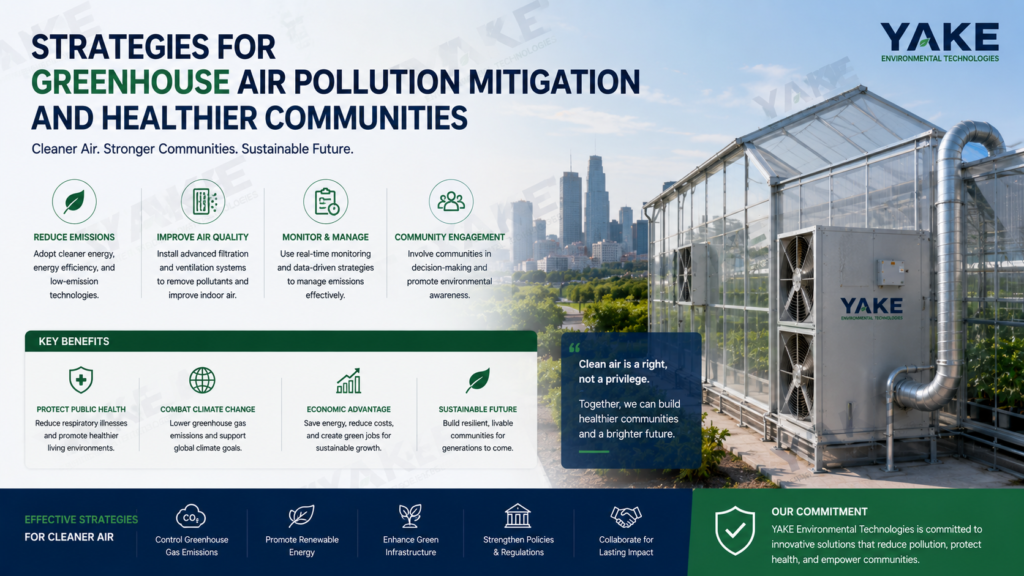


Greenhouse air pollution mitigation is reducing or eliminating dangerous gases, particles, and chemicals inside growing environments to protect plants, employees, and machinery. In closed or semi-closed greenhouses, bad air can accumulate quickly from fertilizers, pesticides, combustion heaters, and nearby traffic or industry. Excessive carbon dioxide, ozone, ethylene, and fine dust can reduce growth and yield and deteriorate plant health for extended periods. Many growers now combine improved ventilation, filtration, smart climate control, and meticulous chemical application to maintain clean air. Good air management additionally stabilizes energy use, disease pressure, and crop quality across seasons. The following sections detail specific risks, typical sources, and actionable instruments to schedule a precise mitigation strategy.
Greenhouse air pollution connects damage to ecosystems with harm to humans, frequently in unseen ways. The same emissions that warm the planet change air chemistry, increase health risks, and stress public budgets, from local clinics to national health systems.
Greenhouse gases trap heat and climate shifts, which in turn feed back into air quality. Warmer air fuels ground-level ozone formation, while elevated ambient temperature, humidity, and wind speed alter the way pollutants disperse, chemically react, and persist. This bidirectional interaction leaves air pollution and climate change exacerbating each other, not separately but as a unified threat to crops, water, and human health.
Climate change increases the likelihood of extreme weather like heat waves, droughts, and severe storms. These occurrences can propel increases in fine particles and ozone, particularly in cities with dense traffic and aging industry. Hot, still air traps pollutants close to the earth. Drying and warming also increase the threat of wildfires, which spew toxic particle pollution into the air, impacting not just communities in proximity but those thousands of kilometers downwind.
Health effects range from mild to acute and fatal. Short-term exposure can aggravate asthma, prompt heart attacks, or induce heat stress. Long-term exposure to smog connects to stroke, lung cancer, and other non-communicable ailments. Globally, fossil fuel ambient air pollution is linked to 5.13 million excess deaths annually, much of it via cardiovascular damage that does not make the front page like a wildfire. Air pollution is believed to cause 28,000 to 36,000 deaths per year in the UK alone, indicating the severity of the problem in even high-income environments.
The load is not equally distributed. Kids, seniors, outdoor laborers, low-income neighborhoods, and those with cardiovascular or pulmonary disease are most at risk. Areas with old power plants, congested traffic, and poor health care experience the sharpest impacts per unit of pollution. These health outcomes then manifest as increased hospitalizations, missed workdays, and extended care expenses, which influence federal budgets and social insurance programs.
The relationship between climate and health is reciprocal. Climate change compounds exposure to environmental stressors that propel cardiovascular and respiratory disease, while those sectors that emit greenhouse gases—power, transport, industry, agriculture—emit the pollutants that increase hospital visits. Addressing one without the other creates big holes in risk reduction and complicates achieving long-term climate targets.
Air pollutants don’t often come in singles. Gases and particles mingle in the lower atmosphere, react in sunlight and drift on shifting winds, concocting a cocktail whose health effects tend to be greater than the sum of its ingredients. Climate is a big deal here because temperature, humidity, and wind speed determine how quickly these reactions proceed and how far pollution plumes drift across borders.
In urban and industrial areas, NOₓ from engines and power plants reacts with VOCs from fuels and solvents to create ground-level ozone and photochemical smog. In coal-heavy grids or antiquated boiler regions, sulfur dioxide can mingle with NOₓ and ammonia to form PM2.5 sulfate and nitrate particles that fuel haze and acid rain. During heat waves, these reactions accelerate, while stable air holds the resulting brew over the same communities for days.
Wildfire smoke creates additional synergy. Tiny particles from forest or peat fires can blend with city NOₓ and VOCs, pushing ozone and particle concentrations much higher than either could alone. This has been the case on multiple continents, as smoke transcends borders and oceans. This complex cocktail of emission sources, shifting power needs, and aging infrastructure indicates a definite requirement for accurate, real-time tracking and reporting, enabling decision-makers to observe these compounded impacts as they occur rather than weeks later in aggregate summaries.
| Primary pollutant(s) | Partner pollutant(s) | Main combined effect | Typical setting |
|---|---|---|---|
| NOₓ + VOCs | Sunlight, heat | Ground‑level ozone, smog | High‑traffic cities, industrial belts |
| SO₂ + NOₓ + NH₃ | Water vapor | Fine sulfate/nitrate particles, acid rain | Coal regions, heavy industry clusters |
| Wildfire smoke (PM₂.₅) | Urban NOₓ + VOCs | Higher PM₂.₅ and ozone peaks | Downwind cities and farming zones |
| Methane (CH₄) | Background ozone chemistry | Higher global ozone, stronger greenhouse effect | Oil and gas fields, waste sites |
Methane is worth particular attention in this interactive web. It propels global warming as a powerful greenhouse gas and raises background ozone, damaging crops and lungs around the world. Proactive methane management in energy, waste, and agriculture is broadly recognized as crucial for maintaining alignment with 2050 climate targets and cultivating a more resilient and less health-damaging energy future.
Core mitigation work rests on a few shared pillars: clean energy, cleaner industry, lower‑impact farming, smarter waste use, and new transport systems. All pillars can reduce greenhouse gases and traditional pollutants, which is important as climate change and air pollution are interconnected. When CO2 and other greenhouse gases increase, even by parts per million or parts per billion, they trap more heat. As SO₂, NOx, and fine particles increase, they damage lungs and affect sunlight and clouds. Mitigation plans work best when sectors exchange data, align targets, and monitor progress with transparent metrics including tonnes of CO2‑equivalent avoided, pollutant levels, and energy or material use per unit of output.
Energy systems underpin the majority of anthropogenic emissions, thus a pivot from coal, oil, and gas to solar, wind, and modern hydropower is fundamental. Coal plants emit massive amounts of CO₂ as well as SO₂ and NOx, contributing to acid rain and smog. Eliminating coal provides rapid wins for climate and air quality. Several countries run auctions for utility-scale solar and wind. Cities install rooftop solar on public buildings and schools.
Buildings and industry efficiency upgrades, such as better insulation, LEDs, heat pumps, and efficient motors, reduce energy demand, so less fuel is burned to begin with. It matters because different greenhouse gases have different global warming potentials. Cutting high-GWP fluorinated gases in cooling systems while switching the electricity that powers them to renewables multiplies benefits. To guide policy, it helps to keep a simple library of case studies with numbers. For example, a city that replaced coal power with wind and solar, or a factory that cut electricity use per unit of output by 30%.
Industry can transition to cleaner manufacturing by utilizing low-carbon heat sources, electrifying processes when feasible, and incorporating carbon capture and storage at high-temperature locations like cement or steel facilities. Fluorinated gases such as hydrofluorocarbons and sulfur hexafluoride have extremely high GWPs and can be substituted with alternative coolants or more efficient system designs that leak less, which dramatically reduces their contribution to greenhouse gas emissions even at parts-per-trillion levels.
Core greenhouse air pollution mitigation circular practice—solvents reused, closed-loop water systems, high-rate scrap recycling—reduces both energy use and upstream extraction. Retrofitting older plants with new burners, process controls and leak detection can reduce both CO2 and classic pollutants per tonne of output. Cross-sector benchmarking, where similar plants in different regions report emissions per unit of output, helps firms and regulators see where the biggest and quickest cuts are feasible.
Farming reform focuses on methane from livestock and rice paddies and nitrous oxide from fertilizers, both of which have significantly higher GWPs than CO₂. Improved manure management, enteric methane feed additives, and intermittent rice field draining have demonstrated emissions reductions.
Precision agriculture, including variable-rate fertilizer, soil testing, and near-real-time sensing, helps farmers match inputs to crop needs, which reduces nitrous oxide and runoff without harming yields. Agroforestry and improved soil management, such as cover crops and minimum tillage, build carbon in biomass and soils, creating a CO₂ sink while typically increasing resistance to drought or floods. Numerous national programs now monitor these reforms with indicators like kilograms of CO₂-equivalent per kilogram of product, allowing validated approaches to diffuse across geographies.
Waste systems can transition from landfilling to treatment pathways that reduce methane and generate value. Farms and cities feed organic waste into anaerobic digesters, creating biogas that substitutes fossil fuels for heat or power while the resulting digestate frequently returns to the fields. Composting food and green waste lowers landfill burdens and curbs methane. Recycling metals and plastics conserves energy compared to primary production.
Waste-to-energy options, including incineration with flue-gas cleaning, gasification, or advanced biofuels, have differing emissions. A straightforward comparison table can tabulate technology type, typical emission savings in tonnes CO₂-equivalent per tonne of waste, and main air-pollution controls required. This information goes a long way towards helping cities and companies select options that suit their context.
Transport reform shifts people and cargo more emission-efficient kilometers. Electrifying light-duty vehicles, buses, and urban delivery fleets slashes tailpipe CO₂ and eliminates local NOx and particle emissions when the grid is decarbonized. Effective public transit and safe walk/bike infrastructure divert short trips from private vehicles, reducing congestion and urban air pollution.
For shipping and aviation, where batteries are less practical, low-emission fuels like green ammonia, methanol, or sustainable aviation fuels can reduce lifecycle CO₂ while cutting SO₂ and some particle emissions versus heavy fuel oil. Cities and countries can monitor progress via indicators including share of trips by public or active modes, grams of CO₂-equivalent per passenger-kilometer, and roadside NO₂ concentration changes.
Pioneering technologies for greenhouse air pollution reduce emissions at the source, purify existing air, and redesign systems so they pollute much less over time. Many tools already work at scale, while others sit in pilot plants or early commercial projects and will still require research, public policy, and thoughtful investment to grow.
Direct air capture (DAC) extracts CO₂ directly from ambient air with fans, contactor surfaces, and chemical sorbents and then sequesters it underground or utilizes it in products like synthetic fuels or building materials. A handful of plants already strip thousands of tonnes of CO₂ a year, and some greenhouses trial small DAC units that feed captured CO₂ back to crops while keeping net emissions minimal.
The principal constraints currently are high cost per tonne of CO₂ and intense energy consumption, which continues to be fueled by fossil power. Cheap, low-carbon power from solar and wind is critical, as are improved sorbent materials that adsorb and desorb CO₂ with less heat. We’ve seen it in flue-gas scrubbers, which can now achieve over 95% SO₂ control on boilers. Focused R&D and tight standards can make costs plummet over time.
A number of companies in Europe, North America, and the Middle East operate DAC pilots or early commercial plants, supported by long-term storage initiatives. Focused investment must come first to systems with proven performance data, known energy sources, and transparent monitoring of sequestered CO₂.
Green hydrogen is generated by splitting water with renewable electricity like wind and solar, so the fuel itself emits no direct CO₂ when utilized in fuel cells, boilers, or engines. It can substitute for coal, oil, or gas in high‑heat applications such as steel, chemicals, and glass that are difficult to electrify. It can power cleaner fertiliser production to reduce upstream emissions associated with greenhouse food systems.
For heavy trucks, buses and certain off-road machines, green hydrogen can provide rapid refueling and extended range. This is important when transporting the construction equipment that constructs renewable energy farms and wide greenhouse gardens. It fits with electrification: studies suggest that electrification and renewables together could deliver about 54% of needed emissions cuts, with green hydrogen covering many of the hard-to-electrify gaps.
Such large-scale use requires new pipelines, storage caverns, port terminals and on-site safety systems, and clear regulations regarding the blending of hydrogen with existing gas networks. Germany, Spain, Japan, Australia and the UAE now fund large electrolysis projects, export hubs and industrial pilots, which provide early indicators on cost, safety and best practices.
Bio-circular models close loops from crop residues, food waste, and other biomass to inputs again in the form of compost, biochar, biogas, or bio-based plastics. In a greenhouse, this can translate to on-site digestion of plant waste for heat and power or use of local compost to reduce synthetic fertilizer need and nitrous oxide emissions. Bio-based products can further substitute fossil-derived coatings, films, and structure materials in greenhouses and supply chains, particularly when combined with low or zero-VOC paints and cleaners that reduce volatile organic compound emissions into the atmosphere.
We already know from industrial experience that better leak detection, infrared cameras that can see gas plumes for instance, and tighter valve seals can sharply lower fugitive emissions from refineries and chemical plants. Such sensors could track bio-gas systems and storage tanks on farms or adjacent to greenhouse clusters. Advancing CFC- and HCFC-free cooling for produce storage and building climate control safeguards the ozone layer while maintaining emphasis on low global-warming refrigerants. Pickup and delivery fleets employing new catalysts, stricter fuel standards and better evaporative controls curb noxious emissions in greenhouse-perimeter zones, particularly when EV or hydrogen trucks are used.
| Bio‑Circular Example | Main Benefit |
|---|---|
| Anaerobic digestion of plant waste | Cuts methane, provides heat and electricity |
| Composting and biochar use | Stores carbon in soils, improves soil health |
| Bio‑based mulches and films | Reduce fossil plastics and microplastic spread |
| Bio‑based cleaning and coatings | Lower VOCs and indoor air pollutants |
Greenhouse air pollution mitigation lives within a broader climate economics landscape. Growers grapple with local challenges such as yield loss and worker health, and these connect to global costs arising from greenhouse gases and airborne pollutants. The fundamental economic equation remains balancing control expense with damage prevented to vegetation, human beings, infrastructure, and the global climate system.
Cost-benefit work begins with good, crisp system boundaries. A grower first lists all direct costs of each mitigation option: filters, scrubbers, low-emission heaters, sealed structures, sensors, and added energy or maintenance. They then contrast these against yield increases, crop quality, less crop loss from ozone or excess carbon dioxide, less machinery rust, and fewer sick days from bad air.
Smart economics then compounds broader health, environment, and social benefits. This is where the SCC comes in handy. It assigns a monetary value to the marginal harm of an additional tonne of CO₂. There’s a long research history on SCC, including the IWG’s 2010 estimate and its 2013 update, but all of these figures have significant uncertainty. Martin Weitzman’s work shows why low-probability, high-impact climate events can drive huge costs that are hard to model yet still very real.
For greenhouse air pollution, the economic equation connects local and global impacts. Cleaner exhaust and better CO₂ use reduce emissions that contribute to ocean acidification, which damages coral reefs and fisheries that support local employment and tourism. Others caution that coral reefs might leave the fossil record for a million years if CO₂ lingers near current high trajectories. When growers consider this in conjunction with market-oriented tools like carbon pricing, they frequently discover early mitigation is cost effective and minimizes “leakage,” shifting emissions overseas instead of reducing them globally as regulations tighten in one location.
| Strategy | Upfront cost (€/m²) | Annual net benefit (€/m²) | Payback (years) |
|---|---|---|---|
| High‑efficiency boiler + scrubber | 10–15 | 3–5 | 3–4 |
| Sealed house + advanced filters | 20–30 | 6–10 | 3–5 |
| CO₂ capture + reuse system | 15–25 | 5–8 | 3–4 |
| Sensor‑driven ventilation control | 5–8 | 2–3 | 2–3 |
Scaling these gains beyond single sites encounters some hard limits. Most growers are working on razor thin margins and they can’t afford to shoulder high upfront capital costs, even when long-term payback is robust. Banks might not believe estimated benefits, particularly in industries where power prices or crop prices fluctuate significantly.
Technical difficulties add additional friction. Advanced scrubbers, closed-loop CO₂ systems and real-time monitoring require stable power, good maintenance and reliable spare parts. In areas with tenuous service networks, a relatively minor sensor malfunction can keep systems down for weeks.
Rules can drag on scale-up too. Other codes still don’t acknowledge newer controls for pollution or accept flexible, performance-based standards. It can take years to obtain approval for pilot projects, which prevents learning on a national or regional scale.
Workforce skills constitute another big challenge. Staff has to interpret air-quality data, perform calibration checks, and adjust control settings without damaging plants. Sites require new training tracks and straightforward, local language manuals. A practical path is to pair each major barrier with a fix: soft loans or blended finance for capital cost, standard packages for small farms, faster approval lanes for tested designs, and joint training run by suppliers, grower groups, and public agencies.
Beautifully crafted incentives can bridge the chasm between great concepts and actual initiatives. Governments and private lenders can share the risk on early greenhouse air pollution upgrades and incentivize growers that cut local pollutants and greenhouse gases.
Tax credits on clean heating units, grants for sensor networks, and power bill rebates for high-efficiency dehumidifiers or filters all reduce payback time. Some tie these to actual emission reductions, aligning everyday farm decisions with climate objectives.
Huge endeavors often require public-private partnership. These could finance shared CO₂ capture from local industry, shared flue-gas scrubber hubs, or joint apprenticeships for dozens of greenhouses in a region. Some regions already demonstrate how this plays out, from subsidy programs that support low-emission combined heat and power in greenhouse cultivation to carbon market initiatives that remunerate verified emission reductions from improved climate regulation.
Your policy blueprint for greenhouse air pollution mitigation provides these clear guardrails so action is measurable, fair, and grounded in science. It focuses on four linked goals: raising building energy efficiency, cutting onsite emissions, reshaping how buildings interact with the power grid, and shrinking emissions from the full life cycle of building materials. Buildings produce more than a third of both in-country climate pollution and harmful emissions that harm air and health. The blueprint places the buildings sector as a focus. It’s looking to slash pollutants from buildings across the country, with an eye on cost, since buildings now power roughly $370 billion in annual energy bills and 1 in 5 Americans are at least a month behind on energy payments.
This is at the core of clear targets and timelines. The blueprint sets out detailed performance targets and market, policy, and technology milestones for 2035 and 2050, so policymakers, investors, and farmers can monitor if the transition is on track. Hitting those goals will need a fast rollout of many tools at once: high-efficiency HVAC, smart controls, heat pumps, advanced dehumidifiers, better insulation, on-site solar, and low-carbon materials. Robust enforcement mechanisms and policy refreshes help trim measures that aren’t working and double down on those that are, according to new climate, health, and cost data.
Policies in this space thrive when they achieve two goals at once. Smartly crafted regulations can reduce emissions, indoor and outdoor air pollution, and energy cost burdens simultaneously, particularly among low‑income families and small farmers. When a greenhouse program supports efficient dehumidification and tight envelopes, it lowers emissions and makes crops better while also making workers healthier. By connecting climate, public health, and economic resilience in a single frame, the blueprint provides national and local agencies with a common set of indicators and sidesteps the compromise that could shift pollution from one industry or community to another.
Regulations establish the minimum for air quality performance in greenhouses and other buildings. They set boiler, backup generator, and process heater emission ceilings, ventilation and filtration standards, and limits on high-global-warming refrigerant usage. Many codes already have minimum insulation levels or rudimentary efficiency requirements for fans and pumps. The policy blueprint tightens these so real emissions from the building stock align with 2035 and 2050 pathways, not just energy use.
Solid monitoring and compliance systems keep these rules real. That encompasses ongoing emissions monitoring for major combustion sources, quarterly third-party inspections of HVAC and dehumidification systems, and digital reporting of energy consumption and indoor air quality metrics such as CO₂ and particulate matter. For a commercial greenhouse cluster, this could require yearly inspections to confirm that gas-fired heaters comply with nitrogen oxide caps and that exhaust treatment operates as intended.
Harmonized rules across regions reduce confusion and accelerate clean tech markets. When a few bordering states all adopted similar efficiency requirements for things like unit heaters, dehumidifiers, or lighting, now manufacturers could forecast at scale and prices fall. A useful tool in the blueprint is a table that traces important regulatory frameworks by country or sector, including building codes, air emissions permits, refrigerant management regulations, and waste management, so decision-makers and operators can identify gaps and opportunities to harmonize.
Global agreements contextualize what “enough” ambition looks like and inform national blueprints. Connected to these are climate and air quality treaties like the Paris Agreement and regional clean-air conventions, which agreed on common targets that drive countries to control greenhouse gases from buildings and other sectors in a manner that maintains warming within defined limits. They send the long-term signals that make it safer to invest in low-emission building design and equipment.
Accountability tools in these agreements matter. Countries must report their emissions on a regular cycle, including those from buildings, and submit updated climate plans that show progress. Peer review, expert assessments, and public dashboards help track if actual emissions match the promised path. When national data show that buildings still contribute more than one third of harmful emissions despite existing rules, that gap feeds back into stronger domestic action.
Among the few experts, there is consensus that the global pacts need further cooperation on building sector emissions. Collaborate on super-efficient appliances and common refrigerant standards and shared methodologies to count materials’ life-cycle emissions to reduce costs and increase confidence. With a brief rundown of the key global pacts and their central goals, which are climate stabilization, air quality, and health, national planners can view how local blueprints, including for greenhouses and indoor farms, integrate into a broader, long-term framework.
Community action provides policy with a local engine and tests whether rules play out well on the ground. Community initiatives that retrofit houses, schools or community greenhouses with improved insulation, efficient heat pumps and clean dehumidification can reduce local air pollution while providing actual cost data to policymakers. When a farming co-operative monitors its fuel usage before and after such upgrades, it creates an easy yet powerful argument for broader backing.
Education and awareness campaigns alter daily decisions in ways laws cannot. Explicit pathways on indoor air quality, safe ventilation, and smart energy usage assist households and growers to operate their structures in pure methods. Community center or farm hub workshops can guide folks on how to read their energy bills, identify heating leaks, or access incentives under the national blueprint.
Community-driven monitoring puts another layer on. Cheap air sensors around dense building clusters or greenzones can show patterns official stations might miss, like spikes during peak heating hours or from antiquated diesel generators. Shared online maps and frequent local meetings transform this information into leverage for improved enforcement or focused assistance, particularly where numerous citizens have difficulty covering energy costs and are most susceptible to bad air.
Atmospheric restoration means more than just reducing new emissions. It involves addressing the greenhouse gases already in the atmosphere and the climate change that is already inevitable. It is a two-pronged approach: mitigation to reduce and stabilize heat-trapping gases and adaptation so people, farms, cities, and ecosystems can live with the changes that are now certain. This is important because climate change isn’t just a science problem. It connects to economics, social stability, politics, and difficult moral questions of who wrecked it and who is left holding the bag to repair it.
These are the present circumstances that illustrate why restoration comes into the conversation. CO₂ has crossed 400 ppm for the first time ever. That increase connects to melting glaciers, surging seas and intensifying heat. Greenhouse gases like CO₂ aren’t inherently “bad.” They hold onto heat from the sun and maintain Earth’s average surface temperature at 14 °C, rather than about −18 °C. Our issue is the surplus burden of human life, primarily the combustion of coal and other fossil fuels that emit CO₂ as well as SO₂ and NOx. Because these gases power both air pollution and climate stress, actions that scrub the air typically scrub the climate as well. Even if emissions ceased today, warming would continue for decades due to the persistence of CO₂ in the atmosphere. It’s the reason a lot of theorists are now discussing active restoration.
Restoration tools span from known land-based solutions to novel high-tech concepts. Reforestation and improved forest management pull CO₂ from the atmosphere into biomass and soil, reducing erosion and enhancing hydrological cycles. Ocean-based carbon removal, such as growing more seaweed or boosting coastal ecosystems, could add additional storage, but interferes with marine food webs. Geoengineering alternatives, such as bouncing back more sunlight or storing captured CO₂ underground, might reduce certain risks while introducing others, including localized climate effects and uncertain long-term safety. Whatever roadmap for restoration you propose needs staged testing, robust monitoring, clear rules, and public input, and it must stand alongside deep emission cuts and stringent air-quality regulations across the board, from power plants to greenhouses.
Greenhouse air remains complicated. It puts crop needs, cost pressure, and air rules all in the same room. Growers encounter actual tradeoffs every day. While fresh air reduces gas concentrations, it means heat loss. Air-tight rooms do cut your energy bill, but increase your vulnerability to mold, CO2, or fine dust.
Transparent paths are most effective. Good vent paths, smart sensor use, and right-size scrubbers provide consistent improvements. A mini herb grower, for example, could begin with improved air circulation and simple filters for greenhouse air pollution mitigation.
NEXT STEP STAYS SIMPLE Map your air risks, match them with tools that fit your scale, then track results. Each cycle makes your air cleaner, your plants stronger and your numbers more appealing.
Greenhouse air pollution mitigation refers to decreasing atmospheric gases such as carbon dioxide, methane, and nitrous oxide. It emphasizes reducing emissions from energy, industry, transportation, and agriculture and enhancing natural and engineered methods for absorbing or capturing these gases.
Greenhouse gases alter the climate and exacerbate heat waves, storms, and air quality. This can increase heat stress, respiratory diseases, vector-borne diseases, and food insecurity. Children and seniors are the more vulnerable groups.
Core strategies are energy efficiency, clean power (solar, wind), low‑carbon transport, better building design, and sustainable agriculture. Protecting and restoring forests and wetlands makes a difference. All of these reduce emissions and clean up local air.
Essential tech: carbon capture and storage, direct air capture, next-gen batteries, green hydrogen, smart grids. Many are already deployed at industrial scale. Their success is contingent on good design, robust regulation, and transparent monitoring.
Since most mitigation measures pay for themselves over time, energy efficiency and renewables usually reduce operating costs and fuel price risk. Upfront costs can be significant, but they spur employment, shield infrastructure, and drop health expenses from pollution.
Policies define specific goals, criteria, and motivations. Think of carbon pricing, emission caps, efficiency standards, and clean tech subsidies. Consistent and clear policies provide companies and communities certainty to invest in long-term mitigation solutions.
Mitigation is when we slow or stop new greenhouse gas emissions. Atmospheric restoration takes it yet another step further. It hopes to eradicate historical emissions already in the air through nature-based solutions, including reforestation and engineered removal, such as direct air capture. Both are complementary approaches.


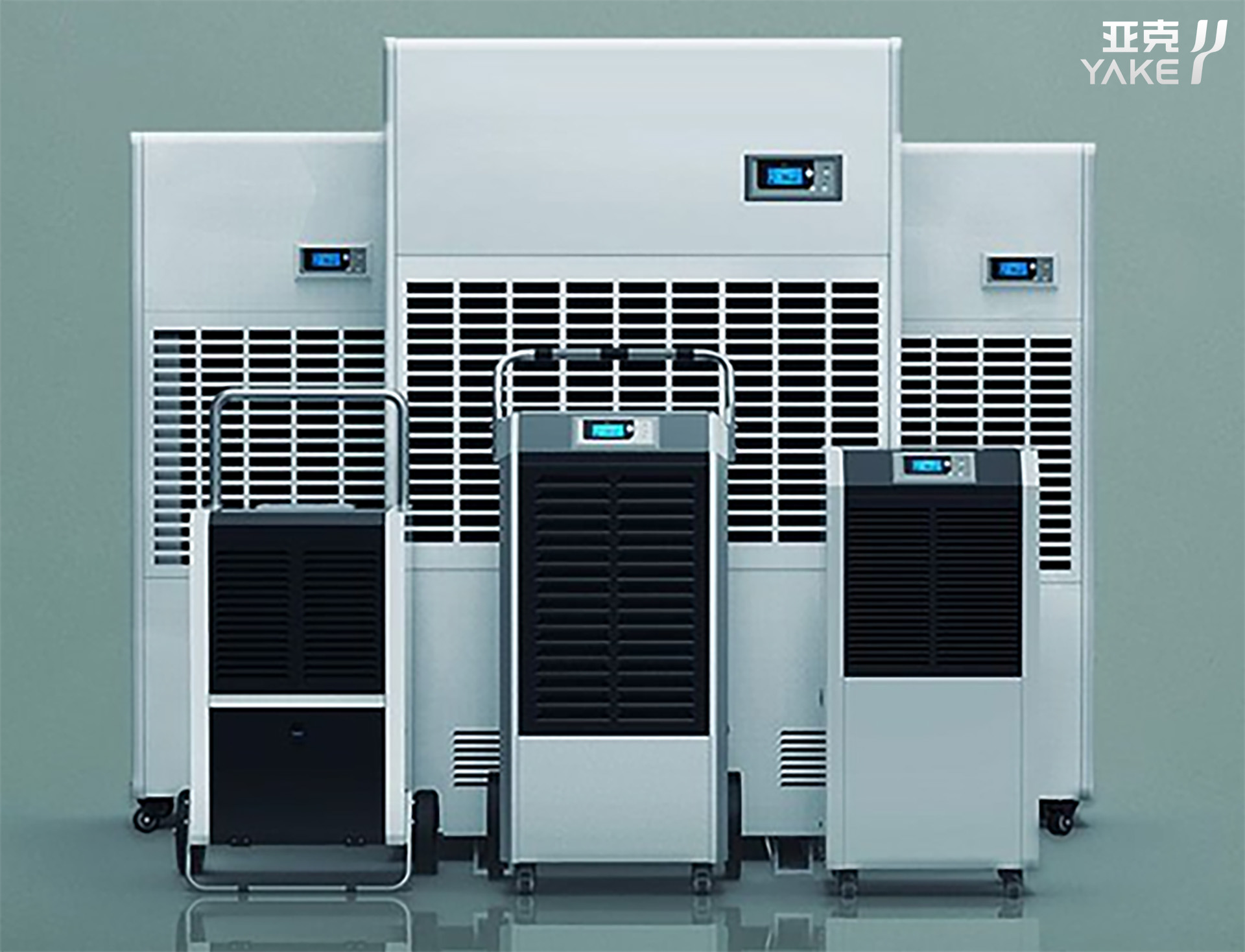
Contact us to find the best place to buy your Yakeclimate solution today!
Our experts have proven solutions to keep your humidity levels in check while keeping your energy costs low.