
Building 34, No. 535 Shunfeng Road, Hangzhou, Zhejiang, China
[email protected]
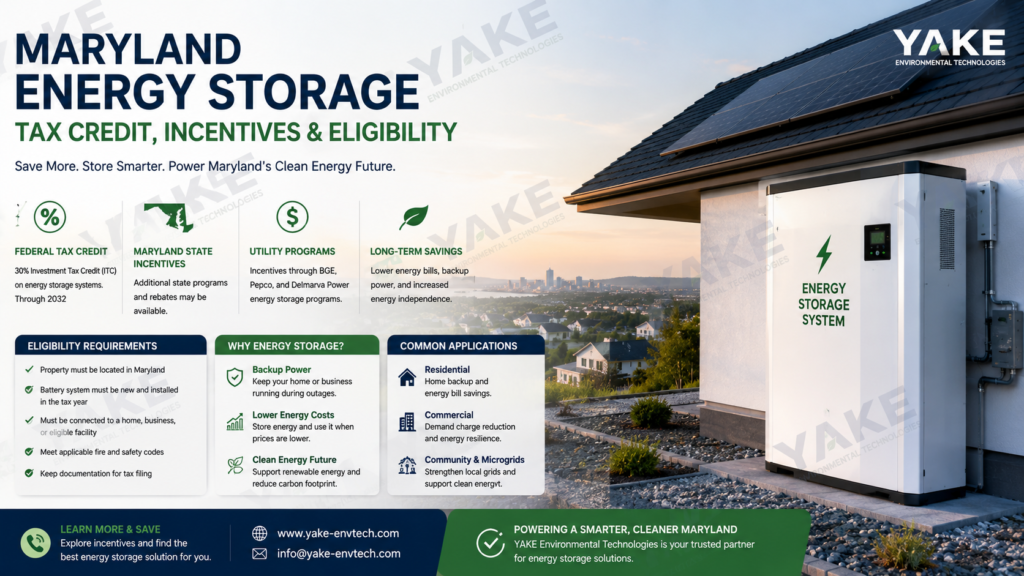


Maryland energy storage tax credit is a state incentive providing income tax credits for the installation of eligible energy storage systems in residential and commercial properties. It incentivizes both solar-paired and stand-alone storage, with credits calculated as a percentage of eligible project costs, limited to yearly caps. Plant leaders, facility teams, and building owners use it to reduce upfront capital costs when they retrofit storage for peak shaving, backup power, or grid services. The credit dovetails with larger ambitions for grid resilience and reduced energy consumption. Below we detail who is eligible, how much money is available, and how to claim it for industrial and commercial projects.
How to Decode the Maryland Energy Storage Tax Credit It evolved from state legislation to promote grid resilience and enable additional solar and wind on the system. The core idea is simple: cut upfront cost so more homes, businesses, and industrial sites add storage to shift load, shave peaks, and ride through outages. With an annual funding cap of $750,000 and a first-come, first-served basis, this is more like a race than a certain rebate.
The credit is available for residential, commercial, and agricultural property owners as long as it is installed on property in Maryland and tied to a Maryland tax filer.
Only brand new, permanently installed energy storage systems are eligible. Used or refurbished batteries, temporary trailer units, or leased third-party assets typically do not qualify per the rules. For an industrial plant, that means the battery has to sit on your balance sheet and on your site.
Systems must meet minimum technical standards from the MEA, such as being capable of charging from the grid or onsite renewables, having UL-listed components, and meeting local electrical and fire codes.
The credit claimant must be a Maryland income taxpayer, as the incentive is claimed on the state return, not as a cash grant.
The credit is worth 30% of the total installed cost. Sector-specific caps are in place.
For residences, the limit is the smaller of 30% of the expense or $5,000. For commercial and industrial projects, the cap is the lesser of 30% of the cost or $150,000, which suits larger systems backing process loads, compressed-air systems, or dehumidification and HVAC.
Simple example:
| System type | Installed cost (USD) | 30% of cost | Cap | Credit allowed |
|---|---|---|---|---|
| Home battery | 12 000 | 3 600 | 5 000 | 3 600 |
| Plant battery | 800 000 | 240 000 | 150 000 | 150 000 |
The credit is nonrefundable. Unused amounts roll forward against future Maryland income tax for a number of years.
Applications must be submitted for each tax year by the MEA deadline, which for 2023 ended on January 15, 2024, with the same mid-January cutoff applying in subsequent years. Money is limited and as of November 22, 2024, total funded and pending 2024 applications already go beyond money available.
You apply online via the MEA portal, inputting your project data, costs and system specifications, then uploading all supporting documents. Schedule time for alignment between your storage vendor, electrical contractor and, if applicable, your humidity control or HVAC provider so information is aligned.
It helps to gather everything before you start: contracts, invoices, spec sheets, permits, and interconnection approvals. That cuts down on back-and-forth, which counts in a first-come queue.
Once submitted, track your portal account and email. MEA might request clarifications or additional documentation, and delayed responses can bump your spot in line.
Key documentation consists of purchase receipts, installation invoices, and complete technical specifications for the battery, inverter, and control system. For an industrial site, segregate labor, materials, and soft costs so the eligible basis is transparent.
You must have utility interconnection approval or permission to operate, as well as any local permit sign-offs or inspections. MEA won’t ultimately close an award if the system isn’t legally energized.
They need an IRS W‑9 form, so they can issue the tax credit certificate in the proper name and ID. Clean pictures of the installed system, nameplates, and general layout go a long way in demonstrating that the project matches the paperwork.
Failing to apply during the annual window renders any project ineligible for that tax year, even if the system is large and well designed.
Many applicants trip over incomplete documentation: mismatched invoices, missing permits, or specs that do not show storage capacity in kilowatt-hours. This drags out review and, in a budget year, can lose you a place.
Failure point #2: Installing non-qualifying or used technology. While cutting costs with second-hand batteries sounds good on paper, it obstructs credit access and can increase safety risks in industrial environments that already operate complex loads like big dehumidifiers.
Ignoring state and local permitting rules jeopardizes the credit and can delay energization. From an operations perspective, the optimal approach is to time the tax credit in alignment with electrical design, storage sizing, and any additional climate-control or process-load equipment so that the overall project remains compliant from start to finish.
Maryland’s energy storage tax credit accelerates storage adoption by reducing upfront cost and payback time for homes and businesses alike. That shift matters because the federal government has frequently pulled back from robust climate action, and states are now shouldering more of the burden. Maryland’s approach demonstrates how state-level tax credits, net billing rules, and transparent interconnection paths push the market from pilot projects into the mainstream.
For homeowners, the most immediate payoff is backup power. Power outages have increased approximately 80% from 2000 to 2021, propelled in part by more intense weather. Battery combined with solar can keep critical loads, such as the refrigerator, necessary medical devices, and essential lighting, going when the rest of the grid is out.
The tax credit makes TOU arbitrage more realistic. Peak-hour tariffs on TOU plans, for example, can be multiples of the off-peak rates. Storage enables a home to charge when prices are low and then discharge in the peak evening. Over time, that price differential can counterbalance a significant portion of the battery cost.
Modern storage translates as an enduring resource. In real estate markets that appreciate solar, pairing it with a right-sized battery can boost perceived home quality and resilience like high-grade insulation or efficient HVAC. Storage reduces day-to-day dependence on the grid, which is crucial in areas with strained infrastructure and more intense storms.
On the commercial side, the primary lever is demand charges. Several tariffs charge not only kilowatt-hours consumed but the maximum 15 or 30 minute kilowatt spike over the month. Batteries can trim those peaks, smooth load profiles and reduce total energy cost per unit of production.
For plants with mission-critical processes, such as pharma cleanrooms, paint lines, and precision electronics assembly, storage provides ride-through during short sags and swells. That can avoid scrap, rework, and unplanned downtime, which frequently costs a lot more than the power itself. In some cases, storage assets can participate in utility programs that compensate for capacity, frequency response, or other grid services. The Maryland credit, along with these sources of revenue, can sustain adoption for both small workshops and large multi-site campuses.
At system scale, distributed batteries provide a form of flexible capacity support that comes to the grid’s aid in peak events, like heat waves or cold snaps. Storage can absorb mid-day solar surpluses, then discharge through the evening, allowing Maryland to incorporate more variable renewables without curtailment. That matters when every state has its own renewable targets and incentive levels and must tune tools to its own grid mix.
For utilities, this eases load on aging transformers and feeders, postpones substation upgrades, and minimizes blackout threat when lines are already put to the test by climate-driven extremes. When numerous homes, hospitals, cold-storage sites, and water systems are equipped with local storage, communities become better disaster-ready. Other states, seeing these results and the vacuum created by disjointed federal climate policy, can customize Maryland’s recipe of tax credits, net billing, and transparent regulations to align with their own grids and environmental aims.
Maryland’s storage tax credit occupies a busy policy space. Its design is relatively thin and focused. For industrial users, it functions less as a stand-alone driver and more as a critical element in the overall project finance stack, particularly when combined with federal tools and wider clean-energy policy.
On the federal level, the ITC now extends to stand-alone energy storage in many instances, with rates that can climb as high as 30 percent or more of eligible project costs when siting, prevailing wage, and domestic content requirements are fulfilled. This federal ITC typically applies to sizable lithium-ion systems that back up peak shaving, backup power, or renewable integration for plants and logistics hubs.
Maryland’s Energy Storage Income Tax Credit is easier. It provides 30% of project cost but limits the return to $5,000 for residential systems and the lesser of 30% or $150,000 for commercial systems. Maryland establishes a firm annual limit of 750,000 USD, and prizes are given on a first-come, first-served basis via an online application that remains open throughout the tax year until money is depleted. In 2024, funded and pending requests were already over budget by late November, which indicates both the robust demand and the fact that timing is everything for project teams.
For nearly all commercial or industrial storage projects, the federal ITC captures the lion’s share of value. Maryland’s credit whittles down residual capital cost and enables smaller or mid-scale deployments. The credit is claimed on the state income tax return with Part R of form 500CR, so finance teams must align documentation early and ensure that federal and state incentives are calculated on consistent cost bases.
| Feature | Federal ITC | Maryland Storage Credit |
|---|---|---|
| Level | Federal | State (Maryland) |
| Typical rate | Up to ~30% (plus adders) | 30% |
| Residential cap | No fixed nominal cap | 5,000 USD |
| Commercial cap | No fixed nominal cap | 150,000 USD or 30%, whichever is lower |
| Funding limit per year | No state‑style pool cap | 750,000 USD total statewide |
| Allocation method | Tax rules only | First‑come, first‑served until funds are exhausted |
New York goes a separate way, leveraging binding statewide storage targets rather than a capped tax credit pool. New York has set multi-gigawatt deployment goals supported by utility procurements and programs through NYSERDA. These encompass capacity payments, upfront grants, and performance-based incentives that reward real-world grid services. The format drives bigger systems to provide peak load relief, renewable integration, and resilience in dense urban grids.
Relative to Maryland, New York relies less on the tax code and more on direct market signals and mandates. Maryland’s first-come, first-served pool is easier to talk through with a finance team, but once that 750,000 USD cap is reached, extra projects get nothing for that tax year. New York’s combination of targets and procurement can provide industrial users more predictable long-term signals, while the application and compliance work can be heavier.
Maryland can still take a lesson here. Without even full New York‑style mandates, clear long‑term storage targets would enable industrial facilities to plan behind‑the‑meter batteries to support internal loads, on‑site renewables, and process‑critical systems such as dehumidification or chilled‑water plants. Greater alignment between the storage credit and Maryland’s RPS could help drive more projects that combine PV, storage, and load control, reducing both emissions and operating risk for manufacturing facilities.
Maryland’s energy storage incentives do more than just squeeze project payback. They innocuously redirect cash flows, jobs, and risk throughout the local economy. Even with the tax credit replaced by the Residential and Commercial Energy Storage Grant Program, the underlying economic gears stay much the same. Lower energy spend, more stable operations, and new technical work for local firms are all part of the effect.
Each financed battery system must be designed, interconnection studies performed, installed, commissioned and periodically serviced. That chain sustains licensed electricians, low-voltage technicians, roof and structural crews and commissioning engineers. As adoption scales, even modest markets can sustain dozens to hundreds of direct installation and maintenance jobs, along with indirect warehousing, logistics, and sales jobs. We see the same pattern in the solar industry, where expansion has already spurred new positions in production, field support and operations hubs.
Training comes after the work. Community colleges and trade schools begin offering short courses on storage system wiring, code compliance and safety (NFPA 855, NEC Article 706, and manufacturer-specific). For plant managers, this generates an increasing cadre of technicians familiar with both on-site batteries and current electrical or HVAC systems. Companies like Yakeclimate can tap into this workforce to install dehumidification and climate controls around such new storage rooms, where temperature and humidity windows safeguard battery life.
For small electrical contractors, rebate-backed demand can help justify bringing on apprentices, investing in test equipment, and pursuing supplier partnerships. Once a local company has a few dozen successful storage projects, work tends to repeat: upgrades, expansions, and service contracts that stretch well beyond the initial grant period. That’s where long-term jobs come in, linked to continuous maintenance loops and system tuning, not one-off installs.
Storage alters the asset mix of a location. Homes and facilities that combine solar with batteries reduce grid imports, use time-of-use rates more effectively, and avoid peak charges. Lower, more predictable bills translate to higher net operating income for commercial sites and more disposable income for homes, which often loops back into local goods and services. Over time, that economic stability typically manifests itself in higher valuations and simpler financing.
Buyers care about risk. Power outages grew by roughly 80% from 2000 to 2021, and stored energy helps keep critical loads online: cold rooms, process lines, humidity control, fire systems, and IT. For industrial users, that cuts scrap, rework, and moisture losses at downtime. For families, it shields meals, home offices, and medical gear. In net billing markets like Arizona’s, the more stable revenue stream from exported energy gives lenders and buyers more concrete figures, which can mean more favorable terms and higher resale demand.
Ways energy storage can enhance property value include:
Insurers price risk and resilience. It routinely amazes me how many sites without properly installed, code-compliant storage that could keep fire pumps, climate control and security systems powered during outages suffer from big-loss situations. With outages increasing and grid events increasingly common, battery-backed resilience can reduce anticipated claims. Certain carriers pass on these reductions via premium discounts or preferential terms, particularly for commercial policies emphasizing business interruption coverage.
Some insurers are even considering it, with a few now adding direct questions about solar and storage to underwriting forms. They might inquire about system size, location, ventilation, and safety certifications. That can cut both ways: discounts for systems designed and installed to current standards and higher scrutiny or exclusions for improvised or poorly documented projects. Once you put in storage, check that policy language. Facility teams need to verify that backup systems, battery room climate controls, and any net billing revenue streams are insured and update asset schedules so insured values reflect the new reality.
Maryland’s storage tax credit lies within a broader transition to high-penetration renewables, more rigorous reliability standards, and soaring energy prices. Policy signals indicate robust long-term support for energy storage, yet more targeted incentives connected to grid value, resilience, and quantifiable cost savings for consumers.
Most state clean‑energy incentives — including the Maryland energy storage tax credit — are written with sunset dates or capacity caps. Lawmakers leverage these end points to manage budget risk and to push markets toward standing on their own once tech costs decline and private capital expands.
With Maryland aiming for roughly 24 GW of storage by 2037, the political argument for long-term subsidies may begin to erode once deployment curves get steep. The pattern is clear in other programs: several U.S. States phased down solar tax credits after rapid adoption, while some European feed-in tariffs for renewables were cut as markets matured. Storage might do the same, with more support during the buildout phase and reduced support after grid managers have seen sufficient flexible capacity come online.
That means timing is important to plant managers and facility engineers. Taking action before a sunset or before a cap on funding is reached can determine whether a project meets internal hurdle rates. A one to two year delay can mean losing that tax credit layer that helps offset capital expenditures for on-site batteries paired with solar, chillers, or dehumidification loads. With residential rates up around 44% since 2020, legislators may expand storage incentives to soften bill shocks, but that is not a sure thing, so project pipelines should model current law and view any expansion as upside.
Governor Moore’s recent actions demonstrate increasing policy alignment on affordability, reliability, and clean energy. His executive order to accelerate cost-effective energy solutions and maintain affordable energy instructs the Maryland Energy Administration to request the Public Service Commission to investigate budget-billing practices, press utilities on transparency, and hold ratepayers harmless from fluctuating bills. At the same time, state law has increased property tax exemptions on added system value, which already enhances economics for solar and can indirectly help paired storage by decreasing overall project overhead.
MSAP, or the Maryland Solar Access Program, is a key piece of the puzzle for 2025. By expanding access to solar and reducing installed cost, MSAP reduces payback periods to less than eight years for certain 2025 projects. Once solar is cheaper and more ubiquitous, policy focus tends to pivot to storage as the next bottleneck, enhancing the likelihood that the storage tax credit gets extended or reconfigured instead of abandoned. Federal policy trends point the same way. The investment tax credit for standalone storage and grid-reliability funding streams make it easier for states to justify their own incentives since state dollars now pull in larger federal co-benefits.
For industrial users, the actionable item is to monitor storage-related, solar-related, and rate-payer protection legislation and committee hearings on legislative calendars. Stakeholder feedback from manufacturers, hospital systems, data centers, and large process plants matters when the state considers whether the storage tax credit is trimming bills and stabilizing operations. Plant teams that demonstrate how on-site storage trims peak demand, stabilizes humidity-critical lines during grid events, and integrates with high-efficiency dehumidification will probably have policymakers interested as they optimize program criteria and eligibility.
Beyond the Maryland energy storage tax credit, a lot of home, building, and plant owners turn to batteries for motivations that don’t appear in a payback spreadsheet. This decision frequently revolves around sustainability, autonomy, and ecological responsibility, which resonate well with how manufacturing facilities consider energy efficiency and climate stability.
Energy storage reduces immediate reliance on the main grid. In practice, a properly sized battery turns a site from a passive consumer to an active operator of its own micro grid. Other owners and facility teams cherish this autonomy as much as any bill savings because they want steadfast power beneath their own roof, not only from a remote substation.
Power outages and energy insecurity more generally increased approximately 80% from 2000 to 2021. With hotter heat waves, storms, and wildfires ahead, that’s a trend bound to continue. During these events, a charged battery keeps critical loads alive: process controls, dehumidifiers, cleanroom HVAC, IT racks, cold rooms, and basic life-safety systems. For numerous sites, the actual worth is downtime averted, not pennies per kilowatt-hour conserved.
Pair storage with solar and it gets even better. The solar panel handles daytime loads and charges the battery, which powers evening peaks and backup. This loop provides a high degree of autonomy and can keep precision climate gear, like industrial dehumidifiers, running when the outside grid is shaky.
Key scenarios where energy independence matters:
Environment motivates many homeowners to use solar and storage even when financial returns are moderate. The fundamental goal is to reduce fossil fuel consumption and carbon emissions, particularly in afternoon hours when grids commonly rely on gas or oil peaker plants. Storage helps shift clean generation into those same peaks, so less fossil capacity is required.
When batteries sit behind solar or wind, the two systems work in tandem. Solar covers mid-day, storage flattens the ramp at sunset, and wind can charge batteries at night when demand is low. This firmed, low-carbon footprint underpins climate action targets at local and national levels and it aligns with corporate decarbonization plans in manufacturing and processing.
Improved air quality is a natural side benefit. Fewer fossil peaker hours means lower local emissions of NOx, SO₂, and fine particles, which ties to lower rates of asthma and heart disease, especially in dense or industrial areas. Many homeowners see a social value here: they are proud to run their homes on clean power, support local renewable projects, and show that small-scale systems can share the load of wider climate goals.
Maryland’s energy storage tax credit does tangible work. It reduces project costs, accelerates payback, and helps more batteries get built in actual homes and actual plants.
The policy makes a strong statement. The state views storage as essential grid equipment, not an ancillary accessory. That counts for lenders, developers, and owners that think in decades.
There are still gaps. The cap is small. Demand can exceed funds. Regulations can change. The pattern remains obvious. Storage goes from niche equipment to standard equipment.
For your own site, digits sell best. Run a trivial case. Size the system, stack the tax credit, and see if the return fits your plan.
Maryland homeowners, businesses, and nonprofits may qualify if they install a qualifying energy storage system at a property they own. The system must comply with state technical standards and be utilized primarily within Maryland. As eligibility rules change, always verify with the Maryland Energy Administration.
This credit is typically a percentage of your total installed system cost, up to a certain cap per project. Specific amounts and caps vary by year. See the current numbers on the MEA website or with a qualified local installer.
In most cases, no. Maryland’s credit is frequently stackable with the U.S. Federal ITC for qualifying battery systems. They’re important to coordinate, so consult a tax professional to be sure you claim both appropriately and abide by all regulations.
Not directly, but indirectly, yes. The credit reduces your upfront cost, making batteries more accessible. Once in place, storage may shift electricity use to inexpensive hours, enable solar self-consumption, and enhance resilience. This may lower long-run costs for energy and outages.
Maryland is one of the first movers with targeted storage incentives. A few states are primarily solar-centric, but Maryland has a storage-specific tax credit. Others might use rebates or performance payments. Maryland’s strategy seeks to accelerate adoption and enable grid reliability.
Increasing distributed storage can reduce grid stress at peak load hours, assist renewable energy integration, and enhance reliability. By incentivizing private investment in batteries, the program helps the grid absorb variable solar and wind energy with fewer interruptions and less dependence on fossil fuel peaker plants.
The program is contingent on the state budget and policy review. Lawmakers could renew, expand, reduce, or redesign it based on performance and climate objectives. For the latest status, consult current legislation and Maryland Energy Administration updates prior to project planning.


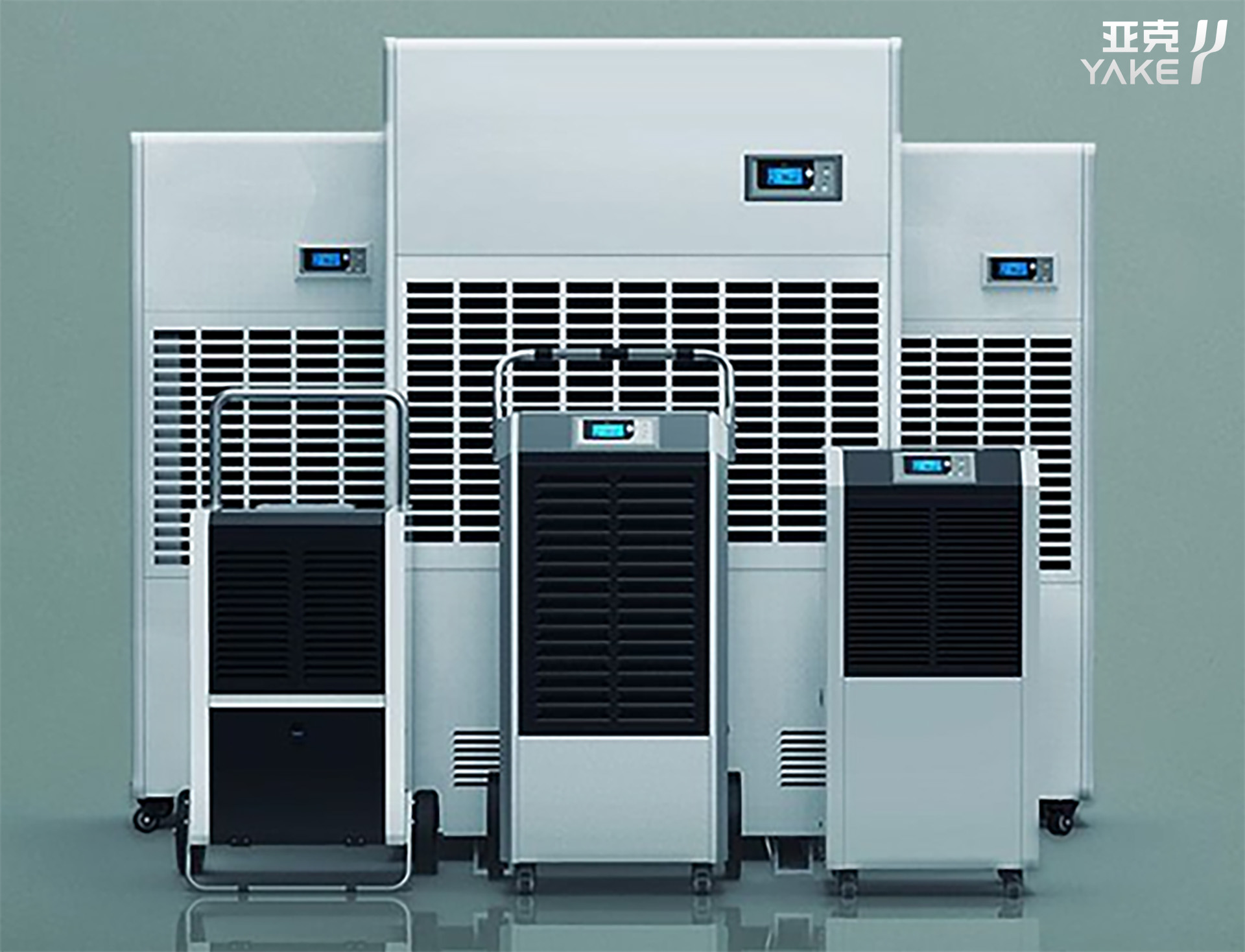
Contact us to find the best place to buy your Yakeclimate solution today!
Our experts have proven solutions to keep your humidity levels in check while keeping your energy costs low.