
Building 34, No. 535 Shunfeng Road, Hangzhou, Zhejiang, China
[email protected]
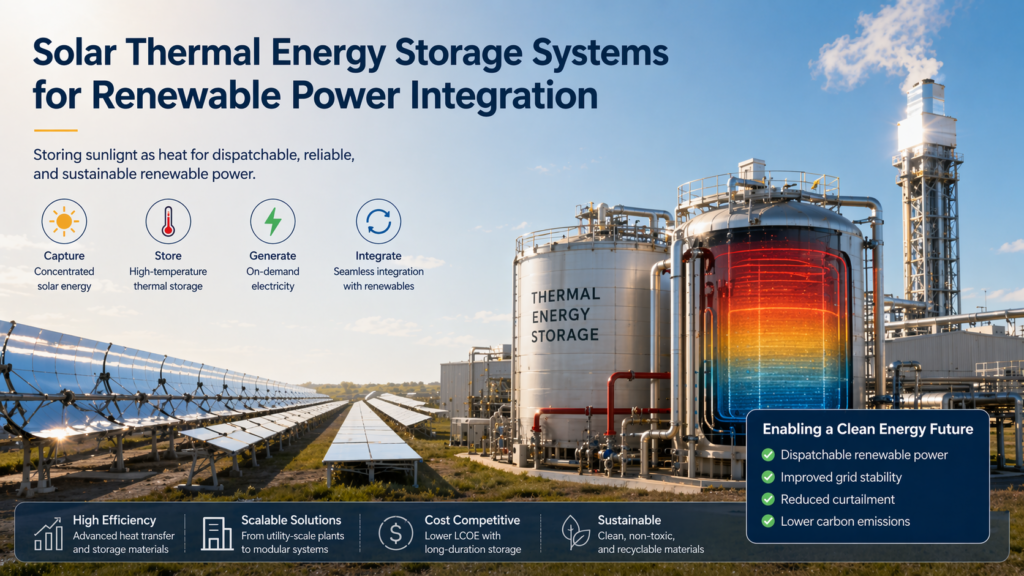


Solar thermal energy storage systems are systems that store heat from the sun so plants can use it later for power, process heat, or heating and cooling. These systems typically employ hot water, molten salts, or phase change materials to store heat at certain temperatures. In industrial plants, they assist in shifting heat loads, reducing fuel consumption, and flattening peaks in demand. Most systems couple with solar collectors, steam loops, and heat exchangers, and tie into existing boilers or CHP plants. Important design considerations are storage capacity in kilowatt-hours, charge and discharge rates, temperature range, and round trip efficiency. The following discusses main technologies, design options, and where it fits into real plants.
Solar thermal energy storage systems capture solar heat, store it in a controlled medium, and release it when demand is at its peak or the sun is absent. They help align fluctuating solar supply with constant thermal loads, which is important for plants with round-the-clock process lines, cleanrooms, or HVAC for big buildings. In grid-connected configurations, they facilitate renewable penetration by smoothing concentrating solar power plant output and shaving gas or electric boiler peaking.
They decouple the time of solar collection from the time of use, so a plant can collect heat at noon and still drive process hot water, drying, or absorption chillers hours later or even months later in STES. That flexibility supports grid stability and decreases reliance on backup fossil systems.
Common applications include:
Solar thermal energy storage works in three linked steps: absorb solar radiation, store the heat at a useful temperature, and then release it in a controlled way to a load or a power block. Collectors or concentrators initially convert sunlight to thermal energy. Flat-plate and evacuated tube collectors provide for low to medium temperature applications, whereas parabolic troughs, central receivers, or linear Fresnel units supply higher temperature CSP. The system then transports heat into some form of storage medium where it can be stored with minimal loss and safely. It later transfers that heat back to water, air, or thermal oil with heat exchangers. The heat could power air-handling units or process loops, or in the case of CSP, drive steam turbines that generate electricity on demand. This is where molten salt storage accounts for roughly 75% of global TES capacity.
Sensible heat storage stores energy by increasing the temperature of a solid or a liquid without a phase change.
Common media are water tanks for low temperatures and molten salts for higher ranges, with saltpeter-based blends melting at about 220 degrees Celsius and maintained at roughly 290 degrees Celsius in insulated tanks to remain liquid. They remain appealing because they contain familiar materials, uncomplicated tank geometries, and conventional pumps and valves that plant engineers are familiar with, trust, and know how to service. Compared with more advanced concepts, sensible storage is usually cheaper per kilowatt-hour and easier to scale from small buffer tanks to multi-megawatt fields in concentrated solar power or district energy.
Latent heat storage employs phase change materials (PCMs) that melt and solidify at desired setpoints while absorbing or releasing significant quantities of energy.
Energy density is more than with basic water tanks at the same volume, which comes in handy where plant room space is tight. Typical PCMs are paraffin waxes, fatty acids, and specialty salt hydrates tuned to melting ranges for specific HVAC or process needs. Since temperature remains nearly constant during phase change, these systems can maintain supply temperatures very close to a setpoint, which aligns well with steady feed temperatures for air-handling coils, process baths, or low-temperature industrial cooling.
Thermochemical storage stores energy in reversible chemical reactions, with heat propelling a reaction in one direction and the reverse reaction releasing that heat later.
Energy density is high and losses over time can be very low, so these systems work well for seasonal storage, sending summer solar heat into winter space heat or industrial preheat. They require innovative sorbents or reactive salts, meticulous management of mass transfer, and precise system design, so they still tend to be more complicated than water or molten salt tanks. For utility-scale solar power plants or district-level networks, they provide a route to long-duration storage spanning weeks or months.
Key elements are solar collectors or concentrators, storage tanks or reactors, heat exchangers, pumps, valves, and a control system connected to plant or building automation.
Collectors capture solar energy. Storage systems contain hot or chilled water, ice, molten salts, or PCMs. Heat exchangers transfer energy into plant loops without mixing the fluids. Insulation strength about tanks, piping, and valves is critical, as every percent of thermal loss reduces effective storage capacity and increases operating expense. Monitoring, automation, and integration with existing SCADA or BMS platforms let operators schedule charging and discharging against tariff windows, production plans, and grid signals. By 2025, Europe alone is projected to exceed 275 MWh of TES just for industrial applications.
Storing solar heat addresses the fundamental issue that solar input very seldom aligns with when we actually need energy. Demand for heat, cooling, and power peaks in early morning, evening, and in winter, while solar radiation peaks at mid-day and in summer. Thermal energy storage (TES) shifts this mismatch so solar can serve as reliable, dispatchable energy rather than a “use it now or lose it” source.
For industrial, commercial, and residential users, stored solar heat equates to consistent process temperatures, consistent building comfort, and reduced dependence on fossil boilers or grid-based electricity. Why Store Solar Heat? By reusing the day’s excess heat at night or on cloudy days, the overall system efficiency is raised, improving the economics of solar thermal fields, rooftop collectors, and hybrid systems. Whether at scales ranging from a small TES tank for a single building to district-level storage serving heating networks, this transition further reduces fuel consumption and reduces GHG emissions.
On systems powered by concentrated solar power (CSP) with molten-salt storage or by solar-assisted heat-to-power plants, TES acts like a thermal battery that keeps the grid stable. This allows them to store solar heat. Operators can continue charging storage when solar output is high and prices are low, then run steam turbines or ORC units later when the grid really needs power.
This directly smooths solar intermittency. Rather than spike ramps when clouds or sunset pass, stored heat allows plants to ramp up generation more gradually, reducing stress on gas peakers, transformers, and transmission lines during peaks. In most places, a relatively small hot-salt or hot-water storage block can store a few hours of full-load output, helping keep frequency and voltage in safe ranges.
That stored solar heat adds resilience, too. During grid faults or extreme weather, plants designed with TES can keep key loads running longer and can support black-start strategies for critical facilities and microgrids.
When sites store solar heat, they can pull energy any time the sun isn’t shining – at night, during cloudy weeks or in cold seasons when solar radiation fades but heat demand spikes. In practice, this can be anything from a well-insulated hot-water tank to a thermochemical system that stores heat for months at a time with low losses.
For factories, hospitals, and data centers, it means backup capability and more continuous operation. Thermal storage can maintain absorption chillers, desalination units, or combined heat and power blocks online during grid or fuel outages, which is absolutely essential where downtime is expensive. It offers flexibility: control systems can pre‑charge storage when demand is light, then discharge during morning and evening peaks to lower purchased electricity and gas.
This is even more important off-grid. Remote mining sites, island grids, or rural agro-processing plants can pair collectors with TES to reduce diesel run hours. A relatively small storage unit can contain enough energy in hot or cold form to heat or cool a large building for a day or even a week, stabilizing microgrids with fragile or costly fuel supply chains.
Industrial users give less to “green image” and more to consistent, precise heat. TES turns solar into a legitimate heat source for unit operations requiring narrow temperature ranges, from pasteurization at food plants to low-pressure steam for pharmaceuticals or hot air for drying and curing at textiles and automotive coating lines. Reliable storage transforms volatile solar feed into a consistent, steady supply, so control loops and product quality remain in situ.
Integration possibilities are wide. Solar thermal fields can feed storage tanks that tie into existing boiler return lines, preheat make-up water, or supply low-temperature loops on heat exchangers. In chemicals and general manufacturing, TES can preheat process streams, back district steam networks, or power absorption chillers for process cooling.
Buildings account for a majority of global final energy use, primarily as heat, and can connect TES to HVAC, domestic hot water, or low-temperature heating systems.
The economics get better. Why Store Solar Heat? Storing solar heat rather than solar electricity drives solar fraction higher and enables better optimization of collector size, load profile, and operating strategy. This translates into improved system performance. Analyses and simulations demonstrate that this increased effective storage density of solar heat provides approximately a 30% increase in effective storage density, making compact, high-density designs more feasible for crowded industrial sites. It reduces operational costs and carbon emissions. Over time, this cuts fuel burn, lowers carbon from heating networks, and supports compliance with tightening emission rules.
Research in thermochemical solar storage peaked in the 1970s oil crisis and since then focused largely on building and industrial use. Dense media and long‑duration storage can bridge daily and even seasonal gaps in solar supply. Such long‑term storage is crucial if plants wish to cover a significant portion of their annual heat demand with solar without having to oversize collector fields to uneconomic levels.
The storage material dilemma in solar thermal, especially concentrated solar power (CSP), is about one hard choice: which medium can hold a lot of heat, stay stable for years, and still keep total project cost in check. Every choice tips the scales between price, energy density, temperature of operation, system complexity, and long-term upkeep. For industrial users, this decision has implications beyond plant output and impacts grid commitments, O&M budgets, and how support systems such as dehumidification protect tanks, piping, and insulation from corrosion and moisture intrusion.
Thermal storage cost isn’t just about €/t material. It connects material cost, specific heat, working temperature range, and the amount of steel, insulation, pumps and controls you have to have strapping around it. In CSP, water, molten salts and solid media like packed beds or concrete blocks lie on different points of this curve.
Molten salts are now the industry standard workhorse in many tower and trough plants. They provide high thermal capacity and low cost per kWh stored, so developers can reach multi-hour dispatch goals without spaghetti tank farms. That higher energy density means heat tracing, more stringent temperature control, and more precise humidity and corrosion control around tanks and ancillary systems.
Storage media days cycle thousands of times during a plant lifetime. The issue with storage media is that repeated heating and cooling cause thermal stress, micro-cracks, phase changes and in liquids, stratification. In molten salts, slow decomposition at high temperature and interaction with oxygen or trace moisture can shift chemistry over time and increase corrosion risk on tank walls and pipe runs.
High thermal stability is not just a lab figure. It determines your feasible operating window and how aggressively you can push for hotter turbine inlet temperatures. Materials that appear okay at 300 °C might exhibit creep, sintering, or breakdown nearer to 600 °C, which is where many next‑generation CSP concepts want to operate. Packed‑bed solids tend to triumph on structural durability. However, you still encounter particle fragmentation, dust creation, and migrating pressure drop as beds mature.
Liquids and certain phase-change materials bring their own set of problems. Tank steel corrosion, leakage at flanges and valves, and chemical breakdown products all drive inspection cycles. They interact with ambient factors: moisture, oxygen, and contaminants can enter during maintenance if the climate around the plant is not well controlled. That’s where close humidity control around storage blocks, pump galleries, and control rooms aids coating life and minimizes unplanned outages.
Hardness planning turns into composite materials and O&M issues. Plants that incorporate routine NDT, salt chemistry analysis, leak detection, and easy access to packed beds in the design tend to maintain performance longer. Upfront engineering that considers storage material, tank design, and environmental controls as a single system typically pays off in lower lifetime cost.
All thermal storage tanks dissipate heat through conduction, convection, and radiation. The significant temperature differentials between hot media and ambient air drive losses. CSP tanks with molten salts or high-temperature solids require careful insulation, tight cladding, and dry, stable surroundings to maintain the outer envelope within design limits.
Insulation scheme is just as important as material. Multi-layer insulation with high-temperature blankets, thermal breaks at supports, and well-sealed penetrations can reduce losses to a small fraction of stored energy per day. Good practice includes vapor barriers and controlled humidity in tank farms and pipe racks because wet insulation conducts more heat, adds weight, and accelerates corrosion under insulation.
Thermal losses impact plant economics. Every megawatt-hour you lose overnight is one less you can sell at peak prices. In systems where molten salts require heat tracing to prevent freeze, any additional loss increases auxiliary load and can nudge salts towards their freezing point, which presents blocking hazards and expensive restart processes.
Monitoring and control bring the loop full circle. Temperature sensors in tank walls, salt lines, and packed beds along with periodic inspections of insulation condition allow operators to adjust setpoints and identify potential issues. Meanwhile, continued research into advanced materials, such as higher-temperature salts, phase-change materials, and better solids, seeks to boost energy density while keeping costs and losses low enough for CSP to scale in more markets.
Performance metrics indicate whether a solar thermal energy storage solution is worth the land, capex, and integration risk. For industrial users, the critical ones are storage efficiency, cost-effectiveness, and lifespan, all connected to project viability, payback, and carbon goals. The same discipline used for thermal management of electronics, Li-ion batteries, or photovoltaic modules applies here: clear definitions, sound data, and honest comparison of options.
Storage efficiency is what percentage of the energy you put in you get out. In reality, you monitor energy charged into the storage tank or PCM block, then monitor energy discharged to the process loop or turbine. Exergy efficiency counts as well, with about 47.5 percent and charging efficiency at 85.2 percent being industry standards for research-scale systems and enabling you to evaluate how close you are to thermodynamic limits.
Insulation, tank geometry and PCM selection contribute to the majority of losses. Paraffin (55–57 °C) and fatty acids (65–67 °C) can be cascaded, so each layer absorbs heat in its own narrow band. That reduces temperature fluctuations and decreases entropy production. Nano-enhanced PCMs (NEPCMs) take this a step further by increasing thermal conductivity and effective storage capacity, but they add expense and occasionally stability concerns.
To evaluate true performance, you require time-series data. A typical approach is to record temperature at 5-minute intervals over 240 minutes while charging and discharging, then extrapolate stored and delivered energy. Anticipate volatility; a 3.4% margin of error is the norm and belongs on any spec sheet or feasibility model.
Industrial teams, for instance, might test two or three configurations in parallel, such as different mass flow rates through the heat exchanger. Comparing efficiency curves indicates for which design initial charging efficiency, perhaps around 90 percent, is reached fastest, how quickly it declines, and when it becomes stable. That figure shows you how the system will respond to start-stop plant operation and partial-load solar input.
Cost-effectiveness ties together up-front hardware, field erection, controls and the long tail of O&M. You map every cost line to one unit: usually euro per kWh of usable stored heat over the life of the system. That means you don’t just measure capital per kWh of nominal capacity, but cost per kWh actually cycled at your actual discharge temperature.
Lifespan has massive leverage. Something that operates 25 years with low efficiency can outrun a 15-year field-tested, high-performance model if it escapes a few major rebuilds. At plant level, you fold in fuel saved, peak-shaving value, and any carbon price or incentive. The same logic you use to judge high-efficiency dehumidifiers carries over: higher efficiency and longer life usually wins on net present cost.
Illustrative relative ranking (values are indicative, not universal):
| Storage technology | Relative cost per kWh stored | Typical scale |
|---|---|---|
| Sensible heat (molten salts) | Low–medium | Utility, CSP |
| Cascaded PCM (paraffin + fatty acid) | Medium | Industrial process |
| NEPCM-based PCM systems | Medium–high | High-precision use |
| High-temperature ceramic sensible | Medium–high | High-T industries |
When comparing offers, verify that test conditions are comparable. Different charge temperatures, flow rates, or cycling profiles can hide real cost gaps.
Operational lifespan covers the years and cycles during which the system maintains its rated capacity and efficiency. For thermal storage, that often translates to robust PCM melting point, no significant tank corrosion, and heat exchangers that maintain design flow without fouling. Longer life increases ROI and reduces life cycle emissions per kWh.
It is important that your materials hold up. Certain paraffin mixtures begin to exhibit phase segregation after repeated cycles. Some of the fatty acids remained stable. NEPCMs enhance heat transport but can increase concerns over nanoparticle agglomeration, which is why lab and pilot cycling tests remain critical. System design sets the limit. Careful control of charge temperature, flow rates, and thermal stresses can add years.
End-of-life planning is an early design brief. You require a route to reclaim salts or PCMs, safely remove nanoparticles, and recycle steel tanks and piping in accordance with regional regulations.
Solar thermal storage is moving beyond standalone plants to become networked assets connected into heat pumps, batteries, HVAC, and the grid. For industrial sites, the real value these days comes from how well storage plays synergies with existing utilities, process loads, and control systems, not from solar hardware alone.
Hybrid setups combine solar thermal storage with batteries, heat pumps or even mechanical storage such as chilled-water tanks or phase-change units. A food processor, for instance, might rely on solar collectors and a hot-water tank for low-temperature process heat, with a battery compressing peak electrical loads from motors and controls. MicroCSP fields can supply pressurized hot water or steam for coffee bean or marigold drying, while a minuscule battery gauges fan and conveyor power. At utility scale, Ivanpah and SEGS combine thermal storage with grid connections and occasionally backup boilers so dispatch remains consistent even with cloud cover.
This type of blend increases dependability. If solar input falls, a heat pump can raise tank temperature with off-peak grid power. A battery can ride short crashes and safeguard essential drives, chillers, and dehumidifiers. Plants can shift energy use: charge thermal tanks when solar is strong or electricity is cheap, then run dryers, washers, or HVAC reheat later in the day.
Common hybrids have layouts like solar thermal combined with heat pump and buffer tank for low-temperature process or space heat, CSP or microCSP combined with molten salt or pressurized water and grid tie for power and process steam, and solar thermal combined with transpired collectors and central HVAC to preheat ventilation air and reduce boiler or burner run time.
Smart controls sit above these hybrid systems and queue up when to charge, maintain, or discharge storage. A cool plant of the future will trend solar input, tank stratification, battery state of charge, process demand and grid tariffs in real time, then select the lowest-cost, lowest-risk energy route. Supervisory controllers, for example, can watch grid signals like demand-response calls and pre-heat storage or pre-cool chilled loops to drop demand on cue.
Predictive control is on the rise. With forecasts for weather and production schedules, algorithms determine how much heat to store in seasonal thermal energy storage (STES) fields or large tanks and when to tap them. It matters when you integrate solar thermal with HVAC reheat, make-up air units with transpired collectors, and precision dehumidification for paint shops or tablet coating lines, where setpoints are tight and swings hurt yield. Remote dashboards bring this all into one view. Engineers can push new setpoints, adjust charge priorities among tanks and batteries, or activate backup boilers remotely and integrate the same logic with smart grid applications or local microgrids.
Storage hardware must stand up in very different climates and duty cycles. For hot, arid sites, exposed piping and tanks require high-quality insulation and UV-stable jacketing to reduce thermal losses and surface degradation. In cold climates, designers select media and materials that can withstand freeze-thaw cycles and detail support steel, anchors, and seals for snow and ice loads. STES blankets for district or campus heating require meticulous ground insulation and moisture management so heat stored in summer is still available months later.
Weatherproof housings, corrosion-resistant coatings, and robust seals are essential in the presence of sand, salt, or industrial pollutants. Transpired solar collectors that preheat make-up air for factories or warehouses can raise inlet air by approximately 22 °C (around 72 °F). They require clean surfaces, secure installation, and appropriate airflow. They typically feed into central HVAC that connects to dehumidifiers, so airflow balance and duct design are important. Fresnel lens concentrators and microCSP arrays, even though Fresnel systems are not yet common at full scale, add another layer of design: tracking accuracy, optical alignment, and maintenance access.
Flexible architectures facilitate deploying a single platform for global sites with varying policies and requirements. It’s not limited to farms; the same base solar thermal, storage, and HVAC concept can feed a car plant paint line, a pharmaceutical cleanroom with strict humidity control, or a community-scale microCSP plant that feeds both process heat and local power.
Solar TES appears expensive on the surface. The true calculus lives in the balance of long-term cash flow, not the sticker price of tanks, piping, or molten salts. The key is how TES changes plant operation: it shifts output to higher-price hours, boosts capacity factor, and cuts reliance on gas or grid power. When you look at levelized cost of electricity (LCOE), you see a wide band: about $0.08 to $0.59 per kilowatt-hour for indirect sensible heat, $0.03 to $0.22 per kilowatt-hour for two-tank direct sensible, and $0.02 to $0.16 per kilowatt-hour for one-tank direct sensible. That margin comes from design decisions, site solar resource, and market price curves, not just hardware cost. TES systems can raise a CSP plant’s capacity factor from approximately 30 percent with no backup to about 55 percent with 12 hours of storage. That translates to more kilowatt-hours from the same solar field and balance of plant, so fixed operations and maintenance and financing are spread out over more output. For small backup windows, around 1 to 4 hours, plants with TES even have marginally lower LCOE than plants backed by natural gas because you sidestep fuel price risk, gas interconnection, and combustion-related compliance.
On the revenue side, stored thermal energy is a fungible commodity that can pursue higher prices rather than offloading power during noon peaks. For demand-charge or time-of-use rate markets, pushing output into evening ramps can be worth more than raw kilowatt-hour volume. TES-based CSP can play grid support roles: spinning reserve, ramping support, and other ancillary services. While total TES electricity cost can extend up to $1.19 per kilowatt-hour, such as for early-stage or poorly matched projects, it typically comes in as low as $0.02 per kilowatt-hour. Where policy is impotent, as in the current U.S. Situation, federal tax incentives by themselves do not make CSP with TES competitive against inexpensive variable price and low-cost gas. Studies indicate that a carbon price in the range of $100 to $160 per tonne CO2 equivalent would be required for CSP to directly compete with new coal in the U.S. Market. That frames TES economics: if carbon stays unpriced, value comes from flexibility and grid services; if strong carbon policy arrives, the stored solar kilowatt-hour becomes much more attractive overnight. There are hidden savings in the physical layout. TES can reduce above-ground infrastructure because the high-density storage enables more energy per square meter of plant footprint, which reduces structural steel, surface area of insulation, and thermal losses. By using subsurface options, like depleted oil and gas fields for heat storage, heat losses can be reduced even more and very large capacities can be scaled without constructing new massive surface tanks. For industrial users that care about process stability and humidity, this consistent output profile can pair well with efficient dehumidification, as both rely on predictable, 24/7 power instead of fluctuating grid demand. That combination can help protect plants from price surges, minimize unplanned downtime, and enable sustainable, low-carbon production plans in local energy markets while generating engineering, construction, and operations and maintenance employment over the project lifecycle.
Solar thermal storage appears straightforward on the face. In practice, it rests on a precarious balance of heat, flow, costs, and risk. Water tanks, molten salts, phase change medium, and hot rocks each carry compromises in temperature range, load matching, and maintenance.
Plant teams don’t just pursue peak efficiency. They balance land consumption, safety regulations, backup requirements, and market fluctuations. The right tank-coupled storage block can reduce fuel burn, even out output, and extend equipment life. A bad fit can strand a site in high cost for decades.
For your next heat project, begin with the load profile, not the hardware. Map temperatures, hours and ramp rates. From there, a solid storage option begins to crystallize.
A solar thermal energy storage system collects solar heat and saves it for when you need it. It typically employs fluids, molten salts, or solid materials to contain heat. That heat in storage can generate steam for power or steam heat for buildings and industrial processes.
Storing solar heat makes solar energy dependable. It buffers sun fluctuations from clouds and night. That translates into more consistent power generation, more efficient utilization of solar plants and lower fossil fuel backup requirements.
Water, oils, molten salts, rocks, and phase-change materials are typically used as storage mediums. All have their own trade-offs in terms of cost, temperature range, safety, and efficiency. Molten salts are the most used in large plants because they store high temperature heat well.
Important parameters are storage capacity in kilowatt-hours or megawatt-hours of heat, round trip efficiency, operating temperature range, thermal losses and cost per kilowatt-hour stored. Engineers consider lifetime, reliability, and integration with turbines or heating.
Solar thermal storage stores energy in the form of heat, rather than electricity. It’s often cheaper per kilowatt-hour and better for high-temperature industrial use. While batteries respond faster and are superior for short duration electrical balancing, they can be more costly for large, long duration storage.
Yes. It can complement traditional power plants, district heating networks, industrial processes, and occasionally solar PV or wind. Hybrid systems could enhance grid stability and plant operating hours while lowering energy costs and emissions.
They can be competitive in sunny areas with expensive electricity or fuel. Economics vary with plant size, storage length, local energy policy and financing. A long operating life and low fuel costs frequently make up for a higher initial investment.


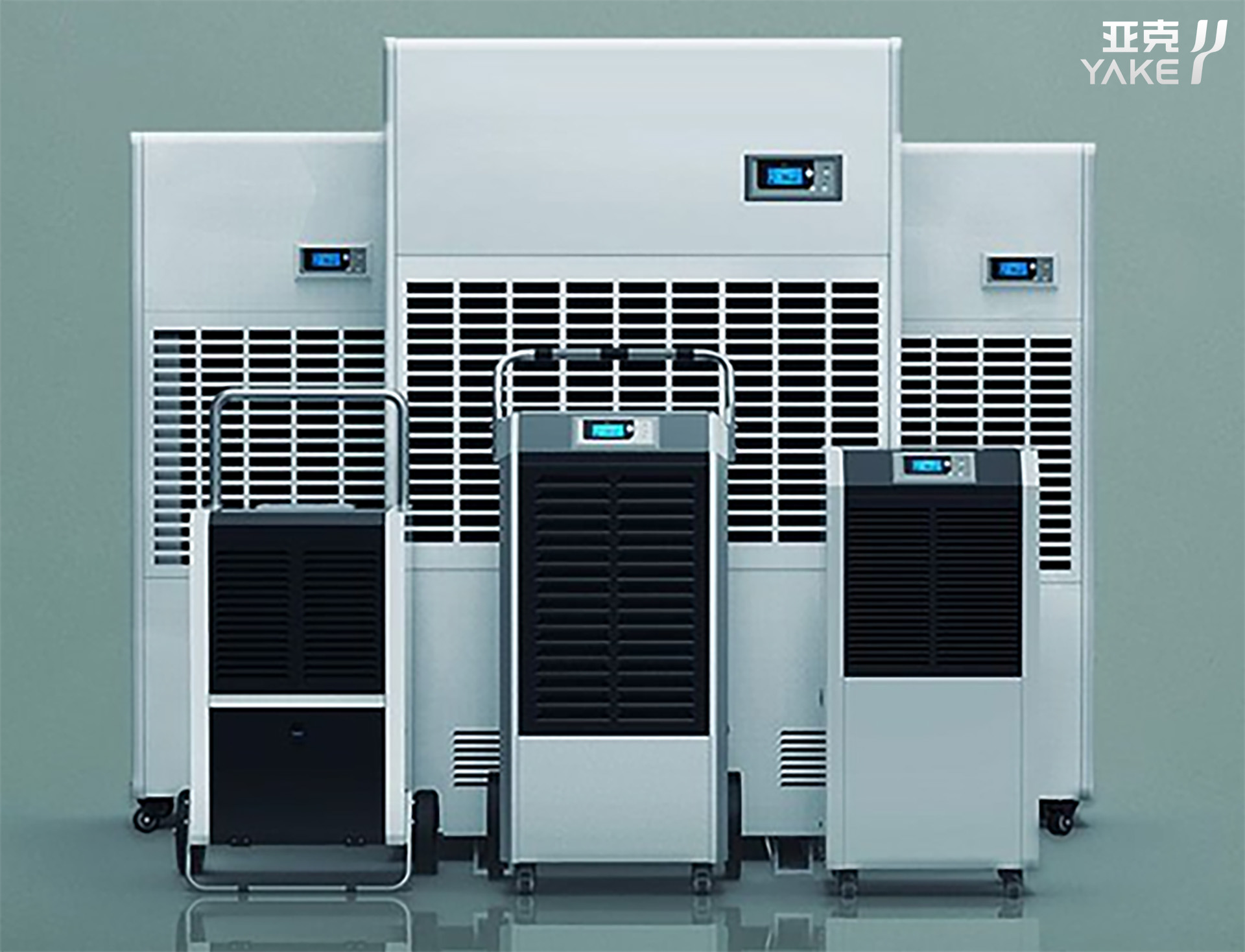
Contact us to find the best place to buy your Yakeclimate solution today!
Our experts have proven solutions to keep your humidity levels in check while keeping your energy costs low.