
Building 34, No. 535 Shunfeng Road, Hangzhou, Zhejiang, China
[email protected]
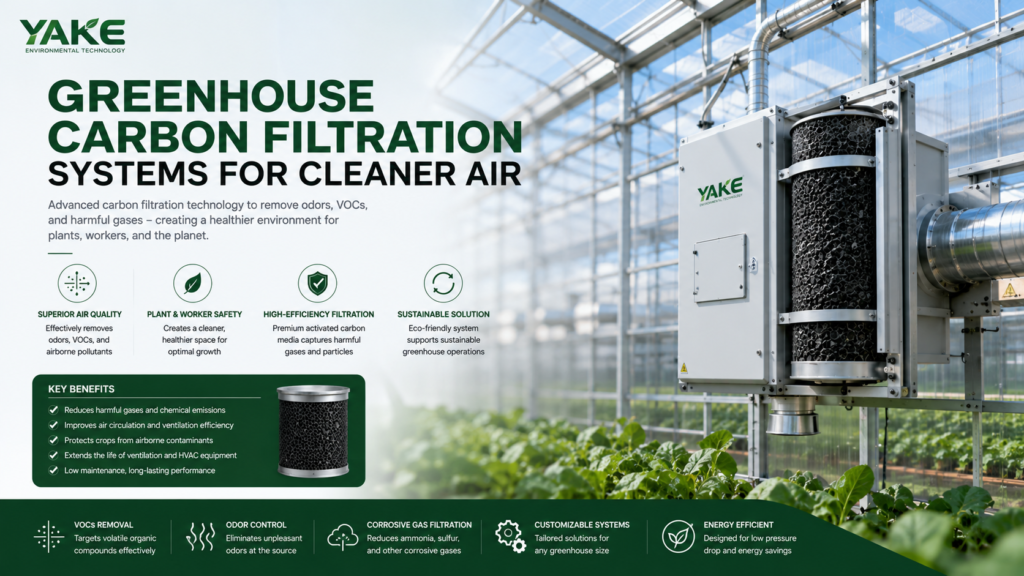


Greenhouse carbon filtration systems are installations that suck air through filters to capture odors, VOCs, and some airborne contaminants before they disperse throughout the grow area. Many growers employ them to maintain pristine air, shield neighbors from stench, and encourage a more balanced and healthy ecosystem for plants. Typically, these filters utilize activated carbon, along with inline fans, ducting, and positioning adjacent to exhaust points. Well-designed greenhouse carbon filtration systems balance filter area, fan size, and greenhouse volume such that airflow remains constant without significant pressure fluctuations. To maintain effectiveness, cultivators schedule periodic filter replacements and ventilation inspections. The following sections explain step-by-step how these systems function and how to size them.
Greenhouse carbon filters purify recirculating and exhaust air by absorbing it through activated carbon, where gases, odors, and numerous VOCs adhere to the carbon. This helps with air quality, odor drift to neighbors, and maintains a stable climate that encourages tough, consistent plant growth.
Activated carbon adsorbs, not absorbs, which is how it works. Gases, fumes, and chemicals stick to the enormous internal surface inside every grain of carbon, not because they soak into the material but because of physical forces between the contaminant and the carbon surface.
As air passes through the carbon bed, toxics from VOCs emitted by plant metabolism, solvent or pesticide fumes adhere to active sites and remain there rather than returning to the greenhouse space. This minimizes the danger of plant distress and assists in shielding personnel working lengthy hours close to treated plants.
This same mechanism can scrub out a variety of pollutants from typical greenhouse odors, such as terpenes and sulfur compounds, to trace gases and some fine aerosols. This wide range is one of the reasons carbon filters are utilized in premium crop rooms and research greenhouses where air quality counts.
Good performance relies on contact time. Air that flows too quickly through the bed has insufficient opportunity to come into contact with the carbon surface and so it contains some contaminants. Designers sometimes tweak fan speed, duct size, and bed depth to provide enough dwell time without stifling airflow.
Activated carbon forms the backbone of greenhouse carbon filters as its internal pore network provides an extremely high adsorption capacity per gram. In water filtration, common iodine numbers correspond to capacities of about 500 to 1600 milligrams per gram, indicating just how much surface area is there. Air systems are rated differently, but the same principle of high capacity applies.
Two common physical formats are granular activated carbon (GAC) and powdered carbon compressed into solid carbon blocks. GAC grains in water systems commonly measure less than 1 mm to a few mm in diameter, and air filters employ analogous granule sizes scaled to airflow requirements. Granules are malleable and convenient to swap out. If the packing in the housing is uneven, air can find low-resistance “shortcuts” through the bed, akin to channeling in water filters where flow focuses in narrow tunnels and circumvents much of the media. Granular carbon traps the particles within a flexible bed that can shift as air flows through, leading to variable flow and contact, but less airflow restriction.
Different feedstocks form different pore structures. Coconut shell carbon preferentially forms micropores that fit small gas molecules and odors. Coal-based carbons often provide a wider pore size distribution. Wood-based carbons typically have more macropores, which accommodate larger organic molecules. For mixed greenhouse odors, most systems utilize premium GAC as it strikes a balance between flow and capacity. Some odor-sensitive locations combine a granular prefilter with a final carbon block stage. In all our examples, fresh, properly sized carbon with an optimal pore profile is essential for sustainable performance and extended lifespan.
A typical greenhouse carbon system is made up of a carbon bed or cartridge, pre-filters, inline carbon filters for ducts, exhaust or circulation fans, ducting, and rigid or modular housings to hold it all in place and seal leaks.
Pre‑filters capture larger dust, pollen, and substrate fibers before they can reach the carbon. This prevents the carbon surface from becoming clogged, maintains pressure drop under control and extends replacement cycles.
Filter diameter, depth and airflow rating must correspond to the space volume and fans in cubic meters per hour or CFM. Undersized fans on dense beds can starve the room of fresh air.
Maintenance matters as much as design. Routine inspections for torn pre-filters, worn fan bearings, loose duct joints and end-of-life carbon help keep the system operating near its original design point and prevent unexpected odor leaks during peak flower or harvest.
Every bit of greenhouse air has to have a free-flowing passage through that carbon bed during each complete air-exchange cycle. That means fans have to blow sufficient volume, and air can’t sneak around the filter in leaks or dead corners.
Clever ducting minimizes sharp bends and bottlenecks so pressure drop remains moderate and airspeed is even. Bad layouts leave stagnant pockets where warm, humid, and odor-laden air can accumulate, increasing disease pressure and odor complaints.
Ventilation rates have to be fine-tuned. Growers desire just enough fresh air to control temperature, humidity, and CO2, but not so much that contact time in the filter plummets. Most operators adjust fan speed controllers seasonally to maintain this balance as the outside weather changes.
Easy instruments keep tabs. Airflow monitors, pressure gauges across the filter, or even static pressure sensors in ducts can indicate when resistance rises, indicating clogged pre-filters, channeling in the carbon bed, or collapsing duct runs. Early detection prevents plant stress and maintains odor control throughout complete grow cycles.
Carbon filtration in greenhouses purifies the air silently and efficiently. It extracts gases, odors, dust and micro-particles that the majority of us never witness but plants experience daily. The cleaner air reduces strain on the crops and increases the comfort and safety of workers who labor long hours inside the house. As time passes, the system helps reduce chemical inputs, so the entire operation creeps toward a more sustainable closed-loop method of growing.
Purer, filtered air provides plants a better foundation for photosynthesis and growth. When the air contains fewer reactive gases and fine dust, leaves remain cleaner and stomata remain open longer, so plants utilize light, water, and CO₂ more efficiently. In dense tomato, cucumber, or leafy-green houses, this can translate into quicker development and more consistent stands throughout the entire bay, not just close to vents or doors.
Carbon media is great at removing phytotoxic gases like low levels of ethylene, ozone, and solvent vapors from tools or coatings. Even at trace levels, these gases can lead to leaf edge burn, tip dieback, or early ripening in crops such as herbs, strawberries, and ornamentals. With filtration, these stress signals fall, so the crop applies more of its energy to root growth, flowering, and fruit fill rather than repair.
As air moves through the filters and then a carefully designed duct or fan layout, temperature and humidity become more controllable within desired ranges. When you combine carbon filtration with dehumidifiers or ventilation control, you experience less acute swings in relative humidity that typically fuel issues like blossom end rot or tip burn. This steadier climate facilitates higher yields, tighter harvest windows, and improved visual quality, which is critical for retail-grade lettuce, vine crops, or cut flowers.
Carbon filters can catch a handful of airborne pest phases, like winged aphids or whiteflies that hitch the breeze between crop zones. They do reduce the number of bugs that land on fresh, sanitized benches or new propagation beds. Every little bit of spread you can take away helps keep these hotspots from becoming full-blown house-wide outbreaks.
Filtering eliminates the plant volatiles and odor cues that lure pests from outdoors or direct them into the home. When the exhaust air blows through carbon, it transports fewer ‘signals’ inviting whiteflies or thrips in from adjacent fields or hedges. This comes in handy for locations around open-field crops, where pest pressure can change rapidly throughout the season.
In reality, cultivators fold carbon filtration into an IPM plan that already utilizes insect netting, sticky cards, and predatory insects. The filter system reduces the background pressure, so biological controls and targeted sprays don’t have to work as hard. There are hidden benefits, says the company, that accrue over time, like many operations reporting a reduction in pesticide treatments per cycle, lower residue risk on herbs and leafy crops, and improved worker safety due to fewer spray events within enclosed environments.
Carbon filtration does its part for disease management by pulling fungal spores, bacteria, and mold fragments from recirculated air prior to it passing from one bay to the next. In crops like cucumbers, basil, or bedding plants, these airborne stages spread rapidly on air currents and fans, so each pass through a carbon filter reduces the inoculum load in the room.
Beyond that, by reducing the amount of spores in the air, the system curtails the spread of typical greenhouse diseases, like powdery mildew or Botrytis, in dense canopies and multi-tier systems. The impact is most powerful when filters are installed on primary air returns and run for extended hours daily.
Properly designed filtration enhances airflow patterns and assists in eliminating cool, damp pockets of air where condensation forms on leaves and structures. Less condensation reduces opportunities for water-borne diseases to initiate or accelerate and preserves coatings and structural components longer. To maintain this advantage, filters require periodic inspections, pressure checks, and media replacements based on operating hours and dust load because clogged or saturated carbon absorbs both airflow and capture ability.
Greenhouse carbon filters employ activated carbon media to adsorb gases, odors, and many VOCs. They usually sit in line with fans, so they purify air as it travels through the room and ducting.
Carbon filters span a broader set of contaminants than many single‑purpose tools. Where certain systems only treat particles or just kill microbes, carbon can reduce odors, ethylene, solvent fumes, and any other gas‑phase by‑products all at once.
HEPA filters catch very fine particles, including dust, pollen, and mold spores as small as 0.3 µm. They scrub air particulates, boost worker comfort, and reduce illness transmission. They don’t capture gases, odors, or VOCs since those go directly through the fiber matrix.
In greenhouses with sensitive crops or strict plant health rules, HEPA works best when paired with carbon filters in series. First, a HEPA stage stops particles that could clog the carbon bed. Then, a carbon filter strips odors and chemicals from the now-cleaner airstream.
HEPA filter life varies based on dust load, fan speed, and pre‑filtration. Growers should establish definite replacement hours or pressure drop limits and document them, or efficacy will diminish even as energy consumption rises.
Ozone generators generate ozone (O3), a powerful oxidant that can neutralize certain odor compounds but can damage leaves, roots, and human lungs at even moderate concentrations. Symptoms can be leaf burn, stunted growth, and respiratory stress to employees in sealed houses.
Ozone reacts fast but is less consistent than carbon for consistent VOC scrubbing, particularly for the complicated blends from pesticides, plastics, or nutrient solutions. It requires tight controls and monitoring and generally vacant spaces to remain below safety thresholds. For this reason, ozone systems are not recommended in occupied greenhouses or rooms with permanent crop presence. Carbon filters provide a safer, easier, and more targeted means to reduce odor and gas-phase loads without introducing a reactive chemical into the grow space.
UV sterilizers use ultraviolet‑C light to disrupt DNA and RNA in microbes, so they’re effective on airborne fungi, bacteria, and some viruses that travel through the chamber. They don’t eliminate odors, VOCs, or fine particles that harbor non‑viable residue.
To mitigate more greenhouse risks, UV units typically rest before or after carbon filters. UV brings the bio-load down, and carbon polishes by catching gases and residual organics, which means cleaner air for plants and staff. UV systems require appropriate intensity and duration, which can vary with duct layout and airflow speed. Furthermore, lamps weaken over time even when still glowing.
Regular cleanings of lamp sleeves, intensity checks and tube replacements on schedule are all critical. If not performed, the kill rate declines and the system can provide a false sense of security compared to a well-maintained carbon filter that sustains a more constant removal rate.
Optimizing your greenhouse carbon filtration is simply a matter of calibrating the filter, fan, and media to the actual air load in the room. Then, maintain that setup with straightforward, consistent maintenance.
Proper sizing begins with volume. Multiply floor space by height to get cubic meters. Then select a filter-fan combo that can completely exchange that air every 1 to 3 minutes, depending on smell threat level and plant density.
| Space type | Volume (m³) | Target air changes | Needed capacity (m³/h) | Typical filter length |
|---|---|---|---|---|
| Small tent (1 × 1 × 2) | 2 | every 1–2 min | 60–120 | 300–400 mm |
| Mid tent (1.2 x 2 x 2) | 4.8 | per 1-2 min | 150-300 | 400-500 mm |
| Hobby greenhouse 3 feet by 4 feet by 2.5 feet | 30 | every 2 to 3 minutes. 600 to 900 | 500 to 600 mm |
| Pro bay 6 × 10 × 3 | 180 | each 2–3 min | 3,600–5,400 | 600–1,000 mm (multi) |
Fan and filter ratings have to match at real working pressure, not the “free air” figure on the box. Long runs, narrow ducts, and sharp bends can reduce airflow by 20 to 40 percent, so size up if you have lots of elbows or reducers. Most growers position the carbon filter as close to the smell source as possible and maintain short, smooth ducts to preserve airflow and media longevity.
Media selection determines what the filter is able to actually trap and how much it will tolerate under duress.
| Media type | Main strengths | Typical use cases |
|---|---|---|
| Bituminous carbon | High capacity, wide VOC range | Strong crop odors, mixed greenhouse emissions |
| Coconut shell | High micropore volume, fast adsorption | Terpenes, light solvents, eco-focused operations |
| Impregnated carbon | Tuned for specific gases (e.g., NH₃) | Livestock near houses, fertilizer or ammonia issues |
| Blended media | Balanced broad-spectrum performance | Mixed crops, uncertain contaminant profile |
For heavy, complex odors from flowering crops, deep beds of high-grade coconut or bituminous carbon tend to perform well due to their high micropore volume per kilogram. If ammonia or certain volatiles are your primary concern, an impregnated or blended media tuned for those gases can outperform a standard carbon. Most commercial sites trial two or three media blends in small pilot ducts or isolated bays, then monitor odor outside the greenhouse and media longevity before scaling up one blend, minimizing the likelihood of purchasing a large batch that under-delivers.
A carbon system remains effective only if the airflow remains near design and the media is not clogged or spent.
The CO₂ enrichment paradox means you make an effort to add CO₂ to accelerate growth, but operate fans, vents, and carbon filters in ways that effectively strip it right back out again and blow it outside as waste. It’s the paradox of CO₂ supply, crop uptake, and how the greenhouse circulates and purifies air, and it can increase direct CO₂ emissions while plants still linger beneath their optimal threshold.
Carbon filters lie at the heart of this dilemma. They catch smells and many volatiles, but they hang out in that very airstream that transports the CO2 you purchased or combusted to create. In a snug room with good scrubbers, the airflow can suck enriched air through the carbon beds prior to plants utilizing it. The crop canopy experiences less than you assume, and the concentration near leaves, already a complex and fluctuating parameter, plummets well beneath your setpoint even while your controller reports all is well.
CO₂ at 550-650 µmol mol⁻¹ is frequently a sweet spot for many C₃ crops yielding increases of around 18% relative to ambient air. At lower levels, below about 450 µmol mol⁻¹, plants respond even more sharply to additional CO₂, so any loss from filters or vents stings more. When it climbs higher, to about 700-1000 µmol mol⁻¹, you can see more glucose and fructose produced in some crops, but some amino acids and minerals decrease, so more is not always better. The worth of CO₂ at night is still unknown and may vary by species or cultivar, so operating enrichment while exhaust fans and carbon filters run full tilt can be inefficient.
To maintain a stable band, ventilation alone won’t do, and it won’t keep CO₂ around leaves even at ambient levels in a dense crop. A more optimized approach is to sync CO₂ dosing with smart controls. Exhaust fans and carbon filters ramp down while injectors run, and timed venting clears heat and humidity in short, controlled bursts. Continuous CO₂ sensors near canopy height then monitor the actual concentration plants experience, not just what you inject. That loop matters in homes that formerly sourced flue gas from heat for CO₂ and must now transition to tanks, biogenic sources, or recapture systems, where each kilogram is precious.
Air quality in greenhouses is moving from a simple add-on to a fundamental design decision. Carbon filtration sits at the core of this transition because it can reduce odors, VOCs, and some gas spikes without injecting chemicals into the grow space. In contemporary crop production, pure air is connected to output consistency, employee health, and immediate community support.
Smart is better. Smart carbon filtration systems use sensors, controllers, and connected software to monitor air and adapt treatment in real time. Growers can monitor key values like CO₂, VOCs, ammonia, humidity, and temperature at different locations in the house or vertical rack. When measurements exceed a threshold, for instance, it can increase fan speed, open or close dampers, or automatically route air through additional carbon stages without waiting for human intervention.
This kind of automation typically reduces energy consumption and prolongs filter life. Filters run hardest just when loads are high, rather than all day at maximum. Fans can coast at night, during low-load seasons, or post-harvest cycles. Over time, it reduces electricity consumption, minimizes heat dissipation in winter seasons, and lessens staff trips to replace cumbersome carbon filters.
Connecting air systems to a centralized greenhouse platform yields even more benefits. That same dashboard that controls irrigation and lighting can log odor complaints, display pressure drop across filters and flag units that need service. Even with simple data analysis, growers can identify trends like surges following nutrient mixes or leaf-wet periods and subsequently shift those activities, modify vent policies, or resize filter arrays.
Sustainable filter media — such as activated carbon derived from green coconut shells or other renewable biomass — is making inroads in new projects. These options keep performance near coal‑based products but cut fossil inputs and encourage circular material cycles. For most growers, the transition assists them in satisfying purchaser requirements on ethical sourcing and accountable inputs.
The selection of media should have a full lifecycle view. This entails considering how far the product travels, how much energy the maker expends activating the carbon, and where the spent media goes. Some suppliers offer reactivation or controlled composting paths, and some work with certified waste handlers to keep used filters out of mixed landfill.
Continued cooperation with suppliers focusing on sustainable agriculture helps this remain manageable. Trusted partners provide test data, pressure drop curves and VOC removal rates, and assist in sizing filter beds for specific crops ranging from leafy greens to berries to high value ornamentals. Over time, this combination of clever systems and sustainable media can help sustain both food security targets and wider environmental stewardship.
Greenhouse carbon filtration systems provide growers true control over air. Fans blow air through the carbon bed. The beds retain smell and lots of gas traces. Plants thrive in purified, regulated air.
There are a few obvious ways growers benefit. There is less whine from sidewinder neighbors. There is less risk from severe gas spikes. There is a quieter work environment for employees. There are more consistent yields from room to room.
Setups will not look the same again. One short inline filter is needed for a small herb tent. A giant glasshouse block will require long duct runs and staged fans. Either way, a savvy strategy begins with defined objectives, experimental equipment, and basic verification.
Want to take your own setup further? Trace your air path, identify the weak points, and begin with a single targeted alteration.
A carbon filter sucks air through activated carbon. The carbon’s microscopic pores catch odor and VOC molecules and some pollutants. Filtered air is then expelled into the greenhouse. This works to protect plants, employees, and the local community from odors and gases.
Carbon filters minimize VOCs and airborne contaminants. They make the air healthier for plants and humans. They assist you in complying with increasingly stringent environmental and neighborhood laws. This all helps encourage healthier growth and a more professional operation.
HEPA filters attack dust, pollen, and spores. Carbon filters focus on gases and smells. Ozone generators chemically change molecules but can be dangerous if used improperly. For greenhouse air quality and odor control, carbon filters are typically safer and more feasible.
Normal carbon filters don’t take away CO2. They primarily adsorb organic gases and odors. You can comfortably run CO₂ enrichment and carbon filtering in tandem. Just make sure you have good airflow and track CO₂ levels with a good sensor.
Most greenhouse carbon filters require replacement every 12 to 24 months. High humidity, strong odors, and constant use will reduce their life. Look out for increasing smells or decreased airflow. Adhere to the manufacturer’s schedule and maintain easy records to keep on track.
Match filter size and airflow (m3/h) to greenhouse volume. Seal all ducting and connections. Position the filter as high as possible where warm, odorous air accumulates. Use pre-filters to trap dust. Monitor performance and change them before failure.
Yes, for many operations they’re a tried-and-true workhorse solution. They’re tested, less maintenance intensive, and scalable. Paired with good ventilation and climate control, they aid stable air quality. New media and smart controls are making carbon systems even more effective going forward.


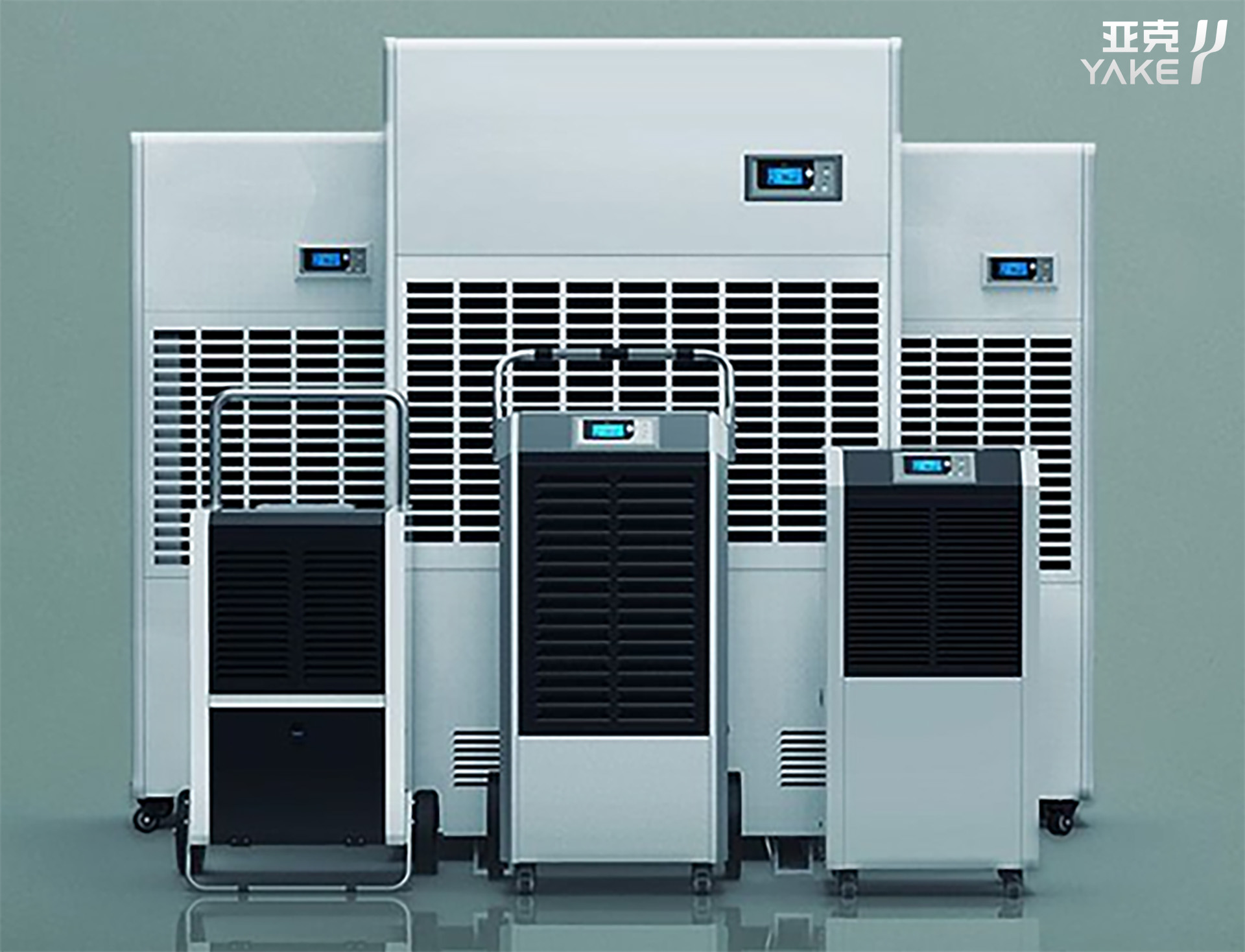
Contact us to find the best place to buy your Yakeclimate solution today!
Our experts have proven solutions to keep your humidity levels in check while keeping your energy costs low.