
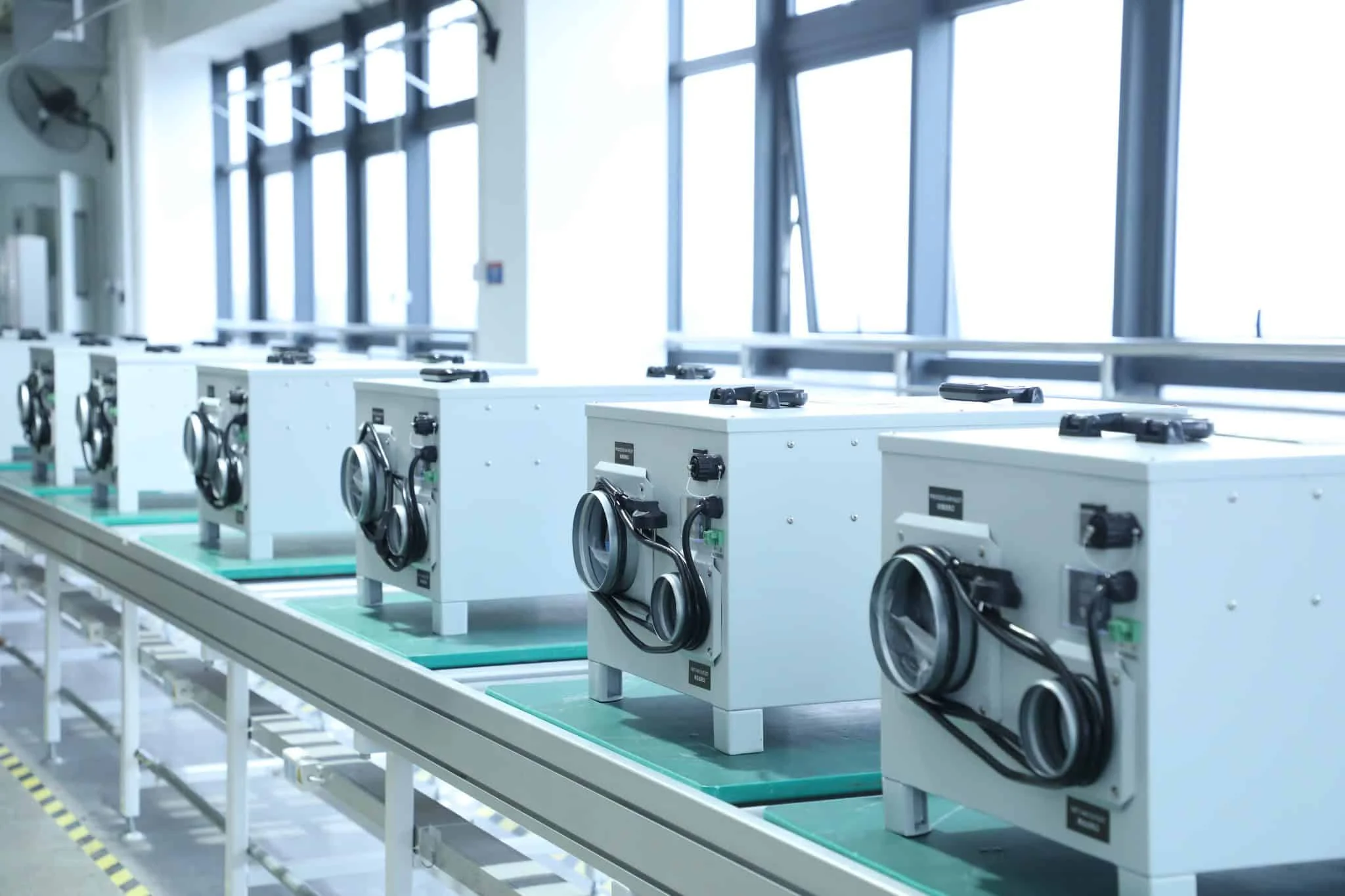
Yakeclimate dehumidification equipment production line

Resources

Practical Information for Humidity-Control Decisions

Find guides, FAQs, product comparisons, application notes, and project checklists for agriculture, energy, electrical, and industrial environments.

Use these resources to clarify the conditions behind a requirement, compare equipment options, and prepare a more focused technical discussion.

RESOURCES / 01
Technical content should support a real equipment decision. Use these resources to compare equipment options and prepare for a technical discussion.

PRODUCT SELECTION RESOURCES

Compare equipment with the conditions that determine performance

Product-selection resources explain how technology differences relate to temperature, humidity targets, airflow, installation, utilities, and project constraints.

Explore Product Selection Guides
  1. Refrigerant vs. desiccant dehumidification
  2. When low-temperature operation changes equipment selection
  3. How to prepare humidity and moisture-load information
  4. Ceiling installation, airflow, access, and drainage
  5. Humidity control for cabinets and enclosed electrical spaces
  6. Water quality and control requirements for ultrasonic humidification

PREPARE A PROJECT REQUIREMENT

Collect the information that makes a technical discussion useful

If some values are unknown, share the information you already have. The remaining questions can be identified during the initial review.

  1. Application and project location
  2. Space, enclosure, or process dimensions
  3. Temperature and humidity range
  4. Target humidity or dew point
  5. Moisture sources, airflow, and ventilation
  6. Installation position, power, and drainage
  7. Controls, alarms, and communication needs
  8. Quantity, schedule, and destination market

FEATURED & RECENT RESOURCES

Continue from the topic or application most relevant to your work

Each article links to related applications, product families, project evidence, and contact options so the next step remains easy to find.

Four-Field Crop Rotation System – Strategies for Sustainable Agriculture
Agriculture & Controlled Environments

Four-Field Crop Rotation System – Strategies for Sustainable Agriculture

Four-field crop rotation system strategies allow farmers to better utilize the land by dividing fields into four sections and planting different crops on each during the year. They involve wheat, root crops, barley, and legumes, which can enhance the soil and reduce diseases.

Innovative Practices in Sustainable Cropping Systems
Agriculture & Controlled Environments

Innovative Practices in Sustainable Cropping Systems

Sustainable cropping systems implement practices that maintain soil fertility, conserve water, and reduce waste. They make crops do well every year, with less damage to the soil and atmosphere.

Yield Monitoring and Mapping in Precision Farming: Key Concepts and Benefits
Agriculture & Controlled Environments

Yield Monitoring and Mapping in Precision Farming: Key Concepts and Benefits

Yield monitoring and mapping in precision farming refers to measuring crop yield across fields using on-machine sensors and GPS. These provide instantaneous information about the yield of each specific area of a field, aiding farmers in identifying growth patterns and voids.

Vacuum Dryer Technology | Applications and Manufacturers
Industrial Dehumidification

Vacuum Dryer Technology | Applications and Manufacturers

Vacuum dryer manufacturers create and manufacture equipment that dries materials through air extraction and reduced pressure, which enables water and solvents to exit products rapidly and at lower temperatures.

Sustainable Soil Fertility Management Techniques for Enhanced Crop Health
Agriculture & Controlled Environments

Sustainable Soil Fertility Management Techniques for Enhanced Crop Health

Sustainable soil fertility management entails maintaining soil vitality in a way that is ecologically sound. By using crop rotation, compost, and balanced plant nutrients, growers can maintain soil vigor without resorting solely to synthetic fertilizer.

Organic Farming Practices | Overview, Significance, and Key Components
Agriculture & Controlled Environments

Organic Farming Practices | Overview, Significance, and Key Components

Organic farming involves growing crops and raising animals in a natural way, without artificial chemicals or genetically engineered seeds. Farmers use compost, crop rotation, and natural pest control to maintain healthy soil and plants.

Sustainable Local Food Systems: Principles, Benefits, and Community Engagement
Industrial Dehumidification

Sustainable Local Food Systems: Principles, Benefits, and Community Engagement

Sustainable local food systems employ environmentally friendly methods to cultivate, process, and distribute food within a specific region. They reduce waste, decrease carbon emissions, and increase food security by connecting local consumers, producers, and farmers.

Subhash Palekar Natural Farming: Principles, Benefits, and Practices
Agriculture & Controlled Environments

Subhash Palekar Natural Farming: Principles, Benefits, and Practices

Subhash Palekar’s organic farming method is a natural way to grow crops without using chemical fertilizers or pesticides. The approach leverages local, easy-to-find ingredients such as cow dung, cow urine, and organic waste to nourish the soil and strengthen the plants.

Local Food Systems: Strategies for Sustainable Development
Industrial Dehumidification

Local Food Systems: Strategies for Sustainable Development

Local food systems development is about fostering connections between farmers, makers, and communities to encourage food grown and consumed close to home. You can receive fresh produce, understand where your food comes from, and support small farms.

Conventional vs. Non-Conventional Farming: Key Differences and Benefits
Agriculture & Controlled Environments

Conventional vs. Non-Conventional Farming: Key Differences and Benefits

Conventional farming refers to using traditional methods such as tilling, chemical fertilizers, and pesticides on open fields. Non-conventional farming employs innovative methods like hydroponics, aquaponics, and vertical farms, typically in controlled environments.

Innovative Approaches to Sustainable Vegetable Production Methods
Agriculture & Controlled Environments

Innovative Approaches to Sustainable Vegetable Production Methods

Sustainable vegetable production uses cultivation techniques that maintain healthy soil, conserve water, and reduce waste. Good methods are crop rotation, drip watering and organic plant food. Such measures keep soil healthy and reduce the need for harsh chemicals.

Healthy Climate Humidifier Control System for Optimal Indoor Air Quality
Humidification & Air Quality

Healthy Climate Humidifier Control System for Optimal Indoor Air Quality

Healthy climate humidifier control systems maintain air moisture at the ideal level for plants, products and people. With healthy climate humidifier control systems in place, these sensors and smart controls monitor and adjust humidity in real-time.

APPLY THE INFORMATION

Need help applying the information to a real project?

Send the application, operating conditions, target, and installation limits. We can help organize the questions that need to be answered before product selection or engineering review.

Discuss Your Requirement