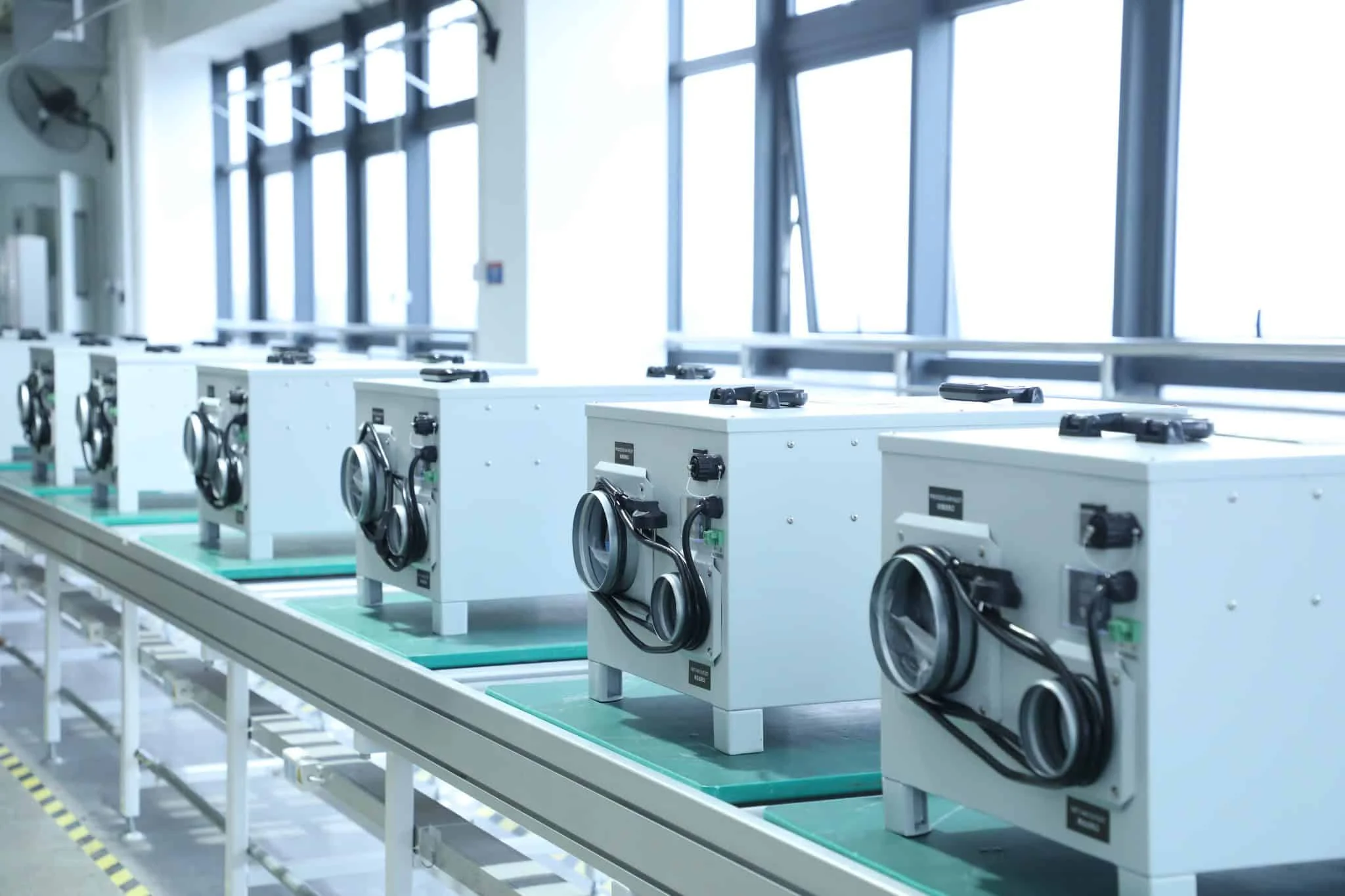
Yakeclimate 除湿设备生产线

资源中心 / 技术文章

面向湿度控制决策的技术文章

浏览面向农业、能源、电气与工业环境的应用说明、工程解释、设备对比与实用指南。文章正文目前为英文。

您可以先通过文章理解具体问题,再返回资源中心查看案例、产品资料、企业视频和项目准备信息。

技术文章 / 01
从问题背后的运行工况开始。 可按应用场景、湿度风险、设备类型、安装条件或技术主题搜索。

技术文章库

搜索和筛选与当前工作最相关的技术主题

每篇文章都在技术文章库中有明确入口,并关联相关行业、产品系列、案例和项目支持。

Conceptual greenhouse dehumidifier installation showing air distribution, condensate drainage, power and controls, support and service access.
Agriculture & Controlled Environments

Industrial Dehumidifier for Greenhouse Cost: What Changes the Quote

The cost of an industrial dehumidifier for a greenhouse depends on moisture load, technology choice, airflow distribution, corrosion protection, controls and installation scope. A price without those inputs is usually not a reliable project number.

Illustrative equipment room showing a small cabinet air zone inside the larger room air zone with separate dashed boundaries.
Energy Storage & Electrical Environments

Air Leakage, Service Doors and Moisture Load in Sealed Enclosures

A sealed electrical enclosure is not automatically a moisture-free enclosure. Water vapour may be trapped during assembly, introduced when service doors open or exchanged through gaskets, cable entries, vents and pressure-equalisation devices.

Illustrative cabinet-base cutaway showing humid trench air passing through an unsealed cable entry above a patch of standing water.
Energy Storage & Electrical Environments

Cable Trench Moisture and Condensation in Switchgear

A wet cable trench can supply both liquid water and water vapour to switchgear. If cable entries are open or poorly sealed, humid trench air can move into the cable compartment as temperature and pressure change. Condensation then appears on the coldest internal surfaces, even when the switchgear…

Illustrative air probe on a bracket below a direct supply jet, positioned to sample representative enclosure air.
Energy Storage & Electrical Environments

Sensor Placement for Dew Point and Condensation Monitoring

A humidity reading is only representative of the air around the sensor. It does not prove that every compartment, cable chamber or metal surface in a battery energy storage system is protected from condensation.

Conceptual load-to-standby chart showing an example surface temperature falling below a retained local air dew point.
Energy Storage & Electrical Environments

Charge and Discharge Cycles: Condensation Risk in BESS

Charge and discharge cycles do not create condensation by themselves. They change the heat released inside a battery energy storage system, the duty of its cooling equipment and the temperatures of walls, pipes, cold plates and electrical components. Condensation becomes possible when any of thos…

Illustrative cutaway of a dry enclosure showing moisture already inside and condensation droplets on a local cold interior surface.
Energy Storage & Electrical Environments

Why an IP-Rated Enclosure Can Still Condense

An IP-rated enclosure can still condense because ingress protection and condensation control are different design questions. IEC 60529 classifies how an enclosure protects against access to hazardous parts, solid foreign objects and water under specified conditions. It does not guarantee that eve…

Illustrative CAB-A identifier linking a drain alarm on a laptop, a physical cabinet nameplate and a drain inspection record.
Energy Storage & Electrical Environments

Consistency Across Multiple Battery Cabinets: Controls, Alarms and Maintenance

A multi-cabinet battery energy storage system needs more than identical dehumidifiers. Consistency depends on using the same equipment definition, sensor basis, control states, alarm meanings, communication map, drainage arrangement, maintenance method and acceptance test.

Illustrative BESS enclosure with commissioning measurement locations at the humidity-control device area, a remote lower zone and a cold enclosure surface.
Energy Storage & Electrical Environments

Commissioning and Validation Checklist for BESS Humidity-Control Equipment

Commissioning a BESS humidity-control device means proving more than “the unit turns on.” The installed system must move air through the intended zone, remove moisture under the relevant condition, drain safely, report useful status and recover after a defined moisture event.

Conceptual comparison of a supported continuously descending condensate hose and a sagging hose with retained water at its low point.
Energy Storage & Electrical Environments

Condensate Drainage for Battery Cabinets and Containers

Condensate drainage is part of the dehumidifier installation, not an accessory decision to make on site. A correctly selected unit can still wet a battery cabinet if the tray is not level, the hose rises, the outlet freezes, the termination allows backflow, or the enclosure penetration is poorly…

Illustrative interface commissioning with a local device display and laptop checklist for names, units, states, alarms, timestamps and history.
Energy Storage & Electrical Environments

Connecting Dehumidifiers to BMS and EMS

Connecting a dehumidifier to a BMS or EMS starts with a signal and data list, not with the phrase “RS485 required.” RS485 describes an electrical serial layer. It does not define the register map, alarm meanings, command authority, update rate or commissioning test.

Conceptual chart showing a surface temperature crossing below the dew point, with the below-dew-point interval shaded as possible condensation.
Energy Storage & Electrical Environments

How to Diagnose Condensation in Battery Cabinets

Diagnosing condensation in a battery cabinet or BESS container starts with two traces on the same time axis: internal dew point and the temperature of the coldest suspected surface. Water forms wherever the surface trace reaches or falls below the dew-point trace. The rest of the investigation id…

应用这些信息

需要把文章内容应用到具体项目吗?

请提交应用场景、运行工况、目标和安装限制。我们可以协助梳理在产品选型或工程评审前需要确认的问题。

沟通项目需求