
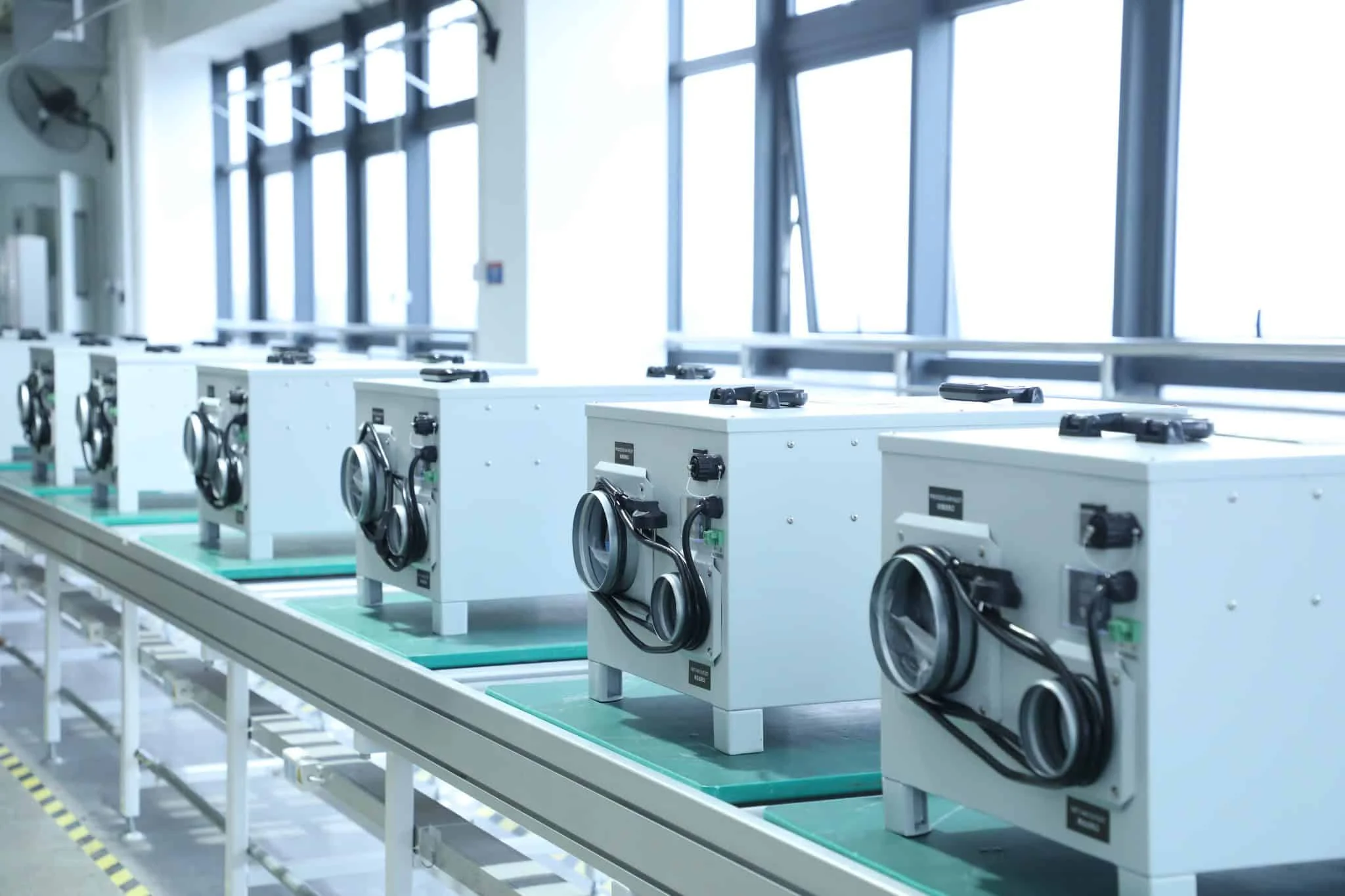
Yakeclimate dehumidification equipment production line

Resources / Agriculture

Humidity Control for Growing and Post-Harvest Environments

Application notes and selection guidance for greenhouses, indoor cultivation rooms, drying spaces, and storage environments where humidity affects the crop rather than the building.

Use these articles to describe the growing conditions, moisture load, and airflow situation before comparing equipment.

RESOURCES / AGRICULTURE
Humidity in a growing space is a crop condition, not just a comfort setting. These resources connect crop stage, moisture load, airflow, and equipment selection.

FEATURED & RECENT RESOURCES

Continue from the topic or application most relevant to your work

Each article links to related applications, product families, project evidence, and contact options so the next step remains easy to find.

Cannabis Cultivation Business Planning Guide
Agriculture & Controlled Environments

Cannabis Cultivation Business Planning Guide

Cannabis cultivation business planning involves outlining well-defined milestones for launching and operating a cannabis farm. Planning touches on fundamentals such as expenses, regulations, harvest requirements, and demand forecasts.

Four-Field Crop Rotation System – Strategies for Sustainable Agriculture
Agriculture & Controlled Environments

Four-Field Crop Rotation System – Strategies for Sustainable Agriculture

Four-field crop rotation system strategies allow farmers to better utilize the land by dividing fields into four sections and planting different crops on each during the year. They involve wheat, root crops, barley, and legumes, which can enhance the soil and reduce diseases.

Innovative Practices in Sustainable Cropping Systems
Agriculture & Controlled Environments

Innovative Practices in Sustainable Cropping Systems

Sustainable cropping systems implement practices that maintain soil fertility, conserve water, and reduce waste. They make crops do well every year, with less damage to the soil and atmosphere.

Yield Monitoring and Mapping in Precision Farming: Key Concepts and Benefits
Agriculture & Controlled Environments

Yield Monitoring and Mapping in Precision Farming: Key Concepts and Benefits

Yield monitoring and mapping in precision farming refers to measuring crop yield across fields using on-machine sensors and GPS. These provide instantaneous information about the yield of each specific area of a field, aiding farmers in identifying growth patterns and voids.

Sustainable Soil Fertility Management Techniques for Enhanced Crop Health
Agriculture & Controlled Environments

Sustainable Soil Fertility Management Techniques for Enhanced Crop Health

Sustainable soil fertility management entails maintaining soil vitality in a way that is ecologically sound. By using crop rotation, compost, and balanced plant nutrients, growers can maintain soil vigor without resorting solely to synthetic fertilizer.

Organic Farming Practices | Overview, Significance, and Key Components
Agriculture & Controlled Environments

Organic Farming Practices | Overview, Significance, and Key Components

Organic farming involves growing crops and raising animals in a natural way, without artificial chemicals or genetically engineered seeds. Farmers use compost, crop rotation, and natural pest control to maintain healthy soil and plants.

Subhash Palekar Natural Farming: Principles, Benefits, and Practices
Agriculture & Controlled Environments

Subhash Palekar Natural Farming: Principles, Benefits, and Practices

Subhash Palekar’s organic farming method is a natural way to grow crops without using chemical fertilizers or pesticides. The approach leverages local, easy-to-find ingredients such as cow dung, cow urine, and organic waste to nourish the soil and strengthen the plants.

Conventional vs. Non-Conventional Farming: Key Differences and Benefits
Agriculture & Controlled Environments

Conventional vs. Non-Conventional Farming: Key Differences and Benefits

Conventional farming refers to using traditional methods such as tilling, chemical fertilizers, and pesticides on open fields. Non-conventional farming employs innovative methods like hydroponics, aquaponics, and vertical farms, typically in controlled environments.

Innovative Approaches to Sustainable Vegetable Production Methods
Agriculture & Controlled Environments

Innovative Approaches to Sustainable Vegetable Production Methods

Sustainable vegetable production uses cultivation techniques that maintain healthy soil, conserve water, and reduce waste. Good methods are crop rotation, drip watering and organic plant food. Such measures keep soil healthy and reduce the need for harsh chemicals.

How to Achieve Perfect Temperature and Humidity in a Grow Tent
Agriculture & Controlled Environments

How to Achieve Perfect Temperature and Humidity in a Grow Tent

Grow tent temperature and humidity control is all about maintaining stable air conditions for your plants to thrive. Proper setup keeps you out of heat stress and mold and slow growth. Good control tools, like fans, heaters, and dehumidifiers, help keep things stable inside tents.

Greenhouse Climate Control Systems for Optimal Growth
Agriculture & Controlled Environments

Greenhouse Climate Control Systems for Optimal Growth

Climate control systems for greenhouses assist farmers maintain consistent temperature, humidity and moisture for their plants. In the US, for example, most growers use automated fans, heaters and dehumidifiers to control air flow and inhibit mold.

APPLY THE INFORMATION

Need help applying the information to a real project?

Send the application, operating conditions, target, and installation limits. We can help organize the questions that need to be answered before product selection or engineering review.

Discuss Your Requirement