
Building 34, No. 535 Shunfeng Road, Hangzhou, Zhejiang, China
[email protected]


Long-duration storage technologies store power for multiple hours or days to help balance power grids with high shares of wind and solar. They help balance supply and demand when generation slumps or spikes and bolster grid resilience amid outages or severe weather. Examples include pumped hydro, compressed air, flow batteries, thermal storage, and newer solid-state or chemical alternatives. Each type provides varying storage times, power outputs, round-trip efficiencies, and pricing structures. For industrial users, long-duration storage can reduce demand charges, back up critical loads, and support on-site renewables. The remainder of this post examines the dominant technologies, fundamental design trade-offs, and implications for long-term energy planning.
Long duration energy storage refers to storing energy for durations beyond just a few hours, typically 8 to 100 or more hours. It takes off where lithium-ion batteries cease to be cost-effective, approximately 8 to 12 hours. It’s crucial as short-duration storage becomes insufficient to bridge supply and demand in grids dominated by solar and wind.
Power systems require real-time balancing of generation and load, as well as strict control of voltage and frequency. Long-duration storage provides a buffer that runs through the night, through multi-day weather events, and through demand spikes that won’t fit in that two to four hour window. It can soak up excess power in times of low demand, then release it for long stretches, so the ramp rate that generators experience is much easier.
In unplanned plant trips, storms or heat waves, these assets are like deep reserves. Rather than turning on peaker plants for each peak, operators can discharge energy stored for hours, reducing load on aging thermal plants and reducing reliance on fossil fuels that are idle much of the year. In regions that already lean on fast-start gas turbines, long-duration storage can directly supplant some of that capacity or at least curtail runtime.
As grids incorporate more inverter-based renewables, they lose traditional inertia. Long-duration systems can provide frequency regulation, voltage support and load shifting in one package, which cannot be done by short-duration storage alone at system scale. That cocktail of services makes these assets long-duration stabilizers for emerging power systems and unlocks revenue opportunities across capacity markets, ancillary services and energy arbitrage.
We live in the Mojave Desert, one of the sunniest places in the world. Long-duration storage absorbs that surplus, perhaps for 10 to 20 hours, then emits it through the evening and overnight demand. That shift makes variable solar into firm, dispatchable power that can be scheduled like a conventional plant.
Wind-heavy grids encounter multi-day lulls when output remains low over vast regions. Short batteries cannot ride these events out. Long-duration storage fills at least a significant chunk of that gap, so system operators can escape rolling blackouts and preserve reserve margins without committing as many fossil units to standby. As we get closer to the point where short-duration storage cannot close the daily and multi-day mismatch, long-duration assets aren’t just nice to have; they’re mandatory for higher renewable penetration.
While reducing curtailment and bridging long calm or cloudy stretches, these systems enable a larger renewables share in the mix while maintaining system reliability norms. They further render new renewables projects more bankable, since developers can combine generation with storage to deliver more predictable, higher-value output.
Long-duration storage reduces imported-fuels exposure by moving some of the reliability role off gas, coal, or oil and onto locally available renewables and storage. It provides robustness when cross-border fuel shipments are disrupted, pricing soars, or pipelines and terminals encounter bottlenecks that persist for days or weeks instead of hours.
Critical infrastructure — water plants, data centers, hospitals, large industrial clusters — can utilize long-duration storage as an on-site or regional buffer during protracted grid outages. Rather than depending solely on diesel generators and fuel supply chains, they tap into stored electricity that gets topped up during normal times from solar, wind, or low-cost off-peak grid power.
At system level, these assets diversify the resource stack and reduce the risk that a single fuel, region, or technology outage induces load shedding. They contribute to the construction of a low-carbon, firm capacity layer that supports national energy security and industrial continuity.
Long-duration energy storage (LDES) connects variable renewables and stable industrial demand, incorporating energy-intensive climate control like massive dehumidification facilities. It is most relevant beyond roughly 8 to 12 hours, where lithium-ion costs and cycle life degrade, and where grids require firm, zero-carbon capacity from 4 to 10 hours (mid-duration), 10 to 24 hours (long-duration), and multi-day coverage over 24 hours.
Main technology families include:
These systems vary in the form of energy storage (motion, heat, chemical bonds, electrochemistry), realistic discharge time, and scale. LDES assets are capital-intensive and generally not cost-competitive with lithium-ion in short-duration markets, targeting bulk shifting, resilience, and renewable backup for communities and industrial clusters.
A simple comparison framework many teams use:
| Category | Typical round-trip efficiency | Practical duration range | Scale potential |
|---|---|---|---|
| Mechanical | ~60–85% | Hours to multi-day | Very high (100+ MW, GWh) |
| Thermal | ~40–75% (electric), higher direct use | Hours to multi-day | High (district / plant scale) |
| Chemical | ~30–50% (power-to-power) | Days to seasonal | Very high, infrastructure-limited |
| Electrochemical | ~70–90% | Minutes to ~24+ hours | Modular, from kW to 100s of MW |
Mechanical LDES stores energy through mass shifting or working fluid compression. The principal types are PHS, CAES, and large flywheels.
PHS transfers water from one of the reservoirs at a lower elevation to another at a higher elevation. In excess power situations, pumps elevate water. During discharge, turbines recoup the stored potential energy. CAES compresses air into underground caverns or large tanks, then releases it through turbines, often with added heat management to improve efficiency. Flywheels store kinetic energy in a high-speed rotating mass within a low-friction enclosure, which is better matched to shorter but highly responsive services.
These systems are well-suited for large-scale, long-duration roles on the bulk grid. Multi-hundred-megawatt pumped hydro plants already serve as multi-hour to multi-day assets in numerous countries, providing firm capacity that can support renewables and stabilize vital industrial loads. There are gravity-based variants — stacked blocks or deep shaft, for example — that follow similar physics and seek flexible siting.
The primary limitations are location and infrastructure. PHS requires favorable topography and water rights. CAES usually requires geologic formations and gas or thermal integration. Flywheels require high-precision engineering and for LDES applications, aggregation into arrays. High upfront capital cost is common, but long lifetimes and low marginal costs drive value where state mandates, such as multi-gigawatt LDES targets, and capacity markets reward long, stable output.
Thermal storage stores energy in the form of heat or cold, in media like molten salts, phase change materials, concrete, packed beds, or chilled water and ice. In charging mode, excess electricity or solar heat increases or reduces the temperature of the storage medium. In discharge, that temperature difference is utilized for power or direct process demand.
Molten salt tanks in CSP plants are a mature LDES option. The salt is heated by solar receivers to several hundred degrees Celsius. Then, steam generators run to drive turbines for 8 to 15 or more hours, smoothing evening peaks. On the cold side, large ice banks or cooled water tanks can shift HVAC and industrial cooling loads overnight, which is significant for humidity control systems that mix cooling and dehumidification.
Direct thermal use often beats re-conversion to electricity for industrial users. A food or pharma plant can store hot water or steam to address peak requirements or leverage cold storage to buffer cleanroom or drying-room conditions during grid disturbances. This bypasses efficiency losses of a full power to heat to power cycle.
$/kWh_th of stored thermal energy are often lower than electrochemical options, particularly at large scale and long duration. Round-trip efficiency depends on whether you count only thermal services or full electric cycles, but long discharge times and the use of low-cost tanks and media align well with multi-hour to multi-day needs.
Chemical LDES stores energy in fuels like hydrogen, synthetic methane, ammonia, or liquid hydrocarbons. Power-to-gas pathways utilize excess electricity to split water through electrolysis or power synthesis reactions. The produced fuel is subsequently combusted in turbines, engines, fuel cells, or directly in industry.
Hydrogen is at the forefront. Electrolyzers convert power and water to hydrogen and oxygen. The hydrogen is either compressed, liquefied, or stored in underground caverns. At discharge, gas turbines or fuel cells convert it back to power or it powers steelmaking, refineries, or fertilizer plants. Synthetic methane includes a methanation step with captured carbon dioxide to produce a drop-in fuel for current gas grids.
These routes facilitate ultra-long duration and even seasonal storage. Energy can move across sectors: power to hydrogen, hydrogen to industrial heat or feedstock, or back to grid power when needed. For areas with strong renewable output in one season and load in another, this cross-sector flexibility is crucial to achieving a zero-carbon system.
The compromise is less round-trip efficiency and infrastructure cumbersomeness. Electrolyzers, gas storage, pipelines, and conversion assets add cost. Round-trip electricity to hydrogen and back is typically in the 30 to 50 percent range. For many grids, this still makes sense when the low-cost energy being stored would otherwise be curtailed, and when that same hydrogen serves industry and transport.
Electrochemical LDES is based on batteries that deploy reversible chemical reactions within cells. Two main families are advanced lithium-ion systems tuned for longer durations and flow batteries, where energy is stored in liquid electrolytes in external tanks.
Lithium-ion is still robust to around 8 hours and can even stretch toward 10 to 12 hours with careful design. The economics beyond that window become more challenging. Flow batteries, including vanadium redox, zinc-bromine, or emerging organic chemistries, separate power (stack) from energy (tank size). Stacking larger tanks increases duration from a few hours to multi-day without the need for oversized cell stacks.
In charge, ions migrate between electrodes via an electrolyte, altering oxidation states and capturing energy in chemical bonds. Discharge turns it around. These respond in milliseconds, which is useful for frequency control, rapid backup for sensitive electronics lines, and protecting humidity-controlled spaces that cannot withstand brief power dips.
Electrochemical LDES shines in modularity. They can scale from kilowatts at a single cleanroom to multi-megawatt systems backing up whole plants or microgrids. Containerized designs serve dense industrial zones well, where pumped hydro or large tanks are not feasible. Cycle life, degradation rates, and material sourcing, including lithium, cobalt, and vanadium, must be closely reviewed on long-horizon projects, especially for facilities operating round the clock.
Deep storage extends beyond single lithium-ion packs that last 1 to 4 hours. Industrial users require assets capable of moving large blocks of energy over 4 to 10 hours today, and probably more than 8 hours in the next 10 years, as average installations lengthen. That transition requires a diverse stack of mechanical, thermal, and chemical storage, frequently in hybrid configurations that couple quick-response batteries with more sluggish, inexpensive bulk storage and stable climate control for safe, efficient operation.
Long-duration solutions cover different roles: 4 to 10 hours for daily shifting and peak shaving, 8 to 24 hours for multi-shift industrial loads, and weeks or seasons for firming high-renewable grids. Lithium-ion suits brief cycles but gets too pricey for lengthy dispatch. Flow batteries, with literally dozens of chemistries and 50 to 80 percent round-trip efficiency, plug some of that hole. Metal-air swaps out lower efficiency for an extremely low energy cost. Smart plants will probably merge multiple technologies, along with rigorous humidity and temperature control, to strike the ideal balance of quick reaction, extensive reach, and equipment longevity.
Long-duration storage creates employment in areas not limited to cell or tank manufacturing, but project design, civil works, power electronics, and long-term operation. Each new plant requires field engineers, control technicians, and service teams that know power systems and in-plant climate control.
Declining costs are a fundamental factor. Battery prices have already fallen more than 80% in the last decade and continue to slide despite cost headwinds. Other long-duration options track a similar curve as plants scale. That helps reduce peak generation demand, postpone gas peaking plants, and even out wholesale prices in the four to ten hour windows in which most new capacity is anticipated.
It’s risky to be a late adopter. Infrastructure centered solely on 2 to 4 hour lithium-ion could leave stranded when grids seek 8 to 24 hour deployment. Plants that fail to design for long duration and stable environmental control risk higher energy bills, more curtailment, and increasing compliance costs.
Long-duration storage is a primary implement of deep decarbonization. It absorbs excess wind and solar that would otherwise be curtailed, which in high-renewable areas can average around 9% of total generation. Storing that energy for evening and overnight hours reduces reliance on fossil-based backup.
It supports electrification. Heavy industry processes, low-temperature heat and transport depots require power that is clean and firm across long shifts. Storage that can hold 8 to 24 hours of energy covers night runs, batch cycles, and weekend loads. Combined with targeted humidity control and temperature-stable rooms, these systems safeguard delicate machinery, coatings, and electronics as you transition from fossil boilers or engines to electric.
Each step cuts greenhouse gases by scalping fossil gas peakers, backup diesel and steam. That is consistent with national and global climate goals that require high renewable shares and close to zero power sector emissions. For regulators and financiers, long-duration assets with robust environmental performance and highly efficient auxiliary systems, including dehumidifiers, are simpler to back over 20-year horizons.
Storage provides a flexibility that conventional plants just can’t compete with. It extends energy through the hours and days, provides frequency and voltage support, and protects critical loads. For industrial sites, that translates to fewer outages, more fluid processes, and less scrap.
It facilitates the integration of distributed resources and microgrids. A factory with rooftop solar, a 10-hour storage block, and robust humidity control can operate as a resilient node during grid stress, maintain cleanrooms and paint lines in spec, and restart more quickly after faults.
By handling peaks on site, storage can delay expensive grid upgrades like new feeders, transformers, or peaking plants. That liberates capital for process, efficiency, and better environmental systems.
Value streams stack up: capacity payments, peak shaving, energy arbitrage, ancillary services, black-start, and resilience for critical loads. Being able to quantify each stream, including less downtime from stable climate and power, is key for bankable projects and sound long-term planning.
Evaluating performance metrics is how teams decide if a long-duration energy storage (LDES) option fits a real plant, not just a lab slide. It shows if a system is efficient, safe, bankable, and practical to build next to a factory that already runs tight on space, power, and budget.
Key metrics typically include capacity (MWh), discharge duration (hours), and round-trip efficiency (RTE). Capacity and duration indicate how long the system can power a line during grid strain or outage. RTE reflects how much of that input energy you receive back after all is said and done. For plants that already measure every kilowatt-hour for compressed air, chillers and dehumidifiers, these metrics fuel both cost models and carbon reports.
Wh/L or Wh/kg and land use count when room is limited. Land use or footprint covers the whole system: tanks, piping, power conversion, controls, and support structures. A gravity storage shaft or large thermal pond requires far more area than a compact battery block but may scale more cheaply per kWh at very long durations.
Cycle life (number of full charge-discharge cycles) and cost per kWh lie at the heart of commercial checks. Average capital cost, in $/kWh or $/kW, is the total build cost of a sample system divided by its rated energy or power. This metric is crucial when you compare LDES alternatives with on-site efficiency improvements, such as high-efficiency dehumidifiers, process waste heat recovery, or variable-speed drives.
A simple comparison table helps frame early discussions:
| Technology | RTE (%) | Energy density (relative) | Cycle life (cycles) | Capex ($/kWh) |
|---|---|---|---|---|
| Li-ion batteries | 85–92 | High | 3,000–8,000 | High |
| Flow batteries | 70–85 | Medium | 10,000+ | Medium–high |
| Compressed air | 45–70 | Low | 10,000+ | Medium |
| Thermal storage | 40–75 | Medium | 10,000+ | Low–medium |
Safety, scalability and environmental impact sit alongside these figures. Safety addresses fire, vessels under pressure, and heat. Scalability is really about what it will cost to scale up from pilot to multi-GWh. Environmental impact includes materials, land use, and end-of-life handling. Many LDES options are in early-stage development, so performance can change quickly and today’s weaker metric may improve in a few years.
LDES is at the heart of net-zero power plans. Its actual build-out is still nowhere close to the demand. Scaling from today’s niche base to 85 to 140 TWh by 2040, about a 400-fold increase, encounters technical, policy, and financial roadblocks that vary by region and grid composition.
Global obstacles begin with cost and risk. A lot of LDES still requires heavy upfront capital expenditure and complicated civil or chemical works. Meanwhile, revenue models remain murky in several markets, even as the worldwide build-out might be a USD 1.5 to 3.0 trillion investment opportunity. The steepest challenges are encountered in areas with feeble grid governance or limited capital.
There is an obvious technology maturity divide. Pumped storage hydropower, which has been in use for decades and still delivers the majority of the world’s long-duration storage, is not viable in many geographies that are missing suitable sites or social license for new reservoirs. Newer options, like power-to-hydrogen-to-power at industrial scale, remain earlier on the cost curve and are still demonstrating efficiency, lifetime, and safety at grid scale.
Regional differences emerge in how markets price grid stability. Systems with high shares of wind and solar, often pushing toward 60 to 70 percent of annual generation, are already straining from variable output and more frequent extreme weather events. These grids require LDES for multi-hour to multi-day balancing and black-start support. Yet many tariffs and planning regulations remain centered on energy volume rather than capacity, inertia, or resilience.
Common threads across markets speak to similar needs. Operators and regulators need shared standards for things like performance testing, safety, and data reporting so projects can be benchmarked across borders. These clear rules assist vendors, investors, and plant teams to compare technologies on a level field.
From an industrial user point of view, the priority is simple: grids must stay stable even as more renewables connect. LDES can help slash curtailment of wind and solar, minimize fossil backup, and mitigate the risk of voltage dips that trip sensitive lines, ovens, and cleanroom systems. The sooner policy, market design, and finance start to support this role, the less difficult it is to plan humidity control and other critical loads in a low‑carbon power system.
Most countries don’t yet have a defined regulatory frame for LDES as a separate asset class. Lacking a strong ruleset, storage frequently sits in between “produce” and “charge,” so project owners incur network fees two times and are unable to realize the complete service value they deliver. This decelerates project pipelines, even in strong renewable build-out jurisdictions.
In many markets, incentives or mandates for grid-scale storage are temporary or technology-neutral in ways that lean toward fast-response lithium-ion rather than multi-hours or days assets. For example, auction rules compensate for one or two hours of peak-shaving. Plants requiring solid overnight or storm outage supply do not receive the long-duration backup they truly depend on.
Planning cycles are another Achilles heel. Too often, power system plans treat storage as an industry to be added on rather than infrastructure that is essential. LDES has little presence in 10 to 20 year resource plans, so transmission upgrades, renewable zones, and storage hubs are not aligned. This mismatch manifests as congestion, curtailment, and more power price volatility that spills into factory operations.
Good policy examples already exist and are worth emulating. Long-term capacity contracts for multi-hour storage, trialled in a handful of advanced markets, provide investors 10 to 20 year revenue visibility. Clear interconnection rules, grid service definitions and performance standards all reduce soft costs, too. Nations with robust pumped hydro fleets provide a model for how to treat LDES as regulated infrastructure yet still attract private capital.
Existing power markets typically undercompensate the extent of services LDES can provide. Most clearing algorithms are built around short-run marginal cost and don’t consider multi-day or seasonal balancing, so the cheaper assets with short duration win the stack and long-duration systems sit idle or only earn spot arbitrage. That’s not how grids actually weather week-long wind lulls or heat waves.
Market tools that pay for agility and resilience are absent or sparse. Ancillary service products tend to be structured around quick-responding batteries or gas peakers, with minimal ability to capture the value of long discharge, inertia support, or prolonged islanding. As ever-increasing levels of renewables reach the 60 to 70 percent market share level, this design gap transforms into more frequent stress events and emergency interventions.
Price signals for storage investment remain noisy and shallow. Storm or evening peak price spikes may indicate a place for LDES, but if those spikes are capped, transient, or politically sensitive, investors shy away from counting on them. Industrial offtakers see the same pattern: high volatility, but no stable product that links LDES capacity to long-term supply quality.
High up-front costs continue to be a major hurdle for LDES, particularly for projects that require new caverns, reservoirs, or large electrolysis and compression systems. The sector is positioned as a $1.5–3.0T investment opportunity. First-of-a-kind assets have construction risk, technology risk, and policy risk simultaneously, which increases the cost of capital.
Technology maturity and bankability vary extensively among options. Pumped storage hydropower is tried and true and encounters siting, permitting, and environmental constraints. New chemistries, thermal stores, and power-to-hydrogen-to-power chains are all still working through track records on lifetime, round-trip efficiency, and O&M costs. Lenders request information that many vendors can’t yet provide over a 20 to 30 year term.
Public risk-sharing tools can smooth the way. Government loan guarantees, CFDs on capacity or green hydrogen prices, and first-loss funds help absorb early risks and bring in debt finance. Where regulators consider certain LDES resources as utility infrastructure, permitted returns may be set to mirror the value to the system and the innovation risk.
De-risking strategies that attract private capital tend to combine technical and commercial levers. On the tech side, module standardization, clear performance warranties, and strong safety codes reduce risk for underwriters and plant operators. On the commercial side, long-term offtake contracts with utilities or large industrial users anchor revenue. Interoperable control systems demonstrate that storage can work seamlessly with existing grids and industrial loads, including sensitive climate and dehumidification equipment in high-value manufacturing.
The future of storage The next wave of long‑duration energy storage (LDES) will be about smarter materials, better design, and tight digital control that link storage with real plant needs, not just grid targets. For industrial users, that equates to storage that syncs with process loads, HVAC, and humidity control instead of perching as a stand‑alone asset.
Progress in materials will fuel a lot of the improvements. Lithium-ion remains critical for 1 to 4 hour daily cycling, but is unlikely to be cost-effective for 10 to 100 hour services. New chemistries like iron-air, zinc-based, and high-temperature thermal storage target long runtimes with less expensive, frequently earth-abundant materials. Meanwhile, mechanical systems such as pumped hydro, gravity storage, and compressed air in rock caverns continue to benefit from improved seals, coatings, and power conversion trains. For a plant manager, this opens options to match different “grades” of storage to different jobs: lithium-ion for peak shaving, LDES for week-scale backup or process stability during long grid stress events.
Design and controls will complete the cycle. Expect more hybrid systems: for example, a site-level package with 2 to 4 hours of lithium-ion for fast response plus 10 to 20 hours of LDES for bulk shifting. Mean new build runtimes would surpass 8 hours by 2035, with certain estimates indicating it could take that long within the next 10 years. That only works with strong digital control: model predictive dispatch, degradation aware algorithms, and plant-wide EMS that manage large dehumidification and HVAC loads. For a humidity critical plant, this aids in maintaining tight RH setpoints while simultaneously reducing peak grid draw and operating more on low-carbon power.
Costs are heading down. Battery prices have fallen over 80% in the past 10 years alone and are set to continue falling, despite inflation and supply risk. LDES remains very capital‑intensive and still can’t beat lithium‑ion in short duration markets. Growth since 2020 has been driven by less expensive short‑duration lithium‑ion projects. Policy is shifting: state mandates like California’s up to 2,000 MW MDES/LDES target by 2037, plus market reforms and revenue stacking, aim to lift long‑duration business cases. As those barriers fall, LDES can underpin 100% renewable scenarios by bridging multi‑day gaps, firming wind and solar, and stabilizing power for sensitive processes like cleanrooms, coating lines, and drying systems that must remain within narrow humidity ranges.
Long-duration storage now lies at the heart of a resilient, low-carbon grid. Not as a buzzword, but as steel tanks, deep shafts, hot salt, pumped-water and smarter batteries. Each way suits a different task. Daily load shift for solar provides week-long cover for wind lulls. Seasonal backup is necessary for cold snaps or heat waves.
Plant teams now balance round-trip loss, project life, capex per kWh, land use, and grid regulations. There is no one ‘winner,’ just better fits for each site.
To move from slide deck to plant floor, next steps stay clear: test one pilot, track real data, push on policy gaps, and line up partners. For a live project case or sizing talk, contact the Yakeclimate team.
LDES stores electricity for eight or more hours. It’s important because it complements intermittent renewables like solar and wind, enhances grid stability, minimizes waste due to curtailment, and can substitute certain fossil backup and peaker plants.
Key LDES technologies include flow batteries, pumped hydro storage, compressed air energy storage, thermal energy storage, and emerging hydrogen-based systems. Each technology has different strengths across cost, scale, geography, and duration. Project design and site conditions drive the optimal choice.
Beyond the battery” is generally mechanical, thermal, or chemical storage. These devices rely on mechanical processes rather than traditional electrochemical cells. They can provide longer duration, lower degradation, and superior economics for multi-hour to multi-day storage than many lithium-ion projects.
Key benchmarks encompass round-trip efficiency, energy capacity, power rating, storage duration, response time, lifetime (cycles, years), safety, and levelized cost of storage (LCOS). Developers balance these with site conditions, grid requirements and regulatory landscapes to choose optimal technology.
Typical challenges include high initial capital costs, uncertain market frameworks, a lack of revenue streams, permitting delays, and the absence of standard regulations. For example, many markets continue to reward short-duration flexibility more than multi-hour services. This impedes investment in large-scale long-duration systems.
LDES moves excess solar and wind to times of below average generation, helps buffer intermittency, acts as backup during severe weather events, and enables grid services like frequency regulation and capacity. This enables greater renewable penetration while preserving reliability and power quality.
Notable trends are declining technology costs, improved financing instruments, enabling policies, hybrid renewables-plus-storage projects, and digital optimization. As grids decarbonize, demand for storage lasting eight to over one hundred hours is expected to grow, leaving space for numerous LDES technologies to scale worldwide.


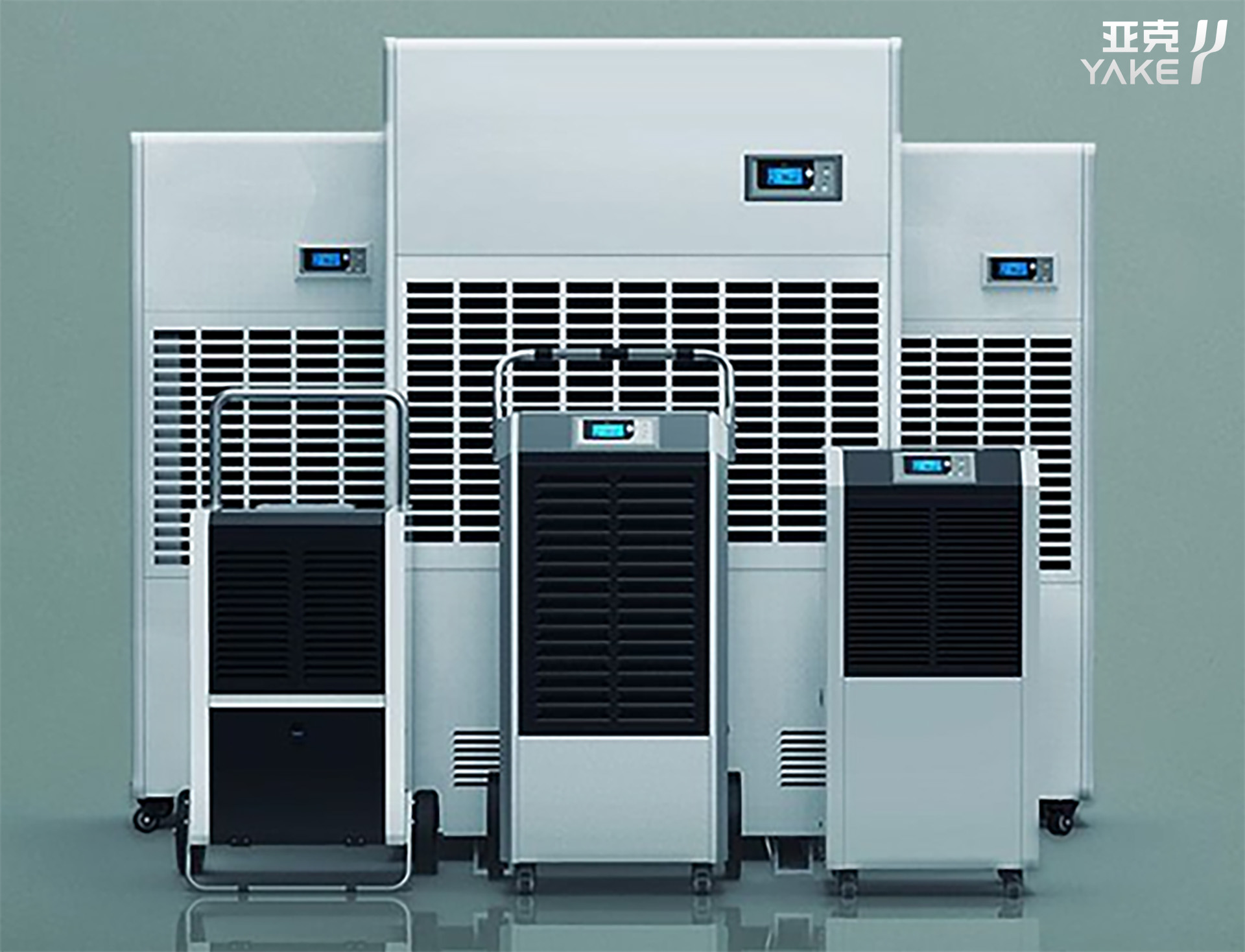
Contact us to find the best place to buy your Yakeclimate solution today!
Our experts have proven solutions to keep your humidity levels in check while keeping your energy costs low.