
Building 34, No. 535 Shunfeng Road, Hangzhou, Zhejiang, China
[email protected]
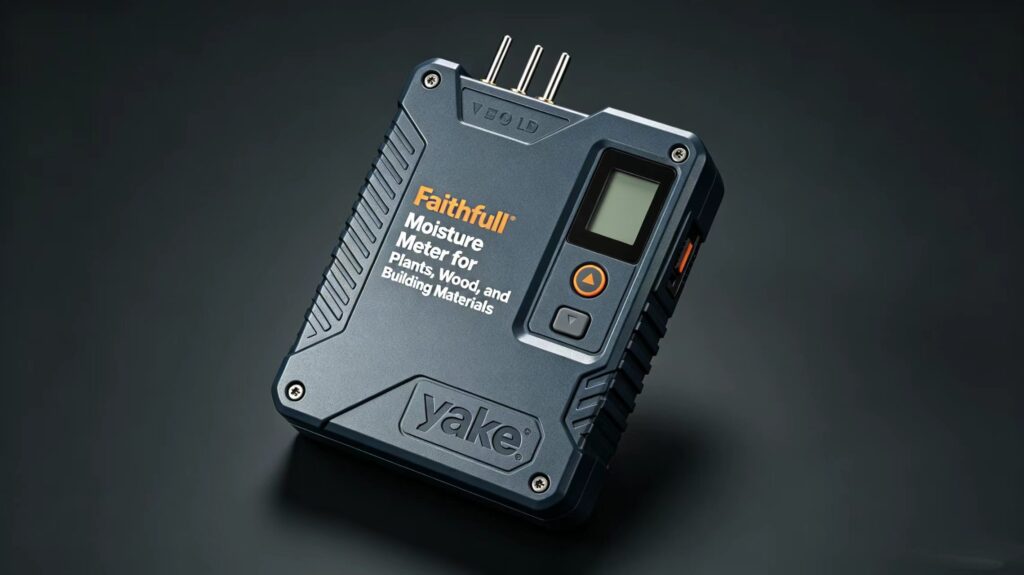


A Faithfull moisture meter is a little handheld gizmo that measures the amount of water lurking inside wood, plaster, or other materials. A ton of indoor growers and facility managers utilize it to identify wet zones in grow rooms, cold storage, or pack areas before mold or rot begin. The Faithfull moisture meter operates by passing a low electrical signal through the material and measuring the variation, then displaying a moisture value on a basic digital readout or LED scale. Growers say they often use these readings in conjunction with room humidity information to optimize dehumidifier settings and airflow. The subsequent sections detail how the Faithfull meter functions, where it assists the most, and how to interpret its readings accurately.
Moisture is one of the very few variables connecting plant health, building health, and energy use at the same time, so it deserves the same rigor as light or nutrients. A faithful moisture meter is one of the few tools that lets you quantify this unseen portion of your system in real time, both in the root zone and in the structure that sustains your grow.
In controlled environment farming, water is not just in the substrate. It is in the air as relative humidity, in porous building materials, in insulation and in concealed spaces. Once relative humidity exceeds roughly 70 percent, the air is capable of holding enough water vapor to gradually dampen walls, ceilings and fixtures. If those materials remain damp for over 24 to 48 hours, they can enter the moisture range that supports microbial growth, including mold, which is a health and structural risk.
Most grow rooms use materials that are at least partly porous and carbon-based: drywall, wood framing, some ceiling tiles, MDF benches, cardboard boxes, and even some acoustic panels. These all foster mold once saturated enough. A moisture meter allows you to verify these materials rather than guessing. For instance, after a drain line leak by a tray, you can scan the lower portion of the wall and base plates to determine if water wicked up into the gypsum or studs. If readings stay high after 24 hours, you know you have to dry or strip that area, not just dehumidify the room air.
Excess moisture can enter from more than one source at once: small leaks in the building envelope, pipe or HVAC condensate releases, humid outdoor air pulled in by fans, or chronic high humidity from heavy plant load and undersized dehumidifiers. If the relative humidity is above 70% for extended periods, materials, even without a leak, will gradually soak up moisture. This is the reason why state-level building and health codes in many areas now tackle excess moisture and indoor mold. They treat moisture as a building performance issue, not just a hygiene issue.
Using a moisture meter in the field requires a little bit of caution. If the probe touches cold metal ducts or concrete slabs, condensation can lead to false high readings. The probe is reading surface water, not material moisture. Cross-checking with room humidity, surface temperature, and a consistent dehumidification strategy prevents incorrect decisions. When the meter’s proven walls and trims are dry, you can size and set dehumidifiers, like Yakeclimate units, to maintain a safe humidity range instead of over-drying and wasting energy.
This section examines the internals of a Faithfull-style moisture meter and how that relates to actual work in a grow room or greenhouse.
Most Faithfull handheld meters are pin or pinless and the difference is significant when you work near irrigation pipes, wet slabs or timber piles. Pin-type sensors impale two metal needles into the substance and measure electrical resistance, which varies with moisture. These meters typically range from 0 to 99.9% for wood, but can hover anywhere between around ±0.1 to ±4% accuracy, so “precise” on a spec sheet might still mean a few points off in field use. Pinless units use a flat plate to broadcast a low-frequency field into the surface, read the capacitance change, and translate that to moisture content. They typically report 0 to 60% for softwood and 0 to 36% for hardwood, which is highly relevant for benches, grow-room framing, or shipping pallets that touch your grow zone.
Moisture sensors respond to environmental background noise. Condensation on a cool slab, sharp temperature swings between nights and days, or salt build up on damp media can all boost readings. A wet, salty slab in hydroponic rooms can register as “too wet” even if the core is fine. Many pro meters respond to this with selectable modes for wood, masonry, and drywall, as well as calibration tables for up to 28 wood species. You can dial in settings that match local lumber, wall systems, or grow-room fit-out and eschew guesswork when connecting building moisture to humidity control strategies and dehu sizing.
The readout comes in handy when you’re standing in a noisy mechanical room or shadowy service corridor. Most premium models display moisture content, air temperature, and relative humidity simultaneously, bridging a damp reading in a wall to a certain weather pattern or broken dehumidifier cycle. Some housings even print a quick species or material guide next to the screen, while others employ a built-in mode map. This allows staff to pair the right wood type or substrate to the right setting without returning to the manual, reducing user error and inaccurate measurements.
Faithfull Meter Mechanics Design that feels simple generates better data in a frenetic facility. Faithfull Meter Mechanics Faithfull-style tools typically maintain the grip compact with an unobstructed thumb stretch to the mode buttons, so you can clutch the meter in one fist, pin or scan a surface, and switch between material presets without relinquishing hold or adjusting posture in cramped aisles.
About: Mastering Your Faithfull Moisture Meter A Faithfull moisture meter is a basic handheld gadget. In a controlled environment facility, it becomes a central element of risk management for both crops and building fabric.
In indoor farms and greenhouses, the Faithfull meter works best as a regular survey tool, rather than a one-off checker. Then use it to scan your grow rooms, drying rooms, fertigation areas and adjacent corridors, not just in the vicinity of plants but also insulation joints, door frames, cold structural beams and HVAC vents. This broader view connects plant-zone moisture with construction vulnerabilities such as cold bridges and under-insulated walls.
To master the meter, develop a pattern over time. Capture different readings in various rooms at different times of day when lighting ramps up, when irrigation cycles fire, and during the nights as extraction slows. Print %RH and air temperature every time. If the display isn’t showing both, pause and adjust the mode before you believe any reading.
For control and audit, record readings in a plain spreadsheet with date, time, room, %RH and air temperature. Over weeks, this data reveals which rooms go wet, when peaks occur and where you might need targeted dehumidification, airflow adjustments or set-point tweaks with higher-capacity systems like Yakeclimate units.
Indoor farms experience pronounced gradients between canopy, floor, and ceiling. Take readings at set heights, such as 0.5 m, 1.5 m, and near the ceiling to capture these strata. Close to outside walls in winter, colder surfaces elevate local percent relative humidity, even if the bulk room air appears safe.
Condensation is sporadic, so measurements taken only during the day or in the warm time of year abound the truth. Add additional checks at night and in the colder months when grow lights turn off. Extraction may slow down and surface temperatures dip. That’s typically when you see water on metal ducting, glazing frames, or uninsulated pipes. These wet spots are mold risk canaries in wall cavities or behind panels.
Yakeclimate dehumidifiers assist in flattening these oscillations. You still require meter data to position units effectively and define realistic control bands for every room.
A typical Faithfull-style sensor functions within a spectrum of about 30 to 100 percent relative humidity. Readings under 30 percent relative humidity are less relevant for plant production areas and when close to 100 percent relative humidity, you’re in a fog or on a condensing surface. Keep this range in mind when you read results.
Most meters have a condensation or dew-point risk setting. In that mode, it correlates air temperature and %RH and alerts when surfaces at standard wall or glass temperatures could experience condensation. Use this near suspect areas: cold corners, glazing frames, chilled-water pipes, and behind large equipment where air flow is low. This mode is valuable for new construction or retrofit projects where insulation integrity remains questionable.
One common error is to disregard the air-temperature readout and simply focus on %RH. Relative humidity fluctuates with temperature, so 65% RH at 18 °C is much more significant than at 26 °C. Read them as a pair, always.
The other problem is under-sampling in time. Condensation tends to spike in winter, early morning and at night, but most teams only test during daytime rounds. This behavior masks short but intense episodes. If your log indicates frequent spikes above 70% RH, naturally sourced materials, such as timber, cardboard packaging, and certain insulation materials, will begin to absorb moisture and deteriorate.
Surface readings adjacent to operating humidifiers or vents, or open doors can mislead. Pause for a few seconds before logging, protect the sensor from direct airflow and pull multiple readings in any questionable zone. When data seem inconsistent, double-check with a different meter or with stationary sensors connected to your HVAC and Yakeclimate system.
Faithfull moisture meter care is simple, and long-term value depends on it. Keep the sensor head clean and dry, don’t store it in high-humidity grow rooms, and protect it from nutrient splashes or foliar sprays. Occasionally calibrate readings to a reliable reference hygrometer in a controlled room. If you notice consistent drift, schedule recalibration or replacement.
By charting %RH and temperature for months on a spreadsheet, you do more than safeguard the meter. You create a humidity record for every room. That background informs insulation upgrades, air-handling redesign, or Yakeclimate dehumidifier sizing decisions to reduce energy consumption and maintain RH well under the 70% natural material damage threshold.
Selection starts with the basic question: what are you measuring, where, and how precise do you need to be? The Faithfull moisture meter becomes a reliable control tool rather than a rough guess.
About: Choosing Your Perfect Meter Some units are calibrated for wood, some for concrete, screed, drywall, or composites. A general-purpose reading can be deceptive if the calibration curve is incompatible with the material. In an indoor farm, that can mean the difference between catching a wet stud behind reflective film or missing a damp slab under an insulated grow room. For structural checks around grow spaces, seek out a meter that features distinct modes for wood, masonry, and gypsum so the scale and alarms remain relevant.
Wood-targeting meters in the Faithfull tier generally span into the crucial low-end values of 6 to 8 percent moisture, which counts when you lay down wooden doors, benches, or floor panels in processing or drying chambers. Concrete or screed checks are different. Here, you often track relative moisture to decide if you can place vapor barriers, insulation, or floor finishes without trapping water that later drives mold growth and adds extra dehumidifier load. When the environment is a mixture of timber framing, drywall, and concrete pads, it’s convenient to standardize on one meter that at least provides dedicated reference scales for the primary materials used in the facility.
Two basic electronic methods apply for wood: pin and pinless. Pin meters measure electrical resistance between a pair of metal pins you insert into the material, so the reading is highly localized and sensitive to small wet pockets. Pinless meters emit a low-frequency, three-dimensional signal into the surface and read the dielectric response, so they “see” deeper and cover a wider spot without drilling holes.
Depth of measurement tends to be in the 0.25 to 0.75 inch range. The good stuff is how repeatable and stable it is at the low end. For floors, trim, or high-end benches around climate-critical areas, you need a meter that consistently detects 6 to 8% moisture and can log or transmit readings since that information plugs directly into dehumidifier setpoints and drying timelines. Non-penetrating models guard your visible surfaces and finished panels. Pin-type models exchange that surface damage for finer, layer-specific precision, which can come in handy when you’re pursuing a leak nestled inside a wall near irrigation lines.
Operating environment molds the best fit. In active grow rooms with multiple daily checks, non‑destructive, pinless meters tend to work better, as staff can sweep extensive wall and ceiling areas quickly without stamping marks on cladding, trays or door frames. In more technical areas behind walls, at slab plate or in service tunnels, pin meters assist you in validating moisture where you anticipate condensation or slab wicking.
Think speed, flexibility and reporting. A good meter at a controlled-environment facility should provide stable results within seconds, enable rapid toggling between wood, concrete, and drywall settings, and preferably include rudimentary logging so you can map localized moisture issues back to RH drift or dehumidifier downtime. Consistent, repeatable readings across shifts are more useful than extreme lab-grade precision because they feed into day-to-day decisions: whether to hold off on cladding a wet wall, reschedule a floor install, or adjust drying protocols to cut energy waste while still protecting crop areas and building fabric.
Peak accuracy with a Faithfull moisture meter is born out of tiny, consistent habits. For indoor farms and controlled grow rooms, that means treating the meter like any other critical sensor. It needs calibration, stable storage, and routine checks that match the climate strategy of the space.
Calibration is what connects the meter reading to actual moisture content, not just an arbitrary number on the display. For pin‑type meters, verify the factory calibration with the provided check block or reference plate, and compare the reading to the value on the block. A difference larger than the manufacturer’s tolerance indicates the meter requires recalibration or service. Pinless meters need to be tested on a known, stable material slab, such as a kiln‑dried board held at constant temperature and humidity, and should remain within about 0.1% moisture content if it is a good unit.
Material settings count as much as calibration. If the incorrect mode is chosen, such as a wood preset on drywall or concrete, the internal correction curves will not align with the material’s electrical or dielectric behavior. As a result, the readings stray significantly away from the actual moisture content. In practice, that can make a slab appear safe for build-out when it is still too wet, or a grow room wall look “dry” while it slowly feeds mold beneath the paint.
Temperature and ambient humidity bias readings. Wood at 10% moisture content is not the same at 10 °C as it is at 30 °C, so if you’re doing exacting work in a drying room or curing space, employ temperature correction charts or built-in compensation and keep the meter in the same environment as the material for a few minutes before testing.
Storage conditions determine long-term accuracy. A moisture meter stored in a hot, damp pump room will drift more quickly than one stored in a dry cabinet near your other sensors. Aim for stable temperature and low to moderate humidity, and keep it away from strong electromagnetic fields from large motors.
Pins must be scrubbed and guarded. Bent or corroded probes alter contact resistance and spoil repeatability. A pinless meter with a scratched sensor plate will not sit flat and will under-read dense substrates such as hardwood battens or laminated panels.
Regular checks connect the instrument to the actual environment in your plant. Strive for a minimum of three readings in small areas, such as a single grow tray support board, and five or more across large walls, floors, or benches. Moisture is seldom uniform; one reading almost always masks wet pockets or edge effects from airflows and leaks. For pinless meters, keep the sensor plate flat on the surface and use the same light pressure each time, while pin-type probes should insert to an even depth so deeper, wetter zones are tested similarly. Frequent spot checking around dehumidifiers, intake ducts, and recognized condensation points assists in verifying that climate control, including Yakeclimate units, keeps surfaces within secure moisture levels.
Faithfull moisture meters are not just about displaying a figure on a screen. What is really valuable is how you read that number in context and then connect it to climate control, drying strategy, and long-term risk management in an indoor grow or controlled facility.
One reading, standing alone, is feeble data. Wood studs, drywall and grow-room fit-out moisture responds to ambient humidity, recent watering, leaks and even brief condensation on cold surfaces. Concealed moisture can nurture mold growth in as little as 24 to 48 hours, so your task is to construct an image, not pursue a single elusion.
Begin with material thresholds. On a timber stud, a reading close to 18% or higher is a significant red flag, particularly behind tray lines, under reservoirs or around duct penetrations. For drywall, anything over about 1% indicates water intrusion and an obvious danger of softening, delamination and mold in wall cavities that contain cables and air lines. Those figures dictate how rapidly you must react and how assertive drying must be.
Meter quality frames the degree to which you can trust what you see. Low-cost units can drift with a margin of error of 10% or more, enough to push a borderline reading into either false safety or unnecessary teardown. Well calibrated in device, held to something like ±0.1% yields consistent data that you can connect to your SOPs, audits, and insurance documentation.
Ambient moisture and drippage lurk in the wings. In high-humidity rooms or adjacent to cold coil housings and inadequately insulated ducts, condensation can fool the meter into reading “wet” where the substrate is solid. Readings must be validated against a hygrometer and surface temperature, and if required, non-invasive and pin modes before you point the finger at the structure.
Begin a firm survey rhythm. Mark a grid on key risk zones: beneath supply lines, around sumps, near exterior walls, and below roof penetrations. Note readings, room relative humidity, and exhaust or dehumidifier status at each. Gradually, you observe what is typical for that room and time of year.
If a stud reads 18% or above, or if drywall exceeds 1%, move from monitoring to intervention. Mechanical drying with dehumidifiers sized to the room’s actual latent load, not nominal volume. In a dense indoor farm, this often translates to industrial units that can pull moisture quickly enough to keep leaf surfaces, insulation, and framing below mold-friendly levels while still maintaining the setpoint climate for plants.
Calibrate meters on a set time. Reference known reference materials or a manufacturer kit and log it. You want that ±0.1% band to be reality, not assumption. Any unit that roves or performs badly in spot checks needs to be removed from service because instrument failure results in bad climate and frame decisions.
Conjure up a moisture map every time you react to a leak or chronic condensation episode. Lay out readings on a plot on the plan of growth, then again after 24 and 72 hours of active drying. The map confirms if your dehumidification plan truly covers all areas and serves as paperwork for insurers and investors that the building is dry and risk-managed.
Future risk management starts with tying moisture data back into the climate system. If one side of a vertical farm just can’t stop trending higher, inspect local airflow, dehumidifier location, and return paths. Dead corners in air currents frequently correspond to hot spots in your moisture map. Pair the meter with constant humidity logging so you can observe how relative humidity peaks correspond with irrigation cycles, night setbacks, or equipment malfunctions. As time passes, you can tune setpoints, airflow patterns, and dehumidifier staging to maintain surfaces below critical thresholds while still maintaining plant VPD targets.
A Faithfull moisture meter provides precise information, not speculation. Wood, walls, or floors all speak to me through moisture. The meter assists you in reading that story quickly and with less danger.
You reviewed why moisture matters. You witnessed the magic of the pins, scale, and ranges in action. You went through meter care, smart test points, and cross checks with other indications like smell, stains, and surface feel.
True progress appears in subtle forms. Less bad boards in your wood shop. Less mold spots in a grow room. Less secret soggy spots lurking around a house.
For the next step, select a single location you are familiar with, make a complete set of readings with your Faithfull meter and establish your own baseline.
Using a Faithfull moisture meter, a tiny electric charge is sent between its pins or sensors. Wet substances carry an electrical charge more efficiently. The meter reads this shift and translates it into a moisture level, typically displayed on a digital or analog screen.
Most Faithfull moisture meters are for wood, plaster, brick, concrete, and other building materials. Faithfull moisture meter always reads the user manual! Certain models include modes or scales for wood versus masonry, enhancing accuracy.
Try it on a piece of known dry material, such as indoor stored seasoned wood. Readings should always be low. Do the calibration steps in the manual. Keep your meter correctly stored and change batteries to ensure long-term accuracy.
Yes, consistent calibration aids in maintaining accurate measurements. A lot of the Faithfull ones have a reference test point or built-in self-check. Follow the instructions from the manufacturer. Calibrate if you’ve dropped the meter, stored it poorly, or it produces unexpected results.
It cannot prevent damp per se, but it can give you an early warning. By detecting excess moisture in walls, floors, or timber, you are able to address leaks, increase ventilation, or repair insulation before mold and rot take hold.
For the majority of homeowners, a basic pin type Faithfull meter with distinct wood and building material modes will suffice. Seek out a moisture meter with easy-to-read numbers, a rugged body, and a cap for the pins. Bonus features are nice but not required.
Yes, temperature can affect readings, especially if it’s really hot or cold. A few Faithfull meters incorporate temperature compensation. For optimum accuracy, measure at normal room temperature and warm up cold materials before testing.



Contact us to find the best place to buy your Yakeclimate solution today!
Our experts have proven solutions to keep your humidity levels in check while keeping your energy costs low.