
Building 34, No. 535 Shunfeng Road, Hangzhou, Zhejiang, China
[email protected]
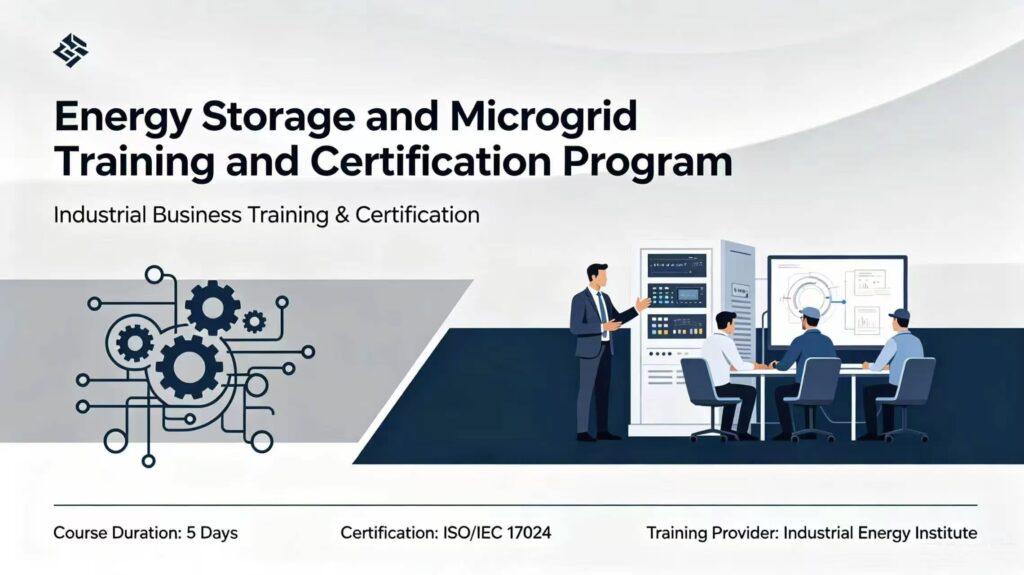


Energy storage and microgrid training and certification address high quality programs that develop expertise in designing, operating, and maintaining distributed energy systems with onsite storage. Topics typically cover battery basics, power electronics, controls, grid codes, and safety rules. A number of courses these days connect to standards such as IEEE 2030.7 and IEC standards, as well as local interconnection standards. In actual projects, teams apply this training to size batteries, create dispatch plans, and operate in island and grid-tied modes. Certification usually verifies expertise in system design tools, real-time control platforms, and performance auditing throughout the life cycle. To connect the theory to field work, the majority of advanced tracks employ lab work, case studies, and project reviews. The following sections detail these with more granularity.
Energy storage and microgrids are one. Storage smooths power and the microgrid routes and controls it. Both have become prominent in plants that blend grid power, onsite renewables, and backup sources. As more renewables come online globally, these systems assist in managing intermittent solar and wind while maintaining voltage, frequency, and power quality within strict boundaries.
It’s a steep growth curve. Places like California — with its 100% greenhouse gas-free electricity goal for 2045 — are accelerating large fleets of storage-ready microgrids. That transition creates a need for employees who understand design, installation, testing, operation, and safe decommissioning. It fuels the need for training and certification that address real-world conditions in industrial plants, not just theory.
Energy storage and microgrids both rely on complex hardware: battery racks, inverters, protection relays, micro‑turbines, switchgear, and control systems. Safe work with this equipment requires strong skills in electrical construction, safety codes, grounding, and coordination with existing plant systems such as HVAC, dehumidification, and compressed air. Arc flash and shock hazards are very real. So are chemical and thermal risks in high‑capacity batteries.
For industrial users, this nexus is about more than just power. It connects with process consistency, quality, and environmental regulation. A microgrid with well-sized storage keeps critical loads running: cleanrooms, paint booths, humidity-controlled warehouses, and precision drying lines. Steady power keeps dehumidifiers and air handlers online, so temperature and relative humidity remain within tight ranges even through grid events.
Workforce requirements are extensive. Among them are licensed electricians, technicians, and apprentices. A number of initiatives are recruiting individuals from underserved communities into this space and then training them in storage and microgrid best practices. Certification pathways are starting to reflect the full life cycle: assembly, commissioning, maintenance, retrofits, and end-of-life handling.
For plant managers and facility engineers, knowing about this nexus assists in constructing stronger project specs. It informs how you size storage, configure microgrid controls, and comply with safety regulations. It configures the defense of mission-critical gear such as industrial dehumidifiers that rely on clean, stable power to meet efficiency and uptime goals.
Battery power dominates nearly every industrial microgrid. Lithium-ion and LFP systems provide fast response, high round-trip efficiency, and tight control, which is ideal for peak shaving, fast frequency support, and ride-through for sensitive loads. Flow batteries deliver long duration and deep cycling for locations requiring multiple hours of discharge. Lead-acid still shows up in smaller, cost-sensitive backup applications.
Flywheels provide extremely high ramp rates and cycle life. They accommodate short-term voltage and frequency support or bridging power while diesel or gas micro-turbines initiate. Thermal storage connects nicely with HVAC and dehumidification. For instance, chilled water tanks or ice storage allow a plant to pre-cool at off-peak times, operate dehumidifiers more efficiently and then pull that “cold” when tariffs or grid stress peak.
Mechanical systems like pumped hydro and compressed air energy storage (CAES) seem to show up more in utility-scale or campus microgrids. They provide big capacity and longevity but require particular geography or room. In congested industrial areas, they are rare but still feasible in brownfield areas.
Technology choice must serve project objectives. If the driver is process stability for a paint line and humidity-critical cleanroom, fast-acting batteries and flywheels might be preferable over long-duration chemistries. If the driver is moving big cooling loads around while reducing emissions, thermal storage combined with high-efficiency dehumidifiers can deliver powerful gains in both cost and energy consumption.
| Microgrid Function | How Storage Supports It |
|---|---|
| Peak shaving | Discharges during demand peaks to cut kW charges |
| Demand response | Adjusts load or exports power when grid sends DR signals |
| Frequency regulation | Rapid charge/discharge to hold system frequency |
| Voltage support | Reactive power and fast response to stabilize voltage |
| Islanding operation | Maintains local balance when grid is lost |
| Black start | Supplies initial power to start generators and controls |
| Power quality control | Smooths sags, swells, and short disturbances |
During peak shaving, batteries discharge during the plant’s highest load windows so the site stays below tariff thresholds, which could be tied to HVAC and humidity control. For example, the microgrid can move some cooling and dehumidification to earlier in the day, then use stored energy when demand surges.
The demand response uses the same hardware but different control logic. The microgrid controller responds to grid or market signals by curtailing net load or exporting power. Workers must know how these modes interplay with process limitations, safety regulations, and code-compliant switching.
Islanding and black start sit at the core of resilience. During a grid outage, a microgrid disconnects from the utility and storage maintains essential loads while gensets warm up. For black start, storage powers controls, pumps, and auxiliaries so larger units and critical systems, such as process dehumidifiers or cleanroom AHUs, can start in a safe sequence. Training must include protection schemes and grounding changes when islanding and safely re-syncing to the grid.
These capabilities power grid-level optimization and site-level resilience. Properly executed, they reduce energy costs, emissions, and stabilize fragile production lines. When done badly, they increase fault risk, arc flash exposure, and unplanned downtime.
When storage and microgrids are designed together, plants can push significantly higher percentages of onsite solar or wind without sacrificing stability. Storage absorbs surplus production when irradiance is abundant and then delivers it back during low-sun or high-load times. The microgrid controller synchronizes this with feeder limits, protection settings, and plant operating schedules, such as when critical humidity-controlled zones cannot shut down.
Energy security strengthens because the site is no longer entirely reliant on upstream grid dynamics. They say that with the right protection and control, storage stacks with diesel, gas micro-turbines or fuel cells to form multiple layers of supply. Microgrids can divide loads into levels, so vital systems like pharmaceutical cleanrooms, battery drying ovens, and electronics assembly lines remain energized while non-critical loads drop.
Cost savings come from three main levers: lower demand charges, time-of-use arbitrage, and reduced outages. Storage allows the site to charge during off-peak hours and discharge during costly periods. Microgrids prevent product loss associated with temperature or humidity excursions that occur in grid events. For facilities with large drying or curing lines, that avoided scrap alone can support significant capacity.
These shared advantages are driving worldwide adoption. They raise the bar for capabilities. Workers are required to conduct assembly, testing, commissioning, maintenance, repair, retrofits and end-of-life work within arc flash boundaries, PPE, and lockout/tagout as part of stringent safety standards. Training and certification now revolve around actual machinery—batteries, inverters, micro-turbines, switchgear—along with codes that dictate how work in and around industrial environments. Several initiatives target an inclusive workforce, recruiting apprentices and electricians from underserved populations and providing them defined upgrade pathways into this expanding industry, including specialties related to power quality and climate-critical loads such as advanced dehumidification.
Energy storage and microgrid projects now occupy the center of contemporary industrial power strategy. Systems interconnect photovoltaics, batteries, inverters, switchgear, and building management systems. Teams require skills that align with this rapid transition. Specialized training ensures that electricians, technicians, and engineers stay up to date on electrical construction practices, safety codes, and standards as the technology and regulations evolve.
High-voltage DC buses, lithium-ion and other chemistries, and dense power electronics introduce failure modes that general electrical training doesn’t fully cover. Specialized courses cover battery thermal runaway, arc flash in bidirectional converters, gas emission from specific chemistries, and backfeed hazards during islanded microgrid operation.
Good courses drill safety protocols: lockout/tagout for hybrid AC/DC systems, safe energization and shutdown sequences, verification of isolation, and correct PPE for both AC and DC incidents. They include emergency response protocols, ranging from fire brigade cooperation close to containerized battery units to secure ventilation and evacuation measures.
Reputable certifications require regular safety modules. This means employees confront new code revisions, refreshed battery requirements, and incident case studies on a routine cadence, not once per career. Over time, this disciplined rehearsal eliminates actual events on the plant floor because crews identify early warning signs and use checklists rather than cobbling together solutions in a high-pressure environment.
Training targets performance, not just risk. Technicians discover how state of charge, depth of discharge, temperature, and C-rate influence battery life and how microgrid control strategies can minimize cycling stress while satisfying load and demand-charge objectives.
Courses go deep into observability and diagnostics. They learn to set alarms on battery management systems, interpret inverter fault codes, track round-trip efficiency, and use predictive maintenance tools that flag cell imbalance, cooling faults, or contactor wear. That same skill set underpins fast fault finding during commissioning and retrofit work, which minimizes downtime for production lines and critical HVAC or dehumidification assets.
The outcome is a team able to tune dispatch schedules, adjust setpoints, and feed performance data back into continuous improvement, all with the obvious output of lower energy costs per kWh stored and greater system uptime.
Certification in energy storage and microgrids will make you stand out on a résumé in a congested electrical and controls job market. Plant managers and EPC firms now vet for proven experience in design review, assembly, testing, commissioning, maintenance, repair, retrofitting, and safe decommissioning of battery assets.
With specialized training, electricians and apprentices transition into positions such as microgrid specialist, ESS commissioning engineer, energy manager or reliability engineer for distributed resources. They’re closer to strategic planning and capital projects. They often lead you to supervisory roles, project lead work, and cross-site normalization efforts that tend to connect to higher pay bands and more long-term career stability as renewables continue to ramp.
Regulation is accelerating. Specialized training teaches how standards for energy storage and microgrids interface with building codes, fire codes, interconnection rules, and environmental law. They train workers in the nuts and bolts of how to comply with local, national, and international codes, from equipment labeling and clearances to functional safety tests and documentation.
Specialized modules guide you through actual compliance mishaps, like defective ventilation design, insufficient fault current analyses, or lack of emergency shutdown interfaces, and demonstrate how to prevent them in new construction and retrofits. In markets really thrusting on decarbonization, like California’s plan for 100% greenhouse-gas-free electricity by 2045, this expertise is nonnegotiable. Teams need to stay current with constant rule changes around recycling, hazardous materials, and lifecycle reporting or risk unexpected delays, fines, and redesigns.
Energy storage and microgrid training provides plant and facility teams a transparent path to building safe, grid-ready systems that are compatible with process loads, HVAC, and humidity control assets such as industrial dehumidifiers.
Entry-level courses cover core concepts. These include DC power systems, basic microgrid applications, energy storage use cases, inverter properties, grounding and bonding, and arc-flash and shock protection. A few programs include battery rooms, fire protection, and coordination with ventilation and dehumidification safety modules. This is relevant if you operate large battery halls in humid or corrosive environments.
Look for providers that include hands-on labs: installing batteries into racks and enclosures, making series and parallel connections, doing basic commissioning checks, and running situational assessments on existing systems. These labs should mirror real work in industrial plants, where high humidity, dust, or chemicals change how you think about enclosures, cable routing, and corrosion control.
These foundational certifications are often required before you can take more advanced levels. They create a foundation in electrical construction, safety codes, and standards before transitioning into design and operations. This stage is suitable for entry-level engineers, maintenance crews, and HVAC or dehumidification technicians who currently influence microgrid or battery projects.
Standard tracks break down into design, installation, ops and maintenance. Design tracks fit electrical engineers and project leads who size microgrid systems and components, run load analysis, and consider HVAC and humidity control loads as part of dispatch strategy.
Installation tracks suit electrical contractors and field supervisors who oversee implementation, testing, and commissioning. Topics range from micro-turbine interconnection to cable routing in humid or corrosive environments and safe work practices around live DC systems.
Operations and maintenance tracks aim for plant managers and reliability engineers. They include business drivers for energy storage and microgrid systems, KPIs, lifecycle planning, and maintenance, repair, retrofitting, and decommissioning procedures.
Advanced courses dig into emerging topics such as battery analytics, hybrid AC/DC microgrids, and integration with flexible loads, including large chillers and dehumidifiers that can shift run times to support peak shaving or islanded operation.
Most paths follow a three-step hierarchy:
Advancement typically encompasses a 100-question certification exam at each stage, in addition to project documentation or hands-on evaluations. Candidates should map target tier to role. For example, a facility engineer planning to lead large microgrid deployments will likely aim for professional or expert credentials.
Verify accreditation and industry recognition from organizations associated with electrical construction, safety codes, or utility standards. Robust courses match materials with leading real-world practices on DC power systems, grounding, bonding, arc flash, and interconnection.
Compare delivery formats: in-person labs, hybrid models, and fully online theory. Instructor bios should highlight direct industrial microgrid, energy storage, and plant integration work, not just residential.
Request course outlines that demonstrate coverage of microgrid systems and components, energy storage systems and components, and safety. Ensure case studies involve industrial loads like compressors, process lines, and climate-control equipment and not just small buildings.
Ask for testimonials, pass rates, and job outcomes from prior students, particularly from manufacturing, pharma, or electronics graduates. This filters out generic courses that don’t address real plant conditions or humidity-driven reliability problems.
Most certifications require continuing education every 2 to 3 years. These can be anything from advanced short courses, standards updates, or manufacturer training on new battery chemistries or microgrid control platforms.
Many organizations accept verifiable work on assembly, commissioning, maintenance, repair, retrofitting or decommissioning projects as renewal credits. Some include in-house training on safety or reliability programs that address climate and humidity effects on electrical equipment.
Continuous education keeps you up to date with rapid changes in storage chemistry, inverter behavior, controls, cybersecurity, and safety regulations. This is critical as demand surges globally with increased renewable energy, stricter regulations, and higher industrial plant uptime expectations.
Manage credential expiration within your training systems and connect them to internal competency matrices for electrical and mechanical personnel.
Training in energy storage and microgrids is not soft value. It manifests itself on the balance sheet as greater production, fewer crashes and more effective utilization of resources. For us and them, it connects straight to revenue, cost and risk.
Certified engineers and technicians on battery systems, inverters, and microgrid controllers command more rapid career advancement. Employers look at credentials when they hire for big storage projects, utility microgrids, or integrated HVAC–storage retrofits. Many programs boast placement rates of over 80% within 6 to 12 months for certified candidates, with salaries 10 to 20% higher than non-certified peers performing similar roles.
That increased compensation is a piece of an obvious return on investment. When a 5 to 10 day course increases annual income by as little as 5,000 to 10,000 USD, the tuition and time cost tends to earn back in the first year. Follow-on promotions to lead engineer, controls specialist, or microgrid project manager extend that return, particularly in plants where storage now integrates with process loads, chillers, and dehumidification systems.
Hands-on training on EMS software, protection settings, SOC/SOH analytics, and grid-forming inverters cuts fear around complex systems. They know how to read alarms, safely isolate a string, and restart a hybrid microgrid post-fault. That confidence boosts performance and reduces turnover, which aligns with larger research indicating trained employees tend to remain longer.
Most certification paths have forums, tech workshops or alumni networks. They cradle those connections straight into EPC companies, OEMs, utilities and climate-control providers. Over time, that network frequently fuels contract work, joint R&D, or pilots that wouldn’t show up on typical job boards. Many programs open up standards libraries, design tools and updated safety guides that keep skills current as codes, chemistries and controls evolve.
For plant owners, that’s an even more numbers-driven argument. Cross-sector research indicates that for every USD invested in training, it returns four in productivity when you factor in accelerated commissioning, more fluid operations and less downtime. In storage and microgrids, where one misconfigured protection relay can drop a line or freeze a critical humidity-controlled room, that ratio is often a conservative estimate.
Certified staff adhere to stringent lockout–tagout, arc‑flash boundaries, and battery handling procedures. That in itself reduces accidents and insurance claims, which is why many insurers provide reduced premiums when high‑risk assets are held by trained, certified individuals. Fewer incidents translate to less unplanned downtime. Each avoided trip or blown fuse during a humidity‑sensitive batch is actual cash left in the bank because of raw materials and schedule impact.
Customers observe this rigor. Industrial buyers and data centers and pharma clients want partners who can demonstrate expertise for both power systems and climate control. Displaying certified microgrid engineers on a proposal, alongside data on stable temperature and dew point control, boosts trust. This tends to boost win rates in tenders and underpin long-term service contracts, fueling recurring revenue rather than one-off sales.
Training upskills existing teams rather than swapping them out. Electricians can reskill into battery safety and EMS integration. Controls engineers can add microgrid optimization and demand-response logic. Maintenance crews can read BMS trends in the same SCADA screens they use for chillers and dehumidifiers. This reskilling eases hiring pressure, reduces stress or uncertainty-related absenteeism, and helps the 72% of companies already reporting productivity benefits from training and 63% seeing improved retention.
From a pure ROI perspective, the benefits appear as increased kWh throughput with reduced errors, optimized utilization of storage to chop demand peaks, and more precise environmental control that shields high-value output. Revenue increases, operating costs decrease, efficiency increases, and risk curves flatten.
Energy storage and microgrid projects today require people who can shift between design, construction, controls, and compliance. Skills shift fast as DC systems, advanced controls, and new business models like energy-as-a-service grow. A solid foundation in electrical construction, safety codes, and standards remains non-negotiable, but the competitive advantage is gained through digital fluency, interdisciplinary thinking, and a commitment to continuous learning.
Education and credentialing must consider digital skills as essential, not add-on. SCADA, IoT sensors, and AI-driven controllers now sit at the heart of storage and microgrid control schemes from battery racks to HVAC and humidity control. Programs should walk through full data paths: field devices, communication layers, edge controllers, and cloud platforms that support predictive maintenance and fleet-level optimization.
Data skills are no longer ‘nice to have.’ Engineers and technicians should be able to read real-time trends, conduct basic analytics, and associate alarms with root causes, like how a humidity surge in a battery room affects dehumidifier load and battery safety margins. With remote monitoring and virtual control rooms enabling lean teams to manage dozens of sites, training needs to include dashboards, KPIs, and incident workflows.
Connected systems increase cybersecurity risk. Courses should cover network segmentation fundamentals, secure protocol usage, user access policies, and response procedures for infected devices. Hands-on experience with digital asset management platforms, digital twins, and virtual reality labs will facilitate safe practice on switching, lock-out/tag-out, and emergency scenarios before a worker comes into contact with live equipment.
Energy storage skills need to catch up to rapid changes in chemistry and materials. Technicians require a working knowledge of lithium-ion variants, LFP, sodium-ion, flow batteries, and thermal or mechanical storage, as well as how these impact DC system design, environmental limitations, humidity control, and fire safety measures. Training modules must refresh frequently to include new chemistries, gas release behavior, enclosure design, and PPE needs.
Lifecycle thinking is key. Workers should understand how chemistry underpins degradation mechanisms, inspection periods, state‑of‑health monitoring, and end‑of‑life trajectories like second‑life applications, recycling, or disposal. This connects to environmental regulations and to cost models that influence microgrid business cases. Continual studying with refresher certifications, vendor sessions, and technical standards work will be crucial, because chemistry and safety guidance won’t stand still.
Policy and regulation influence project design as much as hardware. Training should follow behind storage incentives, grid-support tariffs, interconnection rules and safety codes around battery rooms, ventilation, and humidity and temperature. Workers have to read and implement changing standards and then incorporate them into one-line diagrams, protection schemes, and O&M plans.
Electrical safety, DC arc‑flash risk, and documentation for inspections and audits — including digital records from SCADA and condition‑monitoring tools — must all be covered by compliance skills. With global and regional differences in policy mattering for teams working across markets, courses should contrast frameworks rather than teach a single rule set. Ongoing training, supported by new certifications and virtual/augmented reality labs, will help workers keep up, stay safe, and remain employable as technology and regulations continue to evolve.
Industry events bridge the theory of energy storage and microgrids to what really works on the plant floor. They provide engineers, managers, and trainers a venue to experience live systems, exchange expertise, and tailor training and certification to address day-to-day operational challenges such as humidity and climate control.
Trade shows are good if you want to get from “what is possible” to “what can we spec next quarter” fast. You can stroll from a microgrid controller booth to a lithium-ion rack to an industrial dehumidifier stand in just minutes and compare how each addresses heat load, moisture, and safety. Hands-on demos of BESS, hybrid inverters, and containerized microgrids frequently come with real data on load shifting, round-trip efficiency, and power-quality events, which you can then map back to your own plant profiles.
Live demo zones and short technical talks let you put vendor claims to the test. You can inquire how their control logic reacts when relative humidity surges higher than 70% or a cold start threatens condensation formation inside switchgear. That’s where Yakeclimate’s emphasis on arid, stable casings connects to the design of training labs and certification test rigs. A lot of vendors operate mini‑workshops that act as informal training, going through commissioning steps, fault codes, and maintenance tasks that end up on certification exams afterwards.
Trade shows are networking hives of activity. You can meet training providers, certifying bodies, and even potential employers in one hall, pick up course catalogs, and compare which programs cover energy storage safety, microgrid controls, cybersecurity, and environmental control. To a lot of people, the scene comes across as noisy and slightly intimidating, particularly if you’re a newcomer or introverted. A simple plan helps: target a short list of booths, prepare two or three clear questions, focus on active listening, then follow up after the event with a brief message and a specific ask. This type of purposeful networking is much more likely to result in mentors, collaboration, or employment leads, not an armful of nameless business cards.
Industry events provide slow, deep work. Breakout sessions, tutorials, and standards workshops dive into topics such as black-start strategies, grid-forming inverters, safety cases for high-energy BESS rooms, or how to build humidity-controlled storage rooms into microgrid resilience plans. Many talks unpack real failures: thermal runaway events, corrosion in coastal plants, or control systems that behaved well in tests but failed under real-world moisture and dust. That insight helps you calibrate your own training courses and internal SOPs.
Workforce development panels are helpful if you construct teams or training tracks. Speakers from utilities, OEMs, and industrial users share what skills they actually hire for: reading one-line diagrams, programming microgrid controllers, doing root-cause analysis on trips, and basics like lockout/tagout and safe work in high-humidity, high-energy spaces. You can inquire how they perceive particular certifications and what holds during hiring.
Conferences package research and tools that don’t necessarily surface on the broader web immediately. White papers on lifecycle analysis, standards updates or new test methods for combined electrical and environmental stress frequently remain behind attendee portals. Download that, then connect it with your own projects, like engineering a training cell where batteries, switchgear and dehumidifiers operate under controlled stress to simulate an actual facility.
Networking at conferences is quieter and more strategic. Roundtables, poster sessions, and small group discussions allow you to connect with peers dealing with comparable challenges in food processing, pharma, or electronics. Many of our partnerships begin by having a single targeted conversation about a common issue, like keeping microgrid enclosures dry in tropical climates while satisfying stringent quality standards. With some simple prep and follow-up, even a single conference a year can readjust your perspective on what skills, standards, and tools your teams need next.
Energy storage and microgrid work now move quickly. Skills age fast. Of course, solid training and a real cert keep you in the mix, not chasing from behind.
Short, focused courses help new staff ramp up. Deeper system design or control logic tracks assist senior folks lead large projects. For instance, a plant engineer can reduce outage risk with improved dispatch plans. A project lead can craft a microgrid spec that secures a close RFP.
Solid ROI tends to manifest itself in reduced design mistakes, easier startup, and less rework. Teams share a common technology language. Jobs hit their dates.
To make progress, select one course, one certification, and one event. Then grow from there.
Energy storage enables microgrids to level supply with demand on a moment by moment basis. It aids in the integration of solar, wind, and other distributed energy resources. This mix enhances reliability, resilience, and power quality, particularly for critical facilities and remote or weak-grid locations.
Specialized training develops practical skills for system design, sizing, integration, and operation. It minimizes design mistakes, optimizes project outcomes, and promotes safety and compliance. Employers prefer certified professionals for these complex, high-value projects in this fast-growing segment.
Most tracks begin with power systems and batteries basics, then transition to microgrid design and controls. This is followed by software tools, safety standards, and case studies. Most courses conclude with a proctored exam and some type of project or portfolio to validate applied abilities.
Engineers, electricians, project developers, and energy consultants all gain immediately. Along with developers and OEMs, policy makers, utility staff, facility managers, and investors benefit from learning technical and financial fundamentals. Training supports any professional planning, approving, or financing distributed energy projects.
Training can result in higher value roles, better project results and less expensive redesigns or failures. It fortifies trust with customers, regulators and investors. Over time, this helps facilitate higher billable rates, accelerated growth and more competitive bids.
Growing in demand are expertise in advanced controls, digital twins, cybersecurity and grid-interactive buildings. Professionals will require systems thinking spanning hardware, software, markets and regulation. Continued learning will be crucial as standards, technologies and business models evolve.
Going to specialty conferences, technical workshops, and trade fairs works well. Online courses, professional associations, and standards committees provide good networks. A number of training providers offer access to alumni communities, mentors, and expert-led discussion groups.


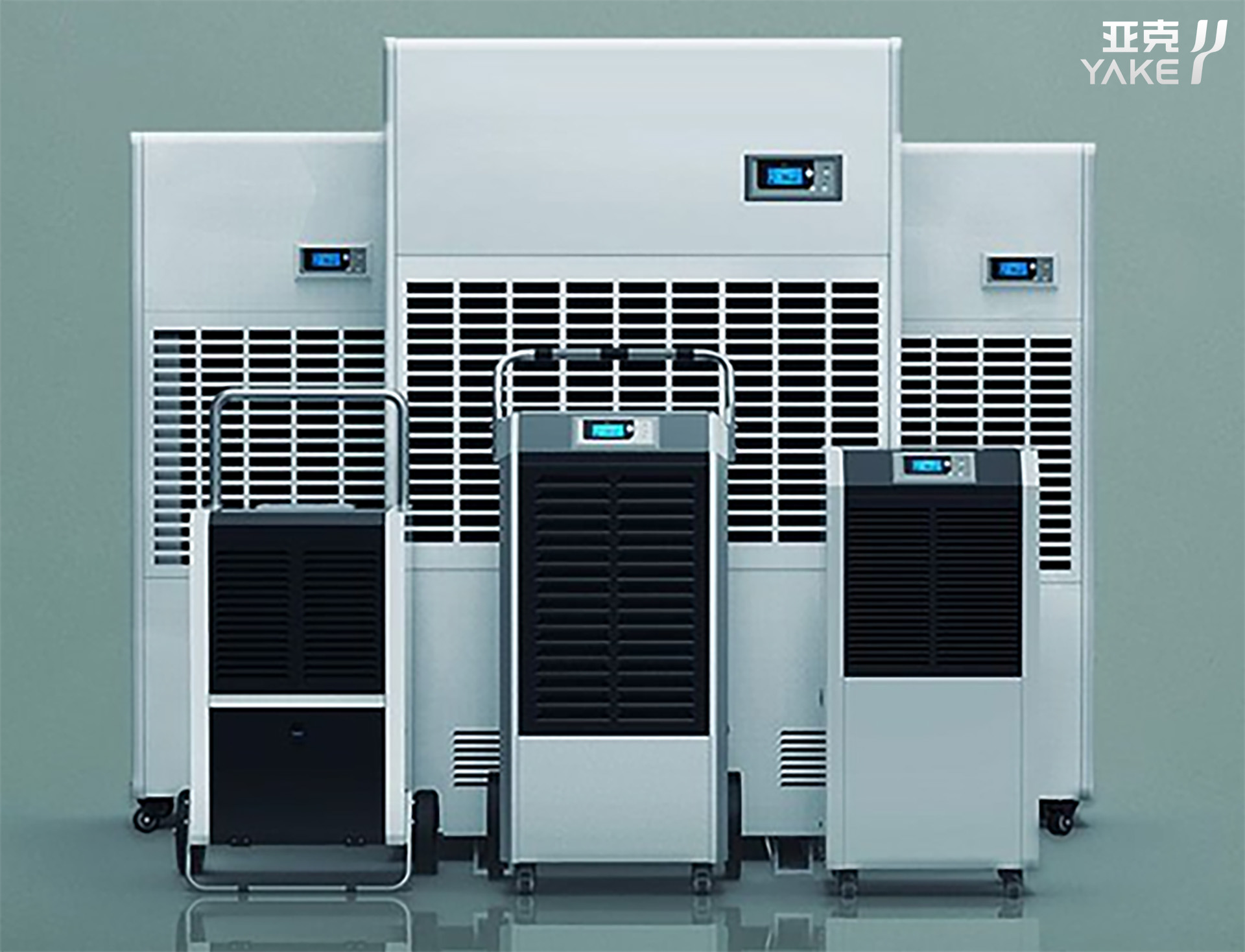
Contact us to find the best place to buy your Yakeclimate solution today!
Our experts have proven solutions to keep your humidity levels in check while keeping your energy costs low.