
Building 34, No. 535 Shunfeng Road, Hangzhou, Zhejiang, China
[email protected]
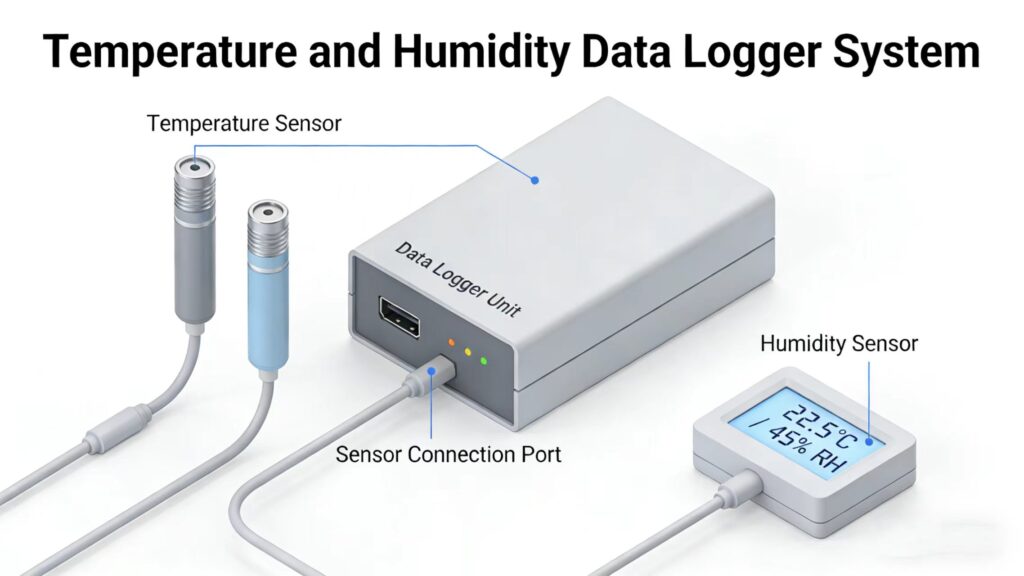

Temperature and humidity data logger systems monitor and log variations in atmospheric temperature and moisture. These have some sort of temperature and humidity sensor and a digital data logger that displays both real-time and logged trend information. For manufacturing facilities, constant climate protects equipment, satisfies compliance standards, and reduces spoilage risk. Temperature and humidity data logger systems keep records for audits and demonstrate compliance in vital industries such as pharma, food, and electronics. Most models support remote monitoring, alarms, and have long battery life for use in big facilities. Accurate loggers detect small climate shifts quickly. Yakeclimate’s solutions provide reliable, easy-to-use monitoring to assist teams in maintaining oversight. The main body covers important types, top features, and how to set up in plant environments.

Temperature and humidity data logger systems track these environmental conditions in real time. These systems utilize sensors and digital memory to monitor temperature and humidity fluctuations, typically 24/7. From food storage and pharmaceuticals to manufacturing, they offer the information required for quality control, safety, and adherence to industry regulations. Accurate data protects against spoilage, equipment failure, and expensive downtime. Typically, systems include sensors, microprocessors, memory, power, and user interfaces, all collaborating for consistent, accurate operation.
The sensor is the soul of a data logger, engineered to monitor temperature and humidity. Premium sensors such as thermistors, thermocouples, or RTDs provide rapid response and reliable measurements, even in rigorous industrial environments. Sensors may vary in response time, range, and long-term stability. For instance, RTD sensors are staples for pharmaceutical labs that require high accuracy, whereas thermocouples are ubiquitous in high-temperature manufacturing. Calibration is crucial to trusted data, so periodic calibration helps keep the system within strict tolerances.
The microprocessor is the brain of the device, processing signals from sensors and executing the routines to store and process data. It regulates the sampling and data storage frequencies, trading off between resolution and storage capacity. Current microprocessors can execute sophisticated algorithms, assisting in identifying patterns or alerting to out-of-range values as they occur. Many systems these days support Bluetooth, WiFi, or 4G, so sharing data across remote or distributed teams is quick and easy.
Memory units save all measured data for subsequent analysis. There are two main types: volatile memory, which is fast but loses data when the device is off, and non-volatile memory, which saves data without power. Ample memory allows users to record data for weeks or months at a time, which is indispensable for the long hauls of food shipping or extended facility observation. Data can be pulled via USB, downloaded over WiFi, or synced to cloud storage, providing teams around the world access to records.
Power sources keep data loggers ticking, with options such as batteries or USB power. For in the field, long-life batteries are essential. Some systems can last as much as three years without a swap. Battery status alerts allow users to prevent record gaps, so vital data is not lost. In stationary arrangements, USB or wall power can enable continuous use.
The user interface is where you configure the system and review real time readings. Smart designs employ touchscreens, transparent menus, or app links to accelerate operations. Simple to use navigation requires less training and faster audits. Most loggers provide customizable alerts via SMS or email, for instance, so that staff can respond immediately if conditions drift out of prescribed ranges, even outside of regular business hours.
Precision in temperature and humidity data logger systems is not merely a technical specification. It’s an essential necessity for industries where quality, safety, and regulatory compliance hinge on accurate environmental monitoring. In pharmaceutical manufacturing, minor variations in temperature or humidity levels can ruin product batches or cause compliance breaches. Anything less in measurement accuracy means they’re sending materials down the drain, or out into the world unsafe, or getting fined by the government. Data integrity, mandated under global standards such as FDA’s 21 CFR Part 11, relies on both sensor quality and continuous calibration. Selecting high-accuracy sensors and maintaining them is the foundation of every world-class monitoring system.
Sensor drift is when a sensor’s measurements creep away from their accurate values over months or years. This drift is induced by exposure to high humidity, temperature swings, dust, and even chemical vapors. In mission-critical environments, like cleanrooms or vaccine storage, drift can be the gap between safe and unsafe products. Only regular calibration can correct drift and bring accuracy back. It’s a good idea to calibrate at least once a year, and more often in potentially harsh environments. Monitoring sensor drift in the long term helps detect early indications of malfunction, allowing you to schedule maintenance before an issue becomes critical.
Measurement resolution is the smallest change a device can notice, for example 0.1 °C or 0.1 %RH. This high resolution means a logger can capture even small fluctuations, providing a more accurate snapshot of the situation on the ground. This is crucial for industries where tight tolerances are a concern, such as electronics or pharmaceuticals. High resolution is expensive, so it’s critical to tailor the device to the actual needs of each application. It’d be wasteful to buy a logger with more precision than you need, but too little risks compliance or quality.
Response time is the speed at which a sensor responds to a new environmental change. In environments where temperature or humidity fluctuates rapidly, lagging sensors can overlook crucial spikes or dips. This lag results in lagging alarms, missed corrective action, or misplaced trust in system stability because speed matters for real-time monitoring and immediate alerts. When things shift in seconds, only a reactive sensor can deliver decision-makers the information they require to respond before problems get expensive.
Critical performance factors. Performance metrics drive logger choice, application, and credibility. The table below sums up the key metrics, their roles, and impact on data reliability:
| Metric | Why It Matters | Impact on Reliability |
|---|---|---|
| Operating Range | Measures temp/humidity spectrum | Ensures accurate data |
| Logging Rate | Sets how often data points are logged | Affects trend detail |
| Memory Capacity | Dictates how much data can be stored | Prevents data gaps |
| Battery Life | Time logger runs before recharge/replacement | Avoids downtime |
| Sensor Type | Determines sensitivity and accuracy | Impacts precision |
| Calibration | Maintains sensor accuracy | Ensures compliance |
| Alarms | Notifies on threshold breaches | Fast incident response |
Knowing these metrics provides purchasers an advantage. The right logger leads to fewer mistakes, less downtime, and more robust data for audits or process controls. Critical performance comes from wendling spec sheets to match real-world needs. As for critical performance metrics, performance reviews should be routine. Old loggers can drift or lose accuracy.
Critical performance metrics, like operating range, refer to the range of temperatures and humidity levels a logger can monitor accurately. Choosing the right range is important for factories, cleanrooms, or cold chains.
If the logger can’t handle your real conditions, you risk gaps or incorrect readings.
Logging rate is how frequently readings are taken, each second, minute, or hour. Quick rates help identify rapid changes, while slow rates conserve battery and storage. For pharma, perhaps every minute. For cold storage, every 30 minutes may suffice.
Short intervals clog memory fast and sap batteries. Long intervals risk missing spikes. Rate causes it to balance detail and uptime. Some loggers allow you to alter rates on the fly if requirements move.
Memory stores every reading until you unload it. More space allows for longer runs before manual download or auto-upload. For remote sites, big memory is everything.
Certain logging devices allow SD cards or USB drives for additional memory. If you want real-time cloud uploads, less on-board storage is okay. Design for normal and peak loads and lost data.
Battery life, that’s what truly keeps the logger alive. High frequency logging kills batteries quickly. Cold or damp places can slay battery life. Some models last for years, while others last just months.
Smart loggers display battery percentage or send text alerts when power is low. Choose loggers that allow you to exchange batteries without losing data. Monitor battery health during rounds and prevent unscheduled halts.
Modern temperature and humidity data logger systems transform the way industries handle their spaces. They allow teams to monitor, analyze, and distribute data without cords or a laborious process. Connected devices enable managers and engineers to easily monitor every vital stage. This counts most at locations such as pharmaceuticals, cold chain logistics, and food storage where a minor slip in temperature or humidity can translate to major losses.
| Advantage | Description |
|---|---|
| Real-time monitoring | See live data, act fast on changes |
| Data access | Get info anywhere, anytime |
| Automated alerts | Get notified right away of any issues |
| Remote troubleshooting | Fix and adjust without being on site |
| Streamlined compliance | Keep easy records, meet rules easily |
Connected systems provide real-time, precise data and facilitate collaboration. Faster data sharing leads to better teamwork across shifts and sites. They aid in the early spotting of risks. Armed with deeper insight, plant managers can reduce waste, conserve energy and keep things humming. These tools assist in complying with global standards and regulations.
Bluetooth allows data loggers to communicate with phones, tablets, or computers wirelessly. This allows staff to easily access readings directly from their device, verify trends, or quickly download reports. No special cables are required, just a couple of taps on an app.
Remote checks via Bluetooth apps allow teams to view what’s happening from anywhere on site. This reduces time on rounds. Just make sure to select devices that are compatible with various phones and tablets, as your teammates may be using different models. Mobile compatibility keeps everyone in the loop with less hassle.
Cloud platforms keep data off-site, so users can monitor logs from anywhere with an internet connection. In other words, remote teams observe identical information in real time. No more searching for paper files or holding up the email chain. Cloud backup prevents data loss and assists with audits.
Security is crucial. Good cloud platforms use robust encryption and access controls. Most providers comply with international data privacy regulations. Cloud-based analytics tools help identify problems, tendencies, or patterns that might be overlooked with traditional logs. This enables smarter and faster decision making.
IoT puts data loggers into larger ecosystems of intelligent devices and sensors. This allows systems to share data automatically across lines and plants. In cold chain logistics, IoT provides complete visibility into every shipment, end to end. Automated reminders indicate teams can repair issues prior to products going bad.
IoT provides a significant push to predictive maintenance. Loggers notice minute air or machine performance shifts. The system alerts teams ahead of failures. For this to work, all devices need to ‘speak’ the same language. Interoperability is key. This is important as more industries adopt AI and blockchain for full-track transparency and improved control.
Temperature and humidity data loggers at work. They provide a trusted method to monitor, capture, and archive information, assisting organizations in meeting standards, excellence, and productivity objectives. These systems provide persistent monitoring, automated calibration, and scalable data storage, which are well-suited for both short-term experiments and ongoing system monitoring. They’re the data loggers actually doing it, helping us meet stringent worldwide standards and keep complicated processes running.
Yeah, the compliance bar in these industries is pretty damn high. Auditors want to see real, time-stamped records, not guesses and hand-logs. Data loggers can sample once per second to once per minute, depending on the process, giving a trace of the environment. Long storage times, sometimes years, mean logs are always at hand to revisit. This minimizes risk, accelerates audits, and maintains product quality at optimum levels.
Data loggers in action: In HVAC systems to monitor real-time fluctuations in temperature and humidity. On assembly lines, they can identify glitches or short circuits that won’t manifest themselves for weeks. These add voltage and current monitors, so they can protect your equipment from frying. Real-time alarms can catch issues before they halt the line.
Industrial teams utilize logger data to identify trends and optimize processes. This prolongs the life of machines and reduces waste. Data Loggers in Action: By monitoring energy consumption, loggers assist plants in conserving power and achieving sustainability targets. Annual calibration keeps readings regular.
Environmental monitoring monitors both internal and external conditions. For farming, loggers indicate when to seed or water. They log soil and weather data for months. For instance, in climate research, loggers capture changes in heat and humidity and aid research into global change.
Loggers are crucial for emissions inspection, such as looking at diesel truck output. With long battery life and big memory, they can collect data for months without offloading. This bolsters sustainability by identifying problems before they become serious and minimizing manual inspections.
Temperature and humidity data logger systems offer more than just raw data. They assist teams in detecting trends, anticipating issues, and complying with regulations. They simplify the ability for global teams to exchange insights and maintain production lines secure.
Data interpretation is transforming logged sensor readings into actionable insights. It’s not only about observing a spike in humidity, figuring out what triggered it and what could occur. Graphs and charts illustrate trends over hours, days or months. Teams tend to use visuals—such as line graphs for day-to-day variations or scatter plots for outliers—to identify problems quickly.
One key example is tracking humidity swings in a cleanroom. This helps catch when air moisture nears the 50% RH upper limit for safety. Watching a slow ascent to 100% RH can alert you to potential dew or fog condensing on products or equipment.
Context is everything. A spike in humidity during a production run could indicate a broken seal, not simply atmospheric weather. Without shift times, maintenance schedules, material changes, and other factors, the numbers by themselves mislead. Teams require fundamental training to interpret these trends and identify actual hazards, particularly in industries like pharma, where in-process materials are altered if they absorb excess moisture.
Predictive analytics relies on historical data to anticipate what is to come. Beyond the raw humidity log, when a logger tracks humidity, temperature and even CAN bus data, it helps models detect patterns before problems manifest on the floor. These models can tell when a paint booth is going to veer off its optimal 40% RH or when a pressure spike means a valve is likely to give out.
Taking initiative reduces waiting. Notifications informed by the data can alert operators in advance of issues, such as warning that sheet metal is beginning to corrode due to ambient humidity. Adding predictive tools into monitoring systems allows facilities to act early, not after the damage is done. Many of the newer loggers provide WiFi streaming to send real-time data into these models, speeding up the process even more.
For compliance reporting, that means maintaining complete logs to satisfy industry regulations. Data loggers simplify the task of monitoring and documenting that critical factors, including humidity, temperature, pressure, and voltage, remain within safe levels. For audits, being able to demonstrate a year’s worth of 30 to 50 percent RH logs, with calibration certificates every 12 months, builds trust and passes checks.
Smart automation enables teams to build reports that adhere to global standards, reducing manual effort and errors. When you need them, detailed logs demonstrate to regulators that every step of the process is compliant with the law. This is key in fields like food, electronics, or pharma.
To monitor temperature and humidity, data logger systems provide accurate, instantaneous readings. They’re designed to help catch those tiny fluctuations that can spoil products or delay processes. Many plants in drugs, auto, and chips need to hold strict regulations and detect faults quickly. Rapid notifications reduce spoilage, protect equipment, and maintain productivity. New cloud sync lets you spot trends from miles away and get ahead fast. Whether simple graphs or raw logs, both get teams fixing pain points. To keep pace with rigorous requirements and rapid changes in technology, robust data loggers provide a distinct advantage. To ramp up plant checks or rule out new plans, check new logger picks from Yakeclimate. Contact us for smart picks that suit your line.
A temperature and humidity data logger system is a device that records and stores environmental temperature and humidity data over time. It assists in tracking and maintaining ideal conditions for delicate operations or warehousing.
The right data keeps your product safe, high quality, and compliant. Accurate measurements save spoilage, equipment damage, or loss in healthcare, food storage, and many other industries.
Calibration should be performed at least annually or per manufacturer recommendations. Periodic calibration confirms maintained measurement precision.
Search for high accuracy, long battery life, simple data acquisition, wireless connectivity, and international standard conformity. They assist in reliable and efficient monitoring.
Thanks to data loggers, you have verifiable records for audits and inspections. They assist businesses in complying with global regulations when storing, shipping, and producing sensitive products.
Yes, numerous new data logger systems allow you to access it remotely using wireless or cloud technology. You can monitor and get alerts in real-time from anywhere.
Data loggers are everywhere in healthcare, pharmaceutical, food storage, agriculture, and logistics. They provide the perfect environment to safeguard delicate goods.


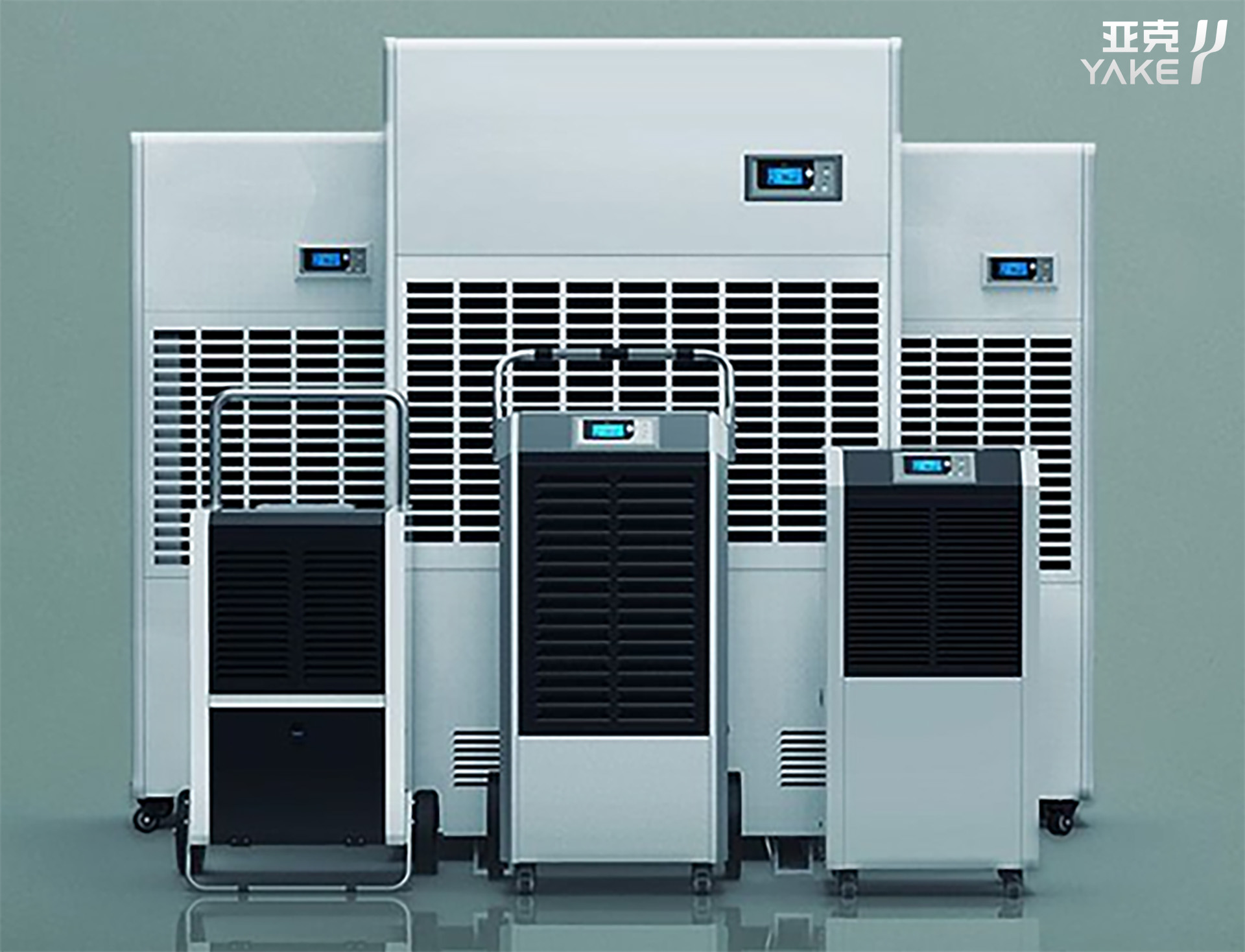
Contact us to find the best place to buy your Yakeclimate solution today!
Our experts have proven solutions to keep your humidity levels in check while keeping your energy costs low.