
Building 34, No. 535 Shunfeng Road, Hangzhou, Zhejiang, China
[email protected]
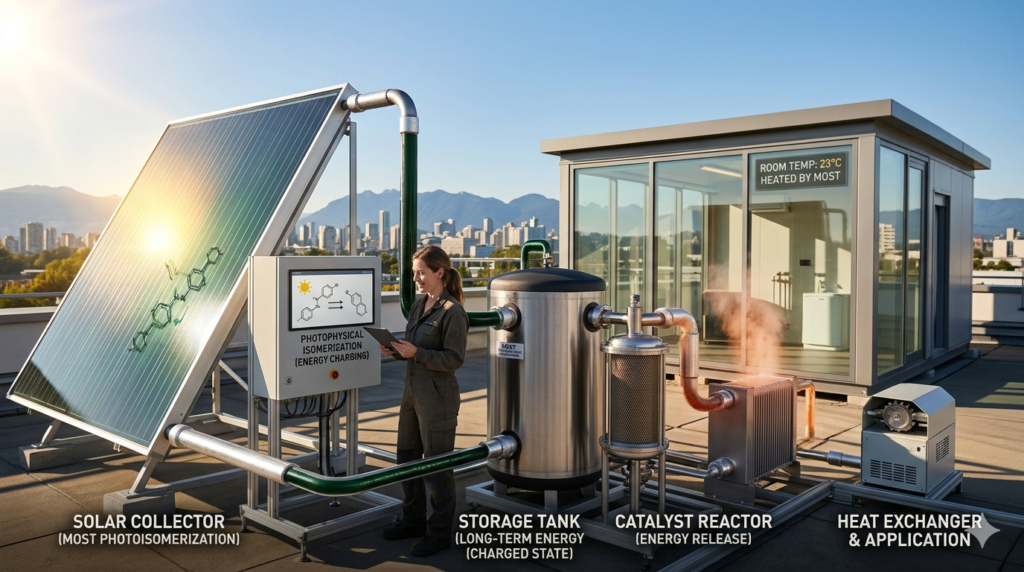

Molecular solar thermal energy storage systems capture and store solar energy in the form of heat using molecules. These clever systems transmute molecules to a high-energy configuration under the sun and then generate heat on demand. Basic setups typically utilize photochromic organic molecules, which makes the procedure both safe and clean. No moving parts reduce wear and decrease maintenance. That translates to robust activity for industrial applications. For factories and plants, this heat storage tech provides a means to store solar heat without bulky tanks or mechanical equipment. Many sectors desire this for consistent, on-demand warmth that reduces fossil consumption. The following parts explain how these systems operate, their main benefits, and their role in contemporary plant configurations.

Molecular Solar Thermal (MOST) energy storage is a method to capture and store the sun’s energy in molecules. These molecules store solar energy as heat that can be utilized later when the sun doesn’t shine. This concept is crucial for sectors that require consistent, reliable heat. Instead of using classic batteries or water tanks, MOST systems utilize minuscule molecules that morph in shape when exposed to sunlight. This shape change traps energy. When heat is required, these molecules reverse position and release the stored energy in the form of heat. Again and again with little sacrifice, this cycle can repeat hundreds of times. In other words, factories can capture the sun’s heat during the day and utilize it at night and during cloudy periods.
MOST is not your average solar storage because it operates on a molecular level. It begins with a liquid or solid that contains these types of molecules, usually organic compounds. When solar rays strike, the molecules transform into a high-energy state. Later, an easy provocation like a little temperature elevation or a catalyst sets off the energy. This process doesn’t require massive storage tanks or elaborate moving parts. This comes in handy for locations with space restrictions or where additional storage is not feasible. For instance, a paint shop or electronics plant can leverage MOST to retain heat for drying or curing without major modifications to their process.
The job of these molecules is crucial for making energy consumption effective. Since the energy gets stored in chemical bonds, losses are low and the system could work for many cycles. The materials can be calibrated for different applications, such as more or less release temperatures. This type of control enables factories to utilize energy more intelligently and prevent waste. MOST can couple with other systems, like dehumidifiers, for further energy savings. For instance, waste heat from a MOST system can dry line air in a production line, reducing power consumption.
MOST can assist in reducing carbon emissions by substituting fossil fuels in thermal applications. The system relies on the sun and can store energy for use at any time, which reduces the dependence on gas or oil. It aids in compliance with tighter emissions regulations and aligns with the drive for sustainable manufacturing. The setup is neat, with no exhaust, drippings, or difficult refuse. These qualities render it suitable for sectors seeking to adhere to international standards and reduce their carbon emissions.
Molecular solar thermal energy storage systems let molecules capture sunlight and store it as heat. They allow industrial users to store solar energy and then tap into it when heat is required. This aids stability, reduces wasted energy, and fuels greener activity. It all involves capture, stable storage, controlled release, and the ability to reuse the system.
Sunlight strikes unique molecules, sometimes referred to as photoswitches. These molecules morph when they absorb light. Others use azobenzene or norbornadiene, popular because they tolerate plenty of sun and change quickly. The top molecules absorb light in the visible spectrum, which is where the majority of solar energy resides. Selecting the appropriate molecule is important. A wavelength mismatch translates to less energy captured.
Dust, humidity, or even passing clouds can interfere with the amount of energy absorbed. In industrial plants, this renders system design and placement critical for consistent output. Smart design maximizes efficiency and helps the system maintain energy capture even on overcast days.
Once a molecule is re-shaped, it stores energy in new chemical bonds. These bonds are strong and store the energy securely for days, weeks, or months. Systems usually do their best from 10°C to 40°C, but high-end molecules can withstand some harsher ranges.
Stability is a function of robust chemical bonds, resistance to degradation, and minimal energy leakage. This allows vegetation to store warmth until it is truly required, reducing loss and increasing efficiency in processes such as batch drying or thermally sensitive processing steps. Stable storage translates to less downtime and more uptime for critical plant operations.
To extract the heat, you activate the molecule using heat, light, or a catalyst. Certain configurations involve a slight temperature increase, while others involve a burst of light. This allows you to select precisely when and how much energy is released. In a drying oven, a plant manager can release heat only when a batch begins, never before.
Precision counts. Excess or insufficient heat can ruin products. Safety is built in. Most systems need a clear trigger, so accidental release is rare. This control translates to lower overheating risk and enhanced process control.
Once the energy is released, the molecules quickly revert to their original state. They can capture sunlight anew and repeat the cycle. This cycle can repeat hundreds or thousands of times before molecules fatigue.
Reusable systems lead to less waste and less raw materials. It reduces expense by allowing solar plants to employ the same molecules over and over again for years. Less waste equals a smaller footprint, bolstering worldwide efforts to create greener industries.
Molecular solar thermal systems harness unique molecules that have the ability to store and release solar energy as needed. It’s all about how these molecules convert light energy to heat by twisting their structure, effectively turning them into microscopic heat batteries. The proper design can enhance energy density and stability and render the process reversible and viable for scale industrial development. Researchers and engineers both hunt for compounds that respond quickly, deliver high yield, and are safe, always seeking new options to match the demands of contemporary industry.
Azobenzenes are remarkable for their dependable toggle between two conformations, trans and cis, upon illumination. This process, called photoisomerization, allows them to capture energy in shape shifts under ultraviolet light and then release it in the form of heat when activated by a different stimulus. Their architecture enables them to go through those cycles with little decay, an essential property for prolonged usage.
Photoisomerization shifts the energy state rapidly and with little loss, which is what makes azobenzenes great at capturing solar energy and returning it later. They resist degradation in aggressive environments, which is crucial for holding up in manufacturing settings where downtime is expensive.
Scientists these days busy themselves figuring out how to tune azobenzenes for higher energy density and faster switching. Others attach functional groups to the core molecule, which makes them more stable and easier to trigger. This continuing work seeks to break present boundaries and make azobenzenes even more feasible for large-scale systems.
Thermal stability ensures norbornadienes last through countless cycles of heating and cooling. That equates to less energy waste and more durable storage. That combination of characteristics makes them good matches for commercial infrastructures that operate 24/7 and require high uptime.
Industry adoption hinges on improving cost and cycle life. These new insights reveal that tweaks to the molecule can increase energy storage capacity and reduce undesirable side reactions.
Dihydroazulenes function by alternating between dihydroazulene and vinylheptafulvene forms upon exposure to light. This reversible transformation captures solar energy in the chemical bonds of the new material. Later, a heat trigger flips it back and releases the stored energy as heat.
One huge advantage is their robust cycle stability, which reduces upkeep and replacement expenses. They can be tuned to store more energy by tweaking side chains and ring structures. This elasticity assists in accommodating the evolving demands of various industrial processes.
Future work focuses on increasing energy density and speeding up the conversion so DHA molecules can compete with or outperform other candidates in real-world applications.
Molecular solar thermal energy storage (MOST) systems use photoswitchable molecules to capture, store, and release solar energy as heat. This strategy is a good match for sectors seeking to reduce energy waste and increase sustainability. The system provides flexible decentralized storage, an excellent match for variable energy demands.
MOST systems integrate seamlessly with solar panels, heat pumps and thermal storage tanks. They can save surplus solar capture at peak daylight and then deliver it on request, evening out supply and demand. With molecules that are stable and rechargeable, they can even be tuned to different temperature ranges. There are trials combining MOST with current solar farms to boost night-time power and decrease fossil backup.
Case studies emphasize pilots in Sweden and China. In Sweden, office buildings with MOST-infused glass recorded up to 30 percent heating cost savings. A university in China experimented with MOST films in greenhouses, enabling round-the-clock climate control with no grid connection. These are just some examples of real-world energy savings and adaptable, scalable integration.
Urban scaling appears promising. MOST can be integrated into windows, facades, and rooftop panels, occupying very little space. Compact cities with high energy needs could retrofit old buildings with these smart coatings. This provides cities a route to comply with new climate regulations and reduce energy costs.
MOST can make windows active solar collectors. The molecules in the glass retain heat from sunlight and emit it when indoor temperatures cool. This lessens impact on HVAC systems. These windows reduce heating and cooling costs by as much as 20 percent. For dense cities, widespread adoption of smart windows might reduce energy consumption across entire neighborhoods. The MOST smart window market will expand as building codes evolve toward energy efficiency.
MOST off-grid heating for cabins, field hospitals, and mobile labs can store solar heat for hours or even days, delivering warmth at night or during cloudy weather. This reduces demand for diesel generators. Operating costs decrease as fuel consumption decreases. In Mongolia, remote farms with MOST panels saved on fuel and experienced more consistent indoor temperatures, even during winter.
MOST makes solar storage wearables — jackets or wristbands that store sun heat. Devices stay alive longer without monster batteries. This assists health sensors, GPS trackers, and outdoor gear operate in shadowy or off-grid locations. A few firms are already employing MOST in clever textiles, providing wearables extended longevity and novel purposes for folks miles away from an outlet.
Molecular solar thermal energy storage systems suffer from a series of technical and operational challenges that deter their use in industrial applications. These are material degradation, low energy density, and problems with scalability for mass market adoption. Here’s a table summarizing these key problems, their effects, and real-world solutions being explored.
| Challenge | Impact on System | Potential Solutions |
|---|---|---|
| Material Degradation | Shorter lifespan, less efficiency | New resilient materials, improved encapsulation |
| Low Energy Density | Larger systems, higher costs | Molecular design, optimized photon absorption |
| Scale-Up | High unit cost, limited deployment | Modular production, process automation |
Molecular stability is vital. Heat exposure, UV exposure, and cyclic exposure can break bonds, making the storage molecule ineffective. Degradation means less stored energy over time and more frequent material replacement, which increases cost and maintenance. Innovative encapsulation techniques, such as for phase change materials (PCMs), are being optimized to protect delicate compounds from aggressive operating environments. Researchers are experimenting with novel molecular structures and solvent systems that have sub-zero melting points to prevent them from freezing in frigid temperatures. Continuous R&D into these areas is critical to prolonging system life and enhancing reliability.
Energy density refers to the amount of energy that can be stored in a given volume or mass. High energy density is crucial for space-limited or mobile applications. Today’s molecular systems frequently hold less energy than traditional thermal storage, limiting their usefulness. Advances are emerging from novel molecules engineered to harness a greater percentage of photons in the UV-visible range, where solar intensity is maximal. They’re focusing on optimizing the stable isomer to increase absorption. Optimizing heat transfer equipment, such as annular setups, aids in containing peak temperatures, opening the doors to safer and more dense storage. Batteries and molten salt systems will compete by raising these limits.
Scaling lab to factory is hard. Synthesis of complex molecules is expensive and can generate waste. To get beyond the current limitations, modular production lines and automation are being employed to accelerate output and decrease cost. The economics get better as process steps, like solvent recovery and molecule recycling, become more efficient. Experience from adjacent areas, such as PCM encapsulation and salt-based storage, demonstrates that with a commitment to process engineering, scaling is feasible. The companies that figure out this transition can address the growing demand in all industries.
Molecular solar thermal energy storage systems are at the cusp of science and industry demand. As manufacturers seek to save dollars and hit green goals, these systems may be more than a lab concept. The following table presents the key economic considerations that influence how and why plants may initiate these systems.
| Factor | Impact on Adoption | Industrial Example |
|---|---|---|
| Upfront Cost | High—may slow first use | Custom reactors, installation fees |
| Payback Time | Key—shorter payback, higher interest | 5-7 years in textile drying |
| Maintenance | Low—simple parts, less downtime | Fewer moving parts than batteries |
| Energy Savings | Large—cuts peak grid draw | 20% lower energy cost in pharma |
| System Lifespan | Long—decade-plus if well kept | 15 years in food packaging |
ROI is a key argument for any venture. For these systems, ROI comes from less energy use, fewer repairs, and longer life than traditional heat storage methods. On the economic side, a plant in Europe that utilized molecular storage for process heat recouped its full investment in six years. After that, energy savings were pure profit. Plants in hot, sunny locations could experience faster returns since more sunlight translates to additional stored heat.
Markets for green energy gear are booming worldwide. Big manufacturers now seek paths to renewables not just for cost, but for brand and rule reasons too. Buyers and users want cleaner supply chains. In Asia and Europe, companies now require suppliers to provide evidence of low-carbon actions. This allows molecular storage plants to shine and close more deals.
Policy counts. In the EU and parts of Asia, tax breaks, feed-in rates and grants make these systems less expensive to initiate. Carbon caps or fossil energy price hikes hasten change. In certain jurisdictions, local regulations even mandate that a certain proportion of heat must be sourced from renewables, rendering molecular storage essential rather than optional.
Among them, molecular solar thermal energy storage systems are notable for their savvy use of sunlight and straightforward construction. These systems employ molecules to capture and store solar heat, then radiate it on demand. You believe in it from labs and real test runs. Factories, homes, and even remote clinics could harness these to reduce grid consumption and fuel expenses. Short cycle times and low hardware requirements assist in propelling the technology forward. To fuel greater transformation, more effort on cost and scale assistance is needed. New research keeps the field exciting. For more information or to discuss your configuration, contact a consultant or see recent research.
A molecular solar thermal energy storage system (MOST) captures sunlight and stores it as chemical energy in special molecules. This energy can subsequently be discharged as heat on demand.
MOST systems utilize light-sensitive molecules. These molecules alter their form under sunlight, thus accumulating energy. When activated, the molecules return to their initial configuration and emit the stored energy as heat.
MOST systems are flexible and compact and can store solar energy for a long time. They operate emission-free without the need for large batteries or heavy, cumbersome gear.
Azobenzene and norbornadiene-quadricyclane are popular molecules in MOST systems. They were selected due to their demonstrated potential for efficient and safe energy storage and release.
MOST systems can heat buildings, power electronic devices, and enable industrial processes. They are particularly handy where direct sunlight cannot be guaranteed.
The main issues are making the molecules stable enough, giving them enough energy density, and keeping costs down. Researchers are making it more practical.
MOST tech is still nascent. Cost-wise, they are still expensive, but such systems are being researched to make them affordable and scalable to world markets in the future.


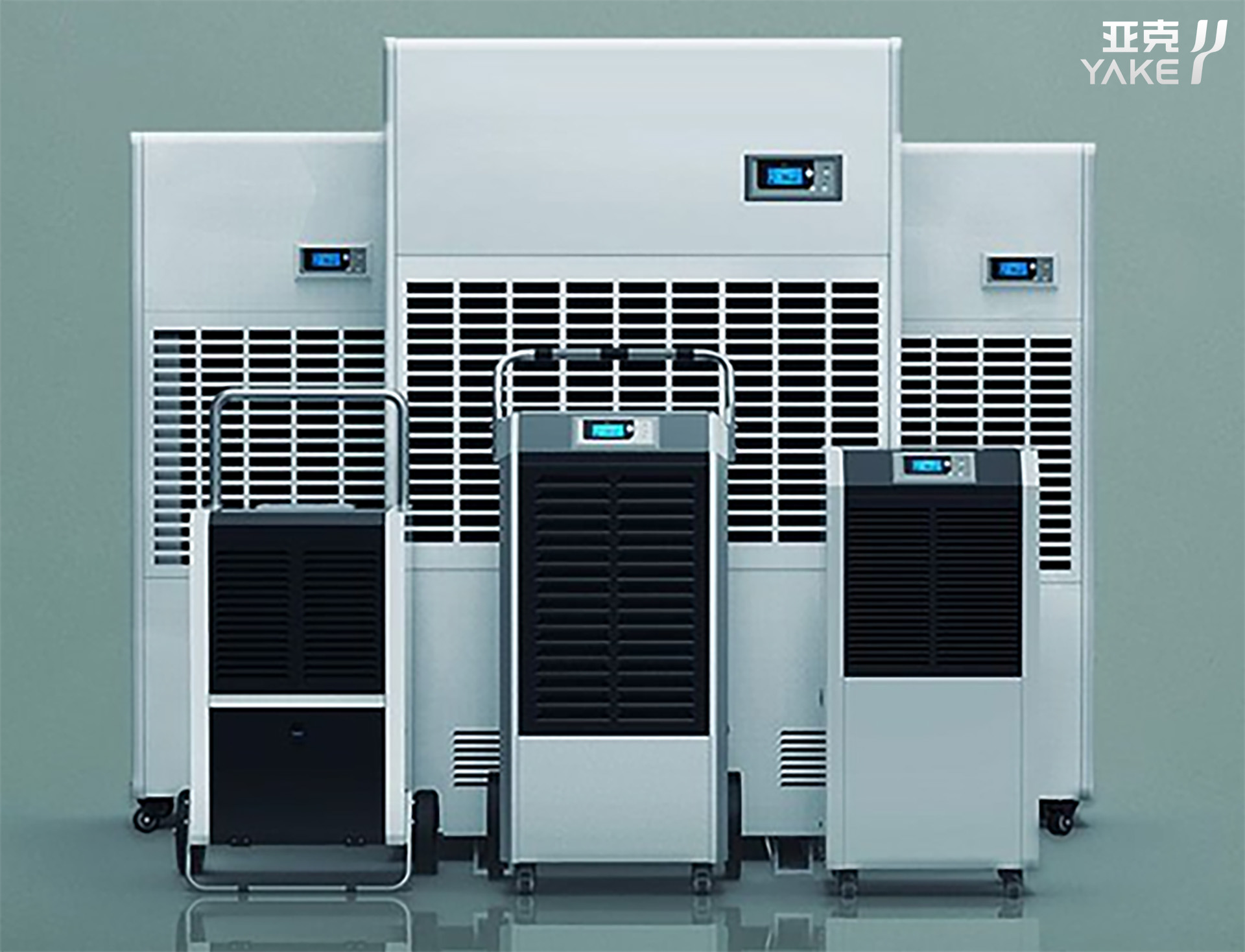
Contact us to find the best place to buy your Yakeclimate solution today!
Our experts have proven solutions to keep your humidity levels in check while keeping your energy costs low.