
Building 34, No. 535 Shunfeng Road, Hangzhou, Zhejiang, China
[email protected]
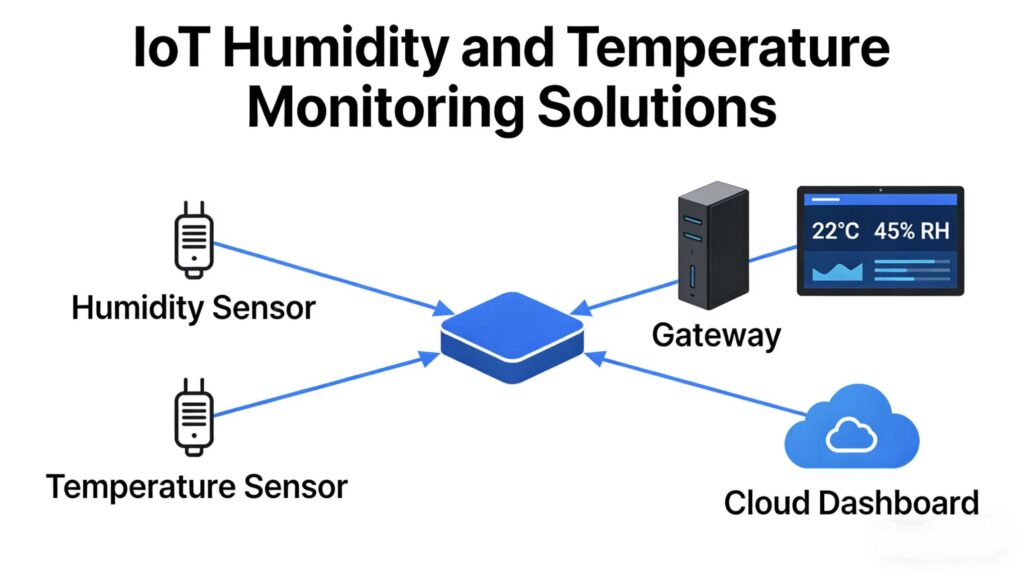

IoT humidity and temperature monitoring systems are smart sensors and wireless networks to measure real-time variations in climate. These systems allow growers and facility managers to monitor air moisture and temperature remotely from any web-enabled device or phone. With data updates around the clock, users can identify trends quickly and prevent damage to crops or inventory. Sensors dispatch alerts for rapid fluctuations, so it’s simple to maintain rooms consistently. Others keep past records to assist in planning future growing cycles or storage. With easy configuration and cloud access, thousands of users in agriculture, laboratories, and warehousing choose these systems for convenience and remote control. The body explains how these tools operate in practice.

Temperature and humidity monitoring is important in various industries, ranging from laboratories to warehouses and libraries. Steady conditions safeguard valuables, maintain inventories, and keep business flowing, and IoT enables constant oversight and rapid action.
IoT sensors monitor storage spaces, labs, and server rooms in real-time. It’s similar to why libraries keep the temperature in the 19–23 °C range and relative humidity in the 40–60% RH range well controlled to prevent mold and damage to rare books. Alerts notify employees if readings spike or plummet rapidly, allowing them to intervene before products spoil or fracture. Delicate items, such as electronics or fresh foods, require consistent environments. When humidity rises, paper documents can absorb moisture and weaken. IoT logs each fluctuation in transit and storage. This information protects value, reduces rot, and prevents expensive losses.
Factories and labs employ sensors to keep a lid on product quality. Tracking helps comply with stringent requirements for scientific or culinary endeavors. Your staff can refer back to logs to demonstrate conditions remained in range throughout experiments or manufacturing runs. If trends in the data indicate a quality risk, teams can detect problems early and correct them quickly. Real-time alerts help keep it all on track. Acting fast means fewer errors, less waste, and more customer confidence.
Not to mention, high humidity feeds mold and dust mites. These can cause damage to individuals, particularly in laboratories, offices, or storage areas. Sensors provide early warnings so personnel can prevent issues before they begin. Notifications mark unsafe warmth or cold immediately. Air quality tests shield employees and guests and aid compliance with health regulations. Stable climate control makes every room safer, cleaner, and healthier.
Automated IoT systems liberate staff from manual checks. Information optimizes heating and cooling, frequently reducing energy consumption by 50%. Real-time trend tracking puts resources where they are needed most. Workplaces remain comfortable, increasing morale and productivity.
A lot of industries need to prove they’re maintaining established standards for climate control. IoT logs support claims during audits or inspections. Systems assist labs and warehouses in adhering to regulations regarding health and safety. Tracking data demonstrates compliance and prevents penalties.
At its heart, an IoT humidity and temperature monitoring system only needs some basic building blocks. All together, they form the crucial pipeline transporting real-world data to the cloud, where it can be tracked and analyzed in real time. It begins with the perception layer, also known as the sensing layer, consisting of sensors and actuators that sense and act on the environment. Next, gateways transmit the data to where it needs to go. Then a platform ties it all together for utilization and decision making. Solid interoperability, reliable network connections, and updates ensure the system functions properly.
Sensors lie at the heart of the perception layer. They monitor temperature and humidity right where you want it, like in a greenhouse or warehouse. Select sensors based on your space and crop or product requirements. For instance, certain sensors have a range of minus 40 degrees Celsius to 125 degrees Celsius, or 0 to 100 percent relative humidity, which encompasses most applications.
Many sensors even come with a wireless feature for easier setup. Wireless sensors can connect through Wi-Fi or Bluetooth, allowing them to easily integrate into difficult-to-access locations. Precision counts, so periodic calibration is key. This process verifies the sensor against a reference and adjusts for any drift that may have occurred. For real-world applications, a sensor such as the SHT3x series or those integrated into microcontrollers such as ESP32 are prevalent because of their balance of cost, range, and accuracy.
The gateway connects sensors to the broader system. It gathers the data from your sensors and transfers it wherever you want it stored or analyzed. A quality IoT gateway should be able to operate with numerous types of data, supporting various protocols such as One Wire, Zigbee, or Wi-Fi on a modular basis, so it is simple to add more sensors later on.
Gateways frequently employ tiny computers, like a Raspberry Pi, to handle volumes of incoming data. Cloud connectivity is a must for remote access, assisting teams to monitor real-time stats from any location. Security is key, so encryption and secure login are required to keep data safe from external threats.
The platform is where all the data converged. It must display obvious charts and allow users to program alerts or explore trends. Stay tuned for future posts on web-based tools that function on both phones and computers. These could plug into other devices or systems, so users would only have to learn one interface.
Cloud stores long-term records and scales as data grows. Most platforms utilize Python snippets or internal analytics to detect anomalies or trends, dispatching alerts when thresholds are breached. This lets users take action before minor disruptions grow into major problems.
Your Wireless Protocol Choice: How to Select the Best Option for IoT Humidity and Temperature Monitoring
All protocols have trade-offs in cost, coverage, data speed and security. Pick based on your needs: is it a greenhouse with steady Wi-Fi, an outdoor field needing long range, or a building filled with smart devices? Protocols in the sub-1GHz band are great for long-range, low-data work such as monitoring remote crops. Security, data speed and future scaling count.
| Protocol | Range | Power Use | Frequency | Cost | Main Features | Example Use |
|---|---|---|---|---|---|---|
| Wi-Fi | 100-300 ft | High | 2.4/5 GHz | Low-medium | Fast, uses existing network | Indoor farms |
| LoRaWAN | as far as 15 km | extremely low | Sub-1 GHz | Medium | long range, low power, remote sites | large fields | Cellular IoT | City-wide | Medium | 4G/5G | High | Reliable, secure, works urban/rural | Multi-site monitoring | | Zigbee/BLE | 10-100 m | Low | 2.4 GHz | Low | Mesh, simple install, good for short range and smart home | Greenhouse automation |
Wi-Fi is standard for indoors where a robust network already exists. It manages speed and sensor-heavy data, perfect for labs or greenhouses. Leverage the existing Wi-Fi network and save, but verify that coverage is uniform. Dead spots can slam your data stream. Watch bandwidth, though, a lot of devices can bog down or fight for room. Protect your network. Wi-Fi’s popularity makes it a tempting attack vector.
LoRaWAN fits remote or sprawling regions where sensors disperse. Its sub-1GHz frequency spans miles. The device can reach 15 km in the open air and somewhat less in urban environments. Power consumption is minimal, so batteries hold up for years. It scales nicely, so you can increase sensors over time. It can send signals through walls, trees, or hills better than higher frequencies, which is good for outdoor farms or greenhouses.
Cellular IoT works in urban and rural environments. It’s trustworthy and leverages inherently secure networks such as 4G or 5G. You need to verify that your sensors and data plans match the local cellular system. Mind data usage, as it can get costly if you have sensors sending lots of data. It is a good pick for tracking at many locations simultaneously.
Zigbee and BLE are ideal for small spaces with many devices, think a greenhouse or a smart building. Zigbee’s mesh lets signals hop from device to device, covering more ground. BLE is fast to deploy and integrates nicely with phones or tablets. Either one works well with smart home gear, so integration is a breeze. They consume very little power, but their range is short, typically under 100 meters.
Designing your own IoT humidity and temperature monitor requires some careful design, setup, and maintenance. Every step needs to account for your specific environment, be it an indoor grow room, warehouse, or greenhouse. The following strategy helps keep the system efficient, inexpensive, and safe.
Sensor placement is crucial for acquiring quality data. Put sensors where they will most effectively monitor actual changes in temperature and humidity, not next to vents, heaters, or windows. Sensors should be at crop or product level, not too high or low, to mirror the true conditions experienced by your assets.
Obstructions, such as shelves, walls, and thick foliage, can block airflow and impact accuracy. Keep sensors free of these impediments. As your environment changes, including plant growth and moving inventory, verify and relocate sensors if necessary to maintain the accuracy of the readings.
Check sensor location regularly. Seasonal changes or new equipment can alter airflow and temperature zones. Regular checks ensure your data remains accurate.
Follow the manufacturer’s setup guides to get you started. Set up your data logging intervals, sensor calibration, and connection with your IoT platform for real-time and remote access. Tune for purpose, whether for energy savings or rigorous quality control.
Give your system a trial run prior to launch. Be sure to test out different scenarios to make sure all your devices are communicating and sending notifications as expected. Record your config settings and changes. This will make troubleshooting and scaling easier down the road.
Turn on automated data collection for second-by-second updates and use conditional logic to automate responses. No coding skills are necessary. This leads to less manual work and faster responses to changing conditions.
Establish temperature and humidity thresholds that are safe or optimal for your process. Set up instant alerts through SMS, email, or push notification so you can address issues immediately if they crop up.
Types of Alerts and Example Thresholds:
Review alert settings each season or after any major process change. Tweak your thresholds with an eye toward minimizing false alarms and catching the true risks based on historical data.
IoT humidity and temperature monitoring systems are transforming environmental sensing. These systems now provide real-time information, allow users to configure alerts, and integrate with other automation systems. They reduce manual inspections and ensure that users can respond quickly when things shift. The emphasis is on precision, with some sensors having a margin of error of plus or minus 2 degrees Celsius and plus or minus 5 percent relative humidity, and consistency across environments. These advances are making environmental sensing affordable and accessible for homes, businesses, and industry.
About: The environmental sensing of tomorrow. With it, users are able to identify trends before they become an issue. We run sensor data through machine learning tools that identify patterns, detect early signs of risk, and assist in future planning. These systems use historical data to forecast what could occur and keep users one step ahead.
Edge computing has accelerated and secured data processing. By processing data near to where it’s gathered, systems reduce latency. That translates to quicker notifications and reduced network congestion because only crucial data is transmitted to the cloud. Local logic could initiate actions such as activating fans or dehumidifiers at precisely the right moment. In areas with flaky internet service, edge devices even maintain sensor operation and logging. With real-time feedback, you can react to changes within seconds, not minutes.
Sensor miniaturization is creating new avenues for sensing the environment. Compact sensors sit in tight spaces, out of sight, and accompany individuals or equipment. These mini machines are now rugged enough to maintain their precision and continue to operate under extreme conditions. They are equally adept at tracking tiny shifts in humidity or temperature as the larger units. Because they are portable, sensors can go from a greenhouse to a warehouse or even onto a drone without missing a beat.
IoT humidity and temperature monitoring systems aren’t just a numbers game. They influence how humans safeguard and care for sensitive environments. Their influence goes beyond mere workflow, transforming our conception of stewardship, resourcefulness, and communal responsibility. The excerpt below takes these systems’ more wide-ranging impacts on individuals and industries alike.
Training is a crucial step for anyone leveraging IoT monitoring. A microcontroller and ultra-precise sensors provide accurate data, but if users don’t understand how to act on alerts or readings, the setup lets them down. Staff — librarians, say — require direction to identify threats and respond rapidly to changes, such as a humidity spike that might ruin a rare tome.
Developing a keen awareness counts equally as well. When they see that monitoring can prevent mold or save energy, they take part in the daily check. This consciousness expands when groups discuss together what is effective and what must be improved. Soliciting input, such as whether the system’s alerts are clear or reports sensible, helps customize the platform to actual needs and optimizes how it slots into workflows.
By keeping users engaged, they didn’t just use the system. They helped shape it. That results in a culture where environmental stewardship is the responsibility of all.
The data from these systems tells us when and where trouble begins. Shifts outside the ideal 19-23°C or 40-60% relative humidity for library materials might trigger alerts. Decision-makers can tweak HVAC or relocate materials to safer places. One such example includes a large library that reduced energy consumption by 50% once it implemented IoT sensors, safeguarding precious novels while reducing costs.
Data visualization, such as graphs of humidity trends, really facilitates understanding. Providing transparent information keeps your team and stakeholders aligned. An open door, putting readings or reports online, establishes credibility and invites broader collaboration.
Beyond the obvious: It’s a personal thing. From food storage to pharma, they all use similar arrangements to protect their products. In libraries, improved climate control translates to reduced damaged texts and less waste. Energy savings release that cash back to be spent elsewhere.
Good monitoring keeps staff and users healthier by reducing mold and dust. The ripple effect impacts economic, social, and environmental aspects, illustrating how tiny sensors can make a big difference.
To operate a smart grow room or indoor farm, convenient temperature and humidity monitoring are what count. IoT systems make these checks easy. Sensors display live figures. Wireless data allows you to identify issues quickly. Plants receive consistent attention, and you cut down on energy and water. A lot of growers are using these tools now. For instance, a tomato farm in Spain reduced waste by 20 percent simply by monitoring air and soil. First, select obvious objectives, choose equipment that suits, and adjust on the fly. The tech continues to evolve, so remain inquisitive and experiment. For cultivators seeking consistent crops and reduced stress, smart sensors provide tangible support. Ready to take your grow space to the next level? Start modest, trial a system, and observe your plants flourish.
An IoT humidity and temperature monitoring system employs smart sensors to detect and transmit environmental data to a centralized platform, typically in real time. This assists in monitoring and managing states autonomously for improved security, convenience, and productivity.
IoT humidity and temperature monitoring systems help adhere to safety standards in healthcare, agriculture, and manufacturing.
At IoT humidity and temperature monitoring systems, these sensors collaborate to monitor, communicate, and process environmental information at a distance.
Keep in mind that the best wireless protocol for you is based on your needs. WiFi is typical for local coverage, though LoRaWAN or Zigbee are good options for large buildings or remote areas. Make your decision based on range, power consumption, and network size.
First, figure out what you have to monitor. Select appropriate sensors and a wireless protocol. Install the sensors, integrate them with your platform, and test the system for consistent data transmission and notifications.
IoT humidity and temperature monitoring systems offer real-time data, remote access, alerts, and historical reports. This allows quicker reaction to fluctuations, minimizes mistakes, and optimizes management decisions.
Contemporary IoT monitoring systems employ encryption and authentication to secure information. Selecting trusted vendors and regularly updating the devices preserves solid security and privacy.


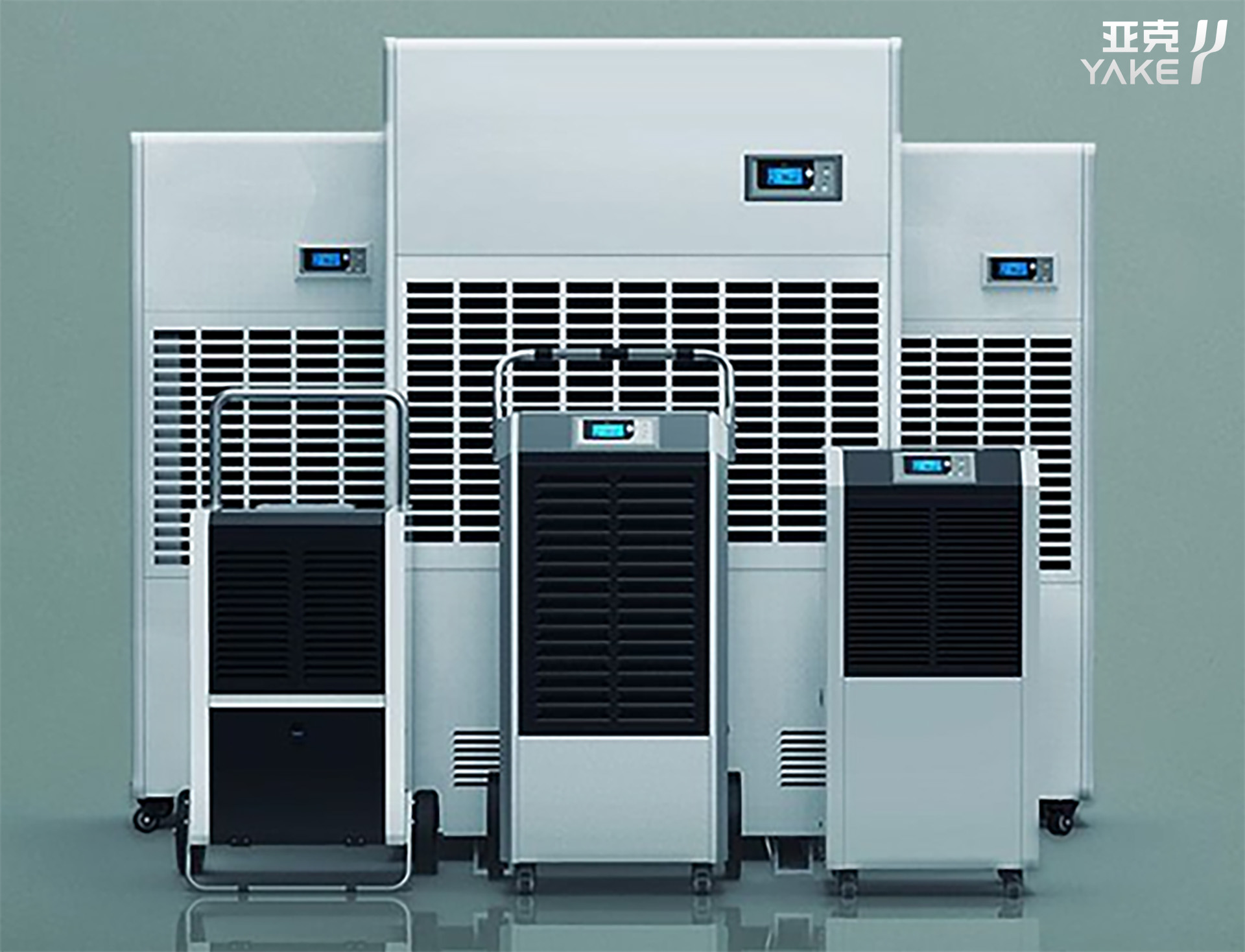
Contact us to find the best place to buy your Yakeclimate solution today!
Our experts have proven solutions to keep your humidity levels in check while keeping your energy costs low.