
Building 34, No. 535 Shunfeng Road, Hangzhou, Zhejiang, China
[email protected]
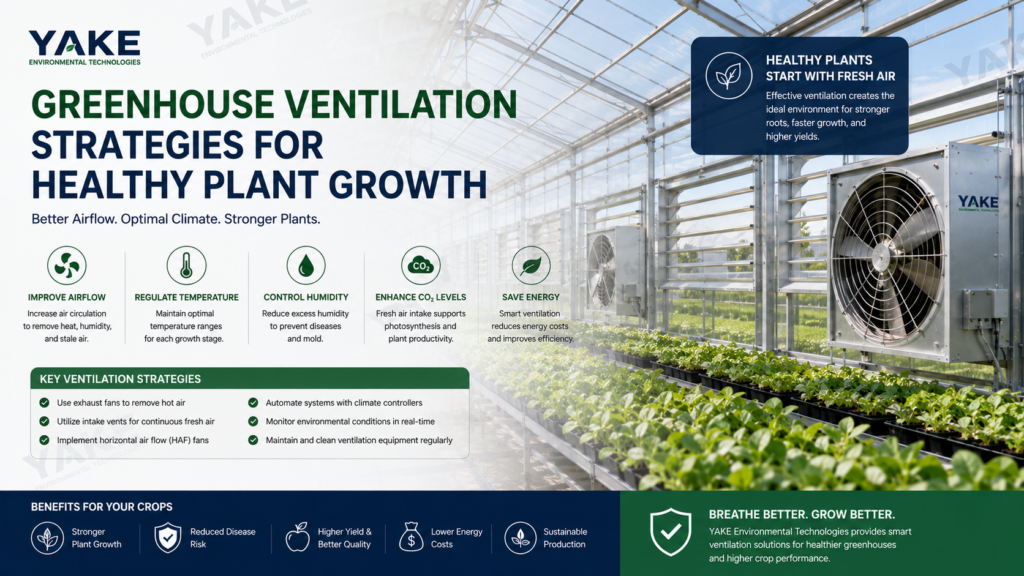


Greenhouse ventilation strategies are designed methods of exchanging air in a greenhouse in order to maintain temperature, humidity, and CO₂ concentrations at levels conducive to plant health. Good strategies often combine natural airflow, such as roof vents and side vents, with fans, ducts, and air distribution under benches or along walls. Growers use them to reduce heat stress, reduce mold and disease, and maintain an even climate across all rows and tiers. In contemporary arrangements, sensors and basic control units steer fans, vents, and even dehumidifiers to align with crop requirements and local climate. The following subsections discuss key methods, typical layout considerations, and actionable advice for small and large greenhouse projects.
Greenhouse ventilation maintains temperature, humidity, and gas levels within a safe range so plants can grow near their genetic potential. With consistent air movement, the greenhouse can remain productive for longer periods of time throughout the year, commonly producing larger harvests and superlative quality when compared to outdoor crops. Good airflow reduces environmental stress, so plants expend less energy on survival and more on growth, flowering, and fruiting.
Without sufficient ventilation, heat and moisture accumulate. That puts you more at risk for leaf burn, blossom drop, root stress and frail tissue that snaps under pests or disease. Over time, bad ventilation generally manifests itself as uneven growth, increased disease hot spots and obvious yield loss, even if light and nutrition appear to be fine.
Ventilation is the key means to dump heat from a greenhouse. Warm air rises, so ridge vents, roof vents, and high side vents allow the hottest air to escape while cooler air is drawn in through low inlets or doors. In a carefully designed structure, a gentle breeze of 2 to 3 mph can supply 80% or more of the required ventilation. In warmer weather, you can keep the inside temperature within 1 to 2°C of the ambient air with minimal or no additional energy.
To maintain even temperatures, aim for one complete air change per minute in the growing area. This means fans or vents exchange a volume of air every minute equal to the greenhouse volume. Big vent openings help significantly. Many growers use vent areas that are 15 to 20 percent as large as the floor area to minimize hot spots and stratification.
Ventilation strategies vary with the seasons. In summer, vents and fans run most of the day with shade cloth and evaporative pads in hot climates. In cool seasons, smaller staged openings or variable-speed fans minimize heat loss while still venting moisture and stale air.
It assists in mapping temperature zones. Place multiple thermometers or probe sensors at plant level across beds and at different heights. If you observe regions that are 2 to 3 degrees Celsius hotter than average, shift vent positioning, fan airflow, or crop configuration to disrupt those hot pockets.
Ventilation is the primary method of controlling humidity. As warm, moist air escapes and cool, dry air replaces it, the relative humidity decreases and reduces the potential for mold and mildew. This is crucial for plants such as tomatoes, cucumbers, and herbs that respond quickly to a wet, stagnant atmosphere.
It’s about balance, not bone-dry air. Humidity that remains too high drives diseases like powdery mildew and botrytis, but air that is too dry is stressful, causing faster transpiration and leaf scorch. A lot of food crops do fine with relative humidities in the 60 to 80 percent range, as long as the leaves dry off each day.
Humidity always tends to jump immediately following irrigation, misting, or a rain event on the greenhouse cover. Short, strong bursts of ventilation immediately after watering drive wet air out before condensation settles on leaves and structures. This works well with both natural vents and timed exhaust fans.
Routine checks with an inexpensive digital hygrometer or a system of humidity sensors assist in finessing vent adjustments. Watch daily patterns: if humidity sits near 100 percent at night or early morning, bring in a bit more air during those hours, even in cooler weather.
Good airflow shatters the conditions that many pathogens require to spread. Fungal spores of powdery mildew, botrytis and other common greenhouse diseases germinate in still, damp layers of air around leaves. Whenever air moves, that layer is thinner and less stable, so infection rates go down.
Ventilation aids leaf surfaces to dry after dew, fogging, or irrigation splash – a critical feature as many fungi require a film of water to infect the plant. Even short drying windows at night and early morning when disease pressure is often the highest already make a clear difference for crops such as lettuce, strawberries, peppers, and cut flowers.
Stale air isn’t only attractive to fungi. It increases pest pressure, as tender, stressed plant tissue is more accessible to insect feeding and virus vectors spread more readily in dense, stagnant canopies.
Key disease symptoms linked to poor ventilation include:
Plants need CO₂ for photosynthesis, and ventilation ensures a fresh supply from outside air. An indoor greenhouse with strong light plants can pull CO₂ down well below the outside baseline, which slows growth even if every other factor looks perfect.
Air exchange eliminates surplus oxygen and gases such as ethylene. Oxygen is not harmful at typical levels, but an accumulation of ethylene from ripening fruit, stressed plants, or engines can lead to leaf yellowing, flower drop, and uneven ripening. Constant air circulation maintains these gases at close to background levels, so plant respiration remains balanced.
Gas levels can be monitored with CO₂ sensors and in more sophisticated ventilation options, ethylene or oxygen sensors. When the data show CO₂ dropping during peak light hours, growers can adjust natural ventilation or add mechanical air exchange or in some systems, combine vent control with CO₂ dosing to maintain a setpoint.
To maintain air flow as designed, vents, louvers, and insect screens must remain free of dust, algae, and plant debris. Even an expertly engineered system aimed at one air change per minute and 15 to 20 percent vent area will fall short if vents are obstructed, fan intakes are littered, or crops press against sidewalls and curtains.
Greenhouse ventilation falls into two main methods: passive (natural) and active (mechanical), with hybrid and circulation strategies bridging the gap. The optimal combination is a function of climate, greenhouse dimensions, and the crop’s heat, humidity, and air movement sensitivities.
Natural systems employ roof and side vents to induce airflow through wind impact and thermal buoyancy. Warm air rises and escapes through roof vents, while cool air enters through side vents. Wind on the windward side increases pressure there and decreases it on the leeward side, drawing air through the crop. This is effective in mild to warm climates with consistent breezes and in small to medium sized structures, such as basic hoophouses or gutter-connected tunnels.
Orientation counts. Align the ridge across the prevailing wind so vents ‘face’ the prevailing wind. In calm or very hot areas, natural-only systems frequently underperform, as you might not achieve the preferred rate of about one air change per minute.
Vent openings must change with weather. They should be wide open on hot, still days. Do not fully open when a strong wind is blowing or when the outside air is cold and dry in order to prevent stress and leaf damage. They are low cost to run, simple to maintain, and suit growers who want low energy use. Control is limited in extreme climates and at very high humidity.
Mechanical ventilation employs exhaust fans, intake openings and frequently air exchange systems to suck fresh air from one end and blow warm, muggy air out the other. This active configuration can function in nearly any climate, which is useful when outdoor conditions are unfavorable to natural circulation.
Fan sizing is the key. A rule of thumb is roughly 3 CFM per square foot of growing area. Boost air exchange about 3 to 5 CFM per square foot if you put on insect screens or evaporative pads, because they limit flow. Shoot for something like one full air change per minute in newer houses.
Avoid dead strips by using axial fans in a straight line along one end wall with inlets or louvers on the opposite side. Keep motors, belts, and shutters clean, and check performance at least once a season. Weak fans raise heat and humidity, which can push relative humidity above 80 to 85 percent, raising disease risk and slowing transpiration.
Hybrid systems combine natural and mechanical ventilation. When wind and temperature are in a good range, roof and side vents do most of the work, and fans come on during low wind or heat waves. This method suits medium to large greenhouses in changeable climates and for plants that don’t tolerate stress well, like tomatoes or salad greens.
Automation assists. Easy controllers can tie vent motors, fan stages, and even shade curtains together so the house opens, cools, and shades in a coordinated sequence as temperature and humidity increase. Shade curtains reduce solar load on hot days and minimize heat loss at night, lightening the load on fans.
Hybrid layouts add initial cost but provide versatility, which lets you run on natural ventilation during the mild seasons. Then, you can use active cooling and higher air exchange when weather swings or humidity spikes.
Air circulation concerns how air circulates within the greenhouse, not only the volume of air entering or leaving. Without it, even well-vented houses can have dead zones of stagnant air and uneven temperature and wet leaf surfaces that encourage disease.
Horizontal airflow (HAF) fans are typical for this purpose. Small fans, arranged in a loop pattern, blow air in a slow, consistent stream over the top of the crop, which tends to mix warm and cool pockets and maintain more even humidity from bay to bay. This assists the main ventilation system to hit the one air change per minute target more easily.
Space HAF fans so their air streams overlap slightly, generally every 10 to 15 meters along the row, and avoid aiming them directly at tender crops to prevent wind burn. Watch plant response: curled leaves, leaning stems, or dry leaf edges can show airflow is too strong or too direct, while persistent condensation or localized disease often means circulation is too weak.
| Strategy Type | Pros | Cons |
|---|---|---|
| Natural (Passive) | Very low energy use; simple gear; quiet operation | Weak in hot/calm or extreme climates; less precise |
| Mechanical (Active) | Works in most weather; precise air exchange | Needs power; higher cost; regular maintenance required |
| Hybrid | Flexible; can save energy; good climate stability | More complex controls; higher install cost |
| Internal Circulation | Evens temperature/RH; reduces dead zones and disease | Needs careful layout; adds minor power and upkeep load |
Smart ventilation leverages sensors and automated controls to operate vents, fans, and air intakes based on real-time data, not trial-and-error or guesswork. This helps maintain temperature and humidity in a tight range, reduces labor, and reduces the chance of plant stress, particularly in big houses or higher-end crops like tomatoes, berries, or cannabis.
Key features to look for in smart ventilation systems:
Automated controls open and close roof and side vents, stage fans, and start exhaust or circulation fans when setpoints are met. It can toggle ventilation on and off depending on ambient temperature, so fans do not run unnecessarily when the house is already in range. Roof vent openings should still adhere to reasonable design guidelines. A typical goal is total roof vent area of approximately 15 to 20 percent of floor area for good air turnover.
Most growers set different day and night setpoints and use different ranges seasonally. In summer, a lot of targets hover around 24 to 29 degrees Celsius (75 to 85 degrees Fahrenheit) during the day and 16 to 21 degrees Celsius (60 to 70 degrees Fahrenheit) at night and then loosen up a bit in winter to conserve power. A thermostat or integrated climate controller associated with this ventilation makes it easy, and simple time schedules can postpone or stage fans to avoid sudden swings.
Once they’re set, the automation cuts down on human error and keeps things more even hour to hour. It’s smart to review logs and setpoint checks at least once a season, then fine-tune for crop stage, outside weather, and any tip burn, botrytis, or heat stress symptoms.
Smart systems rely on sensors, so location and quality are more important than many growers anticipate. At minimum, every house should have shielded sensors for air temperature and relative humidity at crop height, away from direct sun, drips and heater outlets. Many operations add CO₂ sensors proximate to the crop when they use gas dosing, so the system can recirculate air in a way that balances venting with CO₂ usage.
Sensors provide live data to the controller, which decides when to open vents, activate ventilation fans, or decelerate them. This real-time loop allows active techniques to swap air inside and outside, keep air moving through the crop, and maintain a relatively steady flow. This process controls temperature and humidity within a narrow range that fosters consistent growth.
To maintain their accuracy, sensors require regular calibration. Easy precautions are to spot check readings with a handheld reference meter a few times a year and resort to the maker’s calibration procedure if numbers drift. Mapping sensor points on a plan of the greenhouse also assists. The goal is to capture hot spots, cold corners, and dense crop areas so the system ‘sees’ the entire climate, not just a single point.
Smart ventilation generates a continuous cascade of environmental information that you can convert into wiser choices as the months go by. Once you follow temperature, humidity, and CO₂ curves throughout the day and through the seasons, you begin to understand what really works for your particular structure, your crop mix, and your local weather instead of going by rules of thumb.
Historical data helps you identify trends before they become issues. Overnight humidity spikes could be the cause of leaf disease. Multiple late-afternoon heat spikes could be connected to subpar air exchange on windless days. With this insight, you can adjust vent timings, fan stages, or even incorporate circulation fans to level these bottlenecks. Seasonal data informs how you adjust strategies for winter versus summer, keeping the greenhouse healthy year-round.
Most growers will do simple dashboards with live and historical trends displayed on a single screen. Simple graphs help you judge if the system stays close to targets or if you experience wide swings each day. Alerts for sudden shifts, such as a swift temperature spike that suggests blown fans or stuck vents, enable you to respond quickly and prevent overheating or plant stress.
Effective airflow is designed, not slapped on at the end. Basic questions matter: where the wind comes from most days, how the sun hits the structure in summer, and what crops will grow inside. In hot months, a greenhouse can become a furnace in minutes, so design should strive to keep day temperatures near 24 to 29 degrees Celsius (75 to 85 degrees Fahrenheit) and night temperatures near 16 to 21 degrees Celsius (60 to 70 degrees Fahrenheit). Most growers design for a total vent area of at least 15 to 20 percent of floor space, with approximately two-thirds of that area in roof vents for robust natural air exchange. Simple sketches or diagrams that track anticipated airflow paths aid in translating these guidelines into an actionable design.
Shape and size determine the potential for air circulation. Long, narrow houses with their length running with the wind normally afford more even cross-ventilation than wide, squarish houses. Tall structures offer more powerful thermal lift, which draws hot air up toward roof vents.
Cross‑flow‑favorable structures are often easier to ventilate with less energy. For instance, plain tunnel or hoop houses with roll‑up sides can catch the breeze on one side and release it out of the other. Multi‑span gutter‑connected houses may require additional roof vent area and sometimes mechanical fans to prevent dead zones.
Hot air tends to get trapped at the ridge or in corners of older greenhouses. Retrofitting can mean adding ridge vents, cutting additional side vents or installing horizontal airflow (HAF) fans to disrupt hot pockets. Tiny shifts, such as knocking down unused inner partitions or raising up crop benches, can open up airpaths, too.
Each building type has a profile. Hoop houses have low cost and good side ventilation, but they have weaker roof vent options. Gothic or A-frame houses provide better snow shedding and stronger thermal lift, but they may need careful vent layout. Gutter-connected ranges allow for efficient land use, yet they have complex airflow with shared roof space.
Vent location is just as important as vent size. Hot air rises and cool air sinks, so venting at both the roof and floor establishes a natural thermal circuit. Roof vents get rid of the majority of hot air, and lower inlets pull in cooler outside air without blasting crops.
Typically, two-thirds of the total vent area is best in the roof, and one-third in lower side or end vents. This split supports both cooling during the day and control at night so the house doesn’t lose heat too quickly after sundown. It helps to cool and maintain a consistent climate throughout the seasons.
Barriers in front of vents reduce their impact. Dense crop canopies, tall shelving, interior plastic curtains, or big equipment placed right beneath roof vents can all block the warm air as it rises. Around the house, close walls or trees might protect vents from wind. A plan view that locates vents, doors, fans, and large obstacles commonly shows low-tech fixes before any hardware gets installed.
Ventilation rate appropriate to greenhouse volume and heat load. A simple sizing approach for mechanical systems is to base fan capacity on floor area: length multiplied by width multiplied by 2. For instance, a 30 ft by 100 ft house requires approximately 6,000 CFM of fan capacity. Big, tall houses or those in very hot climates might require higher rates.
Dense plantings or high-heat crops, such as tomatoes in mid-summer or high-light ornamentals, stress air systems more. In those situations, many growers opt for slightly larger fans, additional vent panels, or both. This helps keep temperatures closer to that 24 to 29 degrees Celsius range on bright days without having to run fans at full power constantly.
Manufacturer charts for fans, shutters, and vents provide capacity under given pressure and wind conditions. These charts facilitate more precise matching of equipment to greenhouse size and shape. A basic thermostat to toggle fans and motorized vents on and off lets you control things more precisely and reduces manual labor.
| Greenhouse Size (ft) | Floor Area (ft²) | Suggested Fan Capacity (CFM) |
|---|---|---|
| 20 × 40 | 800 | 1,600 |
| 30 × 60 | 1,800 | 3,600 |
| 30 × 100 | 3,000 | 6,000 |
| 40 × 120 | 4,800 | 9,600 |
Bad ventilation does more than turn a greenhouse stuffy. It masks costs in yield, energy, and building life. These costs accumulate over seasons and can silently erase profit margins. Growers monitoring them closely tend to be the early birds in detecting issues and course correcting.
Insufficient air movement leads to temperature swings, hot and cold spots, and temperature shifts of 5 to 8 degrees Celsius (10 to 15 degrees Fahrenheit) across a single house. Plants in warmer zones grow fast and soft, while those in cooler zones stall. The crop finishes unevenly, harvest windows extend, and labor plans dissolve. Patchy air flow fuels humidity swings that stress plants and compromise defenses against powdery mildew, botrytis, and bacterial leaf spots.
When the air doesn’t move properly, leaves remain damp after watering or misting. Disease pressure spikes and growers grab for more fungicides and bactericides. This translates to increased input costs and higher residue risk on premium crops such as herbs, leafy greens and cut flowers. At Len Busch Roses in Minneapolis, more stringent humidity control with improved ventilation eliminated these swings and steadied production, underscoring the influence of climate stability on quality.
Yield trends over time provide an early warning. If your same cultivar, in the same beds, with similar light begins showing lower grams per square meter or more culls, ventilation is an easy suspect. Recording these losses in easy tables—date, variety, bed, yield, disease notes—helps you build a case for upgrades and makes it easier to compare the cost of a fan line or control change against actual revenue lost.
Insufficient airflow makes heating and cooling units work overtime. Hot air nests at the roof, crops nest cooler at canopy, and the controller keeps calling for more heat. A grimy fan or a poorly tuned control system can reduce efficiency by 30 to 50 percent. Even a few ounces of dust resting on fan blades can reduce fan efficiency by approximately 30 percent by throwing the blades off balance.
Ventilation that is sized and controlled well can do the opposite: it balances air so setpoints match what plants feel. A 20% reduction in fan speed can almost halve power draw in many configurations because fan power increases with the cube of speed. The Fan Laws imply small speed changes have a big energy impact. When fans operate at the optimal speed instead of full power all day, monthly energy bills decline and systems endure.
Wasted energy is an environmental toll. Over-ventilating or combating bad airflow patterns with supplemental heating or cooling increases electricity and fuel-tied greenhouse gas emissions. Easy fixes—clean fan blades, proper fan balancing, close control deadbands, and deploying variable-speed drives whenever possible—go a long way toward trimming that footprint. Growers can estimate savings by logging present kilowatt-hour use for fans and heaters, modeling reduced fan speeds or run times, then monitoring bills for six to twelve months post-changes.
Excess humidity and cold surfaces are a terrible combination for building materials. When moist air is unable to vent, it creates condensation on glazing, trusses, and cables. Over time, this causes rust on steel, rot in wooden benches or framing, and mold on insulation, curtain fabrics, and sealants. Condensation that drips back on plants keeps foliage wet and recycles disease spores.
Regular inspections assist in identifying these problems sooner. Walk the house and look for rusty bolts or anchor points, flaking paint on metal, dark or soft spots on wood, mold streaks on cladding, and standing water on sills. Any of these are red flags that ventilation and moisture extraction are falling behind.
They’re expensive mistakes to overlook. Structural repairs, panel replacement, and downtime during major fixes frequently outprice preventative work like installing circulation fans, balancing exhaust capacity, or updating controls. Even a day or two of lost production or shipping due to a failed fan bank or emergency repairs can be a big hit in peak season.
An easy maintenance plan, including cleaning and inspecting fans and louvers, checking belts and bearings, clearing screens, and verifying control settings, mitigates this danger. If fan failures and emergency calls become commonplace, that’s a sure sign it’s time to revisit the entire ventilation design, not just the broken component.
Key signs of poor ventilation and hidden costs
Sustainable ventilation is about fueling what your crop needs and minimizing waste. It marries passive (natural) and active (mechanical) practices so plants receive fresh, circulating air with minimum energy consumption and long-term expense. Good design targets at least one air change per minute and vent openings of 15 to 20 percent of floor area while remaining within clear climate setpoints for each crop and season.
Energy-efficient ventilation begins with the hardware. Fans with efficient motors, well-designed blades, and properly sized ducting push more air per kilowatt. Active systems typically include exhaust, HAF, and air exchange fans, with total fan capacity at least double the square footage to achieve the one-air-change-per-minute rule in design conditions. Thermostats and simple controllers switch these fans on and off based on temperature, while automatic vent openers modulate roof or side vents so the system does not run for longer than required.
Air leaks under doors, at film joints and around vents create unnecessary exchange which wastes heat or cooling. Sealing gaps with gaskets, weatherstrips and proper door hardware helps to reduce load on your fans and heaters, particularly in the winter. Thermal screens add another layer: they close at night or during cold spells to cut heat loss and open when light and heat are needed again. This helps keep summer temperatures within the 24–29°C (75–85°F) day range and 16–21°C (60–70°F) at night. Once changes are made, growers should log kWh use and climate data for an entire season. They should then compare energy per kilogram of yield pre- and post-upgrade to judge actual savings and fine-tune setpoints.
Passive design optimizes site and structure so the greenhouse requires less running fans during its lifetime. Orientation with the long side open to winter sun, insulation on north or end walls in cold areas, and high ridge vents above crop level all facilitate hot, moist air escaping by buoyancy. Equalizing vent area to at least 15 to 20 percent of floor space ensures natural ventilation has sufficient “throat” to actually move air around when wind or stack effect blows.
Natural light and air paths combine. Clear or diffused glazing and low shading frames bring sun in, while roll-up sides or louvered end vents draw in cooler air at crop height and exhaust it at the ridge. The goal is to keep close to summer goals of 24 to 29 degrees Celsius by day and 16 to 21 degrees Celsius at night without having fans on constantly.
Shading nets or exterior paints reduce peak solar gain and maintain leaf temperature closer to air temperature at mid-day. Thermal mass, such as water barrels, concrete floors, or masonry walls painted dark and placed where they see sun, absorbs heat by day and releases it at night. This helps winter houses hold temperatures between 15 and 21 degrees Celsius by day and avoid drops near 7 degrees Celsius (45 degrees Fahrenheit) by night.
For new builds, a simple checklist helps: site orientation, vent area and height, insulation level, glazing type, shading plan, and thermal mass layout. Designers can score each based on how much it reduces fan hours and then select the combination that satisfies both budget and climate targets.
Long-lasting ventilation is sustainable because it minimizes material waste and the environmental impact of frequent replacement. When fans, louvers, and controllers oscillate in their design range instead of cycling hard or running under strain, bearings, motors, and actuators last more years and airflow stays closer to design values.
Regular cleaning and servicing is key. Dust, algae and insect build-up on fan blades and vent screens reduce airflow and compel motors to pull more current. Easy things like washing blades, checking belt tension, lubricating bearings as needed and testing thermostats and sensors at the beginning of each season keep active systems—exhaust fans, HAF fans, and air exchange units—delivering the air changes they were sized for.
Less breakdowns equal less emergency call‑outs and less crop stress from heat spikes or humidity swings. This cuts direct maintenance costs and concealed costs such as yield loss or quality downgrade from bad climate control.
A simple maintenance log, paper or digital, that notes checks, parts replacements, and sensor calibration dates assists growers in tracking trends and scheduling preventative maintenance. Over time, this record informs better decisions of when to refurbish major components versus run them longer.
Good ventilation stabilizes a greenhouse, reduces risk, and is gentler on plants and humans. Fans, vents, sidewalls, and smart controls all have an evident part to play. All of the tools facilitate the movement of heat, moisture, and fresh air in a consistent manner.
A little herb tunnel in a city lot requires just as much planning as a huge glass house with tomatoes on 1,000 m². Both benefit from clean air lanes, correctly sized fans, and transparent heat and humidity set points. Both cut waste and stress with a smart vent plan.
To get going, outline your air route, inspect your vulnerabilities, and try one adjustment at a time. For more serious assistance, contact a CEA engineer or a reliable climate partner.
The majority of greenhouses require 20 to 40 air changes per hour. As a general guideline, roof and side vents should correspond to at least 15 to 20 percent of floor area. Hotter climates or dense planting require more. Combine fans and vents for consistent temperature and humidity.
Best roof vents, side vents and one or two circulation fans. Utilize roof vents to expel heat, side vents to draw in fresh air, and fans to circulate it over your plants. Consider adding automatic vent openers or a small controller for more consistent results.
Smart controllers connect fans, vents, and sensors. These open or close in response to temperature, humidity, and occasionally CO₂. This cools away heat stress, disease risk, and energy waste. Remote monitoring allows you to respond quickly to sudden weather changes.
Key symptoms are high humidity, diseases like mold and leaf spots, stunted growth, and temperature variability. Condensation dripping from glazing, strong odors, and ‘dead air’ corners are red flags. These frequently indicate insufficient air movement or suboptimal vent locations.
Bad air circulation results in heat accumulation, greater cooling demand and increased disease. That translates to more energy consumption, more pesticides and fungicides, and reduced harvests. Additionally, equipment and structures can deteriorate more quickly from moisture and heat build-up.
Frequently not. Natural vents do help, but in hot or humid climates they seldom keep temperatures within the ideal range. Powered fans, evaporative cooling, and shade systems may be required to maintain safe temperatures and protect plant quality.
Use passive design first: ridge vents, side vents, and wind direction. Add efficient fans, variable-speed drives, and smart controllers. Pair ventilation with shading and thermal screens to lower cooling load and energy consumption while maintaining plant health.


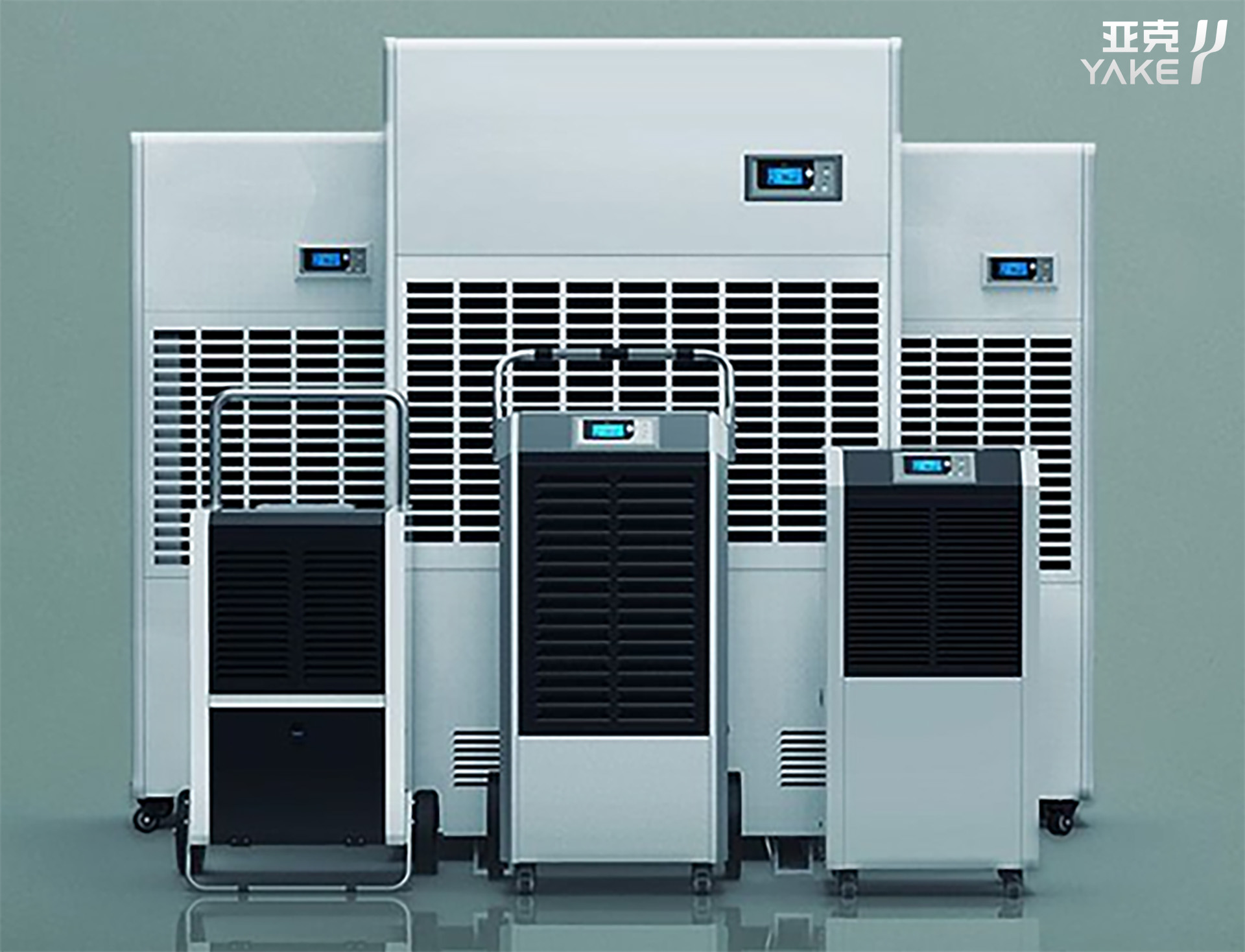
Contact us to find the best place to buy your Yakeclimate solution today!
Our experts have proven solutions to keep your humidity levels in check while keeping your energy costs low.