
Building 34, No. 535 Shunfeng Road, Hangzhou, Zhejiang, China
[email protected]
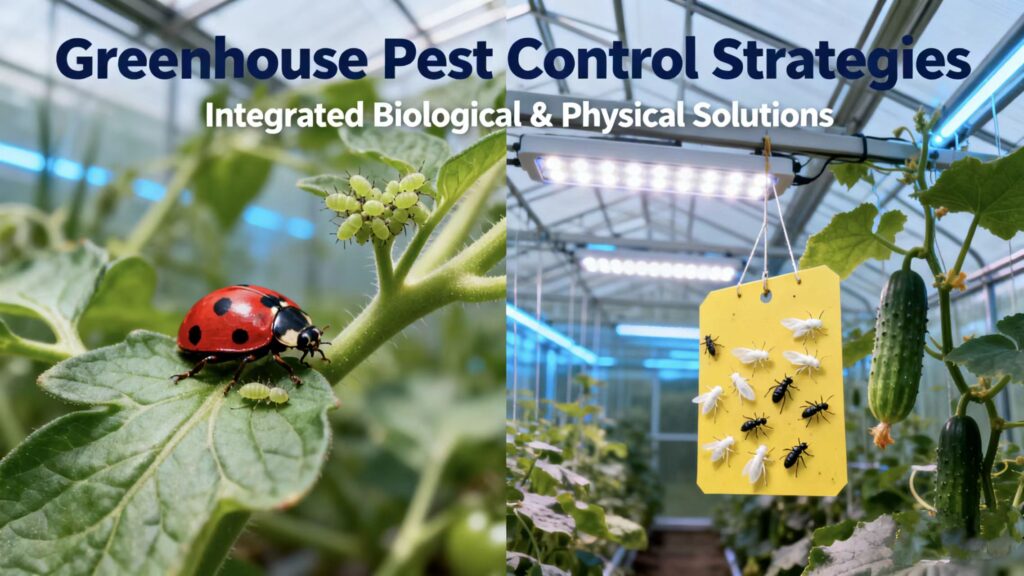

Greenhouse pests are insects and mites that inhabit and feed on plants in protected growing spaces. Typical pests are aphids, whiteflies, thrips, and spider mites. They can wreak havoc on your crops by munching leaves, spreading disease, and generally weakening plant growth. There’s a combination of prevention, monitoring, and control that greenhouse growers use to grow healthy crops. The body contains actionable advice and the best methods to deal with greenhouse pests.

Greenhouses provide a warm, humid environment in which pests flourish. These spaces are perfect for many insects, and growers must identify issues early to preserve plant health and yield. Here’s your greenhouse pest guide, including the most common pests, how to identify them, and how to combat them.
Check under leaves and around fresh growth for colonies of small, soft-bodied insects. Aphids can be green, black, yellow or even pink. They sap the plant’s juices, which can lead to curling, yellowing or dropped leaves. Certain types of aphids transmit diseases from one plant to another, so it’s best to get them under control quickly. Begin by releasing lady beetles to dine on aphids or spraying with soapy water. How to tell them apart. Certain types, such as the green peach aphid, can be spray-resistant, so it’s good to rotate control methods.
Whiteflies are tiny, white, four-winged insects that flutter up when plants are brushed. They suck plant sap and leave behind sticky honeydew that molds. Place yellow sticky traps to track and control their population. Insecticidal soaps and oils like neem oil work great and don’t damage beneficial bugs. Whiteflies transmit plant viruses, which can decimate a crop in no time, so be on the lookout for early symptoms.
Thrips are tiny, thin insects that are so small you’ll need a magnifying lens to see them. They scrape and suck at leaves and flowers, leaving silver trails and misshapen growth. Put out yellow sticky traps to catch adults and scout plants frequently for early signs. If left unmanaged, thrips can introduce viruses and decrease crop quality. Predatory mites can keep numbers down, particularly when combined with frequent inspections and sticky traps.
Tiny spider mites cause pale spots and fine webbing, often on the undersides of leaves. They thrive in hot, dry spots and near greenhouse heaters. Keeping the air humid helps slow their growth. Predatory mites are a strong, natural way to control them. Check leaves for mite eggs and larvae to stop outbreaks before they start.
Fungus gnats are those little, dark, long-legged flies that hover around your wet soil. Adults are more of a bother, but their larvae feed on roots and damage seedlings. Reduce watering and ensure soil drains well to maintain low counts. Yellow sticky traps catch adults, while beneficial nematodes in the soil address larvae.
Mealybugs, leafminers, and caterpillars threaten crops as well. They may chew leaves, bore into stems, or suck plant juices. Treat these intruders with a combination of sticky cards, consistent scouting, and biological controls such as ladybugs or parasitic wasps. Horticultural oils and neem are a backup when things get out of hand. Understanding the life cycle of each pest type will help you time your control steps for optimal results.
| Pest | Life Cycle | Signs of Infestation | Management Strategies |
|---|---|---|---|
| Aphids | Rapid, many generations/year | Leaf curling, sticky honeydew, visible colonies | Beneficial insects, soapy water, species ID |
| Whiteflies | Egg to adult in 3-4 weeks | Fluttering adults, honeydew, mold | Sticky traps, soaps, oils, virus monitoring |
| Thrips | Egg to adult in 2-3 weeks | Silver streaks, deformed flowers | Sticky traps, predatory mites, regular inspection |
| Spider Mites | Egg to adult in 5-20 days | Webbing, speckled leaves | Humidity control, predatory mites, leaf inspection |
| Fungus Gnats | Egg to adult in 3-4 weeks | Flying adults, wilting seedlings | Drainage, sticky traps, nematodes |
| Mealybugs/Other | Varies | Cottony masses, chewed leaves, slow growth | Organic sprays, beneficial insects, scouting |
A vigorous greenhouse does more than protect plants from the wind and heat. It forms the initial barrier to pests. Thoughtful design, regular maintenance, and clever crop planning reduce pest infestations and produce healthier plants. Nice air circulation, consistent temperatures, and thriving plants all make it harder for pests to put down roots or proliferate.
Physical barriers, like insect screens or fine mesh, prevent a lot of pests from getting in. Insect-proof doors and screened vents go a long way, especially for tiny critters such as aphids or thrips. Fortify your greenhouse by using raised beds so air can flow beneath and around plants, which dries leaves fast after watering and complicates life for fungal gnats and mites. Space crops adequately for air circulation and light so leaves dry and the atmosphere remains less humid.
Designate separate locations for each plant grouping, such as vegetables, herbs, and ornamentals, to restrict pest transmission among them. This zoning simplifies identifying where a pest issue originates. Trustworthy lighting and a smartly organized ventilation system, such as roof vents and horizontal fans, keep temperature and humidity consistent, which reduces plant stress and prevents many pests from reproducing. A few greenfingered greenhouse owners incorporate shade cloth to keep plants cool and stress free, which further reduces pest allure.
Crop rotation is an uncomplicated yet strategic method to interrupt pest life cycles. Rotating your beds each season prevents pests from gaining a foothold in any one location. Companion planting—mixing plants that help each other, such as marigolds with tomatoes, in your greenhouse can naturally keep pests from invading the space while supporting beneficial bugs like ladybugs or predatory mites.
Water sparingly and never in the evening. Plants shouldn’t lie wet all night. Wet environments attract pests such as fungus gnats and promote mildew. Healthy soil is the secret. Sprinkle some compost or organic matter to fortify roots. Plants won’t get sick or bug-prone.
Clean up. Clear out dead leaves, fallen fruit and old plant debris inside and under your benches to eliminate pest hiding places. Clean tools and benches frequently. Fortify your greenhouse by inspecting it weekly for early signs of bugs and disease.
Choose pest-resistant varieties when possible. They are less susceptible to getting sick or experiencing common bugs. Plant a few “canary” plants—these attract hungry pests initially, so you can detect infestations early and respond quickly. Pick plants that match your greenhouse’s light, humidity, and temperature. Strong, healthy, unstressed plants won’t tempt as many pests.
Intermix crops by spiraling those that are often hit with those that seldom have a problem with pests. This controls pest populations and provides your primary crops a stronger chance of remaining healthy. Good bugs, such as predatory mites, can keep bad bugs under control without resorting to pesticides.
Integrated pest management (IPM) is a comprehensive approach to pest control in greenhouses. It combines multiple ways to prevent diseases, bugs, and mites while ensuring a safe growing environment and protecting the crops. No one tool or chemical works all the time. About Integrated pest management, it is all about the right combination of strategies for each situation at all times with the least environmental damage. Inspecting the greenhouse frequently and knowing what is going on in there are your first steps to keeping pest populations under control. This strategy emphasizes employee training, intelligent scheduling, and making the right intervention at the optimal time.
Key components of integrated pest management include:
Integrated Pest Management, or IPM, is about balancing pest control. It’s about choosing techniques that won’t kill beneficial insects or the plant. If you overdo it with the chemicals, you’ll kill off the beneficial bugs as well as the harmful. This can throw off the entire greenhouse ecology. Prevention is the aim, not just responding to outbreaks when they occur. By making your greenhouse a diverse environment with a variety of plants and organisms, you create a more robust ecosystem that pushes back against pests. Sustainable habits, such as reducing spray use and employing organic remedies, support long-term health in the greenhouse.
A methodical strategy begins with regular scouting. The literate staff should inspect plants once a week; twice is even better, for the entire season. Devote at least 10 minutes to 20 or more plants for every 1,000 square feet of area. Early morning or late evening is best for releasing biological control agents, as it allows them time to settle and get to work. Everything and pest tally must go in a log, so trends and issues become clear over time. When they linger, especially on perennial crops, rotate products with a minimum of three modes of action. This approach delays resistance and makes treatments last. Never stop searching for new research and better tools because pest management is always evolving.
Using nature’s helpers, such as beneficial insects and microorganisms, provides growers with a hands-on, sustainable approach to pest management in greenhouses and nurseries. It’s not just about minimizing chemical inputs. It’s a comprehensive strategy that fosters robust plant health, satisfies consumers’ desire for safe produce, and sustains pest control into the future. These integrated biological approaches help avoid resistance, reduce expenses, and are readily modified for different crops and environments.
Lady beetles, lacewings, and minute pirate bugs are some of the best-known predators for greenhouse pest control. Lady beetles and lacewings are suckers for aphids, whiteflies, and other soft-bodied insects and are generally a safe bet for most crops. Praying mantises can target bigger bugs like grasshoppers and caterpillars, broadening the types of natural adversaries.
Timing is everything. Release predators early, when pest densities are low but increasing, to preempt outbreaks. Steer clear of broad spectrum insecticides, which kill both pests and beneficial predators. Instead, choose selective treatments or biologicals and let the good bugs do their thing. Track their populations by strolling through the greenhouse, inspecting leaves, and using sticky traps to ensure the predators are still present and pest populations remain low.
Maintaining a checklist assists in providing the proper habitat for predators. Provide adequate moisture, water, and a combination of plants such as basil and rosemary, which act as natural insect repellents. Routine scouting and tracking assist you in optimizing launch dates and identifying possible control holes.
Parasitoids like these tiny wasps provide specific pest control. They deposit eggs inside or on bugs such as whiteflies or caterpillars and their babies consume the host, resulting in its death. Understanding each parasitoid’s life cycle allows you to release them when they will be most effective.
Create the proper conditions by maintaining consistent temperatures and offering refuge, like dense plant patches, so parasitoids can thrive and seek out prey. Steering clear of hard chemicals keeps them going. To monitor success, count pests before and after releases, and check for mummified aphids or other signs of parasitized pests.
Add parasitoids as part of a broader pest management strategy, typically in conjunction with predators or selective miticides. This mix broadens the range of pests controlled and renders the entire system more resilient.
Microbial pathogens, such as Bacillus thuringiensis bacteria or Beauveria fungi, are biopesticides. These products are easy to apply and help control outbreaks of pests resistant to conventional chemicals. They are gentle on most helpful bugs and degrade rapidly, so there is less residue on produce.
Pathogens love temperature and humidity. They usually require a certain range of temperature and humidity in order to work effectively. For instance, some fungi require increased humidity to infect pests. Educate employees to properly manage and apply these products, adhering to label directions and utilizing protective equipment when necessary.
Regular post-application inspections reveal if pest populations are declining. If not, tweak strategies or reintroduce as necessary. This works well in greenhouses where conditions can be maintained relatively stable and constant.
Greenhouse pest control isn’t about exterminating critters, it’s about manipulating the environment to make it inhospitable for pests. By controlling temperature, humidity, water and even plant spacing, growers can make greenhouses inhospitable to pests and hospitable to natural enemies. It helps reduce chemical usage and keeps your crops healthy.
If you regulate the micro-climate within your greenhouse, you can inhibit or halt insect proliferation. Most bugs such as whiteflies and spider mites prosper when air is warm and humid, so managing heat and moisture is necessary. Growers are using fans, automated vents, and dehumidifiers to keep the air moving and cut down on damp patches. Air flow prevents moisture from collecting on the leaves and reduces fungus gnats and other pests that thrive in wet places.
Keeping tabs on temperature and humidity is a necessity. With sensors and digital controls, growers can identify variations quickly and adjust the conditions. By maintaining humidity between 60 and 70 percent and temperatures below 28 degrees Celsius, you can make it hard for typical greenhouse pests to survive. Heating and cooling systems are necessary for plants and helpful insects, such as predatory mites, as well. They require steady environmental conditions to thrive and assist in pest control.
Sometimes, just providing shelter for good bugs, such as turning domatia into homes for mites, can increase their populations. Tipping the climate in favor of these helpers and making life difficult for pests is a time-tested tactic.
Physical barriers represent the most straightforward method of keeping pests out. Aphids, thrips, and whiteflies are kept out by fine-mesh insect netting. Screens on your vents and windows can be upgraded or added. Row covers protect vulnerable seedlings from airborne bugs and allow light and rain to enter.
For walking pests, gardeners erect barriers around plant beds, like tape covered in adhesive or rings of sand, so insects can’t get to plants. These practices play nicely with other controls, aiding in keeping infestations down. Barriers require frequent maintenance and inspection for holes, tears, gaps, or wear if they’re to remain effective. They must be promptly repaired and any type of debris accumulation at entrance points is eliminated to prevent pests from sneaking in.
There’s a watering right is again to pest control. Overwatering makes damp soil, something fungus gnats and root-munching bugs adore. Drip irrigation delivers water directly to roots, rather than moistening leaves and attracting moisture-loving insects. Soil moisture meters assist cultivators in monitoring levels and steering clear of swampy chunks.
Steady watering that corresponds with plant needs keeps roots strong without providing a breeding ground for pests. Switching to drip or micro-irrigation helps you save water and makes your greenhouse less hospitable to pests. Smart water use connects to temperature regulation, too, making the whole system more stable and less susceptible to blooms.
Greenhouse pests flourish in these stable, protected conditions. Knowing their psychology can shift the odds for growers. Understanding what motivates pests — how they migrate, eat, and breed — offers growers the advantage to intervene before infestations spiral out of control. Call it pest psychology, but understanding how you think like a pest determines how we think about control and why frequent pest checkups are vital.
About: The pest psychology
They have their habits. A lot of them, like cutworms, burrow in dirt or mulch by day and munch the crop by night. Understanding when and where pests are most active allows you to identify the optimal time for treatment.
Temperature, humidity and light all factor heavily into pest psychology. Two-spotted spider mites, for example, get worse as heat increases. Aphids reproduce quickly in warm, wet weather and can deliver six to ten offspring every day for as long as a month.
Armed with this understanding, growers can time treatments for when pests are most susceptible. They can spray at dawn to hit night feeders or change watering schedules to drown fungus gnats that breed in water pools.
Training staff to spot unusual leaf damage, webbing, or egg clusters increases early detection. Weekly sweeps throughout all greenhouse areas, including under benches and around faucets, help to catch problems before they proliferate.
Breaking pest life cycles is crucial. Crop rotation and introducing natural enemies like ladybugs against aphids can slow pest buildup. Monitoring for eggs and larvae means action can be taken before pests mature.
Pheromone traps work with pests attracted to scents, interfering with breeding and reducing populations. When staff observe the initial signs of pest activity, such as the presence of aphids or their honeydew, immediate intervention prevents infestations from becoming widespread.
Tweaking greenhouse habits, like eliminating standing water to discourage fungus gnats or relocating plants to disrupt uninterrupted food chains for pests, reduces their opportunities to propagate.
Other pests, such as the female whitefly, lay as many as 150 eggs over her lifetime, depositing 25 every day. Intervening during these highs is crucial to keep numbers under control.
Regular monitoring is the foundation of pest control. Greenhouse teams should monitor pest densities and patterns, record their observations, and remain vigilant for an off-cycle shift.
A written management plan lets everyone know what to do if a pest shows up. This strategy should encompass backup precautions and rapid response actions for when you are in high risk windows.
Staff need to be trained to identify the earliest symptoms of attack, such as wilting, chewed leaves, or webs, so they can act early.
Checking last year’s data makes it easy to anticipate when these pests are going to arrive. Understanding what took place previously allows farmers to be ready for what’s probable, increasing the chance of staving off significant damage, which in extreme situations can be as high as 50%.
Pests discover weak areas rapidly. Just a handful of bugs and it’s a swarm before you know it. Quick inspection, good hygiene, and wise deployment of helpers like ladybugs can keep things under control. Basic stuff like sealing holes and spacing plants properly prevents the majority of attackers. Turn the weather inside to your advantage; it can be too dry or too cold for bugs and just right for your plants. Observe pest behavior, identify trends, and disrupt their rhythm. Every greenhouse is unique, but a keen sight and gentle touch maintain plants healthy and virus-free. Stay inquisitive, experiment with new tactics, and communicate your victories with fellow cultivators. To increase your yields and resist pests, continue to learn and adjust your system.
Typical greenhouse pests are aphids, whiteflies, spider mites, thrips, and fungus gnats. They damage plants by consuming their sap or transmitting diseases.
You can avoid pests by maintaining your greenhouse hygiene, inspecting new plants for pests, and installing insect-proof screens on vents and doors.
Integrated pest management proposes to mix all of these together: monitoring, biological control, and judicious use of safe chemicals to effectively and sustainably manage pests.
Ladybugs and predatory mites are examples of beneficial insects that feed on harmful pests. They assist in minimizing pest populations naturally without the use of chemicals.
Yes, temperature, humidity, and air flow can all be adjusted to make the greenhouse less hospitable to pests and inhibit their proliferation.
Watching how pests behave allows you to catch problems ahead of time. Identifying a pest early means you can act swiftly, which leads to less crop destruction and no heavy hitters from the chemical cabinet!
Chemical pesticides should be used as a last resort. Always read and follow label directions and think about less-toxic alternatives to keep your plants, yourself, and the environment safe.



Contact us to find the best place to buy your Yakeclimate solution today!
Our experts have proven solutions to keep your humidity levels in check while keeping your energy costs low.