
Building 34, No. 535 Shunfeng Road, Hangzhou, Zhejiang, China
[email protected]


A relative humidity gauge is the easiest tool. It reveals the amount of water vapor in the air as a percentage of how much the air should be able to hold at that temperature. Indoor farms and greenhouses use it to monitor moisture levels in real time and prevent fluctuations that stress plants. Accurate readouts from a trusted gauge assist in establishing dehumidifier goals, optimizing HVAC parameters, and maintaining proper vapor pressure deficit throughout each crop stage. Many growers situate gauges at plant canopy height and near air returns to intercept microclimate shifts that reduce yield or promote mold. The following sections cover vital varieties, specs, and best practices for serious indoor operations.
Relative humidity (RH) is the portion of water vapor in the air relative to what it could hold at that temperature if saturated. Zero percent RH air is absolutely dry. At 100% RH, dew or mist begins to form as vapor begins to condense. A relative humidity gauge, or hygrometer, is how you monitor that balance as it happens, which is critical for air quality and comfort, material preservation, HVAC optimization, and even simple climate science.
When RH drifts too far from that 40–60% range, we begin to see obvious health impacts in occupied spaces. Humidity is critical because high humidity inhibits sweat evaporation and suspends particles in the air, such as mold spores and dust mites, which can increase breathing complications, asthma attacks, and allergic responses, particularly within compact grow rooms or worker hallways adjacent to grows. RH that is very low dries out skin, eyes, and mucous membranes in the nose and throat, weakening this first line of defense and making people more susceptible to irritation and respiratory infections.
Precision RH readings provide facility teams a method to connect symptoms to actual conditions instead of hypothesizing. When you know the RH at 24 to 26 degrees Celsius in a trimming room or office area, you can tweak ventilation, humidification, and dehumidification with purpose instead of guesswork. Because RH shifts with temperature and pressure, a steady reading at 22 degrees Celsius can jump after a minor setpoint change, so a dependable hygrometer is as fundamental as a good thermometer.
For homes, easy-to-read digital gauges in bedrooms and living spaces assist users in maintaining relative humidity around the 40 to 60 percent comfort and health range, employing small dehumidifiers or humidifiers or improved air exchanges as necessary.
RH determines how hot or cold the air actually feels, not just what the thermometer indicates. At 26 °C and 60% RH, most folks feel great. At the same temperature and 80% RH in a closed room, that same air is heavy, sticky, and feels much hotter on the skin. In cold climates, very dry indoor air at 20 °C and 25% RH makes a space colder and harsher than the number indicates, and static shocks are frequent.
Maintaining relative humidity around 40 to 60 percent in offices, grow support areas, and homes causes this delta between actual and perceived temperature to shrink. This allows cooling and heating systems to operate at more efficient setpoints. If they are comfortable, they are less apt to request additional cooling in summer or additional heating in winter, saving energy without any hardware replacement, just smarter monitoring and control.
Common signs of uncomfortable humidity include:
Humidity control is key for any environment housing sensitive items like seed banks, museum artifacts, paper files, or electronics. In museums and archives, even minor gradual swings of RH can induce warping of wood panels, cracks in paint layers, curling paper, or corrosion on metal surfaces. Libraries, data centers, and long-term storage rooms for packaged produce all face a similar issue. Cardboard and paper-based packaging absorb moisture easily, so high RH shortens shelf life and raises the risk of mold in both the packaging and the goods inside.
From an engineering perspective, temperature, pressure, and relative humidity travel together. Because warmer air can hold more moisture, if absolute moisture remains constant and temperature increases, relative humidity decreases. When temperature falls, relative humidity increases and the risk of condensation increases on cold bridges like metal frames or thin walls. If relative humidity remains high, moisture will appear as standing water, weeping walls, or wet floor edges that need to be repaired with drainage and sealing before dehumidifiers can deliver maximum effectiveness.
Routine observations by accurate humidity tools assist in maintaining storage locations inside slim intended goals for each materials class, reducing energy waste from over-drying and minimizing destruction cycles over several years. Typical reference bands are:
| Material / Use | Recommended RH range |
|---|---|
| General paper records | 40–55% |
| Rare books / archives | 35–50% |
| Wood furniture and panels | 40–60% |
| Electronics and circuit boards | 30–50% |
| Seed and grain storage | 35–50% |
A relative humidity gauge, or hygrometer, is a scientific instrument that measures the amount of water vapor in the air compared to the maximum it could hold at that temperature. It reads out as a percentage and updates in real time, perfect for any controlled space, from a growth chamber to a clean room. While these gauges have been used in meteorology and building science, they form core instrumentation for indoor farms monitoring air quality, mold risk, and crop stress. They don’t display absolute humidity, which is grams of water per cubic meter of air, but rather relative humidity, which is how close the air is to saturation at that moment.
Here’s how a relative humidity gauge works: it senses moisture in the air and links that signal to air temperature. Humidity by itself is insufficient because warm air can contain more water vapor than cold air.
Physically, it’s measuring the current water vapor pressure and dividing it by the saturation vapor pressure at that same temperature, then listing the result as a percentage. Hygrometers call this relative humidity, which measures how close to “full” air you are. If it reads 100%, the air is saturated and additional moisture will condense.
Numerous equipment utilizes psychrometers in labs and calibration rooms. These employ two thermometers, a dry bulb and a wet bulb, and the divergence of their readings drives psychrometric formulas or charts. Attaining the complete theoretical wet bulb depression is difficult, especially at low RH, so precise thermometer calibration and excellent airflow across the wet bulb are essential.
Most electronic relative humidity gauges have three core parts: a humidity sensor (often capacitive or resistive), a display (analog dial or digital screen), and a power source such as mains power or low-voltage DC. The sensor transforms moisture into an electrical signal that the electronics can interpret.
Good units include a temperature sensor, since relative humidity is useless without an accurate temperature reading. In professional grow rooms you’ll frequently encounter loggers with built-in temperature and RH sensors, onboard memory, and occasionally wireless connections so data can flow to a control system. In these installations, a good liquid-in-glass thermometer remains a valuable independent standard. If carefully maintained, it can maintain a stable reading for years and assist in verifying drift in digital sensors.
For long-term accuracy, many labs use saturated salt solutions for calibration since they produce a near-constant humidity inside a sealed container. This allows you to compare the device reading to a known RH point. Before purchasing a gauge, it’s worth checking the spec sheet for sensor type, accuracy within the 30–60% RH range, display resolution, and logging or network capabilities as these impact both crop safety and energy consumption when combined with dehumidifiers.
Humidity is very susceptible to the local microclimate around the probe. Sure, temperature, airflow, and barometric pressure are a factor, but so are incredibly simple things like how near the sensor is to a light, a cooling coil, or a wet surface.
Direct sun or strong light on the housing can heat the sensor and make the RH seem lower than it actually is. A probe mounted directly in front of a supply vent may oscillate with each HVAC cycle. One adjacent to a wet wall or nutrient tank can read RH far exceeding the room average. For indoor farming, this may result in poor decisions on dehumidifier setpoints or air exchange rates.
Maintaining stable conditions around the gauge helps a great deal. In practice, that means mounting sensors at plant canopy height, away from walls and direct airflow, and shielding them from radiant heat. For example, most facilities maintain a basic spreadsheet or data system that records RH, temperature, setpoints, and significant occurrences such as watering cycles or door openings. Over time, these logs help verify that the room remains in the 30 to 60 percent RH target band that minimizes mold risk, static, and material damage, and they aid in calibrating dehumidifier runtimes for more efficient energy consumption without sacrificing climate stability.
Relative humidity gauges fall into four broad groups that matter in real indoor farming work: analog mechanical devices, digital electronic units, psychrometers, and networked smart sensors. Your selection depends on the level of accuracy required, your data logging habits, and how closely you want to integrate humidity management with dehumidifiers and HVAC systems.
Analog hygrometers utilize a mechanical sensing element that varies in length or shape as the moisture in the air varies. Typical designs employ a coil with a thin polymer film or a metal oxide layer sandwiched between two electrodes or a hair bundle, which elongates when relative humidity increases and drags a pointer across a dial. Classic hair hygrometers, first constructed in the 18th century, literally use human hair as the hygroscopic material and they still appear in low-tech greenhouses and storage rooms.
They require no batteries, provide an always visible readout, and many cultivators prefer the classic round dial style, such as a 2¼-inch analog humidor hygrometer from a box of cigars or a curing cabinet. For grow rooms, this simplicity is handy as a failsafe against power outage. The trade-off is drift. Mechanical parts age, so frequent calibration is usually needed, often with saturated salt solutions. For example, saturated table salt gives about 75% relative humidity in a sealed jar.
Digital hygrometers employ an electronic humidity sensor, typically a capacitive polymer film sandwiched between electrodes, along with a temperature sensor and a low-power processor. They display values on an LCD, usually with 0.1% RH resolution, and in normal office-style environments quality units achieve approximately ±1.2% RH precision. That amount is typically sufficient to maintain a cannabis dry room at 55 to 60% RH or a leafy-greens rack at 70 to 80% RH without any guesswork.
Most digital models record measurements, calculate temperatures, and provide alarm features. Fan favorites such as the Govee H5075 hygrometer and tiny “FI”‑type indoor hygrometers sync with a phone app to plot trending and export data for audits or studies.
Psychrometers use two thermometers, a dry-bulb and wet-bulb, side by side. The wet-bulb has a tiny wick moistened with water, and as air passes, it evaporates and cools the bulb. The difference in temperature between the two bulbs, along with a psychrometric chart or formula, provides relative humidity. Liquid-in-glass wet-bulb thermometers are widespread and inexpensive. Readings often run 2 to 5 points too high if ventilation and wetting are less than perfect.
Well-maintained psychrometers measure a real evaporation process and remain a benchmark in meteorological stations and scientific fieldwork. In indoor agriculture labs, they assist in verifying or calibrating electronic sensors, such as chilled-mirror dew point hygrometers, that cool a mirror until it condenses and then use a light beam to determine the precise dew point. The main drawback is that psychrometers are manual: someone has to read both bulbs and look up values in humidity tables, which does not scale well for large multi-zone farms.
Smart hygrometers extend digital sensors and add wireless connections and software integration. With devices like SensorPush, Temp Stick, and ComfortMinder, relative humidity and temperature data is transmitted via Wi-Fi or Bluetooth to an app or cloud dashboard, where you can monitor historical trends, program real-time alerts, and tie thresholds to actions. In a greenhouse or vertical farm, that could involve firing a push alert when RH in a propagation zone hits 85% so workers can inspect airflow or dehumidifier settings.
They work best where conditions need to remain tight and trackable such as cannabis cure rooms, seed vaults, exotic plant terrariums or condensation-averse server rooms. For growers who connect Yakeclimate dehumidifiers to building control systems, smart sensors provide the feedback layer and supply high-resolution information into automation that cuts energy consumption while maintaining stable VPD.
| Type | Typical Price (EUR) | Key Features | Pros | Cons |
|---|---|---|---|---|
| Analog dial | 10–30 | Mechanical coil or hair, no power | Cheap, battery‑free, visual | Drift, frequent calibration, lower accuracy |
| Hand psychrometer | 50–150 | Wet/dry bulbs, manual RH tables | Good reference if used well | Labor‑intensive, 2–5% error if poorly ventilated |
| Digital desktop | 20–80 | LCD, ±1–2% RH, temp, data logging | Precise, compact, easy to read | Needs power, sensor aging over years |
| Smart sensor node | 60–250 | Wireless, app, alerts, cloud storage | Remote monitoring, trend analysis, automation‑ready | Higher cost, needs network and cybersecurity planning |
| Chilled‑mirror ref. | 1000+ | Optical dew point, lab‑grade measurement | Very high accuracy, calibration standard | Expensive, not practical as routine grow‑room gauge |
Picking out a relative humidity meter begins with the task it has to accomplish, not the brochure page. Fit the instrument to your crop, process, and facility layout. Then ensure its precision, range, and output align with your climate strategy and budget.
Define the main use first: home comfort checks, warehouse storage, cleanroom, greenhouse, vertical farm, or lab work. Indoor farms and hydroponic rooms often require tighter bands than homes since 3 to 5 percent relative humidity swings can alter disease pressure, vapor pressure deficit, and transpiration. In larger warehouses, one sensor is almost never enough. Different zones act their own way depending on layout, LED density, airflow, storage, machinery, or foot traffic, so prepare for a grid of gauges, not a single “master” unit.
Consider your workflow when choosing device type. A basic analog dial may be okay for a mini dry room you eyeball twice daily. Digital handheld meters are perfect for spot-checks during scouting. Networked “smart” probes with Modbus or Wi-Fi are ideal for multi-zone grow rooms that feed into a central BMS or a dehumidifier control system, where trend data and alarms are critical.
Add-ons count, too. Integrated temperature and humidity readouts are standard. Dew point, VPD, and data logging come into play when you adjust dehumidifier setpoints, validate equipment sizing, or require auditable traceable records. Time, cost, technical skills, and your team’s comfort with software all influence what is feasible to operate and support.
| Application | Typical Environment | Suitable Meter Type |
|---|---|---|
| Home / office | 20–50%RH, mild swings | Basic digital / analog |
| Greenhouse / grow room | 50–90%RH, daily cycles | Digital, networked, data logging |
| Industrial process | Wide temp/RH, dust, vibration | Rugged industrial probe, panel system |
| Lab / research | Tight, stable, documented | High‑accuracy, calibratable, logging |
If you are doing serious indoor farming and research, accuracy is not a luxury. A smaller margin of error such as plus or minus 2% relative humidity suits controlled environments, rigorous integrated pest management initiatives and validation efforts, whereas plus or minus 5% relative humidity is typically fine for simple indoor tracking at residences or in workplaces. Check the manufacturer’s stated accuracy over the full range, and read the fine print: accuracy at 25 degrees Celsius and 50% relative humidity alone does not tell you how the probe behaves at 30 degrees Celsius and 80% relative humidity.
Consider the entire precision package, not a single statistic. Check out linearity over the working range, hysteresis and repeatability, long-term stability, and temperature dependence. These considerations determine whether the gauge monitors minor yet valid shifts or drifts over the span of months. Instruments usually require calibration every year or every other year, but in environments of continuous high humidity exceeding 85% RH, high temperatures over 120 °C, or chemically aggressive atmospheres, more frequent inspections are reasonable to maintain accuracy.
Models with field calibration options – like a small trim knob, digital offset, or matching calibration kit – help you keep all sensors aligned to the same reference. When you compare equipment, line up a few data sheets and compare them for accuracy over the range you actually use, not the extreme but unreachable values.
The sensor has to make it where you install it. Begin with anticipated temperature and humidity range, then integrate real-world loads like dust from coco or rockwool, spray from irrigation lines, cleaning chemicals, or outdoor intake air. Choose devices rated for your indoor or outdoor environment and verify the IP rating if there’s any possibility of splashing or wash-down. Certain applications require rugged, sealed probes while others require tiny hygrometers that tuck inside ducts, chambers, or even packaging.
Because the gauge has to monitor conditions that are relevant for humans, plants, or products, mount it at a height and location that observes that air mass, not a dead corner by a door or a hot ballast. This becomes more significant in big rooms with stratified layers or fierce air flows from fans and dehumidifiers. Think about the wider facility monitoring plan: will the same device talk to your central system, log data for years, and give enough channels to cover each distinct zone that behaves in its own way during the day-night cycle? That connection between local sensing and full-facility perspective is usually what determines a device’s long-term value more than the upfront cost.
Before you buy, use a checklist:
Proper use of a relative humidity (RH) gauge in a grow room or greenhouse starts with one aim: stable, repeatable data that you can trust when you size dehumidifiers, tune irrigation, or set airflow. This relies on proper placement, regular calibration, periodic cleaning, and systematic logging, not ad hoc spot checking.
Location dictates the utility of your measurements. A few centimeters in the wrong direction can place the sensor in a draft or by a coil or wet micro-zone and distort the numbers by a few points of percentage. Position the RH gauge away from direct sun, supply diffusers, extraction vents, fan outlets, and blatant heat or moisture sources such as heat lamps, coil drains, or humidifier nozzles. You want to gauge the blended air your plants actually experience, not a duct or mister plume.
For typical indoor air quality, place the sensor at approximately breathing height, or around 1.2 to 1.8 meters off the floor, away from walls and big machinery. In a vertical farm rack, for example, many growers will mount probes just above canopy height and protect them with a basic radiation shield or perforated housing to avoid radiant heat from LEDs affecting readings.
Practical placement checklist with ideal locations by space type:
Due to placement concerns influencing readings and sensors’ intrinsic margin for error, make multiple RH measurements throughout the day in each critical zone. This helps catch microclimates and short‑term swings that a single wall‑mounted gauge can miss and gives you the data you need to fine‑tune setpoints on Yakeclimate dehumidifiers.
Even a good RH gauge drifts. Exposure to the air stream, volatilized nutrients, pesticides, and general dust gradually fouls the sensing polymer or capacitive element. Over time that shift can turn a tight ±2% RH instrument into one that is two or three times worse, which is a problem if you attempt to run flowering rooms in a tight band.
Calibrate your hygrometer routinely, not when you have a problem. Many facility teams opt for monthly checks in high-value rooms and quarterly checks in support spaces. Use either a commercial calibration kit with certified salt solutions or a simple salt test. To salt test, put a small cup of damp (not flooded) table salt in a sealed container with the sensor, leave it for eight to twelve hours at a stable temperature, then recalibrate the device to the known humidity of that salt at that temperature.
Basic calibration checklist:
Wet-bulb/dry-bulb – Take note that liquid-in-glass wet-bulb thermometers tend to run warmer than theory, which can skew calculated RH by 2 to 5 percentage points too high, particularly at low RH where achieving the full theoretical wet-bulb depression is difficult. If you use these for calibration, pair both thermometers in an insulated container of water or alcohol beforehand, so temperature errors do not bleed into your humidity figures.
Where long-term drift or harsh conditions are a concern, consider rugged, condensation-resistant sensors with quoted accuracy near plus or minus three percent relative humidity. Even then, routine calibration keeps real-world performance close to the data sheet, which is critical when you use Yake climate control curves to hold a tight vapor pressure deficit window.
Basic maintenance keeps the gauge near its calibrated status. Dust, foliar sprays, and fertilizer aerosols all accumulate on sensor surfaces and gradually alter their moisture response. Wipe clean the sensor inlet and housing on a set schedule, say once per month in clean rooms and more frequently in high-aerosol rooms, with a soft brush or dry, lint-free cloth. Ditch the solvent wipes unless the maker says it is okay.
Power stability is important. Change batteries on a schedule, rather than when they fail, or better yet, use a quality external power source with surge protection, if your device supports it. A dying battery can cause sluggish or random jumps that mimic real RH swings and fool your automation system. Quick visual checks during rounds help. Cracked housings, loose glands, or kinked cables can all affect readings or shorten service life.
Storage is a factor. When not using a portable gauge, keep it in a dry, secure area away from both chemical fumes and direct heat or cold. Extended exposure to extremely high humidity or aggressive vapors, even off duty, accelerates sensor contamination and drift. For static probes on key Yake climate-controlled units, synchronize servicing and calibration with your larger HVAC and dehumidifier servicing schedule to keep climate sensing and climate control in harmony.
Relative humidity meters are not simply about displaying a number on an LCD screen. In controlled environment farming and other technical spaces, that number underpins real decisions about equipment sizing, air flow and energy use. Those decisions manifest later as crop yield, quality and audit results.
With precise humidity information, professionals have a reliable foundation for day-to-day and strategic planning decisions in HVAC management, farming, and archival projects. In a multi-room grow facility, it’s a good indicator that a dehumidifier is genuinely drying moisture from a dense canopy or that latent load from irrigation is still lingering. In food drying or seed storage rooms, a reading drift of even 3 to 4 percent relative humidity can signify a batch that is under-dried and mold-prone or over-dried and below specification weight. In museums or storage, a stable reading means no slow paper curl, paint cracking, or metal corrosion over years, not days.
Regular tracking serves as an early warning. High humidity near 70 to 80 percent relative humidity can contribute to mold on walls, corrosion on coils and control boards, and even electrical faults, while low humidity under 30 to 35 percent relative humidity can dry substrates, stress plants, and create static discharge around electronics. In factories and electronics assembly, a “cheap” or faulty meter that reads low can mask a true humidity spike and trigger latent corrosion or electrostatic discharge damage that only surfaces as field failures. In regulated sites like pharmaceutical or food plants, bad readings can lead to audit failures, batch rework, and unplanned downtime.
Humidity strongly influences health, comfort, and productivity for workers on office, home, or manufacturing floors. Very dry air can lead to itchy eyes, dry throat, and additional respiratory irritation, while very humid air makes spaces feel heavy, increases perceived heat, and exacerbates some respiratory issues. Other employees refuse to perform optimally in air that is too dry or too humid and might bummertime their way out of shifts or flag. Instead, equilibrium humidity maintained with accurate hygrometers and calibrated dehumidifiers is correlated with less absenteeism and more reliable employee output.
Humidity data is more powerful when it’s not used in isolation. By growers and facility engineers logging RH along with air temperature, leaf or product temperature, CO₂, and air speed, they can track vapor pressure deficit instead of chasing a single target number. This provides a more definitive picture of plant stress, drying rates, and comfort. For this to function, the humidity sensor must be installed in a location consistent with the actual mixed air, protected from direct sunlight or heating lamps that can heat the sensor and bias sensor readings. Continued recalibration to keep accuracy within roughly ±2–3% RH is crucial for quality control and for compliance purposes since even a slight drift can push a grow room, a food dehydrator, or an electronics manufacturing line out of its safe range.
A quality relative humidity gauge does a lot more than provide a pretty number on a display. It’s how you protect your crop, your gear and your profit! A grow room that oscillates from 45% to 80% RH in a single day is going to stay unstable, regardless of how tough the genetics or lights are.
A crisp readout, a calibrated accuracy range, and a convenient place in the room already put you ahead. A simple glance every day and a record in a notebook or app transform that gauge into something more than decoration – they make it a real tool! Many top growers utilize two gauges in a key zone and compare. That easy tendency snaps hazes quick.
To select a gauge suitable for your room and crop, contact the Yakeclimate team for personalized assistance.
A relative humidity gauge measures how much moisture is in the air compared to the maximum it can hold. You want one to avoid mold, preserve electronics and furniture, enhance comfort, and maintain plants and goods in storage in a safe space.
For the majority of houses and interior spaces, the perfect relative humidity lies between 40 and 60%. This range helps minimize mold, dust mites, and static while maintaining air comfort for humans, furry friends, and delicate items.
With most gauges, have them checked and if necessary calibrated every 6 to 12 months. If you need exact readings for labs, storage or HVAC control, test more frequently, such as with a salt test or by referencing a trusted device.
Analog gauges employ mechanical components and are uncomplicated, inexpensive, and require no batteries. Digital gauges employ electronic sensors and typically provide improved accuracy, quicker responsiveness, data logging, and additional metrics such as temperature and dew point.
Set the gauge at breathing height, away from windows, doors, direct sunlight and vents. Don’t hide it in kitchens and bathrooms unless you are testing those rooms. Place it in a central location for the most accurate reading.
Yes. Maintaining humidity at 40 to 60 percent makes it more difficult for mold, bacteria, and dust mites to grow. That contributes to superior indoor air quality, reduces odors, and can relieve allergy and asthmatic conditions.
Check it against a second trusted device or a simple salt test in an air-tight container. If readings vary beyond the accuracy range, recalibrate if possible or replace the gauge.


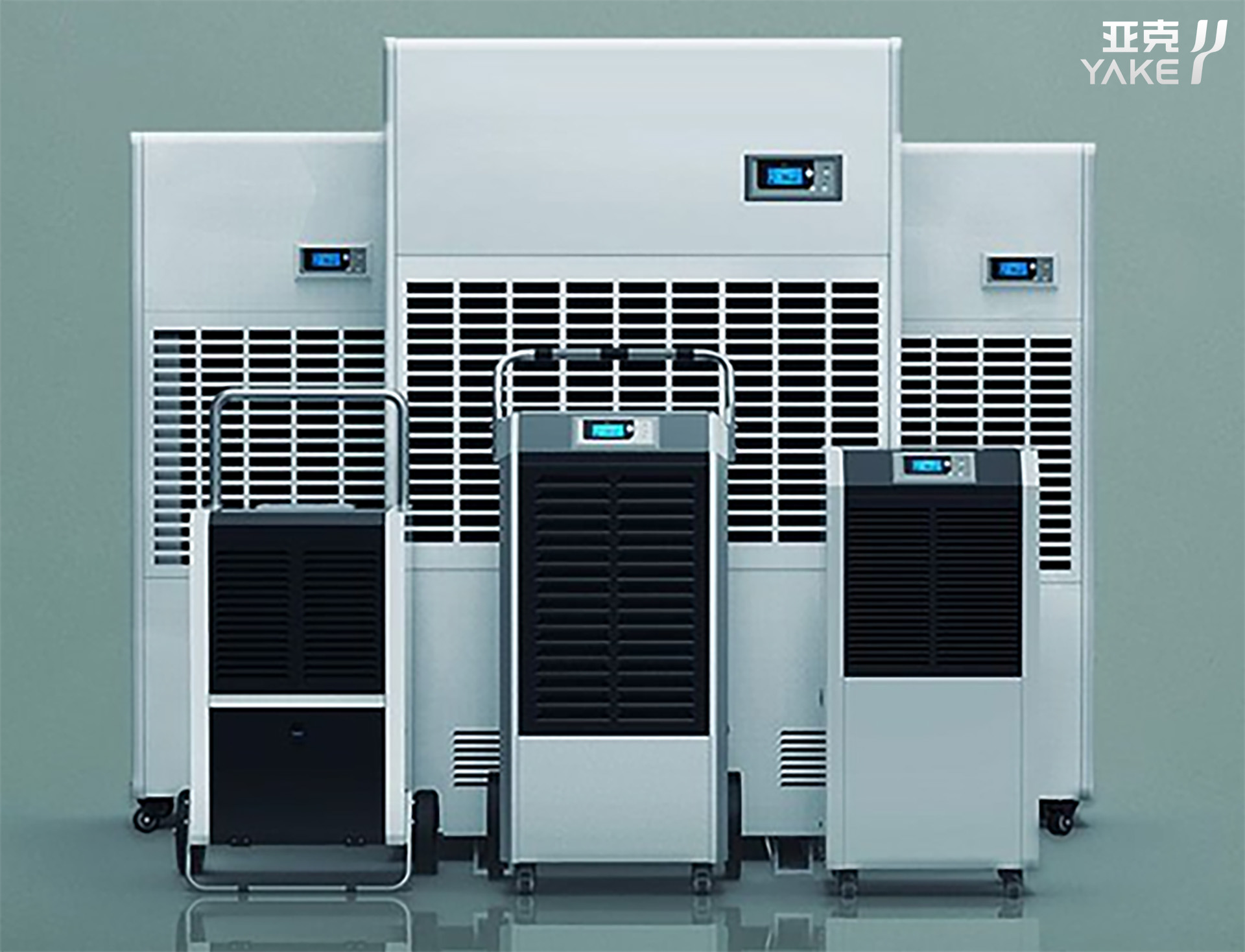
Contact us to find the best place to buy your Yakeclimate solution today!
Our experts have proven solutions to keep your humidity levels in check while keeping your energy costs low.