
Building 34, No. 535 Shunfeng Road, Hangzhou, Zhejiang, China
[email protected]


Cannabis indoor air purification systems are technical solutions that filter and control the air in sealed grow rooms and greenhouses. They handle airborne spores, fine dust, plant VOCs, and heavy odor loads that accumulate in dense canopies. Good systems will combine staged filtration, activated carbon, and in some locations, UV or photocatalytic units tied into the HVAC design and dehumidification line. Indoor growers deploy them to reduce mold risk, keep worker exposure down, and maintain a consistent microclimate around the plant. In larger farms, air purification is directly tied to humidity and temperature control, so design decisions impact fan sizing, duct runs, and energy consumption, which the following sections unpack in detail.
Indoor air quality in cannabis facilities influences plant health, yield consistency, and worker safety. Air in a sealed grow is a shared medium for plants, people, and equipment. Any accumulation of spores, fine particles, or gases impacts all three simultaneously and can rapidly spread throughout dense canopies and multi-room layouts.
Pure air reduces plant exposure to mold spores, bacteria, and other pathogens that hitch a ride on fine particles. In tightly stacked vertical systems, a single untreated source can leap across trays in a matter of hours, not days, if spores float in re-circulated air rather than being caught in filters.
Strong multi-stage filtration, including pre-filters and high-efficiency filters, helps keep back fungal diseases such as powdery mildew and botrytis that love to lurk in humid, still areas near canopy tops or irrigation lines. When filtration combines with dehumidification, particularly coil or desiccant systems sized for transpiration load, disease pressure diminishes and spray events become less common.
Frequent dusting off of dust, pollen and particulates keeps leaf surfaces clear so stomata can function properly. They open and close as required. This encourages balanced gas exchange, steady photosynthesis and even light distribution on leaves and buds. In practice, this translates to less leaf burn at LEDs and more even table growth.
Stable air circulation and purification diminishes stress spikes from hot spots, CO2 stratification or sudden humidity swings, allowing plants to focus their energy on developing root mass and secondary metabolites instead of emergency maintenance. Over time, crops show sturdier stems, shorter internodes and improved response to pruning or training.
Tight humidity and temperature control via good airflow ward off mold outbreaks and heat stress, which are two of the leading causes of late-flower losses and full-room culls. Facilities that maintain VPD on target hour by hour generally experience less emergency sprays, less bud rot, and more saleable biomass per square meter.
When air quality is consistently high, operators can run denser planting, with more plants per square meter or more tiers per bay, because cross-contamination risk and microclimate pockets are under control. This is where designed airflow patterns and properly sized dehumidifiers translate into real grams per watt and grams per square meter benefits.
Monitoring air quality parameters such as PM2.5, CO₂, temperature, and relative humidity provides information to adjust setpoints for cannabinoid and terpene expression, not just crop loss mitigation. For instance, fine‑particle sensors reveal how efficiently filters are doing their job. Room‑by‑room trends help dial in late‑flower conditions that drive resin and aroma to new highs without venturing into botrytis risk.
Airborne contaminants in cannabis grows can be VOCs from building materials, pesticides as aerosols and smoke particulates that drift in during outdoor pollution or wildfires. These fine particles are PM2.5, the size fraction associated with public health research to respiratory issues, heart disease and even early death in humans.
Insufficient filtration increases the risk of these contaminants making their way onto or into final medical and adult-use products. Specifically for medical cannabis, this is a real quality issue for patients with asthma or COPD, whose conditions can be exacerbated when exposed to residual pollutants or microbial fragments.
Airborne pathogens and fungi spread fast in rooms with poor ventilation and weak circulation, since spores and cells remain suspended and continue passing through the canopy. During extreme outdoor pollution events, studies demonstrate that filtration and air cleaning can significantly reduce indoor/outdoor PM2.5 ratios. Portable air cleaners, for example, dropped mean ratios from 0.68 to 0.34 in one research, demonstrating how focused filtration restricts indoor burden even when outside air is filthy.
Heavy-duty air purifiers with staged filters and activated carbon eliminate particles and VOCs and control cannabis odors, enabling worker comfort and regulatory compliance. Meanwhile, these centralized or portable filtration units reduce fine dust and spores that would otherwise ravage crops. High pollutant levels can kill certain plants within days and they minimize health risks for workers who spend full shifts in the grow. High-quality monitoring of PM2.5 and other parameters then closes the loop since active air management is a key part of broader air-quality protection for people and plants alike.
Indoor cannabis rooms saturate the air with odors, VOCs, spores, and fine dust, so it seldom pays to try to get by with one piece of equipment or an “all-in-one” device. Most professional sites blend a few technologies, scaled to the room volume, air change rate, and bioburden. Main options include:
For design, determine upfront if you require particle control, odor/VOC control, or a combination of both. Systems that catch particles down to 0.3 microns or smaller are considered effective for general cultivation, but heavy odor sites require robust gas-phase treatment. Most large cannabis facilities end up combining HEPA or similar particle removal with carbon and sometimes UV-C or PCO to arrive at both plant health and regulatory odor targets.
Activated carbon captures smelling molecules, terpene and solvent VOCs, and numerous other nuisance gases onto its immense internal surface area. This makes it a key asset in rooms or exhaust streams with strong cannabis odor, particularly where local regulations impose strict odor limits at the property line.
Carbon filters should be changed when the media is saturated or breakthrough is evident at exhaust ports or around doors. For bigger commercial grows, pleated carbon panels or colossal canister units in centralized air handlers provide more contact time and less pressure drop per cubic meter of air.
Carbon is weak for spores and dust, so it pairs best downstream of pre-filters and HEPA.
True HEPA filters trap 99.97% of 0.3-micron particles, including mold spores, pollen, plant debris, and fine dust from trimming. The concept dates back to WWII gas masks and was optimized for the Manhattan Project, so it is a proven and highly researched technology.
In cannabis, HEPA is the norm for medical grow rooms, drying/curing rooms, mother and clone rooms, and tissue culture labs requiring low bioburden. Many put a MERV 10 pre-filter upstream to arrest larger dust and increase HEPA life. You have to monitor pressure drop and visual dust loading and replace filters before airflow dips too low, or you’ll damage climate control and plant vigor.
UV‑C systems subject flowing air to germicidal wavelengths that compromise DNA and RNA in fungi, bacteria, and many viruses. In ductwork or upper‑room units, they slice up viable spores and pathogens that crawl past mechanical filters and assist in reducing mold risk in dense canopy areas or wet drying rooms.
Certain UV systems can drive side reactions, such as creating small amounts of ozone, so you want well‑engineered, tested equipment and strategic placement. All UV‑C lamps must be protected from direct line‑of‑sight to workers and plants — interlocks and clear safety procedures. In practice, UV‑C tends to work best as a layer on top of HEPA and carbon rather than a magic bullet.
Ozone generators do oxidize odors and can inactivate microbes, but have major drawbacks. High ozone levels harm cannabis leaf tissue and root-zone biology and are unsafe for employees. It reacts slowly: in many cases, ozone can take months to react fully with chemicals in the air and can leave byproducts that are as bad or worse than the starting VOCs.
For that reason, nearly all professional sites apply ozone only in exhaust ducts or unoccupied shock treatments, with ongoing monitoring to maintain levels within safety standards and well below levels that cause plant injury. Ozone isn’t a front-line indoor air fix in inhabited grow rooms.
Photocatalytic oxidation employs UV light and a catalyst surface, typically titanium dioxide, to produce reactive radicals that oxidize VOCs and organic contaminants into smaller compounds. Relative to basic UV, PCO targets gas-phase cleanup over bulk pathogen elimination, so it suits locations with persistent terpene and solvent releases.
These systems attract facilities that already operate with HEPA and carbon but still experience odor drift or desire reduced VOCs without significant carbon replacement expenses. Certain PCO designs mitigate fouling on catalyst surfaces, which can reduce service frequency. They nonetheless require periodic inspection and output validation. Because some UV‑based systems can produce trace ozone, performance and safety information from the manufacturer is important when you incorporate PCO into cannabis HVAC.
Proper air circulation in cannabis rooms means temperature, humidity, and CO₂ levels are consistent from floor to canopy, so every plant “experiences” the same environment. Lack of good circulation equals stagnant layers, baking lamp-hot zones, and cold damp corners where grey mold (Botrytis) and powdery mildew make a home, which is why air-flow design is one of the most common subjects of professional grow consulting. Good circulation stabilizes lighting performance, as many ‘lighting failures’ are actually caused by fixtures running too hot with trapped warm air, rather than the LEDs or ballasts themselves.
Fresh air intakes function optimally near the floor, where air is cooler and richer in oxygen and carbon dioxide, allowing the incoming air to ascend through the canopy and nourish plants and dehumidifiers in a consistent cycle. Intakes should never sit near exhaust points, waste storage, parking areas or mixing rooms, as they pull back contaminants, spores and volatile compounds into the grow.
Pre-filters on intake vents are simple but important. A washable mesh or MERV-rated panel stops dust, pests, and fibers before they hit your coils, carbon filters, or ducting. In bigger rooms, the intake area and location should correspond to room volume, plant density, and desired air-change rates. A dense flowering room might use multiple distributed floor intakes instead of one large duct that generates a single strong jet and creates dead zones elsewhere.
Exhaust fans go high on walls or in the ceiling plenum, where warm, humid, and odor-laced air collects, so you suck out the “dirtiest” air first and draw fresh air through the entire room. These systems should be sized for the ACH needed for heat load, dehumidification capacity, and CO₂ strategy, often employing high-performance fans that can move up to roughly 2,400 cfm in larger facilities.
Carbon filters at exhaust outlets filter out cannabis odor before release. Duct designs with silencers, insulated runs, and vertical terminations reduce noise and complaints in urban or mixed-use locations.
The internal circulation closes the loop between intake and exhaust. Oscillating or HAF (for horizontal airflow) fans distribute air evenly over the canopy, disrupt boundary layers on leaves, and equalize humidity so there’s no micro-climate lurking in the back corner. Many facilities now redesign their rooms around an HAF pattern, greenhouse practice, with fans generating a smooth, constant circular flow rather than random turbulence.
In tall or extremely dense canopies, vertical airflow fans that push air up through the plants help clear moisture pockets at mid-canopy, where Botrytis and powdery mildew often initiate when leaves remain wet. Periodic inspections with simple thermometers or infrared cameras indicate surface temperature patterns and cold or hot patches frequently identify poor air circulation and direct those small fan adjustments that result in more uniform growth.
Air movement must still honor plant boundaries. Powerful, direct jets on seedlings or new clones can induce wind stress, stem damage and excess transpiration, so the objective is consistent, mild airflow, not a tempest. A lot of growers these days tie fans and dampers into control systems that control CO₂ dosing, so airflow, odor control and ammonia levels remain in balance all day.
Indoor cannabis rooms are like closed, holistic systems. A shift in air purification, temperature, or humidity will cascade through the entire environment. By integrating purification, HVAC, dehumidification, and controls into a single platform, we keep the room stable, reduce manual labor, and typically reduce energy consumption per gram produced.
Air purification works best when it rides on top of a well-designed HVAC backbone. Purifiers, HEPA or MERV 13 filters, and carbon filters should sit where the HVAC moves the most air: in return plenums, main supply trunks, or dedicated recirculation loops between rooms. This way, each rotation through the duct system removes spores, dust, and scent molecules from the air flow, rather than just “deep cleaning” a corner of the room.
Integrate controls for fan speed, damper position, and purification stages into a single control logic. Variable speed fans can maintain a consistent air change rate of about 10 to 20 air changes per hour without large pressure fluctuations. Intelligent thermostats can sequence cooling or heating so that coil temperatures do not saturate filters or heat leaves. Routine HVAC service, including coil cleaning, filter swaps, and duct inspection, keeps biofilm from building up and re-seeding the grow with mold or bacteria. It also keeps static pressure and energy draw within design limits.
Relative humidity in canna rooms likes to sit best in the 40 to 60 percent band, although many growers tighten it by stage. For example, 65 percent early in vegetative growth goes down to 45 to 50 percent late in flowering. Air purification by itself cannot hold that band. It requires dedicated dehumidifiers, sometimes humidifiers, and good air flow patterns so leaves dry at a consistent rate throughout the canopy.
Install humidity sensors at multiple heights and distances from supply vents, not just near the controller, to prevent false readings. Climate-style industrial dehumidifiers connected to those sensors can control output rather than using hard on/off cycling, preserving trichomes and power. Seasonal fluctuations in ambient humidity are an issue, too. As we have discussed before, most spaces require elevated internal airflow and longer dehumidifier runtimes during wet seasons and lower fan speeds with different setpoints when outside air is dry. Otherwise, VPD and energy use swing more than necessary.
Cannabis reacts intensely to narrow temperature ranges, which defines the context for air purification and HVAC operations. Most rooms aim for around 18 to 24°C (65 to 75°F) during the day and 13 to 18°C (55 to 65°F) at night, although some strains run a little warmer. Purifiers, fans, and dehumidifiers all add heat, so integrating them with air conditioning and where needed heating avoids hidden hot spots, cold corners, or rapid swings that stress plants.
About: Integrating environmental controls Use networked thermostats, temperature alarms, and simple IoT sensors across the room and in supply and return ducts. When these feed into a central controller or data platform, you can start to see patterns, like a particular row running 1 to 2 degrees Celsius warmer after lights ramp up, then tweak fan curves or insulation in that zone. Solid envelope work — insulation, sealed penetrations, tight doors — keeps the HVAC and purification system from battling outdoor loads all day, which translates straight to trimming kilowatt-hours per kilogram. Over time, logging temperature, humidity, and air quality data for each crop stage allows the team to fine-tune setpoints, compare runs, and push yields higher while keeping air clean and stable.
Indoor air appears “pristine,” but for cannabis, air quality silently sculpts terpene profiles, aroma, and end product worth in ways most grow logs do not record.
Clean, neutral, low-odor air helps preserve each strain’s terpene profile true to its genetics. When the room air is not imbued with foreign odors or reactive gases, plants express limonene, myrcene, pinene, or linalool in a more consistent pattern, and dried flowers hold that profile through curing and storage. In a good setup, HEPA filters take out dust and spores, and carbon stages remove the background smells so the room is virtually odorless until flowers ripen. That sort of clean slate atmosphere provides a clean sensory reading on every cultivar and renders batch-to-batch comparisons more just.
Smoke, VOCs and strong odors in the grow room or dry room are counterproductive to this objective. Combustion particles, off-gassing from paints, plastics or cheap sealants and scented cleaners introduce volatile organic compounds that can react with plant terpenes or just settle on flower surfaces and coat the native nose. Studies and field reports have indicated airborne fungi as a predominant source of contamination to cannabis facilities. Mold and mildew aren’t just a safety issue; they catalyze terpene degradation and oxidation, so nugs lose potency and taste stale. When air filtration is poor, these contaminants circulate back through the canopy, stick in dense flowers and speed terpene degradation in late flower and cure.
Strong air filtration reduces this burden and preserves terpene quality. Multi-stage filtration with HEPA or high-MERV media, quality carbon and where proven, PCO and similar technologies can reduce particle counts, VOC levels, and fungal propagules to a fraction of baseline. Combined with specific humidity control in the 45–60% range, this decelerates terpene evaporation and degradation while keeping down mold risk. Facilities that tune air changes per hour, pressure balance between rooms and dehumidifier capacity observe not only cleaner tests but more consistent aroma and flavor across rooms and cycles. To bring this impact to light, teams can track air quality metrics (VOCs, spores, RH) with terpene lab panels and sensory notes then analyze trends by strain, room, and season and adjust setpoints over time.
Well-run cannabis rooms treat air purification like any other critical process: planned, logged, and checked. An easy text schedule that touches on filters, fans, sensors, and full system inspections helps maintain air quality steady and avoids scramble repairs when rooms are bursting with flowering plants.
| Filter Location | Type | Typical Interval* | Trigger Condition | Responsible Tech |
|---|---|---|---|---|
| Veg Room AHU 1 | F7 pre-filter | 4–8 weeks | Visible dust, DP +0.5 in. w.c. from base | A. Lopez |
| Flower Room HEPA | H13 HEPA | 6 to 12 months | Airflow drop, DP plus 1.0 inches w.c. From base | M. Singh |
| Odor scrubber 2 | Carbon bed | 3 to 6 months | Odor at exhaust, VOC trend above setpoint | K. Meyer |
Real life depends on contaminant load, time, and filter configuration.
Install digital sensors and data loggers so performance is transparent, not assumed. Monitor airflow, particulate matter, VOCs, and humidity at minimum at room level and adjacent to critical returns.
| Metric | Typical Target Range |
|---|---|
| PM2.5 | < 15–25 µg/m³ |
| Total VOC | Less than 300-500 µg/m3 (or local limit) | | RH | 45 to 55 percent flower, 55 to 65 percent veg | | Airflow at filter bank | Within plus or minus 10 percent of design CFM | | Pressure differential | Replace when plus 0.5 to 1.0 inches w.c.
Configure alarm thresholds so personnel receive notifications when PM or VOCs peak or when RH deviates beyond range. Check trends after every grow cycle to catch gradual changes, such as increasing pressure differential that indicates clogged filters or slipping fan belts.
Air purification and ventilation can sit near the top of a facility’s power bill, so tracking kWh isn’t optional. Where possible, use sub‑meters on major fans, AHUs, and stand‑alone purifiers and export monthly data.
Select high-efficiency EC fans, right-sized HEPA banks, and dehumidifiers with powerful liters per kilowatt-hour statistics. Reserve the heavy-load runs for off-peak tariffs when your utility provides them. A brief quarterly energy report linked to air-quality records will highlight straightforward victories, such as closing unrequired scrubbers among harvests while still maintaining VOC and particulate within acceptable bands.
Good air in a cannabis room does serious work. It suppresses mold, reduces stress on plants, and protects staff. It helps hold terps, not just chase smell.
Every grow has its own cocktail of risk. One room might battle powdery mildew. Another might address heat from dense lights. A third might require strict smell management in an urban location. The air plan should mirror that actual scenario, not a pretty graph.
Close combination of filters, fans, dehumidifiers and control sensors provides the clean foundation. From there, small adjustments yield significant improvements.
For a more in-depth discussion about system sizing, filter selection, or layout for your rooms, contact Yakeclimate and provide them with your site information.
Clean air eliminates mold, pests, and airborne contaminants. This safeguards trichomes, retains terpenes, and encourages more robust growth. Stable air stabilizes temperature and humidity, leading to bigger yields and more consistent cannabinoid and terpene profiles.
Most indoor cannabis facilities use a layered approach. This usually means HEPA, activated carbon for smell, and sometimes UV-C or plasma for microbes. The best system depends on your room size, plant density, and legal air quality and odor rules in your location.
Both are essential. Purification extracts particles and odors. Circulation prevents dead zones, powdery mildew, and CO₂ depletion. Fans, duct design, and air changes per hour must collaborate with filters to maintain stability at every canopy level.
Yes. High heat, VOCs, and microbials stress can harm or deplete terpenes. Well-designed purifications that provide clean and stable air lessen oxidative and biological stress, which translates into more consistent aroma and flavor in the final product.
Use manufacturer directions as a starting point. In heavy-load grow rooms, pre-filters may require weekly inspection. HEPA and carbon filters should be replaced every few months. Routine checks, pressure readings, and logbooks catch issues before they impact plants or compliance.
Newer controllers connect HVAC, dehumidifiers, CO₂, and filtration. Sensors monitor temperature, humidity, pressure, and occasionally VOCs and particles. Automation then varies fan speed, damper positions, and purification cycles to maintain the room within tight, plant-friendly ranges.
For numerous commercial establishments, yes. Cannabis indoor air purification systems are built for high humidity, dense plants, and stringent smell regulations. They can decrease disease risk and crop loss, assist in regulatory compliance, and sustain premium flower quality year after year.


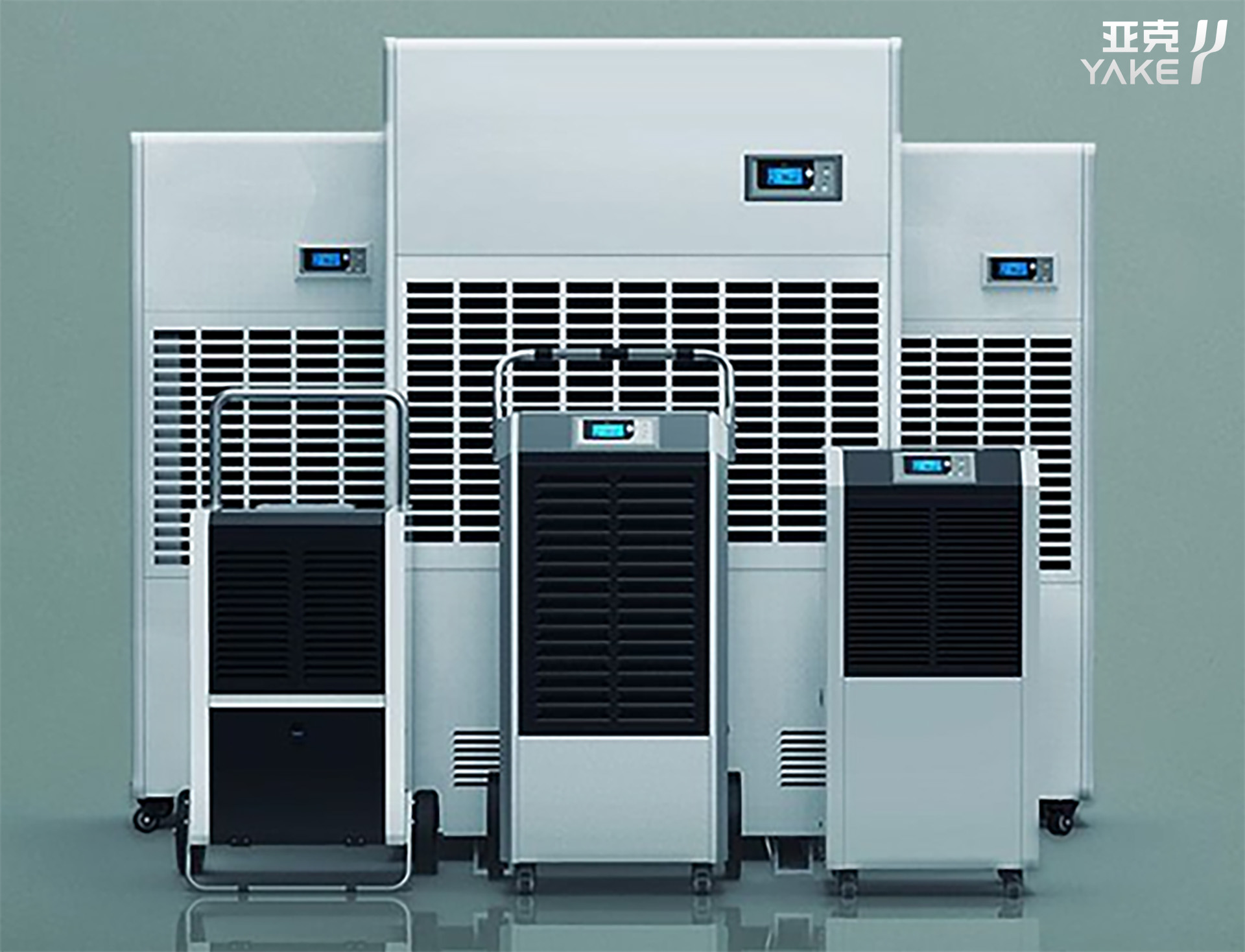
Contact us to find the best place to buy your Yakeclimate solution today!
Our experts have proven solutions to keep your humidity levels in check while keeping your energy costs low.