
Building 34, No. 535 Shunfeng Road, Hangzhou, Zhejiang, China
[email protected]
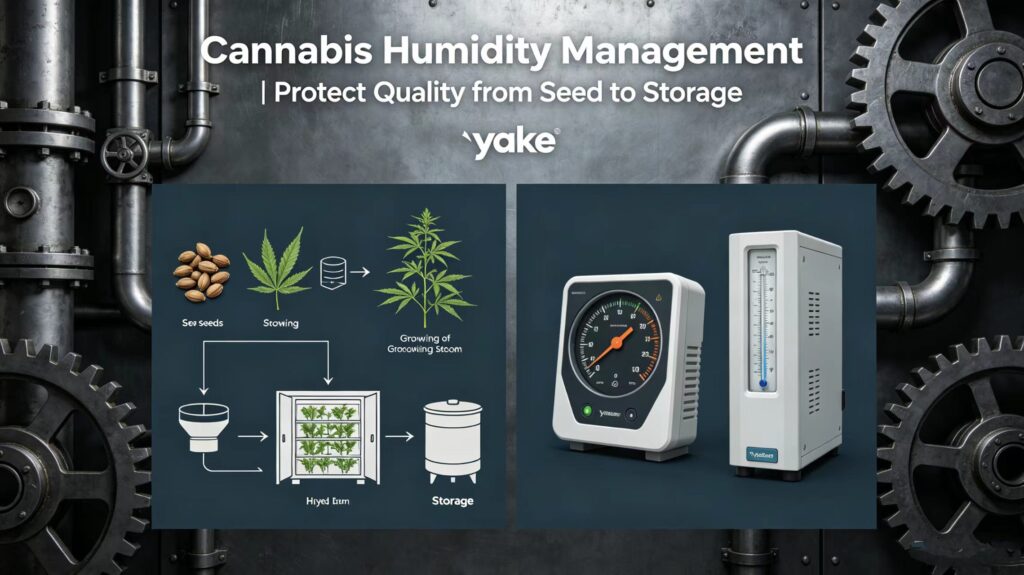


Cannabis humidity management is the art of maintaining air moisture in a sweet spot that promotes plant growth and minimizes the risk of disease and quality degradation. For contemporary cannabis grows, humidity is directly connected to vapor pressure deficit (VPD), plant transpiration, nutrient flow and ultimately final bud density. Bad control leads to botrytis, powdery mildew, stalled growth, and uneven dry or cure that reduce yield and market value. To maintain stable humidity, cultivators have now adopted a combination of dehumidifiers, airflow engineering and precise canopy-level sensors calibrated to each phase from propagation to late flower. The following sections dissect optimal targets, frequent errors, and actionable system configurations for small rooms and large commercial facilities alike.
Humidity sculpts the way that cannabis breathes, eats and protects itself. It powers transpiration and nutrient flow, creating the microclimate that supports either clean, strong flowers or mold, pests and lost yield. For pro growers, that means humidity isn’t a side metric; it’s a key control point to monitor at every stage, from seedlings to drying and trimming.
Cannabis controls water loss via stomata, the minuscule openings on leaf surfaces. When relative humidity is right, those pores open, the plant pumps water from roots to leaves, and gas exchange goes smoothly. For seedlings, humidity greater than roughly 60% relative humidity supports root development and allows young leaves to absorb moisture from the air while the root system is still immature.
When the humidity is balanced, stomata can remain open without the plant depleting its moisture supplies. That permits more CO2 consumption, more photosynthesis and quicker growth. In other words, when humidity is in the sweet spot, the plant can “breathe” more CO₂ and convert it into biomass more efficiently.
When humidity drops too low, stomata shut to reduce water loss and that shuts off CO₂ intake. Growth slows, leaves curl and tips can burn even when nutrients seem okay. If humidity runs too high, the leaf boundary layer becomes saturated, transpiration stalls and oxygen and CO₂ exchange in the leaf tissue can lag, which stresses the plant and sets up disease risk. Once relative humidity gets close to 100%, the air can’t hold any more water, so it condenses on leaves and fixtures, creating a wet surface where spores can bud and bud rot can start.
Good hygrometers in the canopy zone are not one per room; they are enough to see microclimates across tiers or benches. Connecting those sensors to a dehumidifier system that can react to those swift daily swings in temperature is crucial. Fast dips in temperature send relative humidity up and can throw off basic, single-stage equipment. Protect from unstable humidity because stable humidity enables predictable respiration and low plant stress.
Water movement from roots to leaves relies on a vapor pressure gradient between the leaf and the air that is directly linked to humidity. When humidity is in range for the growth stage, that gradient stays stable, so xylem flow is robust and nutrients like calcium, magnesium, and micronutrients ride the transpiration process to where the plant desires them.
If humidity gets too low, transpiration can spike, pulling nutrients up too quickly. This can present itself as tip burn, salt build-up in media and localized toxicities, even when the feed recipe appears moderate. Very high humidity, on the other hand, drags out transpiration, so nutrients languish as well. Then you might exhibit deficiency-like symptoms, like interveinal chlorosis or leggy stems, even though the solution in the tank is spot on.
Paying attention to substrate moisture alone won’t do. A rockwool block or coco slab can read perfect moisture while the leaf environment is dry, causing misdiagnosis. Combine soil or media moisture probes with air RH sensors in critical canopy areas, and record them both. When RH falls outside of the optimal range for that phase, pursuing sub-40% in late flower to boost yield, flavor, and bag appeal, you might have to adjust feeding schedules, EC, or watering frequency to prevent root stress and tip burn.
Drying and trimming introduces a new humidity goal. Maintaining relative humidity around 55 to 60 percent while trimming is critical to avoid rapid drying of flowers, which compromises trichomes, terpene profile, and final potency. At this point, humidity control is no longer about growth; it is about maintaining the chemical quality you already paid to grow.
A good many pests and diseases respond more to humidity than to just about any other single variable. High humidity encourages spores, larvae, and soft-bodied insects that take advantage of tender plant tissue. When relative humidity climbs near saturation or you notice regular leaf and cold-surface condensation, powdery mildew, botrytis (bud rot), and secondary molds that rapidly degrade flower quality and potency thrive.
Maintaining RH in a more narrow range throughout the room decreases the chances of fungus gnats in wet media and prevents spider mites and thrips from taking a foothold in stressed, thin-cuticle leaves. Dry, swinging humidity stresses plants, which reduces their inherent resistance and makes any pest treatment less effective. A consistent humidity profile acts as a passive defense layer that complements your chemical or biological treatments.
Daily scouting should involve consulting RH data any time you observe early pest or disease symptoms. Bursts shortly after lights out, irrigation events, or temperature drop often coincide with outbreak points in logs. When that pattern is clear, integrating dehumidifiers with your integrated pest management plan is straightforward. Ventilate where you can, use filtration where needed, and let precise, staged dehumidification pull RH out of the danger zone before condensation appears.
Cannabis is quick to respond to VPD and RH, which means precise humidity ranges at every stage do more than prevent mold. They invigorate gas exchange, nutrient flow, and dry-matter accumulation. Throughout the entire cycle, 40 to 70 percent RH is generally fine, but yield, terpene profile, and disease pressure fluctuate significantly within this range. This is why most professional rooms operate with tighter targets and employ dehumidifiers as front-line tools, not fallback equipment.
Ideal humidity by stage (room RH):
Pushing well above these bands raises the risk of botrytis, downy mildew, and rot. Dropping well beneath them slows metabolism, desiccates tissue, stalls roots, and can reduce both yield and potency.
Clones have no root system initially so they rely on leaf surface moisture and high RH. Maintaining the micro-climate at 70–80% RH, typically within a propagation dome, reduces transpiration and gives root initials a chance to develop. As a result, many growers spray mist the inside of the dome, not the leaves, to prevent water sitting in nodes and leaf cups. That is where rot starts. Wet rockwool or peat combined with stale air and 80% or higher RH creates perfect conditions for pythium and stem rot. Vents on domes, little fans outside the tray, and a dehumidifier in the room provide a nice stable warm wet but not waterlogged zone for cuttings.
Seedlings have a young root mass that can suck some water, but they still dehydrate quickly through the leaf. Maintaining 65 to 70 percent relative humidity keeps the leaf-air gradient gentle, so they don’t wilt or tip-burn under moderate light. If the room drops nearer to 50 percent relative humidity this soon, you tend to exhibit droop, delayed growth, and more irrigation. Some teams drop relative humidity 2 to 3 percent every couple of days as the root mass grows, which eases seedlings into the lower humidity they’ll experience later without jarring them. Soft, diffuse airflow over the canopy is critical since stagnant, warm, 70 percent air can sprout fungal spores even at this tender age.
In veg, cannabis is building leaf area and stems fast, so it can handle and even prefer moderate humidity. A working band between 55 to 65% RH occupies the middle of the broader 40 to 70% range and corresponds with VPD values that promote robust photosynthesis and nutrient absorption at typical room temperatures. When plants get bushy, the interior canopy traps moisture and if the room remains 65 to 70% RH with poor air mixing, the leaf surfaces can sit closer to saturation and invite powdery mildew. Many facilities react by cranking more horizontal and vertical airflow, thinning lower growth, and employing smart dehumidifiers to suck up the extra moisture that comes as irrigation rates rise. Lowering RH closer to 50 to 55% late in veg also helps prime plants for the drier flowering environment.
Flowering requires the most precise control, as compact buds form pockets where humidity can soar well above ambient RH. Running 40 to 50% RH, with many pro rooms at 40 to 45% by week 6 on, slashes the threat of botrytis and other bud rots while keeping stomata active. As buds swell, transpiration and irrigation both ramp up, so dehumidification capacity and control response become key. Off the shelf comfort units often cannot keep RH in range during dark periods, when HVAC cooling loads drop but moisture loads remain high. Networked dehumidifiers that modulate output on real-time RH data help maintain a consistent 40 to 45% even when lights cycle or irrigation pulses shift. It is critical to monitor closely near harvest, as just a few nights of 60% or more RH around ripe, tight flowers can erase weeks of clean work.
Once cut, the plant can no longer manage water loss on its own, so room RH becomes the primary control for drying speed. A 45–55% RH band encourages gradual, uniform drying that maintains terpenes and avoids case hardening, drying where the exterior dries and seals while the interior remains wet. Most growers begin closer to 45–50% for the initial days to prevent surface mold on fat colas and then allow RH to drift or be managed back to 50–55% for a soft finish. Hygrometers or integrated sensors in the dry room, along with checks using small probes inserted inside sample buds, assist in verifying that internal moisture is declining in line with room conditions. Too much humidity here can push mold, and too little drives harsh smoke and terpene loss. Once dried and trimmed, transferring material into storage at 55–65% RH, with 59–63% often targeted, promotes stable curing, consistent vaporization behavior, as some research suggests that approximately 54% is a good vaporizing RH, as well as compliance with ASTM guidance and numerous regulatory standards.
Humidity controls how cannabis plants grow, feed, and protect themselves, and minor slip-ups appear quickly as leaf curl, stunted growth, or mildew. A simple written troubleshooting checklist helps you move from guesswork to clear steps: measure, diagnose, correct, then record what worked so you can repeat it. A simple checklist would cover daily RH readings (day and night), visual crop checks, equipment status (dehumidifiers, fans, HVAC), and notes on light schedule and irrigation, as lights and watering both shift the load in the room.
Early detection is crucial, as cannabis pumps a high volume of water through stomata on the leaf surface. Plant transpiration is typically the biggest source of humidity, particularly beneath a full canopy in late veg and early flower. As lights spur transpiration, they push moisture into the air. The mechanical design has to keep up with the vapor load, especially in the summer and humid places. Maintaining relative humidity steady throughout the 24-hour period and within stage-specific ranges around 65 to 70 percent for propagation, 50 to 70 percent for veg, 45 to 55 percent for early to mid flower, and 35 to 45 percent for late flower reduces mold risk, nutrient problems, and stress. Recording every problem and solution provides you with a site-specific playbook that improves each cycle.
Powdery mildew and botrytis (bud rot) are the primary humidity-driven cannabis diseases. Both thrive when relative humidity remains elevated in the microclimate near the leaf and bud surface, even if the room sensor reads ‘normal.’ Inspect top and bottom leaf surfaces, stems, and inner canopy at a minimum once per day. Spot white, dusty patches (powdery mildew) or soft, brown, wet tissue deep in dense flowers (botrytis) and modify your checklist accordingly so staff don’t miss these on busy days.
Remove and bag infected leaves or buds at once, clean tools and hands, and review airflow: confirm that oscillating fans are moving air through, not just over, the canopy. Check that intake and exhaust paths are clear. If infections recur, reduce relative humidity to the lower end of the safe band for that stage, increase air exchanges, and ensure that dehumidifiers are sized for peak transpiration and nighttime loads, when lights are off and surfaces cool.
Too low or hard swinging humidity can push plants to close their stomata, alter transpiration, and disrupt the flow of water and ions in the root zone. This can manifest as nutrient lockout even when the feed mix is spot on. Yellowing between veins, burnt tips, slow new growth, or a plant that “eats” less solution than usual can indicate humidity-driven uptake issues, not a bad recipe.
When you notice these symptoms, monitor room RH history in conjunction with pH and EC in the medium, and record all three in your log. Fix humidity first by bringing the room back into the right range for the crop stage. Then return to normal or slightly reduced feeding once plants develop new, healthy growth instead of piling more nutrients on a stressed system.
Low or unstable humidity can stifle cannabis growth at any stage, as the plant must work harder to transport water and keep tissue hydrated. This strain manifests as small leaves, short internodes, and an overall “stuck” appearance. Curling leaves, flaccid or spindly stems that can’t support branch weight, and scorched dry leaf margins are typical symptoms in rooms with relative humidity that crashes after lights on or spikes immediately following irrigation.
Phase 1 – Stabilize humidity first by tuning dehumidifier setpoints, fan speeds and irrigation timing so that RH moves in a narrow band through the full 24-hour cycle. Measure track height, node spacing and biomass gain at least weekly and record those values into your log so you can correlate any decline in growth rate back to changes in RH, lights or watering and adjust before yield is lost.
Scale cannabis is, in reality, a humidity control business. Master your humidity control. Stable vapor pressure, not just temperature or light, is what keeps your plants on schedule and your margins manageable.
Automation holds the fort when staff are swamped or off-site. Automated setpoints, deadbands and staged dehumidifiers eliminate human error and provide consistent results. Sensors and controllers require routine calibration, as even a 3 to 5 percent drift can muddy the difference between safe 45 percent RH and botrytis-prone 55 percent. With constant logging of RH, temperature, and system events, teams can refine setpoints between runs and right-size equipment capacity to actual moisture loads.
Air that’s not moving lets moisture collect around leaves and buds. Oscillating fans at various heights help to mix air so that seedlings at 40 to 70 percent RH, veg plants, and dense flowering canopies all experience similar leaf-surface conditions rather than wet pockets on leaf undersides that sit at 70 to 80 percent RH.
Stagnant air is a proven driver for powdery mildew, botrytis, and fungus gnats.
In late flower, when room RH should be 40 to 50 percent, every 5 to 10 percent above 50 percent in tight canopy zones can spike mold incidence and direct yield loss, even if room sensors read “safe” averages.
Fan configuration isn’t fixed. As your plants transition from veg into early flower and stretch to fill the room, fan angle and speed need to shift so airflow hits the entire cola, not just the lower leaves or walkway. In super dense colas or notorious dead zones, bringing room RH nearer to 50 percent and bumping up airspeed around tops frequently outperforms additional chemical controls.
Fans gather dust and biofilm that reduce efficiency and can distribute spores. Master Your Humidity Control. Wiping grills and blades and vacuuming motors on a set schedule keeps airflow closer to design specifications and helps your dehumidifiers work within their stated PPD rating.
Ventilation connects the room to the outside air mass and to the remainder of the complex. Your carefully calculated exhaust and intake system evacuates moisture-laden air from transpiring plants and replaces it with drier replacement air or conditioned make-up air, maintaining flowering rooms close to 40 to 50 percent relative humidity at lights-on and below 45 percent relative humidity in late flower.
Sizing fans to room volume and target air changes per hour counts. Even in a small, dense flower room, two 150 to 225 PPD dehumidifiers can still drift above 55% RH if the exhaust fan is undersized, duct runs are long, or intake is restricted. Matching fan curves to duct length, bends, and filters is more reliable than nominal flow labels.
Filters on intakes and sometimes on exhaust guard plants and equipment. Blocked pre-filters increase static pressure, reduce flow, and allow corners to remain moist even with dehumidifiers operating. Changing or cleaning filters on a fixed interval, rather than whenever they look dirty, maintains actual airflow near design.
Ducting should move air where you need it most: over hot spots, wet walls, dense canopy lanes, and drying racks. Master your humidity control. Smooth, sealed duct and directed diffusers prevent short-circuiting, where air leaps directly from supply to exhaust in the presence of pockets of high humidity lurking in the crop zone or drying rooms.
Digital climate controllers are the foundation for automated humidity control. They read multiple RH and temperature sensors, then stage dehumidifiers, humidifiers, and fans to hit target setpoints for each growth phase. Higher RH is needed for seedlings and young veg, then a gradual step-down occurs as roots mature in late veg. Finally, 40 to 50 percent is required at the start of flower, with less than 45 percent RH in late flower.
Modern controllers with remote monitoring, cloud logging, and programmable recipes help teams run multiple rooms with consistent logic. One schedule maintains a drying room around 55% RH with Humidi-Cure packets maintaining 50 to 55% RH in local microclimates. Another schedule is for late flower where each 5 to 10% RH above 50% greatly increases botrytis risk.
Integration is what makes these systems truly valuable. Controllers should fire dehumidifiers based on both RH and coil-protection logic, cycle humidifiers to avoid wetting walls, and adjust fan speed or damper positions to avoid over-drying seedlings while still keeping air mixed. Pairing alarms with out-of-range humidity events, such as greater than 50% RH in late flower or unexpected dry room drops, allows staff to intervene before quality or yield is impacted.
Strain selection determines the foundation for how high you should run humidity. Different genotypes manage vapor pressure, transpiration, and pathogen pressure quite differently, even in the same environment and under identical lighting.
While a few growers claim that some dense, resin-heavy strains bulk and frost up better at lower humidity, even down to 54% RH or near 30% RH in late bloom, others exhibit obvious stress once they dip much below the frequently mentioned 55 to 65% RH range. On the flip side, some growers report their plants “love” about 70% RH in veg, and one controlled experiment identified a sweet spot of about 59 to 63% RH for a particular strain, illustrating how “optimal RH” is not a single absolute value but a strain- and context-sensitive range. In practice, you find targets such as 70% RH in veg and 40 to 50% late flower, with certain strains still loading up trichs at 40% and a select few even outperforming towards 30%, provided irrigation, airflow, and temperature remain consistent.
Because strain behavior is not uniform, it is useful to think of humidity as a dial you can adjust, rather than a hard-and-fast law. Certain strains are much more sensitive to quick fluctuations or microclimates in the canopy, whereas others remain stable with minor daily variations. That’s where precision dehumidification and good sensors and tools like a VPD calculator come in, because you can dial relative humidity to the actual leaf temperature and growth stage of the strain sitting in front of you, not to a generic chart. Yakeclimate systems are designed to maintain those tight ranges with minimal overshoot, which is a lifesaver when one block desires 63% relative humidity during mid-flower and a neighboring block likes 50% during late ripening.
Practical steps for strain-specific humidity management include:
Humidity control doesn’t end at harvest. It remains vital through drying, curing, storage, and even distribution if you desire consistent quality and stable lab results, batch after batch. Cannabis is hygroscopic, so it continues exchanging moisture with the air. This means relative humidity after harvest remains just as much a fine art as it is during seedling to late flower.
Curing with the right humidity level slows the dry rate, allowing the chlorophyll to break down and the volatile terpenes to stay in the flower, rather than flash off. Targeting approximately 55 to 62 percent relative humidity at 18 to 21 degrees Celsius tends to provide a smooth burn and stable water activity for most dried flower SKUs. Many facilities now manage curing rooms as controlled environments, with the same rigor as the main grow. High-tech temperature and humidity control systems in these post-harvest rooms can reduce energy use by 40 to 50 percent over older manual systems. This is a consideration when the industry is now transacting tens of billions of dollars worth of product a year and margins remain under pressure.
Humidity packs are a low-tech, yet effective method of maintaining bud quality once product exits those controlled environments. They buffer RH within retail jars, bulk buckets, or export packaging, so the flower doesn’t oscillate between overdry and too wet as it travels through logistics. For instance, a 62% RH pack in a 1 L airtight jar can maintain small-batch top-shelf flower in a narrow water-activity window for weeks, even as surrounding environments fluctuate between 30% and 70% RH. This stabilizes weight, terpenes, and appearance, which facilitates more predictable shelf life and fewer complaints from customers about dry or harsh product.
Long-term quality requires airtight containers supported by a storage regimen, not assumption. That’s food or pharmaceutical grade containers, uniform fill density, and periodic hygrometer or inline sensor checks instead of just opening random jars and feeling the bud. A lot of professional sites now record storage relative humidity and temperature in a centralized system, with setpoints matching those same curing targets described above, because they’ve experienced a 20 to 40 percent improved sellable yield and fewer mold claims when humidity is managed from dry room through warehouse rack.
Cannabis responds quickly to poor humidity. Leaves wilt. Buds lose aroma. Mold sneaks in. Close control yields dense buds, pristine white roots, intense aroma, and silky drying and curing.
Each room, strain, and stage requires its own spectrum. Veg, flower, dry, and cure all have different targets. A short veg run for dense indica in a small tent in Berlin is not going to stack up against a tall sativa in a big multi-room site in a humid coastal city. The optimal configuration invariably aligns with the strain, the location, and the strategy.
To dial that in with less guesswork, contact Yakeclimate for a dehumidifier setup designed around your grow, not the other way around.
For the majority of indoor cannabis grows, shoot for 45 to 60 percent relative humidity. Vegetative stage loves 55 to 65 percent. Flowering stage likes 40 to 50 percent to inhibit mold. Of course, always tweak according to plant response and your climate.
High humidity, particularly over 60% in late flower, raises the likelihood of mold and bud rot. Moisture gets trapped in thick buds. This ruins yield, potency, and safety. Proper airflow and dehumidification keep these issues at bay.
Get a dehumidifier that is sized for your room. Boost exhaust fans and air exchange. Minimize standing water and runoff trays. Water right before lights-on, not pre lights-off. These actions reduce moisture quickly and securely.
Yes. Dense indica-dominant strains generally lean toward a bit less humidity, especially in flower. Airy sativa-dominant strains can handle slightly increased humidity. I always begin with broad ranges, then adjust from there with strain genetics and plant health as your guide.
Vapor pressure deficit (VPD) indicates how hard the air is pulling moisture from leaves. Proper VPD helps nutrient absorption, development, and stress resistance. It’s a hybrid of humidity and temperature. Experienced growers now use VPD charts to dial in ideal grow conditions.
Incorrect humidity while drying and curing can destroy quality. Too high leads to mold and harsh smoke. Too low dries buds too fast and loses aroma and flavor. Shoot for around 50 to 60 percent while drying and 58 to 62 percent inside sealed cure jars.
Yes. Your outdoor humidity affects the air drawn into your grow room. Dehumidifiers and robust exhaust are a necessity in very humid locations. In ultra arid areas, you might require a humidifier. Keeping an eye on both indoor and outdoor conditions increases stability and plant health.


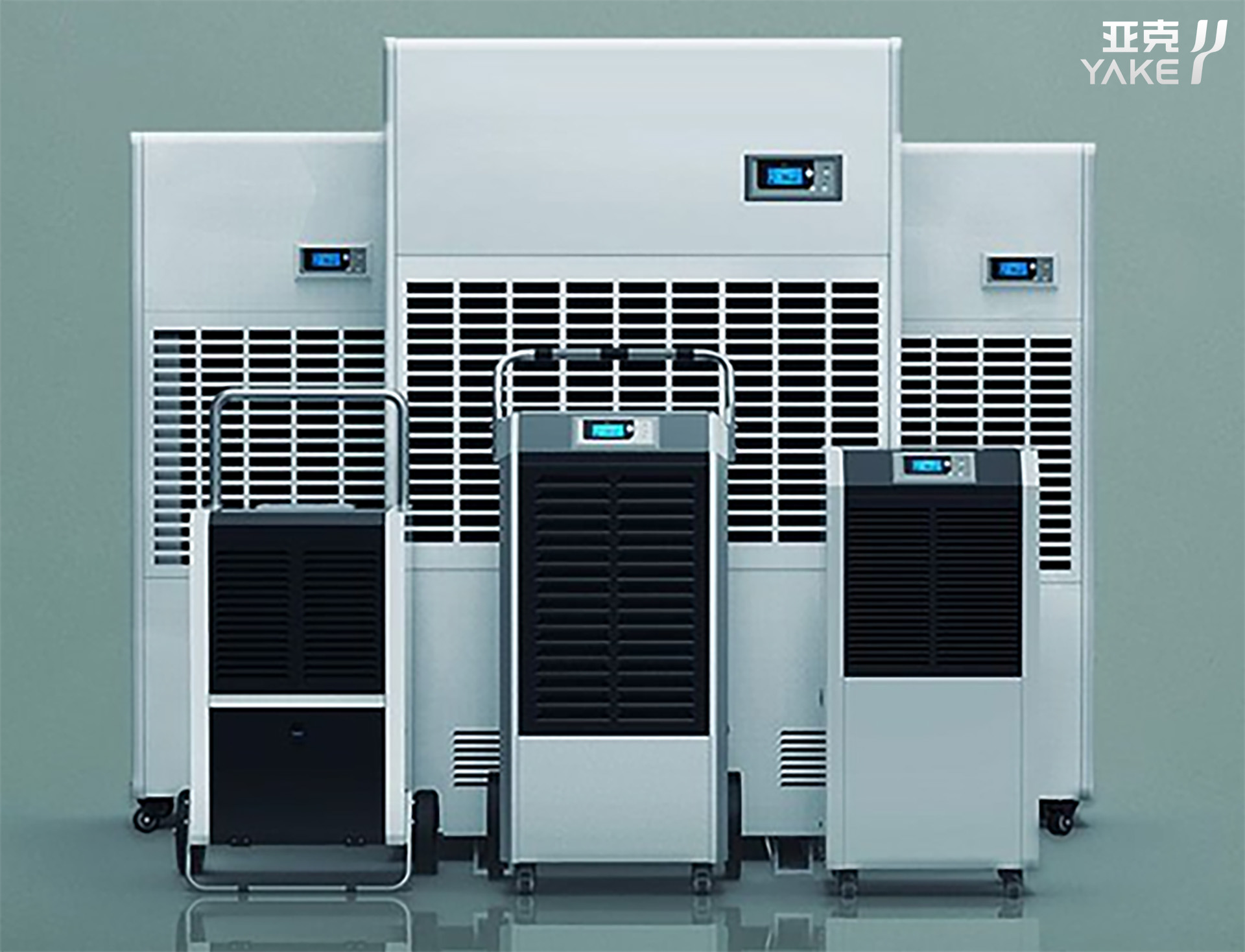
Contact us to find the best place to buy your Yakeclimate solution today!
Our experts have proven solutions to keep your humidity levels in check while keeping your energy costs low.