
Building 34, No. 535 Shunfeng Road, Hangzhou, Zhejiang, China
[email protected]
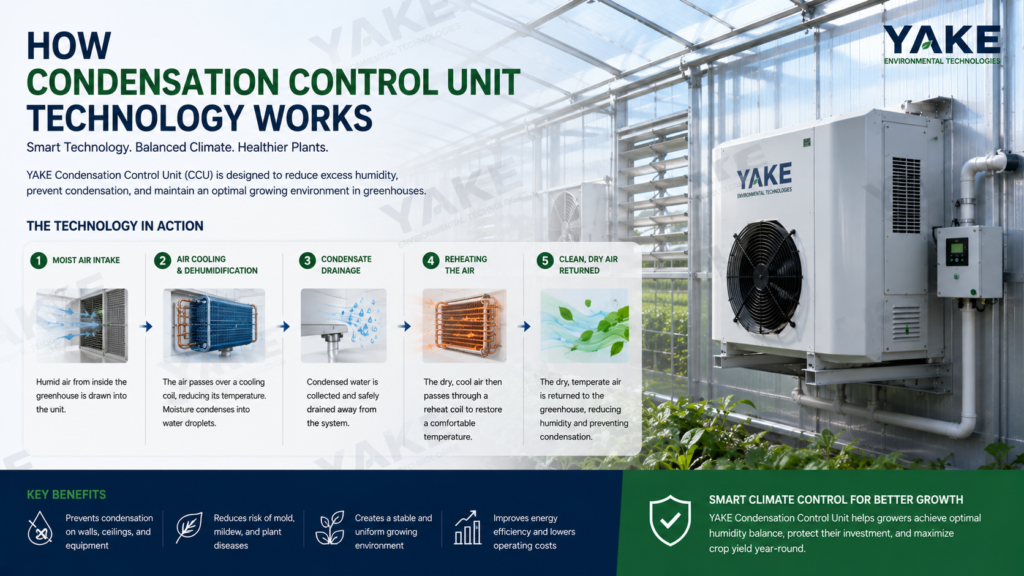


Condensation control unit technology refers to the collection of hardware and controlling approaches that maintain surfaces and air at or above dew point in order to prevent moisture from forming. Industrial plants use these units to control air flow, temperature, and humidity to protect product, equipment, and building structures. They tend to blend dehumidifiers, heaters, sensors, and smart controls to maintain steady conditions in paint lines, cleanrooms, drying areas, and storage rooms. Units now utilize energy-saving fans, variable-speed compressors, and RH control to plus or minus 2 percent. Data tracking and remote monitoring assist plants in reducing unexpected downtime and satisfying stringent quality regulations. The following sections detail how these systems operate, where they are most suitable, and what to consider when making upgrades.
Condensation control, to me, means moisture control – that water doesn’t hang around sitting on surfaces. The core is simple: keep air humidity and surface temperature on the safe side of the dew point. This safeguards machinery, infrastructure, and personnel in facilities where even light water films lead to malfunction, rust, or accidents. It’s mission-critical in pharma cleanrooms, paint and coating lines, food and beverage plants, data centers, cold stores, and high-value electronics assembly.
When temperature falls enough, moisture in the air condenses on cold surfaces, which is why you experience water on windows, on walls, on coils or on ducts. That same physics works inside control cabinets, on drive enclosures, and in roof structures. Left unaddressed, this water wrecks walls, windows, curtains, carpets, furniture, cable trays, and PCBs and can short sensors or cause slip hazards in process areas.
At the heart of control is proper air distribution and air flow. In most industrial rooms, achieving 4 to 6 volumetric air changes per hour is a good design target, with 3 to 5 cubic feet per minute per square foot of exterior glass to wash cold panes with tempered, dry air. Most plants in cold climates require humidification to around 30 to 40 percent relative humidity to keep the indoor dew point low enough that interior surfaces do not reach it, even as conditions outdoors fluctuate.
Condensation develops when a surface operates at or below the room air dew point, so a cold process line, window, or steel beam will accumulate water first. Relative humidity and dew point link this. A typical winter space at 70 °F and 40% RH has a dew point near 45 °F, so any surface at or under 45 °F is at risk. That’s why outside windows fog up on the first cold day if nothing is done to prevent it.
By constantly monitoring the air temperature, surface temperature, and RH, the control unit is able to maintain a safe buffer between surfaces and the dew point. Under the hood, it all tracks back to vapor pressure: when vapor pressure at a surface equals saturation pressure for that temperature, water shifts from vapor to liquid. The heart of condensation control, though, is these units that work to keep that gap wide enough with humidity, airflow, and sometimes surface temperature.
Humidity and temperature sensors provide the real-time information the system requires, particularly in the vicinity of cold surfaces or high-load processes. The control unit then compares those values to a target dew-point margin, drives mechanical dehumidifiers or desiccant units, ramps fans to keep air changes up, and can stage heat to keep key surfaces above the critical point. Tough casings, sealed connectors, and chemical resistant probes are par for the course in harsh plants, as sensors and housings sometimes reside in close proximity to washdown zones, solvents, or dust.
Passive systems use insulation, correct vapor retarder placement, and envelope design to slow heat flow and moisture diffusion. This ensures surfaces do not drop to dew point and internal cavities stay dry. Active systems add mechanical and electronic control, including dehumidifiers, air handlers with tight RH control, targeted window washes, and surface or trace heating on pipes, tanks, or panels.
Centralized systems serve multiple spaces off of a single air handler or dehumidifier, which is great in expansive, fairly homogenous facilities. Decentralized systems apply local units on individual rooms, lines, or cabinets where loads vary quickly or risk is high. Many modern designs run hybrid: a strong passive envelope, active RH control, and local anti-condensation heaters at the most sensitive nodes.
| System type | Efficiency | Cost level | Typical applications |
|---|---|---|---|
| Passive only | High once built | Low–medium | Building shells, warehouses, basic storage |
| Active centralized | High per kWh | Medium–high | Large plants, cleanrooms, data halls |
| Active decentralized | Medium–high | Medium | Process lines, cold rooms, local enclosures |
| Hybrid | Optimized overall | High | Pharma, electronics, high‑spec manufacturing |
Condensation control units unite sensors, controls, and air-side and surface-side hardware into a single closed loop. The goal is simple: hold surface temperatures above the space dew point while keeping energy use and corrosion risk under control.
Units begin by monitoring room conditions in real time. Capacitive or psychrometric sensors read dry-bulb temperature and relative humidity. The controller calculates dew point, which is the main reference. In the natatorium, indoor design dew point is typically 17 to 21 degrees Celsius (62 to 69 degrees Fahrenheit), corresponding to water at 28 to 29 degrees Celsius (82 to 84 degrees Fahrenheit) and 50 to 60 percent relative humidity.
For accurate data, sensors receive factory and field calibration. Several plants calibrate at two points using known humidity standards, then fix those values into the controller. Periodic calibration during shutdowns maintains drift within close tolerances.
Location is more important than most teams anticipate. Sensors need to be positioned in the breathing zone and distanced from drafts, coils, or direct solar gain. In pool enclosures or paint booths, additional probes close to sensitive surfaces such as exterior glass or cold ductwork provide earlier notification of local dew point changes.
Rapid reaction is essential when doors pop, processes scale or outside air swings. They use high-grade sensors with short response times, which allow the controller to react before surface temperature crosses the dew point and condensation forms.
Thermal management maintains vulnerable surfaces above dew point or isolates them from cold sources. Condensation control units employ electric heaters, hot-water coils, or heat-recovery coils to raise surface or supply-air temperature a few degrees. This is just enough to avoid condensation on metal structures, ducts, or window frames.
Thermostats and thermal cutoffs protect both the unit and the building. Surface or line thermostats stop heaters if a panel overheats, while high-limit sensors in supply air prevent discharge temperatures that might damage finishes or coatings. This is important near vapor retarders in walls and ceilings. If condensation forms inside the envelope, it can freeze in winter and slowly destroy the structure.
Thermal barriers and insulation cut thermal bridging. Modern building designs place vapor retarders on the warm, humid side of the envelope, then wrap steel or concrete with continuous insulation. Around exterior windows—high-risk points that will fog on the first cold day without action—units often add warm air washes or heated frames to keep interior glass above dew point.
Typical methods involve preheating outside air with heat-recovery condensers, selective trace heating on cold pipe surfaces, and perimeter heating beneath extensive glazing in pool halls, laboratories, or cleanrooms, where glass visibility is essential and condensation is not tolerated.
Air circulation aids the heat plan. Fans or blowers move conditioned air across the space so humidity and temperature remain uniform. This eliminates ‘dead zones’ where air lingers and surfaces slip below dew point undetected.
Enhanced airflow over cold surfaces removes moist boundary layers. Over a pool deck, the system seeks to provide supply air at the water surface and deck breathing zone, with a minimum of 4 to 6 air changes per hour, to sweep off water vapor as it escapes the pool. Cold tanks, coil banks, and exterior walls operate on the same principle.
Ducting and diffuser placement determine how effective this is. Supply air needs to cascade over outside glass and other cold surfaces before mixing into the mass of air. A good rule of thumb is around 15 to 25 cubic meters per hour of supply air per square meter of outside glazing (approximately 3 to 5 cubic feet per minute per square foot). Poor duct design negates even the best dehumidifier.
Air exchange rates are determined by occupancy. Natatoriums and high-humidity process rooms might run higher air change rates, while storage or light-duty spaces can drop it lower to save energy, as long as sensors measure dew point and surface temperatures still maintain a safe gap.
Material decisions support sensing, heat, and airflow. Water beads and runs off instead of soaking into joints or cable entries with hydrophobic coatings on your metal, glass, or delicate electronics. This alone doesn’t prevent condensation, it reduces dwell time and accelerates drying.
Premium insulation eliminates thermal bridges at beams, fasteners, and window interfaces. Rigid foam, high-performance mineral wool, and insulated cladding systems confine cold spots that would otherwise trace condensation lines across ceilings and wall joints in high-RH rooms.
Corrosion‑resistant alloys and coatings mean a lot in wet, warm spaces. Stainless steels, coated aluminum, and epoxy‑painted structural steel will stand up better than bare carbon steel when surfaces experience intermittent film condensation. This is essential in areas that are subjected to frequent wet and dry cycles, for instance, close to doors, vents, and around evaporator/condenser sections.
| Material focus | Role in condensation control |
|---|---|
| Hydrophobic coatings | Shorten wet time, promote runoff |
| High‑R insulation | Limit thermal bridges and cold surfaces |
| Vapor retarders | Keep moisture out of walls and roofs |
| Corrosion‑resistant metals | Extend life under intermittent wetting |
Control logic connects all these components. The controller reads humidity, temperature, and sometimes surface probes, then decides how hard to run compressors, reheat coils, fans, and dampers. The first step is always the same: set a target dew point that matches the process. From there, the logic maintains surface temperatures a safe margin above that dew point.
Some more advanced systems employ learning behavior. By monitoring how outside conditions, occupancy, or process loads have historically caused condensation, machine-learning models can anticipate high-risk windows, such as the first cool mornings of the season when perimeter exterior glass is prone to fogging, and boost dehumidification or perimeter heating in advance. This is valuable where condenser efficiencies vary from around 50 to 95 percent as gas stream makeup and coolant temperature change, as the controller can select the most efficient operating point ahead of time.
Custom controls allow every plant to fine-tune control to its process. A pharmaceutical cleanroom could seal tight dew point and temperature bands, while a warehouse can tolerate greater swings in exchange for less energy. In pool enclosures, operators are able to optimize water temperature, air setpoints, and air change rates to maintain 50 to 60 percent relative humidity without taxing the building.
With remote monitoring and automated alerts, the system closes the loop. If a dew point spike, fan failure, or drop in condenser efficiency appears, it can send alarms, go to a safe mode, or adjust setpoints. That prevents condensation from venturing into unseen areas, such as within walls or under roofs, where moisture could become trapped and freeze, cracking materials and endangering the integrity of the structure over time.
Condensation control units show their real value when tied to clear risks and measurable gains across sectors:
Among them, well-designed units increase reliability, reduce unplanned downtime, and extend asset life. A quick chart that plots application area to primary condensation risk to control strategy to critical KPI (downtime, scrap rate, MTBF) assists groups in weighing alternatives and constructing a plant-wide strategy.
In plants, condensation control units maintain all surfaces above dew point near cold pipes, tanks, and enclosures. They dry air in control rooms, switch cabinets, and drive rooms, so VFDs, PLCs, and low-voltage gear remain within their rated humidity range.
Sensitive electronics in cleanrooms, SMT lines and test labs find steady states when units connect to plant BMS and local sensors. That stability keeps measurement drift low and helps you meet ISO 14644, GMP, and other process standards.
Food processing and pharma lines employ units ahead of cold rooms, freeze tunnels and tablet coaters. They slice fog, ice and microbiological threats while assisting HACCP and GMP audits. In power and energy, dry switchyards, wind nacelles and turbine halls experience less corrosion and insulation failures.
In offices and public buildings, units protect envelopes, façades, and glazing by maintaining surface temperatures above dew point and indoor relative humidity in a tight range. Smart indoor humidity and condensation control in offices has been field-tested. It yields comfortable conditions with roughly a 5% fault rate in control logic, which is eminently manageable with good commissioning and maintenance.
Tied into central HVAC, the units reduce latent load, reduce coil moisture carryover, and provide more consistent comfort, especially in hot-humid areas where wet spring weather creates extended periods of damp and discomfort. By mitigating mold risk and structural rot, they promote healthier indoor air, can streamline insurance claims, and potentially lower premiums where insurers monitor moisture-related losses.
Heritage buildings utilize more mild solutions. Passive stack ventilation and dedicated low-capacity units exhaust moist air while maintaining dry traditional plasters, mortars, and timber. Any alteration has to meet building codes and conservation regulations too so the fabric and external look remain intact.
In cars, little defoggers coordinate with HVAC to maintain cabin glass beyond dew point, so fog dissipates more quickly and visibility remains high during cold and soggy conditions. This should be considered for comfort and for safety.
Onboard electronics, from ADAS sensors to in-dash systems, experience extreme temperature fluctuations. Local drying and enclosure conditioning reduce condensation cycles that cause PCB corrosion and failure. In EVs, pack and power electronics enclosures employ tight humidity control as part of the safety envelope for high voltage components, alongside thermal management.
The same systems assist in maintaining cabins extra steady in humidity. Passengers are less clammy, seats and soft trims last longer, and windows remain clearer more frequently in heavy urban traffic or damp coastal environments.
In residences, whips units prevent mold on cold walls, window reveals, and in basements, safeguarding indoor air quality in high-humidity areas. They reduce spore development on walls and furniture, leading to less odor and less destruction.
When linked to smart home climate controls, they only run when dew point risk is elevated, using basic moisture and temperature measurements. This sort of targeted moisture control saves energy compared to operating full‑load cooling just for dehumidification purposes.
Brine-based refrigeration and small heat-pump style units provide effective moisture removal in tightly built, well-insulated homes. They service new builds as well as retrofits with short duct runs, wall units, or small floor-standing units, letting installers get flexible and work with existing layouts without all the heavy work.
Condensation control units have benefits beyond preventing drops on pipes and panels. They silently transform the way a plant consumes energy, safeguard assets, and protect individuals, frequently in ways that don’t appear on the initial project brief.
Moist air is more difficult to heat and cool than dry air, so stable humidity reduces latent loads on boilers, chillers, and air-handling units. In lots of plants and large buildings, properly engineered ducted dehumidifiers cut HVAC energy consumption by as much as 50% because the system no longer needs to overcool the air just to squeeze out moisture.
With dry, controlled air, operators can increase setpoints by 1 to 2 degrees Celsius and maintain comfort and process specifications. That little tweak frequently provides an obvious reduction in kilowatt hours and fuel consumption, with no sacrifice in quality.
Variable-speed compressors and fans in newer units match capacity to actual demand. They ramp down during part-load hours rather than cycling, reducing peak draw and improving power factor.
For serious reviews, track electricity and fuel use for at least a full season before and after installation, and log dew point, relative humidity, and run hours to tie energy cuts to moisture control, not random weather fluctuations.
Condensation control holds steel, copper, and electronic assemblies above dew point, which slows rust, pitting, and creep corrosion on boards and terminals. Over time, it extends the useful life of motors, switchgear, sensors, and control cabinets.
Dry, stable air protects inventory: coated parts, packaged foods, paper, films, and textiles store longer and ship with fewer defects or returns tied to moisture.
After units come online, track failure rates, insulation resistance test results, bearing replacement intervals, and scrap generated by moisture. These trends tend to reveal worth that never surfaces on the initial capex sheet.
Reduced humidity reduces mold, mildew, and allergen growth on walls, ducts, and chilled surfaces, enhancing indoor air quality in process and support areas. In certain models, ducted dehumidifiers additionally assist in scrubbing air of bacteria and viruses, creating an extra layer of control in labs, cleanrooms, and packaging areas.
Dry floors and stairs lead to reduced slip incidents in the vicinity of wash-down lines, docks and cold rooms, aiding safety teams in complying with internal policies and external regulations.
By keeping relative humidity in the 50–65% range, plants reduce musty odors, enhance comfort for night-shift personnel, and aid compliance where IAQ standards are in effect.
There’s more to return on investment than energy. Simple payback usually falls in the 2 to 5 year range if you incorporate reduced HVAC loads, reduced emergency repairs, reduced corrosion-induced downtime, and extended replacement cycles on high-value assets.
Compare the total cost of ownership with and without units. This includes energy, maintenance hours, spare parts, product scrap from humidity faults, unplanned stoppages, and any penalties tied to quality or safety non-compliance.
A simple table that lists these elements, with modest figures, typically demonstrates the value of condensation control as a mechanism, not merely a comfort accessory.
Condensation control units don’t operate in isolation. We use them, plug them in, jam them, and occasionally abuse them. A good design has to be in tune with real users, real buildings, and real workloads.
Most plants tack condensation control onto spaces that already operate at capacity. Space is cramped over lines, near ducts and within enclosures. Retrofitting a unit into a paint booth, cleanroom or coating line usually means contorting around cable trays, process piping and fire systems. If the design doesn’t anticipate these constraints, installers begin to scramble to make it fit, and that’s where performance suffers.
Skilled work counts. Even the most beautifully engineered unit can go to pot if the condensate drain is pitched wrong, sensors are mounted in dead zones, or ducts generate short-circuit airflow. Moisture is the culprit in 75 to 80 percent of building envelope issues, and misplacement that holds damp air against cold walls simply increases the potential. Technicians require unambiguous drawings, straightforward mounting schematics, and labeled connection points that do not encourage guesswork.
Integration is another Achilles’ heel. Condensation control needs good data: temperature, relative humidity, and pressure. If the unit can’t talk neatly with the plant DCS or BMS, operators ignore alarms or run everything in manual. That results in wide fluctuations in humidity and temperature, increased condensation, and even mould or fungus in some cases.
Common installation obstacles include:
Routine work is simple on paper: clean sensors, replace filters, check drains, verify fans and heaters. In reality, such work contends with production schedules and quality assurance. If access panels are frustrating or components are difficult to reach with standard tools, maintenance gets skipped.
Periodic inspections are the safety net. Routine inspections discover minor problems before they become soaked walls, rusting siding, or compromised insulation. Neglect moves the unit from “control” to “background load,” so humidity wanders. Once the relative humidity creeps above 50%, dust mite levels can increase, and above 75 to 80 percent, the risk of fungi growth escalates. Those conditions matter even in industrial spaces with protracted human exposure.
A short, clear maintenance checklist helps with what to check weekly, monthly, and yearly. It outlines what readings to log and when to call support. Plain English, photographs, and direct ordering links for spare parts reduce mistakes and keep systems closer to design performance.
User-friendly interfaces are the principal conduit between complicated control logic and frenzied plant personnel. Operators don’t have to read every PID, but they need to see if their unit is holding target relative humidity, where sensors sit and what alarms mean in process terms. If screens are cryptic, they work around the system or keep it in a perpetual override.
Design with a user makes the interface better. Asking maintenance teams how they track work, or control room staff how they view alarms, tends to result in small changes that drastically reduce human error. Easy examples are grouping alarms by process area instead of part number or displaying trend graphs correlating temperature and relative humidity shifts when air is heated. Increasing air temperature from 15 degrees Celsius to 18 degrees Celsius can reduce relative humidity from 50 percent to 40 percent, impacting comfort, static risk, and condensation margins.
Feedback should get to the control algorithms as well. If users say coils frost routinely at certain loads or a space never dries after shift change cleaning, engineers can fine tune logic. A unit can, for example, target 90 to 95 percent relative humidity at a cold surface to prevent surface condensation while maintaining bulk room relative humidity low enough to remain below the 75 to 80 percent mark for fungal growth. Digital reporting tools, quick surveys, and formatted support tickets help capture these cases and polish the software.
Condensation control units are heading toward more intelligent automated solutions that maintain surfaces above the dew point, monitor risk continuously, and reduce energy consumption simultaneously.
Smart condensation control now integrates with plant IoT platforms and SCADA. Sensors monitor surface temperature, air temperature, and relative humidity, and then push that information over IP or fieldbus. The unit can flag when any critical surface drifts near 16 to 17 degrees Celsius (or approximately 62 degrees Fahrenheit), where moisture will begin to form.
Remote monitoring enables maintenance crews to view dew point, coil performance, and energy consumption from any location. Predictive models monitor fan power, compressor cycles, and desiccant rotor trends and can alert of coil fouling or filter loading prior to a shutdown. That prevents paint-line flaws, lens fogging in electronics, or mold in food plants.
Condensation units integrate with building automation systems via BACnet, Modbus, or OPC UA. The BAS can adjust setpoints based on real load, slow air changes in unoccupied zones, or ramp to 4 to 6 ACH in occupied zones to keep the breathing zone dry and stable.
For heavy process lines, integration can be tight with line controls. In a car body shop, it can monitor booth humidity and wall temperatures. In indoor pool halls or spas, it can be synchronized with pool water temperature and envelope heating to prevent window and roof deck condensation twelve months of the year.
Future units will use coatings and materials that slow moisture at the surface level. Nanostructured hydrophobic layers can raise contact angles, stop water film build-up on ducts and coils, and keep thermal performance steady in humid climates.
Lighter, stronger insulation for ducts, tanks, and chilled pipes will be important. High-efficiency foams and composite wraps eliminate thermal bridges so the surface remains above dew point even when the process air is driven to low temperature and low dew point in a single pass.
Self-healing polymer coatings are on the horizon. Even minor scratches from material handling or cleaning close up over time, allowing vapor resistance and corrosion protection to stay in place on steel ducts, roof decks, and cold water pipes without rework every few months.
| Material type | Key property | Advantage for condensation control |
|---|---|---|
| Standard fiberglass | Moderate R-value, absorbent | Low cost, but can hold moisture and lose performance |
| EPS/XPS rigid foam | Higher R-value, closed cell | Better surface temperature control, less moisture |
| Aerogel blanket | Very high R per thickness | Slim profiles for tight ducts and pipework |
| Nanostructured coating | Hydrophobic, thin film | Less film condensation, easier drain and dry |
| Self-healing polymer coat | Micro-crack repair, durable | Long-term vapor barrier on metal, less maintenance |
Regulation already influences how condensation control devices are designed and sized. Energy codes drive toward less kilowatt-hours per cubic meter of dry air. Health and safety regulations for food, pharmaceuticals, and electronics impose tough restrictions around surface condensation, air changes, and microbial growth.
That’s what drives design. Most plants have moved to closed-loop desiccant systems that pull moisture so efficiently it can get to very low dew points, and in some configurations reduce airborne pathogens. Systems have to manage humid summertime air, indoor pools, or high latent load gymnasiums and yet still keep envelope surfaces dry and stable.
In some markets, incentives support high-efficiency dehumidifiers, demand-controlled ventilation, and smart recovery systems. Tax credits or rebates can offset the jump to advanced controls, high-grade insulation, vapor diffusion retarders, and capillary breaks under slabs or in crawlspaces that keep ground moisture out.
Enter global climate shifts as a new factor. Most areas experience longer and more humid seasons with more high dew point days. Facilities that keep an early eye on new standards and local codes can properly size equipment, avoid retrofits, and stay ahead on uptime and energy expense.
CCU tech now sits at the heart of a stable plant climate. It keeps components dry, conduits unimpeded, and integrity secure. This is true not only in pristine labs but in paint shops, pack halls, and test rooms that operate around the clock.
Robust systems reduce waste, prevent corrosion, protect circuits and assist employees in operating more efficiently. Smart control, good layout, and clear rules make that even stronger.
The next step remains simple. Look for areas that drip, sweat, or fog. Match those pain points with units that nail the dew point, flow rate, and control logic. If you want a deeper look at your site, contact a climate specialist at Yakeclimate and discuss real options for your facility.
About: condensation control unit technology It safeguards equipment, products, and building materials from corrosion, mold, and damage. That means longer asset life, fewer failures, and lower maintenance costs.
It tracks temperature, humidity, and occasionally surface conditions. It then modulates heating, ventilation, or dehumidification to maintain conditions above the dew point. By remaining above, it prevents drips from developing on surfaces.
You find it in cold storage, data centers, industrial plants, HVAC systems and transport containers. It’s found in cleanrooms, pharmaceutical and food processing. Anywhere with temperature fluctuations and sensitive gear will be able to take advantage of it.
Beyond just visible water control, it minimizes mold potential, enhances indoor air quality and safeguards insulation. It preserves energy efficiency and minimizes unexpected downtime. These advantages promote enhanced safety, compliance and operational reliability.
The unit engineers the system according to users. They think about workflows, access requirements, safety protocols, and maintenance schedules. Training and intuitive user interfaces assist operators in operating the system properly and addressing alerts.
Yes. Some newer units utilize sensors and smart controls to run only when necessary. They optimize condensation risk with energy consumption. Such focused action has the potential to reduce heating, cooling, and dehumidification expenses while still preserving walls and machinery.
New systems employ advanced sensors, AI-based control, and cloud monitoring. They anticipate condensation in advance and adjust settings in real time. Connected to building management systems and IoT platforms, prevention becomes more targeted and effective.


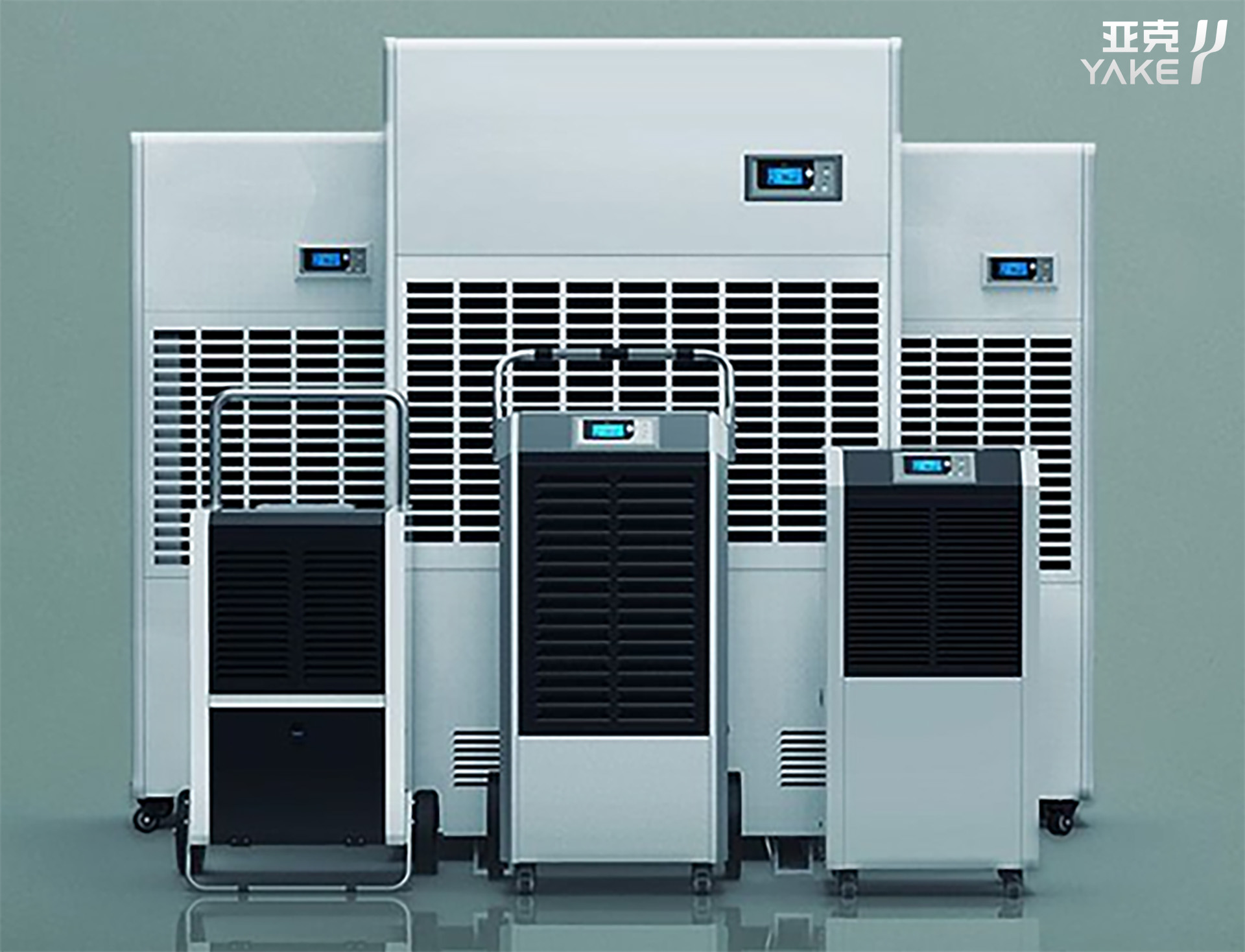
Contact us to find the best place to buy your Yakeclimate solution today!
Our experts have proven solutions to keep your humidity levels in check while keeping your energy costs low.