
Building 34, No. 535 Shunfeng Road, Hangzhou, Zhejiang, China
[email protected]
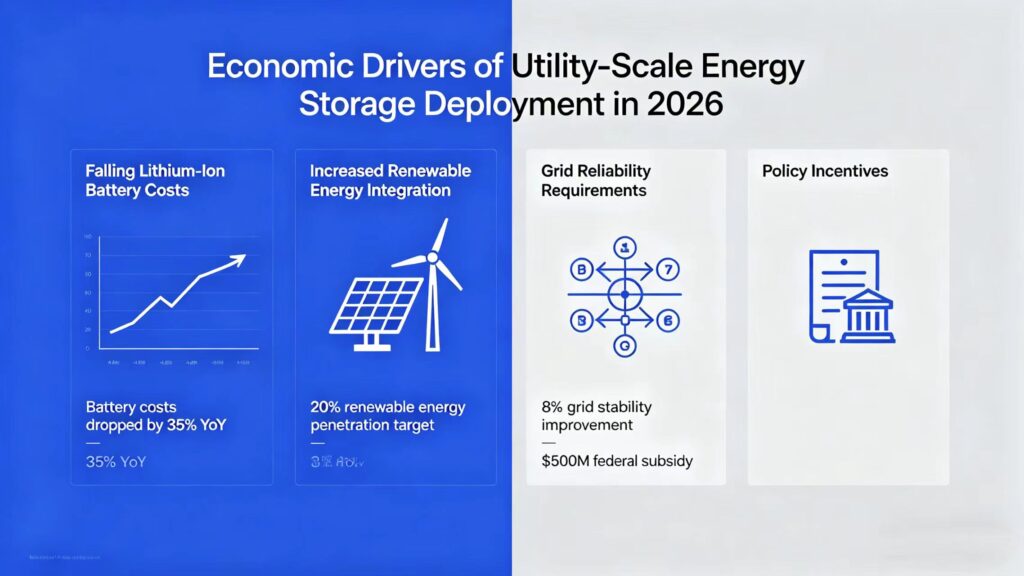

Utility-scale energy storage deployment is about constructing and operating battery or thermal storage systems at scale on the grid, storing megawatt hours of electricity for later consumption. These systems sit at substations, solar and wind farms and peaker plant sites and now play a key role in grid stability, peak shaving and renewable integration. Priyanka’s projects frequently leverage lithium-ion, flow batteries, or hybrids, with capacity ranging from tens to hundreds of megawatts and durations ranging from 1 to 8 hours. Network operators utilize them for frequency response, voltage support, black start and congestion relief. In the sections that follow, the focus moves to real project concerns: siting, safety, HVAC and dehumidification, lifecycle cost, and long-term reliability.

Utility-scale storage moves electric energy over time to align supply and demand. They charge when power is inexpensive or in danger of being curtailed, then discharge when prices and grid demand are elevated. This time shifting enables renewable integration, grid stability, and multiple revenue streams such as energy arbitrage and ancillary services.
Storage systems absorb surplus electricity from solar, wind, and off-peak thermal plants. At scale, most projects use short-duration lithium-ion batteries in the 2 to 3 hour range, as they align tidily to price swings across hours in day-ahead and real-time markets. When mid-day solar pushes prices close to zero or negative, these batteries soak up power that would otherwise be curtailed.
Timing is everything for profit and for system value. Operators monitor day-ahead schedules and real-time prices to identify low-price windows and charge when spreads to anticipated peak prices are largest. Very low prices often indicate renewables oversupply, so charging then reduces curtailment and positions for high-margin discharge later.
Battery management systems (BMS) regulate charge rate, cell balancing, and depth of charge. They cap ramp rates, steer clear of unsafe temperatures, and impose state of charge limits to mitigate degradation. For industrial users who already run strict environmental control, this feels similar to the logic behind good humidity and temperature control on the plant floor. Stable conditions protect long life assets.
Typical charging sources at utility scale are solar PV farms, onshore wind parks and combined-cycle gas plants during nighttime or low-load phases. A few grids, like Germany’s, rely on off-peak coal or nuclear output as charger sources where those plants remain.
Once charged, the energy rests in various forms based on the technology. Lithium-ion and other batteries store it electrochemically within cell materials. Flywheels store it as kinetic energy in high-RPM rotors. Pumped hydro stores it as gravitational potential in elevated reservoirs of water. Thermal systems store heat or cold in a media such as molten salt or chilled water.
Losses in storage are relevant for project economics. Self-discharge in today’s lithium-ion systems is low, a few percent per month at the right temperature, so they fit intraday cycling. Flywheels have higher standing losses and thus are better for very short-duration, high-cycle services. Pumped hydro has low standing losses and is a good solution for long-duration, daily or weekly shifting.
Duration and capacity factor determine how each asset fits the grid. Short-duration batteries run a lot of cycles and hunt hourly price spreads and ancillary services. Long-duration systems, with intraday to multiday capability, can cover long renewable lulls or fuel constraints, but are not fully paid back by price swings within a single 24-hour period under most current tariffs.
Comparing self-discharge: lithium-ion is low and mainly an issue over weeks. Flywheels can shed a small percentage of stored energy per hour. Pumped hydro has little self-discharge but has hydraulic and evaporation losses over long duration.
Stored energy flows back to the grid in a demand spike or when renewable output dips. In numerous markets, two to three hour lithium-ion batteries discharge in the early evening, stretching solar capacity out from mid-day peaks into the ‘duck curve’ hours when everyone gets home and loads spike. That reduces the requirement for quick-ramping fossil units.
Discharge efficiency and ramp rate drive system value. Lithium-ion’s high round-trip efficiency and ability to ramp from zero to full output in seconds supports frequency control and contingency reserves. It’s that quick response that makes ancillary services still the bulk of the storage revenue pile, frequently more than pure energy arbitrage.
The vast majority of system operators require explicit bounds. Markets now enable storage owners to represent state‑of‑charge limits and energy constraints in bids and offers directly. Some jurisdictions even enforce minimum state‑of‑charge regulations so the operator can rely on a portion of capacity being accessible during periods of duress.
| Technology | Typical Discharge Duration | Power Output Behavior |
|---|---|---|
| Lithium‑ion BESS | 1–4 hours | Very fast ramp, flexible, modular |
| Pumped hydro | 6–12+ hours | Large blocks, slower ramp |
| Flywheel | Seconds–15 minutes | Instant response, high power |
| Thermal storage (heat) | 4–10+ hours | Tied to paired process or plant |
A utility-scale battery system revolves around racks of battery modules, a power conversion system (PCS) and hierarchical control and safety systems. The PCS manages bidirectional DC-AC conversion, reactive power control, and grid-code functions. Centralized controllers determine charge and discharge setpoints according to market signals, grid operator commands, and asset constraints.
Enclosures and thermal systems maintain cells within a safe, tight temperature and humidity range. Cooling can be air or liquid based, and industrial-grade dehumidification prevents condensation and corrosion on busbars, breakers, and electronics. The logic is similar to dry-room control in battery manufacturing or paint lines. Steady climate extends life and cuts failure risk.
BMS software tracks voltage, current, temperature and state of health from cell to container level. It flags faults, isolates problem strings, and manages charge windows so the asset hits its contract life. Around the core stack sit auxiliary devices: medium voltage transformers, protection relays, switchgear, and often on site SCADA and networking gear for remote operation.
Storage interconnects at distribution or transmission voltage, typically via dedicated feeders and step-up transformers. Grid-side inverters comply with local interconnection standards on voltage support, fault ride-through, and frequency response, just like a large solar or wind plant.
Dispatch requires close coordination between storage operators and grid or market operators. Control rooms receive real-time telemetry on power, state of charge, and availability, and send back signals for frequency regulation, reserves, or dispatch for peak-shaving. When significant swings emerge in day-ahead and real-time prices, energy arbitrage schedules come into focus, and operators align charge and discharge windows with those spreads.
Variable renewables make it more complicated. Wind and solar output forecast errors make storage maintain some flexibility and not just follow a fixed hourly curve. Market rules try to reflect this. Many regions let owners encode energy limits in bids, but hold minimum state-of-charge levels so enough energy is left for reliability events instead of being fully spent on arbitrage.
Grid code compliance is rigorous. Projects comply with IEC or IEEE grid interconnection standards, local protection rules and capacity market commitments. In capacity markets, longer-duration storage generally receives more credit than short-duration units, as its energy is more likely to exist across extended stress events, influencing the long-term balance between short and long-duration assets.
Utility-scale storage has become a foundational grid resource. It enables reliability, reduces emissions, and assists utilities in complying with clean energy mandates while containing system costs.
Energy arbitrage is easy in theory. Storage “buys” electricity when cheap, stores it, then “sells” by discharging when expensive. These are mostly short-duration lithium-ion batteries, usually two to three hour units, which align nicely with price swings over hours in day ahead and real time markets.
These batteries benefit when there are robust spreads between mid-day lows and evening peaks. Consider solar-heavy systems, where two to three hour lithium-ion packs shift surplus solar from mid-day to the early evening ramp. Those evening hours are often the highest bids because owners think they will get even better prices later, so they withhold SOC and aim for the most advantageous interval.
Precise price and load forecasts are crucial. Bad forecasts tie storage into low-value hours or leave capacity idle. Operators employ optimization tools that monitor state-of-charge boundaries, charge and discharge efficiency, and degradation expenses.
Energy arbitrage is now most active in:
Storage offers extremely fast-response frequency regulation, mitigating short-term imbalances between supply and demand to maintain system frequency and voltage within narrow bands. With high ramp rates and accurate active power control, batteries can track regulation up and regulation down signals on a second-by-second basis.
Ancillary services, such as frequency regulation, still deliver the bulk of revenue for storage. For instance, in CAISO, a resource with a 50 MW regulation up award in an hour needs to be able to discharge at least 25 MWh during that hour under the state-of-charge constraint. This forces operators to run SOC close so they can earn both performance payments and capacity commitments.
In comparison to gas turbines or coal units, batteries answer in fractions of a second, rather than tens of seconds or minutes. They provide better frequency nadir, less wear on traditional plants, and help inverter-heavy grids with high shares of renewables.
Storage fortifies grid resilience by supplying backup power when the broader network goes down. Big batteries or pumped hydro can feed critical loads during disturbances, buying time until the grid comes back or backup generation is fired up.
This resilience role is key for microgrids powering hospitals, data centers, semiconductor fabs, and pharmaceutical plants. Storage allows for “islanded” operation, maintaining voltage and frequency in stasis while local solar, diesel, and gas units ride through faults. For industrial sites, that can translate to preventing scrap batches, wasted product, or equipment damage during broader-area outages.
Post major storms, earthquakes, or wildfires, storage can aid black start, stabilize fragile islanded sections and feed priority customers while repair crews work. Projects in typhoon or hurricane-impacted areas or remote transmission corridors increasingly pair utility-scale lithium-ion batteries with hardened feeder designs or pumped hydro reservoirs.
Think multi-hundred-MWh battery systems connected to coastal grids, or pumped hydro in the mountains that can function for many hours, or hybrid microgrids in remote mining or processing hubs where power continuity is a direct production risk.
Storage can postpone or bypass costly grid improvements. Instead of upstream lines, substations, or peaking plants, utilities place storage at or near load pockets to blanket short peak hours. This is particularly potent where variable renewables are below 40%, and short-term storage is generally sufficient. Once systems get to 80% variable renewables, medium-duration storage in the 4 to 16 hour range emerges to address longer peaks and multi-hour ramps.
By shaving peaks, storage reduces the need for new combustion turbines and cuts run hours on existing peakers. That reduces upfront cost and running emissions simultaneously.
| Investment Option | Typical Role | Relative Cost Trend* |
|---|---|---|
| New peaker plant | Covers a few peak hours | High capex, fuel and carbon |
| T&D line or substation upgrade | Increases transfer capacity | High capex, long lead time |
| Short-duration Li‑ion (2–3 hours) | Local peak shaving, deferral | Falling capex, fast to build |
| Medium-duration storage (4–16 hours) | Long ramps, high-renewable grids | Emerging, costs dropping |
*Trends are directional; exact values are project-specific.
Utility-scale storage is only economically viable at the point where its costs, duty cycle, and revenue stack align with local power prices and grid needs. Capital intensity is high, margins can be thin, and small modeling errors can erase value. Most projects live or die in the spreadsheet phase.
Total capex usually aggregates four blocks: storage hardware (battery racks or tanks), power conversion system (inverters, transformers, switchgear), balance of plant (foundations, HVAC, fire safety, cabling), and grid interconnection. This makes the levelized cost of storage for a 100 MW lithium-ion system around 125 USD per MWh once you include engineering, procurement, and construction.
Technology choice changes that equation. Lithium-ion is often cheaper per kilowatt for one to four hour systems, whereas flow batteries are often cheaper per kilowatt hour for six to twelve hour storage since the power stack and electrolyte scale differently. Pumped hydro maintains lower cost per kilowatt hour at very large scales, but requires special sites and long timelines.
As a rough range today, utility lithium-ion often falls near 300 to 500 USD per kWh installed for 2 to 4 hour systems. Flow batteries might sit 20 to 40 percent higher upfront but add less cost when you extend duration. Pumped hydro can appear competitive at multi-GWh scale but has huge civil works risk and extended payback. These bands are important for manufacturers and process plants that now weigh on-site BESS against conventional grid upgrades or diesel fallback.
Ongoing costs sit in several buckets: routine inspections, firmware updates, spare parts, augmentation, auxiliary loads such as HVAC and controls, and performance testing to keep warranties valid. Battery degradation is key. Higher cycle rates and high-temperature running both accelerate fade and drive early replacement.
Effective battery management with strict thermal control and state-of-charge windows can extend useful life and postpone replacement packs for years. That drives down TCO more than marginal improvements in round-trip efficiency.
In comparison with BESS, pumped hydro has lower variable costs per MWh but higher fixed staffing and civil maintenance. Compressed-air and hydrogen systems add additional mechanical and gas-handling maintenance. For an industrial user, these profiles determine if storage remains lean support for peak shaving or evolves into a full microgrid asset that demands ongoing care and feeding.
Key revenue streams include energy arbitrage, peak shaving, ancillary services, and capacity payments, with some markets additionally remunerating for black start, inertia, or fast frequency response. Arbitrage functions if day ahead and real time prices vary enough that charge and discharge differentials offset losses and capital expenditure. Large intraday spreads make this obvious, although several markets still exhibit marginal B to C ratios for pure arbitrage. A B to C ratio of 0.4430 for a BESS case indicates that, with certain price and policy configurations, direct economic benefits do not cover discounted costs, so capital is not efficiently employed without additional streams of value.
Peak shaving industrial loads usually looks more robust. One study exhibits an internal rate of return of 20.80 percent and a profitability index of 158.37 percent for peak shaving with payback in the vicinity of seven years, driven by decreased demand charges. That compares with microgrid projects where the internal rate of return of approximately 12.04 percent is less, despite hybrid microgrids reducing net present cost by 19 percent compared to diesel only in New Mexico and 35 percent in Maryland due to lower fuel burn and upkeep.
Most big storage assets today ‘stack’ services. That same 100 MW system might be doing peak shaving for a plant, selling frequency regulation, capturing arbitrage when spreads open, and bidding into capacity markets. Other services are ramp-rate control for solar and wind, voltage support, spin/non-spin reserves, backup for critical process lines, and support for on-site equipment such as large dehumidification or HVAC loads. Robust financial models must stress-test all these streams under shifting tariffs, fuel prices, and policy to avoid overestimating revenue or underestimating cycling and degradation.
Utility-scale storage selection not only drives capex, operating risk, and grid value, it defines how much flexible, low-carbon power your plant can access for the next 20 years.
Li-ion now dominates new projects. More than 90% of yearly Li-ion demand is from energy, versus 50% a decade ago. Two-to-three-hour systems are strong for shifting mid-day solar to evening peaks, and most new utility-scale projects in the US come in around 200–300 USD per kWh installed, pre-incentives. The physical footprint behind that price is substantial. About 1 GWh of utility-scale lithium-ion requires approximately 0.7 million tons of mined and processed ore. A 1 GWh battery field also stores energy on the order of 900 tons of TNT, so fire, explosion, and toxic gas scenarios need to be major-hazard design problems, not “edge cases.” These provide ephemeral storage at best, a few hours, so they don’t span multi-day renewable droughts or extended outage periods. On the pro side, energy density is high, response is rapid, and modular racks scale nicely on cramped sites, which fits industrial campuses that already handle tight real estate and strict safety protocols akin to solvent storage and climate-critical rooms.
Flow batteries exchange power and energy in a different manner. Energy resides in the electrolyte tanks, just as stacks determine power. This makes long-duration scaling (8–12+ hours) easy, scaling tanks, not stacks. Round-trip efficiency is lower than lithium-ion and energy density is low, so land needs are larger. Flow systems do embrace deep cycling though, and they fit processes that cycle hard every day, like rugged industrial HVAC or dehumidification duty. The electric and pumping subsystems frequently demand major refurbishment after 10–15 years. Many early business cases undercount these operations and maintenance costs, and this matters for sites that already run complex utilities like chilled water, air handling, and dry-room dehumidification.
Pumped hydro and CAES are in a class by themselves. Both focus on long-term, bulk shifts at the grid or regional scale. Pumped hydro provides high cycle life, proven assets greater than 1 GWh, and relatively low variable cost, but requires specific geography, large water reservoirs, and long permitting, so it is rarely a fit for industrial co-location. CAES can leverage underground caverns or purpose-built vessels, and it similarly favors multi-hour to multi-day windows. Both have less energy density than batteries and are typically utility scale assets your facility taps into, instead of on-premises units you control. Their primary worth to industry is grid-level stability, which in turn enables more electrified processes, such as jumbo HVAC and dehumidification loads.
Below is a concise reference for side‑by‑side comparison.
| Technology | Typical Duration | Energy Density (system level) | Scale Suitability | Key Cost / Risk Notes |
|---|---|---|---|---|
| Lithium-ion | 2–4 hours | High | Highly modular, 10–1000+ MWh | ~200–300 USD/kWh now; strong for solar shifting; high material input and fire/explosion risk |
| Flow battery | 4–12+ hours | Low–medium | Tank-based, easy long‑duration | Capex higher; cycling is robust; O&M for pumps and power blocks rises after 10–15 years |
| Pumped hydro | 6–20+ hours | Very low (large reservoirs) | Best above 1000 MWh | Low energy cost; long life; needs specific sites and long permitting |
| Compressed air (CAES) | 6–20+ hours | Low | Best above 100 MWh | Moderate efficiency; needs caverns or large vessels; strong for bulk grid balancing |
Utility‑scale storage confronts the same cocktail of policy, grid, and cost obstacles that plant and facility teams are familiar with from on-site power and HVAC work, only at a larger scale and under greater scrutiny.
Regulatory risk comes first. One BESS can be subject to building, fire, electrical, and even residential codes at the state and local level. Code cycles move faster than project timelines, so a design compliant with one fire code revision may be challenged under the next. Long-term storage adds more layers. Pumped hydro requires unique topography and water usage permissions. Compressed air typically requires appropriate underground caverns along with subsurface rights and safety reviews. Each step bogs down bankability and builds soft costs. Where policy is clear and stable, like defined grid-service tariffs or capacity market rules for storage, projects proceed. Where regulations are murky, makers hesitate.
Permitting and interconnection were streamlined, eliminating a significant portion of the delays. Storage faces the same deployment hurdles as rooftop solar and EV charging did in California. Uniform forms, transparent timelines, and online tracking eliminate uncertainty for utilities and municipalities alike. Storage requirements and clean-peak standards lend a hand. They signal in the long term that storage has a role and so utilities plan for it rather than treating it as an anomaly. Government programs and targeted funds can move the needle on long-duration assets by supporting seedling projects, pooling data, and de-risking first-of-a-kind plants.
Cost and technology maturity remain key. Utilities and developers balance capital expenditures versus operational expenditures when they examine their net-zero strategies. High capital expenditures and long life with low cycling losses mean that long duration assets can stack significantly with solar and wind too, as long as streams of revenue are clear. Rebates and incentives, such as California’s Self-Generation Incentive Program, demonstrate how support can cover a significant portion of upfront project costs and bring emerging technology into the market. Superior controls and thermal management at the plant level mean each kilowatt-hour of storage is far more useful, firming output and absorbing renewable swings.
Deployment hurdles, practical strategies, siting, environment, and markets. Co-locate storage with existing substations, industrial parks or large plants to utilize existing rights-of-way and switchgear. Run fire and thermal risk in the same way you plan critical HVAC and dehumidification: defined zoning, clean airflow, safe clearances, and robust monitoring. Work with fire marshals and code officials using open models and shared standards early to reduce redesign iterations. Associate storage dispatch with actual flexibility requirements, like peak-shaving for energy-intensive lines or backup for cold-chain and humidity-sensitive zones. Collaborate with international consortia and peer utilities to exchange test data and failure reports, so every project isn’t reinventing the wheel.
Utility-scale storage, while unseen, determines who receives clean, reliable, and affordable power and who doesn’t. For plant managers and engineers, this is not a theoretical policy question. It influences where new load can hook up, what tariffs appear like, and how strong local grids remain throughout tension occasions.
Energy storage can help close energy access and cost gaps. Today, approximately 70% of solar electricity is generated from utility-scale plants and 30% from rooftop PV. Rooftop systems in most countries, and particularly in the US, disproportionately favor wealthier, owner-occupied housing. That leaves renters and lower-income districts with less direct advantage. Utility-scale solar, by comparison, tends to be sited in areas that are more ethnically mixed and have a larger percentage of renters, which helps to alleviate some of that inequity. Combined with big batteries, those plants can deliver firm, off-peak power to surrounding industrial parks and dense urban loads, not only rich suburbs. Yet the picture is uneven: regions with higher incomes still host more utility-scale solar, even though education levels show little impact. The spatial pattern does not entirely track where solar irradiance is optimal, so policy, land cost, grid hosting capacity, and local politics all factor in.
Energy storage connects straight to employment and community economic routes. Deployment means work in engineering, civil works, grid integration, controls and long-term O&M. That includes niche roles that many of your teams already know well: HVAC and dehumidification for battery halls, precision climate control for power electronics rooms, and corrosion control in coastal or industrial air. As energy storage build-out scales, these skills become more valuable. Early movers on storage can anchor new service ecosystems around maintenance, retrofit, and performance tuning for regions.
Policy is a double-edged sword. Solar and storage rules can accelerate deployment, but exacerbate spatial inequity if incentives go primarily to high-income or already well-served grids. That determines what communities experience less local emissions, lower peak prices, and increased reliability. Communities raise valid concerns: land use for large battery yards, fire and thermal runaway risk, and end-of-life impacts of cells and balance-of-plant materials. Sound siting standards, open risk data, strong safety codes, and clear lifecycle plans are key to trust.
Utility-scale storage is now at the core of grid transformation, not the periphery. It keeps solar and wind on the grid for hours longer. It reduces ramp stress on gas fleets. It supports the system in faults that used to imply load shed.
Real gaps remain. Interconnection queues are slow. Market rules trail rapid storage. Local resistance defines sites. Every new plant on the ground provides grid planners actual data, not speculation.
Plant teams that connect robust tech, obvious use cases, and reasonable contracts usually come out on top first. To chart that lower-guesswork path, begin projecting your grid needs, site constraints, and policy risks now and then align them with storage size, type, and duty cycle.
Utility-scale storage soaks up electricity when supply is abundant or prices are low, then injects it when demand or prices increase. It employs controls to respond in seconds. This stabilizes grid frequency and voltage and supports the integration of solar, wind, and other variable renewables.
They offer frequency regulation, spinning reserve, peak shaving, voltage support, and black start capability. These services enhance grid resiliency, minimize outages, and enable more renewable energy to interconnect without straining infrastructure or constructing as many new power plants.
That depends on the local market design, energy prices and policy incentives, among others. In much of the world, multi-use revenue stacking, which includes energy arbitrage and grid services, already renders projects competitive. Declining battery costs and enabling policies are enhancing economics for developers, utilities, and investors.
Lithium-ion batteries have come to dominate today because of their falling costs, fast response, and mature supply chains. Pumped hydro is still number one by capacity where geography permits. Flow batteries, compressed air, thermal storage, and hydrogen are emerging for long-duration and specific use cases.
Key hurdles are high upfront capital cost, complex permitting, land use constraints, supply chain risks, and unclear market rules. In certain areas, old rules and sluggish interconnection procedures stall projects and prevent storage from being equitably rewarded.
Jobs in construction, tax revenue, more reliable power, and other impacts. Things people might be worried about include land use, noise, safety, and traffic. Transparent planning, community engagement, and robust safety standards aid projects in providing net social benefits.
Storage lowers solar and wind curtailment by absorbing surplus generation and time-shifting it to subsequent hours. It smooths output, provides fast backup when fluctuations occur, and displaces fossil peaker plants, allowing greater renewable penetration without compromising reliability.


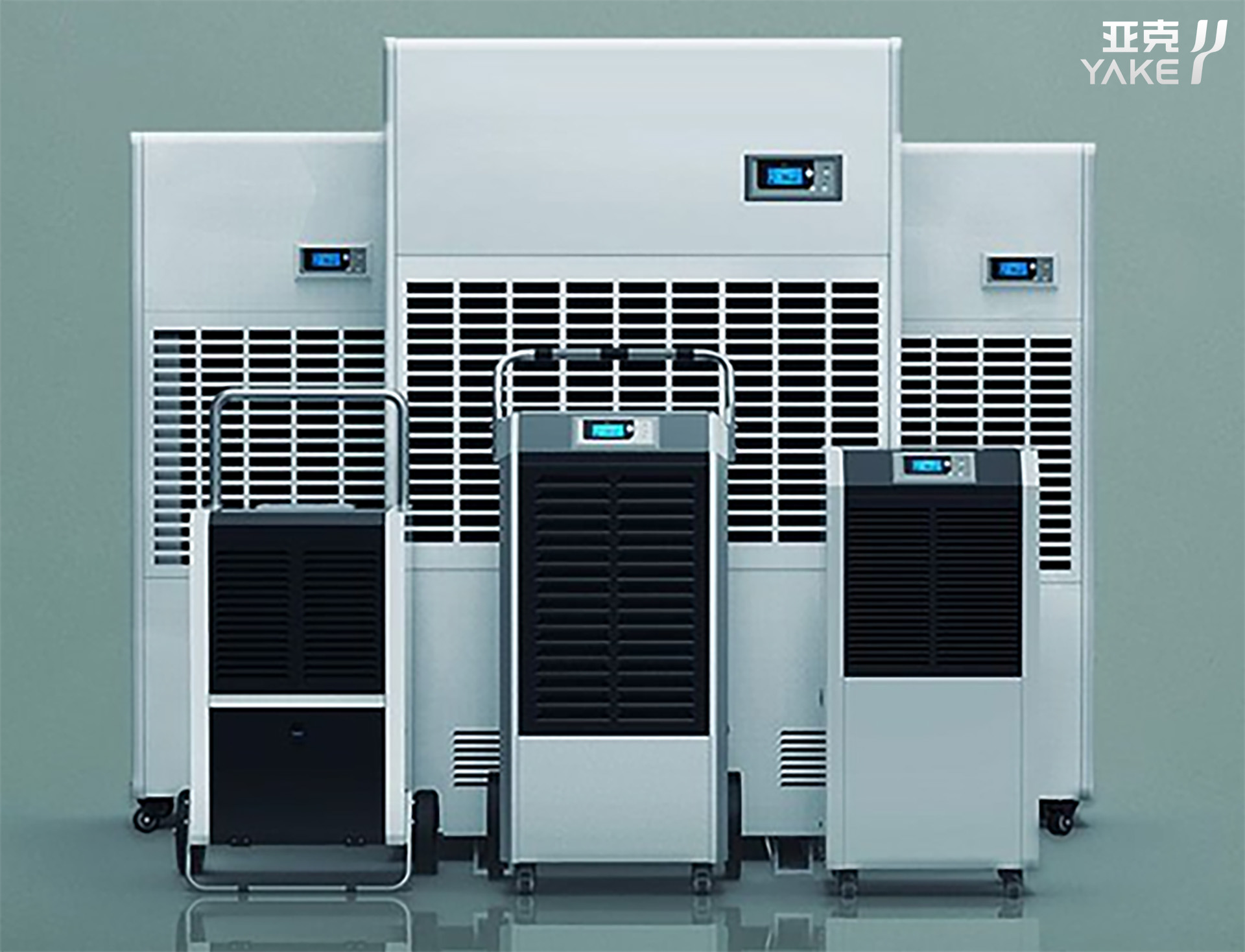
Contact us to find the best place to buy your Yakeclimate solution today!
Our experts have proven solutions to keep your humidity levels in check while keeping your energy costs low.