
Building 34, No. 535 Shunfeng Road, Hangzhou, Zhejiang, China
[email protected]
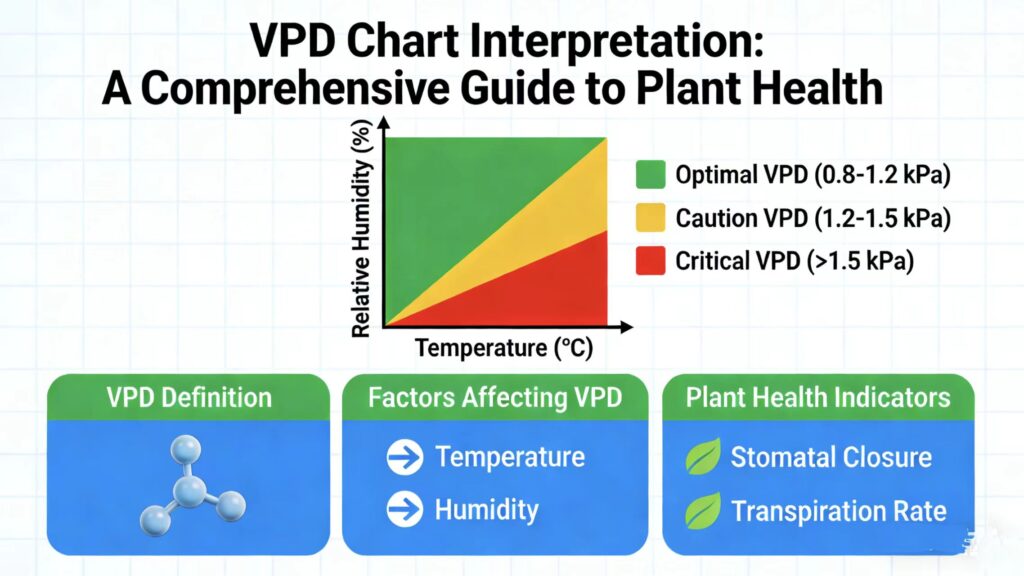

VPD charts are used to guide climate control in indoor grow spaces. VPD, or vapor pressure deficit, reflects the difference in moisture between the air and the plant leaves. Maintaining VPD within the appropriate range facilitates water absorption, nutrient utilization, and robustness in plant growth. Growers use VPD charts to detect whether the air is too dry or too wet for their plants. Charts provide the optimal temperature and humidity blend for each stage of growth. Easy-to-understand color zones and numbers aid growers in tuning their climate systems. With these VPD charts, you can expect faster growth, less disease, and higher yields. The following sections dissect reading VPD charts and applying them in everyday cultivation.

Vapor pressure deficit (VPD) is the difference between the amount of moisture the air can hold when it is fully saturated (saturation vapor pressure, SVP) and how much it actually holds (actual vapor pressure, AVP). VPD indicates how much more space there is in the air for water vapor. For growers, this gap is crucial as it governs the amount of water plants lose through their leaves, which in turn determines plant health, yield, and stress. In indoor and greenhouse environments, maintaining VPD within an optimal range, typically between 0.45 and 1.25 kilopascals (kPa), promotes healthy, robust plant growth.
Vapor pressure is the pressure water molecules exert in the air. Plants transport water from their roots to their leaves, where it evaporates out of pores known as stomata. VPD serves as an impetus for this water loss. To calculate VPD, you take the difference between the saturation vapor pressure and the actual vapor pressure, both of which are functions of air temperature and humidity. For most plants, it is beneficial to remain in the 0.4 to 1.6 kPa VPD range, but every species and even every growth stage has its own sweet spot.
When VPD is just right, stomata open and close in a healthy rhythm, allowing plants to absorb CO₂ for photosynthesis. If VPD is too high or too low, gas exchange gets out of whack. Over time, poor VPD management can stunt growth or induce other stress symptoms.
Temperature modifies how much water air can contain. As temperatures increase, saturation vapor pressure increases. Therefore, VPD increases if humidity remains constant. This forces plants to transpire more rapidly. Leaf temperature matters too—it’s often not the same as air temperature and can be hard to measure. The ideal VPD occurs when air and leaf temperatures are consistent, typically between 20°C and 28°C for most crops. If temperatures swing or spike, VPD can leap by over 0.4 kPa, which studies indicate can reduce yields by up to 20%.
Relative humidity indicates how saturated air is with water. When humidity falls, VPD increases and plants transpire more water. Maintaining humidity is a large portion of VPD management. If air is too dry, plants get stressed and wilt. If air is too wet, they may not transpire enough, resulting in weak growth. By regularly measuring and controlling humidifiers or dehumidifiers, you maintain a steady VPD, which is crucial in enclosed environments.
Transpiration is the process of water traveling from roots to leaves and out into the air. It cools plants and helps suck nutrients up from the soil or growing medium. VPD determines how quickly this occurs. High VPD accelerates water loss. Low VPD decelerates it. Young plants require lower vapor pressure deficit in order to avoid stress, while mature plants tolerate higher vapor pressure deficit much better.
Key factors to balance VPD for top plant transpiration:
VPD is essential for plant health, growth, and yield. VPD informs us of how much moisture leaves can evaporate into the air. When VPD is in the proper range, plants can breathe, feed, and thrive. Excessive or deficient VPD results in stress and reduced yield. It transforms the plant’s internal water and nutrient circulation and impacts the plant’s pest and disease resistance. Most crops do well when the VPD is between 0.45 and 1.25 kPa, but the optimal range varies depending on species and growth stage.
VPD influences how efficiently roots can draw up nutrients. When VPD is just right, plants use water efficiently and nutrients flow easily from roots to leaves. If VPD is too low, water uptake slows, resulting in difficulty for plants to receive what they need. If VPD is too high, water exits the plant too quickly and the roots cannot replenish it. This results in nutrient deficiencies, such as calcium or magnesium. Maintaining VPD in the optimal range ensures plants receive consistent nutrients, which keeps leaves lush and growth vigorous.
There’s a lot more at stake with VPD than how fast plants grow. When VPD is right for the crop and stage, photosynthesis hums and energy flows to growth. High VPD cools leaves but can dry them out. Low VPD stunts growth as water and gas exchange decline. For veg and flower, consistent VPD leads to smoother growth and larger, higher-quality yields. Too much swing in VPD can literally stall your growth or leave you with weak stems and leaves.
VPD aids in pest prevention. Plants stressed by a bad VPD give off signals that attract pests. Fungi and mold flourish when VPD is too low, as wet leaves provide a haven for spores. Right VPD leads to drier leaves and less stress, so your plants can deploy their natural defenses. In a good pest management plan, VPD is your ally for a healthy crop.
Water use is contingent upon VPD. Correct VPD lets plants use water efficiently, so less is wasted. Growers can schedule irrigation to correspond with VPD, conserving water and reducing expenses. When VPD is optimal, plants do not experience water stress, even in dry or hot spots. For organic agriculture, VPD control reduces water waste and maintains output.
| Consequence | Ignoring VPD | Effect on Plants |
|---|---|---|
| Plant Health | Stress, disease risk | Wilting, leaf burn, mold |
| Yield | Reduced | Fewer, smaller fruits/flowers |
| Quality | Lower | Poor flavor, weak structure |
VPD charts are the bread and butter of indoor growing. They assist growers in visualizing the equilibrium between temperature and humidity, illustrating the amount of moisture plants can transpire through their leaves. A good VPD chart reading skill enables cultivators to immediately adapt their environment and can translate to improved plant vigor and increased yields. Misinterpreting a VPD chart or incorrectly utilizing leaf temperature information are common causes of lackluster performance. For controlled environment growers, mastering VPD chart interpretation is key to achieving optimal results.
The axes are the spine of any VPD chart. You’ll notice temperature, typically in degrees Celsius, running along one side and relative humidity as a percentage along the other. VPD values in kPa occupy the chart grid. Each cross provides a VPD value for a specific temperature and humidity. Axis scale, class! Small changes in either value can shift VPD quickly. For instance, a 2°C increase in temperature at the same humidity can drive VPD up by 0.2 kPa. This granularity helps calibrate the grow space at every crop phase.
VPD charts are typically color-coded or zoned. This ideal ‘zone’, typically represented in green, ranges between 0.8 and 1.4 kPa for the majority of crops. Less than 0.4 kPa is too humid since plants are at risk of mold and sluggish growth. Anything above 1.6 kPa is too dry; plants lose water fast and may wilt. Identifying these zones enables growers to respond quickly. For example, if VPD is too high, increasing humidity or reducing temperature helps. If it is too low, lowering humidity or raising temperature is the remedy. Compensating for plant age is crucial—seedlings require lower VPD, and mature plants tolerate higher.
Sweet spot refers to the ideal VPD values for the crop. For lettuce, it could be 0.8 to 1.2 kPa, but tomatoes might prefer 1.0 to 1.4 kPa. Maintaining VPD in this range allows plants to keep their stomata open, absorbing more CO2 and growing quicker. It is the range in which water loss is consistent, not too rapid and not too slow. Sensor-based monitoring helps growers identify swings before they are harmful because even 0.4 kPa changes can reduce yields by as much as 20%.
Plants exhibit VPD stress immediately. Wilting, leaf curling, or tip burn can indicate VPD is too high. VPD is too low if leaves look swollen or growth is slow. Seek changes after lights turn on, as lighting can rapidly alter leaf temperature. Such timely fixes, including increasing airflow or adjusting humidity, combat stress before it slashes yield. Daily checks keep plants in the safe zone.
A lot of people confuse VPD with relative humidity. They monitor different things. VPD is about the difference between how much vapor is in the air and how much it can hold. Relative humidity is just a percent. VPD relies on leaf temperature, not just air temperature, so inaccurate readings from a rudimentary IR thermometer can mess up the entire chart. Being armed with accurate VPD knowledge helps prevent sometimes costly errors, like overwatering or under-ventilating, that can easily slow growth.
Managing VPD is not merely a matter of adhering to figures on a chart. True mastery is the result of combining data, practical observation, and a solid understanding of your environment. Every expanding environment develops its own idiosyncrasies, and a comprehensive perspective aids in detecting changes before they become pervasive. This ensures crops remain vigorous and harvests robust.
Farmers who focus on their plants, not just the sensors, see subtle shifts before issues become large. Wilting, leaf curl or tip burn can signal a VPD that’s too high, while limp leaves or mold may indicate it’s too low. Seeking out these signs aids in dialing in VPD settings. An infrared thermometer can indicate if the leaf temperature is significantly lower or higher than the air, particularly under various types of lights. Other LEDs may drop leaf temperature by 2.2°C or 3.3°C, altering how you read the VPD chart. Cross-checking readings with a second instrument keeps data reliable, ensuring decisions are based on a firm foundation. Sight adds a dimension, capturing what graphs by themselves may overlook.
Not every plant responds to VPD similarly. Tomato strains, for instance, may tolerate a higher VPD than lettuce or basil. Understanding your crop’s context allows you to shoot the appropriate mark for each. Some traits that help plants handle VPD stress better include:
Factoring genetics into your VPD play avoids generalizing. It means your decisions suit the plant, not just a statistic on a graph.
VPD requirements vary as plants develop. Seedlings require tender care, while flowers can handle a little more strain. Tuning VPD for each stage helps prevent setbacks and enhances health. Research demonstrates that maintaining VPD constant enhances photosynthesis and crop growth, particularly in sensitive crops such as lettuce. At night, target lower RH to avoid mold, as plants are predominantly respiring. Here’s a quick guide:
Some seasoned growers will rely on instinct as harvest approaches, tweaking VPD even if it contradicts what the chart says.
VPD management is about balancing the water in the air with the heat in the air. Each crop and growth stage has its own VPD target, meaning growers need to continuously measure and adjust their techniques. VPD charts are useful, but they’re not universal. Flowering plants, for example, flourish at different VPD levels during their stage.
To strike the perfect VPD, adjust humidity to compensate as ambient conditions change day to day. Humidifiers assist in moisture retention in dry climates or colder months, and dehumidifiers extract excess moisture to prevent mold when the air runs too wet. It requires constant monitoring. Growers must establish humidity setpoints and monitor them carefully, as plant requirements shift when transitioning from the vegetative phase, which is approximately 1.0 kPa, to the flowering phase, which is around 1.2 to 1.5 kPa VPD.
Leaf temperature is important as well. Leaves tend to be 1–3°C cooler than room air, so smart growers check them with an IR thermometer for more accurate VPD readings. Remember, high humidity is difficult to maintain without a humidifier, particularly in arid regions, so frequent tweaking is important.
Maintaining consistent temperatures has a significant impact on keeping VPD within the desired range. HVAC controls both heat and cold, ensuring plants are not stressed by rapid fluctuations. To prevent swings, insulate your grow rooms and keep track of both air and leaf temperatures. Aim for a balance: too warm and VPD spikes, too cool and it drops below where you want it.
Temperature and humidity are a team. If you increase air temperature, VPD increases unless you increase humidity. So watch and tweak both together, not just one or the other. For the vast majority of crops, stay right in that 0.8 to 1.2 kPa comfort zone unless your crop demands something different.
Good airflow contributes to keeping VPD stable by distributing moisture and heat. Employ fans or ducting to circulate air, ensuring uniform conditions for each plant. This eliminates wet or dry spots, which can disrupt VPD and stress your crop.
Bad air flow allows humidity to accumulate, increasing the likelihood of mold. Ventilation systems are useful here as they exchange stale, humid air for fresh, dry air. They assist with cooling hot spots and distributing heat on chilly days. Your objective is an even atmosphere with no drafts, no dead spots, and consistent circulation.
Precise VPD is more than chart reading. Growers want to know how tiny changes to their environment, their crop, and their technology impact plant health. Fine-tuning, flexibility, and close attention go a long way, particularly as plants react to stress, light, and day-to-day shifts in climate. With the proper equipment and expertise, cultivators can adjust VPD for each plant and development phase, shaping output and grade.
Advanced VPD Considerations
Where you place your sensors has a huge impact on VPD measurements. Sensor placement near vents, doors, or lights can provide false values. Remember to always position your sensors at canopy height, away from direct airflow and heat sources. This displays the true environment plants experience. Routine checks and calibration are the key. Dirty or old sensors drift over time, so schedule recalibrations. In bigger rooms, deploy multiple sensors and average their readings. Cultivators who bypass attentive dosing can easily miscalculate the environment and either underfeed or overfeed, garnering mediocre results.
Every plant has its own VPD sweet spot. For example, lettuce does best at lower VPD and tomatoes do better at a bit higher. By matching VPD to your crop, you avoid stress and disease like Powder Mildew which can occur if VPD gets too high. It’s not cookie-cutter. Know your crop’s requirements. Look for new research as the VPD science continues to evolve. Tuning your VPD for every species or even growth stage enhances quality and yield. For late-stage crops, maintaining 55–60% RH at 25°C or 65–70% at 30°C maintains VPD at the plant-friendly 1.3–1.4 kPa.
Diurnal swings mean temperature and humidity shift as day turns to night. VPD increases when lights turn on and decreases when lights turn off. Disregarding this can endanger plants. Plant leaves often run 3 to 5 degrees Fahrenheit cooler than the air, so check both leaf and room temperature. Light intensity heats leaves, increasing transpiration and causing VPD to fluctuate quickly. Manage both day and night VPD, not just one. See the sample swings below:
| Time | Temp (°C) | Humidity (%) | VPD (kPa) |
|---|---|---|---|
| 06:00 | 20 | 80 | 0.45 |
| 12:00 | 28 | 60 | 1.30 |
| 18:00 | 25 | 70 | 0.95 |
| 00:00 | 22 | 75 | 0.60 |
Knowing these patterns enables growers to calibrate climate tools and prevent extreme fluctuations that stunt growth or induce mold.
To read a VPD chart well is to give your plants the right space to breathe, drink, and grow. Precise VPD regulation can assist plants to absorb water and nutrients. This creates strong stems, thick leaves, and steady blooms. Growers who interpret VPD charts effectively enjoy greater yield and less waste. For instance, lettuce in a sealed room can remain crisp and mold free thanks to strict VPD monitoring. Orchids can bloom longer with less leaf burn. Every crop has its sweet spot, and the chart makes it easy to recognize. To increase your crop vitality and reduce expenses, experiment with a VPD chart in your area. If you want to explore further or need assistance, contact our team for additional advice.
A VPD chart illustrates the interplay between temperature, humidity, and vapor pressure deficit. It assists growers in locating the perfect growing climate for plants.
Proper VPD chart interpretation allows cultivators to fine-tune temperature and humidity levels to maximize plant transpiration, minimize stress, and increase yields.
Most plants like a VPD of 0.8 to 1.2 kPA during veg and about 1.2 to 1.6 kPA during flowering. Always adapt to your specific plants’ needs.
Yes, VPD charts aid with most plants, but optimal VPD for different species may differ. Never forget to consult your plant’s specific needs.
Check your grow room’s temperature and humidity. Then, compare these values to the VPD chart to keep your plants in the recommended VPD range.
If VPD is too high, plants lose too much water and become stressed. If it is too low, plants can’t transpire enough, risking mold and stunted growth.
Yes, lots of apps and online calculators spit out VPD numbers quickly. These tools make it easier to track and tweak your indoor climate.


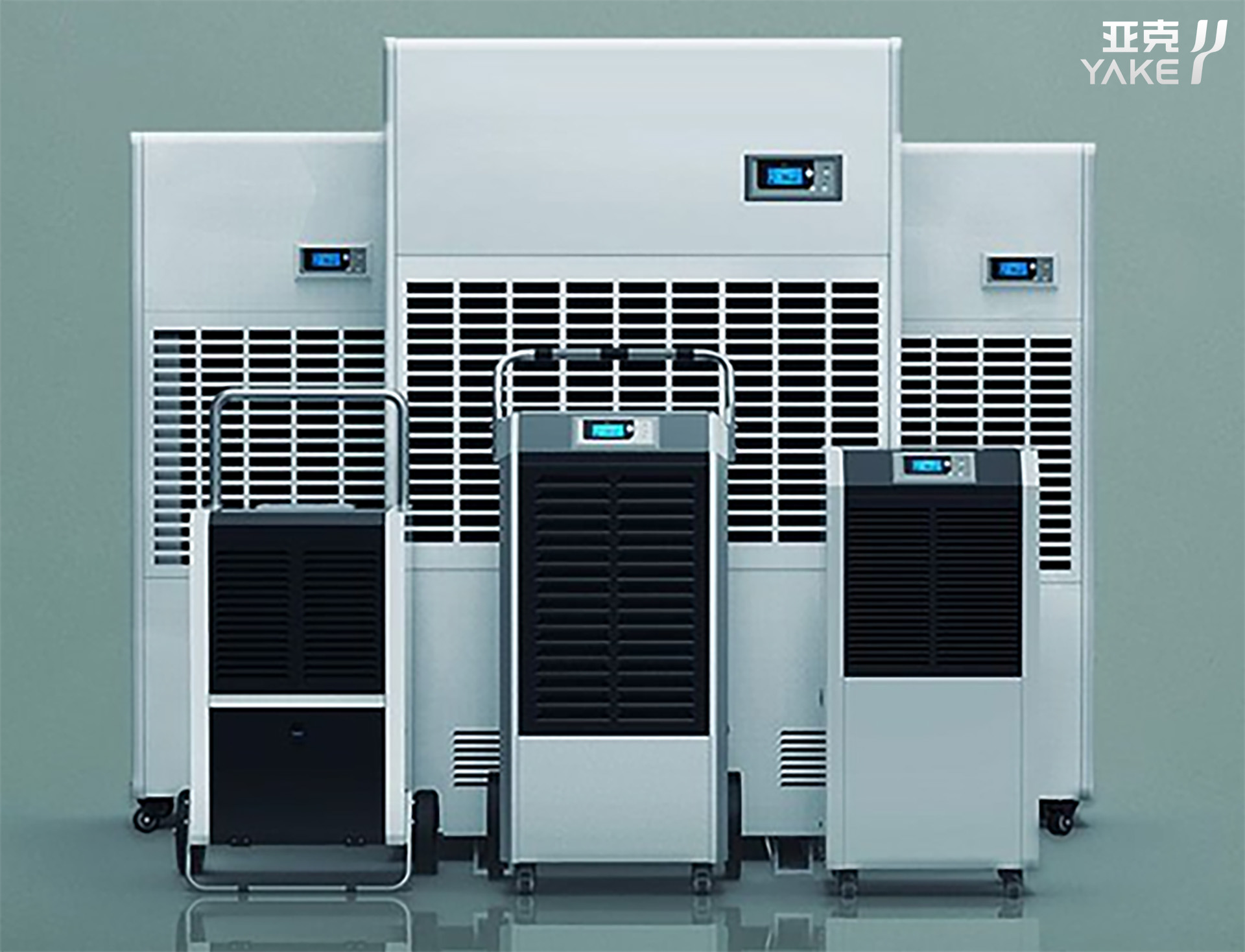
Contact us to find the best place to buy your Yakeclimate solution today!
Our experts have proven solutions to keep your humidity levels in check while keeping your energy costs low.