
Building 34, No. 535 Shunfeng Road, Hangzhou, Zhejiang, China
[email protected]
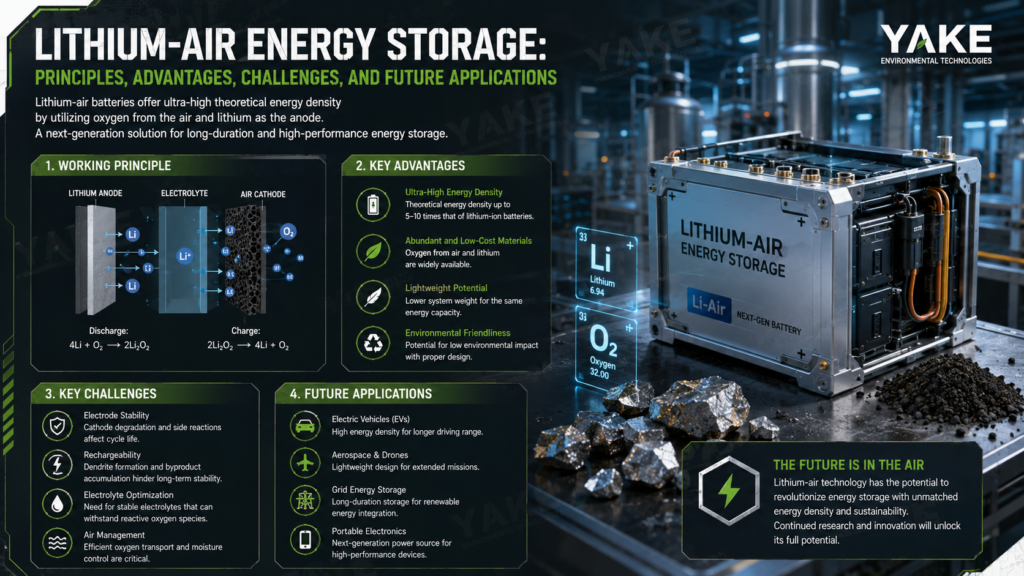


In lithium-air energy storage, the oxygen is typically drawn from ambient air and lithium is used as the anode. These aim for ultra-high theoretical energy density, in some designs exceeding 1,000 Wh/kg, generating intense attraction for long-range EVs and grid storage. Modern research targets stable electrolytes, oxygen-selective cathodes, and management of lithium peroxide deposition to extend cycle life and round-trip efficiency. Major obstacles remain, however, such as limited rechargeability, parasitic reactions with CO₂ and H₂O, and safety concerns associated with lithium metal. The remainder of this post steps through operating principles, major cell architectures, technical challenges, and potential roles in future industrial and grid energy systems.
Here’s how lithium-air batteries pack in energy: they pair lithium metal with oxygen from air. Upon discharge, lithium reacts with oxygen to form lithium oxides and release electrical energy. At charge, an external power source decomposes those oxides to lithium and oxygen. The cell operates on the same fundamental half-reaction as other lithium systems, Lithium reacts to form lithium ions and electrons, but the open cathode that inhales air makes this chemistry very different from sealed lithium-ion packs found in modern industrial equipment or backup systems.
The anode is metallic lithium with ultrahigh specific capacity, at approximately 3,840 mAh/g, which is way beyond graphite in typical lithium-ion cells. When discharging, lithium atoms at the anode surface lose electrons to the external circuit and migrate into the electrolyte as Li⁺ according to the half-reaction Li goes to Li⁺ plus e⁻. Those electrons pass through the load while Li⁺ ions drift through the electrolyte toward the cathode.
On the cathode side, these Li⁺ ions subsequently combine with reduced oxygen to become lithium oxide (Li₂O) or lithium peroxide (Li₂O₂), contingent on the specific design and electrolyte. These solid LiOx products retain the spent state of the anode reaction and accumulate with age, clogging active interfaces.
Stable anode behavior is critical for cycle life, particularly in large industrial packs anticipated to undergo numerous deep cycles. Unstable lithium growth can create dendrites, which are needle-shaped deposits that puncture separators, causing internal short circuits and increasing fire danger. Any real plant deployment would require tight control of anode morphology, temperature, and local humidity, which maps directly to air handling and dehumidification strategy around the pack.
Oxygen from ambient air is reduced at the cathode during discharge, accepting electrons from the external circuit and reacting with incoming Li⁺ to form Li₂O₂ or Li₂O. This ORR dictates the voltage profile at large. Li–air is typically dominated by cathode performance as most of the voltage drop occurs there.
The cathode is a highly porous carbon or other conductive framework. This architecture allows oxygen to permeate the electrode, electrolyte to imbibe the pore walls, and LiOx byproducts to crystallize along interior surfaces. The very porous network that enables high capacity also becomes clogged as insoluble, poorly conducting LiOx phases precipitate and deposit, which limits capacity and cycle life for nonaqueous Li–O₂ cells.
Controlling where and how these discharge products settle is a key issue. Thick Li₂O₂ films sever electronic and ionic channels, raise overpotential, and complicate recharging. In 2017-style cells, the charge overpotential is much higher than discharge overpotential, which wastes energy as heat and stresses components.
Efficient cathode catalysts reduce these overpotentials for both oxygen reduction and oxygen evolution. Materials such as doped carbon, metal oxides, or nanostructured composites are being researched to accelerate kinetics, enhance reversibility, and allow the high theoretical specific energy of approximately 1,300 watt-hours per kilogram and energy density near 1,520 watt-hours per liter to be approximated in practical implementation.
The electrolyte transports Li⁺ between anode and cathode and must remain stable against lithium metal, oxygen, and reaction intermediates such as superoxides. Any degradation in this process reduces Coulombic efficiency and spurs side reactions that consume active lithium and clog pores.
Electrolyte decomposition creates undesirable films and gases, increases impedance and reduces life, particularly under high-rate or high-temperature industrial duty. This is at the heart of why today’s non-aqueous Li–O₂ prototypes falter in cycle count and reliability.
Four main electrolyte families are under study: aprotic liquids (non-aqueous), aqueous systems, solid-state electrolytes, and mixed aqueous-aprotic hybrids. Aprotic designs prioritize higher voltage but encounter robust assault by oxygen radicals. Aqueous systems optimize certain reaction pathways but introduce corrosion and gas management challenges. Solid-state and hybrid designs seek improved safety and longevity. They might suit controlled, low-humidity clean rooms that numerous factories already keep with high-end dehumidifiers.
Oxygen is the active cathode reactant and allows such high theoretical energy because the cell draws it from the outside rather than storing it in the cell. The cathode requires continuous exposure to ambient air, yet must exclude water vapor and other impurities because moisture degrades electrodes and alters reaction mechanisms.
Unregulated oxygen flow causes side reactions and local drying or flooding and uneven LiOx growth. Ambient air has CO₂, moisture, and dust that can poison catalysts, alter discharge products, and increase overpotentials. In industrial settings, this suggests integrated filtration, drying, and purification at the cathode inlet, where careful humidity control and air quality monitoring become part of the energy system instead of simply a building service.
Lithium-air occupies a tiny niche of battery concepts that seek to escape the constraints of current lithium-ion. It targets far greater energy per kilogram and per liter, at a scale that begins looking comparable to liquid fuels such as gasoline. That type of step change counts in the world of electric vehicles or grid storage, or any system where engineers struggle to conserve weight and space while remaining efficient and safe.
The real appeal is energy density. By the numbers, lithium-air cells have a theoretical specific energy of approximately 1,300 watt-hours per kilogram and approximately 1,520 watt-hours per liter. A few routes even suggest top ranges around 11,000 watt-hours per kilogram, though that is a long way from reality. For comparison, gasoline contains about 12 to 13 kilowatt-hours per kilogram of chemical energy, so a fully developed lithium-air system could begin to compete with a full fuel tank, without the combustion.
That’s a massive step up from today’s lithium-ion packs, which clock in around 200–300 W·h/kg at pack level in several EVs. If engineers could get even a fraction of lithium-air’s theoretical value into a stable commercial cell, an electric car with the same pack mass could run several times farther or use a much smaller pack to reach the same range. That tradeoff benefits stationary storage because less material is required to store the same megawatt-hours.
| Chemistry | Specific energy (W·h/kg) | Energy density (W·h/L) |
|---|---|---|
| Lead–acid | 30–50 | 80–100 |
| NiMH | 60–120 | 140–300 |
| Li‑ion (today) | 150–300 | 250–700 |
| Li–air (theoretical) | 1,300–11,000 | ~1,520 |
Lithium-air utilizes lithium and oxygen as its primary active materials. Lithium is already an integral component of contemporary cells, and oxygen is inhaled from air or contained within a secondary tank. Thus, the fundamental feedstocks are ubiquitous.
This can relieve strain on metals such as cobalt or nickel, which increase both price and supply-chain risk. Less reliance on those inputs assists worldwide purchasers who operate gigafactories and long provide traces.
Less expensive, more abundant materials fit nicely with sustainability mandates and lifecycle goals that numerous facilities now confront. With fewer rare elements, recycling and waste processing may be more straightforward and scalable for large-scale energy storage.
That high specific energy means that a given kWh can weigh significantly less than a lithium-ion pack, which is super important for anything that’s mobile. In mobility, every kilo spared can be allocated to cargo, safety equipment, or additional range rather than lugging around dense batteries.
This is why electric aircraft and drones feature on nearly every lithium‑air roadmap. A lighter pack makes a 20-minute drone flight last an hour or more or makes regional electric aircraft practical with meaningful passenger loads. Small autonomous vehicles and delivery bots experience the same benefits.
Industries that benefit span aerospace, logistics, defense, off-grid power, and premium mobile equipment. Even consumer electronics could shrink or run longer. Laptops, AR headsets, and industrial handheld devices all benefit when energy storage takes less space and mass.
Here’s why researchers have pursued lithium‑air since the first proposal in the 1990s and why it took off recently, with major strides in catalysts, electrolytes, and solid‑state designs. In 2023, one solid‑state lithium‑air cell concept went beyond 1,000 cycles in the lab, indicating increasing engineering maturity if not factory-floor readiness.
Lithium‑air systems offer high specific energy. They are distant from commercialization. The main blockers fall into three linked domains: unstable materials, harsh electrochemistry, and tough engineering trade‑offs. Poor rate capability, low energy efficiency, and short cycle life all stem from this threesome. For plant and facility teams, that means Li‑air is not near production yet. Its problems echo familiar issues: moisture, contamination, gas handling, heat, and long‑term stability.
Key obstacles cluster around:
High-priority issues are the safety of lithium metal, oxygen and moisture control, and the degradation of air electrodes and electrolytes since they establish rigid limits on cycle life and reliability.
Ongoing research directions include:
Air electrodes in Li-air cells are subject to harsh structural transformation with cycling. Discharge products such as Li2O2 form and clog pores, then do not totally dissolve on charge. Active surface area plummets, oxygen transport drags, and apparent capacity disappears way earlier than in conventional lithium-ion. Insulating films and side products coat carbon and catalyst locations, which obstruct reaction areas and increase cell overpotential. The carbon itself can corrode at high potentials in the presence of reactive oxygen species, which shifts pore size, roughness, and wetting behavior in difficult-to-reverse ways. Mechanical stress adds another layer: repeated growth and shrinkage of solid products cause cracking, particle detachment, and loss of electrical contact in the air electrode network. Binder fatigue and gas-channel collapse can manifest as drastic declines in rate capability under increased current. To track these modes in real time, labs now lean on in-situ and operando tools: X-ray diffraction and tomography to see phase and pore changes, Raman and infrared spectroscopy to follow product chemistry, and electrochemical methods like impedance spectroscopy to separate charge-transfer loss from transport limits. For industrial scale cells, modest but frequent DC resistance measurements, reference electrode configurations, and capacity-versus-time trending will probably be the pragmatic monitoring arsenal.
Most liquid electrolytes currently employed were designed for lithium-ion, not for contact with solid Li₂O₂, superoxide, and pure oxygen. In Li-air cells, these species degrade typical carbonate solvents and numerous salts, resulting in decomposition evident as gas evolution, viscosity alteration, and color changes. Those breakdown routes generate damaging side products, from lithium carbonate to polymeric films, that coat both the lithium anode and the porous air cathode. Once those layers get thick, they impede ion transport, reduce accessible capacity, and trap irreversible losses. That’s a smack on round-trip energy efficiency and cycle life. The field is moving toward more robust systems: ether-based solvents, ionic liquids, and solid or gel electrolytes that better tolerate aggressive oxygen chemistry. Any candidate must be vetted not only for bulk stability but for compatibility at every interface — particularly with lithium metal and with oxygen at the cathode. Testing currently couples traditional electrochemical cycling with gas analysis, surface spectroscopy, and accelerated aging to evaluate how the electrolyte performs under realistic oxygen partial pressure, humidity, and temperature.
Lithium‑air chemistry looks simple on paper: lithium plus oxygen. In actual air, water and carbon dioxide interfere. Water interacts with lithium metal and with discharge products, and carbon dioxide facilitates the formation of lithium carbonate and other carbonates that are more difficult to eliminate on charge. Even tiny quantities of these impurities reduce cycle life, damage energy efficiency, and introduce safety issues. One fundamental hurdle is that lithium is highly reactive with water, and ambient moisture can be pulled into the cell if seals and gas pathways aren’t meticulously managed. For aqueous lithium‑air, making it work hinges on preventing lithium metal from coming into direct contact with water, which is why scientists are investigating lithium‑conducting glass ceramics as solid separators between the metal anode and aqueous catholyte. These ceramics conduct lithium ions but block liquid water, but are brittle and add internal resistance. That combination of brittleness and ohmic loss is a serious impediment when you attempt to scale to larger cells. To keep oxygen clean during operation, several methods are under study: dedicated oxygen tanks instead of ambient air, pre‑dryers and carbon dioxide scrubbers in the inlet line, membrane filters that pass oxygen but reject water and acid gases, and closed‑loop oxygen recirculation with inline dryers, similar in spirit to gas handling in fuel‑cell systems.
Cyclability is how many helpful charge-discharge cycles a cell can provide before capacity or efficiency dip under a defined threshold. In Li-air, poor cyclability is still one of the biggest gaps versus lithium-ion, where thousands of cycles is typical in certain formats. Here the primary culprits are product build-up and irreversible side reactions. Each cycle leaves behind a residue of Li₂O₂, Li₂O, Li₂CO₃, or organic films that do not fully decompose on charge. Over time that residue clogs pores, increases impedance, and captures lithium in electrochemically dead forms. Low accessible discharge capacity, poor rate capability, and low energy efficiency all trace back to this absence of clean reversibility. Modeling aids map how oxygen, ions, and electrons flow through porous carbon-based electrodes and where products nucleate. Existing computational power usually restricts atomistic models to unit cells of around 100 atoms, which complicates modeling realistic pore networks and long-term aging. Multi-scale approaches are beginning to close that gap, but we’re still a long way from being able to design “first-time-right” structures for long cycle life. For commercial targets, Li-air will be judged against lithium-ion benchmarks: cycle counts in the hundreds at minimum for niche applications and into the low thousands for broad industrial use. That will necessitate not simply superior materials but superior cell and pack design, where gas paths, seals, thermal control, and even humidity management combine to impede side reactions and maintain the active network open. In that respect, the same discipline employed today to keep moisture and contaminants in check inside high-end production environments will probably prove necessary inside Li-air cells, too.
Lifecycle footprint for lithium-air storage spans from raw ore to recycling or disposal. Whenever you add a stage, it shifts where emissions, waste and risk sit in your plant-wide carbon and compliance picture. This requires the same discipline you already apply to HVAC, chillers and dehumidification assets.
Lithium-air cells still need lithium chemicals, conductive carbons, binders, electrolytes, and housings, despite the promise of higher specific energy. Lithium’s carbon footprint alone is estimated at 35.2 tons of CO₂ per ton of lithium, with lithium carbonate or hydroxide extraction contributing approximately 2.8 to 17.1 tons of CO₂ per ton of lithium carbonate equivalent. In brine operations, water demand can be as high as 65 percent of the local supply, generating obvious tension with agricultural and municipal users and increasing risk for permits and community acceptance.
For plant managers, this upstream profile frames the trade-off: less mass per kilowatt-hour than today’s lithium-ion, but still tied to mining regions with tight water and emissions constraints. Recycled feedstock is relevant in this regard. For lithium-ion, recycled content in manufacturing reduces energy use by around 74% and some impact indicators by 72%, 59%, and 57% relative to virgin inputs. Similar closed-loop strategies for lithium-air precursors will be one of the quickest routes to compacting upcoming footprints.
| Raw material/source | Key impact drivers | Typical concerns for industry |
|---|---|---|
| Brine‑based lithium | High water draw, 2.8–17.1 t CO₂/t LCE | Water rights, community pressure, ESG scoring |
| Hard-rock lithium | Higher energy mining and refining | Carbon intensity of grid, mine rehabilitation | | Conductive carbons, binders | Petrochemical feedstock, VOCs in processing | Worker exposure, solvent capture needs | | Recycled lithium-bearing scrap | Lower energy (up to 74% cut reported) | Collection logistics, purity control, regulation |
Manufacturing tends to overshadow the battery footprint. For present-day lithium-ion baselines, approximately 78% of lifecycle emissions are generated by materials and components production. The manufacturing stage for a ternary lithium pack can be as high as 724.2 kgCO₂eq in a complete-pack lifecycle of about 1.38 tonnes CO₂eq, where a further 22% originates from module and assembly processes. Lithium-air will change the process flow, but unless cell plants operate on low-carbon power and slim thermal management, the emissions portion will probably remain front-loaded.
Cleanroom dry rooms, solvent recovery, precision coating, and high-temperature steps are all energy-heavy. It’s where climate infrastructure, including industrial dehumidifiers, silently shifts the statistics. Tight humidity bands reduce scrap rates for electrodes and air electrodes, increase yield, and reduce drying cycles, resulting in less material wasted and less energy per usable kilowatt-hour. In practice, that could mean switching to high-efficiency desiccant systems with heat-recovery wheels, matching dew point closer to process limits instead of over-drying, and controls that modulate both airflow and regeneration heat by actual load, not fixed setpoints. These steps don’t alter the chemistry, but they cut indirect emissions and assist in maintaining the production footprint of lithium-air cells under current lithium-ion standards.
In use, lithium-air systems ought to have less operational emissions per kWh delivered than combustion engines or on-site fossil boilers, particularly when charged from low-carbon grids or on-site solar. There are no tailpipe gases, but there are still issues to manage: oxygen flow paths, moisture sensitivity, possible formation of reactive intermediates, and thermal stability. Any air-breathing cell additionally draws local ambient conditions into the heart of operation, so humidity, airborne pollutants, and temperature all have a direct impact on degradation rate, round-trip efficiency, and safety margin.
Safe handling needs clear SOPs for leak response, off-gas monitoring where relevant, and cell conditioning in controlled rooms with stable temperature and low, predictable humidity. From an engineering view, installing data logging on charge-discharge cycles, room climate, and degradation markers gives a simple way to build a site-specific lifecycle assessment. Plants that already track kWh, make-up air, and drying loads for coatings or pharma rooms can fold lithium-air assets into the same dashboards and see the real operational footprint in kWh, kgCO₂eq, and maintenance events per MWh delivered.
End-of-life for lithium-air will likely mirror advanced lithium-ion flows: dismantling, mechanical separation, and then hydrometallurgical or direct-recycling routes. For lithium-ion, certain processes already reclaim lithium at nearly 92% purity, which drastically reduces the demand for mining and consequently, the upstream 35.2 tons of CO₂ per ton of lithium and high water draw. The trick is sorting and stabilizing chemistries so that reactive components and any dangerous by-products are neutralized prior to transport and processing.
For plant operators, this step is primarily logistics and compliance, not electrochemistry. Storage conditions, moisture control, and temperature management still matter because degraded lithium-air cells may be more susceptible to air and humidity than regular packs. This connects back to facility-wide climate control and appropriate waste stream separation.
Regulation will track what already exists for lithium-ion: classification as hazardous waste in many regions, mandatory collection schemes, transport rules for damaged or suspect batteries, and reporting on volumes handed to certified recyclers. We anticipate future standards to become stricter on recovery rates and traceability, which makes setting up inventory tracking, environmental monitoring, and audited disposal partners early a smart move for any site considering pilot lithium-air installations.
Lithium-air systems lie on the boundary of electrochemistry where technical feasibility meets impossibility, with theoretical energy density as high as 11,000 Wh/kg and practical targets 5 to 10 times that of lithium-ion. Today’s cells approach 300 Wh/kg, and certain lab designs attempt 1,200 Wh/kg, with over 5,000 cycles for EV and grid use anticipated in the next 5 to 10 years. Their most promising work comes from close collaboration across materials science, electrochemistry, mechanical design, and thermal and moisture control, where precise air and humidity management in actual plants will be important.
Solid-state electrolytes swap those flammable organic liquids for ceramic or polymer-ceramic solids, which drastically reduces leakage risk, eliminates most volatile solvents, and stabilizes the cell during abuse. They serve as a physical barrier between lithium metal and ambient air, which is key in lithium-air cells that still have to contend with moisture and CO₂ in the inlet stream.
The smart move is to boost lithium-ion conductivity in these solids to values near 10 to the power of negative three to ten to the power of negative two S/cm while maintaining good contact with lithium metal. One highlight is a solid-state lithium-air battery that operated in ambient air for more than 1,000 cycles, leveraging a solid electrolyte and a trimolybdenum phosphide (Mo₃P) catalyst to facilitate a four-electron oxygen reaction, dramatically increasing achievable energy density.
Main material families under test include:
These methods require rigorous air, moisture, and temperature control during manufacture and use, in the same sort of precise climate regulation that many industrial facilities already employ on paint lines, coating rooms, and dry rooms.
Lithium-air cells require fast oxygen reduction and oxygen evolution kinetics at the air electrode, or internal resistance and round-trip energy loss remain too high. Advanced catalysts affect not only the overpotential but they affect the reaction pathway, enabling us to achieve higher energy density and longer life with less heat and fewer parasitic reactions.
A handy comparison table of these catalysts and their metrics, including overpotential gaps, cycle count, rate performance, and tolerance to contaminants, helps engineers choose tradeoffs for EV, drone, or stationary storage designs.
Protective coatings on lithium metal and air electrodes aim to inhibit dendrite formation, prevent parasitic reactions, and keep discharge products from blocking pores. Thin, conformal layers assist in isolating sensitive interfaces from trace moisture and CO₂ that even quality dry-room and dehumidification systems cannot entirely eliminate.
Typical materials are inorganic films such as Al₂O₃, Li₃PO₄, LiF, Li₇La₃Zr₂O₁₂ and polymer interlayers that provide elasticity and improved mechanical contact. By engineering thickness and composition, the layer halts side reactions and allows ions rapid mobility, targeting super low impedance even at high current.
Next-generation cell designs commonly merge a solid-state electrolyte, a customized catalyst like Mo₃P, and designed protective layers as a stacked unit. That stack then couples with rigorous external regulation of gas purity, humidity, and temperature, just as top-tier industrial lines already tie battery processes with cutting-edge dehumidification and air-handling systems.
Lithium-air energy storage only becomes useful for plants once it clears three tight filters: technical scalability, environmental trade-offs, and policy coordination. Transitioning from coin cells in dry rooms to container-scale systems on actual sites involves confronting safety and system complexity issues and tough questions regarding cost and supply chains.
Industrial utilization of lithium-air requires rigorous regulation of oxygen, humidity, and temperature. Cells that expose lithium metal and porous air electrodes to ambient air can only sit within sealed, monitored enclosures with controlled gas composition, explosion-rated ventilation, and fire-rated partitions. This is similar to how many labs deal with flammable solvents or high-pressure gas lines.
Thermal runaway plans should be in line with or above existing lithium-ion standards. This means layered detection, including cell-level temperature sensors, gas sensors for oxygen deviation and off-gassing, quick mechanical isolation, and clean shutdown paths for inverters and air-management units. Fixed aerosol or water mist, leak trays, and double-containment piping for electrolytes reduce the probability that a single fault becomes a room event.
Safe operation comes down to human and mechanical factors. Workers require task-oriented training for charging, shutdown, inspection and emergency response, as well as explicit boundary protocols for outside contractors. Plants would possibly require Class I, Division 2 (or whatever the equivalent is) electrical gear near packs, non-sparking tools and gas-rated PPE when working on enclosures.
Everything, even a near miss, is recorded with root-cause analysis and connected back into the design and procedures. Shared databases across sites help turn local lessons into global practice, just as mature process safety programs do today.
Lithium‑air systems introduce complexities beyond a “basic” lithium‑ion array. The stack combines electrochemical cells, solid‑state electrolytes, air passageways, filters, and catalysts like trimolybdenum phosphide (Mo₃P), along with gas‑handling modules to maintain oxygen and humidity levels. This drives plants toward close humidity and contamination management from the outset because trace water or airborne contaminants can degrade air electrodes or provoke side reactions.
Connecting these stacks to existing grids or DC buses is not plug and play. Sites need to pair dynamic response with inverters, backup generators, and building management systems while remaining within local grid codes and fire regulations. High round-trip efficiency on paper means nothing if the control logic can’t ride through grid faults or coordinate with existing UPS banks and peak-shaving assets.
Such complexity requires sophisticated monitoring and fleet-level management. Drivers require systems that monitor state of charge, state of health, gas composition, cell impedance and cycle counts in real time and that alert when a pack deviates from its anticipated 1,000-cycle life. Over time, those data streams ought to inform life-cycle models with recycling rates today still under 5% globally across many materials.
Transparent flowcharts of the entire system assist both technical and security groups. Block schemes that map air paths, lithium paths, control loops and tie-ins to dehumidifiers, HVAC and fire systems make design reviews and regulatory sign-off faster and more reliable.
On cost, lithium-air has to compete with lithium-ion, sodium-ion, and flow batteries that already scale. High specific energy may reduce capital expenditures per kilowatt-hour at the system level, but only if materials, catalysts, and solid electrolytes can be manufactured at scale and managed in conventional factories. Supply chains matter here. China’s dominance in lithium refining sets a risk baseline and pushes policymakers and buyers to look for diversified and secure sourcing.
Market adoption will hinge on three things: proven cycle life close to lab results, for example, greater than or equal to 1,000 cycles under realistic duty, stable round-trip efficiency, and credible safety and recycling routes. Integration into a circular economy is a must if plants want to keep pace with tightening regulations, but global recycling rates for many battery materials remain below 5% today. That gulf compels early design decisions toward recyclable lithium, catalyst reusability, and low-impact solid-state electrolytes.
Before general deployment, the industry requires criteria and approvals that move past lithium-ion molds. Protocols to test for abuse, to understand off-gas behaviors, to plan for air-management failure modes, and for end-of-life handling should reside under standards bodies that are supported by pilot projects in microgrids, data centers, or renewable-heavy industrial parks. Those pilots can double as testbeds for policy coordination, where energy, environmental, and safety rules harmonize instead of clash.
Teams should track clear KPIs: cost per installed kWh, cost per delivered kWh over life, effective cycle count, unplanned outage rate, incident rate, and measured environmental footprint per kWh (including critical materials and recycling yield). That type of integrated analytical frame helps to stay centered on whether lithium-air truly enables a sustainable, scalable energy transition on actual factory floors.
Lithium air occupies a weird position at the moment. The lab results look promising. The chasms to practical use remain vast. Energy density on paper trumps today’s lithium ion by a long shot. Meanwhile, round trip loss, short life, and harsh cell chemistry still stand in the way of large packs.
For plant teams and grid planners, the bottom line remains straightforward. Lithium air is not a near term option for new storage. It’s more of a long view call option on extremely high energy density systems.
Smart thing to do now is watch pilots, monitor cycle counts and cost curves. As the field data grows, compare it to your own load shapes, safety regulations, and site restrictions prior to making a wager on it.
Li-air batteries utilize lithium metal as the anode and oxygen from the ambient air as the cathode material. In discharge, lithium reacts with oxygen to produce lithium oxides, liberating energy. When charging, this reaction is reversed. This configuration can provide extremely high energy density.
Lithium-air batteries can store multiple times the energy per kilogram of a typical lithium-ion cell. This increased energy density can power longer-range electric vehicles, lighter drones, and dense grid storage. The majority of these designs remain research prototypes and are not ready for mass deployment.
Main obstacles are low cycle life, low round-trip efficiency, sluggish reaction kinetics, and unstable battery components. The lithium metal anode is susceptible to dendrite formation, posing safety hazards. Scientists are investigating novel electrolytes, catalysts, and protective layers to solve these issues.
Lithium-air batteries may reduce material consumption because they utilize oxygen from the air rather than dense cathode materials. Their overall environmental footprint remains unclear. That depends on lithium sourcing, manufacturing, recyclability, and how long batteries last in the real world.
Safety is a key research area. Lithium metal can be reactive and oxygen can fuel a fire. Researchers are crafting solid and stable electrolytes, protective coatings, and smart battery management systems. Before commercial use, lithium-air systems have to go through rigorous safety testing and certification.
Most experts consider lithium-air a long-term technology. We may see small niche prototypes in the 2030s, but big commercial systems will come later. Advancement is contingent upon addressing stability, efficiency, cost, and manufacturing issues. For now, lithium-ion and its variants rule the roost.
If ever matured, lithium-air batteries might power long-range electric vehicles, aviation, marine transport, and dense grid storage. Integration would necessitate new charging standards, safety standards, and recycling protocols. They’d most likely cohabit rather than supplant other storage technologies.


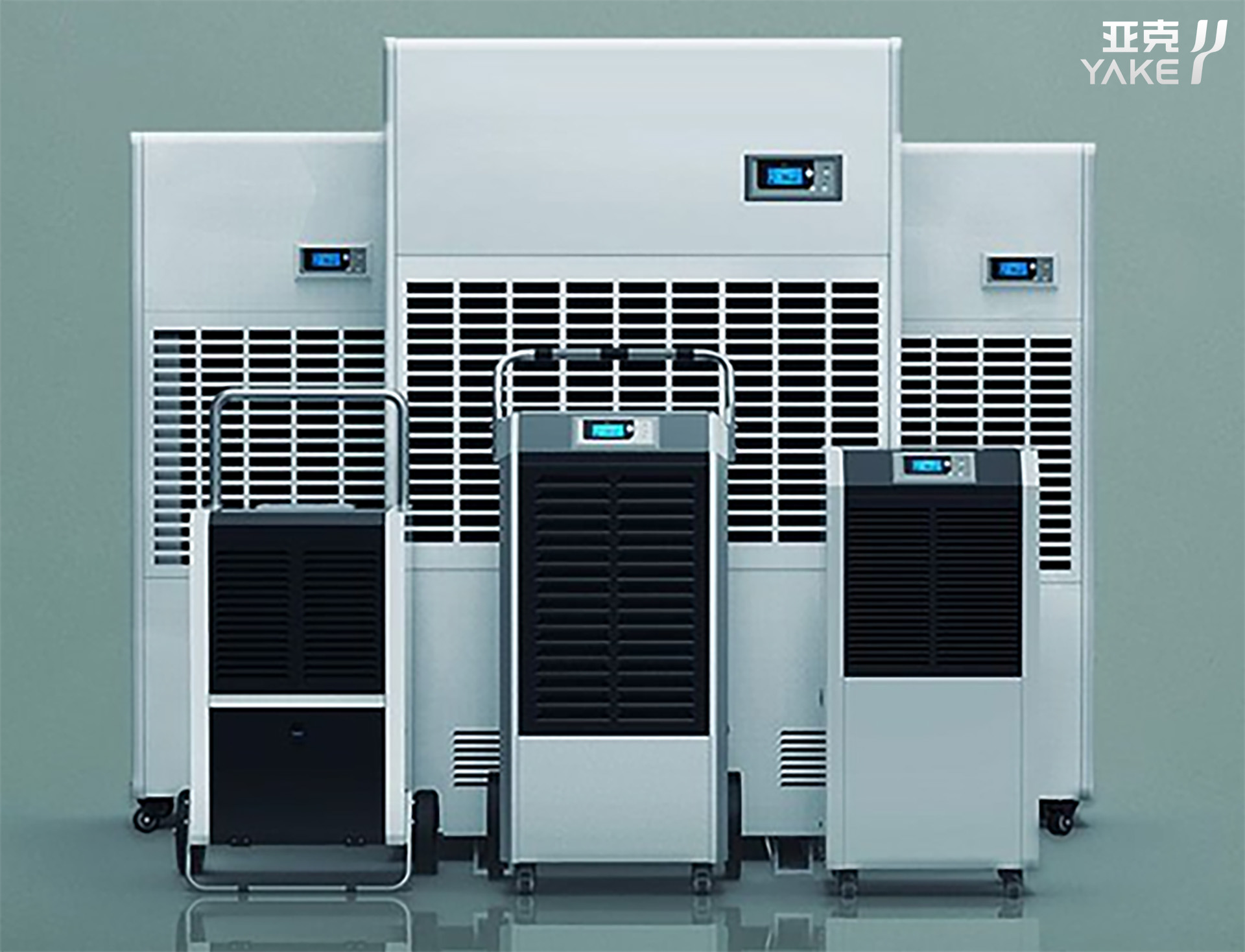
Contact us to find the best place to buy your Yakeclimate solution today!
Our experts have proven solutions to keep your humidity levels in check while keeping your energy costs low.