
Building 34, No. 535 Shunfeng Road, Hangzhou, Zhejiang, China
[email protected]
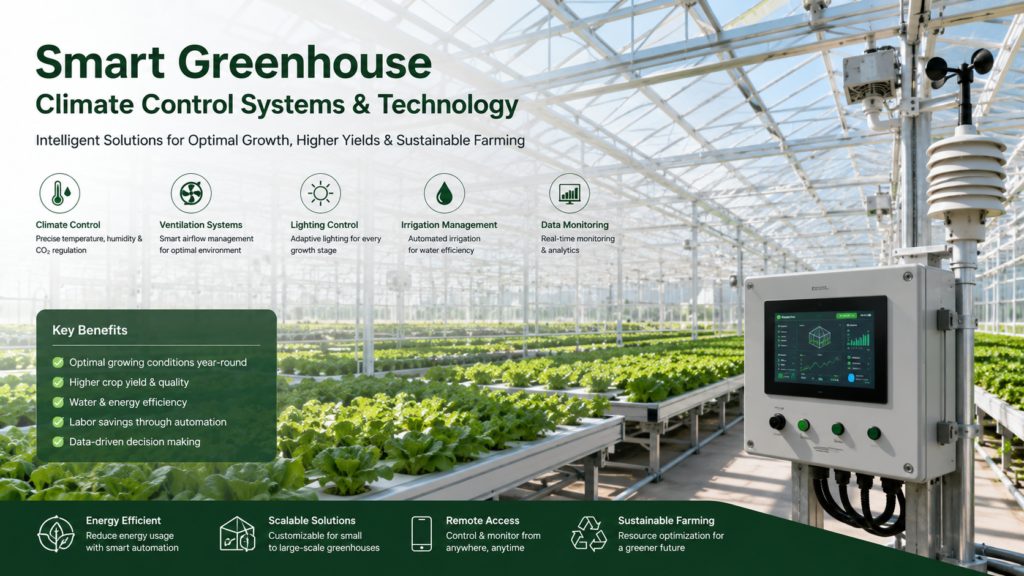


Smart greenhouse climate control systems employ sensors, controllers, and connected devices to maintain temperature, humidity, light, and CO₂ within predetermined ranges with minimal human labor. Greenhouse growers rely on these smart greenhouse climate control systems to reduce waste, conserve energy, and maintain a consistent climate all year round, even when the weather outside is changing rapidly. Sensors monitor air and leaf temperature, vapor pressure deficit, and moisture in soil or substrate in real time. Linked fans, vents, heaters, dehumidification, and irrigation units respond in small increments, not huge oscillations. Data logs assist in identifying trends and optimizing setpoints for every crop stage from propagation to harvest. The following sections demystify how these systems function, essential components, and what to consider before you commit.
Smart greenhouse climate control systems function as an interconnected system that connects sensors, controllers, and automation into a single loop. The aim is simple: hold steady temperature, humidity, CO₂, and light so crops grow in a stable, repeatable way while energy use stays in check.
Smart sensing begins with dense sensor arrays measuring air temperature, relative humidity, soil or substrate moisture, and light intensity at short time intervals. Many growers monitor leaf temperature, CO2, air pressure, and occasionally nutrient solution data. Sensors are located at plant height, near inlets and outlets, and in various climate zones to indicate the true movement of air and moisture throughout the crop and not just by the roof.
IoT greenhouse monitoring makes these readings live and remote. Data flows to the cloud or a local server, then on to a phone or desktop app. Alerts highlight rapid shifts, like a spike in humidity following irrigation or a decrease in CO₂ when a valve breaks, so personnel can respond quickly even off-site.
Multi-crop or stage-per-house systems deploy multiple sensor types in every zone. One zone could run high humidity and softer light for leafy greens, while another runs higher light and tighter vapor pressure difference for fruiting crops. This only functions if the sensors are well positioned and maintained in good condition through regular cleaning, calibration, and prompt replacement of defective units or the entire control strategy begins to drift.
Centralizing processing connects all this data to a single climate computer that samples readings every few seconds, compares them to setpoints, and then determines how to steer the greenhouse. The computer runs transparent logic and control algorithms that consider temperature, humidity, CO₂, light, and outside weather collectively, not in isolation.
Boilers, hot water valves, fans, roof and side vents, evaporative cooling pads, humidifiers, dehumidifiers, climate screens, and CO₂ valves—all devices—sit on the same control network. Staff operate them from one dashboard or app, monitor current conditions and trends, and tweak strategies without traversing the entire site.
Automated response is where the rubber meets the road and the system converts information to action. Using sensor feedback, it controls heating pipes, opens roof and side ventilation, stages exhaust fans, and runs evaporative cooling to maintain stable air temperature and airflow. Humidifiers and dehumidifiers then dial in moisture just right, while thermal energy storage tanks absorb excess heat by day and discharge it at night to flatten boiler peaks.
The controller makes small, frequent adjustments rather than big swings. It may open vents by 3 percent, nudge fan speed, or shift supply temperature a couple of degrees to keep VPD and leaf temperature in a safe band. Shade curtains and thermal screens close or open in stages to eliminate excess solar gain, decrease heat loss at night, and minimize energy demand.
Lighting and shade operate on schedules that correspond to crop stage and local day length. They adjust when clouds or heat waves occur. In multi-zone greenhouses, one structure can host distinct climates for propagation, vegetative growth, and fruiting by driving valves, fans, and screens for each zone on its own curve, so one crop doesn’t impact the other.
Predictive learning adds a forward-looking layer on top of these rules. We pull in weather forecasts and learn patterns, like afternoon storms or night cold snaps, then make heating, ventilation, and screen plans ahead of those changes hitting the crop. Over time, it connects plant stages to ideal patterns of temperature, humidity, CO₂ dosing, and light. It then updates those connections as new seasons and varieties roll through.
Years of greenhouse monitoring data goes into models that first test control strategies in software. ML tools now look for opportunities to reduce energy use peaks and smooth climate curves while still maintaining or increasing yield and quality. Energy savings of 20 to 40 percent are typical when automated screens reduce night heat loss, prevent daytime overheating, and climate equipment operates continuously in a steady, optimized manner instead of turning on and off in bursts.
Smart greenhouse climate control systems connect sensors, software and actuators so the crop grows in a controllable, repeatable environment. They observe temperature, humidity, light, CO2 and even soil moisture in real-time and then tune equipment to meet specific targets for each growth stage.
Smart systems maintain key climate parameters like temperature, humidity, light and CO₂ within narrow boundaries throughout the day and night, so plants remain longer in their optimal growth zone. Sensors monitor air and leaf temperature, vapor pressure deficit, radiation and substrate moisture, then control vents, fans, curtains, fogging and LED lighting. This allows you to drive dedicated recipes for germination, vegetative growth, flowering or fruiting, with setpoints that vary hourly or by stage of growth.
Real-time monitoring and automated control reduce yield loss from heat waves, cold nights, dry air, or sudden humidity spikes. If humidity rises following irrigation, dehumidifiers or venting begin before disease pressure increases. If a hot afternoon drives temperature beyond the threshold, cooling kicks in without waiting for an employee to observe. It can run microclimates within one structure, such as warmer, brighter zones for young plants and milder zones for shade crops.
For commercial growers, this degree of control enables year-round, high-density production at consistent quality. The same greenhouse can grow lettuce at 18 to 20 degrees Celsius and high humidity in one bay, while tomatoes run warmer and drier in another, with separate light and CO₂ setpoints. Sensor data is fed back into crop models, so you calibrate your climate strategy over time and optimize factors like growth rate, internode length, Brix, and even uniformity at harvest.
Sensor data helps climate control systems eliminate waste in water, energy, and fertilizer. Soil moisture probes, drain sensors, and plant-weight scales direct irrigation so you water when the substrate and crop demand it, not by an inflexible schedule. In leafy greens, this can reduce irrigation amounts while sustaining or increasing yield, as the root zone remains balanced rather than oscillating between saturated and dry.
Energy management is another fundamental benefit. Software connects light sensors, tariff schedules, and weather data to manage heating, cooling, and lighting. LED fixtures dim when sunlight is strong and ramp up during cloudy hours or at night. Cooling equipment in hot climates can run in more efficient cycles rather than full-power peaks. This aids growers, particularly those in warm climates, in reducing electricity consumption while still maintaining temperature and light within the crop’s small comfort zone.
Fertilizer goes down too if fertigation is linked to actual plant uptake. Integrated fertigation units blend nutrients to EC and pH targets and modify recipes per stage, reducing run-off and stabilizing nutrient levels. The system automates only when conditions cross clear thresholds, so fans, pumps, and valves operate less often and more precisely, facilitating both lower input costs and more predictable plant responses.
Automation moves regular climate work from humans to code and machines. Rather than having to walk the greenhouse to adjust vents, heaters or irrigation valves, personnel simply program profiles for each zone and let the system maintain the setpoints. That eliminates the need for continuous environmental monitoring and mitigates human error, particularly during nights and weekends.
With that grunt work taken care of, teams can put more hours into scouting, pruning, training, and IPM planning. Central dashboards and a simple UI put all climate data and controls in one place, so a single operator can oversee multiple houses or sites.
With remote access via secure apps or web portals, growers can verify graphs, alarms, or probe status from anywhere. If a sensor identifies an issue, alerts are delivered in real time and adjustments to setpoints or schedules can be made remotely without a site visit. All of this allows bigger or multi-site producers to operate with smaller, leaner crews.
Smart climate control is only fully valuable when it collaborates with the greenhouse shell, structure, and layout. The aim is a unified system, where hardware, software, and architectural design all play to the same tune to reduce energy consumption and maintain crops in their optimal zone.
Structural decisions establish the baseline load. In a ridge-and-furrow layout with aligned roof vents, natural airflow can be directed along the crop rows, reducing the need for fans. Where vents, fans and intake louvers integrate with the frame geometry, the control system can use short, low-speed air paths rather than battling dead zones. Research indicates that reflective shading combined with well-designed vents can reduce annual energy consumption by approximately 30 percent, a feat achievable only if automation and structure are considered holistically.
Sensor placement needs the frame in mind. Climate probes must sit at plant height, away from walls and doors and on both windward and leeward sides. Actuators for vents, screens and dampers are best mounted where mechanics are simple and fail-safe, even during a power cut. This reduces upkeep and keeps control reactions swift and steady.
Thermal storage and heat recovery play a role in this picture. Hot water buffers, ground pipes, or phase change panels can absorb daytime heat and release it at night. In energy-neutral designs, waste heat recovery alone reduces demand by approximately 27%, and renewables contribute an additional 21%, achieving as much as 48% green share. When the control system knows buffer status in real time, it can delay boiler starts, slow fans, or open thermal curtains at the right moment, which lowers peak loads and allows smaller equipment.
Cover and frame materials either assist or oppose the controller. Double or triple covers with high insulation and good light spread keep temperatures more even, so vents and heaters cycle less. Diffuse glass or plastic cuts down on hot spots and leaf burn, whereas clear single film generates sharp peaks that promote frequent vent moves.
Materials have to ‘play nice’ with sensors and automation. Metal frames can protect wireless signals if layouts overlook antenna lines. Some plastics outgas and coat sensor lenses over time, causing drift in humidity and CO₂ readings. Going with coatings and sealants that remain stable helps keep that data pure and prevents false alarms.
Durability counts for sustained climate security. If films sag, seals crack or doors warp, the best control algorithm still chases leaks and drafts. Robust, low-maintenance frames, corrosion-resistant fixings and well-sealed joints make the greenhouse airtight, which is essential when deploying IoT networks and reinforcement learning that relies on accurate data.
Material choice impacts humidity as well. Pervious concrete or unsealed blocks can serve as accidental water traps, altering drying times following irrigation. Easy to wipe clean, non-porous floors and walls make humidity patterns more consistent and predictable, so the system can better time dehumidification and venting to optimize nutrient absorption and growth.
Passive features reduce the frequency with which active systems need to intervene. Fixed or movable shade cloth can keep solar gain in check and reduce peak cooling loads. Roof vents, side vents, and roof windows positioned for natural stack effect provide a stable airflow path, so fans and chillers only supplement when required. In a few designs, this combination has returned energy-efficient investments in as little as six to seven years, often sooner when surplus electricity is fed back to the grid.
Thermal mass, such as water tanks or heavy interior walls, can pick up and store heat throughout the day and release it at night, keeping your greenhouse in a tighter temperature band without constant heater cycling. This mass integrates nicely with efficient solar greenhouses, which can operate critical equipment during the day and store excess power or heat to tide over cloudy periods.
The best solutions combine passive instruments with intelligent active control. IoT sensors deliver real-time insights on temperature, humidity, light, and air quality to a central platform. RL algorithms then learn how the structure responds and can cut cooling energy by up to 45 percent and heating by around 26 percent in certain experiments. By monitoring air quality and humidity, it can maintain vapor pressure in a zone that encourages plants to draw in more water and nutrients, which typically results in faster growth and greater yields.
Smart greenhouse climate control can reduce water waste, input loss, and labor demand. Real projects hit cost, compatibility, and skills gaps that planners need to confront early, not late.
New control platforms often clamber on top of old fans, pumps, boilers, vents, and fertigation units. The first task is mapping what already exists: model numbers, power ratings, signal types (0–10 V, relay, Modbus), and control logic. With that list, growers can see where a gateway or PLC will do and where they need to change hardware. This is significant for cost, as the upfront expense is frequently the biggest obstacle, particularly when that same budget is supposed to pay for solar panels, phase change storage tanks, or AI servers.
Standard communication protocols make that less painful. When devices talk Modbus TCP, BACnet, or MQTT, it’s a lot easier to add a new irrigation controller or connect climate software to a fertigation skid that reduces fertilizer runoff. In many greenhouses, smart dosing associated with EC and drain sensors reduces losses to well below 30 to 40 percent of open fields.
Compatibility implies sensor selection. A central platform ought to be able to read common RS-485 sensors, 4–20 mA pressure probes, and various PAR or CO₂ brands with no special code every time. This allows growers to switch providers or innovate without re-engineering the entire system. Modular design keeps future options open: adding another 1,000 m² bay, a second nutrient tank, or a battery-backed solar string becomes a plug-in job rather than a rebuild.
Smart control relies on clean, continuous data. Servers and controllers should back up to local storage and an off-site cloud, so a power cut or hardware failure doesn’t wipe climate histories or AI models. The same network that streams crop data needs basic cyber hygiene: strong passwords, updated firmware, segmented Wi-Fi for visitors, and VPN access for remote support.
Sensor drift is a more silent danger. A CO₂ sensor that reads 200 ppm low will drive the burner too hard. A clogged drain sensor will deceive irrigation formulas. Regular spot-checks against handheld meters, together with straightforward “out of range” alerts, assist capture these errors earlier than crops really feel them.
Good logs turn trouble into troubleshooting. With temperature, humidity, solar gain, valve status, and pest counts all stored together, teams could watch how a small vent gap raised pest pressure or how tighter night humidity slashed disease and cut sprays by 40 to 50 percent. Those very logs provide machine learning tools that optimize irrigation and fertigation schedules, cut water waste, and boost yields, though they require reliable networks and a bit of data fluency in the field.
A digital greenhouse still requires wrenches and checklists. Sensors, valves, and motor drives should follow a calendar: visual checks each week, function tests each month, and full calibration at least once a season, with CO₂, EC, and pH probes treated as high priority. Many failures begin as tiny blips in the data, such as slower valve response, fans pulling a bit more power, or an increasing gap between setpoint and actual climate. Performance dashboards and basic alerts assist staff to intervene before a heat spell strikes.
Worn parts are cheaper than lost crops. Swapping out a tired fan belt, sticky solenoid, or leaky valve on schedule stops the domino effect where humidity rises, disease spreads, and the grower returns to heavy chemical control. On well-managed sites, improved climate containment and reduced pest ingress via sealed doors and airlocks can reduce spray requirements by 40 to 50 percent.
Clear protocols keep all this realistic. A brief, written maintenance plan that identifies tasks, tools, and spare parts along with who performs which minimizes time and reliance on a single guru. Since clever systems can have one person overseeing a 0.8‑hectare (2‑acre) greenhouse from a phone, that lean crew requires straightforward screens, uncomplicated alerts, and training that suits varying skill levels. Over time, the same plan includes new additions such as thermal storage tanks, phase change panels, or rooftop solar, whose performance and safety rely on regular inspections even if their design and expensive initial investment are the challenging aspects.
Smart greenhouse climate control works best when people and systems divide the work in an obvious and reliable manner, not when one attempts to supplant the other. The aim is a user-centric configuration where tech adapts to how growers think, move, and strategize so the climate system remains both efficient and viable on real farms.
Greenhouse teams require new skills as climate control becomes more intelligent. Employees should understand how to operate automation software, navigate dashboards, configure temperature, humidity, and CO₂ thresholds, and integrate sensors, valves, and fans into a unified interface. In many sites this means cross-training. The person who scouts pests also tags sensor alerts, or the irrigation lead checks VPD trends on a tablet.
Humans have to interpret numbers, not just gather them. This might involve reading light, vapor pressure deficit and substrate EC graphs, then adjusting setpoints or strategies to suit crop stage. For instance, a tomato grower may increase night temperature by 1 degree Celsius when data indicates a lowered flower set under cool nights. It is in this blend of math and crop wisdom that human insight continues to provide powerful value.
Troubleshooting skills become increasingly important as systems become more complex. Teams should track basic checks such as sensor drift, blocked vents, miswired fans, and software update issues. A straightforward playbook that catalogs typical failures and rapid diagnostics is also essential.
Skill sets must remain flexible. New features such as AI-based irrigation, digital twins, or AR/VR support would roll into existing platforms. Early work on VR for digital twins remains scarce, but it hints at future tools where personnel ‘stroll’ a virtual greenhouse to experiment with new layouts or energy configurations before they interact with the physical one.
Trust in automation develops where the system is transparent, reliable, and fair. User-centered design and sound human-computer interaction choices help a lot. Operators should see why vents opened, why fogging stopped, or why the dehumidifier shifted from 65% to 75% relative humidity. When the reasoning is transparent, users can anticipate actions and confidently outsource some activities to automation.
Clear rules for manual override are essential. Many teams define simple lines: the system controls routine changes within set bands, while humans step in for disease outbreaks, hardware faults, or extreme weather. This division underlies both reliability and security.
Remote monitoring keeps oversight human. Mobile apps, web dashboards, and alert systems allow managers to review climate trends remotely and verify that AI or rule-based actions align with the crop objectives. UX and cognitive load studies from other fields show that different alert styles can create similar mental strain, so greenhouse alarms should be tuned. Avoid constant buzzing, group non-critical alerts, and highlight only what needs action.
Documented accomplishment assists belief distribute through the team. When staff can peruse case logs such as “humidity control plus better leaf drying leads to 8% less botrytis,” they begin to have faith in the system. In similar work, human‑robot teamwork pushed up detection probability roughly 14% compared to full autonomy, suggesting that the combination of human oversight and automation could help optimize scouting robots or camera-based stress detection in greenhouses.
Smart greenhouse decisions connect live data with grower touch. Smart systems gather climate, soil moisture, energy use, and sometimes plant photos. The human in the field still observes leaf angle, smell, and color that sensors don’t always do well. The data may say ‘humidity is fine’ but a good grower feels slow drying on lower leaves and tight internodes and rolls down the night a bit more.
Trend analysis transforms raw signals into foresight. By observing how temperature and humidity lines move with season, equipment load and plant mass, managers can address issues before they manifest. For instance, the upward shot in night humidity with a heavy cucumber canopy points to an increased fungal threat, so they might begin earlier dehumidification or adjust air flow to maintain dry leaf surfaces while still conserving energy.
Actionable insights are what count, not charts for their own sake. Systems should turn history into clear options: “reduce target humidity by 3% from 02:00 to 04:00,” or “raise CO₂ to 850 ppm during high-light hours only.” Good HCI design with sustainability thinking can reduce computing energy, for example by reducing logging frequency where full-rate data provides little benefit. This remains under-studied but is crucial at scale for IoT deployments.
New tools such as digital twins, AI and even AR/VR overlays are altering the way humans engage with climate systems. A digital twin might pilot new vent strategies in simulation prior to actual switches, or an AR headset could highlight sensor hot spots just above a bed. In networked telerobots for scouting or micro-spraying, smart human-robot interaction design ensures robots understand basic operator signals and communicate status transparently, so humans and machines function as one.
Smart greenhouse climate control will continue growing as climate change pushes more crops into controlled spaces and as greenhouse area grows globally.
Future systems will set climate targets crop by crop and bench by bench. About the future of cultivation, tomatoes, lettuce, and berries in one 2,000 m2 house, no longer one “compromise” setpoint. Control software would tie zones to recipes that shifted temperature, humidity, CO₂, air speed, and light through each stage — rooting to finishing, with distinct targets for yield and quality.
Machine learning will read decades of sensor data and determine what each variety actually requires. It will discover that one strawberry varietal produces superior color with a bit cooler nights, whereas a second requires higher vapor pressure deficit to reduce disease. Roof vents, side curtains, airflow fans and dehumidifiers will then sculpt dozens of little microclimates within the same structure rather than a uniform room.
Irrigation, fertigation, and lighting will follow this logic. SSL will shift spectrum and intensity per zone, matching growth phase and daily light integral. Drip cycles will react to plant weight, slab moisture, and solar gain, not fixed timers. This enables 25 to 30 percent faster cycles than many traditional polyhouses, while reducing nutrient waste and pest pressure that often fuels heavy spray regimens.
Cultivators will still remain in control. They will build custom “if-this-then-that” automation scenarios. For example, “If leaf temperature rises above air by 2 °C, raise air speed and then dehumidify.” One grower will be able to run roughly 2 acres with a smartphone app, since the system will take care of routine climate, irrigation, and alarm responses.
Closed-loop control will convert greenhouses into self-checking systems. Sensor networks will provide real-time data on temperature, humidity, CO₂, light, substrate EC, and plant stress indicators into one brain. The software will change vents, dehumidifiers, boilers, chillers, and fogging in seconds not hours.
Pest detection will tie into this same cycle. Cameras and sticky-card scanners will flag early pest spots so the system can change airflow, climate, and irrigation to slow spread. With fewer bugs coming in the front door and more climate stability, chemical sprays can fall by 40 to 50 percent, which reduces cost and residue risk.
Mature systems will maintain all factors close to goal with minimal human adjustment. Staff will spend more time on strategy and data review and less time on valve settings. It is this closed feedback that will underpin consistent, premium yields across seasons, sites, and even countries.
Energy use will remain under pressure, so a lot of these new projects will combine smart control with on-site solar, small wind, or biogas. Roof or nearby field solar arrays will feed a big share of power for LED lighting, pumps, and control hardware. This is crucial as greenhouse area expands in places with fragile grids, such as Iran’s target for some 50,000 hectares of new greenhouses by 2025.
Smart energy management will monitor prices, weather, and storage. It will dim LEDs when clouds clear, pre-cool water tanks before peak tariffs, and shift non-urgent tasks to low-cost hours. Batteries or thermal storage will store excess energy for night or peak events, so the climate remains steady even when the sun or wind dips.
When systems connect climate, energy and data analytics, greenhouses can operate off-grid for months, weather blackouts and maintain reliable yield and revenue. Intelligent control combined with heavy-duty materials and effective machinery will assist additional areas transition to greenhouse crops that develop quicker and consume less inputs than open-field alternatives.
Smart climate control now occupies a central role in contemporary greenhouse work. Sensors monitor vital signs. Plain rules and obvious objectives steer the mechanism. The grower remains in control.
Smart systems help reduce waste, reduce labor, and stabilize crop quality. Whether it’s a small herb house in a city lot or a large tomato site on the edge of town, both can benefit from that same clear data vision and tight control of heat, light, and air.
Each grower still makes the critical decisions. Technology simply provides more rapid feedback and fewer blind spots.
To map out your next move, begin with one defined objective, one experimental plot, and one season of unbiased information. Then develop on top of that.
Here’s what a smart greenhouse climate control system does: it uses sensors, controllers, and automated equipment to manage temperature, humidity, light, and CO₂. It automatically collects real-time data and adjusts conditions. The objective is more consistent plant growth, greater yields, and less resource consumption.
It keeps key climate factors stable within optimal ranges. Plants combat stress from heat, cold, or too much humidity, resulting in stronger growth, better quality, and more predictable harvests. Regular climate control also tends to minimize infections and crop losses.
For most, yes. Initial expenses are significant, but payoffs arise from decreased energy consumption, minimized water waste, decreased labor, and enhanced yields. Over time, these systems tend to pay for themselves, especially in commercial or year-round production.
A lot of times you can. Most plug into existing fans, heaters, vents, and irrigation pipes. You might require additional sensors, updated wiring, or new controllers. A professional evaluation ensures the system fits your existing greenhouse and equipment.
They usually monitor air temperature, humidity, light, substrate moisture, and occasionally CO₂ and wind. A few record history and display trends. This data powers smarter decisions, more targeted settings, and optimization of your growing strategy.
Nearly all of these systems feature intuitive dashboards and mobile apps. Following expert installation and initial training, day-to-day use is easy. The system automates the everyday climate changes, and you customize targets and strategies as you learn from the data.
Smart climate control enables data-driven, resource-efficient growing. It enables precision agriculture, urban farming, and all-season production. When systems are affordable and AI-driven, more growers can scale up, de-risk, and deliver steady crops in shifting climates.


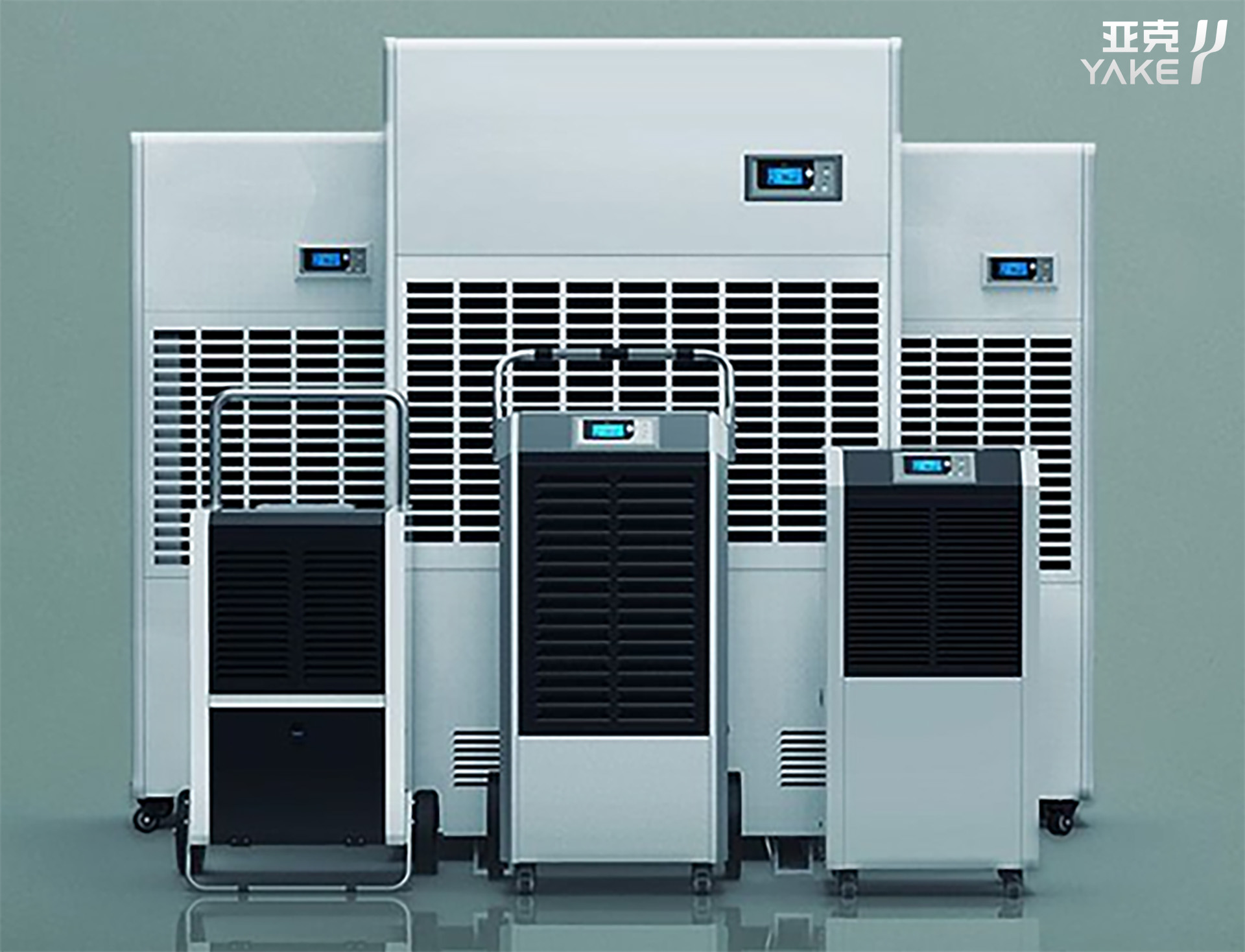
Contact us to find the best place to buy your Yakeclimate solution today!
Our experts have proven solutions to keep your humidity levels in check while keeping your energy costs low.