
Building 34, No. 535 Shunfeng Road, Hangzhou, Zhejiang, China
[email protected]
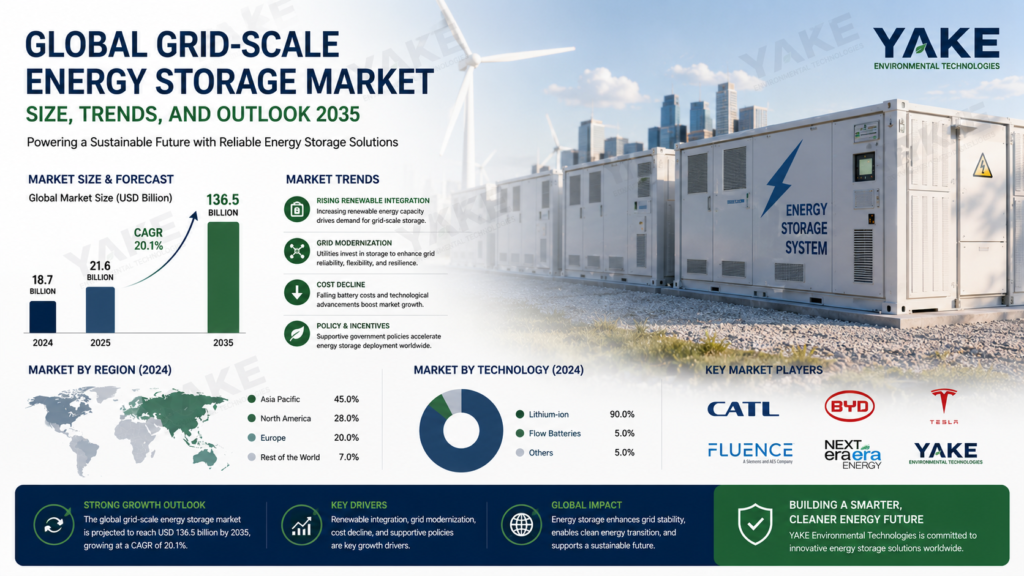


Such as global grid-scale energy storage — large energy storage systems at the scale of an entire region or country’s power, often hundreds of megawatt-hours or more. These systems sit on the power grid and balance supply and demand in real time. They firm wind and solar output, reduce curtailment, and assist grids in riding through brief faults or unforeseen load spikes. Typical configurations are lithium-ion battery farms, flow batteries, pumped hydro, and increasing adoption of long-duration storage with 8+ hour discharge. A number of projects now co-locate storage with solar or wind plants in a single grid connection. The following sections summarize important technology categories, applications, and design decisions that are relevant to global grid-scale energy storage for the long-term, stable operation of the grid.
Grid-scale energy storage refers to powerful systems that reside on the power grid and store electricity in bulk before pushing it back when the grid needs help. These assets help to smooth out the mismatch between when power is generated and when it is consumed, an issue that has become daily as more wind and solar power comes online and output fluctuates with weather and daylight. Storage plants assist in keeping frequency in tight bands, keep voltage within limits, and reduce the risk of blackouts by responding in seconds rather than minutes.
Today, grid-scale capacity is already approaching 28 GW globally, and prices have declined quickly enough that storage is now a useful tool for daily balancing, peak shaving, and deferring grid upgrades. Projections under a Net Zero path indicate grid-scale batteries alone scaling approximately 35-fold from 2022 to 2030, to around 970 GW, which would render storage fundamental to system planning, not a niche afterthought.
Technologies span several buckets: electrochemical batteries, mechanical systems like pumped hydro and compressed air, thermal storage, and chemical options such as hydrogen. Each plays a different role: short-duration, high-response assets for frequency and ramping; long-duration plants for multi-hour or even seasonal shifting; and hybrid setups that pair storage with renewables, industrial loads, or buildings.
For plant managers and facility engineers, this shift matters on two fronts. For starters, a storage-rich, more stable grid mitigates voltage flicker, unplanned trips, and supply interruptions that wreak havoc on sensitive production and climate control systems. Second, many industrial sites are beginning to host their own grid-scale or “near-grid” batteries and thermal stores, interfacing with demand response, microgrids, and behind-the-meter optimization, with tight load control, including dehumidifiers and HVAC, becoming part of the flex stack.
No matter where you’re located, grid-scale storage is supporting renewable integration, sustaining grid stability during peaks and reducing reliance on peaking plants that tend to be fossil-fueled and inefficient.
Grid-scale storage refers to any system that can consume power at scale, ranging from tens of megawatts to gigawatt scale, then return it to the grid as required. It interposes itself between power plants, loads, and the transmission network as a pliable shock absorber. Without this buffer, high shares of solar and wind push grids to their limits and keep operators shackled to fossil peaker plants.
Storage buffers the perennial mismatch between how humans use energy and how generators create it. By charging when supply is abundant and discharging during small gaps, these assets maintain grid frequency near 50 or 60 hertz and maintain voltage within narrow bands at critical substations. This is the core mode for any perceptive industrial line, from paint shops to cleanrooms.
BESS has quickly become the primary resource for fast-response needs. They supply frequency regulation, primary reserves, and synthetic inertia within milliseconds via power electronics. Compared to classic thermal units, they ramp faster, cycle more, and do not burn fuel on standby.
Rapid dispatch from storage curtails dips and flicker that can trip drives, PLCs, and dehumidifiers on factory floors. Power quality remains within spec, resulting in less downtime and less process-critical gear restarts.
For real projects, see the impact. Australia’s Hornsdale Power Reserve, a 150 MW and 193.5 MWh BESS, has prevented frequency collapse following generator trips. In California, multi-hundred-megawatt systems have stepped in during heat waves to avoid rotating outages. Like assets, scaled from tens to hundreds of megawatts, now sit in front of tenuous nodes to arrest local instability.
Storage is the magic wand that makes variable wind and solar fit into a firm grid. As their share increases, the minute-to-minute fluctuations intensify, and operators require an on-demand method to shuffle power instead of just reducing plants or firing up gas units.
When solar output peaks midday and demand is still low, BESS and pumped hydro soak up excess generation. Later, when evening load climbs and PV drops, the same systems discharge. That results in a less jagged net load curve and more opportunity to sunset fossil peaker plants.
This time shift reduces renewable curtailment. Rather than curtailing wind farms in periods of high generation, operators can stockpile that energy, raising its effective utilization. Pumped-storage hydropower, some 160 GW of capacity globally, with around 8,500 GWh of energy capacity, continues to account for more than 90% of all electricity storage worldwide and frequently operates in hybrid mode with wind and solar to deliver near-24/7 clean power.
Net zero scenarios demonstrate how much this needs to extend. In a single net zero pathway, grid-scale battery capacity expands 35-fold between 2022 and 2030 to nearly 970 GW. A 93% reduction in battery storage costs between 2010 and 2024 is what makes that scale plausible.
Reliability benefits from storage are immediate. When there are generation shortfalls, forced outages, or abrupt demand spikes, grid-scale batteries and pumped hydro act as immediate backup. They connect dots that would otherwise cause load shedding or rolling blackouts. To industrial users, that can be the difference between a momentary sag and a lost batch.
During extreme weather or natural disasters, storage has the ability to island and sustain essential feeders. These assets back up “black start” of thermal or hydro plants, providing the initial power to re-energize lines and get the grid rolling again following a wide-area outage. They decrease the amount of spinning reserves that have to idle on fossil fuel just to be on standby.
Utilities measure these impacts in terms of SAIDI and SAIFI. Squirreling storage away is the Grid’s best friend. Even in such high-capacity areas as the US, which today ranks first in global grid-scale storage, operators already record fewer and briefer outages on lines backed by BESS.
Global grid-scale storage steps from pilot to core grid asset as battery prices plummet and renewables surge. Utility-scale batteries now occupy the heart of schemes to stabilize variable solar and wind, reduce CO₂, and provide grid operators more flexible tools than gas peakers alone.
Growth is rapid and widespread. Energy now drives more than 90% of annual lithium-ion demand, compared to 50% in 2016, when the total market was roughly ten times smaller. Battery storage additions through 2030 will outpace new fossil fuel capacity additions over the same period, with China, the US, and the EU leading in installed capacity and project pipelines. Uses keep widening: frequency control, spinning reserve, peak shaving, energy arbitrage, black start, and support for weak distribution feeders. For internal planning, it helps to construct a table — like the one below — that aligns these regions by installed GW/GWh, committed pipeline, growth rate, and their primary revenue sources.
Falling battery pack costs remain the primary economic driver, supported by robust policy instruments including tax credits, auctions, and capacity market reforms. Across many grids, solar PV and batteries already beat new coal on cost in India and will soon beat new gas in the US, which turns utility resource plans on a dime.
Storage today generates value bundles in capacity markets, ancillary services, and wholesale arbitrage. It pushes off substation and line upgrades and reduces peak demand charges for large users, even plants that have to run steady loads for process or climate control and thereby slashes system costs.
Investors chase this change. The broader battery market will hit roughly USD 330 billion in 2030, with approximately USD 6 billion of VC flowing into battery start-ups in 2023 alone. New financing models such as storage-as-a-service and revenue-share contracts are beginning to appear in utility procurements.
China leads battery supply and deployment, now the biggest single market and home to nearly 85% of cell manufacturing globally. It accounts for more than half of lithium and cobalt processing, which underpin project economics globally and increase concentration and supply-chain risk.
U.S. Prioritizes large standalone and hybrid solar-plus-storage systems, supported by robust tax incentives and capacity payments in certain markets. The EU fuels storage through renewables targets, flexibility regulations and high gas price exposure. Australia counts on big batteries for fast grid frequency response in rooftop solar hotspots. Chile and other LatAm markets utilize storage to firm solar in mining regions with weak transmission and steep wholesale price spreads.
New markets in Africa and Southeast Asia contribute both on-grid and off-grid storage. In Africa, nearly 400 million people will benefit by 2030 through solar home systems and mini-grids with batteries, which relocates battery use from pure grid balancing to essential energy access and resilience.
Forward-looking scenarios maintain storage as central to decarbonization. In the NZE pathway, around 60 percent of 2030 CO₂ reductions in the energy sector connect to batteries, positioning them as a central climate instrument rather than a peripheral accessory.
Capital is flowing toward utility-scale BESS, long-duration storage and hybrid wind or solar plants with co-located batteries that share interconnection rights. Simultaneously, developers encounter grid-connection and permitting delays, raw-material price swings and revenue uncertainty where market rules still leave conventional plants the better bet.
Projections indicate swift expansion in both GW and GWh of grid-scale installations through and past 2030. Post-2030 cost reductions are probable as solid-state batteries enter the market, offering increased energy density and enhanced safety.
Grid-scale storage is beyond the pilot stage. Its roll-out continues to encounter persistent barriers including technical, regulatory, and financial challenges. For plant and facility leaders, the central query is how quickly these deployment barriers crumble, as storage is going to dictate power quality, resilience, and even the operation of on-site systems, HVAC, and dehumidification loads for the next decade.
Most grids were developed around big synchronous plants, not two-way storage. Storage has to work well with legacy substations, antique protection relays, and intermittent solar and wind. That implies harder control systems, more challenging grid research, and more stringent regulations on ramp rates, inertia support, and fault ride-through. Misaligned standards delay projects and increase integration costs per megawatt.
On the asset side, battery plants still combat degradation and safety. Lithium-ion systems are subject to cycle fade, calendar aging, and thermal runaway risk, so operators require robust battery management systems, fire protection, and strict environmental control. Accurate humidity and temperature control in containerized units, like many readers run in cleanrooms or paint lines, directly impacts life and safety performance.
Few systems still have restricted periods of 2 to 4 hours which limits their applicability for long-term requirements. Costs for large systems with long durations have fallen to approximately USD 125 per kilowatt-hour, but operators still desire higher energy density, greater than 85 to 90 percent round-trip efficiency, and scalable designs that aren’t dependent on complex civil work.
R&D is moving quick. Efforts on more advanced chemistries, including solid-state and sodium-based batteries, and on flow batteries with physically separate power and energy tanks aim for longer life and flexible sizing for stationary storage. Modular plant designs, standardized containers, and integrated thermal and humidity control packages reduce engineering time and simplify plugging storage into existing industrial campuses.
Rules tend to follow behind the technology. Grid codes, market rules, and asset definitions are different by region and even within some countries. Storage may be called generation in one location, network support in another, and a “hybrid” asset in yet another. Each label governs various licensing routes, taxes, and compliance verifications. Developers encounter prolonged, unpredictable approval processes.
Market design is another Achilles’ heel. Storage can offer frequency, ramping, black start, congestion relief, and local voltage support, but compensation schemes almost never span this full stack. Many tariffs still compensate primarily for energy arbitrage, which undervalues the system benefit of rapid, precise response. This underpayment constrains project pipelines, even where grids are already stressed by intermittent renewables.
Some reforms are beginning to seal these divides. The IRA established an investment tax credit for stand-alone storage, which transformed project economics and made new grid-scale plants more competitive. The European Commission has issued policy guidance to accelerate further storage deployments, and various European countries now operate competitive storage tenders to foster grid resilience and renewables integration.
A practical step for project teams is to build a regulatory checklist early: asset classification, interconnection standards, revenue-eligible services, tax treatment, and data-reporting rules. Defined lists assist in reducing legal risk, orienting technical specifications, and informing pragmatic bid strategies in auctions or bilateral negotiations.
Capital cost continues to be a major deployment barrier, even with declining prices. A 100 MW and 400 MWh plant still means a large up-front investment, whereas long-term price signals for storage services remain unclear in much of the world. Investors like the stacked revenue of energy, capacity, and ancillary services, but they worry about rule changes and price cannibalization over 10 to 20 years.
It’s more difficult to get financing in emerging markets and for newer technologies like flow batteries, even though those systems may be a better fit for long-duration or hot, humid sites. Lenders want track records, standard contracts, and strong counterparties. Without that, debt tenures shorten and interest rates increase, which stunts projects that might strengthen renewables and bolster local economies.
Risk-cutting tools are expanding. Several markets have now transitioned to auctions with fixed or semi-fixed revenue streams for storage over a number of years. Some recent tenders in parts of Europe, the Middle East and South Asia conform to this model and minimize merchant exposure. Capacity payments, minimum availability clauses and performance-based bonuses make for more bankable cash flows. On the deployment side, policy instruments like the U.S. Stand-alone storage tax credit and enlarged European storage tenders lift returns and enhance debt coverage ratios.
Sources of such funding are diversifying. Government grants and concessional funds target early-phase or new chemistry pilot projects. Green bonds and sustainability-linked loans support bigger, established projects, while private equity and infrastructure funds assume portfolio stakes in storage platforms. In markets with strong policy signals, for example, China’s more than 30 GW storage target for 2025 or India’s 51–84 GW goal for 2031–32, these tools are already transitioning from niche to mainstream.
Digital tools now perch on top of grid-scale storage as a separate “optimization layer” that dictates how assets operate, generate revenue, and perform. It connects real-time data, control logic, and market signals, and it’s key to how BESS are becoming increasingly efficient and profitable within technical and safety constraints.
AI forecasting ingests weather data, renewable output, demand profiles, and price curves, then forecasts when storage ought to be charging or discharging. For a 100 MW and 200 MWh system tied to solar, this translates to moving away from static rules to adaptive schedules that monitor cloud cover, ramp rates, and price spreads within the day in real time.
Machine learning models now achieve state-of-charge (SoC) estimation accuracies above 98% with root-mean-square error below 0.75%. That granularity slashes reserve margins, releases more usable capacity, and reduces the chance of over-charging or deep discharge. Decision-Focused Learning and similar approaches directly optimize profit, with learn-to-dispatch policies achieving 9.5% revenue uplift in select markets rather than simply predicting prices.
Wiser cycling reduces wear. AI can guide batteries from high C-rates during hot hours, dodge damaging partial-cycle patterns and plan downtimes, which protects capacity guarantees. Common use cases are near-term load forecasts, day-ahead and real-time price prediction, anomaly detection on pack temperature or impedance, and state-of-charge and state-of-health tracking that informs maintenance plans and warranty reports.
Smart management platforms offer real-time monitoring and control of storage fleets, even spanning multiple locations. They ingest SCADA data, inverter status, HVAC loads, and fire and safety states, then push control signals down to string or rack level.
These systems connect BESS with solar, wind, demand response, and even industrial loads, creating virtual power plants that bid as one flexible resource. Revenue stacking engines can co-optimize day-ahead energy and automatic Frequency Restoration Reserve. In one approach, modeling uncertainty and delivery risk increased profits by 17.3% while still delivering on real-time commitments.
Highlights include automated scheduling, constraint-aware dispatch, remote diagnostics, and detailed performance reporting. Digital twins now replicate physical systems to test new strategies, reduce trial and error on site, and optimize HVAC and balance of plant energy consumption. This is a valuable lesson for any big climate or dehumidification plant seeking comparable visibility and control.
Blockchain inserts a proof point for storage-based energy trades, ancillary services, and guarantees of origin. Each discharge event or flexibility service can be recorded as a cryptographically signed transaction that aligns asset operators, market operators, and regulators.
A few pilot platforms use blockchain-enabled storage for peer-to-peer energy trading within microgrids and for decentralized capacity and frequency services. They can reduce transaction costs, accelerate settlement, and enable new business models where small storage units aggregate into shared pools or local flexibility markets.
Grid-scale storage moves impact from fuel burn to materials. That presents tough lifecycle implications for mining, design, cooling, and end-of-life that plant and facility teams cannot overlook.
The biggest footprint lies in battery manufacturing. Cathode metals, solvents, and high-temperature processing drive most GWP and resource use. Your average system is designed for a 20-year life with approximately 80% DOD. Running it deeper, hotter, or with bad humidity management shortens its life and increases the overall footprint per kWh delivered. For industrial users, this links asset care to environmental performance. Poor operating conditions mean more frequent replacements, more upstream mining, and more scope 3 emissions.
Responsible sourcing and circular practice change that image. A lot of lifecycle studies assume 100% collection at end of life. That’s the ideal, but it highlights the importance of contracts, tracking, and logistics. Effective recycling drastically reduces mineral resource use and can compensate for 47 to 64 percent of production impacts. Top-quality metals are the key. The transformer itself can provide approximately 42 to 52 percent of lifecycle benefits and 26 to 39 percent of GWP savings due to its highly recyclable metal content. This implies that substation design, transformer selection, and dismantling plans are as important as chemistry selection.
Cooling and climate control define sustainability as well. A 40 kW cooling unit with a condenser, evaporator, compressor, pump, and PTC heater keeps cells in a tight thermal band, which slows degradation and maintains that 80% DOD assumption. If humidity is elevated, there’s condensation, corrosion, and insulation breakdown on cabinets, busbars, and transformers. That can cause premature component replacements and unexpected downtime. Dehumidification in battery halls and inverter rooms safeguards both electrical equipment and cooling infrastructure and reduces embodied impacts across the entire project life.
Industry and regulators now drive more eco-friendly chemistries, second-life reuse in less-critical roles, collection mandates, and more rigorous reporting on sourcing and recycling yields.
Grid-scale storage is now at the center of a modern power system. It shapes load, provides backup, and keeps more clean power on the grid. The worldwide market shifts speedily, but actual advances continue to encounter land restrictions, slow approvals, and grid congestion. Policy gaps and weak price signals drag in the same direction.
Digital control and clever data utilization make the difference. Storage fleets answer in seconds. Plants access more income sources. Owners get a transparent state of health, not guesswork. Simultaneously, long asset life, safe end-of-life, and transparent recycling pathways increasingly matter every year.
For your next plant plan or retrofit, drag storage into the early design discussions and test it against actual grid operation.
Grid-scale storage means big things that store electricity. These systems balance energy supply and demand, bolster renewables, and enhance resiliency. They can deploy batteries, pumped hydro, thermal storage, or other solutions at utility or regional scale.
Grid-scale storage is the key because it steadies the grid as more solar and wind come online. It dampens spikes and dips, averts blackouts, and cuts reliance on fossil fuel backup plants. This results in a more reliable, flexible, and cleaner electricity system.
The global market has expanded rapidly over the past ten years. Most areas are installing gigawatts of battery and other storage projects annually. Policy support, declining technology costs, and increasing renewable targets are fueling robust investment globally.
Critical obstacles are expensive initial costs, vague market regulations, and lengthy approval timelines. In other places, old regulations restrict returns. Grid integration studies and community acceptance can stall projects, even if the technology is ready.
Digital platforms leverage data, sensors, and algorithms to manage storage in real time. They optimize charging and discharging, extend asset life, and maximize revenues. Innovative software can orchestrate systems across regions, enhancing both grid resilience and efficient operations.
They can power decarbonization by allowing greater renewable energy penetration. Sustainability requires responsible sourcing of materials, manufacturing impacts, efficiency and end-of-life management. Recycling and reuse, as well as low-carbon supply chains, will be important to decrease the total environmental footprint.
EOL batteries can be reused for less intensive applications or recycled. Advanced recycling processes extract materials such as lithium, nickel, and cobalt. They’ll need strong regulations and circular-economy strategies to ensure safe, sustainable battery lifecycles.


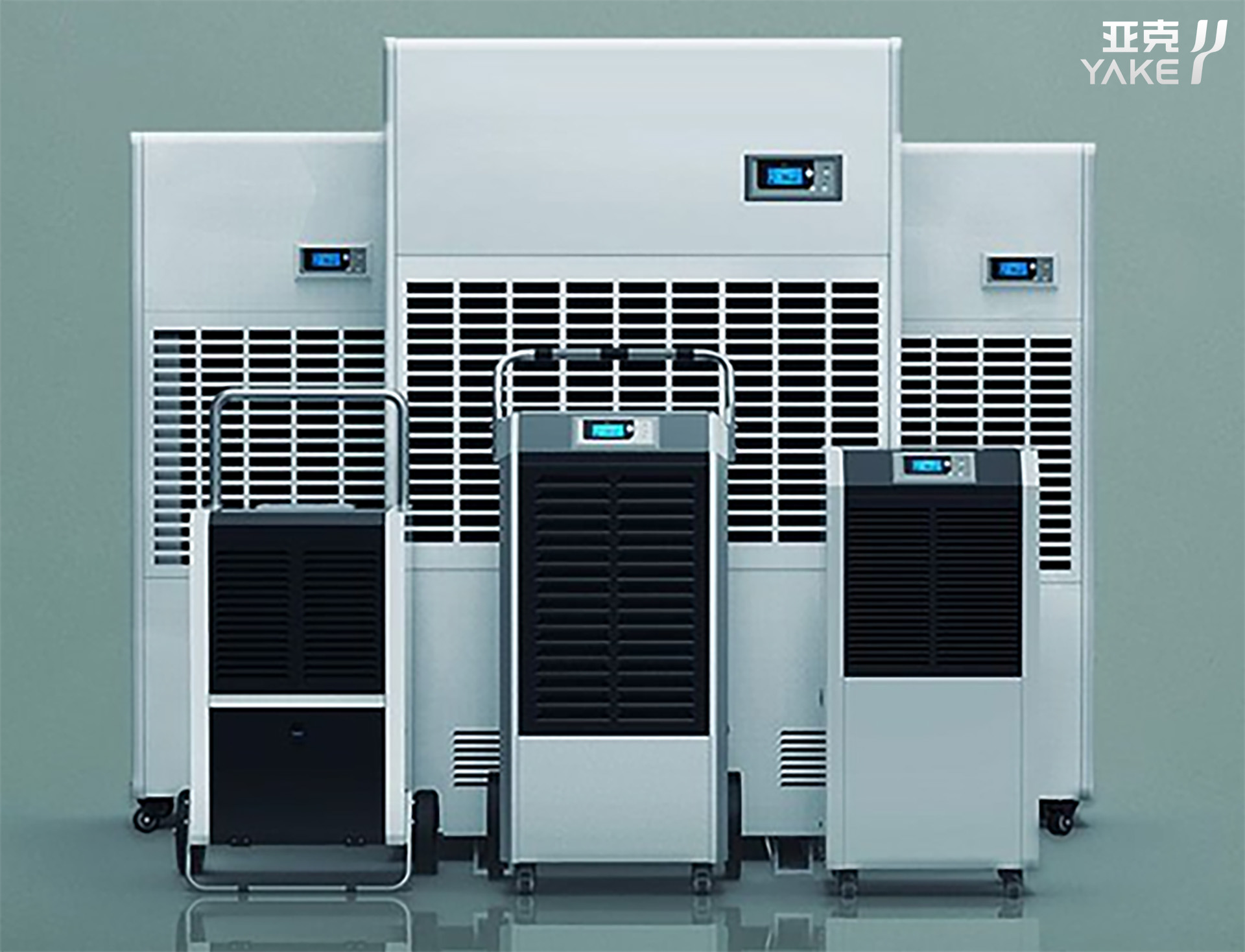
Contact us to find the best place to buy your Yakeclimate solution today!
Our experts have proven solutions to keep your humidity levels in check while keeping your energy costs low.