
Building 34, No. 535 Shunfeng Road, Hangzhou, Zhejiang, China
[email protected]
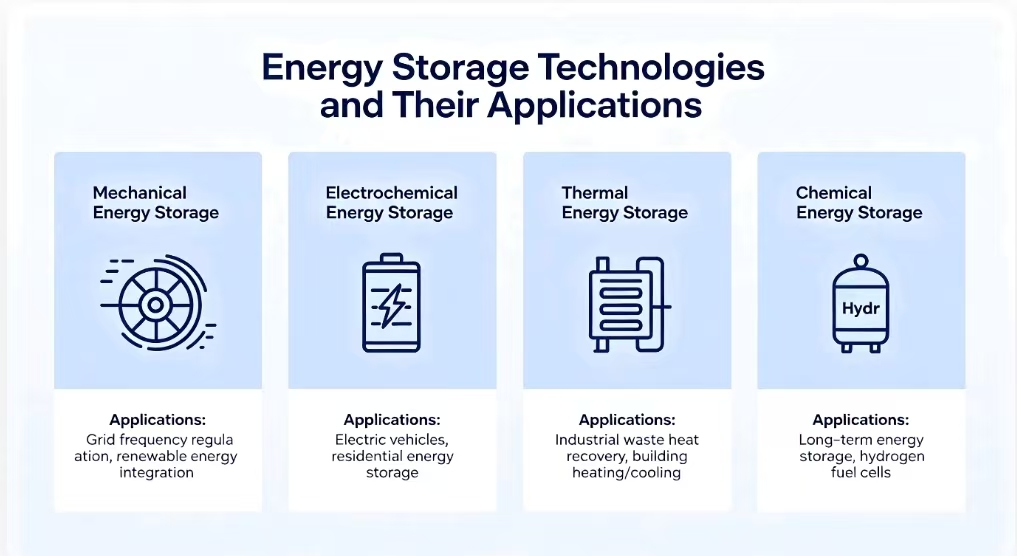


Energy storage technologies and applications include systems that store electrical or thermal energy for later use in grids, buildings, and industrial processes. Batteries, thermal storage, flywheels, and mechanical storage are some of the main types. Applications span from peak shaving and backup power to renewables integration and microgrids. Storage in plant and process settings can minimize demand charges, buffer load, and stabilize power quality. The following sections disaggregate important technologies, applications, and decision criteria.
Energy storage technologies are technologies that convert energy from forms where it cannot be stored to forms where it can be stored. They cover electrical, thermal, mechanical, and chemical methods and in practice sit in six broad buckets: potential mechanical, kinetic mechanical, electrochemical, thermal, chemical, and electric-magnetic field storage. Throughout a plant or a grid, they help align supply and demand, smooth renewables, and stabilize critical loads when the upstream network is stressed.
| Technology type | Typical duration | Scale (approx.) | Round-trip efficiency* |
|---|---|---|---|
| Pumped hydro storage | 4–24 h, multi‑day | 100–10,000+ MWh | 70–85% |
| Battery storage (Li‑ion) | 0.25–4 h | kWh–GWh | 85–95% |
| Compressed air energy (CAES) | 2–20 h | 100–1,000+ MWh | approximately 50–70% | Thermal energy storage | 1 h–seasons | kWh–TWh (district scale) | around 50–75% | | Hydrogen storage | hours–weeks | MWh–TWh | approximately 30–50% (electric–electric) | | Flywheels / supercapacitors | seconds–minutes | Wh–MWh (aggregated) | 80–95% |
*Typical practical values; project‑specific.
These systems now respond to grid control signals every few seconds, shaving peaks, filling troughs, and backing up on-site loads like chillers, dehumidifiers, and process lines.
Electrochemical storage stores energy in chemical bonds and then releases it as electric power. Battery systems, like lithium-ion, lead-acid, sodium-sulfur, and flow batteries, dominate this space. Most plant engineers deal with them in some capacity, spanning from uninterruptible power supplies to containerized, grid-scale units.
Lithium-ion’s high energy density, fast response and high round-trip efficiency make it the leader in electric vehicles and most battery energy storage systems. Lead-acid is less expensive up front and well known, but it has a shorter cycle life and a lower practical depth of discharge, so it suits low cycling backup roles like emergency lighting or a few control systems. Vanadium flow batteries store energy in external electrolyte tanks. They have lower energy density, but they have a long cycle life and easy scaling of energy capacity by enlarging tanks.
Rechargeable batteries are at the heart of new renewable projects and behind-the-meter systems. They capture excess mid-day solar and distribute it during the evening peak or deliver short-duration backup for sensitive equipment like precision humidity control, cleanrooms, or surface finishing lines, where a momentary outage can ruin a batch.
Mechanical storage transforms electrical energy into potential or kinetic form, then back again. Pumped hydro lifts water from a lower to an upper reservoir and releases it through turbines when the grid needs it. This is large-scale potential mechanical storage. Plants can operate for 4 to 24 hours or beyond and can extend operational life for decades with diligent maintenance.
Flywheels store energy as rotational kinetic energy in a spinning mass suspended in low-friction bearings. They charge and discharge in seconds, handle extremely high cycle counts, and support applications such as voltage and frequency control or ride-through for brief grid events. Compressed air energy storage (CAES) uses off-peak electricity to compress air to underground caverns or pressure vessels, then releases it through turbines when needed. CAES is categorized as mechanical but straddles thermodynamics. Its round-trip efficiency is typically in the range of 50 to 70 percent, but it is scalable into the hundreds of megawatts.
For large grids, mechanical systems, particularly pumped hydro, continue to supply the majority of long-duration storage due to their scale, durability, and comparatively high efficiency compared to emerging long-duration ideas.
Thermal energy storage stores heat or cold for later use rather than storing electricity directly. Traditional media are hot water tanks, molten salt in solar thermal plants, chilled water or ice for building cooling. Underground thermal energy storage (UTES) takes it a step further by pumping heated or cooled water into aquifers, boreholes, or underground tanks during off-peak hours and withdrawing it later.
From a design perspective, thermal storage could be sensible heat, which involves heating a medium to a higher temperature, latent heat, which includes phase change materials like ice or paraffin that melt or freeze, or thermochemical, which involves reversible chemical reactions that store heat in chemical compounds. Each class has its own temperature range, energy density, and cycling behavior, which determines where it slots.
District heating networks, solar thermal power plants and large HVAC systems employ thermal storage to shift loads off the peak hours, reduce chiller and boiler run times, and reduce electricity demand charges. Efficiency of DC electric input to useful heat or cold output is often around 50 to 75 percent, but in integrated systems, the net energy savings and demand peak shaving can be much higher from the plant’s perspective.
Chemical storage stores energy in fuels like hydrogen, synthetic hydrocarbons, ammonia, or biomass. A key route is “power-to-hydrogen.” Surplus electricity feeds electrolysers that split water into hydrogen and oxygen. The hydrogen can then be compressed or liquefied, stored in tanks or underground formations, and subsequently utilized in fuel cells or combustion equipment to produce power or high-temperature heat.
Chemical-hydrogen storage appeals where long-duration or seasonal storage is required, or where the fuel can be used for transport or industrial processes. A steel plant, for instance, could utilize hydrogen as an energy carrier and a reducing agent, connecting power storage with process decarbonization. Round-trip efficiency from electricity through hydrogen and back to electricity is often 30 to 50 percent, lower than batteries or pumped hydro, but energy density by mass is high and storage duration can stretch to weeks or months.
In heavy transport, shipping, and certain process industries, chemical storage is a route out of fossil fuels while still delivering the energy-dense, dispatchable fuels operations need.
Electrical storage involves the use of electric or magnetic fields rather than bulk materials. Supercapacitors or ultracapacitors store energy in an electric double layer. Superconducting magnetic energy storage (SMES) stores energy in the magnetic field of a DC current that passes through a superconducting coil. Supercapacitors and SMES both provide very rapid charge and discharge, great cycle life, and power density, but they have fairly low energy capacity.
Compared with batteries, these devices respond faster and endure many more cycles yet hold much less energy by cost or volume, so they are best for seconds to minutes services. Supercapacitors manage short term power quality events, ride through for data centers, or stabilization in rail traction applications. SMES, where applied, powers grid services requiring extremely rapid and accurate output. However, cryogenic needs and cost deter adoption.
In power systems, these electric-magnetic field storage technologies serve as the “first line” of defense for frequency and voltage support. They synergize with batteries, flywheels, and other resources to keep industrial and grid voltages within strict bounds.
Energy storage is at the heart of any dependable, robust, and adaptable energy system. It connects variable generation, industrial loads, and end-use processes, and it turns intermittent power into something plant teams can schedule around.
Storage serves as a rapid, fine grained stabilizer for frequency and voltage on a contemporary grid. It is able to inject or absorb power in milliseconds, quicker than any traditional turbine. That speed is what keeps sensitive loads, like pharmaceutical cleanrooms or electronics assembly lines, chugging along within tight power quality limits.
When a big generator trips offline or demand ramps up quick, battery and other storage systems fill in with frequency regulation, spinning reserve, and black-start assistance. This is important for 24/7 factories that can’t tolerate voltage dips that disrupt drives, compressors, or dehumidifiers maintaining precise climate specifications.
Key grid services enabled by storage include:
Some of the most common technologies used for grid stability include lithium-ion batteries, flow batteries, flywheels, supercapacitors and, at scale, pumped hydro and compressed air energy storage. There is no one-size-fits-all system here. Grid operators and industrial users pair response speed, duration and duty cycle to the appropriate technology mix.
Solar and wind now reach parity with fossil fuels in many markets, yet grids still cannot absorb more than roughly 30% new variable output without help. Storage smooths this. It stores excess energy during mid-day solar peaks or blustery nights and spills it back when generation dips, which accelerates ramp rates and keeps fossil plants from frequent cycling.
When energy is stored instead of curtailed, operators increase utilization rates and safeguard project economics. Europe, for instance, must increase storage capacity roughly five-fold over the next five years to prevent squandering extensive amounts of wind and solar. In the UK, almost 10 percent of wind output was curtailed in 2024, and Northern Ireland up to 30 percent, primarily due to storage and transmission trailing demand.
For net-zero countries, these losses are more than a cost issue. Storage makes high renewable penetration technically feasible, undergirds grid codes, and enables downstream consumers, including moisture-sensitive crops, to depend on low-carbon energy with consistent quality.
It diminishes our exposure to imported fuels and price shocks. When countries combine local renewables with storage, they secure a portion of their energy supply for years, enabling the design of long-life industrial assets and high-efficiency climate systems.
Distributed storage, from behind-the-meter batteries at factories to community systems, puts users in the driver’s seat. Sites can ride through grid faults, run critical lines, keep dehumidifiers and HVAC stable, and shift load away from peak tariffs without full on-site generation.
Examples of regions using storage to boost energy independence include:
These projects demonstrate the interplay between storage, renewables, and efficient end-use systems. For industrial plants, that mix reduces emissions, enables compliance, and stabilizes the conditions that quality-critical processes require.
Energy storage spreads across three main levels: grid-scale, commercial, and residential. Each tier contains its own power rating, discharge duration, control requirements, and commercial case. They can sit front of the meter on the grid side or behind the meter at the user site and range from short-duration units that run for a few minutes to diurnal systems that run for several hours.
| Application level | Typical technologies | Scale (approx.) | Typical use cases |
|---|---|---|---|
| Grid-scale | Pumped hydropower, Li-ion batteries, flow batteries, CAES, hydrogen storage | 10–1,000+ MW, 2–12+ hours | Peak shaving, load shifting, frequency control, renewable firming |
| Commercial | Li-ion batteries, thermal storage, flywheels | 100 kW–50 MW, 0.25–6 hours | Demand charge reduction, backup, power quality, microgrids |
| Residential | Li-ion batteries, small thermal, hybrid inverters | 3 to 20 kW, 2 to 10 hours | Solar self-consumption, backup, bill management |
Globally, demand is increasing for all three as more variable solar and wind come online and as users look for lower energy costs and greater resilience.
Grid-scale storage implies large plants serving as system resources, not customer appliances. These plants address bulk energy management and grid reliability at transmission or large distribution voltage. Equipment operators utilize pumped hydropower, large lithium-ion battery parks, flow batteries, compressed air energy storage, and even hydrogen-based solutions linked to electrolyzers and fuel cells.
These assets shave peaks, shift load from low to high-price hours and firm up variable wind and solar when generation outstrips demand. They save excess mid-day or high wind energy and then release it during the evening peak or minimal renewable production.
Grid-scale units provide very fast reserves. Depending on design, they can respond within 10 seconds for frequency regulation, 10 minutes for spinning reserve, or around an hour for longer balancing. This fast action reduces curtailment waste, stabilizes voltage and frequency, and decreases demand for peaker plants.
Modern grids with high renewable shares lean on this layer to stay stable and to avoid blackouts. Most new transmission planning today treats storage as core infrastructure, not an afterthought.
Commercial storage is behind-the-meter at plants, malls, data centers and sprawling campuses. Primary applications are to handle demand charges, condition power for sensitive loads and back up critical lines. The majority of its systems employ lithium-ion battery racks, typically coupled with on-premises solar and building controls.
A factory or cold warehouse could charge batteries at night under super off-peak tariffs, then discharge during the mid-day demand window to reduce peak kW and lower bills. It can use the same system to ride through short grid events, smooth voltage sags for drives and PLCs, and support microgrids at industrial parks.
Data centers, hospitals and process plants have often paired batteries with diesel or gas gensets. Batteries manage instant response and brief outages, while gensets address longer occurrences. Key benefits for operators include lower energy costs, higher uptime, and more predictable power quality surrounding mission-critical equipment.
Residential storage appears primarily in the form of home battery systems paired with rooftop solar. For example, a typical unit accesses a lithium-ion pack, a hybrid inverter, and a smart energy manager that shifts loads in real time.
Homeowners put excess solar energy in during the day and use it at night or on cloudy days instead of pulling from the grid. It can pull grid power when prices are low, store it, and run from the battery during evening peaks to reduce time-of-use charges.
These systems make possible small microgrids at the building or neighborhood scale, providing backup during grid failures and letting homes island when lines come down. Key benefits are improved bill management, a degree of energy sovereignty and increased versatility for local renewable production.
Every energy storage system dissipates some energy between charge and discharge. Losses from conversion steps, heat, and self-discharge manifest as lower RTE, faster lifespan degradation, and material boundaries that limit performance. For plant teams, these losses affect project economics, grid services value, and how effectively systems sustain stable, low-carbon power in damp, real-world production halls. A quick summary table comparing RTE, cycle life, and key material constraints across storage types frequently provides a more immediately clear perspective than any single metric.
Round‑trip efficiency is how much energy you get out versus put in over one charge and discharge. A system that stores 100 kWh and delivers 85 kWh has an RTE of 85 percent. Grid operators will typically aim for a minimum of 80 percent RTE, as below that level the price of wasted input energy can begin to chip away at project returns and diminishes the value of services such as peak shaving and frequency support.
Losses arise from power electronics, resistive heating in conductors, electrochemical overpotentials, and self-discharge. Even before storage, roughly 5% of electricity is lost along conventional power lines. Additional losses inside storage stacks directly increase the delivered per kilowatt-hour cost to the plant. In addition to RTE, engineers measure charge capacity, discharge capacity, and coulomb efficiency (CE). CE is the fraction of discharge capacity to charge capacity in a full cycle, and it indicates how much charge is wasted on side reactions instead of productive work.
Lithium-ion systems often hit 88 to 95 percent round-trip efficiency at scale, whereas pumped hydro typically hovers in the 70 to 85 percent range based on head height and turbine design. Compressed air, thermal storage, and power-to-gas routes can be much lower, but they may still make sense for very long-duration storage, such as multi-day winter coverage. Reducing round-trip losses leads to more usable output per given input, enabling flexible, safe, and cost-effective grids capable of powering process loads as well as supporting systems such as industrial dehumidifiers.
Every charge/discharge cycle fatigues the storage medium. Active materials crack, electrodes corrode, interfaces grow resistive films and seals age. After thousands of cycles, this wear manifests as reduced capacity, lower output power, and a greater efficiency gap between new and aged equipment, which drives up replacement and downtime expenses.
Different chemistries and architectures age at vastly different rates. Lithium iron phosphate, for example, tends to retain capacity longer than high‑nickel cathodes but at lower energy density. Flow batteries can boast tens of thousands of cycles as the reactants are stored in external tanks. Many high‑temperature systems sacrifice cycle life for high specific power or compact footprint. Robust mechanical design, careful thermal control, and advanced battery management systems monitoring cell‑level voltage, CE, and temperature all help decelerate this drift. When selecting storage for a paint line, cleanroom or cool temperature warehouse, teams have to align cycle life and degradation profile with use case, not just nameplate energy and RTE.
Materials dictate the upper bound for energy density, safety, and lifespan, so most of the performance improvements nowadays are due to chemistry, not just system design. New cathode blends, silicon-rich anodes, and solid electrolytes seek to boost energy density while reducing fire hazard and flammable solvents. Meanwhile, nanostructured coatings and engineered separators aim to manage side reactions that lower coulombic efficiency and diminish cycle life.
Work ranges from sodium-based batteries that reduce reliance on limited lithium, solid-state architectures that offer greater safety in densely populated or indoor locations, and next-generation carbon or metal hydride approaches to hydrogen storage. Material choices drive cost and environmental footprint: cobalt-heavy cathodes and fluorinated binders raise supply and disposal concerns, while simpler, earth-abundant systems may be easier to scale for global grids. Reviews that enumerate recent breakthroughs, like high-CE solid electrolytes, stable manganese-rich cathodes, or durable electrode coatings, assist engineers in sifting which routes are near bankable application.
Energy storage looks simple on a slide deck: capex, kWh rating, round-trip efficiency. In real plants and grids, the picture is messier. Hidden costs lurk in maintenance, integration with legacy equipment, environmental risk, compliance, and end-of-life. Most of these only surface after the system operates a few seasons with actual load profiles and ambient swings, including humidity, that your initial model didn’t quite capture.
A quick checklist of hidden costs that decision makers tend to miss:
Reviewing technologies in a serious way is not light work. A full screening can pull data from more than 250 information sources, including the 2022 Cost and Performance Assessment and field reports, to uncover where the real lifecycle cost lies.
Almost all of these storage solutions are shifting when energy is consumed, but they’re shifting where environmental burdens strike. Mining for lithium, cobalt, nickel, vanadium, or rare earths causes land use change, water stress, and social impacts in source regions. Mechanical systems like pumped hydro and compressed air require large land footprints and occasionally significant civil works that alter local ecosystems.
Recycling and circular design are no longer nice to haves; they’re core. Closed-loop recycling for lithium-ion and new chemistries can reduce raw material demand and toxic waste. Capacity remains limited across most regions. Circular strategies consider design for disassembly, standardized pack formats, and second-life use of EV packs in stationary storage. All of these decrease the amount that requires full hazardous processing.
That carbon footprint appears in both manufacturing and operation. High-temperature batteries and certain flow systems might require constant heating or pumping that increases operational emissions unless powered by clean supply. Lithium-ion batteries, with very little degradation and high round-trip efficiency, maintain lifetime emissions per delivered kilowatt-hour relatively low, particularly once factories are powered by low-carbon energy.
Work is underway on greener chemistries (sodium-ion, zinc-based, iron-air), water-based electrolytes, and low-impact binders and solvents. In industrial sites, combining storage with efficient HVAC and humidity management reduces auxiliary loads and asset life, driving down waste and embodied carbon over time.
Economics depend on more than headline capex. Capital costs, auxiliary systems, O&M, replacement schedules and end-of-life all feed into LCOS. LCOS is now the relevant benchmark to compare a lithium-ion system at $150 to $200 per kilowatt-hour against, say, a long duration thermal or flow battery with a higher upfront cost but lower cycling degradation and a longer life.
Battery prices continue to plummet, and scale is significant. Certain chemistries now provide meager degradation over several years, reducing replacement capex and tightening LCOS. At the same time, integration can add major hidden costs. Grid modernization, control upgrades, communication links, and physical works can equal or exceed the storage hardware budget on complex brownfield sites.
That’s revenue stacking is what makes many projects possible. Storage can make money from peak shaving, which typically results in 50 to 90 percent demand charge reductions in well-suited plants, frequency regulation, capacity markets, and energy arbitrage. Stacked revenues are especially critical for long-duration systems, which is why the US DOE’s Long Duration Storage Shot aims to reduce costs by 90 percent by 2030. Levelized Cost of Storage remains too high today for many use cases.
A simplified LCOS snapshot (illustrative, 4–8 h systems):
| Technology | Typical LCOS (USD/kWh‑cycle) | Notes |
|---|---|---|
| Li‑ion (LFP) | 0.05–0.10 | Low capex, minimal degradation |
| Vanadium flow | 0.07 to 0.14 | Long life, higher capital expenditure |
| Pumped hydro | 0.03 to 0.08 | Site dependent, long lifetime |
| New long-duration | 0.08 to 0.20+ | Declining costs with lots of uncertainty |
Smart application of recent cost estimates and field data is necessary to discover the actual economic bottom for each alternative.
Policy frames both the risk and value of storage. Incentives, tax credits, and transparent interconnection standards can pull LCOS down by distributing fixed costs across additional revenue years. Ambiguous fire safety, grid code, or performance guarantee rules can slow projects, increase financing costs, and introduce design complexity.
Grid reliability rules and fast response and ride-through capabilities put a thumbprint on technologies. Renewable integration mandates and emissions caps improve the system value of storage that can move large blocks of energy over many hours, shifting the competitive equilibrium between short-duration lithium-ion and long-duration technologies.
Permitting, interconnection queues, and safety certification are now big schedule drivers. Stationary batteries potentially require fire resistant rooms, gas vents, suppression systems, and sometimes dedicated humidity and temperature control. Every layer contributes to expense, yet shields humans and production resources.
Storage tax credits and capacity payments in North America, renewable-plus-storage tenders and grid codes in parts of Europe, and large-scale flexibility and resource adequacy programs in high solar and wind build-out regions are key policy drivers in front-runner markets. Matching technology selection to these rules is often what distinguishes projects that add up from those that bog down.
Energy storage is not a side bet anymore. It underpins everything from utility-scale BESS to sensors inside paint booths and cleanrooms — the very heart of modern power, mobility, and process control. The next frontier connects high-density storage with tight climate control, so output remains constant as grids and loads rapidly fluctuate.
Hybrid energy storage systems combine two or more storage types to achieve a superior blend of power, energy, and lifetime than any one device can provide. A typical configuration is a lithium-ion battery bank for bulk energy, supported by supercapacitors that absorb sharp power spikes on millisecond timescales or by flywheels that stabilize fast charge-discharge fluctuations on the AC side.
At plant or microgrid scale, hybrids can be tuned to site goals. This battery–supercapacitor combo can capture the benefits of both worlds, handling weld robots, large compressor starts, or spray line flash loads without stressing the main BESS. A battery–flywheel mix can provide ride-through for essential HVAC, dehumidifiers, and cleanroom equipment, maintaining setpoints while diesel gensets or grid support come online. This reduces wear on batteries and can allow operators to right-size inverters and cabling.
Major advantages are greater round-trip efficiency at the system level, extended effective battery life, better power quality, and more flexible dispatch for grid and process demands. Challenges are non-trivial: more complex controls, protection schemes that must cover very different response times, integration of multiple vendors, and the need for skilled operators in a market where the biggest bottlenecks are not only technical but human.
Solid-state batteries swap liquid electrolytes out for solid materials to increase energy density and safety simultaneously. In theory, they back lithium metal anodes with much higher specific capacity while reducing fire risk and leakage as there’s no flammable liquid phase.
Assuming the pilots scale, plants could experience cells with extended cycle life, broader temperature windows and quicker charge, which are all relevant for fast-cycling BESS in close proximity to large industrial loads. Top-tier cell makers and automotive OEMs today operate commercialization programs, from EV pouch cells to modular units targeting grid storage cabinets. These coexist with current lithium-ion, nickel-metal hydride packs in hybrid cars and well-established lead-acid batteries for backup.
Anticipated applications range from electric vehicles and grid‑scale storage that smooth renewables to portable devices that power professional workflows and manage systems. For humidity‑sensitive sites, safer chemistries minimize fire‑protection constraints and simplify how close storage can sit to high‑value production and dehumidification assets.
Long‑duration storage refers to storing energy for multiple hours or even days, rather than just peak shifting. It is the missing piece for deep renewable integration and for grids that must ride through extended heat waves, storms, or calm periods with low wind.
Flow batteries, hydrogen systems and gravity-based designs are all pursuing this role. Flow batteries store energy in liquid electrolytes in tanks, decoupling power and energy by sizing stacks and tanks separately. This design can fit industrial parks that need 10 to 20 hours of support. Hydrogen storage moves power into a fuel that can support both process heat and electricity, but round-trip efficiency remains low. Gravity systems displace large masses up and down shafts or towers, offering long life with simple mechanical components.
As researchers push battery science and as supercapacitors gain more energy density, both of these options seek to raise stored energy per kilogram, push down cost per kWh, and cut environmental impact across mining, use, and end of life. Facility teams, meanwhile, can track utility scale BESS project pipelines, long duration pilots, and their operators to get early insight on which platforms will be bankable and serviceable over a plant’s design life.
Energy storage now sits in the middle of actual change in energy consumption. Not just in labs. On factory floors, in data halls, at ports and mines and city grids.
Batteries trim peak load and shave bills. Thermal tanks even out chill and heat in large plants. Flywheels support lines and test rigs. Each one matches a specific task with obvious compromises.
Big hole remains on the table. Round trip loss. Asset longevity. Safety. Land use. Grid ties. None of that disappears.
Smart next step easy. Map your loads, time frames, and risk points. Then pair it with the appropriate storage stack. If you like a candid discussion on that suitability, contact the Yakeclimate team.
Some energy storage technologies are batteries (for example, lithium-ion), pumped hydro, compressed air, flywheels, thermal storage, and hydrogen. Each functions differently, but they all store energy for use at a later time, which helps balance supply and demand in power systems.
Energy storage is the solution for variable solar and wind power, which stores when there’s too much and releases when there’s too little. This increases grid stability, reliability, and enables higher shares of renewables.
Energy storage technologies in applications like power grids, buildings, electric vehicles, data centers, and off-grid systems enable backup power, peak shaving, frequency regulation and renewable integration. Businesses employ it to save on energy expenses and enhance dependability.
Round-trip efficiency by technology. Lithium-ion batteries can get to 85 to 95 percent. Pumped hydro is usually 70 to 85 percent. Thermal and hydrogen storage tend to be lower. More efficient means losing less energy and optimizing the whole system.
These hidden costs can be installation, maintenance, replacement, safety systems, and grid connection. You should factor in environmental impacts, recycling, and degradation. A complete life-cycle cost analysis is much more accurate than purchase price.
Battery systems can pose hazards such as overheating, fire, and chemical leaks if inadequately designed or handled. Proper engineering, certified equipment, monitoring, and ventilation all reduce these risks. Adhering to protocols and safety measures is crucial.
Featured trends are long-duration storage, new battery chemistries, digital controls, and V2G. Costs are dropping as manufacturing scales. These trends will enable stronger renewable integration and more adaptable, sustainable power systems.


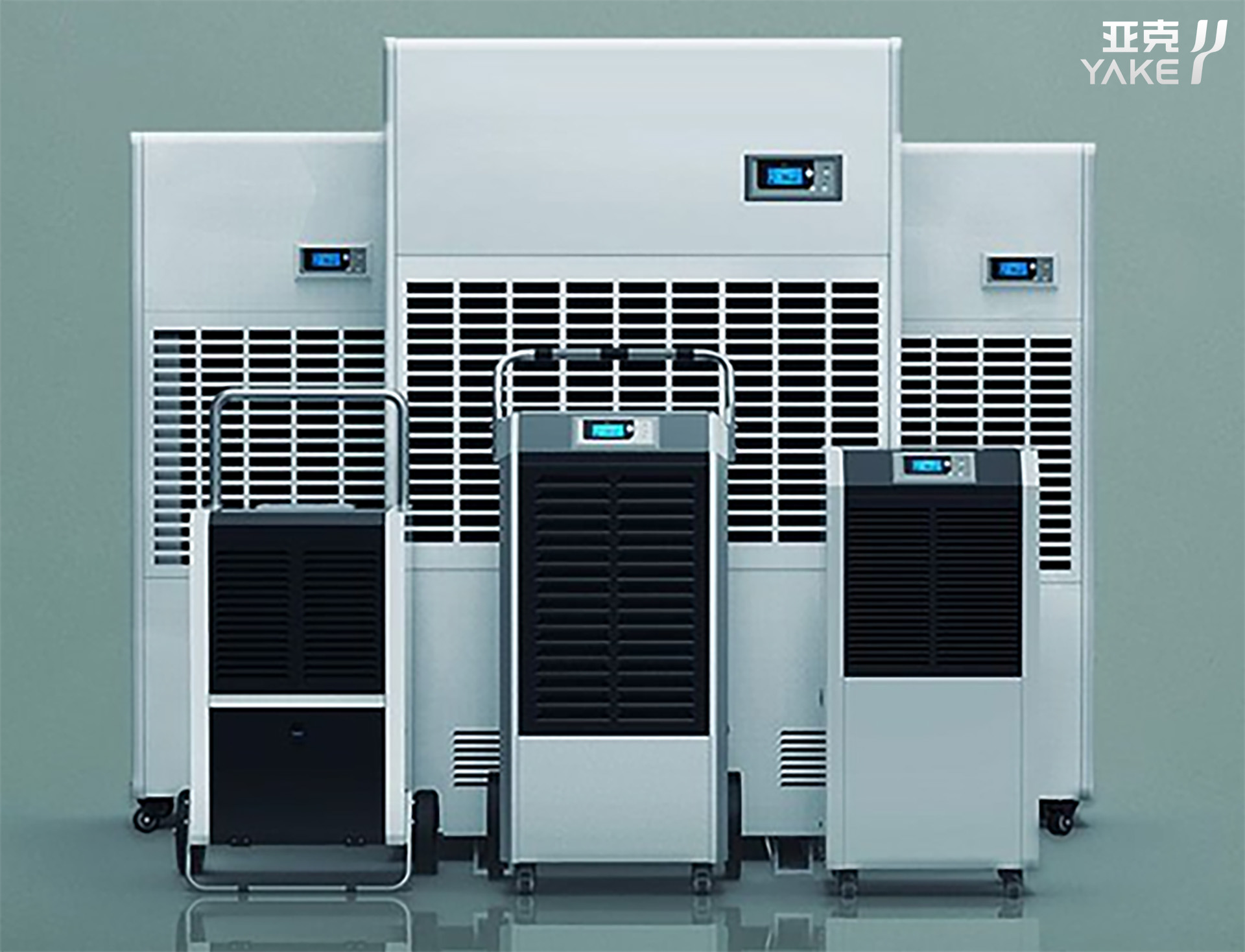
Contact us to find the best place to buy your Yakeclimate solution today!
Our experts have proven solutions to keep your humidity levels in check while keeping your energy costs low.