
Building 34, No. 535 Shunfeng Road, Hangzhou, Zhejiang, China
[email protected]
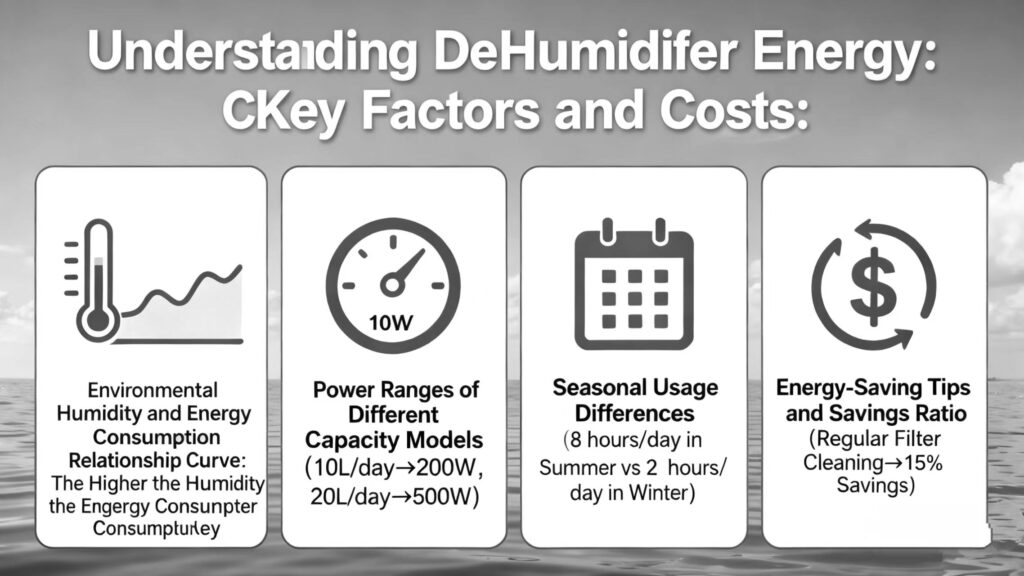

Dehumidifier energy consumption refers to how much energy a dehumidifier consumes to extract water from a volume of air in a given period of time. Its power draw connects to its size, type, and how hard it’s working in the space. Big industrial dehumidifiers can use more than 1,000 watts, but small units often draw less. High moisture, low air flow, or old systems can increase energy usage quickly. Most facilities monitor kilowatt-hours to verify expenses and identify waste. Newer models with smart controls and heat recovery can significantly reduce power use. For businesses, verifying this number assists in forecasting budgets, regulating output, and complying with energy regulations. Next, find out what fuels these figures and how to cut expenses with smarter selections and proper maintenance.

Commercial dehumidifier energy consumption is influenced by a combination of external and internal elements. Decisions on equipment, room arrangement, and running style all have a role. Smart energy management begins with understanding what fuels these expenses.
Outdoor dew points establish the floor on indoor humidity control. When outside air is wet, more work falls on dehumidifiers to keep targets met. Seasonal swings are important as well. High summer humidity or rainy seasons translate into longer runtimes and more draw. Room temperature ties in closely with energy consumption. Since warm air contains more moisture, units labor more in hot rooms. In colder rooms, less energy might be required. Actual humidity sets workload. An 80% relative humidity room will require more energy to get down to 50% than one at only 60%.
Room size establishes the minimum required dehumidifier capacity. A small room with a big unit wastes energy, while a large space with an undersized unit works overtime and still misses goals. Insulation affects the rate at which air heats or cools and the amount of outside air that leaks in. Leaky or drafty rooms demand more from the dehumidifier, which consumes more kilowatt-hours. Busy rooms, like the laundry and any area with water sources, ramp up both moisture and energy consumption. Air movement counts as well. Nice fans or open layouts diffuse dry air, allowing the dehumidifier to operate less for equal results.
Compressor dehumidifiers typically use less energy per liter of water removed in hot, humid conditions, whereas desiccant models are more suitable for cold sites but can have higher overall energy usage. Energy labels such as CE or ENERGY STAR help in comparing models. Lower-wattage machines might save runtime costs, but verify that they can actually manage the space. Variable fan speed settings could assist. Low for maintenance and high for quick drying allow users to align power usage with actual needs.
Setpoints are important. Maintaining relative humidity at 45 to 55 percent is typically sufficient. Lower thresholds waste energy. Check logs or meters to identify usage trends. Shorter cycles are typically more efficient. Variable fan speed for room loads. Timers and smart plugs can eliminate wasted hours.
Dirty filters obstruct airflow, resulting in extended runtimes and increased energy consumption. Clean units stay efficient. One drain line had to be clear as it could clog and cause overflows and short cycling. A refrigerant check keeps your cooling system running at peak efficiency.
Industrial dehumidifiers have come a long way technologically, providing tighter humidity control and lower energy costs. The two primary kinds are refrigerant and desiccant dehumidifiers. Both come with specific power requirements and performance advantages. Knowing the difference is important for facility managers seeking the optimal combination of savings, reliability, and efficiency.
Refrigerant dehumidifiers have a cold coil that condenses moisture from the air. This is power hungry because it makes a compressor run cycles to control the coil temperature. Newer refrigerant models utilizing R-32 refrigerant are even more efficient, up to 10 percent better than older types. Variable-speed fans enable you to control the airflow exactly, shaving more energy when the demand is low.
Energy Star-rated units define the top end of efficiency in this category. These models can reduce operating costs by as much as 14 percent against non-certified models, a significant benefit for large operations. The cooling effect of refrigerant dehumidifiers can be utilized in some industrial spaces, offsetting some air conditioning, but sometimes increasing total energy usage when not properly balanced.
High end systems hold humidity within plus or minus 2% of set points, whereas low end units can vary by plus or minus 5% or more. When fitted with independent air dehumidification and heat recovery, they can save between 29% and 42% of primary energy depending on the configuration.
Desiccant dehumidifiers employ a drying wheel coated with a moisture-absorbing substance. Unlike refrigerant types, they do not depend on cooling and work well in frigid environments in which refrigerant models become less time-efficient. Their energy consumption is constant, but it can be minimized in combination with heat pumps or sensible heat exchange.
Heat pump-driven desiccant wheels are more efficient, especially in climates where the ambient air is cooler or where humidity is more extreme. In pharmaceutical or electronics cleanrooms, they are great at maintaining stable low humidity, while membrane-based total heat exchangers reduce energy use even more.
For cold applications or applications requiring low humidity, desiccant models often translate into lower overall energy use in the long run. Their tight control with less variation makes them a great fit for critical production lines or storage.
About: Calculating Your Energy Bill This controls costs and aids sustainability goals. Energy cost equals wattage multiplied by hours used multiplied by local energy rates. For a clear estimate, use this formula: (hourly energy use in kWh) multiplied by (hours used per day) multiplied by (energy price per kWh) equals daily cost. Multiply by 30 for the monthly amount.
Wattage counts the most. Common dehumidifiers operate from 100 to 900 watts. Consult the manual or the label on your machine for precise figures. Consider a 240 watt unit running 8 hours a day at $0.12 per kilowatt-hour; that would cost you roughly $0.23 each day, or about $7 per month. If you run a 100-watt dehumidifier all day, 24 hours, it consumes as much energy as leaving a 100-watt light bulb burning all day.
The table below helps break down the main cost factors:
| Factor | Example Value | How to Use in Formula |
|---|---|---|
| Dehumidifier Wattage | 240 W | Divide by 1000 to get kWh |
| Hours Used Per Day | 8 | Multiply by daily kWh |
| Electricity Rate | $0.12/kWh | Multiply by daily energy consumed |
For a dehumidifier with 240 watts used 8 hours daily:
Following your electricity bill provides actual data on how much the dehumidifier contributes to your energy costs. This is critical for big sites with multiple units. Check the bill’s kWh line before and after you use the dehumidifiers. This aids in identifying increasing costs and optimizing run times.
For high-efficiency, low-waste operations, Yakeclimate’s advanced systems consume less power to remove more moisture. This not only saves cash but supports green objectives. Custom settings and smart controls help match output to site needs and halt wasted energy.
Smart features that save energy Modern dehumidifiers incorporate smart features that significantly reduce power consumption while still maintaining the safety and dryness of a room. These upgrades put plant managers and engineers back in control, reduce costs, and achieve green goals. With energy consumption frequently gauged in liters per kilowatt-hour, each piece of tech that conserves power has a tangible effect on the bottom line.
A built-in humidistat allows the dehumidifier to sense air moisture and adjust its effort accordingly. This maintains the set humidity in the room, frequently between 50 and 60 percent, which prevents overuse and waste. Thanks to precise sensors and digital panels, users can select the exact level they want. Once that number is reached, the unit throttles down or powers off to prevent extracting too much moisture from the air. This conserves energy and ensures that the air doesn’t become too dry, which damages goods and machinery. Top models with this feature can use 15 to 30 percent less power than older types, making them a smart choice for any facility that requires tight controls.
Smart Features that Save Energy: Automatic shutoff stops the machine when the tank is full or desired humidity is reached. This reduces waste and helps prevent unnecessary unit run time. It additionally protects the machine from overflow or long-run wear. Users don’t have to babysit the dehumidifier or manually switch it off. That’s a time and money saver. Over time, this feature translates into obvious savings in energy bills, particularly in locations where units are run all day long.
Timers enable customers to save and be efficient. It prevents the unit from running when not needed, aiding in energy targets.
Pairing dehumidifiers with smart features allows users to adjust settings remotely. Remote control power means less wasted power and a fast response to changing needs. They can communicate with other smart equipment, such as HVAC, to control energy consumption. Smart network data help users identify patterns, optimize consumption, and save even more over time. Facilities with smart integration typically experience smoother runs and increased power efficiency.
Energy use of dehumidifiers exceeds what the power label indicates. There are a lot of hidden things that can swing a unit’s actual energy requirements on a daily basis. These ‘invisible’ multipliers are most important in large-scale plants, where small changes in energy consumption accumulate quickly. For industrial sites, failing to identify these can translate to increased costs, reduced uptime and more difficult adherence to energy goals. Below, a table decomposes some of these invisible variables and their impacts.
| Hidden Factor | Potential Effect |
|---|---|
| Poor insulation | More energy loss, longer run times |
| Air leaks | Unstable humidity, higher demand on dehumidifier |
| High ambient humidity | Increased cycle frequency, spikes in energy use |
| Old or dirty equipment | Lower efficiency, higher power draw |
| Shared space with other machines | Heat loads increase, system works harder |
| User settings | Wrong set points lead to wasted energy |
| Maintenance gaps | Clogged filters, less airflow, more power needed |
No or poorly-installed insulation and leaks are frequently a plant problem. If walls, doors, or windows do not retain exterior air, moisture percolates and the dehumidifier works overtime. This translates to more cycles, a larger bill, and sometimes uneven humidity. Sealing leaks and insulating can prevent this waste.
Excess humidity is another multiplier. If outside air has high humidity or if an internal process emits moisture, the unit needs to operate extra hard. In food or pharma plants, this may occur with open door loading or wet cleaning. If unchecked, high humidity doesn’t just waste energy—it jeopardizes product quality and safety. Deft sensors and better sealing can reduce the load.
Other appliances in the same room contribute to the difficulty. Every heat source—motors, ovens, even lighting—raises the temperature and transforms how much water the air is capable of containing. The dehumidifier needs to compensate by frequently running harder and longer. Scheduling together, low-heat equipment or zoning the facility can relieve this unseen burden.
The unseen energy multiplier is not a constant. It shifts with operation, repair, user behavior, and even machine age. As the months and years go by, these little things, such as tweaking set points, cleaning filters, or switching to a newer Yakeclimate, can reduce energy consumption by a significant percentage.
Industrial users can trim dehumidifier energy with simple, proven measures. The majority of the savings come from smart operation, routine care, and selecting the appropriate working machine.
Start with a checklist for better energy use:
Regular maintenance counts. Clean filters and vents to prevent dust accumulation. Dirty coils or blocked airways force the unit to work harder and use more power. Check for leaks and strange noises every year. Fast fixes skip over bigger issues and save energy.
Choose energy-efficient models. Modern dehumidifiers feature more efficient compressors and fans. ENERGY STAR machines conserve roughly 20% more energy than non-ENERGY STAR models. Newer refrigerant units use 13% less energy but extract the same water. Desiccant models consume 240 to 480 watts, and refrigerant types use 300 to 700 watts. Always check specs prior to purchase.
Keep an eye on humidity and compensate. Get a digital humidity meter. If air remains under 50 percent, turn the run time down. Don’t crank it to full power unless air is saturated. Operate the dehumidifier only during the worst humid hours, not 24/7. This strikes the point without expending energy.
To reduce energy costs, choose the appropriate dehumidifier for your room. Consider the dimensions, the technology, and the intelligent accessories. All three affect your monthly power usage. A properly matched unit doesn’t run too long or waste power. Choose ones with obvious energy ratings and timers. For tight budgets, easy things like filter cleaning or humidity setting pay off big. Many plants employ smart controls to monitor and prune their energy usage on a daily basis. To increase your profits and protect equipment, discover fresh dehumidifiers that suit your work. Contact us for a fast fit to your requirements or additional advice in conserving energy.
Average residential dehumidifier consumes between 0.2 and 0.7 kWh per hour. The specific quantity varies based on the type, size, and moisture in the area.
Some of the key factors that impact energy consumption are room size, humidity level, dehumidifier capacity, and running time. High-tech and smart controls can factor into total energy consumption.
Yes, energy-efficient models consume less electricity in the long run. They might be more expensive initially, but they reduce your energy bills each month and have less of an environmental footprint.
Take your dehumidifier’s power rating in kilowatts, multiply it by hours used per day, and then multiply that by your local electricity rate. This provides you with the daily or monthly operating cost.
Yes, smart features such as humidity sensors and timers automatically control operation. This cuts down on any unnecessary running time, which saves energy and money.
Running a dehumidifier in extremely humid or poorly ventilated areas can boost your energy costs. That’s because the unit has to work harder and longer to achieve the target humidity level.
Close up doors and windows, clean filters, and operate only when necessary. Selecting the proper size for your space increases efficiency.


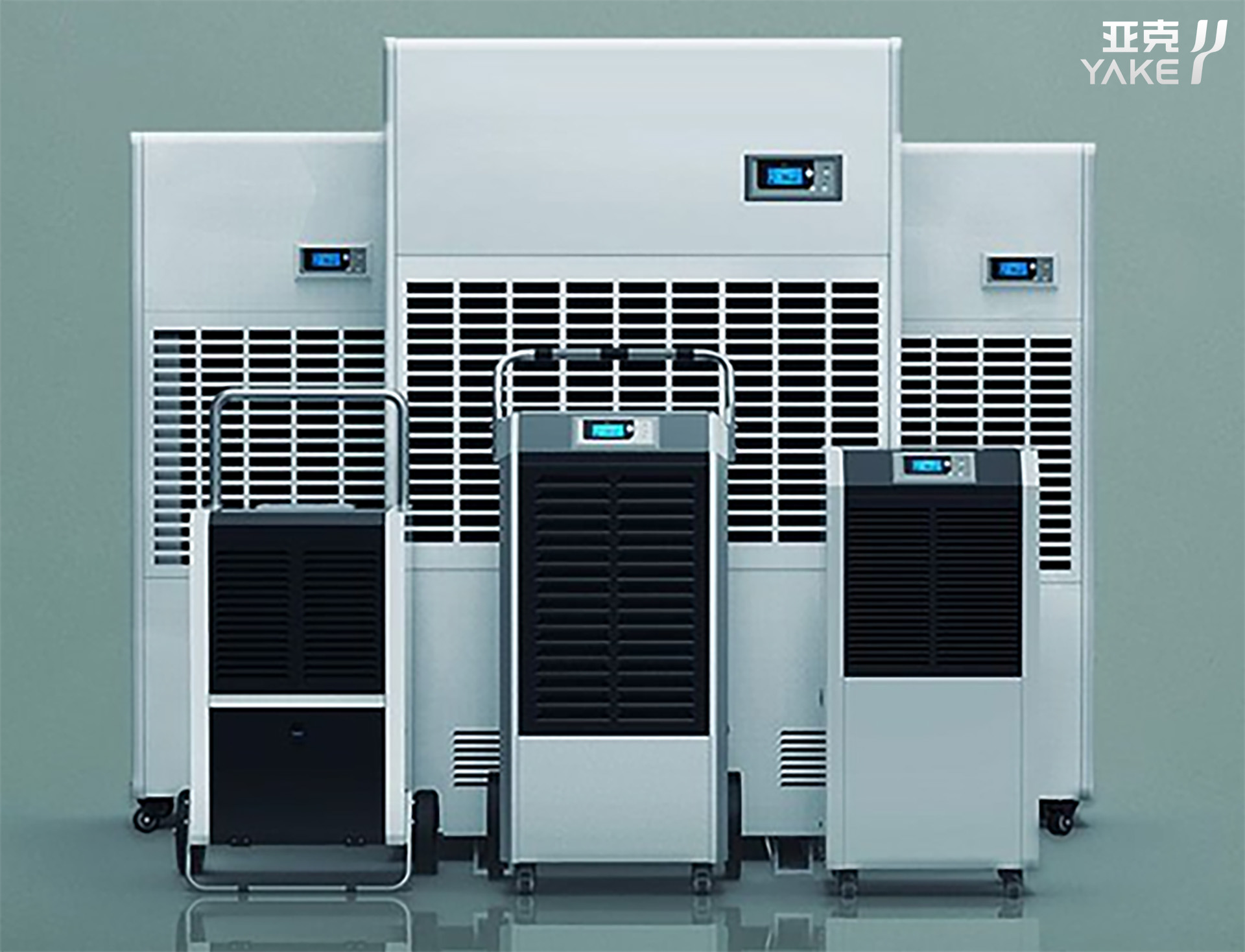
Contact us to find the best place to buy your Yakeclimate solution today!
Our experts have proven solutions to keep your humidity levels in check while keeping your energy costs low.