
Building 34, No. 535 Shunfeng Road, Hangzhou, Zhejiang, China
[email protected]
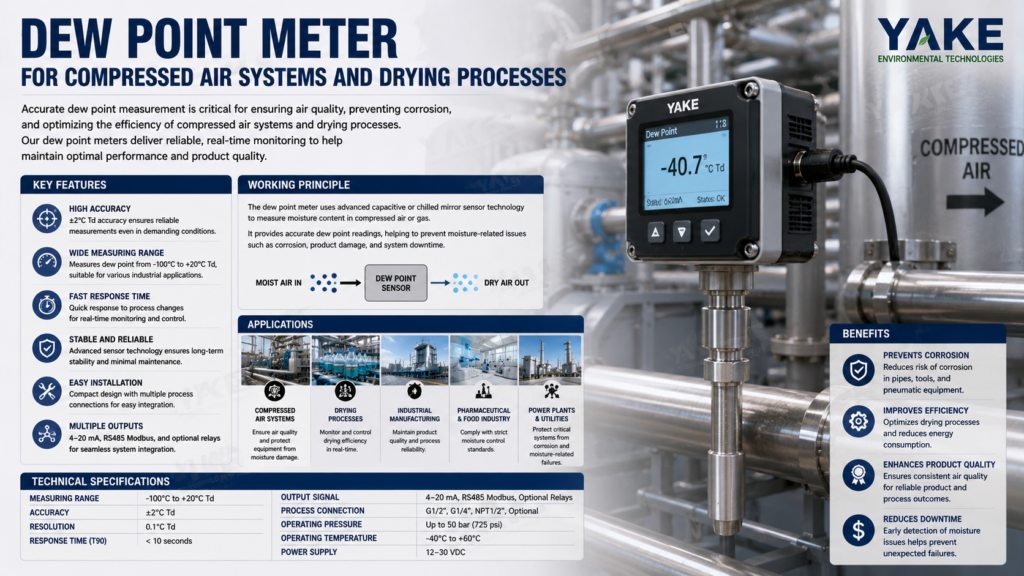


Dew point meters for compressed air identify the dew point temperature of moisture in compressed air. They assist in identifying moisture hazards in air lines, dryers, and storage tanks, which is critical to quality control and equipment protection. In real configurations, a dew point meter can indicate whether a dryer performs effectively, whether filters are saturated, or if lines are at risk of freezing in low room or process temperatures. Numerous plants in the food, pharma, and electronics industries consider dew point limits as integral process rules. To get this from theory to pragmatic checks, the next sections dissect how these meters work, main types, and what specs matter in daily use.
Dew point indicates the temperature when air becomes saturated and vapor begins to condense. It’s one of the fundamental figures that explains how “wet” or “dry” your compressed air actually is. In a compressed air line, this is more than just a comfort measure. It’s a direct handle on risk, reliability, and cost throughout the system.
High dew point means the air will condense at a higher temperature. In a plant where pipes may dip below that temperature, water condenses on the inner surface of walls, low points, valves, and tools. Dew point in compressed air can vary from near ambient down to about −80 °C in extreme cases, demonstrating the enormity of the moisture window. A line with a 10 °C pressure dew point that runs through a 5 °C room will have liquid water appearing in drains and at the point of end use. Minutes at the same 3 °C pressure dew point remain dry in the very same room. That’s why numerous pipeline standards use 3 °C pressure dew point as a fundamental minimum for secure dryness.
When dew point stays low, you eliminate the source of corrosion, premature seal deterioration, and product contamination. Moist air leads to rusted steel pipes, pitted valve seats, and sludge in filters. It brings issues into processes. In a food plant, high dew point air can saturate packaging lines and alter product consistency. In electronics, moisture on parts can lead to dendrite growth or surface leakage. Refrigerant dryers keeping dew point around +3 °C to +10 °C are often good enough for general purpose tools. For critical work, desiccant dryers that drive dew point down to −40 °C or even −70 °C keep lines and products significantly safer.
Tight dew point control connects directly to quality, energy, and cost. Most ISO air quality classes are measured in terms of pressure dew point bands, therefore a dew point meter is how you prove that your dryer actually makes its spec. If dew point drifts up, the dryer might be overworked, fouled, or bypassed, which damages system efficiency. Wet air can increase pressure drop, reduce filter life, and necessitate more frequent tool and valve changeout. All of that manifests as increased energy consumption, additional unplanned downtime, and elevated total cost of operation throughout the system life cycle.
Dew point meters take a measurement of the dew point temperature of compressed air, which is the temperature at which the air becomes saturated and water vapor begins to condense. In compressed air systems, this is frequently referred to as ‘pressure dew point’ because the gas is above atmospheric pressure. By monitoring this value, you can see whether a dryer really does provide the dryness it claims on its datasheet, frequently as low as –40 °C or even –80 °C in rare cases, which is important for instruments, valves, and any process that cannot endure liquid water.
Most meters situate a sensor in the air stream and transform the sensed humidity or condensation state into a dew point temperature. The meter then displays real-time data or transmits it through analog output or a fieldbus to a PLC or SCADA system. At that point, operators can monitor trends, configure alarms, and intervene before water reaches consumers. Portable meters do spot checks during audits or service, while fixed units do full-time monitoring of critical lines. Threaded ports like G 1/2″ or 5/8″ UNF and IP65 housings help these units survive in common industrial pipework.
Continuous dew point monitoring augments pressure, flow, and temperature information to provide a more comprehensive picture of system health. As long as your reading stays near your dryer’s spec, your air quality is in good shape. A slow drift or sudden jump indicates a need to check filters, drains, or the dryer itself. High-quality sensors, with an accuracy of around ±2 °Ctd and fast response, make this feedback loop reliable and actionable.
Chilled mirror dew point meters cool a polished mirror in contact with the compressed air until condensation appears on it. An optical system senses when a thin layer of water forms and maintains the mirror near that condition, so the mirror temperature at equilibrium equals the dew point. Since it measures the phase change itself instead of a secondary property, it is considered a reference-grade method that can provide exceptional accuracy and long-term stability when properly maintained. These are popular in laboratories, calibration facilities, and quality departments requiring a traceable reference for validating other dew point transmitters or certifying dryers. They require frequent mirror cleaning, since small oil or dust films can lag the condensation and skew the reading, so they are less popular as unattended field probes within grimy compressed air systems.
Capacitive polymer sensors involve a thin layer of polymer sandwiched between two electrodes forming a small capacitor whose capacitance varies with the quantity of water absorbed. As the dielectric constant of the polymer changes with humidity, the electronics translate that change into a dew point temperature at the present pressure.
They react quickly to changes in moisture and are ideal for real-time monitoring of multiple points in a plant.
These sensors are resilient to moderate contamination, shock, and vibration, making them suited for common industrial compressed air, such as packaging, small machining shops, or well-filtered food plants. They’re pretty inexpensive, so you can install a few stationary transmitters and a portable unit for spot checks without killing the budget.
Metal oxide dew point sensors use a porous metal-oxide layer whose electrical conductivity varies with the amount of adsorbed water. When water content in compressed air tends toward very dry, the conductivity pattern maps a dew point down to -80 °C or lower. This renders them useful anywhere very dry air is needed, such as electronics drying lines or instrument air for critical valves. They withstand high temperatures and demanding environments better than many polymer designs, so they frequently live near hot compressors, regeneration outlets of desiccant dryers, or in outdoor installations where conditions swing. Due to their durability and low-dew-point capability, they are prevalent in process control loops where a missed alarm would halt production or destroy high-value equipment.
Optical dew point meters shine light onto a mirror and measure the reflection to detect when a thin condensate layer forms. The shift in reflected light indicates that the mirror has reached dew point, and control electronics subsequently monitor that temperature. Because the sensing is optical and non‑contact, the mirror surface sustains less wear and there is less mechanical stress on vital components than certain conventional probes. These tend to work well in places where access is difficult and scheduled maintenance windows are uncommon, like high‑level pipe racks or clean enclosures around explosive equipment. They’re handy in sensitive or dangerous areas where you want to leave the sensing elements isolated but still obtain precise pressure‑dew‑point information for safety‑critical air supplies.
Choosing a dew point meter for compressed air begins with the use case. Specify the dew point range before you choose the sensor technology. Only after that, look at pressure rating, contamination protection, and signal outputs. This sequence prevents you from purchasing a “nice” instrument that doesn’t fit your line, dryer, or control system.
You want to think beyond today’s setup. If you are going to tighten dryer performance, add nitrogen lines or move from general compressed air, typically minus 20 degrees Celsius to plus 20 degrees Celsius, to dry industrial air, which ranges from minus 40 degrees Celsius to minus 10 degrees Celsius, size the meter range, accuracy, and outputs for that journey. A lot of teams construct an easy comparison table for each meter type, such as chilled mirror, polymer, aluminum oxide, and quartz, with columns for range, accuracy, pressure rating, contamination limits, and cost, and then score options against their current and future state system.
Dew point range is your first hard filter. The optimal approach is to maintain your typical operating dew point in the mid 30 to 70 percent of the sensor span, not on the edges, as that is where stability and repeatability are most robust.
Operating a meter beyond its intended range (for example, taking a −20 °C minimum sensor to monitor a −40 °C dryer) results in sluggishness, false alarms or complete sensor breakdown. That hazard escalates in mixed-gas labor such as natural gas or hydrogen.
Operational scenarios to list when you check range:
Document these in one place before you compare catalogs.
Match accuracy with actual risk. For a general plant utility line, a common industrial meter with plus or minus 1 to 2 degrees Celsius dew point accuracy is usually sufficient. For medical oxygen, lab gases, or natural gas custody transfer, high-end industrial sensors with plus or minus 0.1 to 0.3 degrees Celsius can be worth the cost.
| Application example | Typical accuracy need | Notes |
|---|---|---|
| General compressed air tools | ±2 °C | Mostly for water trap checks |
| Pneumatic control / packaging | ±1 °C | Avoid sticking valves, label issues |
| Instrument / dry industrial air | ±0.5–1 °C | Dew point alarms and logging |
| Medical, lab, specialty gases | ±0.1 to 0.3 °C | compliance and traceability |
Note the maximum error your process can tolerate (for example, “alarm at −30 °C plus or minus 1 °C”) and post this in front of you as you peruse models and data sheets.
The meter must ‘survive where it works’. Monitor gas temperature at the sensor, typically between −20 °C and +60 °C, working pressure from 0 to 1 MPa for standard compressed air, 4 to 10 MPa for natural gas or CNG, and actual humidity at the line rather than relying on the dryer nameplate.
A wrong pressure rating can ruin the sensor body or seals. The same applies to dust, compressor oil, and chemicals. If the probe doesn’t have filtration or contamination protection, reading drifts and you’re chasing ghosts in your data. This is typical in antiquated compressor rooms with oil carryover.
Site-specific challenges to map out:
Now, pair each of these with a design feature (filtration, ATEX rating, vibration-proof housing, or remote sampling).
The dew point meter is part of your data story. It has to interface with the rest of your system. Verify that signal outputs, including 4 to 20 mA, Modbus, Profibus, Ethernet, or wireless, align with your PLC, SCADA, or data historian, and that scaling is transparent for your analytics efforts.
Remote monitoring frequently returns its investment in large or diffuse plants. With a probe by the dryer and a wall transmitter linked to a plant network or cloud dashboard, you track trends across your compressed air, nitrogen, and other gases all from one place.
Basic integration checklist:
Reliable dew point data in compressed air comes from the full chain: right instrument, correct installation, clean process conditions, and disciplined calibration and verification. The goal is simple but strict: keep the actual pressure dew point below the level where condensation can form, often down to -40 °C and in some cases -80 °C, and prove it with traceable measurements over time.
Calibration should occur at the manufacturer’s interval and in the manner frequently every 6 to 12 months adjusted for duty cycle, system cleanliness, and needed accuracy. A sensor perched in a clean, stable line running at a moderate load requires calibration far less often than one employed for roving troubleshooting in grimy plant alleys.
Use certified standards or accredited calibration labs so you maintain traceability and know that a claimed ±2 °C accuracy (above about -100 °C) is genuine, not an estimate. This becomes critical when dryers have to consistently deliver a pressure dew point at -40 °C or when a pharmaceutical or electronics production line runs at -60 °C or below.
Each calibration event should be logged: date, person, reference used, as-found and as-left values, and any adjustments made. Over time, those records show drift trends and help you determine when a sensor is approaching end of life long before it fails in service.
Dew point meters should measure air that actually reflects system conditions, not a cold dead leg or a silent bypass. Achieving Reliable Measurements embed inline sensors in the main distribution header or immediately after the dryer outlet, downstream of filters, with sufficient flow to maintain stable readings.
Don’t put it in locations that experience heavy vibration, direct water slugging, or large ambient swings, like immediately adjacent to hot process equipment or outdoor doors. For field work, match the device to the job. Use portable meters for quick checks or dryer tuning and fixed transmitters for continuous control and data logging into a SCADA or quality system.
| Item | Requirement / Guideline |
|---|---|
| Sampling point | After dryer and filters, in main line, stable flow |
| Mounting orientation | As specified by maker, usually horizontal, leak‑tight fittings |
| Temperature limits | Within sensor rating; avoid radiant heat sources |
| Pressure connection | Rated fittings, isolation valve, and vent where needed |
| Electrical and signals | Shielded cable, proper grounding, match output (4–20 mA, Modbus) |
A short commissioning checklist helps to verify location, conduct a leak test on fittings, confirm pressure and temperature range, validate output signal at the control system, and save baseline readings on day one.
Oil mist, water, and fine dust can coat or block the sensing surface and cause readings to lag, read falsely dry, or fail outright. This is typical when the dew point probe hangs before coalescing filters or in lines with bad condensate control.
Install proper filtration upstream of the dew point meter: bulk water separator, fine coalescing filter for oil, and a particulate filter sized for the flow and line pressure. In high-risk spaces, like aged compressor rooms with oil carryover, a dedicated sampling panel with staged filters can protect the sensor even more.
Check the probe and hardware regularly, say every quarter, and clean or replace filters based on pressure drop and service hours, not just calendar time. When applicable, use the maker’s cleaning solution if your sensor design supports it. Ad-hoc solvents can damage polymer or ceramic elements.
Write down known contamination hazards for each process—oil-lubricated compressors, dusty processing steps, harsh cleaning agents—and tie them to specific precautions. That documented risk and control map simplifies defending your measurement quality at audits and interpreting unusual trends in logged dew point data.
Ignoring dew point in compressed air looks cheap in the short term, but it shifts cost into places that are harder to see. Failures, waste, and risk keep growing over time.
Uncontrolled moisture in compressed air becomes a direct loss in multiple ways. When water condenses in lines, it drives corrosion inside pipes, valves, and pneumatic cylinders. This leads to additional leaks, pressure drop, and limp actuators. For many plants, the air leaks alone can waste as much as 30% of system output and energy use. If you operate a 200 kW compressor 24/7, such waste can amount to tens of thousands of euros per annum in lost energy specifically. Above all, humidity can ruin product batches in food, pharma, or coatings when water droplets or rust particles interfere with the process. One bad batch or packaging or filling line shutdown for a few hours often costs way more than a complete dew point monitoring system!
Compressed air is the “fourth utility” and it ain’t cheap. Clean, dry compressed air can be about eight times as expensive as electricity, as compressing air converts the majority of input energy to heat that is then wasted. When dew point is not well measured, dryers can be significantly oversized “just in case” or run longer than necessary, which drives energy use still higher. Or the opposite happens: the dryer underperforms, dew point creeps up, and the system runs with wet air. Either way, this slashes system performance and accelerates wear, reducing the lifespan of compressors, dryers, filters, and end tools.
In regulated industries, poor dew point control becomes a compliance risk as well. Numerous standards for pharma, food, medical devices, and electronics require specified documented air quality classes, including moisture limits. Incorrect or absent dew point data can complicate audits, initiate corrective actions, or even result in fines and mandated shutdowns. Every day you postpone installing reliable dew point meters is a missed opportunity to reduce energy costs, increase equipment life, and safeguard product quality. The risk of an expensive downtime incident continues ticking upward in the background.
Proper dew point meter maintenance lies at the heart of maintaining a compressed air system within its moisture boundary and near ISO 8573-1 standards. It connects the meter, the dryer and the actual air quality so the readings correspond to the true pressure dew point throughout the system, whether it operates close to ambient or all the way down to minus 80 degrees Celsius.
A practical maintenance plan begins with a fixed schedule. Most makers recommend a one- or two-year calibration interval, and the selection generally depends on how harsh the site is and how low the target dew point is. A meter used to monitor a refrigerated dryer at +3 °C can often hold steady longer than one monitoring a desiccant at −40 °C or below. It helps to time this schedule alongside other service windows—dryer inspection, filter change, etc.—so you can pull the sensor, send it for calibration, and return it with minimal downtime. When dew point sensors rest at key bends in the pipe run, say downstream of a dryer or in pockets where the air cools and might condensate, that schedule becomes part of the risk mitigation for the entire plant.
Any worn or broken parts should be replaced early, not when they give out. Topics such as sensor tips, O-rings, sintered guards, quick couplings and sampling hoses. Even a cracked fitting or clogged guard can shift readings by a few degrees, potentially driving a system out of its ISO 8573-1 moisture class with no one the wiser. When different drying technologies are at work, such as membrane dryers on one line and desiccant dryers on another, incorrect readings can mask under-drying and permit liquid water to develop in tools or valves.
Calibration dates and results, part changes, fault codes, and whenever the unit is moved to a new measuring point should be logged in maintenance records. These notes assist with warranty claims, internal audits, and root-cause work when you track a batch issue back to a possible humidity excursion.
Basic staff training closes the loop. Operators should know to check sensor placement, detect drift, compare readings at critical nodes, and perform rudimentary checks on dryers so dew point monitoring remains a live control, not a passive readout.
Dew point meters for compressed air seem small, but they protect enormous worth. Dry air keeps tools clean, seals sealed, and products protected. Wet air does the opposite. It corrodes metal, destroys film, jams valves and reduces yield.
A quality meter selection and quality maintenance provide a safety blanket. The correct range, correct sensor, proper installation, and periodic inspections create a combination that eliminates the guesswork and transforms “pray it’s dry” into actual data.
Remember your plant, lab, or shop. Where does moisture still sneak past? Select an air line, a dryer, or a storage tank to begin with. Map the weak spot, then find a meter to suit your needs and your budget.
Dew point is the temperature at which water vapor in compressed air converts to liquid. It matters because excess moisture can lead to corrosion, product contamination, freezing, and instrument failure. Dew point control protects equipment, enhances product quality, and minimizes unexpected downtime and repair expenses.
Dew point meters typically employ capacitive or chilled mirror sensors. They detect the moisture in the compressed air and express it as a dew point temperature. The instrument then indicates this value and assists you in quickly confirming drying performance and identifying issues within your air treatment system.
There is no single ideal dew point for all applications. General industrial use usually aims for minus 20 degrees Celsius to minus 40 degrees Celsius pressure dew point. Sensitive processes, like pharmaceutical or electronics, might require even lower dew points. Equipment manufacturing guidelines and standards for your industry should always be followed.
Match the meter to your dew point range, pressure and installation point. Take into account accuracy, sensor type, response time and certification requirements. Seek rugged designs proven for compressed air, with transparent calibration records and support documentation from a trusted manufacturer or calibration laboratory.
The majority of industrial users calibrate dew point meters annually. Extreme environments, ultra low dew points, or mission-critical quality could warrant 6-month intervals. Adhere to the manufacturer’s guidelines, monitor for drift in values, and employ accredited calibration laboratories to support confidence in measurements and regulatory compliance.
Signs of trouble are sudden step changes, unstable readings, and values not corresponding to system conditions or reference instruments. If dew point sounds too good to be true, double check with a second meter. Contributing factors include dirty sensors or missed calibration.
Without dew point control, the moisture can ruin your valves, tools, and dryers and spoil or degrade your product. This results in more maintenance, energy squandering, unplanned downtime and even safety hazards. A trusted dew point meter keeps these expenses at bay and fosters sustainable system dependability.


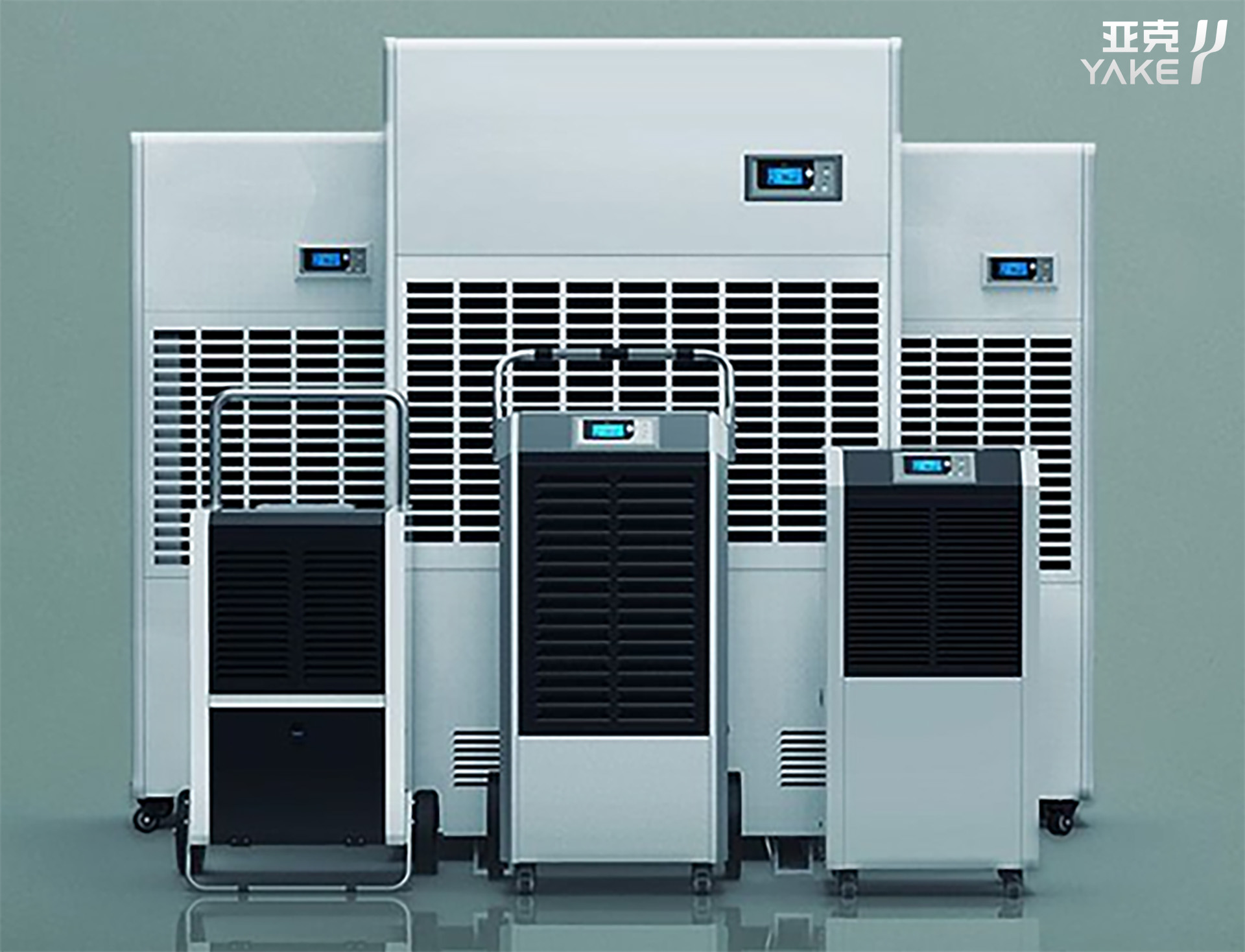
Contact us to find the best place to buy your Yakeclimate solution today!
Our experts have proven solutions to keep your humidity levels in check while keeping your energy costs low.