
Building 34, No. 535 Shunfeng Road, Hangzhou, Zhejiang, China
[email protected]
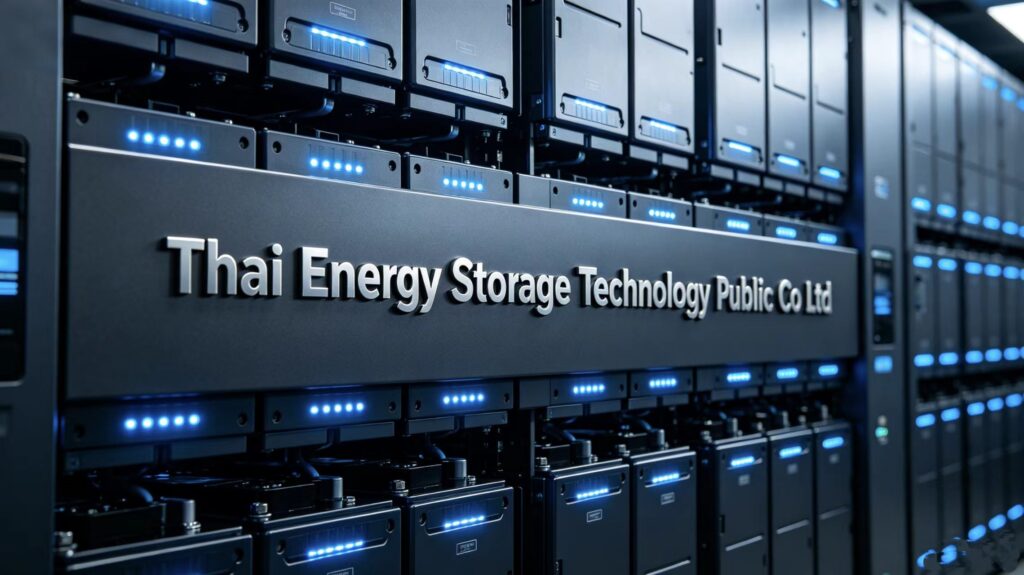


Thai Energy Storage Tech Public Co Ltd is a Thailand-based industrial and commercial battery and energy storage system. The company commonly associates its products with backup power, grid support and stable power supply for plants, data centers and large buildings. Main product lines typically encompass lead-acid and newer battery chemistries, with emphasis on long cycle life, stable discharge and safe operation at high load. Most projects seek to facilitate renewables, reduce peak loads and maintain essential infrastructure during blackouts. For plant managers and engineers, the company frequently appears on the radar when designing UPS systems, microgrids or big storage banks. The following sections take you through those points in detail.
Thailand is attempting to reduce its consumption of fossil fuels while maintaining a stable and affordable power system. The grid is still natural gas driven at 57% generation and domestic coal at 15%, so the transition won’t be rapid or easy. For industrial users, this implies a long transition during which reliability, power quality, and cost will all change simultaneously, not in discrete stages.
Thailand’s ambition is for renewables to constitute approximately 68% of power generation by 2040 with the Power Development Plan (PDP) having intermediate targets to 2037. Solar and wind currently provide only about 4% of electricity so growth has to be steep, supported by more biomass, biogas and large initiatives such as over 2.7GWp of floating solar on hydropower dams targeted by 2037. A PDP revision anticipated in early 2024 will likely update these figures and timelines.
Energy storage finds itself at the heart of this peak demand planning. Pumped storage hydropower of up to 10 GWh is being studied, and Thailand awarded 24 solar plus co-located BESS projects totaling 994 MW. The state sought 500 MW of long-duration storage capable of running at least eight hours, targeting evening peaks and night-time reliability.
KPIs are renewable share in the mix, system reserve margin, average outage duration, and GHG intensity per kWh. These metrics inform how grid operators price storage, demand response, and more efficient industrial loads such as climate control in large plants.
Main policy frameworks that push energy innovation include:
Incentives include feed-in tariffs or premium rates for solar, wind, and biomass, along with tax holidays on critical equipment and in certain areas expedited permitting. Floating solar and hybrid hydro-solar developers benefit from shared use of existing dam infrastructure, which reduces grid tie-in costs.
New transmission and substations are now being planned with renewable corridors. Utility-scale solar clusters, several paired with BESS, are situated near industrial zones so factories can access more stable, low-carbon power without lengthy, fragile lines.
Scaling renewables still encounters land limitations, grid bottlenecks, risk of curtailment, and slow approval cycles. Intermittency causes plant managers to be nervous about power dips that’ll fry batches, dry rooms, or paint booths.
Grid modernization — advanced metering, automation, and better forecasting — has to grow in step with renewables so industrial users experience stable voltage, fewer sags, and cleaner power for sensitive HVAC and dehumidification systems.
Energy storage makes the intermittent sources relevant to real industrial demand. It captures midday solar surplus and transfers it into evening peaks, crucial as solar and wind ascend from roughly 4% today to a significantly bigger share of the blend.
Storage enhances grid resiliency by smoothing ramps, shaving peaks, and delivering swift frequency response. In practice, that translates to less unplanned outages, sags, and improved power quality for climate-controlled critical lines, cold rooms, and coating lines reliant on stable temperature and humidity.
Economically, sophisticated storage can lower peak tariffs, minimize the need for new peaking plants, and increase asset utilization of both renewables and transmission lines. For big factories, behind-the-meter batteries combined with efficient equipment such as newer dehumidifiers can reduce demand charges and keep critical operations running through near-term grid events.
| Storage Technology | Typical Duration | Role in Thailand’s Plans | Key Benefits for Grid/Industry |
|---|---|---|---|
| Pumped storage hydropower | 6–12+ hours | Up to ~10 GWh under consideration | Bulk shifting, peak shaving, system backup |
| Li‑ion BESS (co‑located) | 1–4 hours | 24 solar‑plus‑BESS projects, ~994 MW | Fast response, ramp control, local reliability |
| Long‑duration storage (LDES) | ≥8 hours | 500 MW tender requested | Night coverage, deep peak reduction |
| Hydro‑solar hybrids | Multi‑hour | 2.7 GWp floating solar on dams by 2037 | Joint operation, flexible dispatch, land saving |
Thai Energy Storage Tech Public Co Ltd occupies a strategic position in Thailand’s energy storage ecosystem, primarily by designing and mass-producing vehicle batteries. It’s focused on pragmatic battery and storage platforms that serve both local transport fleets and larger power projects, with a consistent history of quality, safety, and electrical performance.
The company started with a clear aim: to build reliable energy storage for fast-growing vehicle use in Thailand and nearby markets, then grow that know-how into broader storage systems. Its initial emphasis was on starter batteries able to survive heat, stop-start traffic, and fragile grid issues.
Founders came from electrical engineering and industrial manufacturing, so they knew how to scale a battery line, manage plate chemistry, and set up test labs that match automotive standards. Initial capital was provided by local industrial groups, bank loans, and a small handful of strategic supply contracts that guaranteed demand from motorcycle assemblers.
Along the way, highlights included breaking into motorcycle OEM supply, entering export markets, and going public. Those steps provided the company improved access to funds for R&D and facility enhancements.
The bread and butter is lead-acid vehicle batteries, optimized for motorcycles and light vehicles that require consistent ignition power and reliable 12 V output for lights and controls. Designs include standard flooded and low maintenance formats.
Its tech stack covers scientific and electric apparatus and instruments, as evidenced by three registered trademarks in this IP class. This includes plate grids, separator designs, charge acceptance control, and test systems.
It conducts ongoing R&D on cycle life, vibration resistance, and charge time, since they directly affect fleet uptime and warranty cost. Internal labs monitor density, sulfation, and heat build-up to optimize alloy blends and paste formulas.
A patent list would probably cluster around plate alloys, vent structures, case geometry, and maybe smart test or monitoring tools used in manufacturing and service.
Today’s solution set revolves around vehicle batteries, with a robust niche in motorcycle units that supply ignition and all on-board electrics. These products service OEM assembly lines and the huge workshops and dealer aftermarket.
Most models differ by ampere-hour rating, cold cranking current and case size, allowing fleets, distributors and service shops to match each unit to engine size and duty cycle. Industrial users with service bikes or light utility vehicles typically lock into one battery family for simpler inventory and scheduled swaps.
After-sales support normally covers technical data sheets, charge and storage rules, and claim handling through partner distributors. Service staff are typically equipped only with simple test routines for voltage, internal resistance, and visual check.
A sample spec table might track nominal voltage (V), capacity (Ah), cold cranking amps (A), design life (cycles at 50% depth of discharge), and recommended ambient temperature range (°C).
Its leadership says it sees a direct connection between reliable energy storage and optimized, lower-emission transport and power systems. In practice, that translates into lobbying for longer-life batteries that lower scrap rates and lead losses per kilometer.
Management generally grows talent through plant-level training, lab internships, and working closely with material suppliers and equipment makers. That assists engineers connect electrochemistry, process control, and real-world failure modes.
CSR tends to be via safe waste handling, lead recycling with certified partners, and worker health programs. The team hints at ambitions to expand into more sophisticated storage formats and higher-value systems associated with grid and renewable projects.
Core markets sit in Thailand’s motorcycle and vehicle sector, then extend into surrounding ASEAN countries where two-wheel transport remains dominant. The company addresses replacement demand via retail and workshop channels.
To stand up to global brands, the firm relies on local manufacturing, consistent quality and rapid response on orders and claims. Its online presence, with a mobile-friendly site that’s slick on iPhone and other devices, facilitates a rapid route to product information and contact for fleet managers.
Customer acquisition occurs via OEM contracts and through national distributors and dealer networks who can maintain inventory and provide frontline technical assistance. Retention requires field reliability data, consistent specs, and clear warranty rules.
Growth cruises on joint initiatives with assemblers, logistics players, and energy players that require stable battery supply as they optimize fleets, introduce accessories, or experiment with new powertrains.
Thai Energy Storage Tech Public Co. Ltd. Is part of a broader transition of energy storage from lab-scale to actual industrial use. For plant teams, the key question is simple: which milestones really change how you plan power use, protect lines, and link with clean energy and EV loads.
One fundamental move is toward increased storage density and improved security. The worldwide shift to lithium-ion, highlighted by the 2019 Nobel Prize in Chemistry, established a benchmark for energy density and cycle life. Thai Energy Storage Tech builds on that with cells and packs tuned for local grid and transport duty: tighter thermal management, more robust battery management systems, and clear fault isolation in modules. For a plant that needs to coast through grid sags or support cleanroom lines, that translates to extended discharge windows in kilowatt-hours per rack and reduced fire hazard through managed venting and active monitoring.
Prizes and recognition in an industry help demonstrate which designs hold up. In this area, accolades typically arrive from national innovation agencies, energy ministries, or EV associations for research connecting storage with EVs and renewable plants. Once a system meets stringent grid-code tests or passes car safety standards, it notifies data center engineers that it can live next to high-value assets, HVAC drives, and critical dehumidifiers without causing concern.
Pilot projects in Thailand’s EV and clean energy push count for more than lab data. With a national target to be a regional EV hub by 2025 and 750,000 EV units by 2030, practical rollouts of motorcycle and light-vehicle batteries represent a clear milestone. Packs sized for two-wheelers and delivery fleets similarly translate to industrial AGVs, forklifts, and on-site shuttle systems. When those pilots run in parallel with rooftop solar and plant-scale storage, they demonstrate how to balance loads, maintain power quality within strict bands, and enable stable climate control for humidity-dependent lines.
Thai Energy Storage Tech Public Co Ltd plays a classic niche player’s global game. It doesn’t attempt to compete with tier-one battery giants on volume. Instead, it’s targeting particular storage formats and use cases, where grid operators, OEMs, and industrial users desire customized performance, certified safety, and explicit lifecycle information. This limited focus provides space to compete overseas, even at a fairly small scale, since customers in that niche are more concerned about fit, uptime, and compliance than about top line capacity numbers.
It depends on partnerships to stretch its scope. On the technology side, it collaborates with local cell chemistry labs and system integrators that focus on grid-scale battery energy storage systems (BESS). Manufacturing-wise, it teams up with contract assemblers in East Asia for pack-level work, retaining module design and control firmware in house. For exports, it leverages distributors in the EU and Middle East that already serve utilities, telecom towers, and industrial microgrids.
These joint moves create value in a way a small balance sheet can’t. Lab partners assist with tuning electrochemistry and battery management systems for hot-climate duty cycles or frequent cycling in behind-the-meter applications. Local assemblers reduce logistics expense and lead time for big racks. Global distributors deliver front-line service, spare parts, and field data that flow back into fresh iterations. The company participates in international consortia on grid codes, safety, and recycling standards where many of tomorrow’s rules get there first.
| Alliance Type | Region | Focus Area | Main Outcome |
|---|---|---|---|
| R&D lab partnership | East Asia | Cell chemistry, BMS algorithms | Higher cycle life in high‑temperature sites |
| Contract manufacturing | ASEAN | Module and pack assembly | Lower unit cost, faster delivery |
| Distribution network | EU, Middle East | Utility and telecom BESS sales | Stable export pipeline, local service |
| Industry consortia | Global | Safety, grid and recycling rules | Early visibility on standards, smoother certifications |
Compliance is at the heart of any global game for energy storage. The firm complies with Thai energy and safety regulations and then overlays global standards such as IEC standards for battery safety, UN transportation regulations, and grid interconnection codes at locations where systems will be deployed.
To get certifications and permits, it sends products to approved labs, then keeps technical files and test reports and traceable firmware versions. Every target market has its own compliance dossier including safety labeling, recycling obligations, and performance data. It takes longer than a pure cost play, but it establishes trust with utilities and industrial buyers.
The company maintains a permanent crew that meets with regulators, participates in working groups, and tracks draft regulations around issues such as fire safety in battery rooms or extended producer responsibility. That way, design tweaks, material shifts, or documentation updates begin early, not just before launch. It architects modular platforms so it can swap components or switch software to comply with new rules without re-engineering whole systems.
Energy storage is trending toward higher-cycle chemistries, safer pack designs, and closer integration with renewables and EV charging. Thai Energy Storage Tech is seeking to deepen its niche in distributed and industrial storage with an increased emphasis on long-life systems that support microgrids, peak-shaving, and backup for critical loads.
Expansion plans rely on increasingly export-ready product lines, enhanced digital monitoring, and service models that share performance risk, such as availability guarantees. Risks are raw material price swings, fast-moving safety rules, and aggressive pricing from big integrated players. The firm combats risks with flexible sourcing, compliance-driven design, and working closely with partners that handle local installation and service.
China’s energy storage boom provides helpful context for Thai Energy Storage Tech Public Co Ltd and other Thai companies that operate in a far smaller, more specialized market. The gap in grid scale is massive, but the gap in practical, high-value niches is not.
China plays a volume game. By mid-2025, it had 101.3 GW of new energy storage installed, which is 110% higher year on year and 32 times more than at the end of the 13th Five-Year Plan. It added 23.03 GW and 56.12 GWh in the first half of 2025 alone, whereas Chinese suppliers exported 233.6 GWh of storage batteries worldwide. That scale powers low cell and rack prices, broad product lines, and hefty supply chain leverage.
Thailand plays a specialization game. Firms such as Thai Energy Storage Tech focus on tighter segments: C&I behind-the-meter systems in factories, microgrids for resorts, telecom backup, or hybrid systems that combine storage with dehumidification and HVAC in controlled plants. This type of shallow filtering reduces volume but permits engineers to optimize duty cycles, enclosure design, and EMS logic around practical use in moist, high-temperature locations.
Specialization accelerates change. When a paint shop wants a 2–5 MWh system that must be in sync with dehumidifiers and air‑handling units, a Thai integrator can adjust firmware, fire‑safety design, and commissioning steps in months, not years. Chinese mass‑market platforms are slower because every change has to get past big‑fleet risks, warranty implications, and export regulations.
Cost ends up split: China wins on cell dollars per kilowatt-hour and container dollars per megawatt, while Thai integrators win on full-stack cost in small projects where poor integration would raise downtime, humidity-driven failure, or compliance risk. That’s where coupling energy storage with stable, high-precision climate control from partners like Yakeclimate can cement savings and safeguard output.
A simple ‘China vs. Thailand’ comparison table on installed GW, typical project size, export share and key application segments would expose these trade-offs at a glance.
Policy design shapes both markets. In China, national targets drive system scale and grid flexibility. Pumped hydro’s share has already fallen below 40%, while lithium-ion and other “new energy storage” routes experienced leap growth to manage variable wind and solar. The structural shift since the 13th Five-Year Plan is clear: more battery storage at grid scale, shorter construction cycles, and tighter coupling with renewables.
Thailand’s policy path is more modest but more focused on grid stability, peak shaving and energy security. Support preferentially arrives via selective procurement, pilots, and tariff designs that incentivize peak shaving and local reliability in tourist zones, industrial parks, or remote islands. That background fits nicely in mid-sized projects where Thai Energy Storage Tech can integrate storage with power quality controls and site level controls.
Key policy differences include:
For plant managers, the result is straightforward. In China, you plug into massive, cost-first platforms. In Thailand, you access more bespoke, policy-aligned systems that can be tuned around local grid codes, humidity, and load patterns.
Innovation paths separate. In China, government labs and big cell makers push new chemistries and system designs, then rapidly scale them into 50 to 200 MW projects. That model applies for grid-level lithium-ion, long-duration demonstrators, and new technology routes that are now transforming the storage mix relative to the end of the 13th Five-Year Plan. Utility-scale battery stations connected with high penetration solar and wind are the marquee use case, and they lie at the heart of addressing China’s grid flexibility challenge.
Thailand’s innovation is more close to site. Private integrators, EPCs, and firms like Thai Energy Storage Tech pick proven chemistries from global suppliers, then refine the balance of system: outdoor cabinets that can stand 35 to 40 degrees Celsius and high humidity, EMS logic that talks cleanly with factory SCADA, and service designs that local crews can maintain with limited spare part stock. This is where coupling with R&D driven dehumidifier manufacturers like Yakeclimate earns dividends, because enclosure climate, condensation management, and corrosion concern sit directly on the interface between storage and HVAC.
These roles are reflected in the speed of commercialization. China is quick to convert lab-scale ideas into hundreds of megawatts once bankability is demonstrated. Thailand is quick to transform off-the-shelf modules into customized, income-producing systems for individual factories, estates, or microgrids. Both paths are important and they cater to different decision points for industrial users.
In reality, a brief innovation catalog might list Chinese grid-scale battery hubs above 1 GWh, coastal provinces flexible storage plus renewable plants, and Thai industrial microgrids combining 1 to 10 MWh of storage with solar roofs, cutting-edge dehumidification and automated load management in food, pharma, or electronics facilities.
Humans determine whether Thai Energy Storage Tech Public Co Ltd or any storage player can actually assist grids in managing volatile solar and wind. Hardware is important, but craft, culture, and community trust determine whether deep-time storage moves past pilot scale.
Expertise talent is central. Engineers who model solar’s daily curve, wind’s seasonal swings and grid constraints must size systems that can store power for hours, days or even supplement seasonal gaps. They need to know, for example, that in Brazil wind output can be 2.5 times higher in September than February, or that some regions experience mild seasonal swings in solar but large changes in demand. That sort of insight informs system design, safety margins, and control logic. It’s the same when we size dehumidification in battery halls or power electronics rooms at Yakeclimate — one missed detail in climate control, and multi-day backup units for data centers or microgrids start failing prematurely.
Company culture either unleashes that instinct or cuts it off at the knees. Teams that are safe to call out weak cell chemistry, challenge a long-duration cost curve, or demand better thermal and humidity control around battery racks tend to ship safer, more stable systems. If culture rewards speed rather than rigor, you end up with storage that photographs well in a slide deck but cannot sustain a critical facility through a three-day storm. A culture that ties process engineers, grid planners, and climate-control specialists close is the one able to sustain 55 GW of long-duration storage demand in spots such as California come 2045.
Community engagement and education define what can be done. If local partners know why storage is essential to hit goals like India’s 175 gigawatts of renewables, why grids require multi-hour to multi-day storage to maintain frequency and voltage, and how solar-plus-storage hybrids reduce evening peak costs to below 150 USD per megawatt-hour, they’re more apt to green-light new sites, share load data and embrace new operating profiles.
Underpinning all of that are the people on the floor. Battery stack techs, inverter specialists, HVAC and dehumidifier crews, grid-code experts. They adjust setpoints that maintain humidity within tight ranges so cabinets do not rust. They check vents and seals so backup systems for data centers can ride through long outages without thermal or moisture stress. They adjust maintenance as seasons change. They make the pledge of “solid, zero-carbon energy” tangible, not just a slogan on a slide.
Thai Energy Storage Tech Public Co Ltd occupies a snug corner, but not a feeble corner. The company operates in a tough space. Profit cycles are long. Gear needs to endure. Customers need validation, not marketing.
Grit, the company demonstrates with steady plant upgrades and real field tests. It stands its ground against massive China rivals by relying on local talent, ASEAN grid demand, and collaboration with international equipment manufacturers.
For plant leads and energy planners, it is a name that matters if you are serious about mid-size storage deals, fleet retrofits, or grid support in SE Asia.
To explore further, view actual project data, tender results and partner lists. That shot will show you if Thai Energy Storage Tech suits your plan.
THAI ENERGY STORAGE TECH PUBLIC CO LTD matters because it underpins Thailand’s transition to cleaner, more dependable power, assisting in grid stability and the integration of additional solar and wind power.
As the company supports Thailand’s energy plans by delivering storage that equalizes both demand and supply. It helps cut fossil fuel reliance, boosts grid resilience, and makes clean energy more viable at a national scale.
Important breakthroughs span from scaling up small pilot projects to commercial systems, enhancing battery performance and durability and incorporating smart controls. These steps take the company from simple storage modules to intelligent, grid-tuned energy solutions.
Chinese players often lead in scale and cost. Thai Energy Storage Tech Public Co Ltd is competing as a niche player, emphasizing local conditions in Southeast Asia and regulatory needs and tailored solutions as much as pure volume and price.
It is very much regional, concentrated in Thailand and nearby markets. Its tech and tie-ups target wider involvement in global supply chains and project exports going forward.
Key risks are intense Chinese price competition, fast tech shifts and policy uncertainty. It has to ensure stable supply chains and safety and quality in deployed systems as well.
The human factor appears in executive selection, engineering expertise, and indigenous project collaborators. Talented teams, accountable leadership, and community involvement can fuel safer deployments, superior upkeep, and greater long-term confidence.


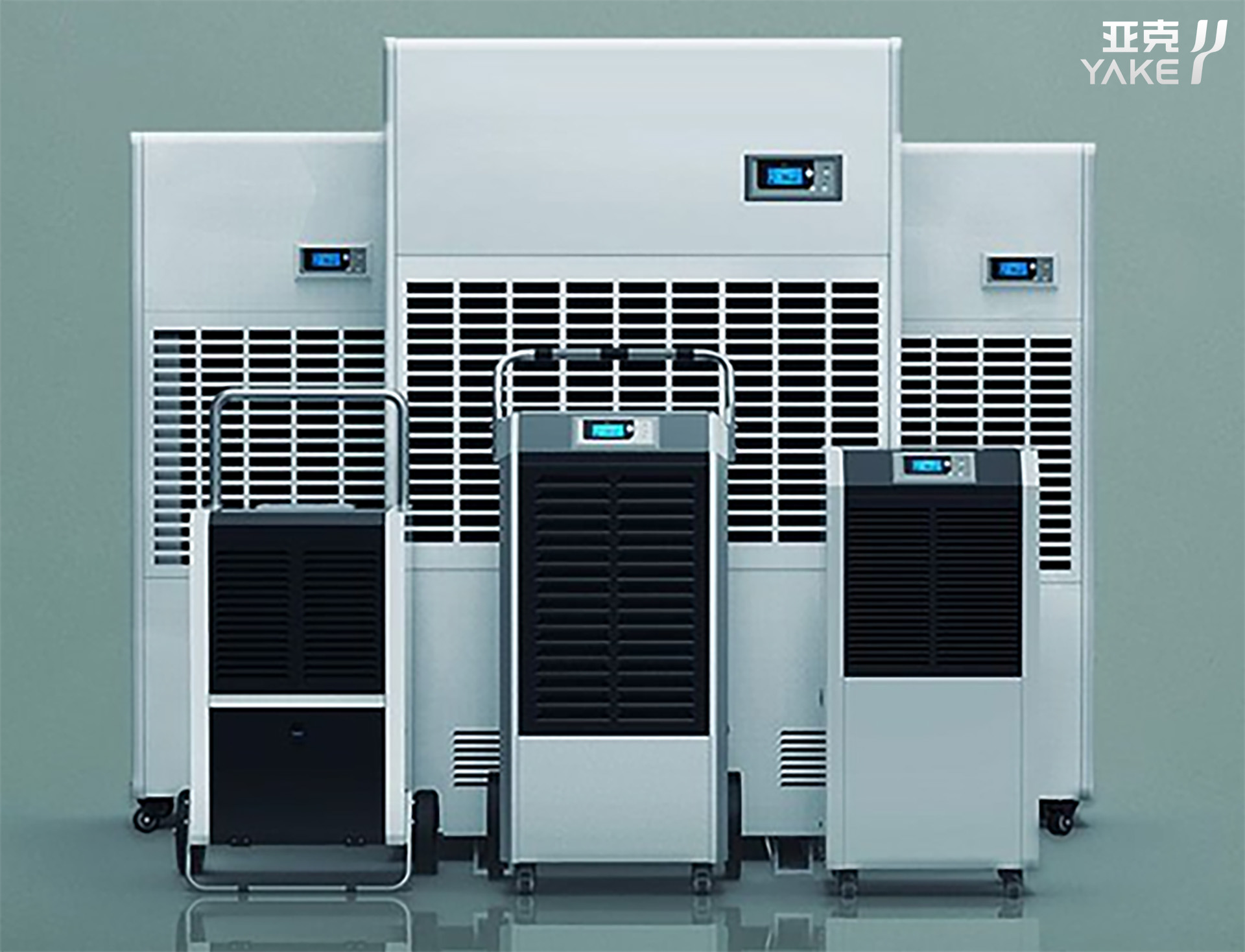
Contact us to find the best place to buy your Yakeclimate solution today!
Our experts have proven solutions to keep your humidity levels in check while keeping your energy costs low.