
Building 34, No. 535 Shunfeng Road, Hangzhou, Zhejiang, China
[email protected]
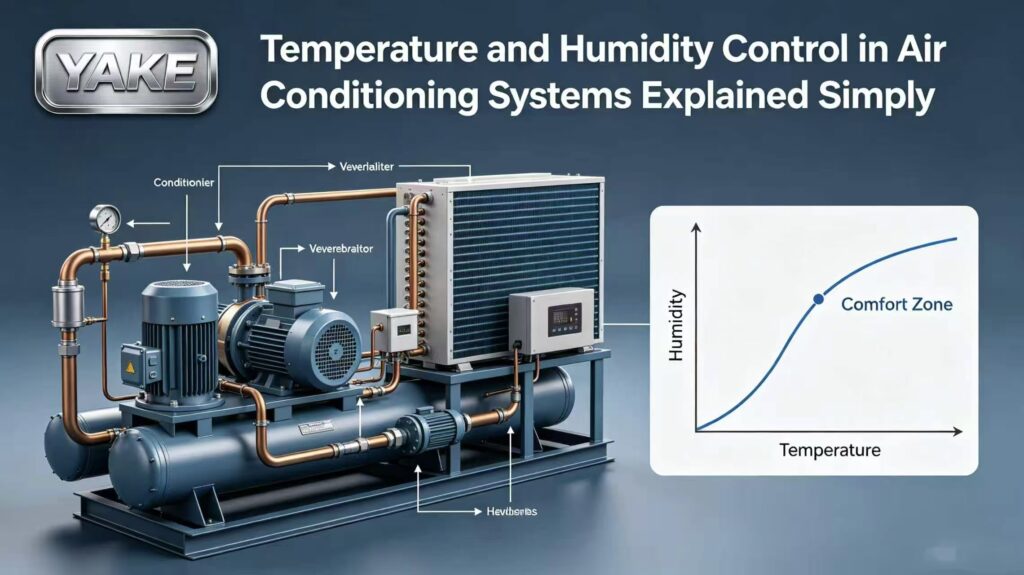


Temperature and humidity control refers to an air conditioning system’s ability to keep the air cool and maintain moisture at a consistent and healthy level. Fine control maintains rooms in a steady 22–26°C range and keeps indoor humidity around 40–60%, which aids comfort, health, and energy consumption. Most rely on sensors, thermostats, and control boards to monitor indoor air and adjust fan speed, compressor run time, and sometimes fresh air flow. A few even add or take away moisture with integrated humidifiers or dehumidifiers. In practice, they experience this as reduced hot spots, less humid air, and more consistent comfort, which the following sections dissect.
Temperature and humidity complement each other. They influence comfort, air quality, and health more than most folks realize, particularly in enclosed environments such as offices, residences, classrooms, and hospitals.
Humidity plays a direct role in how clean your indoor air stays. When relative humidity falls below roughly 40%, the air is dry and airborne particles can linger longer, increasing exposure to dust, smoke and fine droplets. Above 60% humidity, particles clump and drop out on damp surfaces, which can nourish mold and bacteria rather than clearing them from the environment.
Balanced humidity, 40–60%, helps slow the growth of mold, bacteria, and dust mites that flourish in damp areas such as carpets, ceiling tiles, or poorly drained condensate pans. Unmitigated moisture in an AC system can produce that powerful, “moldy” smell in a meeting room or hallway. Over the course of a few years, these micro-organisms provide a constant reservoir of spores and allergens.
The right humidity controls reduce obvious moisture issues. Glass fogs less, walls are less marked with moisture stains, and surfaces in bathrooms, kitchens, and high-traffic rooms remain drier and easier to clean. This aids in hygiene and reduces eyestrain in classrooms, hospital corridors, and transit terminals.
Modern air conditioning that couples precise dehumidification with excellent filtration, HEPA or at least high-MERV filters, can scrub a huge portion of airborne pollutants while maintaining indoor temperatures in a comfort-stable band, often 21 to 22ºC (70 to 72ºF) in offices and schools.
When temperature and humidity drift out of range, those are the places where you see the earliest symptoms. Too dry and you have irritated eyes, scratchy throat, and dry skin. Too humid leads to heavy, stale air that can exacerbate asthma, allergies, and other respiratory ailments, particularly when mold and dust mites proliferate.
Checklist: key health gains from sound humidity control
Stable indoor temperatures back this up. Office and classroom research ties temperate climates, approximately 21 to 22 degrees Celsius (70 to 72 degrees Fahrenheit), to superior concentration and productivity relative to cooler or warmer spaces. Broader comfort bands still work: about 23 to 28 degrees Celsius (74 to 83 degrees Fahrenheit) in summer and 19 to 26 degrees Celsius (67 to 79 degrees Fahrenheit) in winter, depending on humidity and clothing.
Heat strain is not a summer outdoor issue. People over 65 years are at highest risk for heat-related illness and death, and one study found that half of people with adverse summer heat symptoms had a history of hypertension. Early-season heat waves strike hardest before we have acclimated, even indoors without well-set air conditioning. Good humidity control, with moderate indoor temperature, minimizes sweat load, dehydration risk, and nighttime overheating that can wreck sleep, mood, and daytime productivity.
High indoor humidity doesn’t just take a toll on people — it assaults structures with slow moisture accumulation in walls, ceilings, and floors. Gypsum board will soften, paint will blister, and insulation will lose its effectiveness when it remains damp for extended periods.
Effective dehumidification keeps RH in range and reduces condensation on cold surfaces such as chilled pipes, windows, or metal ducts. This keeps HVAC coils, drain pans, and filters drier and less susceptible to biofilm and sludge that lower efficiency.
Without that control, mold can spread behind cabinets, inside wall cavities and in ceiling plenums, as wood joists and frames rot and metal parts corrode, even in the HVAC units themselves. They raise repair costs and can reduce the lifespan of both the building envelope and mechanical systems.
Routine monitoring of indoor humidity through basic sensors connected to AC controls or individual dehumidifiers preserves asset value and maintains indoor conditions closer to the comfort of well-managed, naturally ventilated structures. This is associated with reduced building-related health issues.
Expert climate control makes everyone comfy, safeguards resources, and allows HVAC to operate with less waste. Most indoor environments function fine in the 60 to 90°F (15.5 to 32°C) range at 30 to 50% humidity, but narrower bands are often preferred. In terms of comfort, most buildings target approximately 24 to 26°C (75 to 78°F) and 50 to 55% relative humidity (RH) in summer and 22 to 24°C (72 to 75°F) with 35 to 40% RH in winter. On job sites or in workshops, stable conditions safeguard finishes, electronics, and stock, so climate control is a quality and safety concern, not just a comfort one.
Robust sensor modules sit at the heart of any serious control strategy since you can only fix what you can measure well enough. In your home, office, or job site, paired temperature and humidity sensors monitor conditions in real time so the controller knows when to cool, reheat, or dehumidify. A typical capacitive humidity sensor reads relative humidity by how a tiny sensing film retains an electric charge as moisture in the air fluctuates, while a digital temperature sensor translates a change in resistance or voltage into a robust degree Celsius reading the controller can read and log.
Typical options are stand-alone capacitive humidity probes, digital temperature sensors such as integrated IC chips, and 2-in-1 or 3-in-1 modules that house temperature, RH, and sometimes pressure in a single package. These combo sensors work great in smart thermostats and duct probes where space is limited and wiring must remain minimal.
Sensor drift is natural over time, so frequent calibration and cleaning count. Dust on a duct sensor or paint overspray on a wall sensor can make the system “believe” the room is hotter or more humid than it actually is. A simple maintenance schedule that validates readings against a trusted reference, replaces failed probes, and tests cables and connectors goes a long way toward stable, predictable control.
Modern HVAC controllers convert raw sensor data into action with control algorithms that determine how hard to push the system. Basic rule-based logic may declare “turn cooling on at 26C and off at 24C,” but more sophisticated algorithms take into account both temperature and humidity setpoints and hold 25C with 50% RH while preventing overcooling. Programmable logic controllers or adaptive parameters can slow fans to wring more moisture, stage compressors, or open reheat coils only when RH creeps above 55%, which all help hold comfort set points without a major spike in energy.
A basic comparison of strategies is useful: PID control (proportional–integral–derivative) suits offices and data rooms that need tight, stable conditions with few swings. Fuzzy logic can work better with variable occupancy and open doors. Simple rule-based control remains appropriate for smaller homes with light loads. The correct algorithm minimizes short cycling of compressors and fans, reducing wear, noise, and power draw while maintaining relative humidity in the target 30 to 50 percent bracket even when outside conditions shift rapidly.
Refrigerant design determines how effectively a system can reduce temperature and humidity. The refrigerant charge, the evaporator coil surface area, and the coil’s fin spacing all influence how much moisture actually precipitates out of the air as it passes over the chilled surface. When the charge and flow are right, the coil operates at a temperature low enough to draw water out of the air without freezing, providing powerful dehumidification and sensible cooling at the same time.
If the flow is too low or charge is off, the coil may not dehumidify enough, or it may hold liquid water that re‑evaporates when the compressor cycles off. A few premium units employ a different refrigerant or have more coil rows or coated fins to boost latent moisture performance, which is useful for those spaces that can’t seem to get below 55% RH in the hot, humid season. Checking system specs and aligning refrigerant properties with your temperature and humidity range is crucial, particularly for buildings that need to maintain dryness of materials like archives or wood shops.
Balanced airflow ensures each room experiences comparable temperatures and humidity, not some hot and sticky and others cold and dry. Supply and return ducts, diffusers, and grilles must be sized and located such that air actually sweeps through the occupied zone, not just the ceiling. Ventilation fans and makeup air matter because exhausting too much without makeup air can pull in moist outdoor air through leaks, increasing indoor relative humidity above the ideal 30 to 50 percent range.
Air handlers usually permit fan speed tweaks that affect how effectively they dehumidify. Slower indoor fan speeds can provide more contact time with the evaporator coil, assisting in dehumidification when relative humidity is high, while higher speed can be suitable for milder days when the primary goal is even mixing. Minimal airflow or clogged filters can lead to coil icing, elevated humidity, and inferior air quality. Basic measures such as maintaining clean filters and ensuring that vents are not blocked by furniture or boxes are effective components of temperature control.
Smart integration connects sensors, algorithms, and equipment into a single adaptable system that responds to real-world conditions instead of static setpoints on a wall. Smart thermostats and remote monitoring platforms can read indoor temperature and RH, pull local weather data, and shift schedules when a space is empty. For instance, your system could maintain 26°C with 50% RH during office hours, then ease up to 28°C after the staff disperses, while keeping the humidity under 55% to guard your stocks of paper and other supplies.
Several smart devices offer remote access by phone app, send alerts if indoor RH creeps above a threshold, and connect to cloud services that learn patterns over time. In a home, it could run the bathroom exhaust fan longer after showers or postpone a dishwasher cycle to a cooler time in the evening to reduce the moisture load. In perpetually humid rooms, combining the AC with a whole-home dehumidifier provides added control, and that very same app can orchestrate both machines.
At job sites or in workshops, intelligent controls assist with scheduling climate-sensitive tasks, like floor laying or painting, during hours when the temperature remains between 15.5 and 32 degrees Celsius and relative humidity is nearer to target levels. Woodworkers, in particular, may employ a moisture meter to measure wood content and let boards sit in the shop for at least 72 hours so they match the room’s climate prior to cutting or finishing. These little habits, such as timing ventilation, tracking relative humidity trends, and selecting smart devices that work with your specific HVAC, transform climate control from guesswork to a consistent, data-driven routine.
Moisture control in an air conditioning system is simply a matter of maintaining indoor relative humidity in a healthy range, typically between 30 and 50 percent. Above 60 percent, you increase the risk of mold and dust mites. Below 30 percent, you begin to experience dry skin, irritated airways, and static. Good control means operating both the cooling system and add-ons in a way that matches the building, climate, and real moisture load.
Humidification and dehumidification strive for the same stability objective, though from different extremes. In hot, muggy climates or times of rain, dehumidification is the primary requirement. The AC coils already extract water from the air, and reducing humidity from 70% to around 50% can make a room feel 2 to 3 degrees Celsius cooler without adjusting the thermostat. In dry or cold climates, air can dip under 30% relative humidity, which can crack wood, parch eyes and throat, and even make certain people more susceptible to infections. In these cases, carefully controlled humidification supplies fresh moisture, but must cease far below 60% relative humidity to prevent mold in walls, ducts, and carpeting.
The humidity controller module is the heart of set point control. It requires a dependable sensor, rigorous precision within the 30–50% range, and intelligent location outside of drafts, direct sunlight, and damp patches. Connecting it to a smart system helps adjust outdoor air intake depending on real outdoor temperature and moisture, so it takes in air when it is cooler and drier. It pairs well with good outdoor intake placement, duct sealing to prevent humid leaks, and design features that keep rain, groundwater, and plumbing leaks from bringing in sneaky moisture. In extremely humid areas, an additional dehumidifier, clean coil and filters, clear condensate drains, and annual pro check-ups prevent the primary AC from running too cold or too long just to hunt moisture.
A controller module is the “brain” that assists an HVAC system in maintaining a consistent balance of temperature and humidity. It interacts with components like the SC360 system controller, fans, compressors, and occasionally an independent dehumidifier coil. The module reads the temperature and humidity sensors, compares them to the setpoints, and instructs the system when to energize or de-energize the cooling, heating, or drying of the air. In a split-system, packaged, or ductless system, the logic is similar. The module decides when to move refrigerant, when to slow or speed indoor fans, and when to keep coils cold long enough to pull more moisture from the air, not only to hit a target temperature.
Most contemporary humidity controller modules have a digital display, relay outputs and easy to program menus. The screen typically indicates present room temperature, RH, and modes like “Cool,” “Dehumidify,” or “Fan Only.” Behind the scenes, relay contacts open and close to switch compressors, condenser fans and reheat stages. In more complex arrangements, the controller communicates with a dedicated programmable thermostat and the SC360 system controller allowing users to configure time-of-day schedules for temperature and humidity bands, such as 24 °C and 50 % RH during working hours and looser ranges overnight. Some units facilitate remote access via a secure web portal or app, which allows service personnel to check alarms, adjust setpoints, and even address rudimentary faults without a site visit.
As there are numerous control types, including vendor-specific or custom designs, the user guide is mandatory. It works through wiring, sensor location, menu structure and running calibration for temperature and RH. It includes typical error codes and relay and input tests in steps. For any system plugging into the SC360 controller or other networked HVAC platforms, it explains address settings, communication ports, and how to lock user levels so casual changes don’t mess with vital humidity ranges.
Prior to selection or installation of a controller module, different products should be screened on the basis of their specifications and suitability to the HVAC configuration. Key checks here are supply voltage, number and type of relays, sensor range (for example, 0 to 100 percent RH, minus 10 to 60 degrees Celsius), and support for the exact system type – split, packaged, or ductless. It is critical to verify protocol compatibility with the SC360 system controller, any programmable thermostats, and building management systems. For intricate sites — think labs, data rooms, or healthcare — expert review prevents undersized control hardware or absent safety interlocks. Control systems get complicated very quickly, and smart, upfront selection minimizes both service calls and energy waste later.
Smarter control of temperature and humidity reduces wasted energy, saves on bills, and keeps indoor spaces consistent and comfortable. It is less about running the air conditioner harder and more about running it only when and where you need it.
Precise control begins with how it cools and dries the air. If the thermostat is set too low to ‘cool fast’, the unit could be short cycling. That can leave air cool but still damp, which feels clammy, so people crank the setpoint even lower. When temperature and humidity are both controlled within a tight range, occupants are usually comfortable at 25–26 °C rather than 22–23 °C. That 2–3 °C can reduce cooling energy use by approximately 5 to 10 percent for many homes, as the compressor runs less and for shorter spans. Efficiency is often measured with the Energy Efficiency Ratio (EER), the ratio of heat removed to electric energy consumed. Higher EER or EER2 units convert each kilowatt‑hour into more effective cooling and greater comfort, particularly in hot, dry regions where extended cooling seasons are the norm.
Thermostat settings and schedules impact run time directly. Something as easy as increasing the setpoint by 1 °C when away for the day results in energy savings with no obvious decrease in comfort. Smart thermostats take this a step further. They can track daily habits, like increasing the setpoint and decreasing fans once a smart door locks at night or when everyone exits. Smarter energy use—programmable schedules eliminate unnecessary operation in unoccupied spaces, and intelligent HVAC systems can reduce heating or cooling in spaces that are seldom used, while applying personalized settings in high traffic areas or rooms with large windows.
Humidity control is important. Even newer homes with tight envelopes and good insulation experience a moisture load nearly identical to older homes because of cooking, showers, plants, and people. High humidity makes the inhabitants feel warmer, so they tend to turn down the thermostat instead of evacuating moisture. By dehumidifying at the right level, it breaks this “over-cooling” tendency and reduces energy consumption and associated power-generation greenhouse gas emissions. Smart HVAC units can sense indoor humidity, control fan speed, and leverage special dehumidify modes to reach a desired range without driving the temperature too low.
Real-time monitoring transforms these concepts into continual savings. For example, smart HVAC systems and apps display not only real-time power draw, but daily and weekly energy curves and which rooms or modes consume the most energy. Armed with that information, users can easily identify that cooling a guest room daily introduces a distinct spike and then opt to prune that schedule. These systems can respond to weather fluctuations. On a cooler, dry day, they might allow a higher temperature or shorter cycles, while on a humid day, they might concentrate more on moisture removal. Over time, this sort of feedback loop helps you fine-tune setpoints, schedules, and zones for lower use without trial-and-error guessing.
Climate-responsive systems monitor conditions outside and inside, then adjust cooling and dehumidification in real time. They seek to maintain a consistent blend of temperature, humidity, air quality, and pressure without the user intervening with continual manual adjustments.
In humid climates, such control is not a luxury. It becomes the heart of the design. When the average monthly latent load from outside air equals or even exceeds the sensible load during the cooling season, moisture is the system’s primary work. This is typical in coastal and tropical cities, and in places such as Orlando, where the outside air latent load can significantly long outswell the sensible load. In such locations, a standard “cool-only” arrangement can maintain temperature yet still leave spaces clammy, with a potential moisture danger inside walls, ceilings, and ductwork.
Climate-responsive HVAC technology focuses on three linked targets at once: indoor thermal comfort, indoor air quality (IAQ), and indoor air pressurization. Good pressurization prevents unfiltered, wet outside air from sneaking in. Meanwhile, humidity needs to remain sufficiently low to prevent moisture build-up and microbial growth on coils, filters, and building surfaces. Most systems cool supply air down to roughly 10 to 13 degrees Celsius (50 to 55 degrees Fahrenheit) to squeeze out water vapor, then reheat or mix the air to achieve a comfortable room temperature.
Since temperature and humidity control are so closely coupled, advanced techniques are employed to maintain it. Two broad types of humidity control are common: extra devices that treat moisture separately (such as dedicated dehumidifiers or desiccant wheels) and units that handle temperature and humidity together inside a single air conditioner. Among them, engineers typically opt for HWBD or SWBD. HWBD may have dedicated cooling and dehumidification coils, whereas SWBD relies on control algorithms to allow a single set of coils to perform both functions efficiently.
| Feature | What it does |
|---|---|
| Outdoor and indoor sensors | Read weather and room conditions in real time |
| Automatic setpoint adjustment | Change cooling and drying based on outdoor shifts |
| Latent/sensible load tracking | Balance moisture removal and temperature drop |
| IAQ and pressure control | Keep air cleaner and limit humid air leaks |
| HWBD / SWBD methods | Separate or coordinate temperature and humidity control |
In homes and offices, they can reduce mold risk, preserve finishes, and maintain comfort during rapid weather fluctuations. In commercial buildings, improved humidity control helps protect equipment, inventories, and indoor air quality while preventing overcooling and energy waste.
To sum up, effective heat and moisture management in an AC system results in tangible benefits. Rooms feel stable. Air remains fresh. Gear operates longer. Bills stay down.
Just the right temperature range promotes better sleep, concentration, and a good mood. Stable air humidity is great for skin, lungs, and your gear like books, wood, and devices. It uses a smart controller that reads room heat and air moisture. It adjusts fan speed, valve steps, and runtime. It’s not just blasting cold air. It strives for a stable, secure blend.
Next, check your own room. Feel the room heat and the dry or damp feel at a few times of day. Then discuss it with a technician or planner and fine tune your arrangement based on your discoveries.
Temperature and humidity combined create the sensation of warmth or coolness. High humidity makes air feel hotter and stuffier. Low humidity can be cooler but dry. Balanced control around 22 to 24 degrees Celsius and 40 to 60 percent relative humidity generally provides the most comfort to most people.
Adequate humidity (40–60% relative humidity) aids in preventing mold, dust mites, and certain airborne pathogens. It decreases dry skin, irritated eyes, and respiratory discomfort. Good humidity control means sleeping better, fewer allergies, and healthier air overall.
Good moisture control incorporates a variety of techniques. Among these are proper AC sizing, dedicated dehumidification modes, quality ventilation, sealed ducts, and well-maintained filters and coils. In particularly humid climates, a separate whole-home dehumidifier can be an efficient option.
The controller module is the “thinker” of the system. It reads temperature and humidity sensors, compares them to your setpoints, and adjusts compressor speed, fan speed, and other components. This coordination maintains comfortable indoor conditions while using energy efficiently.
Smart controls use sensors, learning, and schedules to cool or dehumidify when necessary. They eschew overcooling, handle humidity with greater precision, and adapt to occupancy. This cuts wasted energy, reduces your electric bill, and may prolong equipment service life.
A climate-responsive system adjusts automatically for outdoor and indoor conditions. It varies fan speed, compressor output, and dehumidification according to weather, humidity, and occupancy. This keeps you comfortable, safeguards your building materials, and increases efficiency regardless of the season and climate.
It’s a good idea to check your settings at least when the seasons change, or if you find yourself feeling uncomfortable, or experiencing either condensation or dryness. For smart systems, review your app data on a monthly basis. Frequent inspections maintain optimal comfort, block excess humidity, and encourage good efficiency.


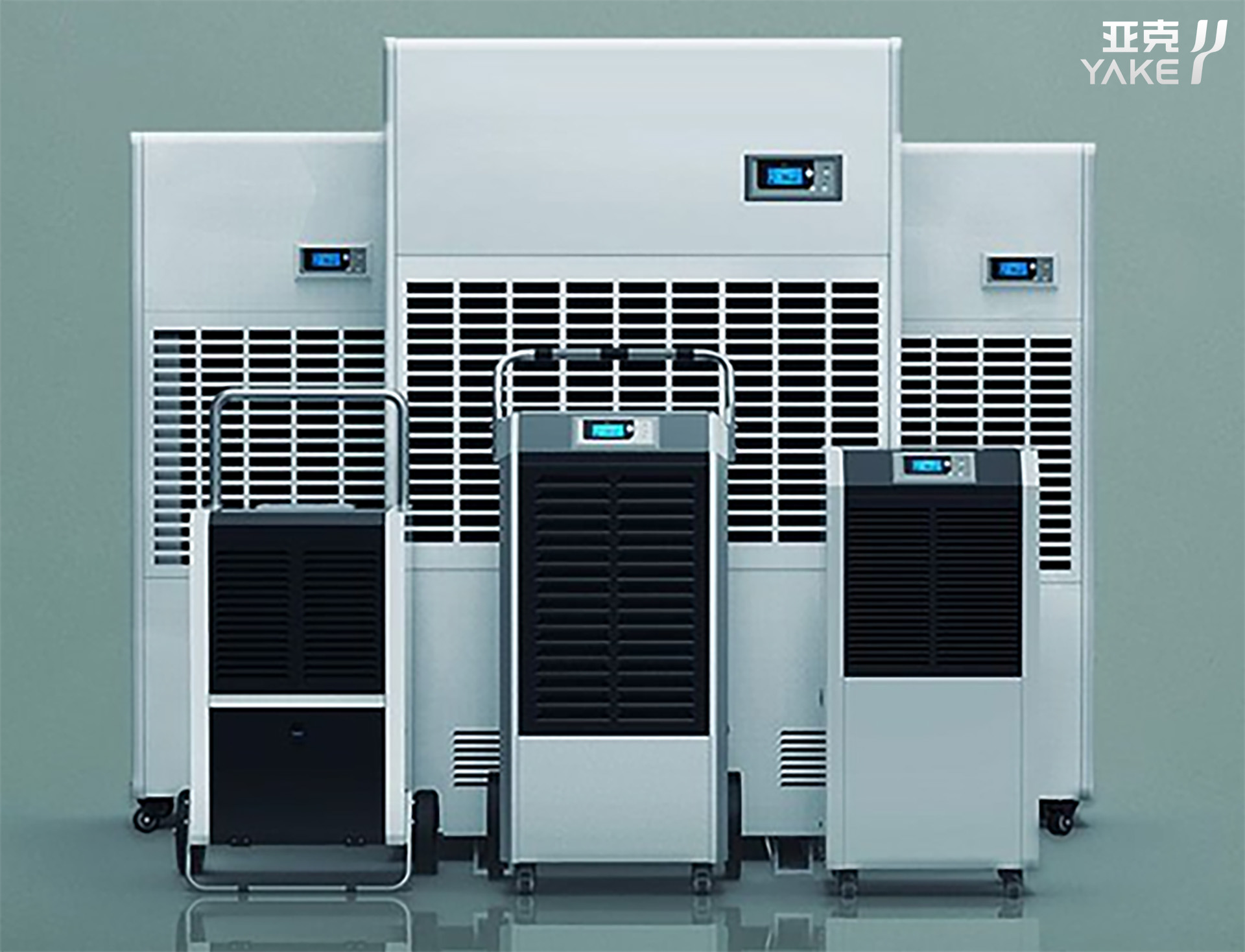
Contact us to find the best place to buy your Yakeclimate solution today!
Our experts have proven solutions to keep your humidity levels in check while keeping your energy costs low.