
Building 34, No. 535 Shunfeng Road, Hangzhou, Zhejiang, China
[email protected]


Portable soil moisture measurement refers to measuring soil moisture on-the-spot using handheld or mobile devices. For indoor farms, greenhouses, and vertical systems, these tools assist growers in monitoring root-zone moisture in real-time, instead of using guesswork or static sensors alone. Readings frequently employ capacitance or time-domain methods and display volumetric water content, which correlates to plant stress, nutrient uptake, and root disease risk. By scanning measurement spots across racks, benches, or grow beds, growers can optimize irrigation cycles, minimize runoff, and maintain substrate moisture within narrow target ranges. The following sections explore fundamental techniques, kinds of devices, and how to leverage data in routine watering management.
Portable soil moisture measurement gives growers direct, fast feedback from the root zone, right where decisions about irrigation actually play out. Instead of guessing based on plant stress or surface appearance, you read what the soil profile tells you and act immediately.
Portable tools make on-the-spot assessment possible, so you can stand in the bed, beside the gutter, or at the end of a hydroponic slab and decide if you should irrigate now, later, or not at all. With a portable capacitance probe, a manual reading and note taking might take about three minutes per access tube, but that single stop can give you a full profile of moisture at several depths. One pass through a block of lettuce or a cannabis room gives you enough real-time data to adjust irrigation pulses the same day, instead of waiting for plant symptoms or guess-based schedules.
This type of in-field data is critical to preventing both overwatering and underwatering. Accurate volumetric water content or soil water potential readings from capacitance probes or tensiometers impose safe upper and lower limits. You can monitor soil water depletion between irrigations and understand when your root zone is near the target refill point, which reduces the danger of stress from dry-down and prevents you from pushing water past the root zone. This leads to fewer issues with root disease in moisture-saturated rooms and leaching of nutrients into drains or subsoil.
Effective water management requires vision into how water flows in depth and in space, not just at the surface. Portable probes via access tubes allow you to record moisture at multiple depths in multiple locations per zone, so you can observe if the deeper layers stay saturated, if the top dries out too quickly or if a drip line is uneven. It optimizes irrigation timing, increases yield and grain or fruit quality, and conserves water and energy because pumps and dehumidifiers only operate when they are value-additive. It is easy to collect, eliminates a lot of the busy work, and yet provides the accuracy required for accurate, sustainable irrigation planning.
Portable soil moisture tools fall into a few main groups that differ in physics, cost, and fit for controlled environments:
Each makes tradeoffs between latency, precision, span of impact, robustness, energy consumption, and sophistication. Matching those trade-offs to your crop system, substrate, and data workflow matters more than chasing the “best” sensor on paper.
TDR transmits a brief electromagnetic pulse down metal rods and calculates the time of travel. That travel time varies as a function of the soil’s dielectric constant, which varies in a predictable manner with volumetric water content. A well-calibrated unit produces direct moisture estimates with high repeatability.
You receive robust precision over a broad spectrum of textures from rockwool to clay loam. TDR is less sensitive to salinity than basic resistance probes, although highly saline or high-clay media still require on-site calibration. Lab-grade systems are the gold standard in research plots for good reason. They enable moisture curves, volume of influence, and uncertainty that is traceable, which fits experiments on root-zone stress, fertigation timing, or climate-driven water use in high-value crops.
Portable TDR isn’t plug-and-play. Instruments are more expensive, consume more power than simple meters, and usually require personnel who are knowledgeable about waveform quality, probe insertion effects, and temperature correction. For most commercial greenhouses or vertical farms, TDR is logical at a couple of reference points, then less expensive sensors saturate the grid.
Capacitance and closely related FDR probes read moisture from changes in the soil’s dielectric properties around the sensor body, using an oscillating electric field rather than a time-of-flight pulse. The electronics then translate those changes to a frequency or voltage signal that corresponds to volumetric water content.
They react very quickly, often within seconds, so you can walk a room and identify wet or dry areas in near real time. Core’s handheld portable units are light, battery-operated, and menu-driven, which is a great fit for grow teams who require frequent checks and don’t want complex setup.
Most new capacitance probes communicate readily to data loggers, wireless nodes or climate controllers via common outputs. That aids in correlating moisture patterns with HVAC and dehumidifier operation, which is valuable when calibrating VPD, drain fraction, or irrigation pulsing in compact indoor systems.
Cost is in the moderate range, with broad availability for hobby and professional use alike. Accuracy depends on soil type, bulk density, and salinity, so site-specific calibration is key if you’re shooting for tight targets.
Resistance sensors place two electrodes into the soil or into a porous block that is in contact with it and measure how readily current passes between them. Wet media conduct current better than dry media, so the meter translates conductivity into a density or moisture reading.
We really like these because they are some of the cheapest and easiest tools to use, with minimal power draw and straightforward readings that can be sufficient for quick checks in noncritical beds or teaching configurations.
They flounder in saline or highly conductive substrates, where changes in fertilizer strength masquerade as changes in water content. Errors compound if EC swings a great deal between irrigations.
Electrodes corrode over time, particularly in fertigation systems, so you’ll need to inspect, clean, and replace them on a regular basis if you want consistent readings throughout a crop cycle.
Calcium carbide tester drops a measured amount of soil into a sealed chamber with calcium carbide. Water in the sample reacts to form acetylene gas, which raises pressure in proportion to moisture content. A little gauge or dial indicates that pressure, which you interpret via a calibration curve.
This is all fully mechanical and requires no grid power, data logger or radio link, so it can assist in remote field blocks, backup checks when electronics are on the fritz, or quick spot tests where digital tools are not handy.
It still means chemicals, gas pressure, and waste, so staff require rudimentary safety training and clear procedures to prevent spills or improper sample preparation.
Reaction, shaking, and reading all take time, and repeatability is lower than with electronic probes, so it works better as an occasional reference than as the main sensor for high-frequency irrigation control.
Portable soil moisture tools only pay off when they match your use case, your soils, and even your own skill level. It helps to approach selection as a checklist and compare several models side by side before you buy.
Start by naming the main job: spot checks with a handheld probe, continuous logging in fixed beds, or spatial mapping across many zones. Spot checks work for basic handheld TDR/Capacitance meters or even tensiometers, while long-term monitoring typically requires loggers, reliable power, and data output that is compatible with your climate control or irrigation system. Mapping in large greenhouses or vertical farms favors small, compact probes with quick response and effortless logging through Bluetooth or wired hubs.
List out all of the crop or plant groupings you intend to monitor, such as leafy greens in shallow trays, high-value fruiting crops in deep substrate, or mother plants in large pots. Many sensors act differently in peat, coco, rockwool, or mineral soils, and some vendors publish crop or substrate specific advice that can eliminate guesswork.
If you move between sites or zones often, rank portability by considering probe length, cable management, battery life, and data download speed. If you need blocks for outdoor or brutal service corridors, put ruggedness at the top of your list, with sealed housings, impact-resistant shafts, and IP-rated connectors that keep dust and humidity at bay.
Note your main soil or media texture at each site: sand, silt, clay, or named soilless mixes. Soil moisture sensors vary in sensitivity to texture, temperature, and salts, so see if the model provides soil-type settings, adjustable calibration, or at minimum, published performance curves.
For precise work, prefer tools where each sensor receives its own factory calibration, not a generic curve. This is important if you want to integrate goals like irrigation management, research data, and yield experiments. In saline, rocky, or heavily layered profiles, certain technologies like some capacitance probes can mistake bulk electrical conductivity or lose insertion quality, so field testing a unit or two before the full rollout is safer than outfitting an entire farm at once.
Keep in mind that tensiometers, the oldest water-potential implement, work great in the wet range but break down at high tension. Gypsum blocks span a wider tension range but deteriorate and sometimes require annual replacement.
Researchers and engineers typically design an accuracy comparison table with each model’s nominal error, calibration type, and supported media. They then augment it with notes from lab or field soil-moisture curves that expose hydraulic conductivity behavior. Greater accuracy and soil-specific calibrations can push accuracy closer to plus or minus 1 to 2 percent for soils and soilless substrates. This typically comes with a more complex setup, greater time spent on calibration checks, and higher purchase cost. Daily production monitoring can sensibly stick to “good enough” accuracy while research beds use the most precise sensors.
Establish your budget band of 300 to 800 euros per handheld and 100 to 250 euros per node, which incorporates both initial and yearly costs such as calibration checks, sensor replacement, and software licenses. Mid and end-of-season maintenance should be included in this, as some systems require regular descaling, gasket replacement, or at least a check-up in high-humidity rooms.
| Option type | Initial cost level | Annual / upkeep notes |
|---|---|---|
| Simple handheld meter | Low–medium | Occasional calibration check, probe wear over years |
| Tensiometers | Low–medium | Regular refilling, service mid-season |
| Gypsum blocks + basic reader | Low | Blocks may need yearly swap as they degrade |
| Research-grade multi-sensor | High | Calibration, software, possible sensor replacement |
Search for warranty duration, local assistance and transparent repair channels, since long-term value frequently trumps the lowest upfront cost, particularly when data feeds into irrigation control and climate equipment like dehumidifiers that safeguard crop quality.
Accurate portable soil moisture readings rely on a repeatable field routine, good sensor maintenance, and simple data management practices. In controlled environments, this discipline connects irrigation decisions, dehumidifier setpoints, and disease risk in one cohesive image.
A simple checklist helps: inspect cables and housings for damage, clean probes, confirm calibration status, pick stable sampling spots, take multiple readings at different depths and locations including some shallow points below 15 cm, even if sensors struggle there, log each value with depth and time, and note nearby equipment or unusual conditions. Don’t use dirty or damaged probes, as they are responsible for more error than the soil itself.
Regular journaling is important. It can take three minutes per access point to manually log and is vulnerable to skipped entries or swapped numbers, so lots of facilities migrate to shared spreadsheets, QR-coded points, or direct upload to a central platform that can feed climate-control systems such as dehumidifiers.
Probe insertion should be slow and vertical with minimum twist, so you don’t open big air gaps or compress the profile. Both of these actions can alter the apparent permittivity the sensor “sees” and bias readings low or high. Use a pilot hole in compacted substrates, then shove the probe along the shaft of the initial structure as opposed to punching it through rocks or root mats.
Wipe down metal or composite tines prior to each session with a soft cloth or alcohol swab, as dried fertilizer salts, substrate fibers, or biofilm can alter capacitance and masquerade as actual moisture variation. Make an insertion depth mark on the rod or handle, or use a simple depth collar so each visit punches the same layer. This is crucial when you correlate readings with irrigation events or dehumidifier runtimes.
Bad insertion is wasted effort and can obscure actual trends since you’re pursuing noise instead of true water movement.
Capacitance-based portable sensors require soil-specific calibration if you want more than rough trends due to sensor-to-sensor variability and soil type both influencing the dielectric response. A generic ‘factory curve’ can under-read in organic mixes and over-read in sandy layers, so premium crops typically pay for at least a two-point calibration in their primary media.
To get the most accurate readings, adhere to the manufacturer’s protocol and where provided, utilize calibration solutions or reference soils with known volumetric water content. Some teams make small trays of their own mix at “field capacity” and “near dry” and then fit a site-specific curve. Newer workflows incorporate data-based calibration with hybrid models, where ML trains on paired gravimetric samples and sensor outputs. These models can overcome shallow depth limitations of less than 15 centimeters, moderate salinity, and even minor hardware drifts.
Document every calibration: date, operator, reference materials, firmware version, and target soil. This record aids audits, clarifies trend-line turns, and maintains long-term moisture yield correlations that are significant, particularly when you connect them with antique climate controls.
Soil moisture readings are always in the shadow of recent rain or irrigation and the room’s thermal and vapor profile. Measure at least a few hours after irrigation pulses or fertigation events and try to work under relatively stable temperature, as strong gradients can alter sensor electronics and water distribution in the profile.
Look for interference from nearby pumps, LED drivers, HF controllers, or even some dehumidifiers. High measurement frequencies of approximately 50 MHz and up reduce some interference, but poorly shielded cabling can still pick up noise. Try not to sample during extreme weather or aggressive climate changes when vents or the dehumidifier may be running at unusually high output, as those times might not be reflective of your typical operating state.
Note conditions with each reading: irrigation status, air temperature and relative humidity, recent system changes, and any maintenance on lighting or HVAC. Over time, this coalesced log allows you to observe how moisture distribution intersects with humidity loads and where targeted dehumidification can balance both substrates and air.
Portable soil moisture tools do more than provide a point measurement in the field. The true significance occurs when that figure streams into broader data streams, connects with climate management, and nourishes long-range planning in indoor farms and hydroponic mediums.
Hook each handheld or portable probe to a mobile app or cloud platform when the hardware supports it, so readings don’t languish as isolated snapshots on a screen but become time-stamped records tied to zone, crop, substrate, and even valve or fertigation line IDs. This aids in monitoring how various beds or vertical racks react to irrigation events, lighting schedules, and dehumidifier setpoints. This is particularly true when soil water content percentage by volume and soil water tension in kilopascals are both utilized on a site.
Export raw data on a schedule into spreadsheets or a farm management system, then construct straightforward charts that compare moisture trends to events like irrigation start/stop, fan cycles, or outside weather fluctuations if you operate greenhouses. With simple line graphs you can visualize how fast a substrate drains, how long it remains in the optimal tension band, and where the thresholds are crossed prior to crop stress.
It’s helpful to note beyond the reading that sensor accuracy is not static. High soil salinity, particularly above roughly 8 dS/m saturation extract, can bias readings. The dielectric constant of the soil or substrate varies with soil type and bulk density. Frequency-domain machines operating close to or over 50 MHz are less impacted by these characteristics. Low-frequency capacitance or resistance probes likely require additional calibration for particular blends or rockwool densities.
Automated alerts in the software layer create yet another control loop. When moisture falls below a threshold or tension exceeds a safe kPa level, the system can send push notifications, emails or integrate with existing environmental controllers. This is convenient in large operations where personnel cannot stick a probe in every area on a daily basis.
Instant readings are still the first line of defense, especially in high-value crops where even brief periods of water stress or saturation can reduce yield or increase disease risk. Teams need to be prepared to adjust irrigation time, frequency, or emitter flow right at the bench when portable sensors indicate out-of-range readings.
Use live alerts and easy color-coded dashboards for critical levels, not just raw numbers, as staff of varying experience must consume and respond to feedback fast during hectic shifts in multi-room locations.
Because accuracy varies with soil type, salinity, and installation technique, train crews to implant probes uniformly, eschew air gaps, and honor each sensor’s calibration range. Remind them that TDR, FDR, capacitance, and resistance probes all have trade-offs. Well-calibrated capacitance sensors come close to matching more complex TDR systems in many crops.
Combine real-time moisture with dehumidifier logs and weather forecasts where applicable, so indoor farms or greenhouses can curb or postpone irrigation before a cool, humid night. Run Yakeclimate units a bit harder to extract excess moisture from the air after intense watering. Time schedules with historical patterns have already shown stability for a specific cultivar.
The future of portable soil sensing will connect real-time measurement in the root zone with the wider climate system in the room, so irrigation, dehumidification, and airflow function as a single control loop instead of independent activities.
Wireless and IoT-enabled soil moisture sensors will probably become the default in greenhouses and stacked vertical farms. Small, low-cost nodes will sit at multiple depths down to approximately 2 meters, transmit data in short bursts, and operate for months on small batteries. That sort of in situ, always-on feed provides a much clearer understanding of how water moves through rockwool slabs, coco, or custom substrates, and how those profiles react when a dehumidifier like a Yakeclimate unit pulls moisture from the air and shifts vapor pressure deficit. For this to work at scale, accuracy remains non-negotiable. Even a 2 to 3 percent bias in volumetric water content can shift irrigation setpoints the wrong direction and waste both water and energy.
For large sites, soil sensing will merge with drones and other remote tools. Multispectral cameras reveal canopy stress and surface moisture patterns over an entire site or watershed, while ground sensors verify what is occurring at root depth. That combination of top-down and in-soil information assists in fine-tuning zone-specific irrigation and humidity control, thus avoiding over-drying one block as you’re running after mold pressure in another. It complements the increasing need to monitor soil and substrate moisture at the small plot scale, or at the full-field or multi-greenhouse scale, with the same data platform.
Sensor hardware is going to keep getting more robust and cheaper. Frequency Domain Reflectometry and TLO-based probes already provide superior stability to many older handheld meters, but they require further trials with numerous soil types, EC levels, and moisture ranges. A transparent, independent performance comparison of these newer probes with today’s common handheld devices is still lacking in much of the market and will be crucial for serious growers. Eventually, low-cost handheld tools, fixed wireless probes, mobile apps, and cloud analysis may all exist in one stack, so climate equipment, including dehumidifiers, can respond to actual plant water use instead of coarse averages.
Portable soil moisture tools now lie at the heart of smart field work. A swift probe in a dry bed, a test plot mapped on a tablet, and a convenient check before a fertigation run. Each step converts guesswork to transparent decision.
Growers who monitor moisture in the root zone use less water, reduce stress on pumps, and experience more consistent yields. A basic handheld meter guides drip cycles. A probe combined with a data log can pinpoint alert dry spots in a greenhouse row. A sensor-phone link can keep a field team on the same page all day.
To dial in your next move, begin to test one tool on a small block, compare it to your gut and find out how much tighter you can run your irrigation.
Most quality portable meters are accurate to plus or minus 2 to 5 percent volumetric water content when properly calibrated and used. Lab tests remain the gold standard, but these field-portable tools provide rapid, “good enough” data for irrigation, crop management, and research activities.
Select according to your soil, crop and budget. Time-domain and capacitance probes fit the needs of most farms and gardens. Gravimetric kits are slower but very accurate. For regular field inspections, rugged capacitance or TDR/TDT probes provide a balance between speed and accuracy.
For the majority of crops, take measurements two to three times per week during critical growth phases or hot, dry weather. High-end or delicate crops may require daily checks. Frequent measurements avoid overwatering and drought stress, maximizing yield and efficiency.
Stick the probe in at uniform depths and angles. Don’t be afraid of rocks, roots, and air pockets. Rinse electrodes between samples. Allow the sensor to settle prior to reading. Calibrate for your soil type if you can. Make multiple measurements per area and average them.
They function in most soils, but accuracy varies with texture, salinity, and organic matter. Sandy soils react differently than clay soils. For optimum accuracy, apply soil-specific calibration curves when accessible and constantly adhere to the manufacturer’s soil-type guidelines.
Yes. Measure real-time soil moisture and match irrigation to plant needs. It prevents overwatering, reduces pumping expenses, and frequently enhances plant vigor. Most growers we hear from say they use less water and get better yields once they switch to portable monitoring.
New tools integrate moisture, temperature, and electrical conductivity all in one probe. Several now link via Bluetooth or even cellular networks. It lets you log data on mobile apps, see trends, and integrate with automated irrigation for data-driven watering.


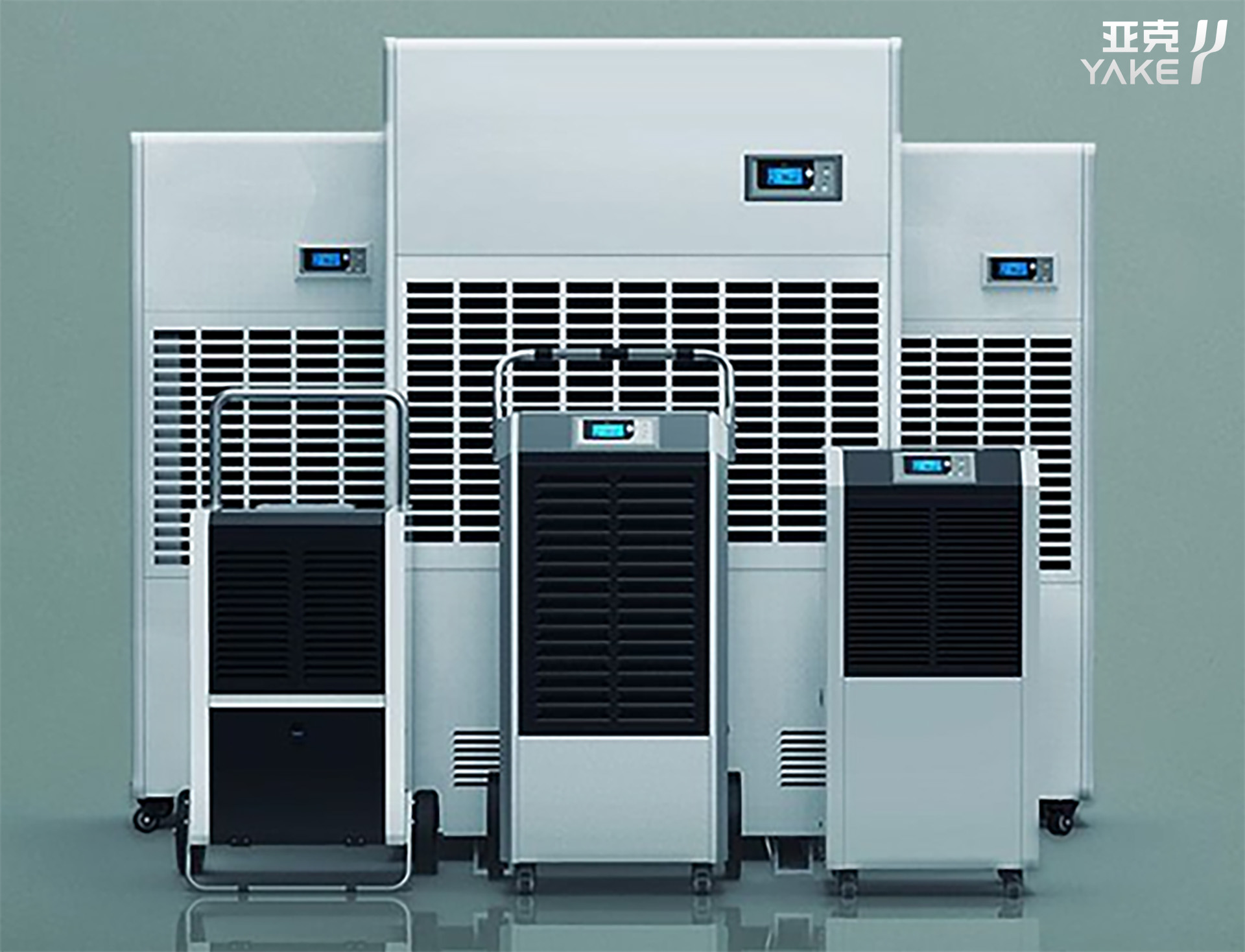
Contact us to find the best place to buy your Yakeclimate solution today!
Our experts have proven solutions to keep your humidity levels in check while keeping your energy costs low.