
Building 34, No. 535 Shunfeng Road, Hangzhou, Zhejiang, China
[email protected]
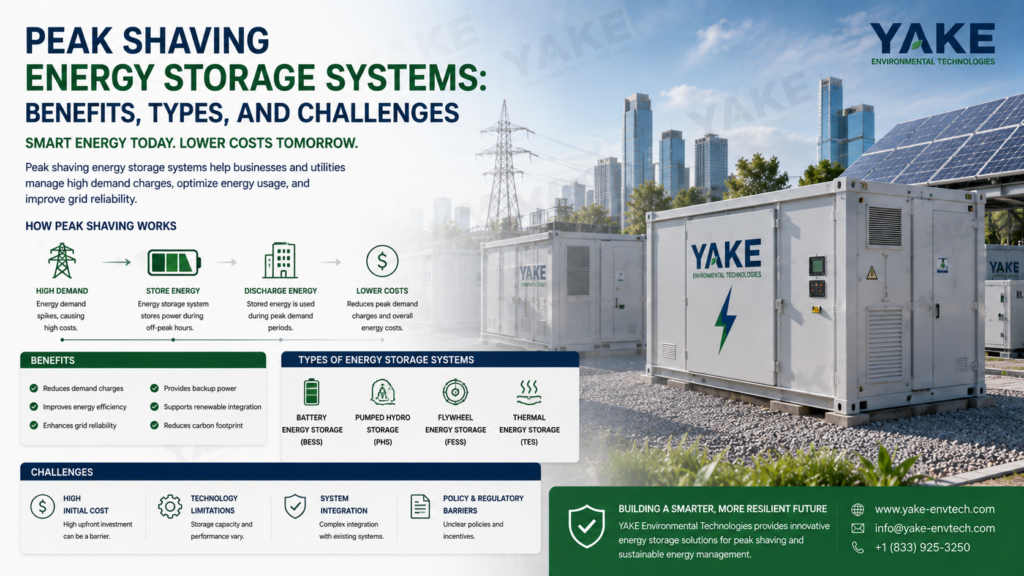


Peak shaving energy storage systems are systems that reduce power consumption from the grid during peak hours by moving some of the load to stored energy. For many plants, they’re paired with battery banks or hybrid systems that charge during off-peak tariffs then discharge when demand and pricing spike. Use cases range from large motors, chillers, compressed air, and process lines that create short, sharp demand peaks. By peak shaving those spikes, sites can reduce demand charges, reduce stress on upstream equipment, and help improve grid stability. Many operators combine peak shaving with backup power and power quality capabilities. The following sections decompose fundamental system categories, control methods, and design considerations for industrial locations.
Peak shaving energy storage systems reduce a site’s draw from the grid during the costliest hours by discharging stored energy rather than pulling full power from the utility. They sit in between the grid and your loads, observe how your demand varies, and intervene when usage would otherwise spike. For large industrial users, they mainly aim at one thing: lower demand charges and more predictable energy costs, while easing stress on the wider grid as markets bring in more variable renewables.
Peak shaving means you store energy when demand and tariffs are low, then release it back to your operations as your plant load moves toward its daily or monthly peaks. In practice, batteries charge overnight or during low-rate hours, then discharge during paint line starts, HVAC ramp-up, or batch process heating when the grid is under the most strain. This offloads some of the strain on the grid without signaling production to decelerate.
In so doing, it flattens your site’s demand curve. These “peaks” make your demand charge fall nearer to your baseline, which is important if your profile is ‘peaky’ with short, sharp bursts of kW. Many utilities calculate demand charges on the single highest 15-minute average in the month. Even a short spike from a compressed-air ramp or dehumidifier bank start can trigger a big charge; shaving that spike repays quickly. At the same time, lower peaks mean the grid operator needs fewer fossil peaker plants, so the emissions tied to your operations decline as well.
Charging is nothing more than sucking excess or low-cost power into the storage asset. That typically occurs off-peak, at night or mid-day when tariffs dip or on-site solar is robust.
Good charge control counts. If you charge too hard, you age batteries faster. Charge at the wrong hours and you forfeit the economic value. Modern systems follow grid price signals, demand forecasts, and renewable output so the storage is full and ready before the next known peak.
Discharging is the reverse: stored energy flows back into the facility or, in some markets, to the grid during high-demand windows. When a line starts, chiller sequence, or large dehumidification bank would push your kW above normal, the battery makes up some of that load. The meter still spins, but slower.
Control has to be tight. Over-discharge can jeopardize backup capacity, reduce battery life, or leave you vulnerable to a second spike in the same billing cycle. Industrial sites appreciate rapid response. The system must respond within seconds to sudden ramps so that short transients do not become the new demand peak on the bill.
The control system is the “brain” that schedules and controls charging and discharging. It monitors real-time power, past load profiles, tariffs, and sometimes weather and production schedules, then automatically decides when to store and when to release. For most plants, it hooks into the building or plant management system and in some locations it communicates with the grid to track demand response or capacity signals. Sophisticated algorithms then examine cross days and weeks, not minutes, to select the optimal setpoints that reduce peak demand, preserve equipment life, and operate in conjunction with other strategies such as load shifting and HVAC or dehumidifier scheduling.
Peak shaving energy storage systems fall into three main groups: battery, mechanical, and thermal. Each fits different site sizes, response requirements, and budgets, and typically supplements existing peak tools like on-site gas turbines or diesel sets that many plants already deploy.
A quick comparison table of these three types aids teams in mapping plant needs (power in kW, energy in kWh, response time in seconds, and €/kWh or $/kWh) against technology limits and selecting a short list prior to detailed design work.
BESS now peak shave by discharging with near-constant current during tariff peak windows where legacy sites once leaned exclusively on diesel or gas peakers. Lithium-ion is the default for most industrial plants, fueled by fast ramping, a compact footprint, high round-trip efficiency often at 90 to 95 percent, and strong cycle life when sized and cooled well.
Other chemistries like vanadium or zinc-bromine flow batteries suit longer-duration shaving, where plants require 4 to 10 hours of coverage rather than a 1 to 2 hour spike trim, exchanging higher capital expenditure and more complex balance of plant for flexible energy capacity. Lead-acid and lithium-ion both work for peak shaving, but lead-acid is typically sized for about 50 percent depth of discharge, while lithium-ion is happy at 80 to 90 percent depth of discharge, which reduces necessary battery mass for the same usable energy.
Standards and research employ battery state of health (SoH) as an important design target, with end of life commonly defined as 80% SoH or 20% capacity fade. Simulation results demonstrate that well-controlled BESS operation with smart current limits and temperature management can increase bank life and total dispatched energy by upwards of 50%. Capacity fade curves and daily dispatched energy records become central KPIs for plant engineers monitoring if the peak shaving strategy is reimbursing as expected. Safe peak projects require fire-safe rooms, tested battery racks, appropriate ventilation, and defined maintenance processes.
Mechanical storage for peak shaving primarily refers to flywheels and pumped hydro. Flywheels provide near-instant response and high power for seconds to minutes. They can even smooth fast load ramps in welding lines or high-inrush motor starts, often coupled upstream of BESS to catch the sharpest spikes.
Pumped hydro occupies the opposite scale end, with water relocated between two reservoirs to store sizable energy chunks for hours. It facilitates regional or utility peak shaving more than a single plant would because of land, elevation, and water requirements.
Both options exhibit very low degradation over time relative to batteries. Cycle life can reach tens of thousands or more with minimal efficiency loss. The trade-off is site and space. Flywheels require strong foundations and rigid safety shells. Pumped hydro requires large land, altitude difference, and heavy civil work. Thus, it’s rarely a solution for dense industrial parks.
The shifting of those cooling loads, instead of kW on the main bus, is what thermal storage for peak shaving is all about. For example, systems build chilled water or ice in off-peak hours, then discharge that cold at a later time so chillers run at lower load or even shut down during peak tariff windows. This suits plants and large buildings with significant and stable HVAC loads, such as cleanrooms, coating lines, or humidity-controlled storage.
Once constructed, thermal storage typically operates with low operational cost. Tanks, insulation, valves, and heat exchangers substitute for a lot of rotating parts, which reduces mechanical wear and daily service work. Energy savings come from tariff shift and optimum chiller operation at night when ambient temperature is lower.
Scope is narrower. Thermal storage only assists where cooling or dehumidification is king during peak, and the design has to integrate well with air-handling units, process cooling loops, and humidity control approaches. Integration is often tricky in retrofit jobs, as pipe routing, floor load, and control logic for setpoints all have to be reviewed in order to keep climate-critical zones steady for sensitive lines and dry rooms.
Peak shaving storage starts as a simple money question: how much you pay for power at the worst 15 minutes of the month and what it costs to knock that spike down in a safe, repeatable way.
Demand charges often arise from the highest 15-minute or hour demand in the billing month, and for most commercial customers, this segment of the invoice accounts for 30 to 70 percent of total energy expense. A slight cut in the monthly maximum can alter the economics of a storage project.
Peak shaving storage caps the plant’s grid import when paint lines, chillers, dehumidifiers, and compressors all start at once, so the meter “sees” a smoother profile with a lower single maximum, which can be tracked by the drop in both the maximum peak-valley difference and the standard deviation of the load curve over the billing period.
For plants with batch dryers, curing ovens, or defrost cycles, this moves from concept to currency, with recorded instances of approximately one-third demand charge reduction and savings in the neighborhood of €48,000 per annum once setpoints and dispatch rules are optimized.
Energy arbitrage refers to charging from storage when prices are low and discharging or selling when prices are high. It uses the spread between off-peak and on-peak tariffs as the primary profit driver rather than solely the demand charge line of the bill. This strategy works best where there is a clear day-night or weekday-weekend spread in time-of-use or real-time pricing.
Time-of-use rates leave fixed nighttime ‘valleys’ and afternoon ‘peaks’, so a battery or retired power tool battery bank can fill the valley and shave the peak. You purchase inexpensive energy, store it, then operate dehumidification, process cooling, and air handling from the battery during times of high grid prices, effectively transforming the system into a hedge on tariff fluctuations and a reliability solution.
Right forecasting is important. You want quality day-ahead forecasts of plant load, solar or wind output, and market prices to select every charge and discharge window. Many operators use straightforward rule-based management initially, then transition to multi-objective optimization tools such as Pareto sorting or particle swarm optimization to balance energy arbitrage, peak shaving, and battery wear in a single scheduling model that respects each plant’s process constraints and humidity-sensitive equipment.
Grid service revenue adds another layer. The same storage that handles your local peaks can deliver ancillary services such as frequency regulation, spinning reserve, or fast contingency support. Grid operators or market platforms pay for this fast, accurate response if your system meets their technical standards on ramp rate, power factor range, telemetry, and minimum up-time.
Participation involves connecting the storage controller to utility or ISO programs, completing compliance tests, and in some cases pooling multiple smaller systems together into a single virtual power plant so minimum bid sizes are satisfied. Revenue stacks with your on-site savings, further shrinking payback and TCO for both traditional and second-life battery systems where economics, not performance, often decide the ultimate solution.
Prior to relying on this revenue, engineering teams should examine local regulations, qualification trajectories and penalty models. They should then dimension C_E, C_om and C_dis with an emphasis on minimizing C_b for decommissioned power batteries. Many existing initiatives make that minimization their primary optimization objective, with peak shaving and valley filling for the utility and plant as collateral advantages along the same value chain.
Peak shaving energy storage now has to integrate with the modern, data-driven smart grid. That means close connections to grid utilities, building controls, and frequently on-site renewables while fulfilling plant manufacturing and quality requirements.
When plants combine storage with on-site solar or wind, they get control over when that energy gets used, not just how much they produce. Battery energy storage systems can store midday solar surplus or night wind and discharge during late afternoon peaks, when demand charges are 30 to 70 percent of the bill. This trims grid draw during the ugliest price windows and further stabilizes the grid simultaneously.
Storage smooths intermittent renewable output. Short, fast peaks and dips go in the battery instead of on the feeder, which aids grid stability and increases power quality for sensitive loads like dehumidifiers, cleanroom HVAC, and precision drives. In practice, sites often use a mix of peak shaving and load shifting: discharge to cap the kW peak and then shift non-critical loads into low time-of-use pricing periods.
To size storage, plants should begin with high-resolution data on renewable output and load profiles. No less than 12 months of 15-minute data provides a transparent picture of how frequently solar or wind overrun on-site demand, the typical duration of peaks, and the actual depth of discharge required. This enables higher renewable penetration without major grid upgrades by aligning storage power (kW) and energy (kWh) with actual site behavior rather than heuristics.
Several industrial sites rest behind feeders with strict capability constraints or repeated congestion. In these cases, distributed storage near the load can provide a local buffer by charging when the feeder is strained and discharging when the on-site load would exceed the contract limit.
This can postpone or even bypass substation upgrades, new transformers, or heavier cabling, which frequently cost millions of EUR and have long lead times. For brownfield plants, it’s often a question of a 10 to 15 year grid upgrade plan versus a modular BESS roadmap that can expand by container blocks.
Before design, teams should map site-specific constraints: feeder ratings, actual peak profiles, transformer loading, power factor issues, and any voltage problems. That same study can highlight where peak shaving, load shifting, and smart grid controls can go the furthest in supporting local reliability with the least hardware.
Interoperability with the modern grid means operating within a complex regulatory shell. Permitting, interconnection rules, and market participation terms all influence how a peak shaving system may operate, and they differ considerably by region and even by individual utility. One thing left out can stall a project for months or block access to revenue from demand response or ancillary services that help pay for the battery.
A structured checklist helps keep risk low and timelines realistic:
Conformance accomplishes more than penal avoidance. It establishes a transparent blueprint for how smart grid technologies will communicate data, how dispatch will react to dynamic grid conditions, and how storage will facilitate renewable integration and grid resilience without introducing new hazards.
The unseen operational layer is the silent control stack behind peak shaving and load shifting. It connects storage machinery, site demands, costs, and in numerous factories, moisture regulation units into a single synchronized schedule. Most of the value is in the invisible networked layer of software, data, and procedures over months and years, not in the battery nameplate.
Behind the scenes, energy management systems (EMS) work with predictive analytics to anticipate demand peaks, determine when to charge, and schedule discharging into a load. For a plant on TOU tariffs, the EMS can shift charging to low-price night hours and discharge in the afternoon peak when demand charges and kWh prices spike.
On the operational side, forecast engines tend to integrate ARMA models with machine learning techniques such as LSTM networks. They fetch load history, real-time meter data, production schedules, and even upcoming humidity-sensitive batches where Yakeclimate dehumidifiers need to operate at 100 percent duty. Weather and market signals matter too. Heat waves, cold snaps, or grid events alter both load and price.
Forecast outputs are most effective when operators can view them. Along with daily data, clear plots of predicted kW peaks, state of charge plans, and expected demand charge savings for each site help engineers fine-tune rules, test “what-if” cases, and lock in operating playbooks.
Real-time monitoring follows state of charge, charge/discharge power, round-trip efficiency, and system limits. When this layer is tight, peak shaving remains accurate even if your line-up or HVAC profile changes.
Alerts on anomalies, like sudden voltage drift, cell temperature rise, or inverter trips, allow teams to intervene before they miss a peak-shaving cycle or harm cells. Dashboards that aggregate storage, main incomer, and key process loads provide a line of sight into how much of the 30 to 70 percent demand-driven portion of the bill is in control.
Periodic reviews, perhaps weekly or monthly, transform this raw data into action. Teams can tune setpoints, refine schedules, and write down best practices that reduce response time for the next event.
Battery life is a function of how you run it, day after day. Cycle count, depth of discharge, and temperature trend based maintenance routines keep the asset healthy and maintain ROI that many sites are now experiencing in three to five years with demand response or tariff incentives.
Manufacturers’ recommendations on permitted C-rates, ideal SOC windows and rest periods should flow directly into EMS policies. Peak shaving objectives don’t conflict with long-term wellness. End-of-life plans, including recycling or second-life use for less-critical loads, back sustainability targets and reduce the footprint of both the storage system itself and the humidity-controlled production it underpins.
Demand management is evolving from basic peak shaving to a dynamic, data-driven environment where storage, loads, and onsite equipment operate as a single integrated system.
Peak shaving energy storage will grow rapidly as grids incorporate more renewables and phase out aging plants. Worldwide storage capacity will approach 300 GWh while lithium-ion batteries remain the dominant technology given their scalability, high round-trip efficiency, and suitability for compact plant layouts. For industrial sites that encounter peak demand charges of 30% to 70% of their bill, this shift transforms storage from “nice to have” to core infrastructure. Many plants already realize 20% to 30% bill savings by sizing storage to their 15-minute or 30-minute demand windows and combining it with load shifting, charging at low-tariff hours, and discharging in time-of-use peaks.
The future will be centered around an EMS that sits over top of storage, major loads, and onsite generation. Best-in-class EMS platforms already leverage historical and real-time data to predict peaks, automate charge and discharge, and manage system health. As AI and IoT mature, these tools will extract data from meters, dehumidifiers, chillers, compressors, and weather feeds to predict plant load and grid prices in five-minute increments. The EMS will then determine when a line can ramp down a bit, when storage should cover a spike, and when to pre-cool or pre-dry a space to reduce an upcoming peak.
For plants that operate close to environmental specs, such as paint shops or tablet coating rooms, this is important. Storage and EMS can hold climate at bay while still trimming peaks, rather than inducing brute cutbacks that jeopardize product. This cuts down on demand stress on the grid at peak times, enabling a more robust, flexible network for utilities and users alike.
Following these trends today illuminates for sites when and how to schedule upgrades to keep in sync with 2025 tech and to phase in demand smarts.
Peak shaving with storage now lives in reality, not in slide decks. Plants employ it today to shave demand charges, secure rate plans, and stabilize lines. Data shows distinct improvements. Reduced bills. Less driving. Smoother power quality.
Each site still requires its own way. A paint shop with tight cure temps will size and stage load shifts in a very different way than a cold store with long thermal mass. Good design begins with your load curve, your tariff, and your risk limits.
Peak events will pound harder as grids get more intricate. Teams that plan now have a better position. To make progress, consult your power team, your finance lead, and a reliable storage vendor. Begin with a single well-defined use case.
A peak shaving energy storage system charges when electricity prices and demand are low and discharges during peak hours. This shaves a facility’s peak demand, reduces demand charges and alleviates grid stress without disrupting core operations.
Utilities typically levy costly demand fees based on your peak power usage in a billing cycle. Peaking systems cut that maximum peak by feeding stored energy. This directly reduces demand charges and can seriously reduce total energy bills.
Lithium-ion battery systems are the most common because of high efficiency and fast response. Additional alternatives are flow batteries, thermal storage, and occasionally on-site generators. The optimal decision varies with load profile, budget, and project aspirations.
The most benefit is experienced by energy-intensive sites with acute load spikes. These include factories, data centers, commercial buildings, cold storage, and hospitals. Any facility contending with high demand charges or time-of-use tariffs can frequently justify peak shaving systems.
Peak shaving saves transformers, lines, and substations from stress during periods of high demand. It helps to avoid grid congestion and blackouts and facilitates the integration of variable renewables such as solar and wind, enhancing grid stability and reliability.
It’s the software and controls that perform load analysis, peak forecasting, and stored energy dispatch automatically. This layer optimizes when to charge and discharge, coordinates with other equipment, and ensures safe and efficient system operation with minimal manual intervention.
Peak shaving is trending toward increased automation, AI-driven forecasting, and engagement in grid services markets. Systems will increasingly pair with solar, EV charging, and demand response, transforming buildings and sites into adaptable, grid-interactive energy assets.


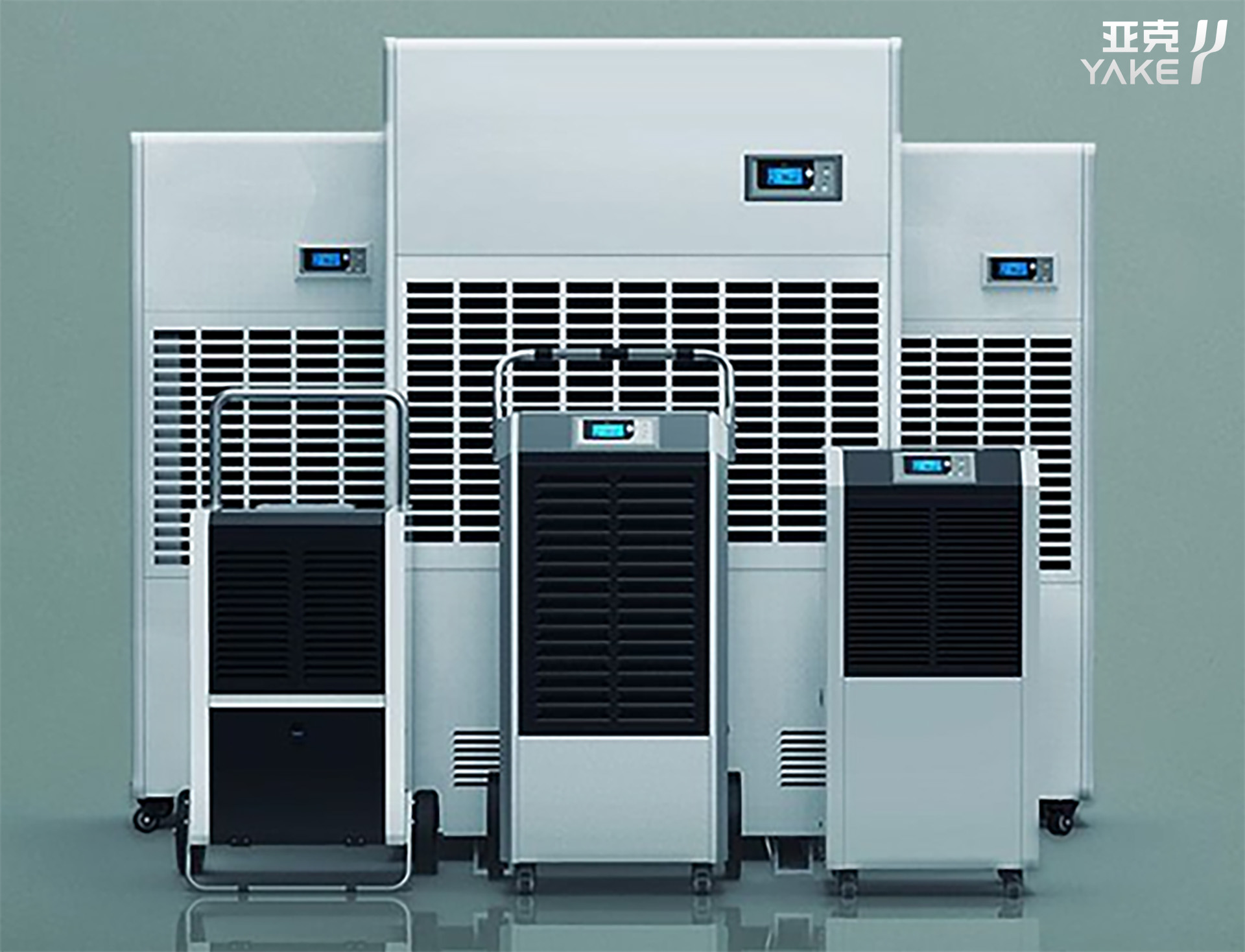
Contact us to find the best place to buy your Yakeclimate solution today!
Our experts have proven solutions to keep your humidity levels in check while keeping your energy costs low.