
Building 34, No. 535 Shunfeng Road, Hangzhou, Zhejiang, China
[email protected]


Indian energy storage policy describes the collection of regulations, schemes, and market rules that direct how batteries and other storage systems are designed, deployed, and utilized in India’s power sector. Policy now ties closely with solar and wind expansion, grid stability, peak demand management, and electric mobility. Indian energy storage policy current regulations span storage tenders, capacity markets, time-of-day pricing, and grid services, with the central and state regulators playing different roles. Manufacturing and R&D incentives determine where and how storage assets come online. To provide plant managers, developers, and large power users clear visibility, the following sections decompose key policy pillars, timelines, and probable effects on project design and costs.
India spells energy storage policy into clean power roadmap. The nation targets around 596 GW of renewables by March 2032, compared to circa 177 GW in mid-2023, with the non-fossil share of generation climbing from 26% in 2023 to 58% in 2030. National planning studies now consider storage, both PSP and BESS, as core grid assets rather than pilots, with studies targeting approximately 73.93 GW and 411.4 GWh of storage by 2031-32, of which approximately 61 GW and 218 GWh is cost-effective by 2030. The Central Electricity Authority (CEA), Ministry of Power (MoP), and the Ministry of New and Renewable Energy (MNRE) lead this transition, while state regulators and load dispatch centers determine how storage operates in daily system management, such as peak shaving, solar and wind firming, and ancillary services that facilitate a low-carbon grid.
Policies are now nudging utilities and developers to include storage in new solar and wind bids, particularly peak-supply and round-the-clock tenders where storage duration and discharge windows are well-established. These mandates push grid-scale storage from a “nice-to-have add-on” to a “need-to-have” capacity that supports peak demand, which continues to accelerate beyond previous projections.
Compliance timelines typically coincide with bid commissioning dates, and penalties reside in power purchase agreements as availability-linked deductions, liquidated damages, or loss of peak-hour payments. Storage obligations sit beside renewable purchase obligations (RPOs), where states are nudged to meet a share of their renewable needs with firm, dispatchable renewable energy and storage instead of pure energy-only contracts.
Central aid currently comprises viability gap funding for BESS, with approximately Rs 37.6 billion authorized to pay up to 40% of the capital cost for 4,000 MWh of projects. This lowers front-end capex, which is usually the primary blocker for utilities and industrial offtakers.
Tax holiday and concessional finance pile on for eligible projects, but access is contingent on competitive bidding, minimum technical performance, and firm operation obligations during contract life. Lithium-ion BESS, PSPs, and hybrid solar-plus-storage projects tend to have different structures, where longer-life assets like PSP are favored in tenure and BESS is supported through focused VGF and performance-based contracts.
MoP lays out policy. CEA is in charge of system-level planning and technical standards. CERC handles wholesale-level rules and tariffs. SERCs manage retail-side integration. Developers generally go through land, environmental, and grid-interconnection approvals like with any large power plant, with additional industry safety and technology standards reviewed in concentrated industrial areas.
Tariff frameworks are gradually transitioning from energy‑only to multi‑part structures remunerating capacity, energy and grid services. New reforms designate storage as a distinct asset class, enable it to access ancillary service markets and create space for storage‑linked green open‑access products, relevant for industrial users seeking firm green power paired with precise climate control demands.
Policy documents list PSP and BESS as priority technologies, with clear roles: PSP is for bulk, long-duration shifting and BESS is for fast response and flexible, medium-duration needs. R&D funds and pilot support extend to flow batteries, thermal storage, and advanced power electronics that connect storage with industrial loads.
Performance standards span round-trip efficiency, response time, cycle life, and availability, with generally tighter assurances for grid-facing assets. Planners emphasize technology-agnostic acquisitions, establishing capability requirements such as 4-hour firm supply during evening peak rather than specifying a required technology approach.
Safety regulations mandate compliant site layout, fire detection and suppression, ventilation, and physical separation from occupied spaces. All of these factors are critical for storage co-located with process plants or mega HVAC and dehumidification units. Equipment should have validated certifications, and operators should have certified training in commissioning, operation, and shutdown.
Emergency plans now include isolation, fire control, and coordination with local responders, with a particular emphasis on BESS thermal incidents. Standards are being regularly reviewed against global best practices, which are relevant for multinational manufacturers that want storage and climate control configurations aligned with their internal EHS playbooks.
India’s storage policy is nested in a broader grid strategy that envisions a modern, flexible, cybersecure power system. Storage is not a side add-on here. It is one of the primary instruments to keep a high-renewable grid stable as it powers fast-scaling industrial loads, including climate-sensitive plants that rely on close environmental control.
The vision is a flexible, resilient grid able to absorb massive shares of solar and wind, transmit power across regions, and keep critical users online during faults. This follows international practice, where modernisation is a long-term, systems project conducted over decades, not a one-off upgrade. Policy treats storage as grid infrastructure, not just generation support, so it can generate revenues across services and reduce plant curtailment, losses, and diesel backup usage.
Investment signals are important. On the global front, grid modernisation packages have funneled more than USD 4.5 billion into smarter networks through recovery programmes, as well as around USD 220 million through grid modernisation lab consortia to pilot test novel tools. On the ground, over 1,300 Phasor Measurement Units (PMUs) and 16.6 million smart meters now deliver high-resolution data into control rooms. One electric cooperative reduced operating costs by 65 percent with advanced metering alone. India’s policy direction suggests analogous rollouts and pilots around large substations, solar parks, and green industrial clusters.
Digitalisation is the adhesive. Wide-area PMU data, AMI feeds, and substation automation back cutting-edge storage controls that can react in milliseconds. Energy storage then becomes a rapid, software-defined asset that can pivot from peak shaving to frequency response or local voltage support as the grid state evolves. Robust cybersecurity is in this stack too, with over $150 million invested in joint cyber research and development worldwide and Indian regulations increasingly folding storage facilities, plant-level EMS, and vendor gateways into critical infrastructure defense perimeters.
For users, this blueprint translates directly into increased access and reliability. Higher renewable shares, supported by storage, cut fuel risk and improve power quality for factories with sensitive lines such as coating, precision assembly, or humidity-critical rooms where Yakeclimate systems operate.
Storage smooths short-term swings from solar ramp-up and ramp-down and from wind gusts, so the grid experiences a more stable net load. BESS near solar parks clip sharp edges in output, while pumped hydro and longer-duration storage address intra-day shifts, such as holding mid-day solar for the evening peak when industrial and household demand accumulate. For a plant manager, that translates into fewer jolts of brownouts and less dependence on oversized UPS or backup gensets.
India ties storage ambitions to green growth paths. Policy discussions might track, for example, four to six megawatt-hours of storage per megawatt of solar in key nodes or system-level targets in the tens of gigawatt-hours of grid-scale storage by the early 2030s to undergird rising variable renewables. These targets direct tenders for ‘renewable plus storage’ capacity and send signals to OEMs and EPCs to map out supply chains for batteries, controls and balance-of-plant gear.
Here’s how it works in case studies. Solar plus storage plants under time bound peak supply contracts have demonstrated they can firm output, even as state utilities trial battery energy storage systems at urban substations to shave peaks and defer transformer upgrades. Around the world, island grids have deployed storage to drive renewable penetration above 50 percent without shedding stability; that experience informs Indian coastal and remote systems considering diesel displacement.
Scaling up means solving four parts: long-term procurement signals (multi-service contracts rather than single-use PPAs), clear rules for grid-connected and behind-the-meter storage, standards for safety and performance, and access to low-cost finance. Industrial users will typically begin with behind-the-meter storage that pairs demand charge management with backup, and policy that enables stacking these services with grid support bolsters those business cases substantially.
Storage has emerged as a fundamental instrument of frequency and voltage control. With high renewable shares and diminishing inertia from synchronous machines, fast-responding inverters with storage can inject or absorb active and reactive power within cycles. This maintains grid frequency around 50 Hz and keeps bus voltages within narrow bands.
Key stability issues involve rate of change of frequency following faults, voltage local over voltage when solar output spikes in weak feeders, and congestion on corridors feeding industrial belts. Storage systems at strategic nodes, linked to PMU driven controls, can solve each by providing synthetic inertia, dynamic voltage support, or congestion relief. For process plants, improved grid stability manifests itself as less nuisance tripping on drives, paint lines, and precision HVAC and dehumidification systems.
On the demand side, advanced storage — particularly grid-connected BESS — facilitates real-time balancing. With millisecond-scale telemetry and dispatch, operators can run fast frequency response, primary reserve, and ramping support from the same asset. This diminishes the requirement to maintain traditional units at inefficient part-load. It slashes fuel consumption and emissions while still accounting for contingencies.
Policy that appreciates this performance lets regulators and utilities regard storage as a legitimate weapon against blackouts and renewable curtailment. When storage soaks up excess solar at mid-day and discharges during evening peaks, line loading and thermal stress on transformers decrease and emergency load shedding happens less often. Over time, that enhanced reliability reduces the cost of quality power for energy-intensive industries.
Compensation lies at the heart of storage-based ancillary services. Markets or regulated tariffs must compensate for capacity, which is the megawatts reserved for support, performance, which refers to how fast and precisely it responds, and sometimes energy throughput, which is the megawatt-hours charged and discharged. In advanced systems, storage earns stacked revenues from day-ahead or real-time energy arbitrage, plus separate payments for regulation, reserve, and capacity adequacy. India’s evolving policies around ancillary markets, deviation settlement, and flexibility procurement will influence the rate at which storage scales.
Pilot projects already demonstrating benefits. Trial BESS units participating in regulation markets have provided top-quality frequency control with less wear than ramping thermal units. Some also offer black-start capability, slashing restart times after outages. Like these pilots at renewable plants, they use storage to help meet grid-code ramp limits, avoid penalties, and reduce curtailment, making projects more bankable.
Utilities win when it can purchase those services under transparent contracts. Long-term ancillary-service agreements with storage developers or utility-owned assets bid into internal markets provide a cost-effective alternative to building new peaking plants as a way to support the grid. To industrial users, this blueprint unlocks the potential for behind-the-meter storage and even flexible loads such as dehumidifiers to participate in aggregated portfolios that balance the grid while generating ancillary income.
India’s storage policy must attract capital swiftly and maintain lifetime costs down, or the 60 GW grid-storage requirement by 2030, which includes 42 GW (208 GWh) from BESS alone, will remain theoretical. That implies transparent revenue regulations, robust public assistance during the initial years, and tight collaboration between government, industry, startups, and laboratories to transition both lithium-ion scale-up and innovative chemistries from pilot to fleet application.
Public-private partnership (PPP) models that bundle storage with solar or wind with long-term contracts are working. State utilities or central agencies are anchor offtakers. Private firms fund, develop, and operate BESS or pumped hydro assets. Many tenders now utilize “renewable plus storage” PPAs or storage-only capacity contracts with 10 to 25 year terms.
Risk is shared by allowing the public side to deal with land, grid interconnection and basic permitting, and the private side to bear technology and performance risk under transparent penalty and bonus provisions. Where the state provides part-payment guarantees or viability gap funding, lenders get more comfort and the cost of capital decreases. For industrial users, behind-the-meter PPPs can mirror this logic: the utility or a public bank backs part of the capex and the plant signs a long-term storage service deal.
Contract structures that help include two-part tariffs that separate fixed capacity payments from variable energy or cycling fees, indexation to inflation, performance-linked adders for high round-trip efficiency or fast response, and clear rules on how stacked services such as peak shaving, frequency control, and backup are paid. These are cloneable states with just slight local adjustments that reduce transaction overhead and create a bankable, repeatable template for storage in industrial load pockets and renewable-rich areas.
India’s storage push already leans on global ties: joint work under clean energy programs, bilateral taskforces under SCEP-type platforms, and development-bank backed projects for grid-scale BESS and pumped hydro. These agreements assist in establishing common policy roadmaps, sharing test information, and aligning co-funded pilots that de-risk new use cases such as hybrid solar-BESS for industrial parks or electrified logistics centers.
On the R&D side, joint calls and technology-transfer deals connect Indian labs and startups with overseas cell and power-electronics manufacturers. This is important for next-generation chemistries—sodium-ion, solid-state, or flow systems—where India is seeking early pilots today for long-duration usage, even as lithium-ion addresses short-term demand. Cross-border equity stakes in Indian gigafactories, component plants, and recycling units are increasing as these deals solidify IP guidelines, localization strategies, and export strategies.
Knowledge flows are just as key as capital. Webinars, global knowledge series and taskforce workshops provide engineers and policymakers a rapid way to view what works in other grids — from tariff design to fire safety codes. When done right, these partnerships enable India to push further and more quickly down the cost curve and create a role as a design and production center for clean energy and mobility tech, not just a bulk purchaser.
| Policy Measure | Focus Area | Typical Tool |
|---|---|---|
| Production‑linked incentives (PLI) | Cell and module lines | Per‑kWh output incentive |
| Basic customs duty | Cells, modules, selected components | Tariff on imports |
| Capital subsidies / soft loans | Gigafactory and component plants | Interest subvention, capex grant |
| R&D and pilot grants | New chemistries, recycling, BMS | Matching grants, test‑bed funding |
Policy drives local lines for electrodes, separators, casings, BMS, power conversion and packs so India can move from pure imports to deep local value chains. Incentives for gigafactories usually link payouts to actual installed GWh, domestic value add and lifecycle standards which incentivize plants to reduce energy consumption, use low-humidity dry rooms efficiently and implement strong recycling.
Roadmaps mention high local-content shares by 2030, both to reduce import bills and to retain technology know-how within the nation. For that to function on the shop floor, skill programs for cell production, pack assembly, quality control, and dry-room operations must keep up with line build-outs, which are frequently conducted in joint centers established by OEMs, institutes, and training organizations.
India’s storage policy has powerful intent, yet actual projects continue to experience delays, cost differentials, and grid constraints. For industrial users and utilities, the value arrives when there is hardware on the ground, connected to the grid, bringing in money every day.
The sector relies heavily on lithium-ion, so any worldwide price surge or export restriction strikes Indian initiatives immediately. That risk is dire when the nation requires a minimum of 60 GW of grid storage by 2030, including roughly 42 GW (208 GWh) of batteries. Implementation delays of 12 to 18 months can typically be tracked back to cells, power conversion systems, or control gear showing up late or costing more than assumed at the bid stage.
Policy and procurement must force diversified chemistries and sources. This opens the door to sodium-ion, flow batteries, and hybrids, and drafting tenders that are tech-neutral but demanding when it comes to performance, such as round-trip efficiency, cycle life, and response time. Long-term offtake contracts can anchor local cell plants and pack assembly lines, so more value is created in-country instead of at overseas gigafactories.
On the ground, logistics and warehousing are rudimentary but commonly an Achilles heel. Big packs require climate-controlled storage, transparent handling protocols, and personnel training. Bad humidity control, for instance, can compromise power electronics pre-commissioning. That’s where industrial players like Yakeclimate plug in, with steady dehumidification for module storage halls, inverter rooms, and control centers so components remain in spec from delivery to energization. Local supplier development rounds it out: qualified tier-2 vendors for enclosures, busbars, HVAC, and monitoring panels cut import dependence and buffer global shocks.
Storage pays its own way when it rests on firm grid infrastructure. Plenty of substations don’t have space, short-circuit strength or SCADA bandwidth to consume multi-hundred-megawatt systems, so projects sputter even after contracts are signed and land is primed. Clear national interconnection standards for storage, such as fault ride-through, protection settings, and communication protocols, can shorten design cycles and reduce utility hesitation.
Co-location is helpful. Co-locating storage with solar or wind plants or installing it at substations near load centers minimizes land search, expedites permits, and reduces grid losses. Meeting the sharp evening peak is the main driver for many DISCOMs. Well-sited storage that soaks up mid-day solar and discharges from 18:00 to 23:00 can replace peaking fossil units and ease local constraints. Robust monitoring and control is non-negotiable: high-resolution metering, cyber-secure telemetry, and integrated environment control. In battery halls and inverter rooms, tight temperature and humidity control increases safety and prolongs life, which helps tariff viability where bids are already beneath many developers’ actual costs.
Skill gaps now lurk behind many procurement and commissioning lags that extend to 18 months. There are not enough engineers who are at ease with battery management systems, grid code compliance, fire safety, and high‑power electronics. There are even fewer technicians to install and maintain large systems in rough field conditions. This delays financial close because lenders perceive greater implementation risk and price it in.
Targeted training and certification will change that. Brief, targeted training for installers, SCADA engineers, and O&M teams, supported by national standards, gives developers and lenders a shared reference point. When industrial climate control—dehumidifiers, ventilation, filtration—is in the mix, it should be in the same training track so teams know how environmental control factors into safety, warranty conditions, and round-trip efficiency.
Partnerships with universities and technical institutes can establish a pipeline of storage-ready engineers. A curriculum on grid-scale batteries, power systems, and hands-on lab work on PCS, protection, and control will help reduce the learning curve on site. Continuous upskilling matters because hardware, software, and safety codes move fast. Without that, projects risk under-performing, which weakens the case for stronger policy and slows the broader energy shift already constrained by societal barriers, economic limits, and fossil fuel lock-in. It is more robust implementation of the types of rules we already have, supported by competent individuals, that transforms this from goals on a sheet of paper to dependable resources in action.
Indian energy storage is not just about balancing a high-renewable grid. It determines who receives dependable power, who receives employment, and who is excluded as non-fossil capabilities increase toward an expected 590 GW by 2032, sustained by some 86 GW of storage.
Checklist: social outcomes to build into storage policy
Storage makes feeble country feeders and lonely lines strong, steady microgrids. Paired with village-scale solar, batteries even out evening peaks, weather clouds, and provide pumps, cold rooms, and clinics with power when the grid trips. This is critical in India, where solar resources are abundant but demand frequently resides in other states and transmission is sparse.
A few state-run and private pilots in Rajasthan, Chhattisgarh, and the North-East demonstrate that solar-plus-storage microgrids can achieve near-24-hour supply with loss-of-load less than 1 to 2 percent. Some telecom-backed systems cite diesel use reductions exceeding 70 percent, while farm cooperatives store energy to energize chilled milk chains.
As India chases 450 GW of renewables, these models can scale. Standard design blocks, such as 50 to 250 kW PV with 200 to 800 kWh lithium or flow batteries, can be cloned across unelectrified or underserved clusters. They can then be adapted for local loads like milling, drying, or low-temperature storage where humidity and heat must be held in narrow bands.
Building out 60 to 97 GW of storage capacity by 2030 to 2032 could anchor a complete value chain. Cell import could remain global, but pack assembly, power conversion systems, thermal and humidity management, and long term O&M could all shift near industrial belts and rural growth centers.
Local companies can do battery leasing, provide ‘energy-as-a-service’ to small plants, service inverters, or handle end-of-life recycling. For instance, a cluster of food-processing units connected to a common solar-plus-storage hub can introduce cold rooms and low-humidity packaging lines. This reduces spoilage and unlocks export markets.
Policy can hard-wire this connection. Storage tenders can bid for points on local content, training hours, and use of local MSMEs. Industrial parks can get tax shreds when they combine new non-fossil capacity with storage that supports adjacent villages and small artisan workshops, not just the anchor plant.
Energy equity, in this context, denotes just access to dependable, green, and inexpensive power supported by storage, regardless of whether consumers are located in an urban area, a rural village, or an isolated community. It includes not only price but also quality of service.
Policy can drive equity with stepped tariffs, low-interest community storage finance, and rules capping service outages for priority users like clinics, schools, and small manufacturers. Where RE plus storage already trumps new coal on price, regulators can suspend pass-through of legacy fossil costs for low-income and rural users.
Targeted capital subsidies or viability-gap support can be concentrated on districts with bad supply quality and high diesel use. When high solar penetration causes net load to swing quickly throughout the day, flexible storage can help keep these feeders stable instead of first shielding urban centers.
Closing the urban‑rural gap means siting storage so it soaks up daytime solar that would otherwise be curtailed and uses it to power evening demand, including e‑cooking. If grid bottlenecks ease and storage soaks surplus midday power, clean cooking can cut LPG use, import bills and subsidy pressure while improving living standards in villages and slums.
India is now at the heart of the global conversation around energy systems, storage, and grid stability. For global factory floors, its decisions on storage policy will define power costs, reliability, and sustainability throughout supply chains.
India’s global energy footprint: India is the third largest energy consumer, consuming some 7% of global energy, second only to China at 27% and the US at 14%. Yet, India remains with low per capita electricity consumption, around 20% of Europe’s and less than 10% of America’s. This gap translates into massive pent-up demand. As that demand comes online, energy storage is a crucial instrument to stabilize the grid and control emissions. For plant managers, that translates into future sites in India or those reliant on Indian suppliers, skewing toward storage-backed, renewables-heavy grids.
India’s impact on storage trends is already apparent. Policy targets indicate approximately 60 gigawatts of grid-scale storage by 2030 to maintain the system’s reliability and cost-effectiveness. That scale pulls global technology in a few directions: larger lithium-ion projects, more hybrid solar-plus-storage plants, and fast-growing interest in long-duration storage like flow batteries and pumped hydro. When a juggernaut that big requires storage, it shifts production volumes, experience curves, and cost levels globally. It lifts the bar on system integration: dispatch algorithms, energy management systems, and microgrid controls. For industry users, that translates into more mature, field-verified choices for behind-the-meter storage and for integrated solutions with dehumidification, HVAC, and process loads.
Storage is key to India’s emissions trajectory. Coal still provides nearly 75% of India’s power, and domestic coal frequently has 25–45% ash, which is much higher than imported coal at 10–20%. That fuels local air and waste issues and propels policy in the direction of cleaner sources. India targets 590 GW non-fossil capacity by 2032, which includes 372 GW solar, 105 GW onshore wind, and 16 GW offshore wind. Without storage, that much variable output would have led to curtailment, grid stress, and volatile industrial supply. With storage, solar can shift to evening peaks, wind can firm baseload, and frequency events get damped before they reach critical plants, labs, or cleanrooms. Every megawatt-hour diverted from coal to renewable-plus-storage eliminates CO₂, but it likewise eliminates the ash handling, stack emissions, and corrosion-prone flue gas that wreak havoc on industrial plants.
India’s position at global energy platforms magnifies this influence. It’s a core player in the International Solar Alliance and a vocal member of G20 and other climate platforms, where it pushes themes of energy access, affordability, and flexible support for developing grids. Its jump from roughly 60% electricity access in the 2000s to 99.5% today lends India legitimacy when it speaks about scaling grids rapidly. By advocating for “storage as a public good” and additional concessional finance for storage, India encourages multilateral banks and export credit agencies to support large hybrid projects. That in turn opens more bankable models for IPPs that build renewable-plus-storage plants feeding industrial clusters. For manufacturers, this may translate into steadier power purchase agreements and more predictable tariffs.
India is a net fossil fuel importer and the world’s third-largest oil importer, now a significant purchaser of discounted Russian crude. This import exposure is a powerful impetus behind its storage effort. By cutting peak fossil generation with storage, India reduces fuel imports, trade deficits, and exposure to price shocks. As India scales storage, it could reorient parts of global oil and coal trade flows, which moves power and fuel prices in other markets. It can even alter the location of global battery factories, component plants, and raw material refining. India’s big storage hunger lures cell and pack plants to co-locate around industrial belts, with spillover benefits for local equipment makers, HVAC/dehumid suppliers, and power electronics firms. For instance, a gigafactory cluster will require precise humidity, temperature, and particulate control throughout electrode mixing, coating, and formation. That drives demand for ultra-precise, energy-efficient dehumidifiers and integrated climate control, the sort of systems that enable facilities to maintain tight dew point control while minimizing energy consumption and operating cost.
Upcoming changes to global energy markets will probably follow India’s storage deployment. If India meets its storage and non-fossil ambitions, it will be among the world’s biggest markets for flexible, low-carbon power for industry. That will increase the worldwide demand for 24/7 clean power contracts, for resilient microgrids at industrial parks, for on-site energy systems that integrate rooftop PV, battery storage, and high-efficiency process equipment. For facility engineers, that implies planning plants not as passive electricity consumers, but as active grid resources that can load-shift, leverage on-site storage, and maintain power quality even while the broader grid is strained. Climate control is a big part of that. Smartly engineered industrial dehumidification and HVAC reduce peak loads, reduce wasted reheat, and pair seamlessly with storage dispatch to even out demand curves. Soon, perhaps this kind of integrated design will be standard for new industrial projects, in India first, then elsewhere in the fast-growth world.
India’s energy storage policy, in particular, now finds itself at a critical juncture. The regulations provide transparent goals, establish a spot for storage in the grid blueprint, and attract new investment. It connects storage to day-to-day living. Rural clinics, cold chains, small shops, and homes all benefit from a more stable grid and cleaner power.
There are real gaps that still stand in the way. Land use, slow bids, weak rules at state level, and unclear revenue paths can drag down good plans. The central track seems solid. Storage begins to function as serious, firm grid gear, not a sideline act.
For plant heads and project leads, time feels ripe to pilot models, build local connections, and strain test storage schemes within real sites and real loads.
India’s energy storage policy is a series of regulatory frameworks and subsidies to promote batteries and other storage solutions. It matters because it integrates more solar and wind power, creates grid resilience, and weans us off fossil fuels and imported energy.
Energy storage stabilizes supply and demand in the moment. It levels the peaks and valleys from solar and wind. This stabilizes the grid, reduces blackouts, and enables smarter operations such as advanced metering, flexible tariffs, and improved distributed energy resource integration.
India provides policy support with tenders, viability gap funding, and storage in renewables auctions. Some states offer extra incentives. The central government is creating standards and frameworks to mitigate risks, increase bankability, and draw both domestic and global investors.
Major concerns are upfront costs, policy uncertainty and grid interconnection. There are worries about technology pick, project financing, and supply chain resilience. Meeting these requirements requires clear policy, long term price signals, and coordination between regulators, utilities and developers.
It incentivizes cleaner technologies, fosters recycling and responsible sourcing, and facilitates employment in manufacturing and project development. It seeks to scale dependable electricity access, curb air pollution, and facilitate a just transition for communities reliant on fossil fuel economies.
India’s pursuit of big storage makes it a key market and innovation hub. With advanced storage deployed at scale, India will be able to shape global costs, standards, and best practices and cement its position in international climate and clean energy collaboration.
It is technology-neutral but focuses on proven options such as lithium-ion batteries and pumped hydro storage. It backs pilot projects for innovative solutions like flow batteries, thermal storage and green hydrogen to cultivate a varied and robust storage ecosystem.


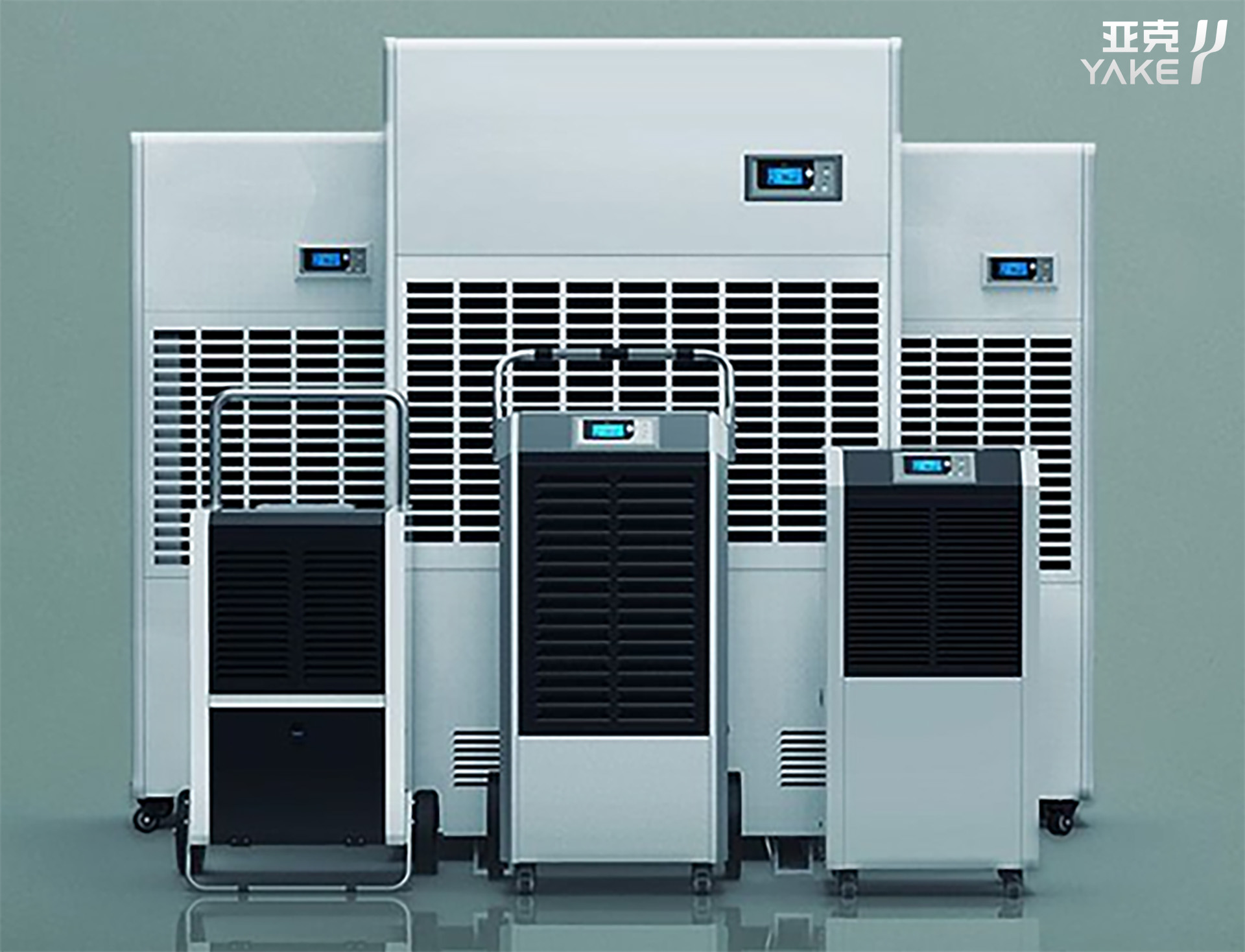
Contact us to find the best place to buy your Yakeclimate solution today!
Our experts have proven solutions to keep your humidity levels in check while keeping your energy costs low.